The right hiking glove keeps your hands functional, not just warm: the wrong choice leaves you fumbling with buckles in the cold or sweating through a mild climb.
The three glove categories and when each wins
Liners like the Smartwool Liner Glove are thin knit or fleece gloves, typically 50–150 g fill weight, designed for high-output movement in the 40–55 °F range. They breathe well, pack to nothing, and let you operate a phone, trekking pole grip, or map without taking them off. On a fast-paced day hike in cool but dry weather, a liner is often all you need.
Softshell gloves add a woven face fabric that cuts wind and sheds light moisture while keeping more breathability than a hard membrane. They live in the 25–45 °F zone and suit technical terrain where grip and dexterity still matter. Many experienced hikers call this the single most useful category because it covers the widest range of real-world conditions.
Waterproof insulated gloves like the Sealskinz Kelling pair a waterproof/breathable membrane with synthetic or down insulation. They belong in sustained wet cold below 30 °F, on winter approaches, or anywhere prolonged rain is guaranteed. The trade-off is real: expect slower dexterity on zippers, buckles, and camera controls.
Warmth versus dexterity: the core trade-off
Insulation adds bulk between your fingertips and the world. A 100-weight fleece liner costs almost no dexterity. A 600-fill waterproof mitt costs a lot. The practical implication: plan around the coldest moment on your route, not the average temperature.
On a day hike where you move continuously, your body generates significant heat through your palms. You will likely need less glove than you think. On a summit attempt where you stop to photograph, belay, or eat, your hands cool fast and you need more.
Buy for your coldest stopped moment, not your warmest moving one.
For most three-season hikers in North America, a softshell glove like the Black Diamond Midweight Softshell handles 80 percent of days. Add a liner underneath when the thermometer drops, and you have a layering system that spans roughly 15–55 °F without carrying a bulky insulated glove at all.
Waterproof/breathable membranes: what the marketing means
Gore-Tex, Polartec NeoShell, and proprietary laminates from brands like Outdoor Research and Black Diamond all work by sandwiching a microporous film between face fabric and liner. The pores are large enough for water vapor to escape but too small for liquid water to enter.
In practice, the membrane works well when the temperature differential drives vapor out. In warm, humid conditions or during hard aerobic output, sweat can build up inside faster than it escapes. Fit is the biggest variable: a glove that's too tight compresses the insulation and reduces both warmth and breathability. Look for a snug but not restrictive fit with room to make a relaxed fist.
Inserts that are glued to the outer fabric (laminated construction) perform better and last longer than drop-in liners. If the glove listing doesn't specify, a lower price usually signals a drop-in insert.
Grip palms, trekking pole use, and touchscreen tips
Trekking pole users need grip on the palm and the index finger side of the hand where the pole shaft rests. Look for silicone-print or synthetic leather reinforcement in those specific zones rather than full-palm leather, which adds weight without proportional benefit.
How to check a glove for pole use
Grip test
Hold a trekking pole and note where shaft contacts glove: palm heel and lateral index finger
Grip material
Silicone print or synthetic suede in those zones grips better than smooth nylon
Pinch test
Can you pinch and release the pole strap buckle without removing the glove?
Wrist closure
A Velcro tab that cinches over a jacket cuff prevents the cuff-gap draft
Dexterity check
Simulate clipping a carabiner or adjusting a pack strap before buying
Touchscreen-compatible fingertips use conductive thread or a conductive patch. They work reliably on index finger and thumb, less so on other fingers. Cold hands reduce screen sensitivity regardless of the glove, so don't expect to type a message at 20 °F: a quick map check or photo is a realistic use case.
Sizing, layering, and getting the fit right
Glove sizing runs small in outdoor brands. Measure the circumference of your dominant hand at the widest point (across the knuckles) and the length from wrist crease to tip of middle finger. Most brands publish both dimensions in their size charts.
If you plan to layer a liner inside a shell, buy the shell one size up. A shell that fits bare-handed will be uncomfortably tight over a liner and will compress the insulation in both gloves, reducing warmth from both.
Cuffs matter more than most guides acknowledge. A gauntlet cuff (extends over the jacket sleeve) works for winter mountaineering. An underglove cuff (tucks inside the jacket) works better for fast hiking because it doesn't catch on pack straps. Match the cuff style to how you move, not to what looks warmer.
Frequently asked questions
Can I use ski gloves for hiking?
Ski gloves work in a pinch but are usually over-built for hiking: they run warm for aerobic output, have minimal dexterity for fine tasks, and are bulkier than hiking-specific options at the same warmth level. If you already own a quality ski glove, it covers cold wet conditions fine. For warm- or mixed-condition hiking, a hiking-specific softshell will be more comfortable and versatile.
How do I keep gloves dry on the inside?
Pre-warm your gloves before putting them on in very cold conditions: cold fabric chills your hands faster than no glove at all. If your gloves get wet from sweat, remove them during breaks and let them air out rather than leaving damp insulation against your skin. Merino liner gloves dry against body heat faster than synthetic alternatives, which is worth considering if you run warm.
What is the warmest glove that still lets me operate trekking poles?
A softshell glove with a synthetic-fill back panel and a leather or silicone palm sits at the practical dexterity ceiling for pole use. Beyond that warmth level, most hikers switch to a removable liner plus a softshell shell so they can strip to the liner for technical sections. Fully insulated mittens with a removable liner are the warmest option, but you will tuck the mitten shell under your arm every time you need your fingers, which is a genuine workflow interruption on busy terrain.
For specific picks across each category, see our guide to the best hiking gloves. Browse all hike guides or read how we research and rate gear.
Recommended gear
Our current top picks from the Best hiking gloves for cold and wind (2026) guide, if you are ready to buy.
Best for: Three-season hikers who want one waterproof glove that handles cold mornings, wet trail conditions, and frequent phone or map checks.
- Ventia insert keeps hands dry in sustained rain and wind up to 40 mph, verified across independent reviews
- Breathability is rated 1/5 by the brand: hands run warm during high-output climbs
- Waterproofing
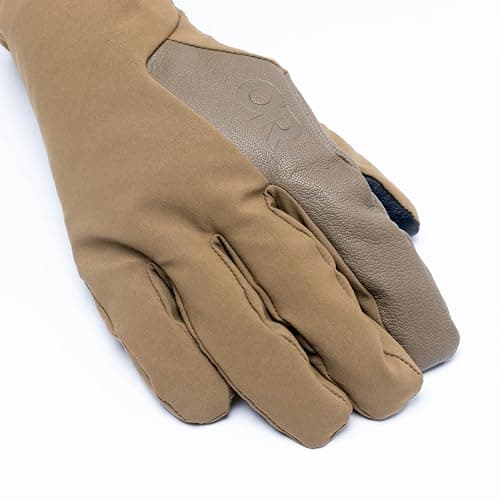
- Ventia waterproof insert, 100% windproof
- Insulation
- EnduraLoft polyester, 133g
- Palm
- Waterproof goat leather
- Weight
- 5.0 oz (142g) per pair
- Touchscreen
- Compatible fingertips
- Closure
- Adjustable Velcro under-wrist cuff
About this pick
A mid-weight waterproof softshell built for three-season hiking and snowshoe days, the Sureshot Pro pairs a Ventia waterproof insert with goat leather palms and EnduraLoft insulation for a glove that handles cold rain and light snow without going bulky. Outdoor Gear Lab ranks it among the top waterproof winter gloves tested and gives it high marks for weather resistance.
Strengths
- Ventia insert keeps hands dry in sustained rain and wind up to 40 mph, verified across independent reviews
- Goat leather palm provides secure grip on trekking poles without requiring glove removal
- Lightweight profile (142g) packs easily and transitions well between trail and town
Weaknesses
- Breathability is rated 1/5 by the brand: hands run warm during high-output climbs
- Warmth suitable for roughly 25–40 F conditions; not a winter mountaineering glove
Kit Score breakdown
BLACK DIAMOND
Black Diamond Midweight Softshell Gloves
Best Value
Kit Score 8.0/10
$68.55 Price checked Oct 23, 4:16 PM CDT
Best for: High-output hikers and trail runners who need maximum dexterity and pole grip in cool, mostly dry conditions and want to layer a shell over the top in rain.
- Full-finger and full-palm goat leather is unusually generous at this price point, giving confident pole grip in all conditions
- DWR-only weather resistance: not waterproof, and heavy sustained rain will penetrate the shell
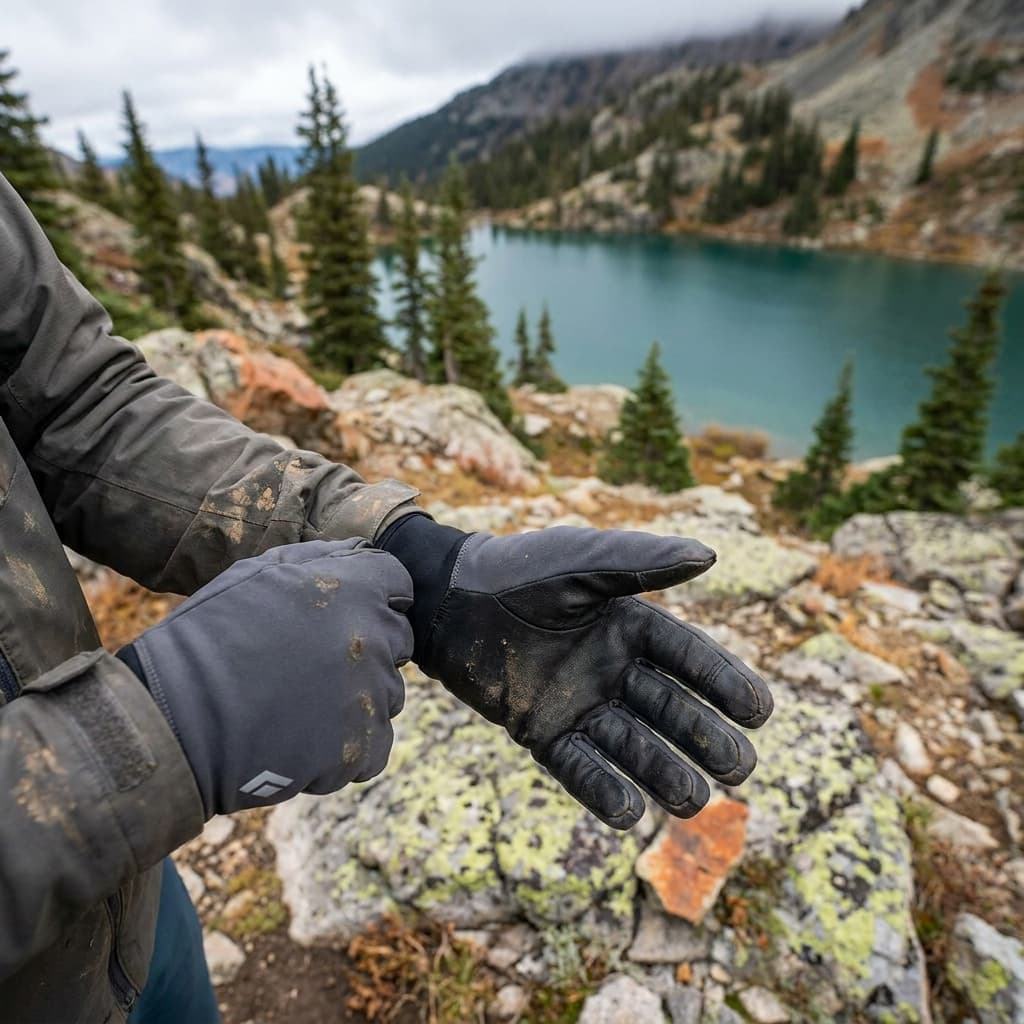
- Shell
- Four-way stretch softshell, DWR treated (63% nylon, 26% polyester, 11% elastane)
- Insulation
- 60g PrimaLoft Gold on back of hand
- Palm
- Full goat leather palms and fingers
- Weight
- 92g per pair
- Cuff
- Fleece-lined neoprene, seals out drafts
- Touchscreen
- Digital thumb and index finger
About this pick
Black Diamond's Midweight Softshell packs full goat leather across the entire palm and fingers alongside 60g PrimaLoft Gold insulation in a lightweight 92g package, making it one of the best-equipped gloves for active hiking and ski touring at this price. The four-way stretch softshell and DWR finish handle cool, dry to lightly damp conditions well.
Strengths
- Full-finger and full-palm goat leather is unusually generous at this price point, giving confident pole grip in all conditions
- 60g PrimaLoft Gold insulation on the back of hand adds meaningful warmth without bulk
- Dexterity is consistently praised by outdoor reviewers for mountaineering and trekking tasks
Weaknesses
- DWR-only weather resistance: not waterproof, and heavy sustained rain will penetrate the shell
- Neoprene cuff is narrow and can be stiff to pull on; noted by multiple reviewers as a fit quirk
Kit Score breakdown
SMARTWOOL
Smartwool Men's Liner Glove
Best Budget
Kit Score 7.7/10
$28.00 Price checked Oct 23, 4:16 PM CDT
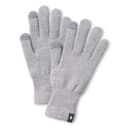
Best for: Hikers building a layering system who need a lightweight, packable base layer that works alone on shoulder-season days and pairs with a waterproof shell glove when the weather turns serious.
- Merino blend manages moisture effectively: wicks sweat and dries faster than full-wool alternatives during aerobic hiking
- No grip pads: the smooth knit surface is slippery on poles and ice axe handles, which owners repeatedly flag
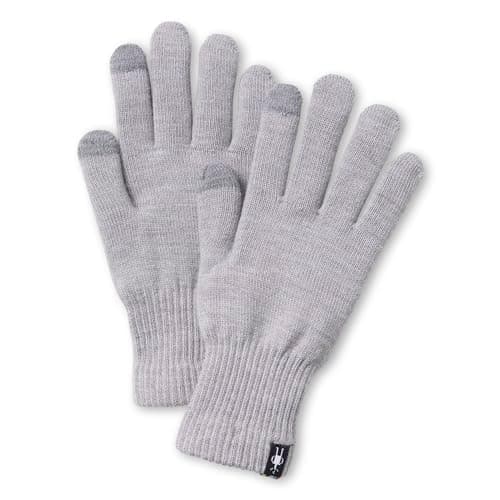
- Material
- 48% merino wool, 48% recycled polyester, 2% other fiber, 1% elastodiene, 1% elastane (Amazon listing B0998Z9X22, checked 2026-09-27)
- Weight
- 1.5 oz per pair
- Touchscreen
- Thumb and index finger compatible
- Cuff
- Ribbed knit for secure fit
- Use range
- Standalone to 30F, liner system below
About this pick
The Smartwool Liner Glove is a 1.5-ounce merino and recycled polyester knit with touchscreen-compatible thumb and index finger, designed as a standalone on mild days and as the inner layer of a two-glove system when temperatures drop. It carries 4.4/5 stars from over 700 Amazon owners.
Strengths
- Merino blend manages moisture effectively: wicks sweat and dries faster than full-wool alternatives during aerobic hiking
- At 1.5 oz, it disappears in a hip-belt pocket and doubles as a camp glove or emergency layer
- 4.4/5 stars across 700+ Amazon reviews reflects consistent satisfaction for a lightweight liner
Weaknesses
- No grip pads: the smooth knit surface is slippery on poles and ice axe handles, which owners repeatedly flag
- Not waterproof or water-resistant beyond light moisture: hands get cold and wet in sustained rain without a shell over the top
Kit Score breakdown
See all picks in Best hiking gloves for cold and wind (2026)
Keep going
Related guides
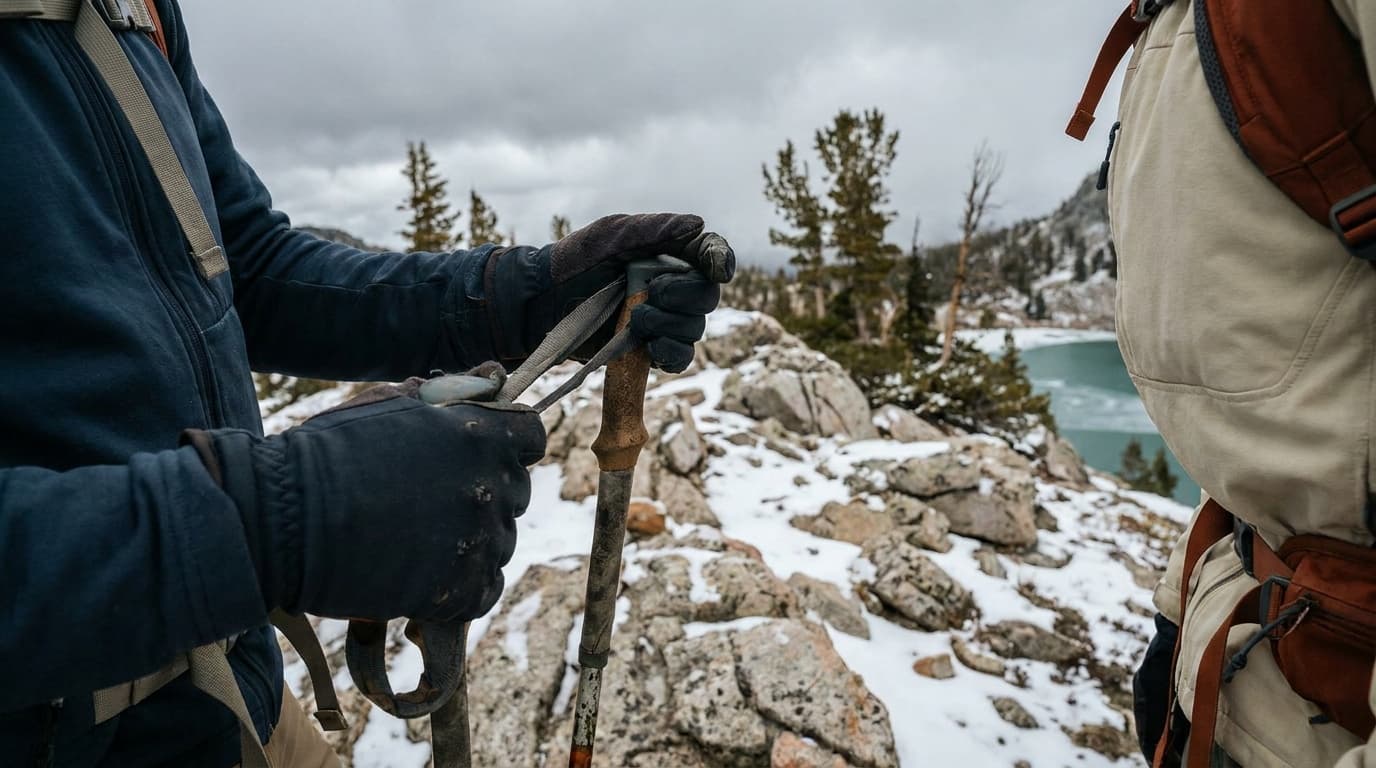
 Complete hike loadoutDay hike kitBuild the complete kit
Researched, not hands-on tested
Updated Jun 4, 2026Our recommendations draw on manufacturer documentation, retailer listings, owner feedback, and comparisons with alternatives.
As an Amazon Associate I earn from qualifying purchases. We may earn a commission from links here, at no extra cost to you. How we research →