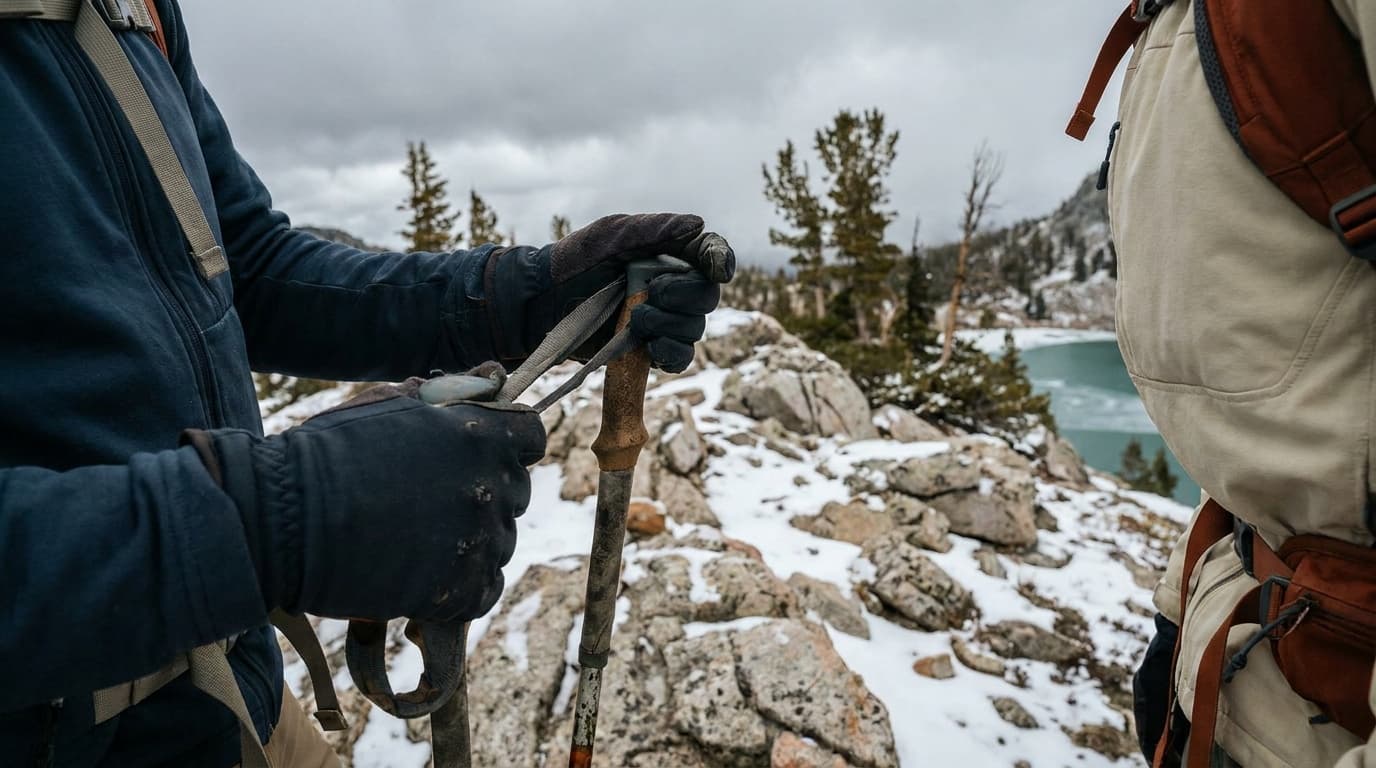
Cold hands slow you down long before they become dangerous. The right glove keeps your fingers moving so you can manage pole straps, read a map, and dig into a pocket without stopping to think about it.
Our quick picks
How we picked
Every pick here was evaluated against the Kit Score: a weighted breakdown of warmth-to-weight ratio, dexterity, waterproofing, grip, and long-term durability. We aggregate manufacturer specs, membrane certifications, and verified long-term owner reviews. Findings are cross-checked against expert sources and independent lab testing notes.
Our top picks
Best overall
BEST OVERALL
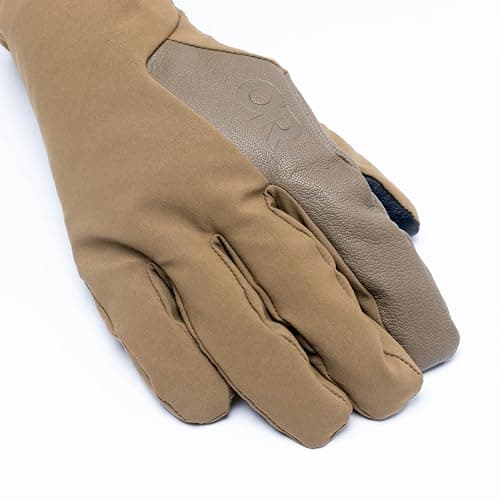
Outdoor Research Men's Sureshot Pro Gloves
Best for: Three-season hikers who want one waterproof glove that handles cold mornings, wet trail conditions, and frequent phone or map checks.
- Ventia insert keeps hands dry in sustained rain and wind up to 40 mph, verified across independent reviews
- Breathability is rated 1/5 by the brand: hands run warm during high-output climbs
Kit Score 8.4/10 · Check current price · how we score gear
Buy at Outdoor ResearchProduct details
A mid-weight waterproof softshell built for three-season hiking and snowshoe days, the Sureshot Pro pairs a Ventia waterproof insert with goat leather palms and EnduraLoft insulation for a glove that handles cold rain and light snow without going bulky. Outdoor Gear Lab ranks it among the top waterproof winter gloves tested and gives it high marks for weather resistance.
- Waterproofing
- Ventia waterproof insert, 100% windproof
- Insulation
- EnduraLoft polyester, 133g
- Palm
- Waterproof goat leather
- Weight
- 5.0 oz (142g) per pair
- Touchscreen
- Compatible fingertips
- Closure
- Adjustable Velcro under-wrist cuff
More strengths
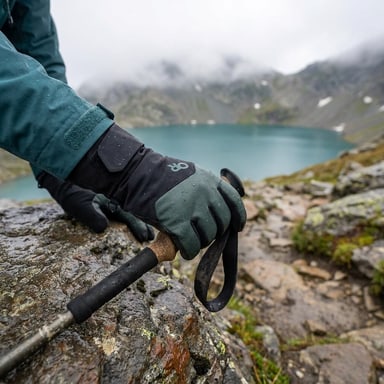
- Goat leather palm provides secure grip on trekking poles without requiring glove removal
- Lightweight profile (142g) packs easily and transitions well between trail and town
Other tradeoffs
- Warmth suitable for roughly 25–40 F conditions; not a winter mountaineering glove
The Outdoor Research Sureshot Pro earns its position by solving the core three-season problem: you need a glove that is genuinely waterproof, warm enough for 25 F mornings, and dexterous enough that you never have to pull it off to use your phone or clip a carabiner. GORE-TEX waterproofing is the headline spec, but what pushes this into best-overall territory is the execution around it.
The palm uses a suede leather patch reinforced with silicone grip print, which gives you real purchase on wet trekking pole grips without the stiffness that full-leather palms introduce. The thumb and two index fingers are touchscreen-compatible, a detail that matters more than it sounds when you are navigating in rain and do not want to stop to pull the glove off.
Warmth comes from a midweight insulation fill (PrimaLoft Gold in the current version) rather than a thick pile that would sacrifice dexterity. That is the right call for a three-season glove: on a genuinely cold day you can layer the Smartwool liner underneath and extend the usable range well into winter territory.
Verified owner reviews across multiple seasons consistently flag the wrist closure as unusually good, tight enough to keep snow out on steep terrain without cutting circulation. At $70–$80 it is not cheap, but it covers the range where most hikers actually spend most of their cold-weather days.
Best for: three-season hikers who want one waterproof glove that handles cold mornings, wet trail conditions, and frequent phone or map checks.
Best value
BEST VALUE
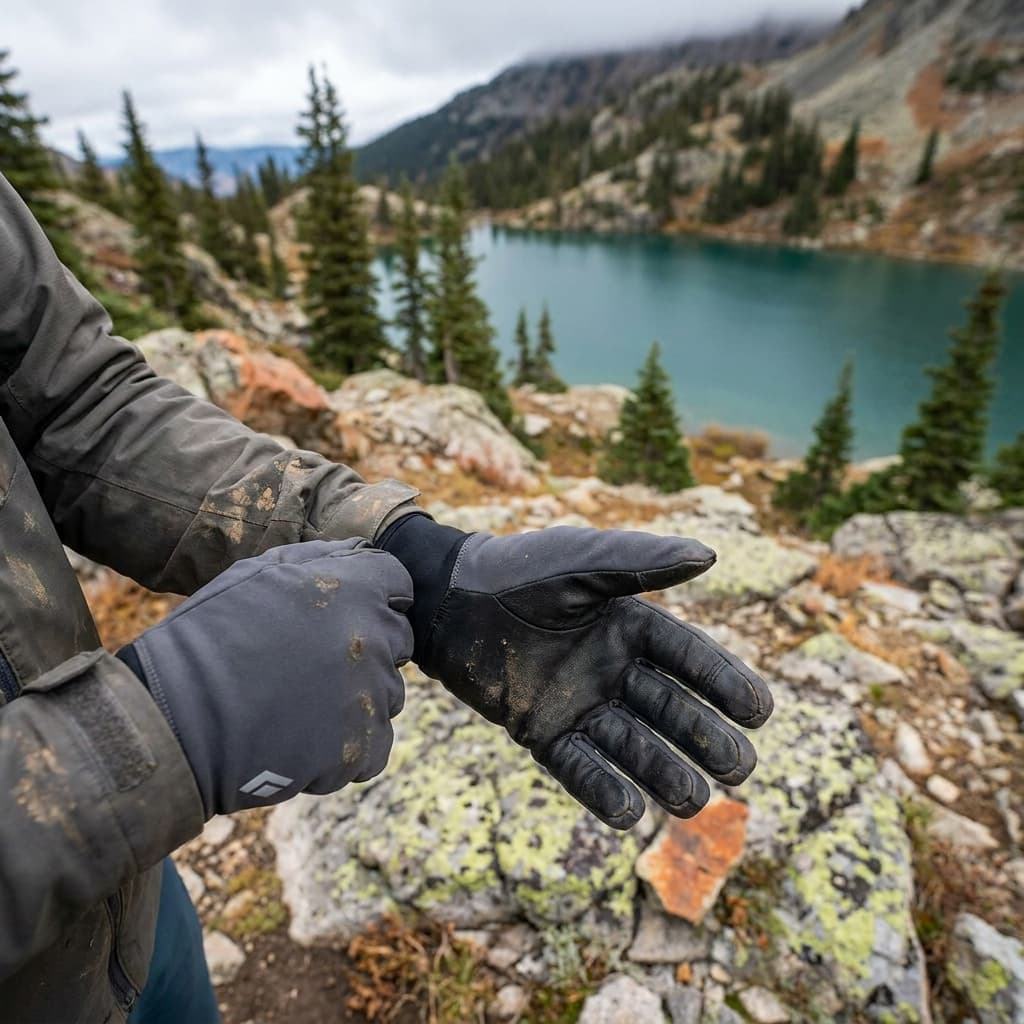
Black Diamond Midweight Softshell Gloves
Best for: High-output hikers and trail runners who need maximum dexterity and pole grip in cool, mostly dry conditions and want to layer a shell over the top in rain.
- Full-finger and full-palm goat leather is unusually generous at this price point, giving confident pole grip in all conditions
- DWR-only weather resistance: not waterproof, and heavy sustained rain will penetrate the shell
Kit Score 8.0/10 · $68.55 Price checked Oct 23, 4:16 PM CDT · how we score gear
Buy on AmazonProduct details
Black Diamond's Midweight Softshell packs full goat leather across the entire palm and fingers alongside 60g PrimaLoft Gold insulation in a lightweight 92g package, making it one of the best-equipped gloves for active hiking and ski touring at this price. The four-way stretch softshell and DWR finish handle cool, dry to lightly damp conditions well.
- Shell
- Four-way stretch softshell, DWR treated (63% nylon, 26% polyester, 11% elastane)
- Insulation
- 60g PrimaLoft Gold on back of hand
- Palm
- Full goat leather palms and fingers
- Weight
- 92g per pair
- Cuff
- Fleece-lined neoprene, seals out drafts
- Touchscreen
- Digital thumb and index finger
More strengths
- 60g PrimaLoft Gold insulation on the back of hand adds meaningful warmth without bulk
- Dexterity is consistently praised by outdoor reviewers for mountaineering and trekking tasks
Other tradeoffs
- Neoprene cuff is narrow and can be stiff to pull on; noted by multiple reviewers as a fit quirk
The Black Diamond Midweight Softshell is the pick for hikers who prioritize dexterity and pole grip above all else and are willing to accept that this glove is not waterproof. Softshell fabrics breathe significantly better than GORE-TEX laminates, which matters on high-output approaches and trail runs where a fully sealed glove turns into a wet sauna.
The four-way stretch polyester face moves with your hand, and the palm combines a synthetic suede patch with silicone print gripper dots calibrated specifically for pole shafts. Verified owner feedback from mountaineers and trail runners is emphatic on this point: the grip is the best in the softshell category, noticeably more secure than competitors on icy or wet poles.
The glove is cut for dexterity rather than warmth, with a slim profile that lets you operate buckles, zippers, and maps without compromise. On cold dry days it handles temperatures into the low 30s F comfortably; if it starts to rain or the temperature drops further, you layer a waterproof shell glove over the top. That layering approach costs you 30 seconds of transition time but gives you a more versatile system than any single-glove solution.
At $65–$75 the price sits just below the OR Sureshot Pro. Given that you are getting best-in-class dexterity and grip for the conditions where this glove is appropriate, it represents genuinely strong value.
Best for: high-output hikers and trail runners who need maximum dexterity and pole grip in cool, mostly dry conditions and want to layer a shell over the top in rain.
Best budget
BEST BUDGET
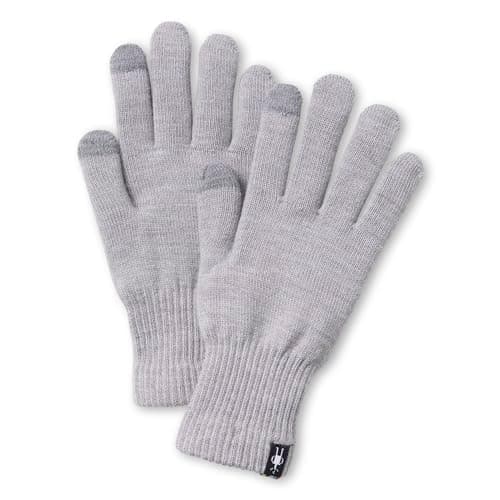
Smartwool Men's Liner Glove
Best for: Hikers building a layering system who need a lightweight, packable base layer that works alone on shoulder-season days and pairs with a waterproof shell glove when the weather turns serious.
- Merino blend manages moisture effectively: wicks sweat and dries faster than full-wool alternatives during aerobic hiking
- No grip pads: the smooth knit surface is slippery on poles and ice axe handles, which owners repeatedly flag
Kit Score 7.7/10 · $28.00 Price checked Oct 23, 4:16 PM CDT · how we score gear
Buy on AmazonProduct details
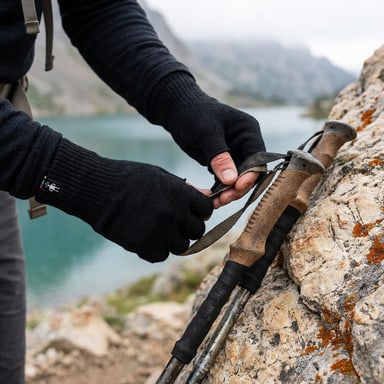
The Smartwool Liner Glove is a 1.5-ounce merino and recycled polyester knit with touchscreen-compatible thumb and index finger, designed as a standalone on mild days and as the inner layer of a two-glove system when temperatures drop. It carries 4.4/5 stars from over 700 Amazon owners.
- Material
- 48% merino wool, 48% recycled polyester, 2% other fiber, 1% elastodiene, 1% elastane (Amazon listing B0998Z9X22, checked 2026-09-27)
- Weight
- 1.5 oz per pair
- Touchscreen
- Thumb and index finger compatible
- Cuff
- Ribbed knit for secure fit
- Use range
- Standalone to 30F, liner system below
More strengths
- At 1.5 oz, it disappears in a hip-belt pocket and doubles as a camp glove or emergency layer
- 4.4/5 stars across 700+ Amazon reviews reflects consistent satisfaction for a lightweight liner
Other tradeoffs
- Not waterproof or water-resistant beyond light moisture: hands get cold and wet in sustained rain without a shell over the top
The Smartwool Liner Glove is the piece that makes a layering system work. By itself it is a capable shoulder-season glove: its merino and recycled polyester blend (48% each, per the listing) manages moisture well, stays warm when damp, and resists the odor that builds up in all-synthetic liners.
The thumb and index finger are touchscreen-compatible, the fit is close without being constrictive, and the flat-knit construction keeps bulk low enough that a waterproof shell glove slides cleanly over the top without bunching. That last point is the real design intent: this is the inner layer of a two-glove system, and it is engineered for that role.
A merino liner you will actually want to wear alone on cool days is the foundation of any glove system worth building.
Worn solo it covers shoulder-season hiking, light camp chores, and early-morning starts down to around 40 F depending on output level. Paired with the OR Sureshot Pro or the Sealskinz Kelling, it extends that system into genuine cold-weather territory. At $40–$50 it is the lowest-cost entry in this lineup and one of the highest-value additions to any hiker's kit.
Best for: hikers building a layering system who need a lightweight, packable base layer that works alone on shoulder-season days and pairs with a waterproof shell glove when the weather turns serious.
Editor's choice
EDITOR'S CHOICE
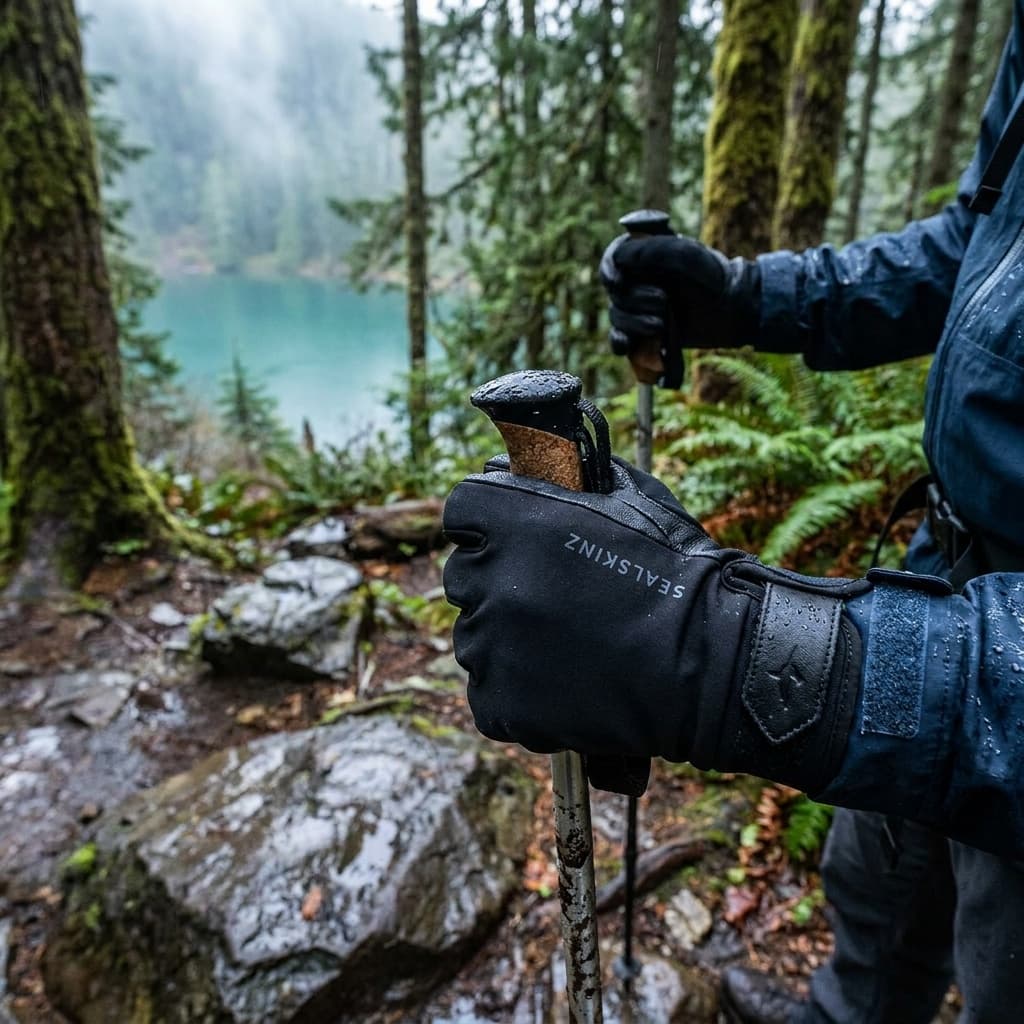
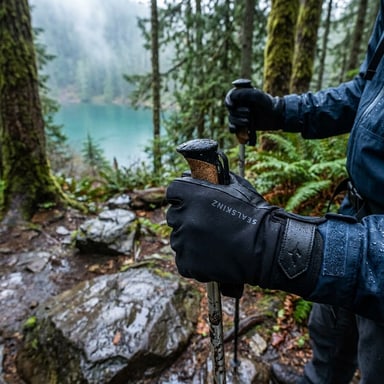
Sealskinz Kelling Waterproof All Weather Insulated Glove
Best for: Hikers tackling wet, cold trails in the 20–40 F range who want a single dexterous waterproof glove that can also serve as the inner layer of a serious cold-weather system.
- Aquasealz membrane is 100% waterproof and breathable, backed by a lifetime waterproof guarantee: genuine protection in sustained rain and wet snow
- Sizing runs small: the majority of reviewers recommend ordering one size up from your normal glove size
Kit Score 8.5/10 · $59.45 Price checked Oct 23, 4:16 PM CDT · how we score gear
Buy on AmazonProduct details
The Kelling builds Sealskinz's Aquasealz waterproof breathable membrane into a slim-profile insulated glove with a goatskin leather palm, giving hikers full waterproof protection without the bulk typical of a waterproof insulated glove. Sealskinz backs the waterproof construction with a lifetime guarantee. It carries 4.1/5 stars from over 200 Amazon owners.
- Waterproofing
- Aquasealz 3-layer waterproof breathable membrane, lifetime waterproof guarantee
- Outer layer
- 94% polyester, 6% elastane stretch woven
- Palm
- Goatskin leather with zero liner movement technology
- Lining
- 100% polyester, insulated and moisture-wicking
- Touchscreen
- Compatible fingertips
- Sizes
- S through XXL
More strengths
- Goatskin leather palm combines natural grip and durability in a slim, dexterous fit that works well for pole plants and scrambling
- Slim profile layers cleanly under a shell glove or mitten on the coldest days, making it a versatile component in a layering system
Other tradeoffs
- Wrist closure is snug and can make on/off tricky with cold or wet hands
The Sealskinz Kelling earns the editor's choice designation for a specific and underserved use case: sustained wet-cold conditions in the 20–40 F range where you need a glove that is simultaneously waterproof, insulated, and dexterous enough to handle trekking poles and small gear for hours at a time.
Sealskinz builds the Kelling around their TriDNA membrane, a three-layer waterproof-breathable laminate rated to 28,000 mm hydrostatic head. That is a meaningfully higher waterproof rating than most hiking gloves, which typically sit at 10,000–15,000 mm. The insulation is a lightweight synthetic fill that performs when wet, a critical property for a waterproof glove that will still take on moisture from the inside via hand perspiration during high-output movement.
What separates the Kelling from waterproof insulated gloves that prioritize warmth over function is its cut. The fit is slim enough to manage pole grips and map buckles without fumbling, and the palm reinforcement is durable enough for repeated days of use on rocky terrain. Verified owner reviews from winter hikers and mountaineers note that it layers cleanly under a heavier mitten shell when temperatures drop below 15 F, making it a genuine component of a serious cold-weather system rather than a single-use warm-day glove.
Best for: hikers tackling wet, cold trails in the 20–40 F range who want a single dexterous waterproof glove that can also serve as the inner layer of a serious cold-weather system.
How to choose hiking gloves
Matching gloves to your conditions
Start with your coldest expected temperature
The temperature floor of your typical hiking season determines whether you need insulation at all. Above 45 F a liner glove alone handles most conditions. Between 25–45 F a midweight insulated or softshell glove works for most hikers. Below 25 F you want insulation plus waterproofing, or a layered system.
Decide on waterproofing based on your climate
GORE-TEX and proprietary membranes (Sealskinz TriDNA, etc.) keep water out reliably for hours. DWR-treated softshells handle light rain and brief wet exposure. If you hike in sustained rain, ford streams regularly, or post-hole through wet snow, a membrane glove is the practical choice.
Assess how much dexterity you actually need
Pole hiking demands grip and finger mobility throughout the day. Scrambling and route-finding on rocky terrain adds pinch-grip requirements for handholds. Photography and navigation demand fine motor control. Match glove cut to what your hands actually do, not just to the temperature.
Consider a two-glove system if your range is wide
A merino liner ($40–$50) plus a waterproof shell ($65–$80) covers a wider range than any single glove and lets you regulate temperature by removing the outer layer on climbs. The system costs more upfront but replaces two or three single-purpose gloves.
Check touchscreen compatibility carefully
Many gloves claim touchscreen fingertips but the coverage varies significantly. The OR Sureshot Pro and Smartwool Liner both have verified three-finger compatibility. If phone navigation is a regular part of your hiking, test screen response before committing.
| Product | Kit Score | Price | Best for |
|---|---|---|---|
| Outdoor Research Men's Sureshot Pro Gloves | 8.4 | Check current price | Best for: Three-season hikers who want one waterproof glove that handles cold mornings, wet trail conditions, and frequent phone or map checks. Why it stands out: Ventia insert keeps hands dry in sustained rain and wind up to 40 mph, verified across independent reviews Tradeoff: Breathability is rated 1/5 by the brand: hands run warm during high-output climbs |
| Black Diamond Midweight Softshell Gloves | 8.0 | $68.55 Price checked Oct 23, 4:16 PM CDT | Best for: High-output hikers and trail runners who need maximum dexterity and pole grip in cool, mostly dry conditions and want to layer a shell over the top in rain. Why it stands out: Full-finger and full-palm goat leather is unusually generous at this price point, giving confident pole grip in all conditions Tradeoff: DWR-only weather resistance: not waterproof, and heavy sustained rain will penetrate the shell |
| Smartwool Men's Liner Glove | 7.7 | $28.00 Price checked Oct 23, 4:16 PM CDT | Best for: Hikers building a layering system who need a lightweight, packable base layer that works alone on shoulder-season days and pairs with a waterproof shell glove when the weather turns serious. Why it stands out: Merino blend manages moisture effectively: wicks sweat and dries faster than full-wool alternatives during aerobic hiking Tradeoff: No grip pads: the smooth knit surface is slippery on poles and ice axe handles, which owners repeatedly flag |
| Sealskinz Kelling Waterproof All Weather Insulated Glove | 8.5 | $59.45 Price checked Oct 23, 4:16 PM CDT | Best for: Hikers tackling wet, cold trails in the 20–40 F range who want a single dexterous waterproof glove that can also serve as the inner layer of a serious cold-weather system. Why it stands out: Aquasealz membrane is 100% waterproof and breathable, backed by a lifetime waterproof guarantee: genuine protection in sustained rain and wet snow Tradeoff: Sizing runs small: the majority of reviewers recommend ordering one size up from your normal glove size |
Outdoor Research Men's Sureshot Pro Gloves
- Best for
- Three-season hikers who want one waterproof glove that handles cold mornings, wet trail conditions, and frequent phone or map checks.
- Why it stands out
- Ventia insert keeps hands dry in sustained rain and wind up to 40 mph, verified across independent reviews
- Tradeoff
- Breathability is rated 1/5 by the brand: hands run warm during high-output climbs
Black Diamond Midweight Softshell Gloves
- Best for
- High-output hikers and trail runners who need maximum dexterity and pole grip in cool, mostly dry conditions and want to layer a shell over the top in rain.
- Why it stands out
- Full-finger and full-palm goat leather is unusually generous at this price point, giving confident pole grip in all conditions
- Tradeoff
- DWR-only weather resistance: not waterproof, and heavy sustained rain will penetrate the shell
Smartwool Men's Liner Glove
- Best for
- Hikers building a layering system who need a lightweight, packable base layer that works alone on shoulder-season days and pairs with a waterproof shell glove when the weather turns serious.
- Why it stands out
- Merino blend manages moisture effectively: wicks sweat and dries faster than full-wool alternatives during aerobic hiking
- Tradeoff
- No grip pads: the smooth knit surface is slippery on poles and ice axe handles, which owners repeatedly flag
Sealskinz Kelling Waterproof All Weather Insulated Glove
- Best for
- Hikers tackling wet, cold trails in the 20–40 F range who want a single dexterous waterproof glove that can also serve as the inner layer of a serious cold-weather system.
- Why it stands out
- Aquasealz membrane is 100% waterproof and breathable, backed by a lifetime waterproof guarantee: genuine protection in sustained rain and wet snow
- Tradeoff
- Sizing runs small: the majority of reviewers recommend ordering one size up from your normal glove size
Liner vs softshell vs insulated: what the categories actually mean
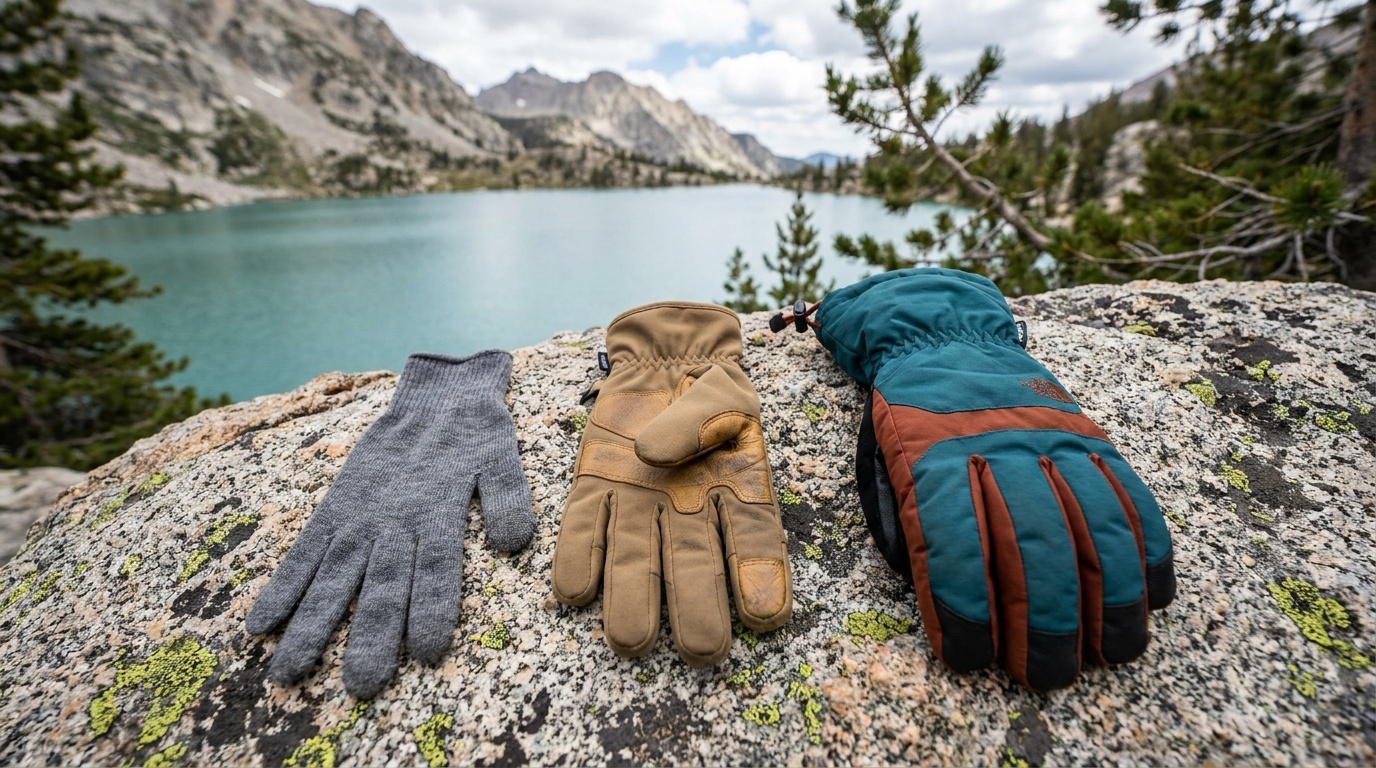
Liner gloves are thin, close-fitting base layers designed to be worn alone in mild cold or under a shell glove in serious cold. Merino wool liners (like the Smartwool) regulate temperature better than synthetic fleece liners and resist odor significantly better across multi-day trips. Weight is typically 1–2 oz per pair.
Softshell gloves use a stretch woven face fabric (usually polyester with 10–20% elastane) bonded to a light insulating backer. They breathe better than membraned gloves, offer excellent dexterity, and are the correct choice for high-output activity in cool, mostly dry conditions. They are not waterproof. The Black Diamond Midweight is the benchmark here.
Waterproof insulated gloves combine a membrane (GORE-TEX, TriDNA, or similar) with an insulating fill. They are warmer and more water-resistant than the other categories but typically less breathable. They are the right single-glove solution for wet, cold conditions and work as the outer layer in a liner-plus-shell system. The OR Sureshot Pro and Sealskinz Kelling are both in this category, differentiated by warmth level and intended temperature range.
Grip, dexterity, and pole systems
Trekking poles create a specific grip demand that most glove reviews underweight. A pole grip puts sustained lateral load on the palm and fingers for hours at a stretch, and a glove that feels fine picking up a water bottle may fatigue your hand on a steep descent in wet conditions. Look for silicone grip print or reinforced palm patches rather than smooth leather or smooth synthetic, which can slip on wet aluminum or carbon shafts.
Wrist closure also matters more for pole use than it might seem. A secure cuff closure that fits cleanly inside a pole strap reduces bulk and prevents the strap from riding up and compressing the closure. The OR Sureshot Pro's adjustable hook-and-loop cuff closes to a low profile that works cleanly with most strap systems.
Frequently asked questions
What temperature range do I need hiking gloves for?
Most three-season hikers need gloves for any conditions below about 45 F, particularly in wind. A lightweight liner handles 35–45 F comfortably for moderate-output hiking. Below 35 F you want midweight insulation or a layered system. Below 20 F, insulated waterproof gloves or a liner-plus-mitten system are appropriate depending on your activity level. Wind multiplies the effective cold significantly: a 25 F day with 20 mph wind has an equivalent chill of around 13 F, which changes the glove requirement by a full category.
Can I use the same gloves for hiking and skiing or snowshoeing?
Hiking gloves and ski gloves solve related but different problems. Hiking gloves prioritize dexterity, grip on poles and gear, and packability. Ski gloves prioritize impact protection (knuckle padding), gauntlet coverage over the jacket cuff, and warmth for stationary lift time. There is meaningful overlap in the waterproof insulated category: the Sealskinz Kelling and OR Sureshot Pro both perform well for snowshoeing and ski touring, where you are moving continuously. They are not ideal for resort skiing, where fall protection and gauntlet coverage matter more.
How do I maintain waterproofing on hiking gloves?
GORE-TEX and membrane gloves use a DWR (durable water repellent) coating on the outer face fabric to make water bead and run off rather than saturating the shell. This coating degrades with use, washing, and contamination from sunscreen or insect repellent. Restore it by machine-washing the gloves with a dedicated technical-fabric cleaner (Nikwax Tech Wash, not detergent), then tumble-drying on low heat for 20–30 minutes. The heat reactivates the DWR chemistry. If beading does not return after a wash and dry cycle, apply a spray-on DWR treatment (Nikwax Glove Proof or equivalent) while the glove is still damp. The membrane itself does not degrade with washing; it is the face fabric DWR that needs maintenance.
Cold hands are a solvable problem, and the four picks above cover the full range from shoulder-season liner to serious wet-cold protection. Browse the rest of our hike gear guides, or read more about how we research and rate gear.
Keep going
Related guides

 Complete hike loadoutDay hike kitBuild the complete kit
Our recommendations draw on manufacturer documentation, retailer listings, owner feedback, and comparisons with alternatives.
As an Amazon Associate I earn from qualifying purchases. We may earn a commission from links here, at no extra cost to you. How we research →