We may earn a commission from links on this page, at no extra cost to you.
You can reach 8,000 to 10,000 steps without leaving the house by stacking short indoor walks. In a treadmill study of adults aged 21 to 40, walking at 2.0 to 2.5 mph took about 96 to 106 steps per minute (Tudor-Locke et al., 2019), so every 10 minutes of steady walking is roughly 1,000 steps. Six to eight of those bouts, plus the steps you take anyway, gets most people close, and federal guidelines count short bouts toward your weekly activity.
The step math: how indoor minutes add up
Step counts are just cadence multiplied by time. The table below uses the average cadence measured at each treadmill speed in the CADENCE-Adults study. Your own numbers will differ with stride length and age, so treat it as a planning guide and check it against your tracker once.
| Pace | Average steps per minute | Steps in 10 minutes | Steps in 30 minutes |
|---|---|---|---|
| 1.0 mph (slow desk walking) | 68 | about 680 | about 2,030 |
| 1.5 mph | 84 | about 840 | about 2,510 |
| 2.0 mph (easy walk) | 96 | about 960 | about 2,880 |
| 2.5 mph | 106 | about 1,060 | about 3,170 |
| 3.0 mph (moderate) | 114 | about 1,140 | about 3,410 |
| 3.5 mph (brisk) | 122 | about 1,220 | about 3,650 |
Two things fall out of that table. First, slow walking still counts: an hour at 1.5 mph under a desk is about 5,000 steps. Second, pace matters more for effort than for step totals. The same study pegged about 100 steps per minute as the threshold for moderate intensity, the kind of walking the weekly 150-minute guideline is built on.
If your goal is a number on your wrist, any pace works. If your goal is fitness, get some of those minutes at a pace where you can talk but not sing. For a structured version, the free beginner walking plan builder sets weekly minutes and brisk blocks for eight weeks.
Do you really need 10,000 steps?
Not necessarily. The 10,000 figure is a round goal, not a threshold from research. The largest pooled analysis so far, 15 international cohorts with nearly 50,000 adults published in The Lancet Public Health in 2022, found that more daily steps went with lower risk of death up to a point, and that point depended on age. For adults under 60 the benefit leveled off around 8,000 to 10,000 steps. For adults 60 and older it leveled off around 6,000 to 8,000.
So a winter indoor target of 7,000 to 9,000 is a sensible place to start for most people, and more is fine if it feels good. If weight loss is your reason for counting, our guide to how many steps a day to lose weight walks through the calorie math and why diet does most of that work.
Option 1: walk your home, no equipment
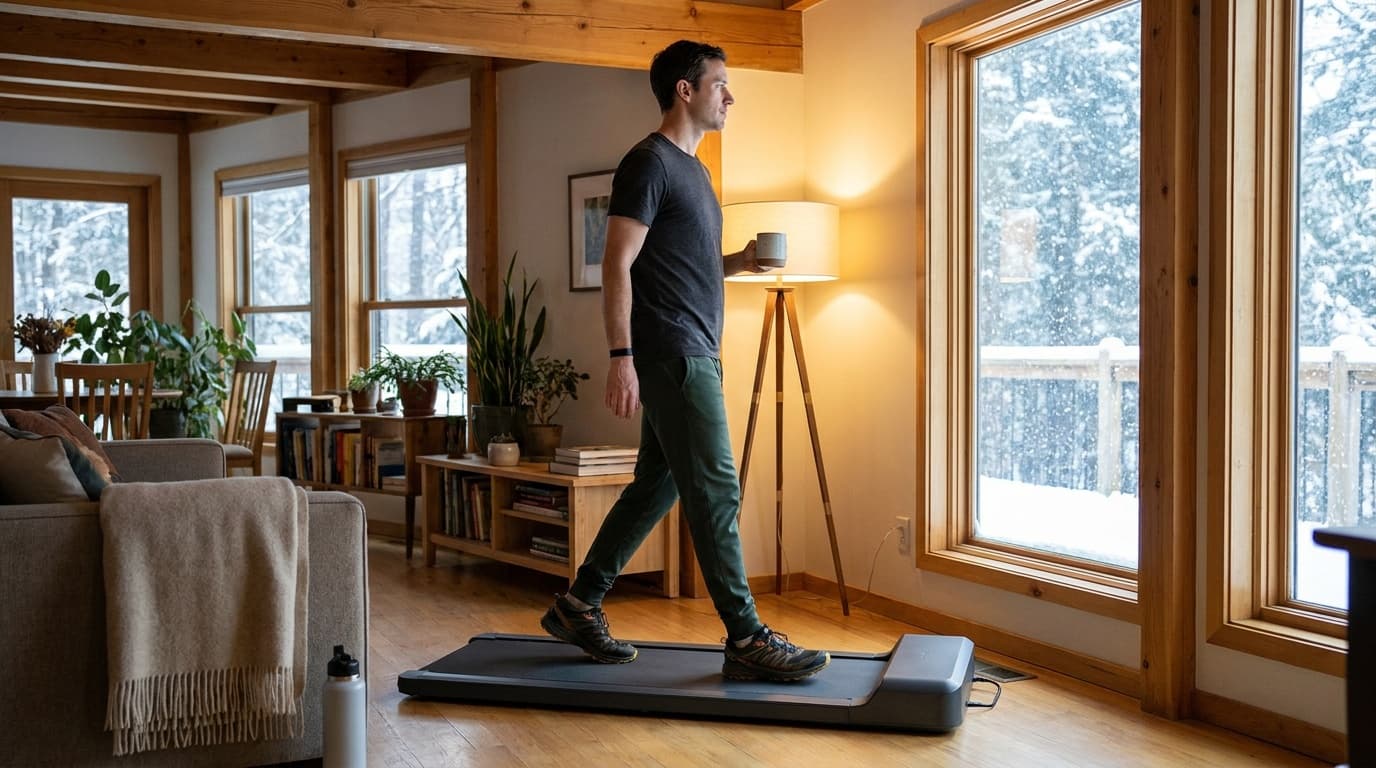
Most homes have a loop. A hallway, a kitchen island, or a lap through three rooms is enough, because the goal is minutes on your feet, not distance.
Ways to add indoor steps without buying anything
Walk every call
Take phone calls and audio-only meetings on your feet. A 30-minute call at an easy pace is roughly 2,500 to 3,000 steps.
Walk after meals
Ten minutes after breakfast, lunch, and dinner adds about 3,000 steps. A 2022 meta-analysis in Sports Medicine found light walking breaks lowered after-meal glucose more than standing breaks.
Break up long sits
Set a timer to stand and walk for a few minutes every 30 to 60 minutes of desk time. It adds up quietly across a workday.
Use the stairs on purpose
The Compendium of Physical Activities rates slow stair climbing at 4.5 METs, versus 3.0 for level walking at 2.5 mph. Use the rail and skip it if balance is a concern.
Do laps during TV
A 10-minute lap walk during each ad break or between episodes is the easiest habit to keep when it is dark by 5 p.m.
Option 2: walk somewhere warm
When home laps get dull, move the walk indoors somewhere bigger. A CDC-supported guide on mall walking, produced with the University of Washington Health Promotion Research Center, lists why malls work for walkers: climate control, security, level surfaces, and water and restrooms along the way. If you go, ask whether the mall opens its doors early for walkers. Big-box stores, indoor tracks at community centers, and covered parking garages on dry days do the same job.
Option 3: a walking pad, if you sit at home for hours
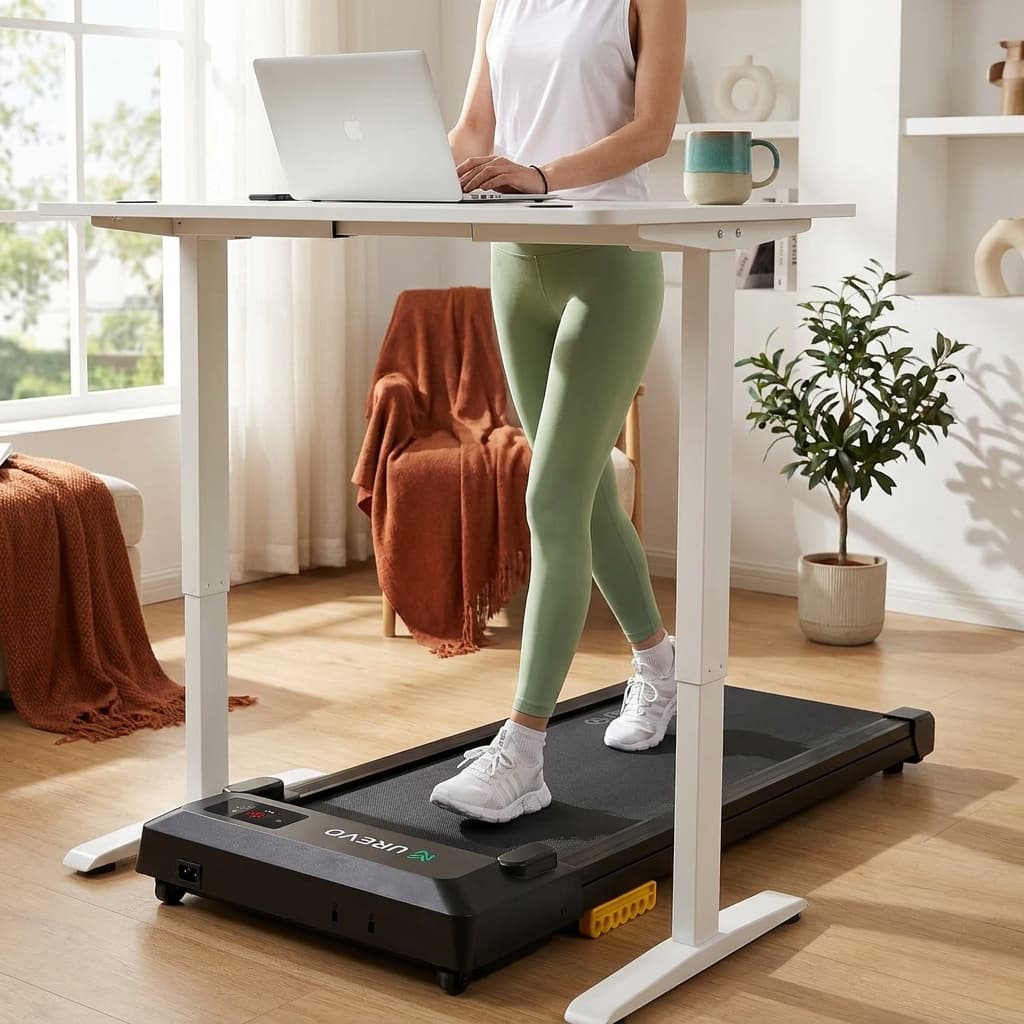
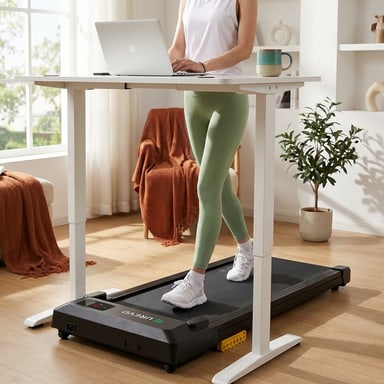
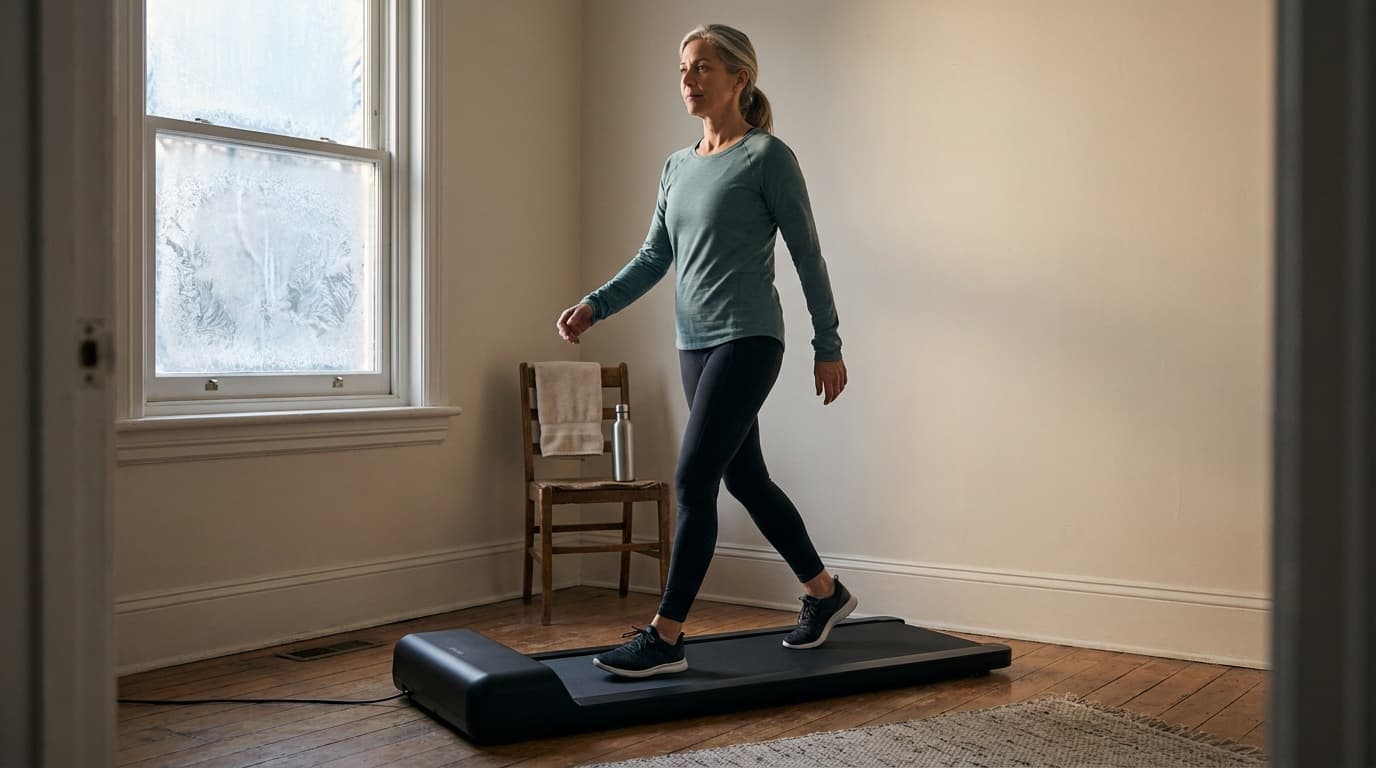
A walking pad earns its space when you spend long stretches at a desk or on the couch at home. It turns sitting time into slow walking time, which is where most of the steps come from, not a single hard workout. If you mostly need 30 minutes a day and have a hallway, you probably do not need one. Our guide to whether walking pads are worth it covers that decision in more detail, and the walking pad fit checker sizes the deck to your height and desk.
LOW-COST FLAT PAD
UREVO Smart Walking Pad
Kit Score 8.0/10 · Check current price
Buy on AmazonBest for: Work-from-home walkers who want reliable daily-use performance and app tracking without paying a premium brand markup.
- 2.5 HP motor and multi-layer shock absorption at a budget price point
- App-connected with MIIT workout modes and step tracking, remote included
- 35.43-inch belt is much shorter than the WalkingPad C2's 47.2 inches, which may feel limiting for taller users or long strides
The UREVO Smart Walking Pad covers the speeds this plan uses. Its Amazon listing gives 0.6 to 4 mph, a 2.5 HP motor, a 265 lb user limit, a 35.43 by 15 inch belt, and a 4.1 inch profile, so it slides under a couch or bed. It has no incline and does not fold, so it needs a flat spot to live. Read the full UREVO Smart Walking Pad review for the tradeoffs.
FOLDING HANDLEBAR + INCLINE
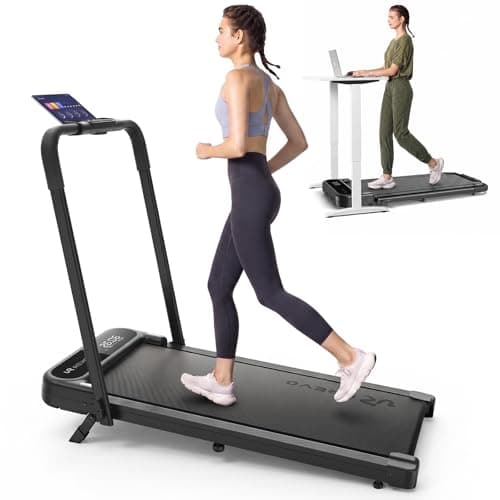
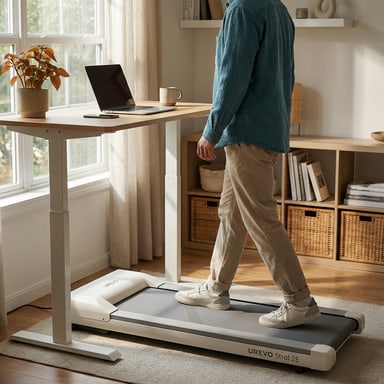
UREVO Strol 2E Pro Walking Pad Treadmill
Kit Score 7.9/10 · Check current price
Buy on AmazonBest for: Home-office walkers who want incline, a 300 lb capacity and the option to jog, from one pad near $200.
- Only pad near $200 that combines a 12% incline, a 300 lb listed user limit and a 6.2 mph top speed
- 4.2 inches tall with the handlebar down and 44 lb with transport wheels, so it fits under most standing desks and rolls under a sofa
- 4.0-star Amazon average across 2,170 ratings, with motor longevity under running use the recurring complaint
The UREVO Strol 2E Pro suits people who want a little more than desk walking. UREVO lists 0.6 to 4.0 mph with the handlebar down and up to 6.2 mph with it raised, up to 12% incline, a 300 lb user limit, and a 36.2 by 15.2 inch running surface. The incline is set with flip-down support legs rather than a button, so it is a setting you choose before a session, not mid-walk. The Strol 2E Pro review covers the details, and the best walking pads roundup compares it with the WalkingPad C2, which folds in half for closet storage.
A sample indoor day
This is an example of how the pieces fit together on a day you cannot get outside. The step estimates use the cadence table above and will vary from person to person.
| When | What | Rough steps |
|---|---|---|
| Morning | 10-minute walk before work, hallway or pad | 1,000 |
| After each meal | Three 10-minute easy walks | 3,000 |
| Workday | Two 30-minute calls on your feet | 5,000 to 6,000 |
| Evening | 10 minutes of laps during TV | 1,000 |
| All day | Normal moving around the house | varies |
That adds up to roughly 10,000 steps before counting ordinary household moving. On lighter days, drop the calls and you are still near 5,000 from planned walking alone.
Track it so it counts
A step count keeps indoor walking honest, because short bouts are easy to forget. Your phone works if it is in your pocket, but phones left on a desk miss every lap. A wrist tracker is the simpler habit.
SIMPLE STEP TRACKER
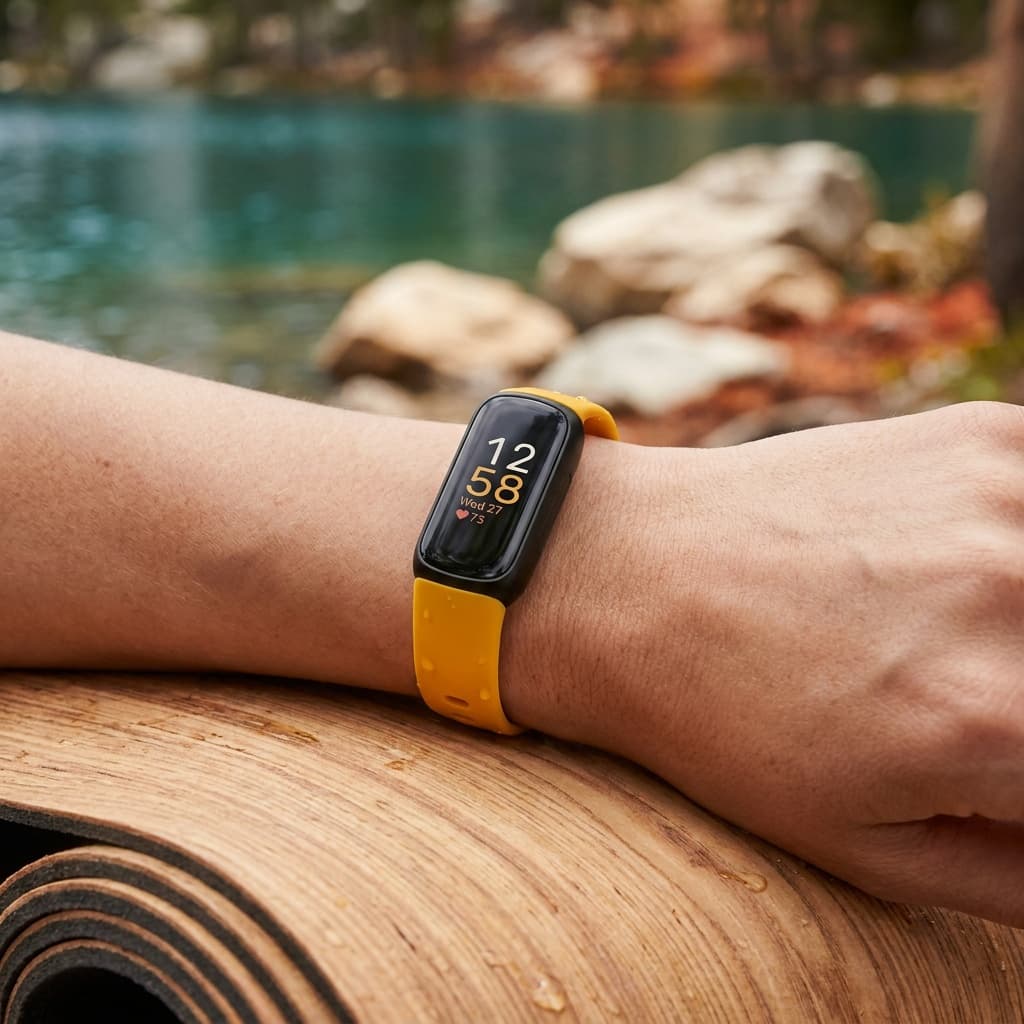
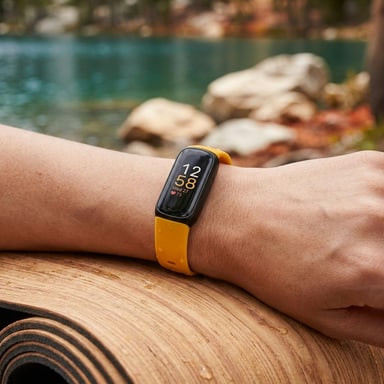
Fitbit Inspire 3
Kit Score 8.0/10 · Check current price
Buy on AmazonBest for: Daily walkers who want a slim, accurate, set-and-forget band and already carry a phone on most walks.
- Excellent step accuracy relative to price
- Among the lightest trackers in its class at 17.69 g
- No onboard GPS: route maps require carrying a phone
The Fitbit Inspire 3 is a light band that tracks steps all day. Its Amazon listing lists all-day activity tracking, 24/7 heart rate, Active Zone Minutes, 40+ exercise modes, and reminders to move, and it works with iOS 16.4 or later and Android 11 or later. Wrist trackers are not perfect counters: our guide to how accurate fitness tracker step counts are explains when they undercount, including slow walking. For more options, see the best fitness trackers for walking.
Where these numbers come from
| Claim | Source | Checked |
|---|---|---|
| Treadmill cadence by speed (68 steps/min at 1.0 mph, 84 at 1.5, 96 at 2.0, 106 at 2.5, 114 at 3.0, 122 at 3.5); about 100 steps/min marks moderate intensity; 76 adults aged 21 to 40 | Tudor-Locke et al., Int J Behav Nutr Phys Act 2019 | Sep 2026 |
| 15 cohorts, nearly 50,000 adults; mortality benefit leveled off at about 6,000 to 8,000 steps (60+) and 8,000 to 10,000 (under 60) | Paluch et al., The Lancet Public Health 2022, summarized by ScienceDaily | Sep 2026 |
| 150 minutes a week of moderate activity; activity can be broken into smaller chunks | CDC, adult activity recommendations | Sep 2026 |
| 2nd edition guidelines removed the 10-minute bout requirement | ODPHP, top 10 things to know about the Physical Activity Guidelines | Sep 2026 |
| Seven one-day lab trials; light walking breaks lowered after-meal glucose and insulin versus sitting, and more than standing breaks | Buffey et al., Sports Medicine 2022 | Sep 2026 |
| Stair climbing, slow pace: 4.5 METs; walking 2.5 mph, level: 3.0 METs | Compendium of Physical Activities, walking | Sep 2026 |
| Level surface, 2 to 3 ft clearance, dedicated wall outlet, surge protector, no extension cords | MERACH, treadmill maintenance tips | Sep 2026 |
| Mall walking benefits: climate control, security, level surfaces | Mall Walking: A Program Resource Guide (CDC library) | Sep 2026 |
| UREVO Smart Walking Pad: 0.6 to 4 mph, 2.5 HP, 265 lb, 35.43 x 15 in belt, 4.1 in profile | Amazon listing, ASIN B097BKS6Z9, read through the Amazon Creators API | Sep 2026 |
| UREVO Strol 2E Pro: 0.6 to 4.0 mph walking mode, 0.6 to 6.2 mph running mode, up to 12% incline, 300 lb, 36.2 x 15.2 in surface | UREVO, Strol 2E Pro product page | Sep 2026 |
| Strol 2E Pro incline set with flip-down front support legs | UREVO Strol 2E Pro user manual (PDF) | Sep 2026 |
| Fitbit Inspire 3: all-day activity tracking, 24/7 heart rate, 40+ exercise modes, iOS 16.4+ and Android 11+ | Amazon listing, ASIN B0B5F9SZW7, read through the Amazon Creators API | Sep 2026 |
Step estimates in the tables are Kit Authority's arithmetic from the published cadence averages, not measurements. We have not used these walking pads or trackers ourselves; specs are the makers' and retailers' published figures.
Frequently asked questions
How many steps is 30 minutes of walking at home?
About 2,900 to 3,200 steps at an easy 2.0 to 2.5 mph pace, based on average cadence in a treadmill study of adults aged 21 to 40. Slower walking, such as 1.5 mph at a desk, is closer to 2,500 steps in 30 minutes. Stride length changes the count, so check your own tracker once.
Does walking around the house count as exercise?
Yes. The U.S. guidelines count any moderate activity toward the 150-minute weekly goal, and the 2nd edition removed the rule that it had to come in bouts of 10 minutes or more. To make it count as moderate intensity, pick up the pace for part of it; about 100 steps a minute is a useful marker.
Is walking in place as good as walking around?
It keeps you moving, which is the main goal on a day stuck inside, but it is harder to keep up for long and trackers vary in how well they count it. Laps through the house or a walking pad make it easier to reach longer durations. If you rely on walking in place, count 100 steps yourself once and compare with your tracker.
Do I need a walking pad to get 10,000 steps at home?
No. Calls on your feet, walks after meals, and short laps can reach 8,000 to 10,000 on a free day. A walking pad helps most when you sit at a home desk for hours and want to turn some of that time into slow walking. See are walking pads worth it before you buy.
How many steps a day should I aim for in winter?
A reasonable target is 7,000 to 9,000, since the mortality benefit in the largest step-count analysis leveled off at 8,000 to 10,000 for adults under 60 and 6,000 to 8,000 for adults 60 and older. If you are starting far below that, add 1,000 steps a day each week rather than jumping straight to the target.
Next steps: build a week-by-week routine with the beginner walking plan builder, compare the best walking pads and best under-desk walking pads, or learn how to use a walking pad while working. Our research approach explains how we source the numbers on this page.
Keep going
Related buying guideBest walking pads 2026: budget, incline, and heavy-duty picksFree tool: Beginner Walking PlanRelated guides
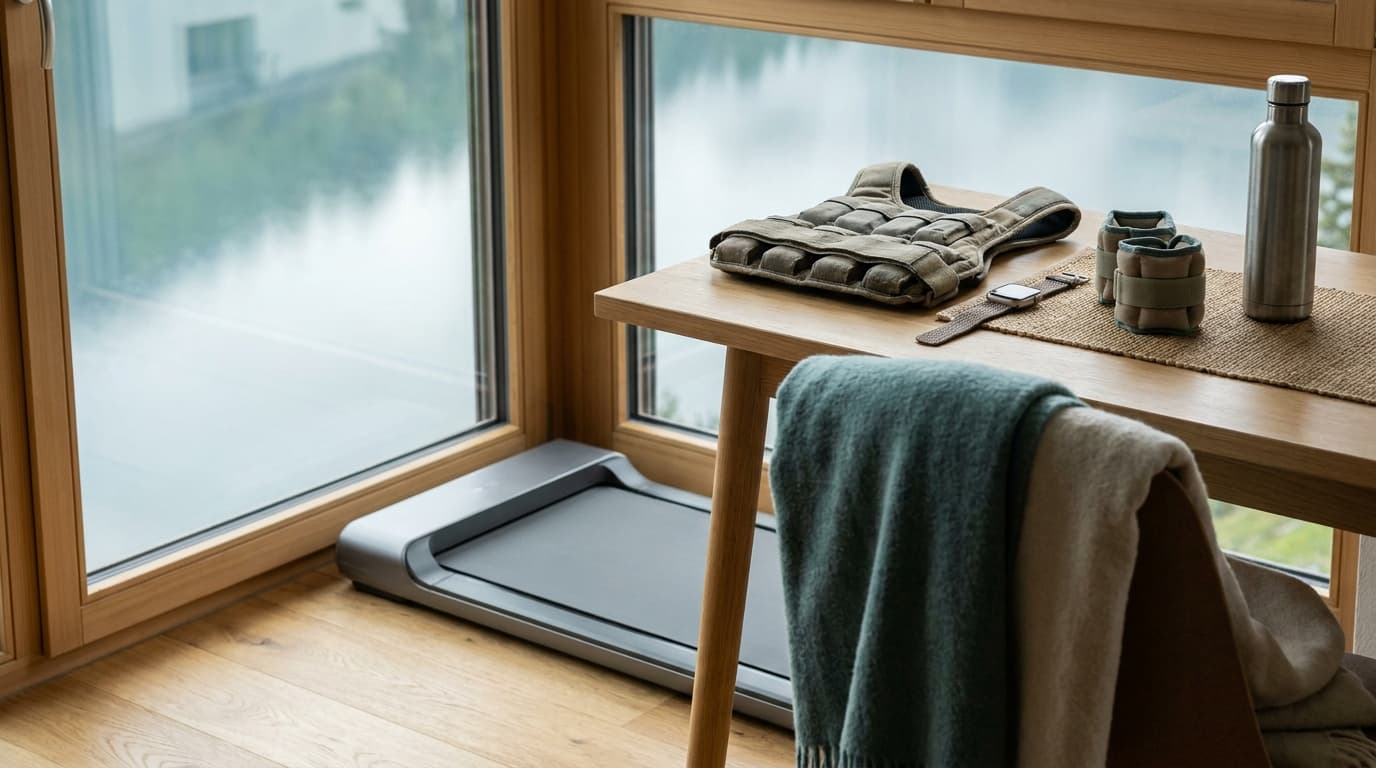
 Complete fitness loadoutWeighted-vest starter kitBuild the complete kit
Our recommendations draw on manufacturer documentation, retailer listings, owner feedback, and comparisons with alternatives.
As an Amazon Associate I earn from qualifying purchases. We may earn a commission from links here, at no extra cost to you. How we research →