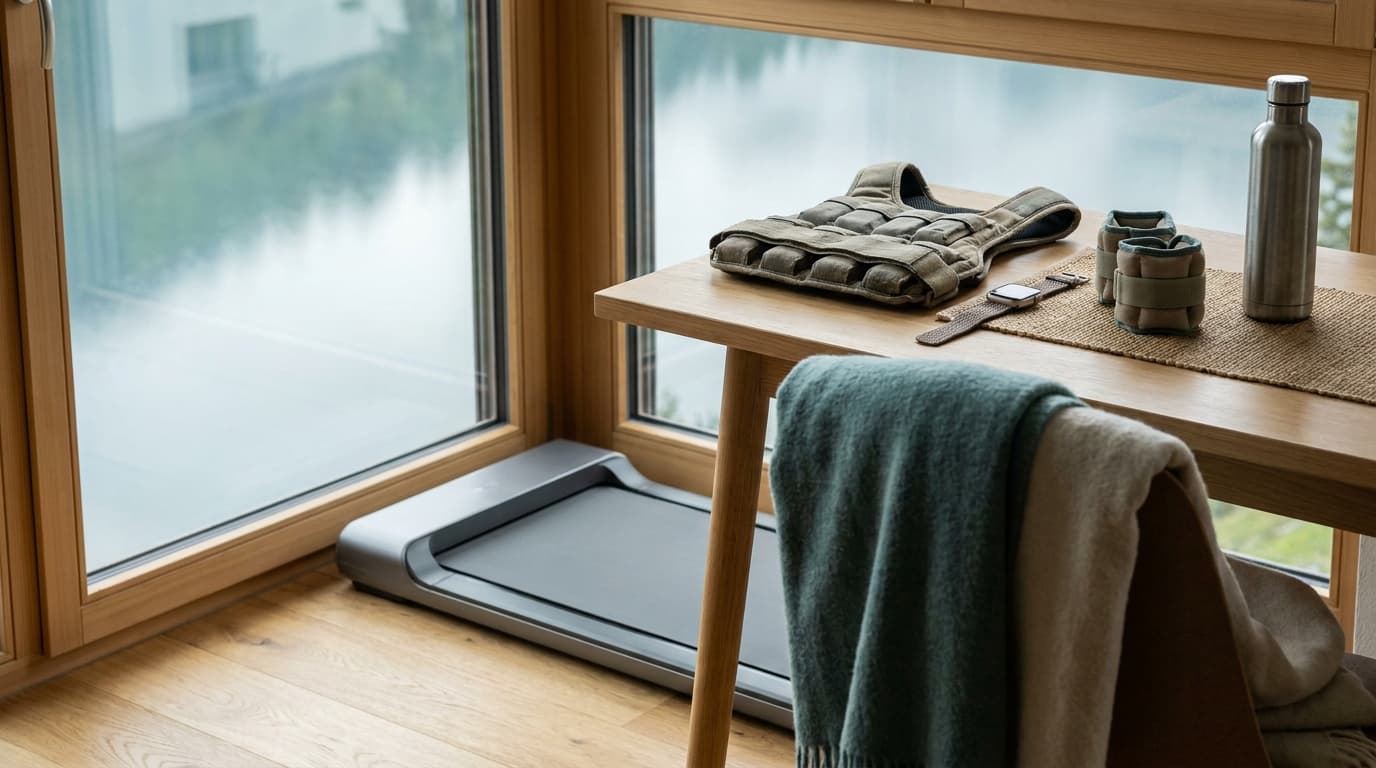
If you are choosing between a walking pad and a full treadmill, the decision comes down to one honest question: do you plan to run, or are you building consistent daily movement?
Walking pad vs treadmill at a glance
| Walking pad | Full treadmill | |
|---|---|---|
| Top speed | 3.5–4 mph (a few reach 6) | 10–12 mph |
| Running support | No: short belt, thin deck, no rails | Yes: cushioned deck, handrails |
| Powered incline | Rare (the MERACH W50 is an exception) | Standard from about $600 up |
| Footprint | 50–55" x 20", under 5" tall, slides under furniture | 60" x 28" and up, needs dedicated space |
| Weight | 37–75 lbs, easy to move | 200–300 lbs |
| Noise | Quiet enough for calls at walking speeds | Louder, especially at running pace |
| Typical price | $150–$600 | $600–$2,000+ |
| Best for | Desk steps, small spaces, renters | Running, incline training, heart-rate work |
Speed range and running capability
This is the sharpest dividing line. Most walking pads top out at 3.5 to 4 mph. That is a brisk walk, and for desk use it is plenty. A handful of premium models push to 6 mph, which covers a slow jog, but the narrow belt and lower-power motor are not engineered for sustained running at that speed.
Full treadmills typically run from 0.5 mph up to 10–12 mph. A 12 mph top speed covers sprints well above what most home users ever need. More practically, the belt length (usually 55–60 inches), the deck cushioning, and the motor are all sized for the impact load of running. Walking pads simply are not.
If you run even occasionally, buy the treadmill. There is no workaround.
Incline: a bigger gap than most people expect
Virtually no walking pads offer powered incline; the MERACH W50, with its 12% auto incline, is a rare exception. A few others allow manual incline adjustment at a fixed angle before you start, but you cannot change it mid-session. Full treadmills in the $600 and up range routinely offer 0–12% powered incline, and incline-focused models like the NordicTrack X series push to 40%.
Incline matters more than speed for calorie burn and lower-body strength work. A 3 mph walk at 10% incline elevates heart rate and glute activation well beyond a flat 5 mph jog. If weight loss or leg strength is your goal, a treadmill with incline is the more capable tool, and it pairs well with a weighted pack: Ruck Authority's 4-week indoor treadmill rucking program is built around exactly that combination.
A brisk walk at a real incline trains your cardiovascular system and lower body harder than a flat jog at the same effort level.
Footprint, storage, and the under-desk use case
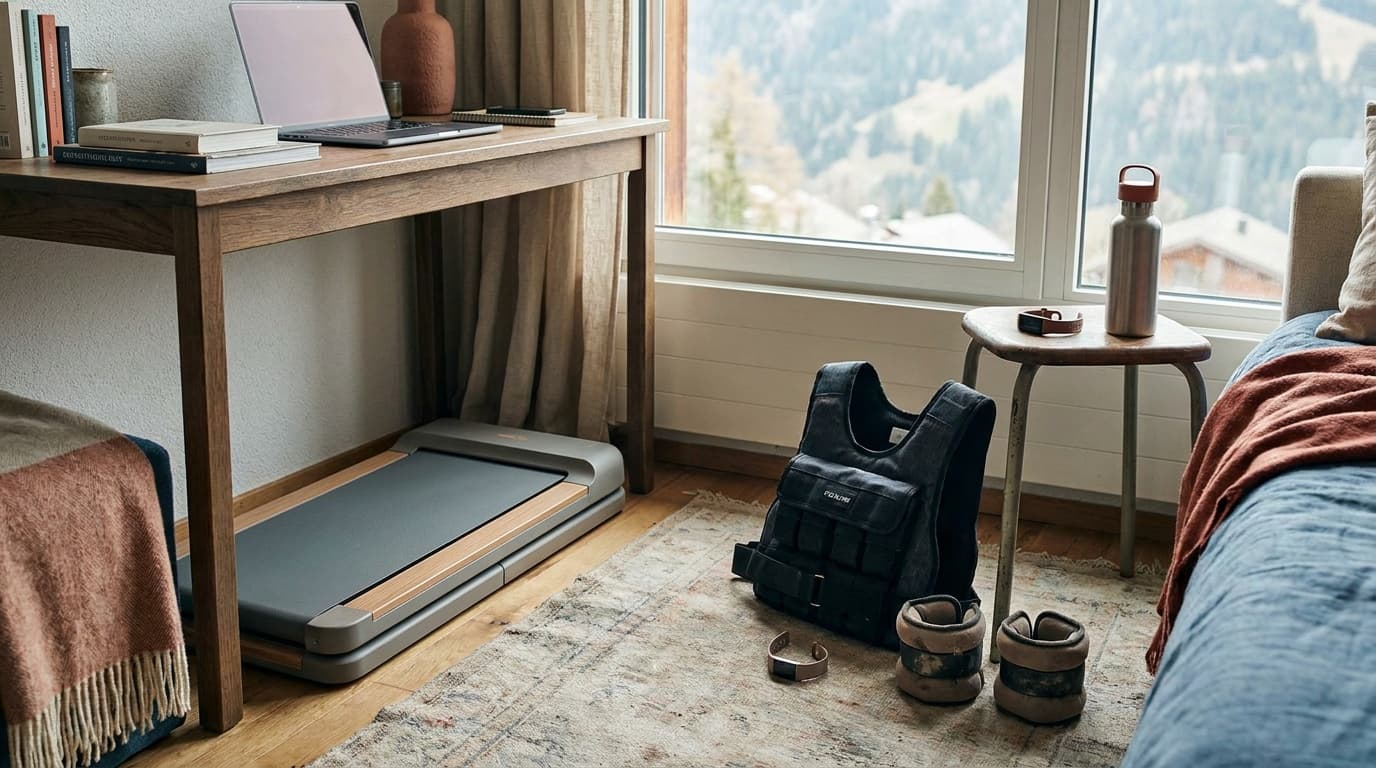
This is where walking pads are genuinely excellent. A typical walking pad is 50–55 inches long, 20 inches wide, and less than 5 inches tall when stored flat. It slides under a sofa, a standing desk, or a bed frame. Most weigh 55–75 lbs and include transport wheels.
A full treadmill footprint starts around 60 x 28 inches and only folds vertically, which still requires roughly 3 feet of clear wall space. Weight commonly runs 200–300 lbs.
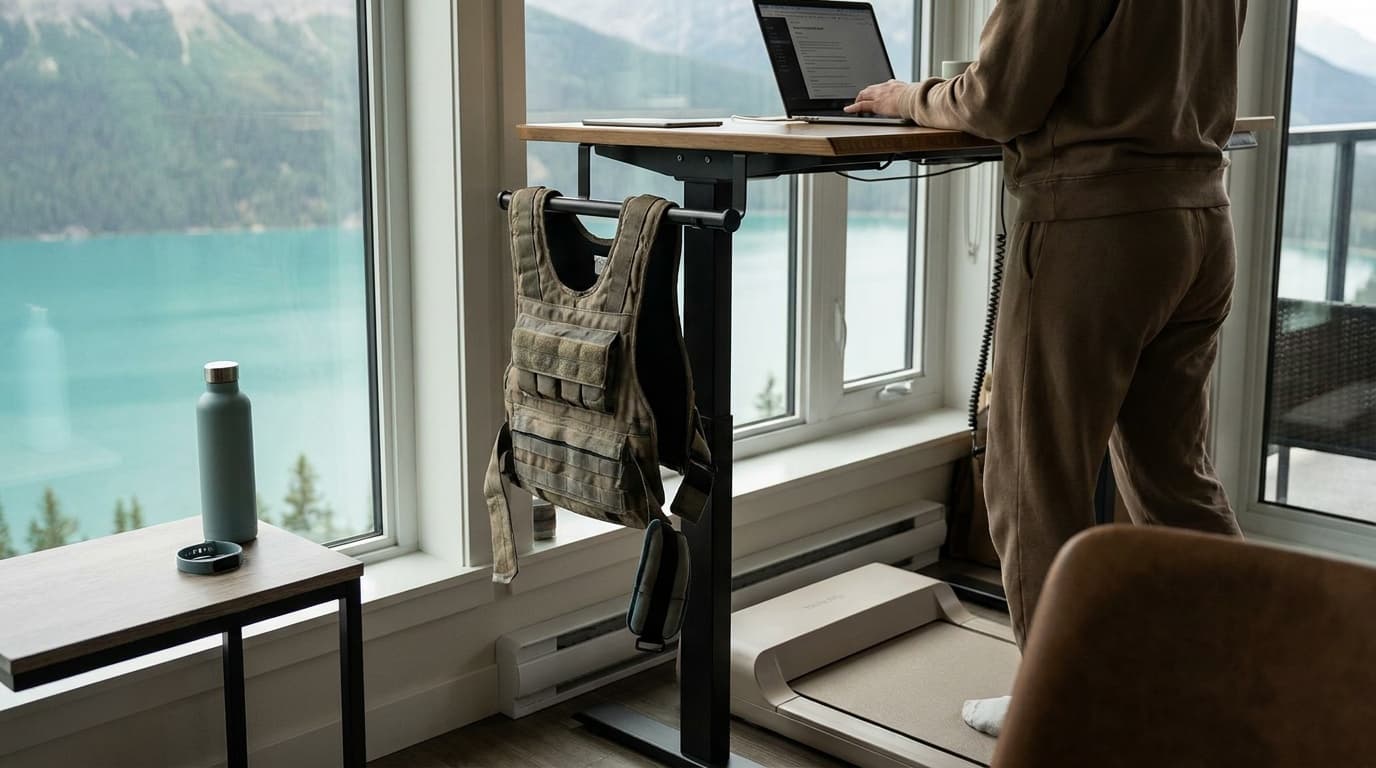
For under-desk walking, the walking pad's form factor is the product. You can pair it with a sit-stand desk, walk at 1.5–2.5 mph during calls or reading, and roll it out of the way when you are done. Treadmills are not physically compatible with this use case.
Choosing by your actual space
Small apartment, no dedicated room
Walking pad. Slides out of sight, no assembly, minimal footprint.
Dedicated workout corner or garage
Full treadmill. Use permanent placement and it pays off fast.
Home office with a sit-stand desk
Walking pad specifically. It is built for exactly this.
Mixed cardio plus strength room
Treadmill. You already have the space; get the full capability.
Temporary or renter situation
Walking pad. Lower weight, easier to move, lower financial risk.
Motor, deck cushioning, and long-session comfort
Treadmill motors are rated for continuous duty, typically 2.5–4.0 CHP (continuous horsepower). Walking pad motors are often rated in peak horsepower, which is a less reliable number. A 2.0 HP peak motor in a walking pad is more like 0.8–1.0 CHP continuous. Fine for walking; not fine for running or sessions over 45 minutes at pace.
Deck cushioning follows the same pattern. Treadmills at $700 and above use multi-layer decks with elastomer cushioning that absorbs a meaningful portion of impact. Running puts 2.5–3x body weight through your joints per stride; this matters. Walking pads use thinner decks suited to walking loads. For long daily walking sessions the difference is minor. For running it is significant.
Price and the honest value calculation
Walking pads from reputable brands, like the WalkingPad C2, run $300–$600. A solid entry-level treadmill starts around $600–$700 (NordicTrack T Series, Sole F63) and climbs to $1,500 and beyond for incline trainers or commercial-grade machines.
The value question is not which is cheaper but which capability you will actually use. A $400 walking pad that gets used daily for desk steps delivers better ROI than a $1,200 treadmill that becomes expensive furniture. Conversely, if running is your primary cardio and you compromise to a walking pad, you will either stop using it or buy the treadmill anyway.
Be honest with yourself before you buy.
Frequently asked questions
Can I jog on a walking pad?
Briefly and occasionally, yes. But walking pads are not engineered for sustained jogging. The belt length is shorter than your natural running stride, the motor is not rated for continuous running loads, and the deck offers less impact cushioning. For regular jogging or running, a full treadmill is the right tool.
Are walking pads actually useful for fitness or just a gimmick?
They are genuinely useful for one specific goal: adding low-intensity movement to a sedentary desk day. Research consistently shows that breaking up sitting with light walking improves metabolic markers and energy levels. A walking pad at 1.5–2 mph for 2–3 hours of desk work adds meaningful daily steps. That is a real fitness benefit, not a gimmick. It does not replace structured cardio.
What motor size do I need in a treadmill for running?
Look for at least 3.0 CHP (continuous horsepower) for regular running and at least 3.5 CHP if you are heavier than 200 lbs or plan to do interval training. Peak horsepower ratings in marketing copy can be 2x the continuous rating, so always check for CHP specifically.
Is a walking pad worth it compared to a treadmill?
It depends entirely on the job. For adding steps during desk work in a home without spare floor space, a walking pad is worth it and a treadmill often is not: the pad costs a third as much, stores under furniture, and is built for exactly that use. For running, incline work, or structured cardio training, the treadmill is worth its price and the walking pad is a compromise you will outgrow. Our full breakdown of whether walking pads are worth it runs the value math in detail.
Can a walking pad replace a treadmill?
Only if your treadmill use is walking. A walking pad fully replaces a treadmill for daily steps, desk walking, and easy recovery movement. It cannot replace one for running, sustained sessions above 4 mph, or powered incline training, because the belt length, motor duty rating, deck cushioning, and missing handrails are all sized for walking loads. If your current treadmill sessions are jogs or hill programs, keep the treadmill.
Which is better for weight loss, a walking pad or a treadmill?
The treadmill has the higher ceiling, but the winner is whichever machine you use most hours per week. A treadmill's incline and speed range burn more calories per minute: a 3 mph walk at a 10 percent grade or an interval run outworks any flat 2 mph desk walk. But walking pad users often accumulate far more total minutes because the movement happens during work they were doing anyway, and two hours of slow walking a day adds up to a meaningful calorie total. For dedicated 30 to 45 minute workouts, choose the treadmill; for passive volume on a desk-bound schedule, the walking pad usually wins in practice.
For specific picks, see our guides to the best walking pads and the best under-desk walking pads, or work through the full walking pad buying guide spec by spec. Browse all fitness guides or read how we research and rate gear.
Recommended gear
Our current top picks from the Best walking pads 2026: budget, incline, and heavy-duty picks guide, if you are ready to buy.
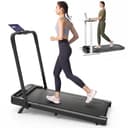
Best for: Desk walkers who also want manual incline and a raised-handlebar speed mode.
- URTM059 manual specifies a 265 lb / 120 kg maximum.
- The manual's 265 lb maximum differs from the 300 lb figure on UREVO's product page.
- Speed range
- 0.6–6.2 mph (walking mode 0.6–4 mph)
- Max incline
- 12% (manual, flip-down front legs)
- Weight capacity
- 265 lb / 120 kg maximum per URTM059 manual; UREVO product page says 300 lb
- Running surface
- 36.2" x 15.2"
- Handlebar-down dimensions
- 44.9" L x 21.9" W x 4.2" H
- Unit weight
- 43.4 to 43.6 lb per UREVO; 44 lb per the linked Amazon listing
About this pick
The UREVO Strol 2E Pro listing is crosswalked to model URTM059. Its manual sets a 265 lb / 120 kg maximum, while UREVO's product page lists 300 lb; use the manual limit. UREVO lists a 12% incline and the manual describes a support-leg setup. Walking mode is listed to 4 mph with the handlebar down and up to 6.2 mph with it raised. The linked listing gives handlebar-down dimensions of 44.9 x 21.9 x 4.2 inches; the belt is listed at 36.2 x 15.2 inches.
More specifications
- Motor
- 2.25 HP
Strengths
- URTM059 manual specifies a 265 lb / 120 kg maximum.
- UREVO lists a 12% incline and separate handlebar-down walking and handlebar-up speed modes.
- The linked listing provides handlebar-down dimensions for clearance checks.
Weaknesses
- The manual's 265 lb maximum differs from the 300 lb figure on UREVO's product page.
- The manual describes a manual support-leg incline setup; no noise figure is established here.
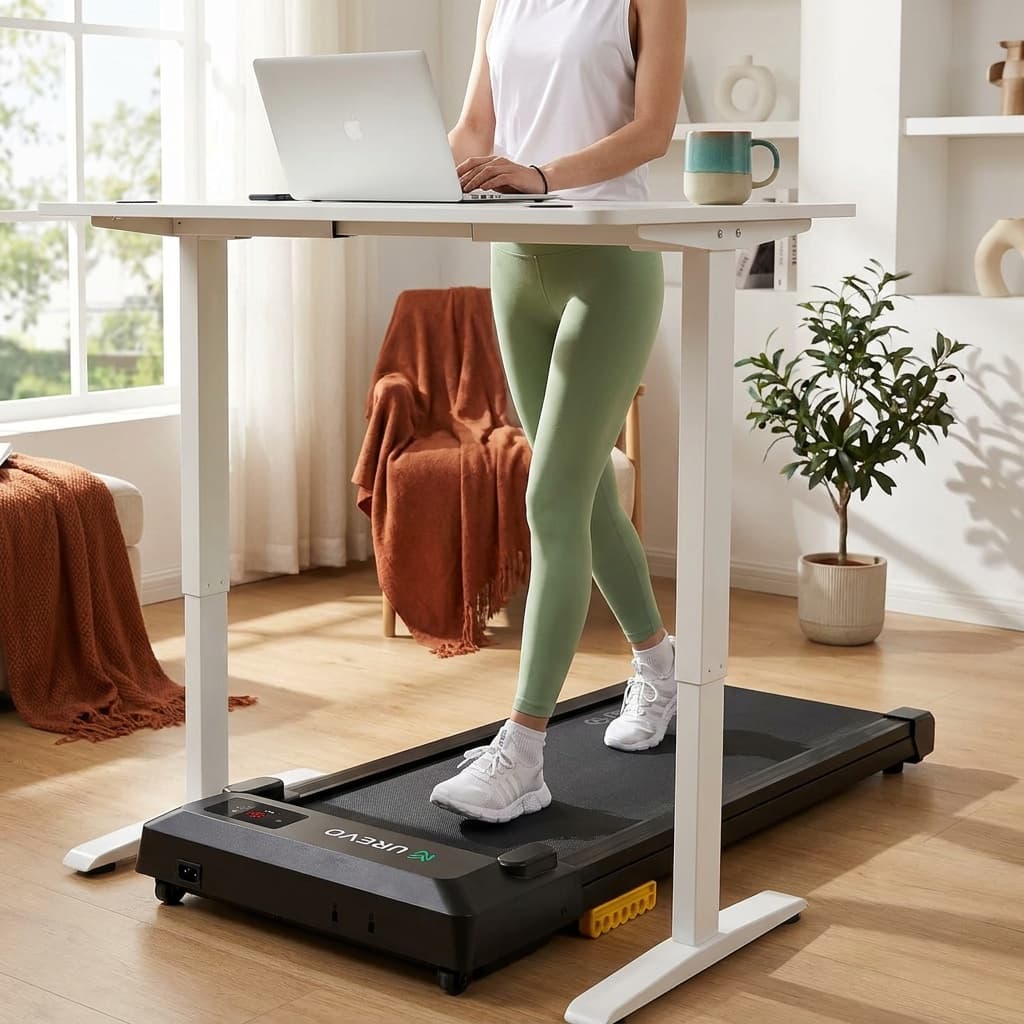
Best for: People seeking listed flat-walking, remote and app features for desk use.
- The exact listing identifies model URTM025 / part URTM057 and gives a 42 x 19 inch footprint.
- The exact listing's 265 lb capacity has not been verified against a manual.
- Speed range
- 0.6 – 4.0 mph
- Motor
- 2.5 HP
- Weight capacity
- 265 lb per exact-ASIN listing; operating limit not confirmed from a reviewed manual
- Belt size
- 35.43" x 15"
- Machine weight
- 39.68 lb per exact-ASIN listing
- Footprint
- 42 x 19 x 4 in per exact-ASIN item dimensions; listing copy separately claims 4.1-inch profile
About this pick
The linked Amazon listing identifies this Smart Walking Pad as UREVO model URTM025 / part URTM057. Listing dimensions are 42 x 19 x 4 inches, while separate listing copy calls the profile 4.1 inches; use 4.1 inches for preliminary clearance planning. The listing specifies a 35.43 x 15 inch belt, up to 4 mph, remote/app features and a 265 lb capacity claim. That capacity has not been confirmed against a reviewed manual. The listing does not establish upright-storage permission.
Strengths
- The exact listing identifies model URTM025 / part URTM057 and gives a 42 x 19 inch footprint.
- Remote and app features are listed for this exact item.
Weaknesses
- The exact listing's 265 lb capacity has not been verified against a manual.
- Listing dimensions state 4 inches high, while listing copy separately claims 4.1 inches.
- Upright-storage permission is unconfirmed.
GOPLUS
Goplus 2-in-1 Folding Under Desk Treadmill (SuperFit)
BEST BUDGET 2-IN-1
Kit Score 7.2/10
$113.99 Price checked Oct 23, 4:16 PM CDT
Best for: First-time buyers on a tight budget who want to walk at a desk and jog occasionally, and who accept a short warranty.
- The lowest price of any pad Kit covers, with a jogging mode to about 7.5 mph when the handrail is up
- Walking mode under a desk tops out near 2.5 mph, so brisk walks need the handrail raised
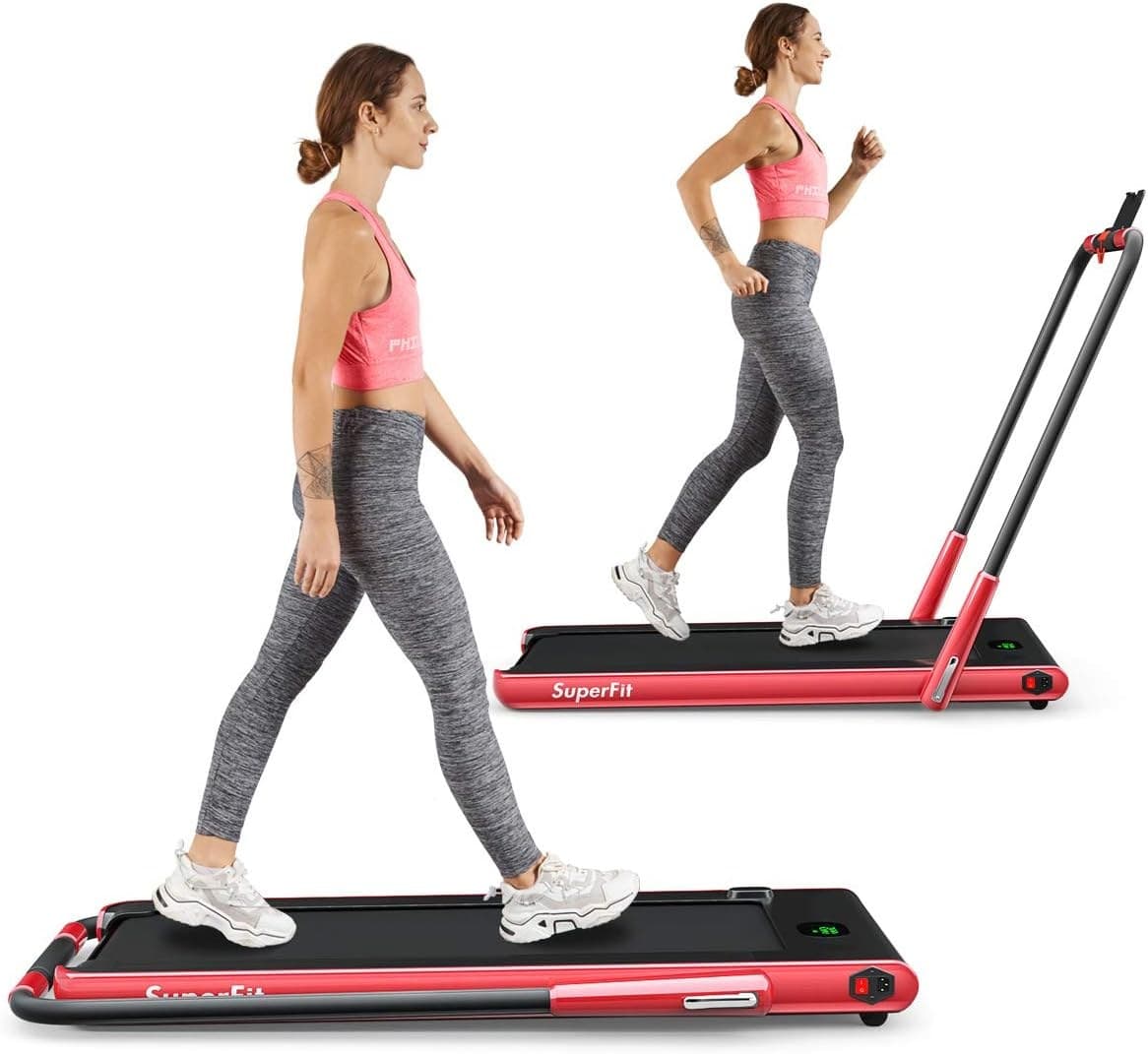
- Walking mode (handrail folded)
- 1–4 km/h (about 0.6–2.5 mph)
- Running mode (handrail up)
- 1–12 km/h (about 0.6–7.5 mph)
- Running area
- 40" x 16"
- Weight capacity
- 265 lb
- Folded size
- 52" x 27" x 5"
- Unit weight
- 69.5 lb
About this pick
The Goplus 2-in-1 (sold under the SuperFit name) is the budget way to get both a desk pad and an easy jogger. With the handrail folded flat it runs at 1 to 4 km/h, about 0.6 to 2.5 mph, for under-desk walking; with the handrail raised it reaches 12 km/h, about 7.5 mph. The running area is 40 by 16 inches, the user limit is 265 lb, and folded it measures 52 by 27 by 5 inches and weighs 69.5 lb. Every figure here is from the Amazon listing, which also states a 3-month warranty.
More specifications
- Motor
- 2.25 HP
- Warranty
- 3 months (Amazon listing)
Strengths
- The lowest price of any pad Kit covers, with a jogging mode to about 7.5 mph when the handrail is up
- 40 by 16 inch running area and a 265 lb rating, roomy for the money
- Remote, app control, Bluetooth speaker and phone holder included
Weaknesses
- Walking mode under a desk tops out near 2.5 mph, so brisk walks need the handrail raised
- 3-month warranty on the listing and mixed owner reports on noise and early failures
Kit Score breakdown
See all picks in Best walking pads 2026: budget, incline, and heavy-duty picks
Keep going
Free toolWalking Pad Fit CheckerWhich walking pad fits your height, weight, desk, and floor space.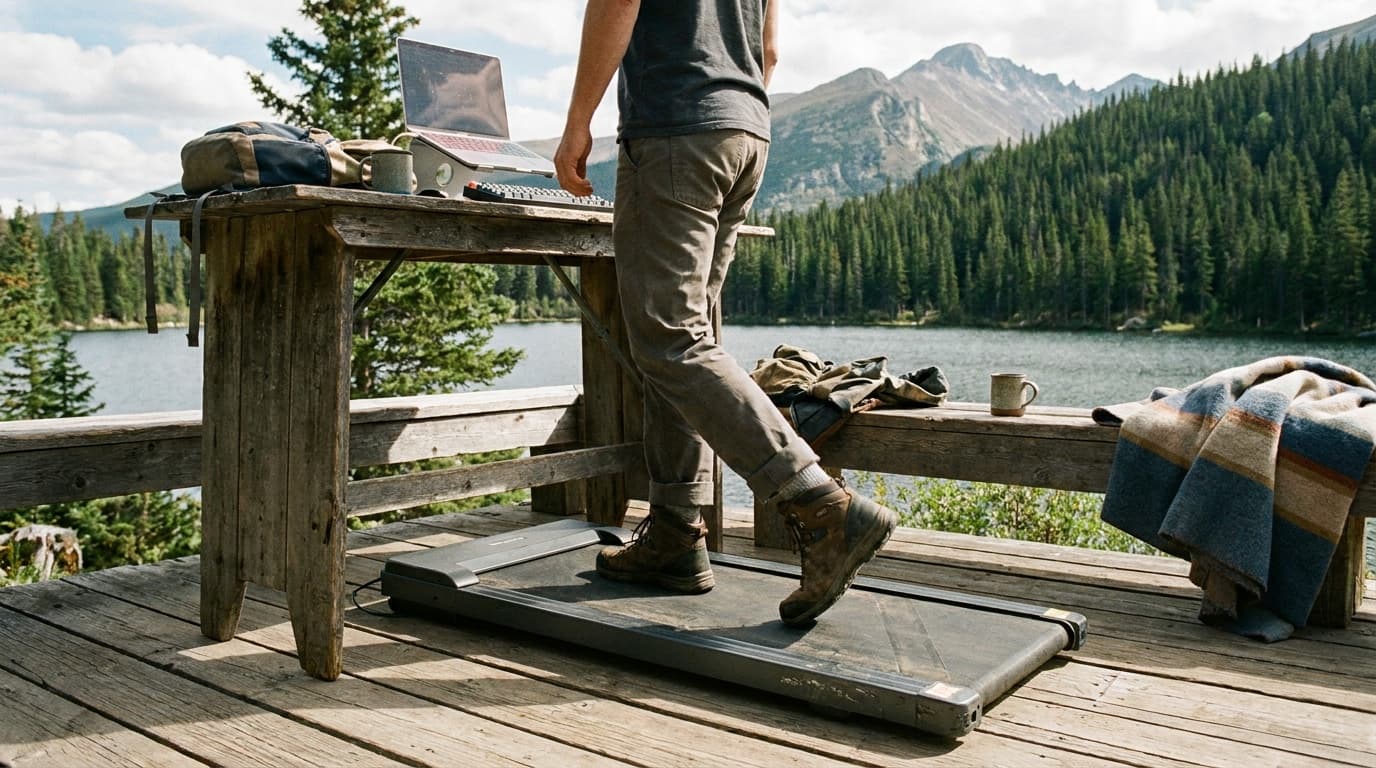
Researched, not hands-on tested
Updated Jul 7, 2026Our recommendations draw on manufacturer documentation, retailer listings, owner feedback, and comparisons with alternatives.
As an Amazon Associate I earn from qualifying purchases. We may earn a commission from links here, at no extra cost to you. How we research →