We may earn a commission from links on this page, at no extra cost to you.
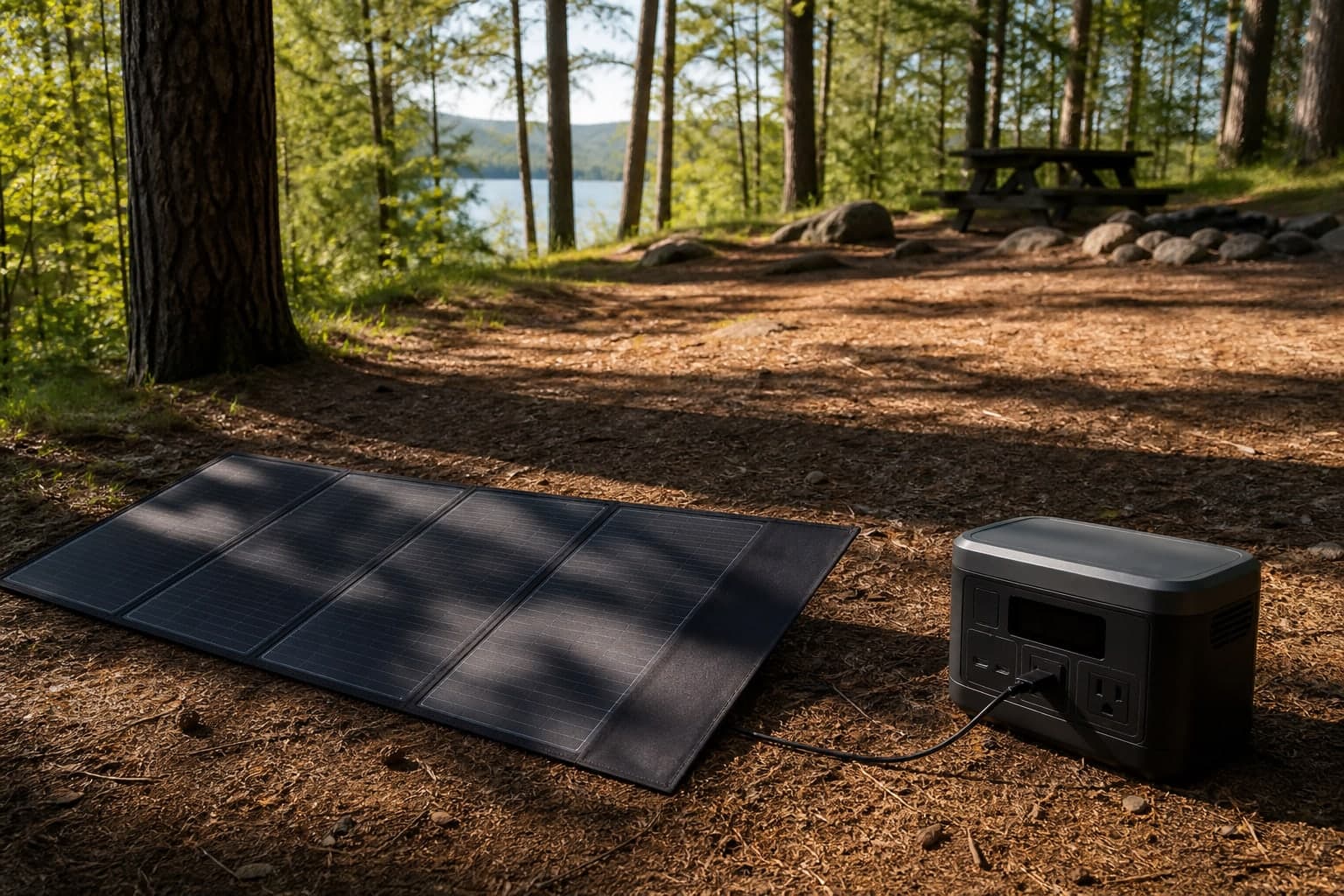
When a portable power station shows zero solar input, the panel is not automatically defective. Partial shade, a poor angle, a loose connector, a nearly full battery, or a panel that does not match the station's input range can all produce the same symptom.
The safest approach is to simplify the setup, improve the sunlight, and change one variable at a time.
The five-minute field check
Work from the simplest cause to the most technical
Move into full sun
A narrow branch shadow across one panel section can cut output far more than its size suggests.
Aim the panel
Face the panel squarely toward the sun instead of leaving it flat by default.
Read the display
Note battery percentage, incoming watts, warning icons, and whether the input changes when the panel moves.
Reseat one cable
Inspect both ends, then reconnect the shortest manufacturer-approved cable without a stack of adapters.
Check compatibility
Compare the panel label with the solar-input limits in the manual for the exact power-station model.
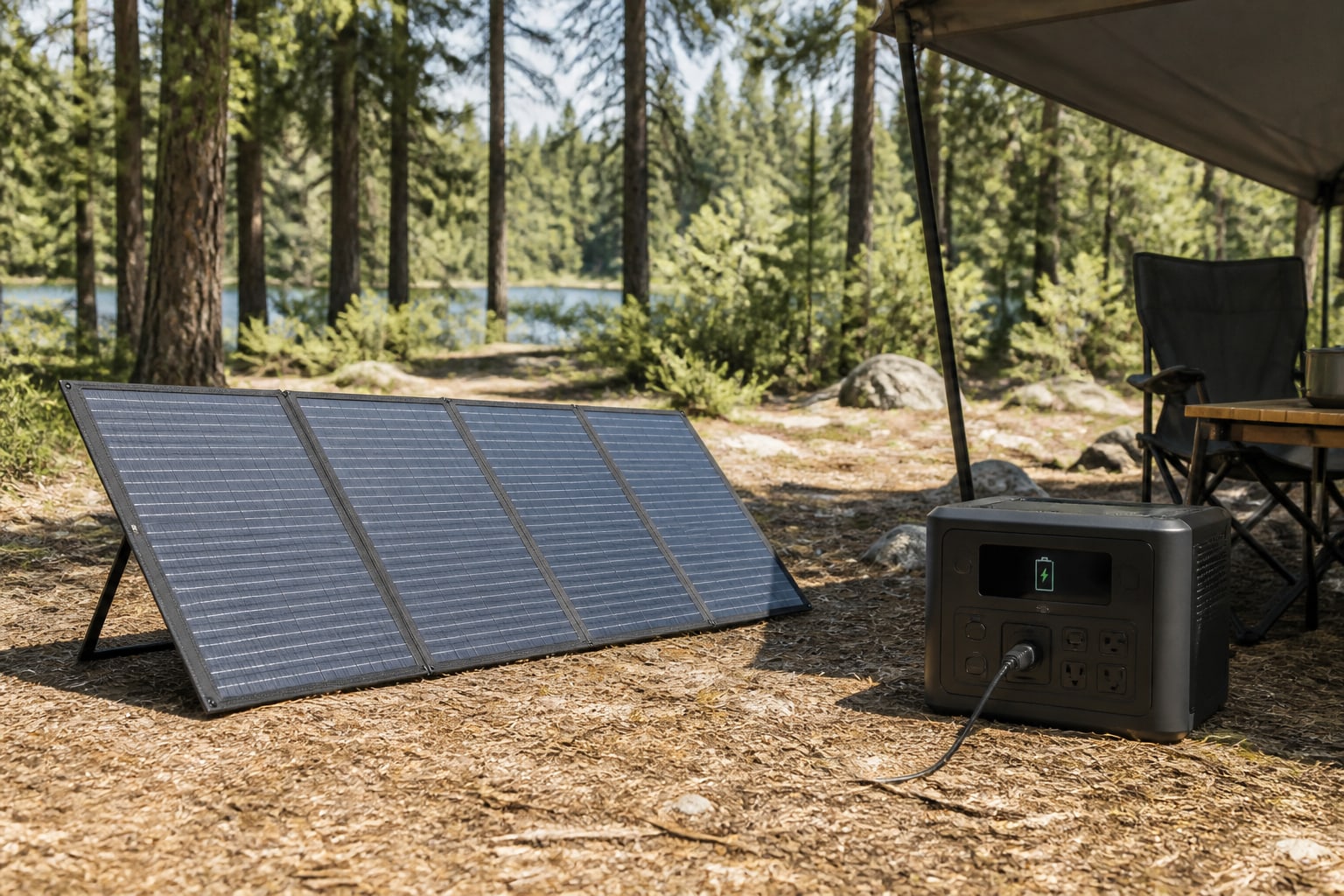
Corrected setup: full sun on every panel section, a clean face, one compatible cable fully seated, and the power station kept dry and ventilated.
Start with sunlight, not settings
Portable panels are rated under controlled conditions. At camp, haze, low sun, heat, dirt, panel angle, and shade all reduce real output. A panel can look sunny while a tree branch casts a thin shadow across one section.
Move the entire panel into open sun. Wipe away dust with the cleaning method recommended by the manufacturer, unfold every section, and point the face more directly toward the sun. Watch the input display for a minute before making another change; some stations do not update instantly.
If input rises when you rotate or tilt the panel, the system is working. The original position was the problem.
Read what the station is telling you
Zero watts, low watts, and intermittent charging are different clues.
- Zero watts with no charging icon: suspect shade, a disconnected cable, the wrong input port, or incompatible electrical limits.
- Input appears and disappears: inspect connectors, moving shadows, cable strain, heat, and any warning symbol on the display.
- Low but steady input: improve angle and sun, clean the panel, and remember that real output is normally below the printed maximum.
- Input drops near a full battery: charging may taper as the battery-management system protects the pack. This is normal on many stations.
Do not use the printed panel wattage as the only test. A 200-watt panel does not promise 200 watts in every campsite or at every battery level.
Simplify the cable path
Disconnect the panel only according to the manufacturer's procedure. Inspect the cable and connectors for bent pins, grit, moisture, looseness, cuts, discoloration, or melted plastic. Do not keep testing a connector that is hot or visibly damaged.
Use one cable that the station or panel maker lists as compatible. Adapter chains add more failure points, and two connectors that physically fit are not proof that the electrical configuration is safe.
Keep the power station out of rain and direct heat while the panel remains in the sun. Do not cover the station's cooling vents.
Match the panel to the exact station
The important numbers are on both products: the panel's open-circuit voltage and current, and the station's accepted solar-input voltage and current. Connector type and polarity also matter.
Never copy the limits from a similar-looking model. Product generations can use different solar controllers. Connecting panels in series raises voltage; connecting them in parallel raises current. Do not combine panels until the exact manual confirms that configuration stays within every limit.
Isolate the panel from the station
Once the basic checks pass, repeat the test in strong sun with a partly discharged station and one known-compatible panel. Do not improvise a multimeter test unless the manufacturer provides a procedure and you know how to perform it safely.
Wall charging can confirm that the station and battery still accept power, but it does not prove that the solar-input port is healthy. Likewise, a panel working with another station only helps if that second station accepts the same voltage, current, and connector.
If a clean, compatible panel in direct sun still produces no input, record the display, battery percentage, panel label, cable used, weather, and exact model numbers. That gives manufacturer support enough information to diagnose the solar controller, cable, or panel.
When replacement makes more sense
If your current panel is electrically incompatible, too small for your daily energy use, or difficult to keep in open sun, start with our guides to the best solar panels for camping and choosing a camping solar panel. If the station itself is undersized, compare the best portable power stations and calculate your needs with our capacity guide.
For compact loads, see the EcoFlow RIVER 2. For a larger campsite system, compare the Anker SOLIX C1000 and Jackery Explorer 1000 v2.
Can a shaded solar panel still charge a power station?
It may produce some power, but partial shade can reduce output sharply and can cause unstable charging. Diagnose the system in direct, unobstructed sun before deciding that hardware has failed.
Why does solar input fall when my power station is almost full?
Many stations reduce charging power near full capacity to protect the battery. Check the manual and repeat the test at a lower battery level before blaming the panel.
Can I connect any solar panel if the plug fits?
No. The panel's voltage, current, connector, polarity, and wiring configuration must all fall within the limits for the exact power-station model.
Keep going
Related buying guideBest portable power stations for camping in 2026Related guides
 Complete camp loadoutCamp kitchen kitBuild the complete kit
Researched, not hands-on tested
Updated Aug 19, 2026Our recommendations draw on manufacturer documentation, retailer listings, owner feedback, and comparisons with alternatives.
As an Amazon Associate I earn from qualifying purchases. We may earn a commission from links here, at no extra cost to you. How we research →
Related buying guide
Best portable power stations for camping in 2026