A portable solar panel turns a sunny afternoon into free electricity for your power station, phone, and lights. The difference between a frustrating panel and a useful one comes down to a handful of measurable things: real wattage output, port flexibility, and how well the kickstand and frame hold up after a few seasons.
Our quick picks
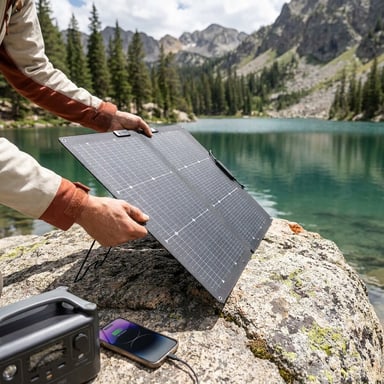
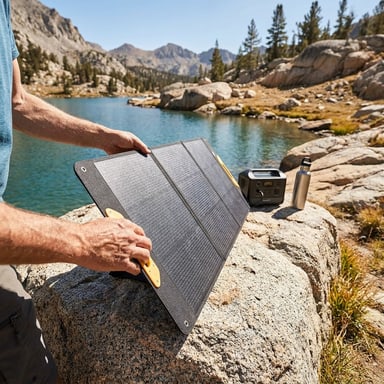
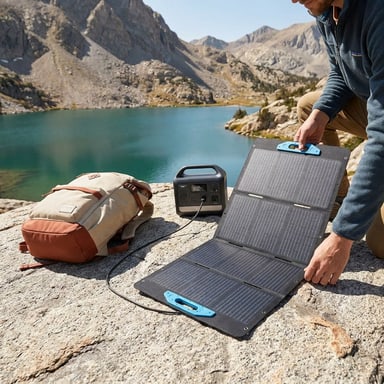
What actually matters in a portable solar panel
Wattage is the headline number, but it rarely tells the whole story. Cell efficiency, port types, and frame durability decide whether a panel earns its place in the kit.
How we picked
Every panel here was evaluated against the Kit Score: verified wattage and efficiency ratings, confirmed port types, aggregated owner reports on durability, and price-to-output value across current retail listings. We did not favor ecosystem lock-in over performance, but we do note compatibility clearly because it matters for real-world setup.
Best overall: EcoFlow 160W foldable solar panel
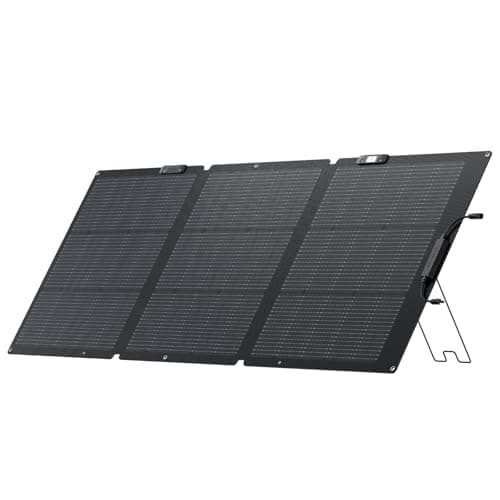
The EcoFlow 160W steps up in two ways: more watts and a build rated for real weather. Its IP68-waterproof junction box and reinforced corners address the weak points that cause cheaper panels to fail after a season of car camping and rooftop storage. At 160W with 22% cell efficiency, it charges an EcoFlow RIVER 2 (256Wh) from flat in about two hours of good sun. The kickstand is adjustable from 40 to 80 degrees, which matters more than most buyers expect when the sun is low. If you camp hard and want a panel you will not replace in two years, the EcoFlow 160W is worth the premium.
BEST OVERALL
EF EcoFlow 160W Foldable Portable Solar Panel
Best for: Car campers and overlanders who want the most reliable all-weather panel at the 160W tier and plan to pair it with an EcoFlow RIVER or DELTA series station.
- IP68 waterproofing is the best in its price range: owners report leaving it out through unexpected rain showers with no damage
- At 15.4 lbs it is too heavy for backpacking and adds meaningful weight to a car-camping kit
Kit Score 8.8/10 · $344.88 Price checked Oct 23, 4:16 PM CDT · how we score gear
Buy on AmazonProduct details
The EcoFlow 160W punches above its weight class with real-world outputs of 120 to 150W under ideal conditions, an IP68 waterproof rating that survives heavy rain without complaint, and a carrying case that doubles as an adjustable stand. Owner data from the River 2 Max pairing shows 134W in full sun and a steady 90W through light cloud cover.
- Wattage
- 160W
- Efficiency
- Up to 22% monocrystalline
- Weight
- 15.4 lbs (7 kg)
- Folded size
- 26.8 x 16.5 x 1.0 in
- Output connector
- MC4 solar connectors (2.5 m cable included)
- Water resistance
- IP68 fully waterproof
More strengths
- 160W sweet spot charges mid-size power stations (500Wh) roughly 60 percent faster than a single 100W panel
- Integrated carrying case unfolds into a 30 to 60-degree adjustable kickstand, no separate hardware needed
Other tradeoffs
- MC4 adapters for non-EcoFlow power stations are not included and must be purchased separately
Cell efficiency is the number that matters most when cloud cover rolls in: a 23% panel recovers usable output faster than a cheaper 20% panel of the same nominal wattage.
Best value: BougeRV 200W 9BB foldable solar panel
Two hundred watts for well under $200 is the BougeRV pitch, and the 9BB cell technology (nine busbars vs. the standard five) backs it up with better low-light performance and lower resistance losses. At base camp where weight is not the constraint, this panel can charge a 1kWh station in five to six hours of solid sun, a pace that competes with panels costing twice as much. The Anderson connector and MC4 cables ship in the box, covering most power stations. The trade-off is a heavier, less refined build: the kickstand draws consistent complaints in owner reviews for feeling loose over time. Prop it against a rock or pack a small wedge and the wattage-per-dollar case is hard to argue with.
BEST VALUE
BougeRV 200W 9BB Foldable Portable Solar Panel
Best for: Drive-in and base-camp setups where weight is not a constraint and you want to charge a large power station (500Wh to 1kWh) as fast as possible for the least money.
- 200W at this price point is the clearest watts-per-dollar value in the foldable panel category
- 18 lbs is the heaviest panel in this group, which limits its appeal for anything beyond base-camp or drive-in camping
Kit Score 8.4/10 · $179.99 Price checked Oct 23, 4:16 PM CDT · how we score gear
Buy on AmazonProduct details
BougeRV's 200W foldable panel delivers the most raw wattage per dollar in this roundup, using 9-busbar monocrystalline cells at 23 percent efficiency and an IP67 rating that handles rain and dust. It charges at the same rate as panels costing two to three times as much, making it the practical pick for campers who care more about results than brand prestige.
- Wattage
- 200W
- Efficiency
- 23% monocrystalline 9BB cells
- Weight
- 18 lbs (8.2 kg)
- Folded size
- 25.5 x 21.9 x 2.75 in
- Output connector
- MC4 (compatible with most power stations)
- Water resistance
- IP67 waterproof
More strengths
- 23% efficiency with 9BB cell architecture squeezes more power out of partial shade or low-angle morning light than older 5BB designs
- IP67 waterproofing and ETFE pressure-bearing shell hold up well in dusty and wet conditions per owner reports
Other tradeoffs
- MC4 connector requires an adapter for power stations that use XT60 or proprietary inputs (adapters are inexpensive but sold separately)
Editor's choice: Anker SOLIX PS200
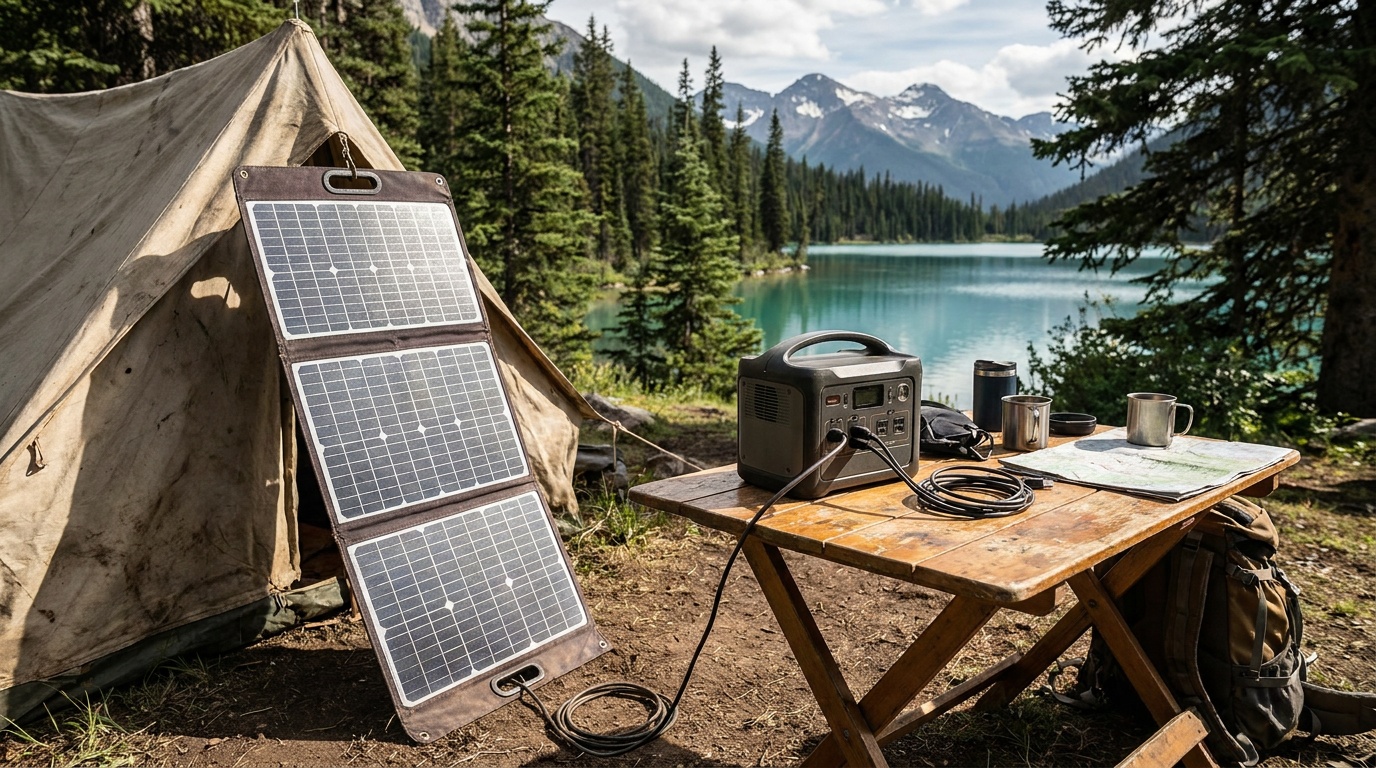
The PS200 costs more than the BougeRV for the same 200W output, but it earns the premium through build quality rather than wattage. The aluminum alloy frame does not flex, the kickstand locks with a satisfying click and stays there, and the IP67 water resistance rating is verified at the housing rather than just the junction box. Owner reviews consistently call out that it still looks new after two or three seasons of repeated setup. It ships with both MC4 and Anderson connectors and is compatible with the full Anker SOLIX station lineup as well as third-party stations. For campers who treat their basecamp as a semi-permanent setup and want a panel that matches that commitment, this is the one.
EDITOR'S CHOICE
Anker SOLIX PS200 200W Foldable Portable Solar Panel
Best for: Campers who set up the same base camp repeatedly and want a 200W panel built to last several seasons without worrying about frame flex or kickstand failures.
- Kickstand system with fixed angle positions holds position in gusting wind where softer-frame competitors tip over
- At 20.3 lbs it is the heaviest panel in this group, so placement and repositioning takes more effort across a day
Kit Score 8.4/10 · $499.99 Price checked Oct 23, 4:16 PM CDT · how we score gear
Buy on AmazonProduct details
The Anker SOLIX PS200 is the most durably built 200W foldable panel in this group, with a rigid frame, a kickstand system that stays put in wind, and 23 percent efficiency cells that hold output through hazy Pacific Northwest skies where cheaper panels fall off faster. It costs more than the BougeRV, but the construction and 2-year warranty justify the gap for regular-use campers.
- Wattage
- 200W
- Efficiency
- 23% monocrystalline
- Weight
- 20.3 lbs (9.2 kg)
- Folded size
- 22.4 x 23.7 x 2.4 in
- Output connector
- MC4 with XT60 adapter cable included
- Water resistance
- IP67 waterproof
More strengths
- 23% efficiency sustains meaningful output in overcast and hazy conditions, not just ideal full-sun scenarios
- Broad compatibility: works with EcoFlow, Jackery, BLUETTI, and Anker power stations via the included MC4 and XT60 cables
Other tradeoffs
- Price premium over the BougeRV 200W is substantial; primarily justified by build quality and warranty, not raw wattage
How they compare
| Product | Kit Score | Price | Best for |
|---|---|---|---|
| EF EcoFlow 160W Foldable Portable Solar Panel | 8.8 | $344.88 Price checked Oct 23, 4:16 PM CDT | Best for: Car campers and overlanders who want the most reliable all-weather panel at the 160W tier and plan to pair it with an EcoFlow RIVER or DELTA series station. Why it stands out: IP68 waterproofing is the best in its price range: owners report leaving it out through unexpected rain showers with no damage Tradeoff: At 15.4 lbs it is too heavy for backpacking and adds meaningful weight to a car-camping kit |
| BougeRV 200W 9BB Foldable Portable Solar Panel | 8.4 | $179.99 Price checked Oct 23, 4:16 PM CDT | Best for: Drive-in and base-camp setups where weight is not a constraint and you want to charge a large power station (500Wh to 1kWh) as fast as possible for the least money. Why it stands out: 200W at this price point is the clearest watts-per-dollar value in the foldable panel category Tradeoff: 18 lbs is the heaviest panel in this group, which limits its appeal for anything beyond base-camp or drive-in camping |
| Anker SOLIX PS200 200W Foldable Portable Solar Panel | 8.4 | $499.99 Price checked Oct 23, 4:16 PM CDT | Best for: Campers who set up the same base camp repeatedly and want a 200W panel built to last several seasons without worrying about frame flex or kickstand failures. Why it stands out: Kickstand system with fixed angle positions holds position in gusting wind where softer-frame competitors tip over Tradeoff: At 20.3 lbs it is the heaviest panel in this group, so placement and repositioning takes more effort across a day |
EF EcoFlow 160W Foldable Portable Solar Panel
- Best for
- Car campers and overlanders who want the most reliable all-weather panel at the 160W tier and plan to pair it with an EcoFlow RIVER or DELTA series station.
- Why it stands out
- IP68 waterproofing is the best in its price range: owners report leaving it out through unexpected rain showers with no damage
- Tradeoff
- At 15.4 lbs it is too heavy for backpacking and adds meaningful weight to a car-camping kit
BougeRV 200W 9BB Foldable Portable Solar Panel
- Best for
- Drive-in and base-camp setups where weight is not a constraint and you want to charge a large power station (500Wh to 1kWh) as fast as possible for the least money.
- Why it stands out
- 200W at this price point is the clearest watts-per-dollar value in the foldable panel category
- Tradeoff
- 18 lbs is the heaviest panel in this group, which limits its appeal for anything beyond base-camp or drive-in camping
Anker SOLIX PS200 200W Foldable Portable Solar Panel
- Best for
- Campers who set up the same base camp repeatedly and want a 200W panel built to last several seasons without worrying about frame flex or kickstand failures.
- Why it stands out
- Kickstand system with fixed angle positions holds position in gusting wind where softer-frame competitors tip over
- Tradeoff
- At 20.3 lbs it is the heaviest panel in this group, so placement and repositioning takes more effort across a day
How to choose the right panel for your setup
The right panel depends on three things: the power station you own (or plan to buy), the wattage you actually need, and how much you care about weight and build quality.
Match the panel to your camp style
Match connector types first
Before you buy, confirm the panel's output connector matches your station's input port. Jackery uses its own barrel connector; EcoFlow and Anker use XT60; most budget panels ship with Anderson and MC4 adapters. Mismatched connectors add adapter weight and a potential failure point.
Size the panel to your station
A rough rule: 1W of solar per 2Wh of battery to refill in a day of good sun. A 500Wh station pairs well with a 100W panel; a 1kWh station needs 200W or two 100W panels chained.
Foldable vs rigid
Foldable panels make sense for camping because they pack to a manageable size. Rigid panels are cheaper per watt but belong on a van roof, not a backpack or car rack.
Check pass-through before you count on it
Most portable panels include a USB-A or USB-C port for direct device charging. Not all support pass-through while also charging a station, so read the spec sheet before assuming you can run both at once.
Weight is a real constraint on foot, not at base camp
At 100W, panels run 4 to 6 pounds. At 200W, expect 8 to 12 pounds. For car camping the weight difference is negligible; for any carry-in site it shapes the whole decision.
FAQ
Can I use any solar panel with any power station?
Mostly yes, with caveats. The voltage and wattage of your panel must fall within the station's solar input spec, which is listed in its manual. Connector types differ by brand, but Anderson and MC4 adapters ship with most panels. The main compatibility risk is exceeding the station's max solar input wattage: a 200W panel feeding a station with a 100W solar input limit just charges at the lower rate, it does not damage the station.
How long does it take to charge a power station with a solar panel?
Divide the station's capacity in watt-hours by the panel's real-world output (typically 75 to 85% of rated wattage in good direct sun). A 100W panel delivering 80W takes about 6.25 hours to charge a 500Wh station. Cloud cover, panel angle, and temperature all reduce output, so plan for 20 to 40% longer on a partly cloudy day.
Are foldable solar panels as efficient as rigid panels?
The monocrystalline cells used in top foldable panels reach 22 to 24% efficiency, which matches or exceeds many rigid residential panels. The difference is that foldable panels use thinner, lighter substrates that are less durable under foot traffic or long-term UV exposure. For seasonal camping use, the efficiency is comparable; for permanent rooftop installation, rigid panels last longer.
Good solar is the foundation of a comfortable off-grid camp. Browse more camp gear, or read how we research and rate gear.
Keep going
Related guides
 Complete camp loadoutCar-camping starter kitBuild the complete kit
Our recommendations draw on manufacturer documentation, retailer listings, owner feedback, and comparisons with alternatives.
As an Amazon Associate I earn from qualifying purchases. We may earn a commission from links here, at no extra cost to you. How we research →