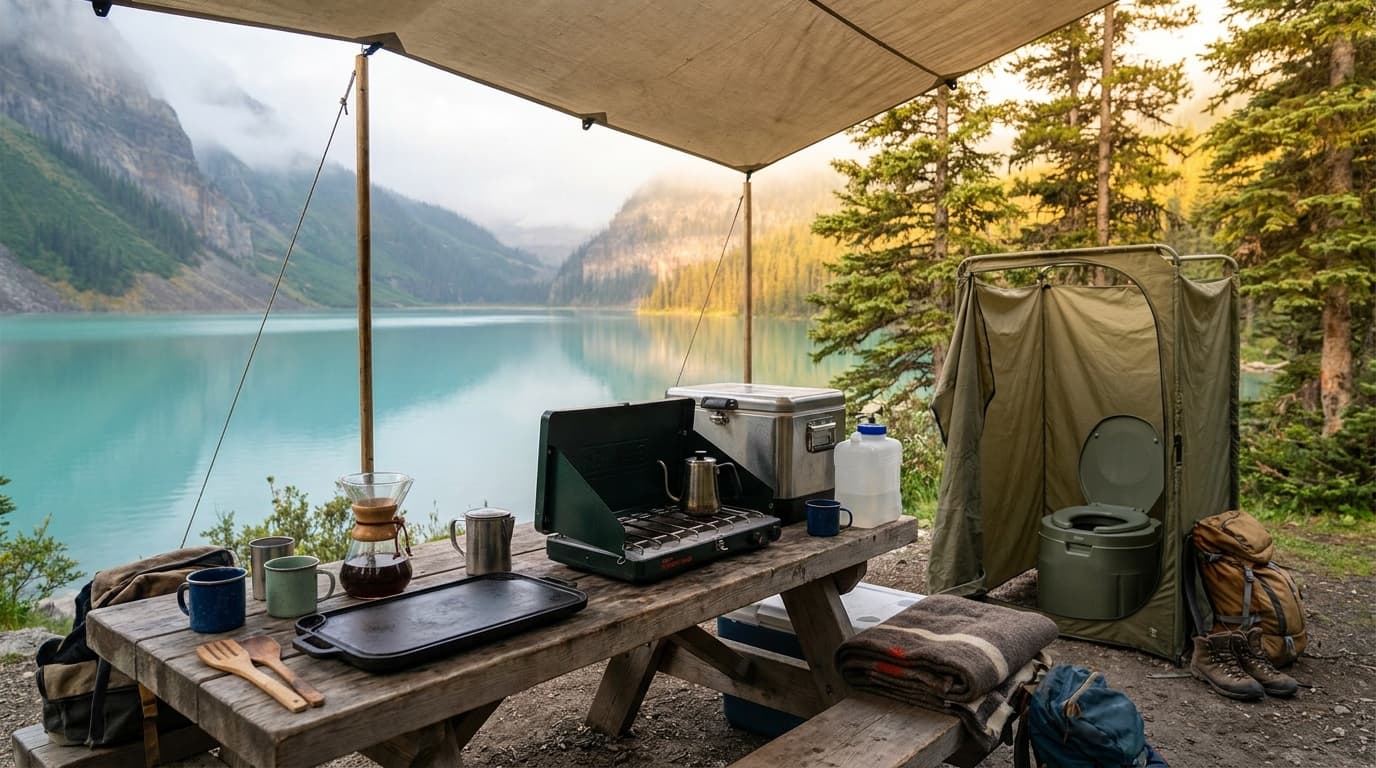
A portable camping toilet turns a sanitation problem into a solved one, but only if you know how to set it up, use it correctly, and dispose of waste the right way.
Two main types and how they work
Most portable camping toilets fall into two categories: bucket-style toilets and flush toilets with a holding tank.
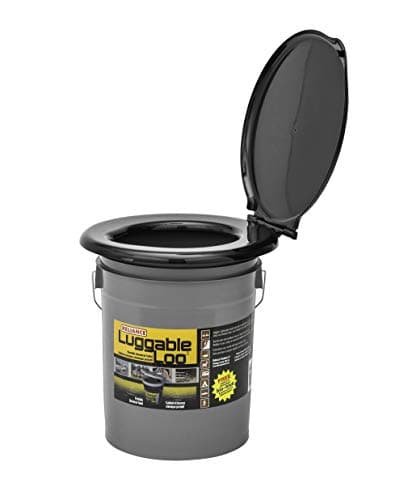
Bucket toilets are simple. A rigid bucket (often 5 gallons, like the Reliance Luggable Loo) holds a liner bag, and a snap-on seat lid provides a stable surface. There are no moving parts and nothing to flush. Odor control comes entirely from the bag and any chemical treatment you add.
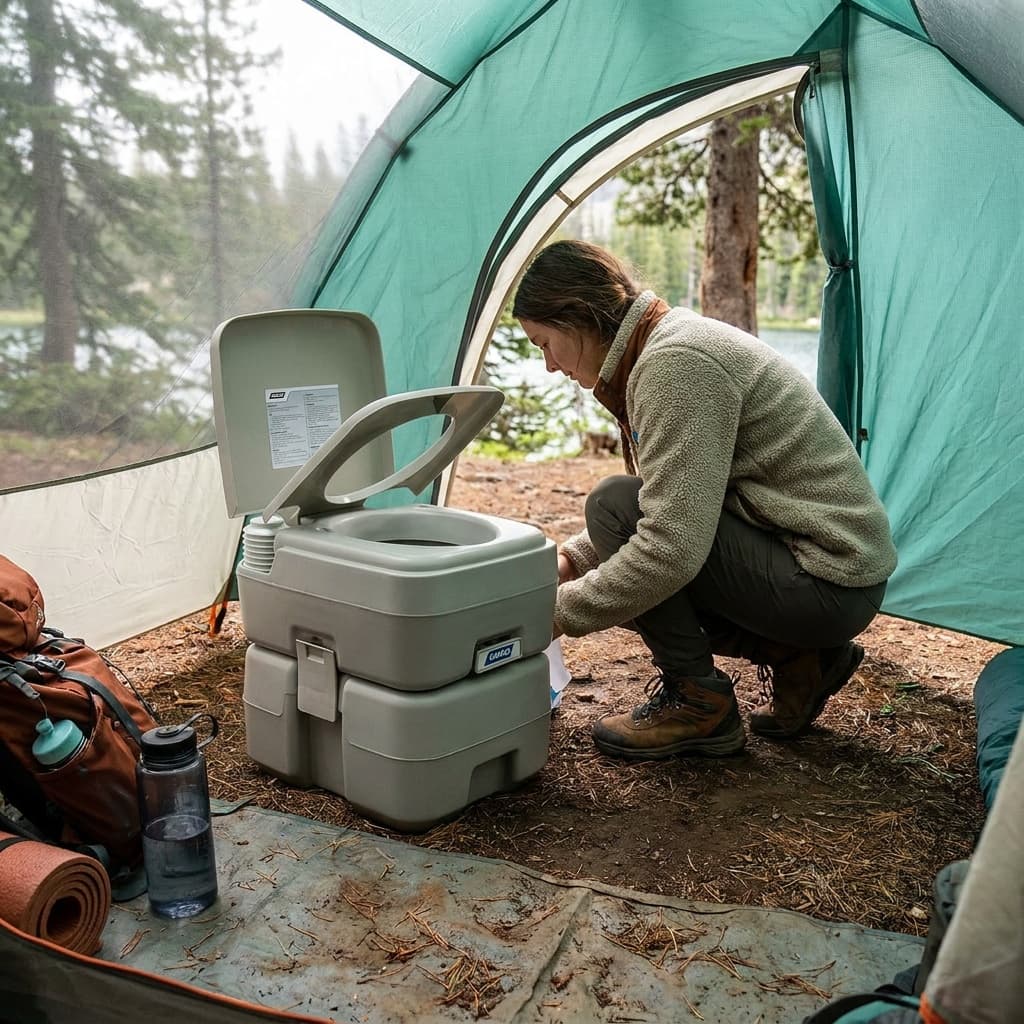
Flush toilets like the Camco 5.3-Gallon Portable Toilet work more like a household toilet in miniature. A separate freshwater tank (typically 3–4 liters) feeds a manual or electric flush that rinses the bowl into a sealed holding tank below. The holding tank capacity is usually 10–20 liters. Some models use a bellows pump flush; others use a piston or electric valve. The holding tank seals between uses, which keeps odor inside.
Still choosing between a bucket and a flush model? The best portable camping toilets guide compares stable, currently available options across both types before you commit to a waste system.
Setting up your toilet before the first use
Good setup prevents most odor and mess problems before they start.
Setup checklist
Bucket toilet: liner bag
Open a waste bag liner, fit it over the rim of the bucket, and fold the top edge down so it grips the outside. Add 2–3 tablespoons of kitty litter, sawdust, or a purpose-made deodorizer tablet inside the bag before first use.
Flush toilet: freshwater tank
Fill the freshwater tank with clean water. Add the manufacturer-recommended dose of holding-tank deodorizer or blue treatment fluid to the holding tank before first use. This breaks down waste and controls odor.
Seat and lid
Confirm the seat is locked onto the base. On flush models, test the flush lever or pump a few strokes to verify water flows cleanly before you need it.
Level ground
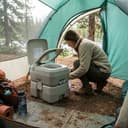
Place the toilet on a stable, flat surface. An unstable base causes spills and makes the seat uncomfortable. Inside a tent vestibule or a privacy shelter works well.
Privacy
A pop-up privacy shelter or a natural screen (dense brush, a vehicle side) keeps the experience dignified, especially in group campsites.
Using the toilet and managing odor on the trip
For bucket toilets: after each use, add a small amount of deodorizer or cover material (kitty litter, pine shavings, or a commercial enzyme powder) directly into the bag. This absorbs moisture and suppresses ammonia. Keep the lid closed between uses. When the bag is two-thirds full, tie it off and start a fresh one.
For flush toilets: use the flush after each use to move waste into the sealed holding tank. Add a small dose of deodorizer to the holding tank every 1–2 days in warm weather. Keep the holding tank valve closed except when emptying. Monitor the level indicator if your model has one; most holding tanks need emptying every 2–5 days for two people.
Never flush wet wipes, even ones labeled flushable. They do not break down in holding tanks or bag liners and create clogs or messy empties. Use toilet paper rated for RV or marine use, which dissolves faster.
The single biggest odor mistake campers make is leaving the holding tank or bag open between uses, which lets gases escape into the shelter all night.
Emptying waste the right way
This is the part that matters most for Leave No Trace and for public health.
Bag liners go in the trash only if the bags are certified as WAG (Waste Alleviation and Gelling) bags designed for solid waste disposal. Standard garbage bags are not approved for this in most jurisdictions. Check local regulations before assuming trash disposal is legal. In many parks and wilderness areas, WAG bags must be packed out to a trash facility, not left at the trailhead.
Holding tanks on flush toilets must be emptied at a designated RV dump station or a campground sewage connection. Dump stations are available at most RV parks, many state and national park campgrounds, and some rest stops. The Sanidumps.com directory and the iOverlander app both list dump stations by location.
At the dump station: open the dump port, connect or position the tank over the drain, release the valve, and let gravity do the work. Rinse the tank with fresh water two or three times, letting the rinse drain completely. Never empty a holding tank into a pit toilet, a stream, a lake, a field, or a regular trash receptacle. These are not legal disposal points and spread pathogens.
Cleaning and storing odor-free
After emptying and rinsing, do a final clean before storing the toilet.
For the holding tank: add a small amount of RV tank cleaner or diluted dish soap, fill partway with water, slosh, and drain. Leave the valve open so the tank dries completely. Moisture trapped inside grows mold fast.
For the bowl and seat: wipe down with a mild disinfectant spray or diluted white vinegar. Avoid bleach on rubber seals and gaskets, it degrades them over time. A small drop of mineral oil on rubber seals before storage keeps them pliable.
For bucket toilets: remove and dispose of the liner bag, wash the bucket interior with a diluted cleaner, rinse, and let it air dry fully before nesting the lid on top.
Store the toilet in a well-ventilated bag or its original carry bag with the lid slightly ajar so air circulates. A sealed storage bin traps humidity and odors.
Frequently asked questions
Can I use a portable toilet inside a tent?
Yes, with conditions. Use it inside a tent vestibule or a dedicated privacy shelter rather than the sleeping area. Keep the lid sealed at all times between uses, and ventilate the space after each use. Flush-toilet models with a sealed holding tank produce far less odor in an enclosed space than open bucket models.
What deodorizer works best for a portable camping toilet?
Enzyme-based deodorizers (like Thetford Aqua-Kem or Camco TST) break down waste chemically and handle odor better than masking fragrances. For bucket toilets, granular enzyme powder or kitty litter works well as a cover material. Avoid bleach-based products, which react with urine to produce harsh fumes and damage seals.
How do I find a dump station while camping?
The Sanidumps.com directory and the iOverlander mobile app both list dump stations across North America with user-verified status. Most RV campgrounds have a dump station available to non-guests for a small fee (typically $5–$10). Call ahead at remote destinations, because some seasonal facilities close in winter.
For specific picks across bucket, flush, and composting styles, see our guide to the best portable camping toilets. Browse all camp guides or read how we research and rate gear.
Recommended gear
Our current top picks from the Best portable camping toilets 2026 guide, if you are ready to buy.

THETFORD
Thetford Porta Potti 365 Portable Toilet
Best Overall
Kit Score 8.4/10
$159.79 Price checked Oct 23, 4:16 PM CDT
Best for: Car campers, van lifers, and overlanders who want a civilized flush toilet and access to dump stations or a privy every few days.
- Sealed slide valve and tight latches deliver exceptional odor control, even on long trips
- Becomes very heavy when full, making transport and emptying awkward
- Waste tank
- 21 L (5.5 gal)
- Flush tank
- 15 L (4 gal)
- Seat height
- 16.3 in
- Weight (empty)
- 11 lbs
- Dimensions (H x W x D)
- 16.3 x 15.1 x 16.8 in
- Flush type
- Manual piston pump
About this pick
The Porta Potti 365 is the go-to cassette-style toilet for car campers and van lifers who want household-level comfort on the road. Its 21-liter sealed waste tank and reliable piston-pump flush handle 4–5 days of use for two people before needing to be emptied.
Strengths
- Sealed slide valve and tight latches deliver exceptional odor control, even on long trips
- Comfortable seat height comparable to a home toilet, with a full-size adult seat and level indicators on both tanks
- Large 21 L waste capacity reduces dump frequency to every 4–5 days for a couple
Weaknesses
- Becomes very heavy when full, making transport and emptying awkward
- Requires a substantial freshwater supply (12–17 L per fill), a real constraint for remote off-grid camps
Kit Score breakdown
CAMCO
Camco 5.3-Gallon Portable Toilet (41541)
Best Value
Kit Score 8.2/10
$109.99 Price checked Oct 23, 4:16 PM CDT
Best for: Families and groups doing weekend car camping or RV trips who want flush convenience without spending premium prices.
- 5.3-gallon waste tank handles a full family weekend without needing to be dumped
- The slide valve can stick when the tank is near full, which is a common complaint in owner reviews
- Waste tank
- 5.3 gal (detachable)
- Flush tank
- 2.5 gal
- Seat height
- 17 in
- Weight (empty)
- 11.5 lbs
- Dimensions (H x W x D)
- 17 x 14 x 16.25 in
- Flush type
- Bellows pump with sealing slide valve
About this pick
The Camco 41541 pairs a 5.3-gallon detachable waste tank with a bellows-pump flush at a price well below most cassette competitors. It is one of the bestselling portable toilets on Amazon, with a 4.6-star average across nearly 6,000 owner reviews.
Strengths
- 5.3-gallon waste tank handles a full family weekend without needing to be dumped
- Detachable lower tank with sealing slide valve makes emptying at dump stations straightforward and odor-contained
- Solid polyethylene construction with 330 lb weight rating; owners note it feels sturdy and is easy to clean
Weaknesses
- The slide valve can stick when the tank is near full, which is a common complaint in owner reviews
- Seat opening is narrower than a home toilet, which some adult users find uncomfortable
Kit Score breakdown
RELIANCE PRODUCTS
Reliance Products Luggable Loo Portable 5-Gallon Toilet
Best Budget
Kit Score 8.1/10
$49.84 Price checked Oct 23, 4:16 PM CDT
Best for: Budget-conscious campers, emergency preparedness kits, and anyone who wants the simplest possible sanitation option for weekend trips.
- Featherweight at 3.1 lbs empty; fits in any vehicle without planning around it
- No flush means the bowl relies entirely on liners for hygiene; odor containment depends on keeping the lid closed and using bag-gel additives
- Capacity
- 5 gal (19 L)
- Height
- 15.3 in
- Dimensions (L x W x H)
- 13.5 x 13.0 x 15.3 in
- Weight (empty)
- 3.1 lbs
- Weight capacity
- 250 lbs
- Waste system
- Compatible with Double Doodie waste bags
About this pick
The Luggable Loo is a 5-gallon bucket with a snap-on seat and lid: no flush, no chemicals required, and no moving parts to fail. At around $20–$35 depending on retailer, it is the starting point for anyone new to camp sanitation or needing a reliable emergency backup.
Strengths
- Featherweight at 3.1 lbs empty; fits in any vehicle without planning around it
- Zero maintenance and zero failure modes: nothing to pump, flush, or repair in the field
- Works with standard Reliance Double Doodie bags or any 5-gallon liner for clean, bag-in bag-out waste disposal
Weaknesses
- No flush means the bowl relies entirely on liners for hygiene; odor containment depends on keeping the lid closed and using bag-gel additives
- The round base can wobble on uneven ground, and the bucket design is less stable than a three-legged folding frame
Kit Score breakdown
Keep going
Related guides
 Complete camp loadoutCamp kitchen kitBuild the complete kit
Researched, not hands-on tested
Updated Aug 31, 2026Our recommendations draw on manufacturer documentation, retailer listings, owner feedback, and comparisons with alternatives.
As an Amazon Associate I earn from qualifying purchases. We may earn a commission from links here, at no extra cost to you. How we research →