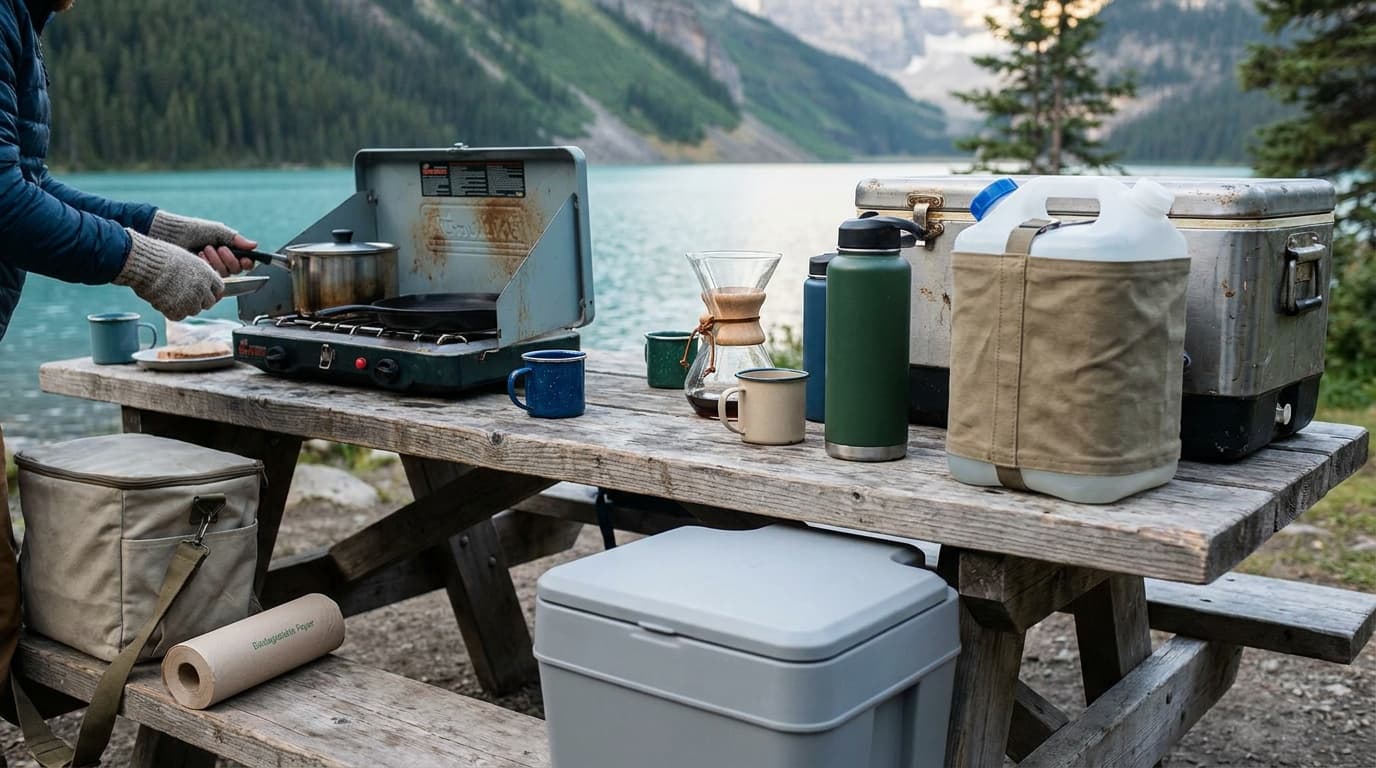
Deciding where to go in the woods is easy until there are no woods, or until you are camping with kids, older adults, or anyone who reasonably expects a seat. Choosing the right portable toilet means matching the system to your setup before you leave home.
The three main types and when each makes sense
Portable camping toilets fall into three functional categories, and the right one depends almost entirely on how you camp.
Flush-style portable toilets use a small fresh-water holding tank (typically 2–4 liters) and a separate sealed waste tank (typically 3–5 gallons). A hand-pump or bellows mechanism flushes waste into the lower tank. Units like the Thetford Porta Potti 365 dominate this category. These are ideal for car camping, van living, and RV use where you can drive to a dump station. They feel familiar, seal odor well when the slide valve is closed, and typically support adults up to 300 lb. The trade-off is bulk: most units are 12–16 inches tall, weigh 10–15 lb empty, and need dedicated space in your vehicle.
Bucket toilets are exactly what they sound like: a 5-gallon bucket with a snap-on toilet seat lid (the Reliance Luggable Loo is the long-standing default). They hold liner bags (double-bagged heavy-duty bags or specialty liner bags with absorbent powder). Total cost is often under $30 for the bucket and seat, making them popular for car camping on a budget. The capacity is generous, the seat height (around 14–15 inches) is comfortable, and they are nearly indestructible. The weakness is that emptying requires access to a vault toilet or pack-out waste bags; you cannot dump liquid waste on the ground.
Folding and bag-based systems include products like the Cleanwaste GO Anywhere Portable Folding Toilet and similar designs that fold flat or collapse into a small footprint. Each use requires a biodegradable bag with a gelling and odor-neutralizing powder inside. These weigh under 2 lb packed, fit in a backpack, and are the Leave No Trace compliant choice in areas with a pack-out requirement (common in desert and alpine wilderness zones). The ongoing cost of bags, typically $3–5 per bag, adds up on longer trips.
Waste capacity and emptying: the math that matters
The average adult generates roughly 1 quart of liquid waste per toilet use. A family of four making two uses each per day produces about 2 quarts (half a gallon) daily. On a three-night trip that is roughly 3 gallons before any solid waste is added. A 3.5–5 gallon waste tank covers this trip without mid-trip emptying; a 2.6 gallon tank does not.
For flush-style units, waste goes to a dump station at a campground or RV park. Most campgrounds with any RV sites have one; dispersed campsites and backcountry sites do not. Confirm the dump station is available before you rely on this system.
For multi-stop RV trips, verify dump access as part of the route rather than after arrival. Our RV LIFE Pro and Trip Wizard guide shows how the paid planning stack fits alongside official campground and road sources.
For bucket systems, lined bags of solid waste must go in the trash in a sealed bag. Liquid-only waste can go in a vault toilet but should never be dumped on bare ground.
Pack-out bag systems are the only compliant choice in wilderness areas with a pack-out rule. Waste goes in the trash in a sealed, odor-blocking bag. Plan bag count before you go.
Odor control: chemicals, bags, and slide valves
Odor is the thing that makes a portable toilet feel either acceptable or miserable. Each system handles it differently.
Flush-style units rely on a slide valve that seals the waste tank from the bowl between uses. Chemical deodorant tablets or liquid (look for formaldehyde-free options like Thetford Aqua Kem Green) added to the waste tank break down solids and suppress odor. Use the correct dose for tank volume: under-dosing accelerates odor; overdosing does not help.
Bucket systems depend entirely on the liner bag and whatever powder or gel you add. Double-bag everything and tie off the inner bag after each use if you are not emptying the bucket daily. Some campers add a cup of kitty litter or a commercial deodorizer powder to help.
Folding bag systems include gelling and odor-neutralizing powder in each bag. The bag seals and contains odor effectively if sealed correctly. The key step is expelling as much air as possible before sealing.
The best odor control system is the one you actually use every time, at every use, before you close the lid.
Seat height, comfort, and weight capacity
Standard home toilets sit at 15–17 inches. Most flush-style portable toilets land at 14–16 inches, which is close enough for most adults. Bucket toilets with a seat lid sit at about 14–15 inches depending on the bucket. Folding bag systems are the lowest, often 10–12 inches, which can be difficult for adults with knee or hip issues.
Weight ratings matter more than they appear in listings. Most quality flush-style and bucket toilets are rated to 250–330 lb. Check the spec before purchasing for heavier users; some budget units are rated only to 220 lb.
Match toilet type to use case
Car camping with family
Flush-style (3.5+ gal tank) or bucket with liner bags; prioritize seat height and capacity
Van or overlanding
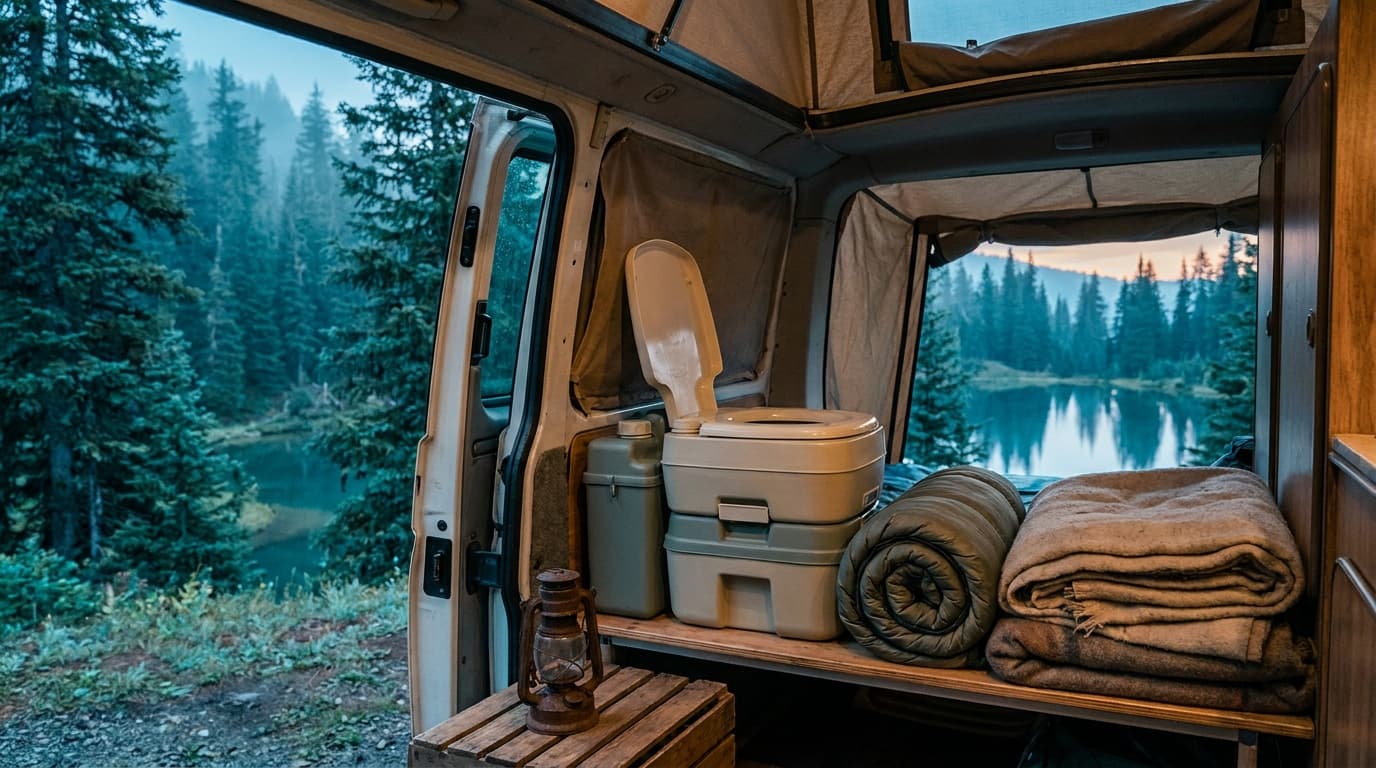
Flush-style with compact footprint; confirm it fits your storage space unpacked
Backpacking or wilderness
Folding bag system only; confirm pack-out requirement for your specific area
Festival or event
Bucket with multiple pre-staged liner bags; easiest to stage and swap
Emergency preparedness
Folding bag system or bucket; long shelf life, no liquid chemicals to store
Packed size and vehicle fit
A flush-style toilet typically occupies a footprint of roughly 14 by 14 inches and stands 14–16 inches tall when stored. Measure your cargo space before buying. Some van campers mount a dedicated toilet cabinet or store the unit under a platform bed; confirm clearance.
Bucket toilets nest a toilet seat lid on a 5-gallon bucket, which is easy to stack gear on top of and doubles as a stool or gear storage container. The lid seat adds no meaningful height.
Folding bag systems compress to roughly the size of a paperback book. They store in a glove box, a backpack hip belt pocket, or an emergency kit.
Frequently asked questions
Can I use a portable camping toilet in a tent or vestibule?
Yes, with precautions. A flush-style unit with a properly closed slide valve or a sealed liner bag in a bucket is acceptable for short-term indoor use in cold or wet conditions. Ventilation matters: crack a vent or vestibule zipper to let air circulate. Do not leave an open or unsealed unit inside an enclosed tent.
What do I do with waste from a portable toilet in a campground with no dump station?
For flush-style units, locate the nearest dump station using apps like iOverlander or the Campendium dump station finder, or call the campground host before arrival. For lined bags of solid waste, double-bag and place in a trash receptacle. Never pour waste into a regular trash can without a bag, and never dump on the ground.
Are chemical deodorant tablets safe for the environment?
Formaldehyde-based tablets are not safe for septic systems or the environment and should be emptied only at dedicated RV dump stations. Formaldehyde-free enzyme and biocide formulations (common in European-market products like Thetford Aqua Kem Green) are safer for dump station disposal and some municipal sewer systems. Check the product label and your local dump station rules before using any chemical additive.
For specific picks across all three types, see our guide to the best portable camping toilets. Browse all camp guides or read how we research and rate gear.
Recommended gear
Our current top picks from the Best portable camping toilets 2026 guide, if you are ready to buy.

THETFORD
Thetford Porta Potti 365 Portable Toilet
Best Overall
Kit Score 8.4/10
$159.79 Price checked Oct 23, 4:16 PM CDT
Best for: Car campers, van lifers, and overlanders who want a civilized flush toilet and access to dump stations or a privy every few days.
- Sealed slide valve and tight latches deliver exceptional odor control, even on long trips
- Becomes very heavy when full, making transport and emptying awkward
- Waste tank
- 21 L (5.5 gal)
- Flush tank
- 15 L (4 gal)
- Seat height
- 16.3 in
- Weight (empty)
- 11 lbs
- Dimensions (H x W x D)
- 16.3 x 15.1 x 16.8 in
- Flush type
- Manual piston pump
About this pick
The Porta Potti 365 is the go-to cassette-style toilet for car campers and van lifers who want household-level comfort on the road. Its 21-liter sealed waste tank and reliable piston-pump flush handle 4–5 days of use for two people before needing to be emptied.
Strengths
- Sealed slide valve and tight latches deliver exceptional odor control, even on long trips
- Comfortable seat height comparable to a home toilet, with a full-size adult seat and level indicators on both tanks
- Large 21 L waste capacity reduces dump frequency to every 4–5 days for a couple
Weaknesses
- Becomes very heavy when full, making transport and emptying awkward
- Requires a substantial freshwater supply (12–17 L per fill), a real constraint for remote off-grid camps
Kit Score breakdown
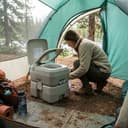
CAMCO
Camco 5.3-Gallon Portable Toilet (41541)
Best Value
Kit Score 8.2/10
$109.99 Price checked Oct 23, 4:16 PM CDT
Best for: Families and groups doing weekend car camping or RV trips who want flush convenience without spending premium prices.
- 5.3-gallon waste tank handles a full family weekend without needing to be dumped
- The slide valve can stick when the tank is near full, which is a common complaint in owner reviews
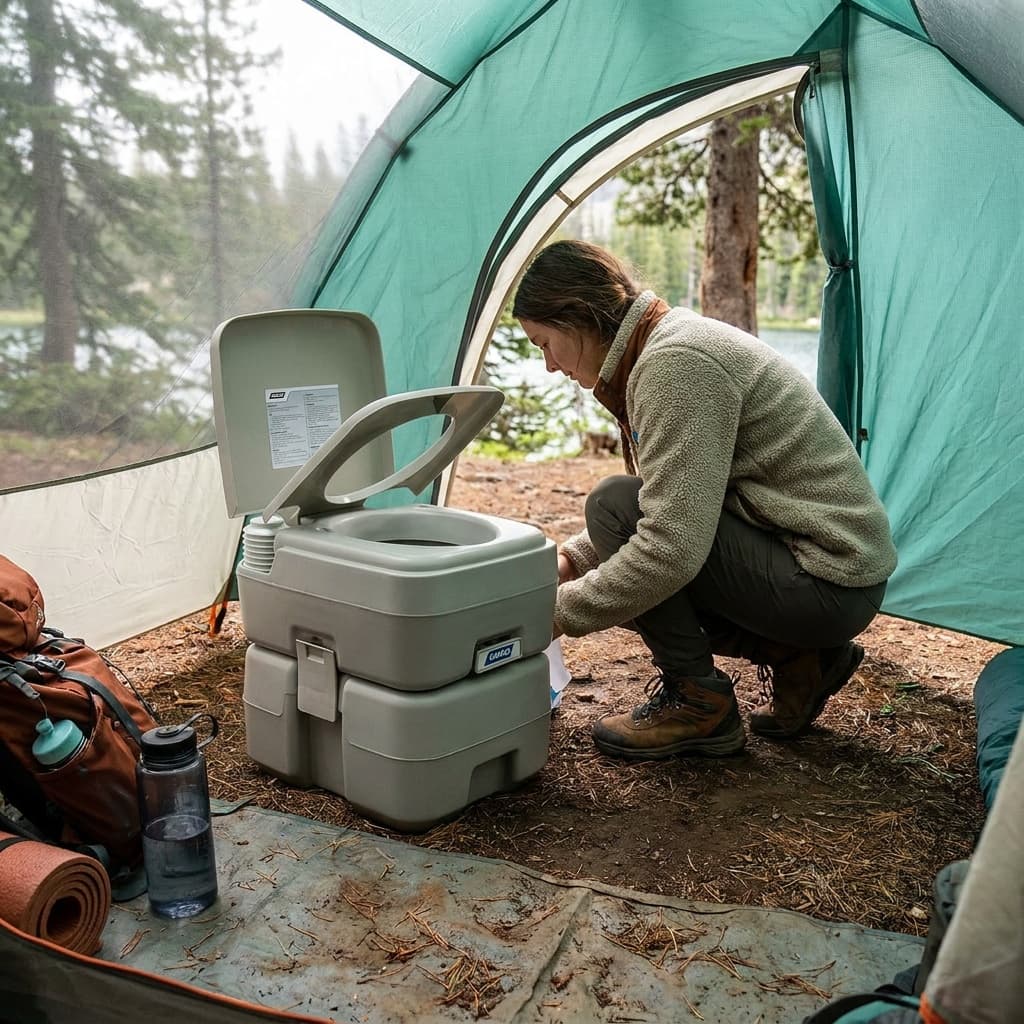
- Waste tank
- 5.3 gal (detachable)
- Flush tank
- 2.5 gal
- Seat height
- 17 in
- Weight (empty)
- 11.5 lbs
- Dimensions (H x W x D)
- 17 x 14 x 16.25 in
- Flush type
- Bellows pump with sealing slide valve
About this pick
The Camco 41541 pairs a 5.3-gallon detachable waste tank with a bellows-pump flush at a price well below most cassette competitors. It is one of the bestselling portable toilets on Amazon, with a 4.6-star average across nearly 6,000 owner reviews.
Strengths
- 5.3-gallon waste tank handles a full family weekend without needing to be dumped
- Detachable lower tank with sealing slide valve makes emptying at dump stations straightforward and odor-contained
- Solid polyethylene construction with 330 lb weight rating; owners note it feels sturdy and is easy to clean
Weaknesses
- The slide valve can stick when the tank is near full, which is a common complaint in owner reviews
- Seat opening is narrower than a home toilet, which some adult users find uncomfortable
Kit Score breakdown
RELIANCE PRODUCTS
Reliance Products Luggable Loo Portable 5-Gallon Toilet
Best Budget
Kit Score 8.1/10
$49.84 Price checked Oct 23, 4:16 PM CDT
Best for: Budget-conscious campers, emergency preparedness kits, and anyone who wants the simplest possible sanitation option for weekend trips.
- Featherweight at 3.1 lbs empty; fits in any vehicle without planning around it
- No flush means the bowl relies entirely on liners for hygiene; odor containment depends on keeping the lid closed and using bag-gel additives
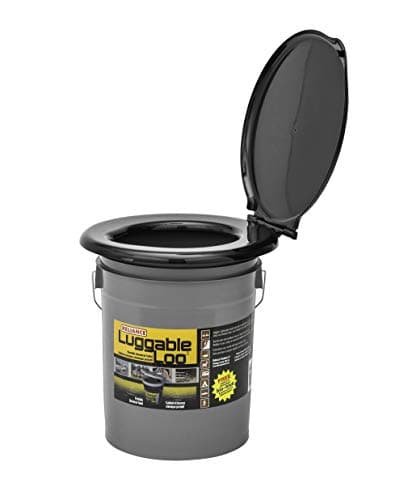
- Capacity
- 5 gal (19 L)
- Height
- 15.3 in
- Dimensions (L x W x H)
- 13.5 x 13.0 x 15.3 in
- Weight (empty)
- 3.1 lbs
- Weight capacity
- 250 lbs
- Waste system
- Compatible with Double Doodie waste bags
About this pick
The Luggable Loo is a 5-gallon bucket with a snap-on seat and lid: no flush, no chemicals required, and no moving parts to fail. At around $20–$35 depending on retailer, it is the starting point for anyone new to camp sanitation or needing a reliable emergency backup.
Strengths
- Featherweight at 3.1 lbs empty; fits in any vehicle without planning around it
- Zero maintenance and zero failure modes: nothing to pump, flush, or repair in the field
- Works with standard Reliance Double Doodie bags or any 5-gallon liner for clean, bag-in bag-out waste disposal
Weaknesses
- No flush means the bowl relies entirely on liners for hygiene; odor containment depends on keeping the lid closed and using bag-gel additives
- The round base can wobble on uneven ground, and the bucket design is less stable than a three-legged folding frame
Kit Score breakdown
Keep going
Related guides
 Complete camp loadoutCamp kitchen kitBuild the complete kit
Researched, not hands-on tested
Updated Sep 2, 2026Our recommendations draw on manufacturer documentation, retailer listings, owner feedback, and comparisons with alternatives.
As an Amazon Associate I earn from qualifying purchases. We may earn a commission from links here, at no extra cost to you. How we research →