We may earn a commission from links on this page, at no extra cost to you.
A camping stove that will not light usually has one of four problems: fuel is not reaching the burner, the fuel is too cold to vaporize well, wind is disrupting ignition, or the igniter is not putting its spark in the right place. Start with the checks that do not require taking the stove apart.
Quick answer: If you see liquid fuel, smell gas, hear hissing at a connection, or find a damaged hose or seal, close the valve and stop. Do not keep clicking the igniter. Let the stove cool completely and follow its manual.
Diagnose the symptom first
| What happens | Most likely cause | First safe check |
|---|---|---|
| No hiss and no flame | Closed valve, empty fuel, poor connection, or blocked fuel path | Close everything, cool the stove, and reconnect exactly as the manual shows |
| Hiss but no ignition | Spark location, wind, or wet burner | Close the valve, let fuel clear, then inspect the igniter and burner |
| Tiny flame that fades | Low fuel, cold canister, or restricted jet | Try known-full fuel at a moderate temperature |
| Flame lifts, blows out, or pulses | Wind or unstable fuel delivery | Move to a sheltered outdoor position and use only the wind protection your stove permits |
| Fuel smell or wet connection | Leak or damaged seal | Stop using the stove |
Run these checks in order
1. Move into open air and remove the cookware
Camping stoves belong outdoors, never inside a tent, vestibule, vehicle, or other enclosed space. Set the stove on a stable, noncombustible surface away from dry grass. If it was recently running, wait until every part is cool.
2. Confirm that the fuel source is not empty
A nearly empty canister can still feel substantial. Swap in a known-full canister or cylinder that matches the stove. Do not force a connector that does not thread or seat easily.
For liquid-fuel stoves, use the fuel and pressurization procedure specified by the manufacturer. This is not the time to substitute a different fuel because it happens to be available.
3. Consider the temperature
Cold canisters lose pressure. MSR lists a cold canister as a cause when a canister stove will not light and recommends swapping the canister. Keep fuel at a normal ambient temperature before use, but never heat a canister with a flame, stove, hot water, engine, or heater.
If cold-weather cooking is routine, the better fix may be a stove and fuel system intended for those temperatures. Our propane versus butane guide explains the tradeoffs.
4. Check the igniter without feeding more fuel
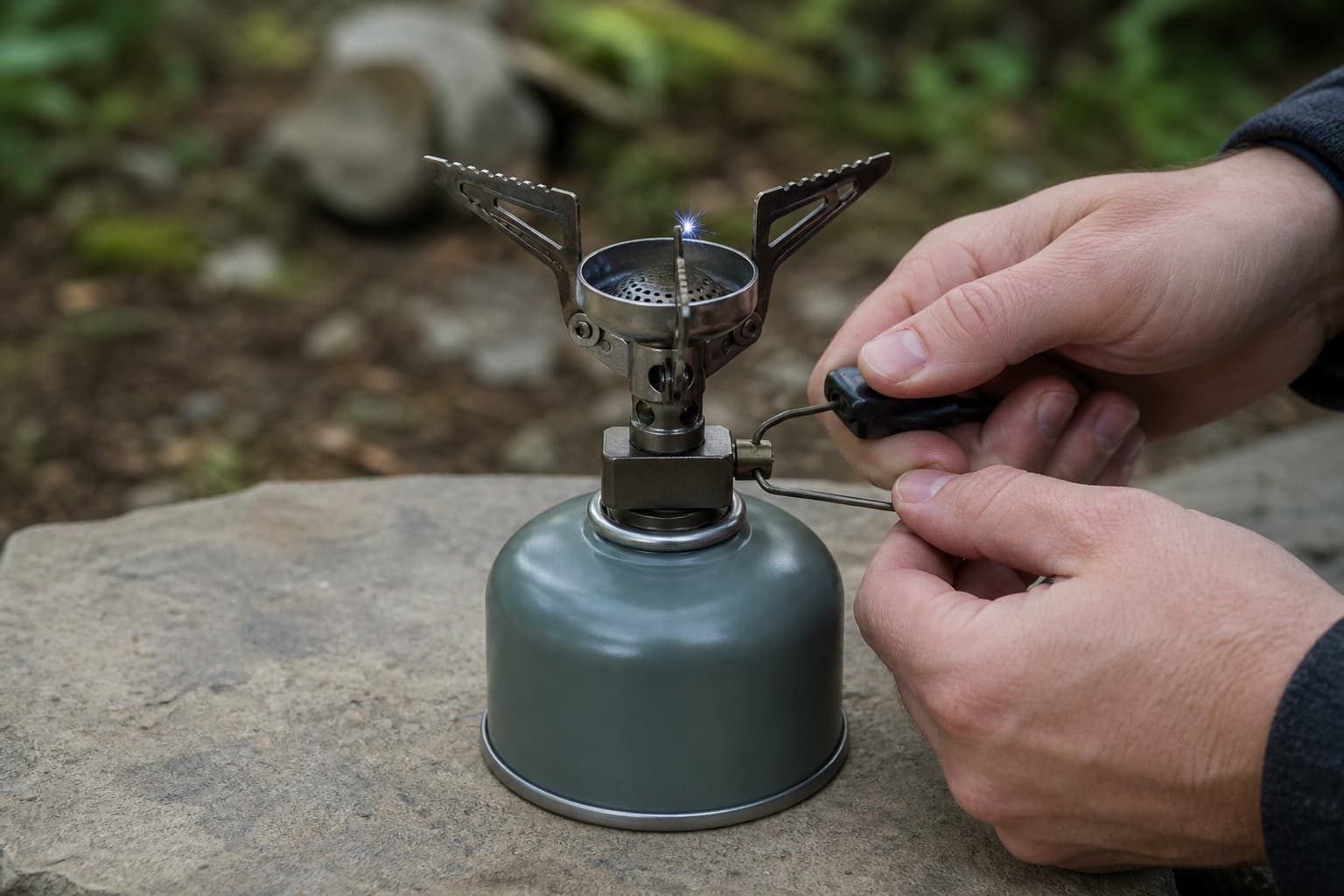
With the valve closed, look for a visible spark near the burner. A spark that lands against the stove body instead of near the burner ports may not ignite the fuel-air mixture. A wet or dirty electrode can also stop working.
Some stoves allow manual lighting with a long lighter. Only do that if the stove manual permits it, the stove is outdoors, and there is no fuel smell or pooled fuel. Close the valve and let unburned fuel disperse before another attempt.
5. Inspect, but do not improvise a repair
After disconnecting the fuel and letting the stove cool, look for dirt at the connector, damaged O-rings, bent burner parts, and clogged burner openings. Use only the cleaning tool and procedure named in the manual. A random needle can enlarge a calibrated jet and change how the stove burns.
When wind is the problem
Shelter the cooking area with terrain or a campsite windbreak while keeping generous ventilation. A windscreen can help some stoves, but enclosing a fuel canister can trap heat and create a serious hazard. Follow the stove maker's windscreen instructions and keep the fuel source outside any screen arrangement that could overheat it.
When to stop troubleshooting
Retire the stove from the trip if you find:
- Persistent fuel odor after closing the valve
- Liquid fuel around a fitting or burner
- A cracked hose, regulator, valve, or fuel bottle
- A cut, flattened, missing, or brittle O-ring
- Flames coming from anywhere except the burner
- A control valve that will not close reliably
Do not test a suspected leak with a match. Replace the approved part or have the manufacturer service the stove.
What is worth carrying
A reliable camp-kitchen repair pouch is small: the stove manual, its approved cleaning tool, a manufacturer-approved seal kit, a long lighter, and a backup meal that does not require cooking. For car camping, a second compatible fuel cylinder is more useful than a bag of improvised repair parts.
If the stove is old, unreliable, or mismatched to the way you camp, start with our best camping stoves and camp kitchen kit guides.
Frequently asked questions
Why does my stove click but not light?
The piezo may be sparking in the wrong place, the burner may be wet, wind may be carrying the fuel away, or fuel may not be reaching the burner. Close the valve before inspecting it.
Can I warm a cold fuel canister?
Bring it back toward normal ambient temperature passively. Never expose a canister to flame, a stove, a heater, boiling water, or another concentrated heat source.
Can I use a camping stove inside a tent if the door is open?
No. Combustion stoves produce carbon monoxide and can ignite tent fabrics. Use them outdoors and away from enclosed spaces.
Sources
Recommended gear
Our current top picks from the Best camping stoves for car camping (2026) guide, if you are ready to buy.
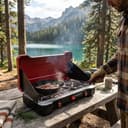
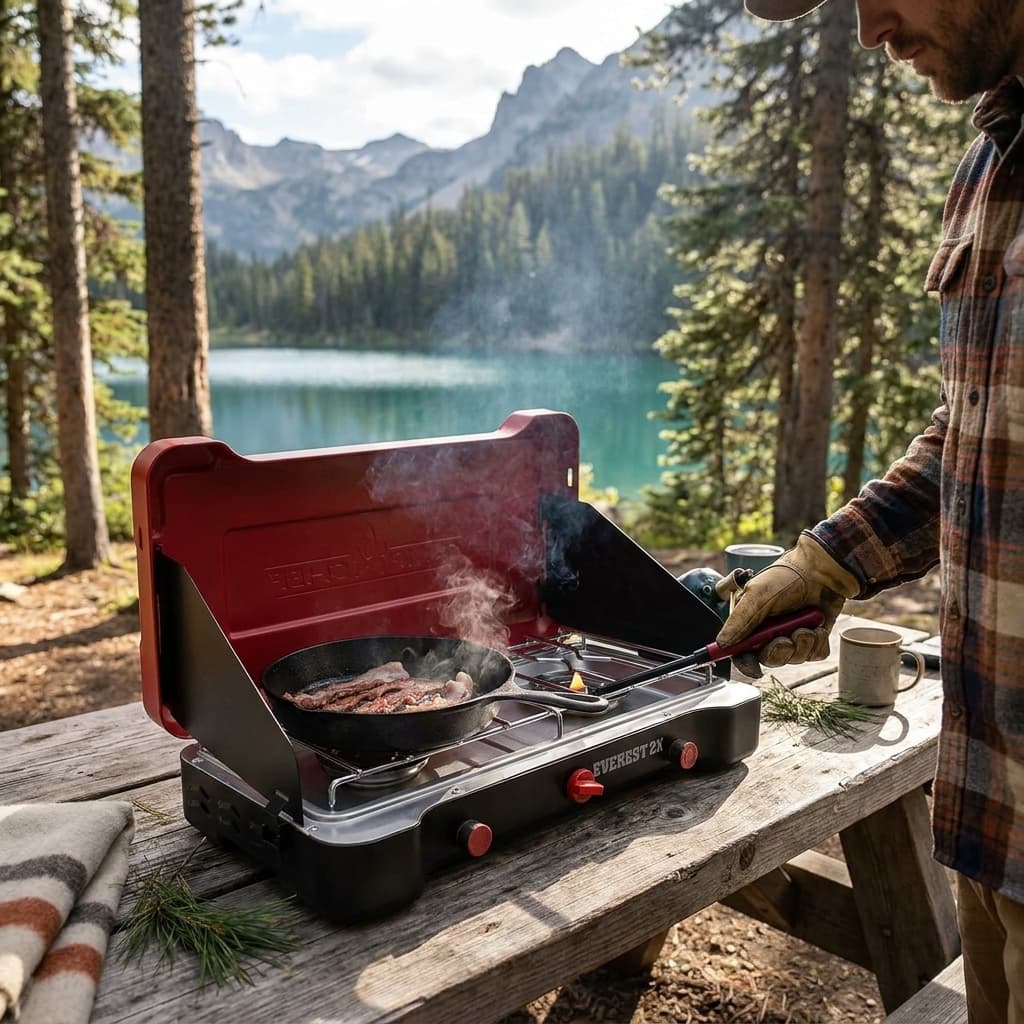
The Everest 2X is the most versatile two-burner propane stove in its class, pairing jet-level output with enough low-end control to hold a steady simmer. A three-sided folding windscreen lid and stainless steel burner heads handle breezy conditions that stall most competitors.
Best for: Car campers who want a single stove that can sear, saute, and simmer without compromise, and cook fast for groups of two to four.
- Exceptional simmer control despite high peak output: OGL rated simmering 9/10
- Near-seamless folding windscreen performs well in moderate wind; boil time barely affected by breeze in third-party testing
- At roughly 14 lbs it is bulkier and heavier than budget alternatives
- BTU output
- 40,000 total (20,000 per burner)
- Cooking surface
- 215 sq. in. (21 x 9.5 in.)
- Weight
- 14 lbs
- Packed dimensions
- 24 x 13 x 6 in.
- Ignition
- Matchless piezo
- Fuel
- Propane (1 lb canister or adapter for 5 lb tank)
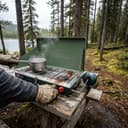
The Cascade Classic is Coleman's updated two-burner, the lightest full-size propane stove in its price bracket. Reviewers consistently note surprisingly precise simmer control for the price, though peak output is modest and wind resistance is below average.
Best for: Budget-conscious car campers who prioritize fuel economy and gentle heat control over raw speed, and do most cooking in sheltered sites.
- Lowest fuel consumption among two-burner propane stoves tested: ideal for multi-day trips
- Multi-turn knobs deliver fine simmer control: sauteing and sauce work are manageable
- Slow peak boil: averaged 6 min 39 sec for 1 liter, the slowest gas-powered stove in OGL testing
- BTU output
- 20,000 total (10,000 per burner)
- Cooking surface
- 240 sq. in. (20 x 12 in.)
- Weight
- 9.7 lbs
- Packed dimensions
- 21 x 13 x 3.5 in.
- Ignition
- Rotary piezo (matchless)
- Fuel
- Propane (1 lb canister)
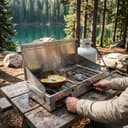
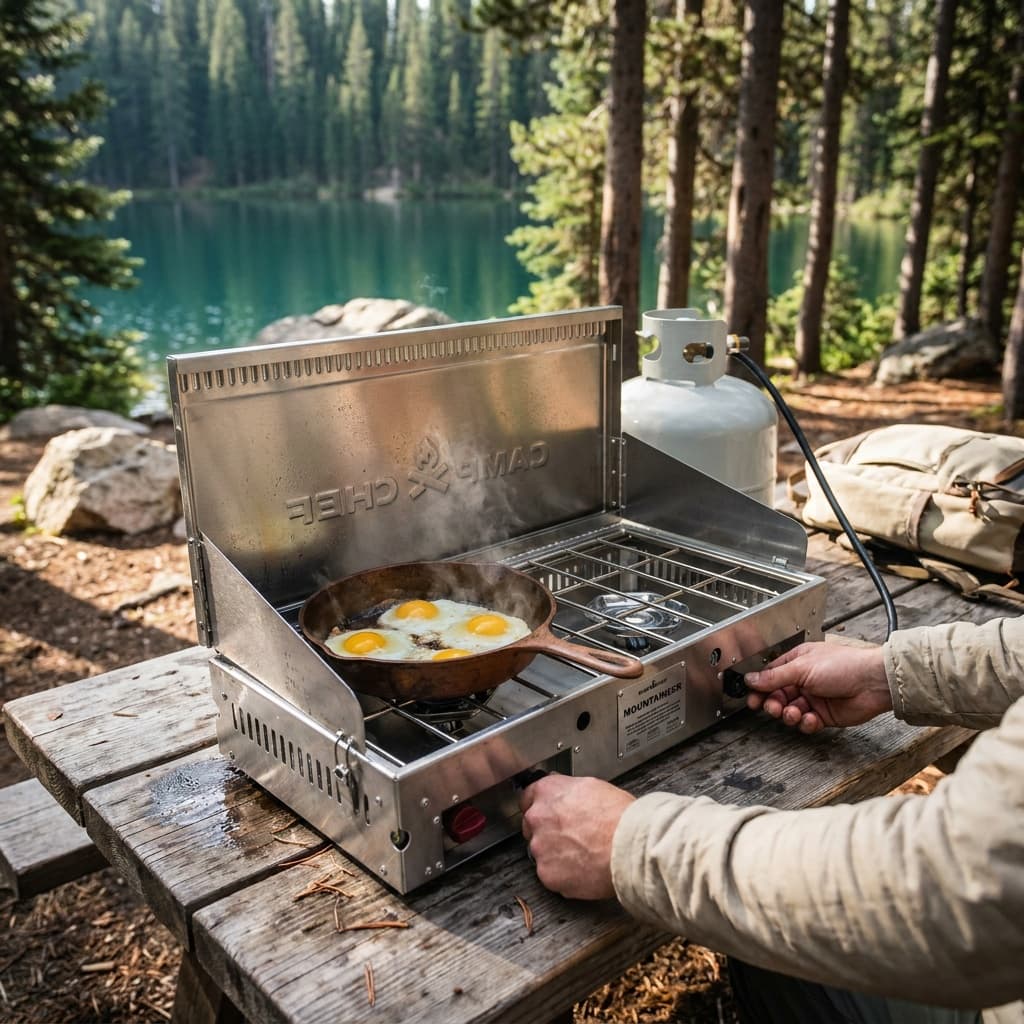
The Mountaineer is the most fuel-efficient stove in its BTU class and the most wind-resistant two-burner unit OGL has tested: only 40 seconds slower in windy versus calm conditions. Comes with a 5-foot hose and regulator for 20 lb propane tanks, a meaningful advantage for extended base camping or overlanding.
Best for: Overlanders, river-trip basecamp cooks, and serious outdoor chefs who cook daily in wind-exposed conditions and want a stove that can run on a 20 lb tank for a week without resupply.
- Top-rated fuel efficiency in OGL testing (10/10): the included 20 lb tank connection lowers per-meal fuel cost significantly
- Exceptional wind resistance: nearly no boil-time penalty in breezy conditions, outperforming every two-burner stove tested
- At $470 it costs roughly twice the Everest 2X for incremental rather than transformative performance gains over that stove
- BTU output
- 40,000 total (20,000 per burner)
- Cooking surface
- 302 sq. in. (24 x 12.5 in.)
- Weight
- 16 lbs
- Packed dimensions
- 25.25 x 13.75 x 5.25 in.
- Body material
- Rust-resistant aluminum
- Fuel
- Propane (compatible with 20 lb tank via included 5 ft hose and regulator)
Keep going
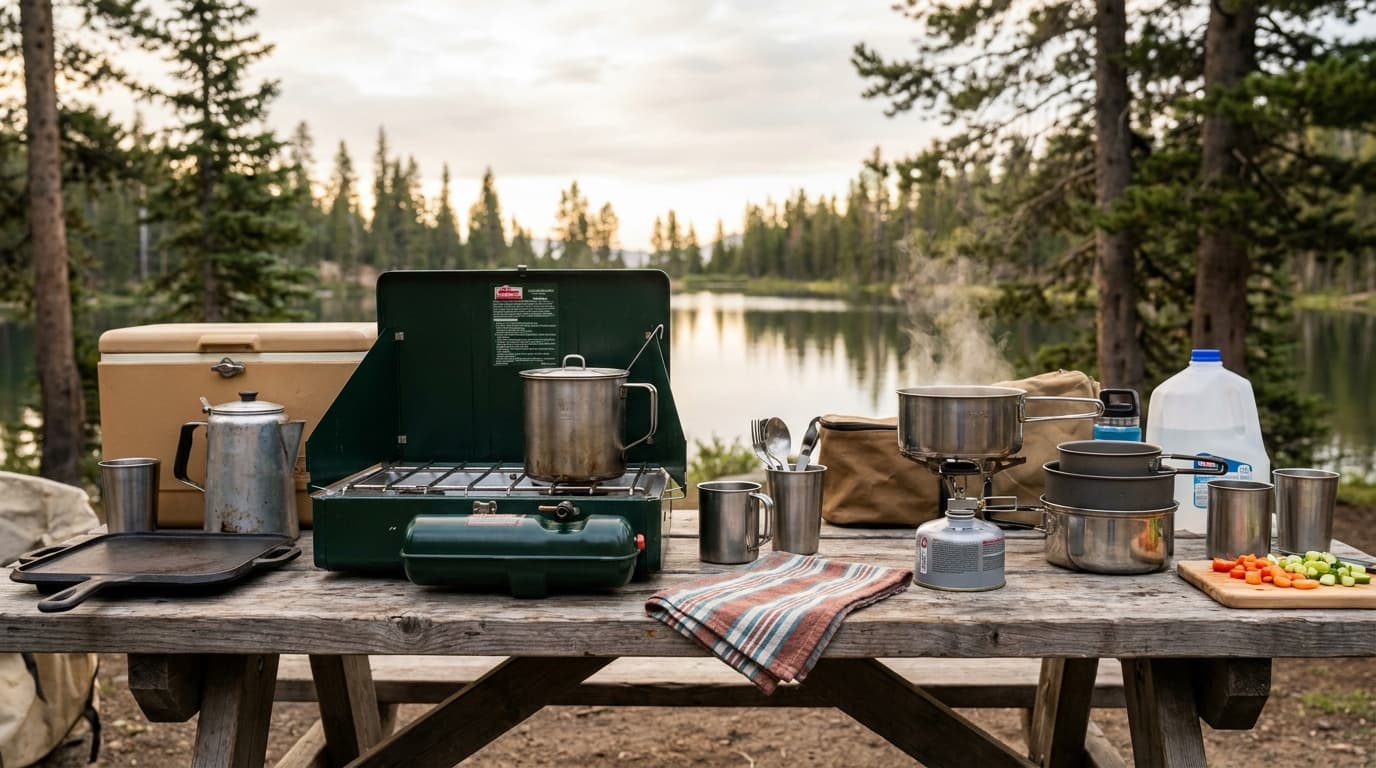
Complete loadoutCamp kitchen kitA durable base-camp cooking setup built around heat, cookware, coffee, cold storage, workspace, and water.
Our recommendations draw on manufacturer documentation, retailer listings, owner feedback, and comparisons with alternatives.
As an Amazon Associate I earn from qualifying purchases. We may earn a commission from links here, at no extra cost to you. How we research →