The lightest camera is not always the easiest one to travel with. A 360 camera can save a missed angle, then ask you to reframe and export the clip. A mirrorless body may be light by itself, but the lens, battery, mic, and charger are part of the carry. For a solo walk-and-talk, a built-in gimbal or a flip screen may save setup time that matters more than a few grams.
This guide compares five different ways to shoot travel video: a gimbal camera for solo movement, a 360 camera for flexible framing, a waterproof action camera, a fixed-zoom compact for talking to camera, and an interchangeable-lens hybrid. The useful question is which workflow you will actually carry and finish.
Quick comparison
| Shooting job | Camera and carry note | Main trade-off |
|---|---|---|
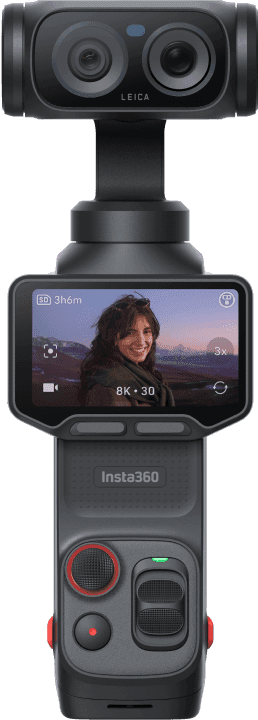
| Solo walking narration | Insta360 Luna Ultra, 233g camera | Built-in three-axis gimbal and detachable screen; protect the moving head in your bag |
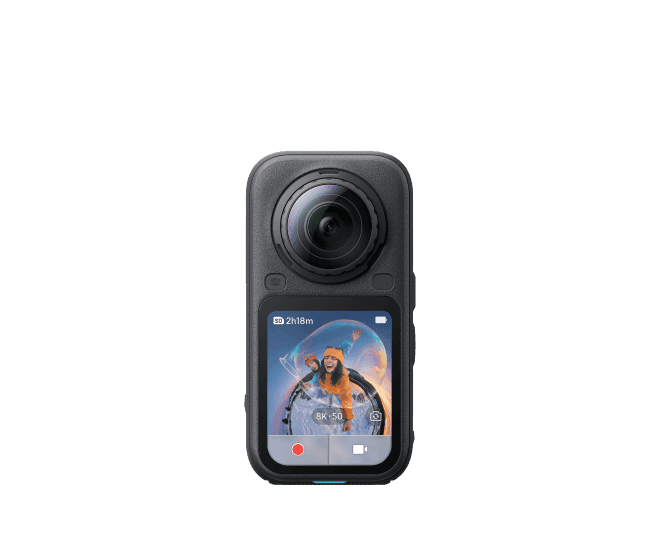
| Capture now, frame later | Insta360 X6, 196g camera | 360-degree recording gives framing freedom but adds app or editing work |
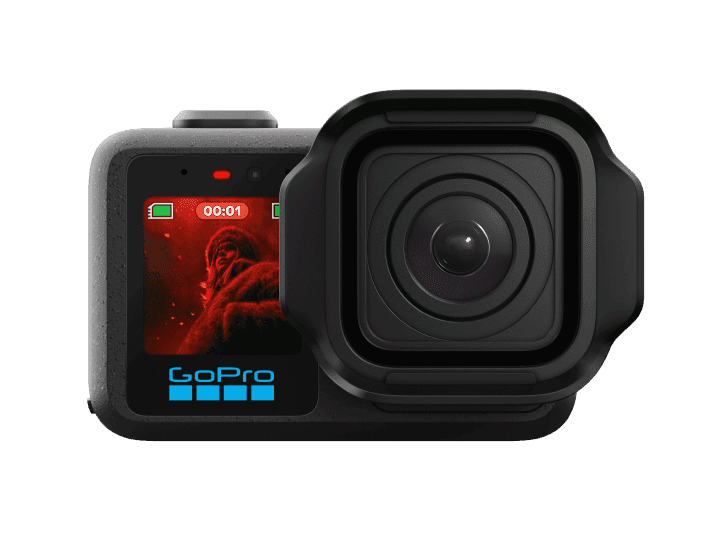
| Water, mounts, and action | GoPro MISSION 1 PRO, 207g camera | Waterproof to 20m without a housing; fixed lens with 15–27mm-equivalent view options |
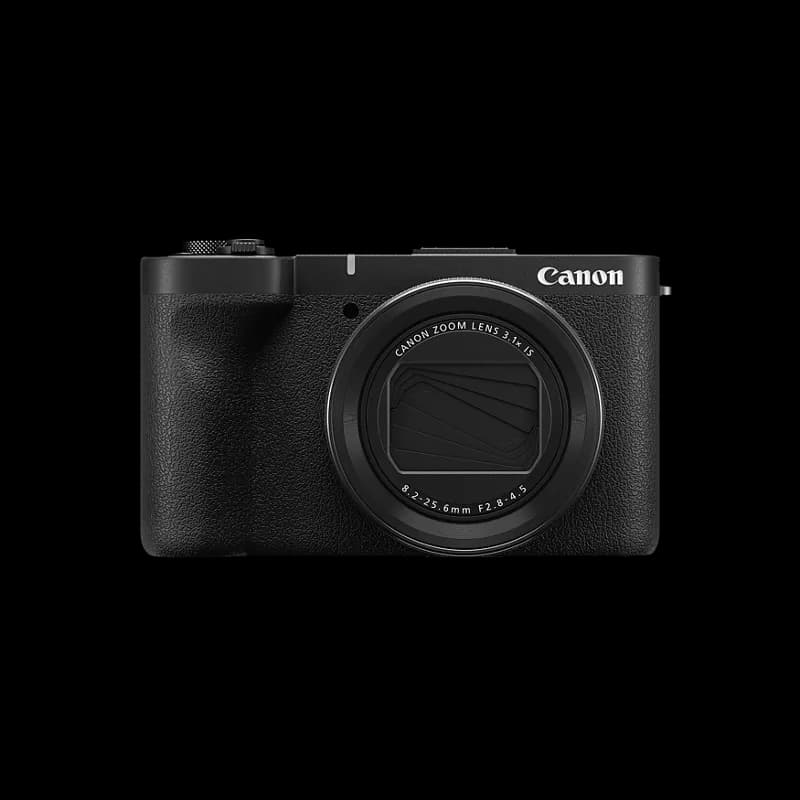
| Direct-to-camera with zoom | Canon PowerShot V1, 426g with battery and card | Fixed 17–52mm-equivalent video zoom plus mic and headphone jacks |
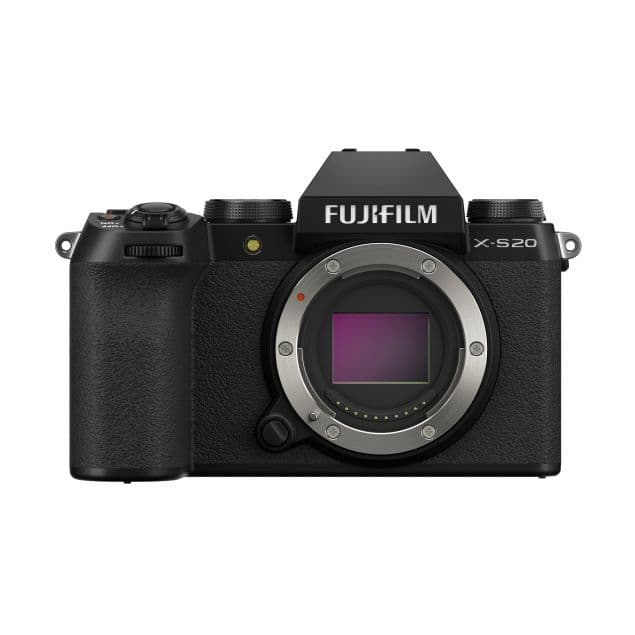
| Photos plus flexible video | Fujifilm X-S20, 491g body with battery and card | Add the lens and support you choose; more control also means more kit and editing decisions |
These are camera weights, not complete shooting-kit weights. The X-S20 figure is body-only with battery and card; add the lens you plan to carry. The Canon figure includes its battery and card. Audio, support, and charging gear add weight to every setup.
Solo walk-and-talk: Insta360 Luna Ultra
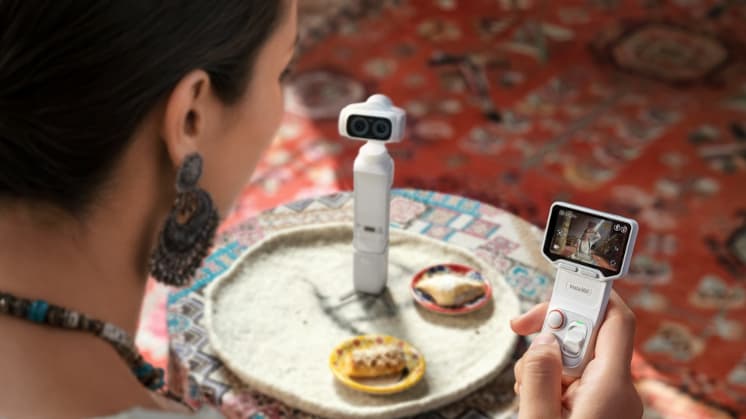
The Luna Ultra is the most direct fit if you often set a camera down, step into frame, and keep walking. Its three-axis mechanical gimbal handles stabilization in the camera, and the detachable touchscreen gives you a way to frame yourself remotely. The main camera uses a 20mm-equivalent lens; a second 60mm-equivalent telephoto lens gives you a tighter view without changing lenses. Insta360 lists the black camera at 233g and the white version at 235g. Its hardware specifications also list 47GB of internal storage and microSD support up to 2TB.
That integrated setup can mean less to assemble at a stop. It is still a moving gimbal camera, so give the head a protective space in your bag and avoid treating it like a sealed action camera. The official spec sheet does not give it a water-depth rating. For voice, Luna Ultra supports Insta360 Mic Pro and Mic Air systems directly; do not assume that means every wireless mic pairs without a receiver or cable. Check the exact microphone and firmware combination before you leave.
The solo-vlogging gimbal
Luna Ultra
Best for: Solo travelers who want stabilized, framed walk-and-talk footage without carrying a separate gimbal and phone.
- Mechanical stabilization is built into the camera
- The moving gimbal head needs more care in a crowded bag than a fixed-lens action camera
Check current price
Buy at B&HProduct details
A dual-lens gimbal camera for solo walk-and-talk clips and controlled handheld moves. The detachable screen can help frame a shot when you are filming yourself.
- Stabilization
- Three-axis mechanical gimbal
- Lenses
- 20mm and 60mm equivalent
- Camera weight
- 233g black; 235g white
More strengths
- Detachable screen can act as a remote framing display
- 20mm and 60mm equivalent lenses cover two useful views without swapping glass
Other tradeoffs
- Its 233g camera weight excludes the rest of a shooting and charging kit
- 4K or 8K high-bitrate clips still need a planned transfer and backup routine
Capture the whole scene, choose the angle later: Insta360 X6
The X6 suits a travel day where you cannot predict which direction the interesting moment will come from. Its two lenses record a 360-degree view, so you can reframe a conventional forward-facing clip or a different angle afterward. Insta360 lists 8K at up to 50 frames per second for 360 video, a 196g camera, and IPX8 protection to 20m without a dive case. Its internal storage provides 47GB available to the user, with microSD support up to 1TB. See the official X6 launch information and hardware specifications.
This is a different kind of “easy” than a point-and-shoot: you can aim later, but you have to review, reframe, and export the take. That adds time on a phone or computer and creates more working files. The protruding lenses also need protection in a crowded bag. If you are recording long days, check card space and battery plans before relying on internal storage alone.
The 360-degree option
X6
Best for: Travelers who want to capture an entire moving scene first and choose the camera angle later.
- Reframe the view after recording when the moment is hard to aim at
- 360 footage needs reframing and export before it behaves like a conventional shot
Check current price
Buy at Insta360Product details
A 360 camera for recording the whole scene and choosing the framing later. It trades a quick, ready-to-share clip for more decisions in the app or editor after the trip.
- Capture
- 360-degree video up to 8K at 50 fps
- Camera weight
- 196g
- Waterproofing
- 20m camera-only rating
More strengths
- Light camera body at 196g
- Manufacturer rates the camera IPX8 to 20m without a dive case
Other tradeoffs
- The exposed lenses need protection from knocks and abrasion
- Large captures add ingest, editing, and backup time
Wet and active clips: GoPro MISSION 1 PRO
The MISSION 1 PRO is the fixed-lens model in GoPro’s MISSION 1 lineup. GoPro lists 15–27mm-equivalent view options for the built-in lens. The separate MISSION 1 PRO ILS accepts Micro Four Thirds lenses and has a different water-resistance rating. Do not use an ILS body for a dive based on the PRO’s 20m rating. GoPro specifies that the fixed-lens MISSION 1 PRO is waterproof to 20m without a housing and weighs 207g. Its US series page compares the three cameras and explains the distinction.
For wet walks, boat trips, and mounts on a moving subject, that rated body and fixed wide view can be easier to manage than a gimbal. The trade-off is lens choice: digital view options do not replace an optical zoom or a longer lens. GoPro’s camera system also offers its own mounts and audio accessories, but check what is included in the specific bundle and whether your microphone needs a media mod, receiver, or adapter.
The fixed-lens action camera
MISSION 1 PRO
Best for: Wet, active travel where a small camera that can be mounted or used in water matters more than lens choice.
- Manufacturer rates MISSION 1 PRO waterproof to 20m without a housing
- The standard PRO uses a fixed lens; it is not the interchangeable-lens PRO ILS
Check current price
Buy at GoProProduct details
A fixed-lens compact cinema/action camera for outdoor clips where a sealed, mountable body matters more than changing focal length. The PRO ILS is a separate interchangeable-lens model.
- Lens
- Fixed lens; 15–27mm equivalent view options
- Camera weight
- 207g
- Waterproofing
- 20m without a housing
More strengths
- Built-in mounting points suit hands-free and fixed-position shots
- 207g camera weight stays close to the lightweight action-camera class
Other tradeoffs
- Its 15–27mm-equivalent view options remain wide, with no optical lens swap
- High-resolution recording calls for a fast card and frequent offloads
Direct-to-camera with a built-in zoom: Canon PowerShot V1
The PowerShot V1 is a compact option for a creator who wants more than an action camera’s fixed wide view but does not want to pack an interchangeable lens. Canon lists its non-interchangeable lens at 17–52mm-equivalent for video, a built-in three-stop ND filter, and a weight of 426g with battery and card. It has a 3.5mm microphone input and a separate 3.5mm headphone output, useful when you want to monitor a wired mic while recording. Canon’s US specifications list the connections and video modes; Canon’s manual confirms the stated battery-and-card weight.
The built-in zoom makes framing less wide when you are speaking to the camera, and the camera provides Canon Log 3 recording in 10-bit 4:2:2. That can help if you intend to grade footage, but log footage takes more work to make look finished. Canon notes that compatibility with plug-in-powered microphones varies by manufacturer, so check the microphone’s power requirements rather than assuming any 3.5mm mic will behave the same. Its 4K60 mode is cropped, which narrows the view further.
The fixed-zoom compact
PowerShot V1
Best for: Creators who want a grab-and-go compact with zoom framing and conventional wired audio monitoring.
- Built-in 3.1x zoom spans wide to short-telephoto framing
- The lens is fixed, so you cannot swap to a longer or faster lens
Check current price
Buy at CanonProduct details
A fixed-zoom compact for direct-to-camera video when you want a built-in lens range, mic input, headphone monitoring, and a three-stop ND filter in one body.
- Lens
- Fixed 17–52mm equivalent video zoom
- Camera weight
- 426g with battery and card
- Audio
- 3.5mm mic input and headphone output
More strengths
- Mic and headphone jacks support a wired audio workflow
- Built-in ND filter and cooling fan suit longer video sessions
Other tradeoffs
- At 426g it is heavier than the gimbal and action cameras here
- 4K60 is cropped, so compare its narrower view with the angle you need
Still photos and more lens choice: Fujifilm X-S20
The X-S20 is the one to consider if still photographs matter as much as video, or if you already know which lens you want for the trip. It uses Fujifilm X-mount lenses, records 6.2K 3:2 video, and offers internal 4:2:2 10-bit recording. Fujifilm lists the body at 491g with battery and card. That body weight does not include a lens. The US specification page lists the recording options, weight, and separate microphone and headphone sockets.
Lens choice gives you room to change the framing, but the lens is part of the camera you carry. Add its weight, any microphone, spare battery, and support before comparing this with the all-in-one cameras above. 10-bit or log recording can preserve room for color work, with larger files and a grading step in return. If your goal is mostly short clips with minimal editing, that flexibility may not repay the setup.
The interchangeable-lens hybrid
X-S20
Best for: Photo-first travelers who also want flexible video framing and are comfortable choosing lenses and managing larger files.
- X-mount lenses let you build a lens kit around the trip
- The 491g figure is body-only with battery and card; add the lens and any grip or mic
Check current price
Buy at FUJIFILMProduct details
An interchangeable-lens APS-C camera for a traveler who also wants a capable stills camera and expects to manage lens choice, focus, exposure, and post-production.
- Lens mount
- Fujifilm X mount
- Body weight
- 491g with battery and card
- Video
- 6.2K 3:2, internal 4:2:2 10-bit
More strengths
- Records 6.2K 3:2 video and internal 10-bit 4:2:2 options
- Mic and headphone jacks support external audio and monitoring
Other tradeoffs
- Lens swaps, spare batteries, and support add packing and setup work
- High-bitrate formats and log profiles need more storage and a color workflow
Choose for the work after recording
Audio and support can change the carry more than the camera body. The Luna Ultra's direct mic pairing is a specific Insta360 ecosystem feature. The Canon and Fujifilm offer standard 3.5mm mic inputs and headphone monitoring; with Canon, check plug-in power on the exact mic. GoPro bundles and add-ons differ, so check the parts list for the option you plan to buy. A compact support, light, monitor, sound setup, or power kit belongs in the same packing decision. Our compact travel video kit compares those add-ons.
Then estimate where the footage goes. 360 captures need reframing before they look like normal camera shots. 10-bit log and high-resolution modes need a computer or phone workflow that can decode them, plus room for original clips and exports. Copy the files to a second device or drive before clearing cards. See our guides to rugged portable SSDs for travel and backing up travel photos and video. For editing away from home, the portable workstation guide covers a laptop-first setup, and cool travel tech gathers more small gear ideas.
Frequently asked questions
Which compact travel camera is easiest for solo video?
For a walk-and-talk, the Insta360 Luna Ultra combines mechanical gimbal stabilization with a detachable screen for framing yourself. If the camera will be clipped to you or used around water, consider the fixed-lens GoPro MISSION 1 PRO instead. The more useful choice depends on whether you need a moving gimbal or a waterproof body.
Is the Insta360 X6 a good choice if I do not want to edit?
It is best when you want to choose the framing after the moment. Reframing and exporting are part of the workflow, so a conventional action or compact camera is simpler if you want a finished clip straight from the camera.
Can I change lenses on the GoPro MISSION 1 PRO?
No. MISSION 1 PRO has a fixed lens with digital view options. MISSION 1 PRO ILS is a separate camera for Micro Four Thirds lenses. The ILS has a different weather and water rating, so check the exact model before underwater use.
Do I need a camera with a microphone input for travel video?
For speech, use a microphone system that is compatible with the camera, whether it connects directly or through a receiver. Built-in microphones can capture ambient sound and may suit a short clip in a quiet place, but check the recording before relying on them for narration. The Canon V1 and Fujifilm X-S20 have 3.5mm mic inputs and headphone outputs. Confirm microphone power, receiver, cable, and camera compatibility before packing.
How much storage should I bring for travel video?
There is no single card size that fits every recording mode and trip length. Higher resolution, frame rates, and bit rates increase file size. Test the settings you plan to use and check available internal and card storage. Before reusing a card, keep two verified copies of the originals on separate devices, such as a laptop and a separate drive.
Sources and method
Published specifications and product pages checked October 28, 2026. This is a specifications-based comparison, not a hands-on test. Product imagery: respective manufacturers.
- Insta360 Luna Ultra hardware specifications and Luna Ultra launch article
- Insta360 X6 hardware specifications and X6 launch article
- GoPro MISSION 1 US product comparison and MISSION 1 announcement
- Canon PowerShot V1 US support and specifications
- Canon PowerShot V1 manual and battery-and-card weight
- Fujifilm X-S20 US specifications
Product photographs are original, unaltered manufacturer images. They show product configurations and scenes selected by the manufacturers; an image does not establish that pictured accessories are included with every bundle.
Keep going
Related buying guideBest travel duffel bags: top picks for every trip
Our recommendations draw on manufacturer documentation, retailer listings, owner feedback, and comparisons with alternatives.
As an Amazon Associate I earn from qualifying purchases. We may earn a commission from links here, at no extra cost to you. How we research →