We may earn a commission from links on this page, at no extra cost to you.
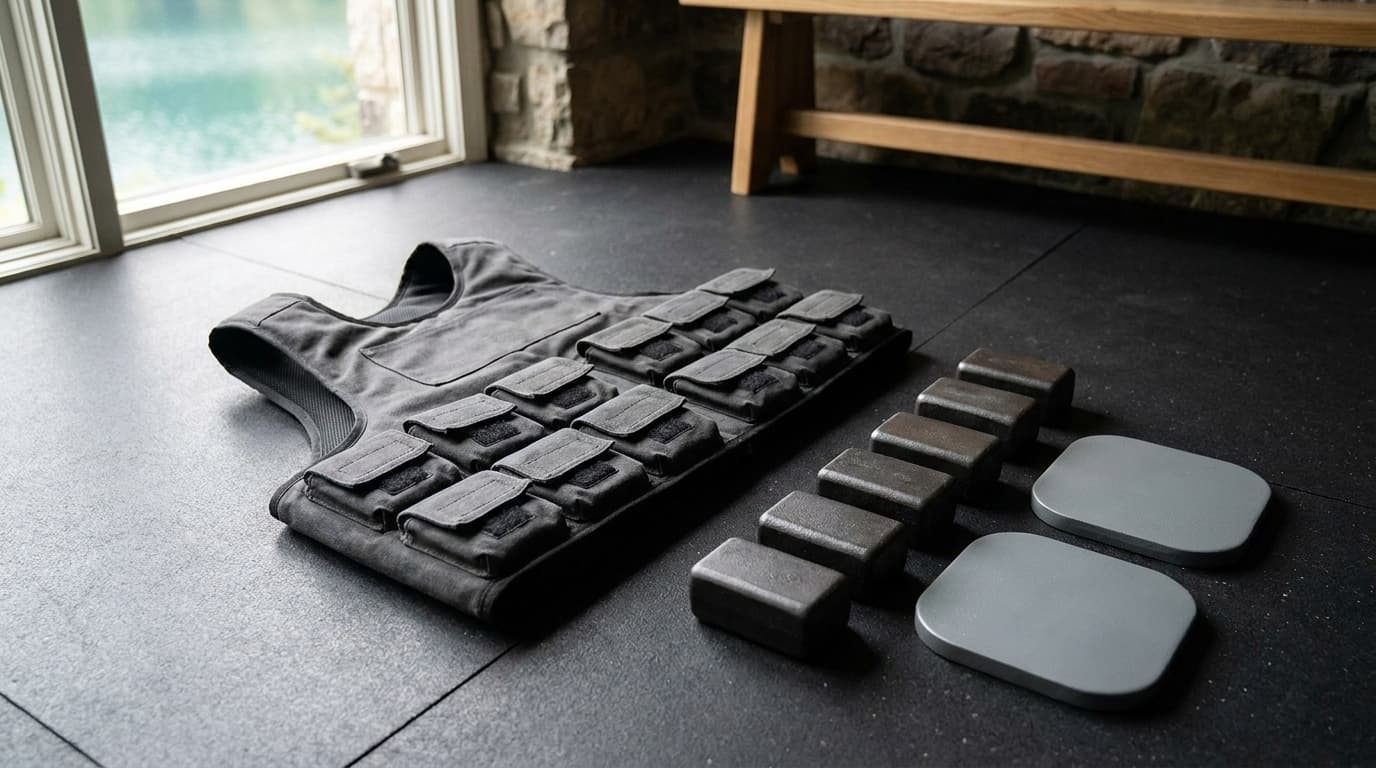
Weighted vest weights are rarely interchangeable. Each brand sizes its pockets around its own weights: 3 lb iron bars in miR vests, 2.25 oz steel plates (two per pocket) in the Hyperwear Hyper Vest PRO, and a single large curved plate per side in plate carriers like 5.11's and GORUCK's. GORUCK says its curved plates fit only its own Rucking Weight Vest. So buy replacement weight from your vest's maker, load it evenly front and back, and fix bounce by snugging the lower straps before you touch the shoulder straps.
Which weights fit which vest
The table covers the vests Kit recommends most often, plus the two plate carriers people most often ask about. Sizes and counts come from the makers' pages and listings, cited at the end of this guide.
| Vest | Weight system | Weight pieces | How pieces load | Swap with other brands? |
|---|---|---|---|---|
| miR Air Flow and other miR vests | Removable solid iron bars | 3 lb each; listing copy gives about 4 x 2.5 x 1.5 in | Velcro pockets, front and back; the Air Flow tops out at 60 lb | miR sells bar sets for all its vests. The listing copy says other vests may work if the pockets are big enough |
| Hyperwear Hyper Vest PRO and ELITE | Galvanized steel plates | 2.25 oz each, 1/4 in thick; a 5 lb pack holds 36 | Two per pocket in the PRO; load front and back from the center out | Hyperwear says compatibility with other brands is not guaranteed, and these do not fit the FIT |
| Hyperwear Hyper Vest FIT (women's) | Steel weights | 1/2 lb each, 10 lb maximum | One per pocket, loaded from inside the vest | FIT weights only; they do not fit the PRO or ELITE |
| ZELUS classic (iron sand) | Sewn-in iron sand | Fixed: 6, 8, 12, 16, 20, 25, or 30 lb | Chosen at purchase | Nothing to swap |
| ZELUS women's adjustable (Z-Fit) | 16 removable soft iron weights | Up to 15 lb total | Balanced front and back; ZELUS suggests starting at 2 to 4 lb | ZELUS weights only |
| 5.11 TacTec Trainer | Plate carrier | 5.11 V2 plate: 12.5 x 9.5 in, 7.6 mm thick, curved steel, 8.75 lb | One plate front, one back, held by an internal strap and a closure flap | 5.11 lists its own and Rogue plates as compatible |
| GORUCK Rucking Weight Vest | Plate carrier | Curved Ruck Plates: 12.5 x 10.5 in, sold in pairs of 6.25, 9.25, or 14.25 lb | One plate front, one back | GORUCK says the plates fit this vest only |
Two patterns stand out. Walking vests (miR, Hyperwear, ZELUS) split the load into many small pieces, so the vest bends with your torso. Plate carriers put all the weight in two rigid slabs, which is simpler to load but less forgiving of a poor fit. If you are choosing between the two styles, our weighted vest vs rucking guide explains which one suits which kind of training.
Curved vs flat plates
If you use a plate carrier, plate shape matters more than almost anything else about fit.
A flat plate touches your chest at the center, and its edges stand away from your ribs. With every stride the plate can rock on that contact point. You feel it as bounce and as a hard spot on the sternum.
A curved plate follows the shape of the rib cage, so the load spreads across a wider area and the edges stay close to your body. 5.11 describes its V2 plate as having "ergonomic compound curvature" so it stays close to the body. GORUCK goes a step further: it cuts a hole in the middle of its curved plates to take the weight off your diaphragm, and it uses a swimmer's cut and a lower neckline so your arms can move freely.
Small-piece walking vests avoid the problem a different way. A row of 3 lb bars or a grid of 2.25 oz plates bends around your torso because each piece is small. That is a big reason they are more comfortable for daily walking than a carrier with two slabs.
Replacement and extra weights: buy from your vest's maker
Pocket sizes are designed around one weight shape. A piece that is slightly too big strains the pocket seams. A piece that is too small shifts and bangs around. Buying from the maker avoids both.
- miR: sold as sets of 3 lb iron bars for miR vests, belts, and shorts. Every bar adds 3 lb, so adding one bar to the front and one to the back means 6 lb jumps.
- Hyperwear PRO and ELITE: a 5 lb booster pack of 36 galvanized steel plates, 2.25 oz each. Hyperwear sells a separate 5 lb pack for the FIT.
- ZELUS classic: the iron sand is fixed in the vest, so there are no refills. If a fixed vest feels too light, most walkers are better served by an adjustable vest than by a second fixed one. Our best adjustable weighted vests guide compares the options, and the miR Air Flow is the top overall pick in Kit's weighted vest guide.
- Plate carriers: use plates the vest maker lists as compatible. 5.11 lists 5.11 and Rogue plates for the TacTec Trainer; GORUCK's curved plates are for the GORUCK Rucking Weight Vest only.
Stay under the vest's rated maximum. The Hyper Vest PRO tops out at 20 lb in a small, 25 lb in a medium, 30 lb in a large, and 40 lb in an extra large. The miR Air Flow maxes out at 60 lb, and the Hyper Vest FIT at 10 lb. Makeshift fillers like sandbags, loose sand, or cut steel shift inside pockets and can have sharp edges, so skip them.
Torso length and fit
A vest that fits your chest can still be the wrong length for your torso. Check both before you judge a vest by how it feels.
Check your fit in three measurements
Chest
Measure around the fullest part of your chest (bust for women's charts) and compare it with the maker's chart. Hyperwear lists the PRO at 31 to 34 in for a small, 35 to 38 in for a medium, 39 to 42 in for a large, and 43 to 46 in for an extra large.
Torso
Measure from the notch at the base of your neck down to your navel, then compare it with the vest's panel height where the maker lists one. GORUCK's vest panels are 13 in tall at the tallest point, and 5.11's TacTec Trainer is 13 in tall. A panel that reaches past your waistband will dig in when you bend or climb stairs.
Movement
With the vest loaded, swing your arms as if walking briskly and take a deep breath. You should be able to do both without the armholes rubbing or the front panel squeezing your ribs.
Sizing notes from the makers:
- Hyperwear says its PRO sizes run small and to size up when in doubt. It gives the same advice to people with a larger bust or osteoporosis.
- Hyper Vest FIT sizes by bust, height, and body weight. A small is 30 to 34 in bust and 4 ft 8 in to 5 ft 3 in. A large is 38 to 43 in bust and 5 ft 6 in to 6 ft. The FIT puts no weight over the bust area.
- ZELUS classic is one size with buckle straps. ZELUS's own page lists a 35 to 45 in chest; the Amazon listing says 31.5 to 45 in. If you are near either end, measure first.
Women who find that standard vests press on the bust should start with our best weighted vests for women guide, which focuses on contoured and bust-free designs.
Stop the bounce
A vest bounces when the load can move independently of your torso. The fix is almost always in the loading and the order you tighten things, not in adding more straps.
Fix a bouncing weighted vest
Balance the load
Put equal weight front and back. Hyperwear's instruction is to load "evenly front and back from the center out."
Keep it low and central
Fill the pockets nearest your spine and sternum first, and keep the weight below the collarbones.
Snug the bottom first
Tighten the waist or bottom straps until the vest cannot slide up and down. miR's listing says to adjust the bottom straps to keep the vest snug to your body.
Then the sides
Pull in the side lacing on vests that have it (Hyperwear and the ZELUS women's vest) so the panels hug your ribs.
Shoulders last
Adjust the shoulder straps only enough to keep the vest level. If you crank them down first, the vest hangs from your neck.
Walk test
Walk briskly for a minute. If it still bounces at walking pace, the vest is too big or the load is too heavy for that vest.
UCLA Health's sports medicine guidance puts it simply: the vest should fit so the weight is evenly distributed and the vest will not shift as you move. If you also plan to run in it, our guide to running with a weighted vest covers the tighter fit and lighter loads that running needs.
Neck, rib, and shoulder pressure
Pressure usually points to one specific cause. Match where you feel it to the likely fix.
| Where you feel it | Likely cause | Try this |
|---|---|---|
| Neck and the top of the shoulders | Shoulder straps carrying all the load, or the vest riding high | Loosen the shoulders, snug the waist so your torso carries the weight, and balance front and back |
| Lower ribs, or you cannot take a full breath | Waist strap cinched over the ribs, or a flat plate pressing the diaphragm | Move the strap below the rib cage; use a curved plate or a lighter load |
| Sternum or bust | Front panel too wide, or weight sitting over the chest | Choose a contoured or bust-free design, such as the Hyper Vest FIT |
| Armpits | Armholes too tight, or shoulder straps too long so the vest drops | Size up, or shorten the shoulder straps slightly |
| Tingling or numbness in the arms or hands | Straps compressing the shoulders | Stop, take the vest off, and reduce the load; see a clinician if it keeps happening |
UCLA Health's guidance also says that anyone with back or neck injuries, or arthritis in the hips, knees, or ankles, should talk to a doctor before starting a weighted vest program. Our guide to whether weighted vests are safe covers who should be careful.
Chafing: where it starts and how to stop it
Chafing comes from edges moving against skin. Most of it happens at the armholes, the neckline, and under the side straps.
- Wear a fitted base layer that covers every contact point. A snug, moisture-wicking shirt with sleeves or wide shoulders keeps the vest's edges off bare skin. Avoid thick seams under the straps.
- Fix the movement, not just the rubbing. A vest that chafes at the armpit is usually loose or too large. Tighten it using the bounce steps above, or size down.
- Watch the neckline. If the collar rubs your neck, the vest is riding high. Loosen the shoulders and snug the waist.
- Keep it clean. Dried sweat stiffens fabric. miR says to remove the weights, machine wash, and tumble dry low. Hyperwear says to hand wash the PRO in mild detergent and air dry it. ZELUS says to wipe the classic iron-sand vest with a damp cloth.
How to add weight safely
The goal is steady progress without pain, so add weight slower than you think you need to.
- Start near 5% of your body weight. UCLA Health's guidance is about 5%, which is roughly 7.5 lb for a 150 lb person. Our weighted vest calculator does the math for your body weight and goal.
- Change one thing at a time. UCLA suggests adding a little weight, or keeping the same weight and walking farther, faster, or up more hills, but not all at once.
- Add weight in pairs. Put a piece in the front and a matching piece in the back so the vest stays balanced. On a miR vest that means 6 lb steps (two 3 lb bars). On a Hyperwear PRO a pair is 4.5 oz, so you can add weight in very small steps.
- Stop if something hurts. Joint pain, pain that lasts into the next day, or tingling in your arms means you should drop back to the last load that felt fine.
For a fuller guide to target loads by goal and body weight, read how much a weighted vest should weigh.
When to exchange or return a vest
Some fit problems cannot be adjusted away. Consider an exchange if:
- The vest still bounces at walking pace with a light, balanced load and every strap snug.
- Neck or rib pressure comes back every session even after the adjustments above.
- The panel runs past your waistband, or the armholes rub no matter how you set the straps.
- You measured between two sizes and chose the smaller one. Hyperwear says its PRO sizes run small.
Check the return window as soon as the vest arrives. Weight Vest Deals, a miR retailer, lists a 30-day money-back guarantee and a 30-day exchange policy on it. If you are starting over, our best weighted vests guide ranks the field.
Frequently asked questions
Can I use miR weights in a different brand's vest?
Sometimes, but it is not guaranteed. miR's 3 lb bars measure about 4 by 2.5 by 1.5 inches in the listing copy, and that copy says they may fit other vests if the pockets are large enough. Measure an empty pocket before you buy. Hyperwear and GORUCK both say their weights are designed for their own vests.
Are curved plates worth it for walking?
For a plate carrier, yes. Curved plates follow the rib cage, so they bounce less and press less on the sternum than flat plates. GORUCK even cuts a hole in its plates to take weight off the diaphragm. If you mostly walk, a vest made of small bars or micro-plates, like miR or Hyperwear, bends with your body without needing curved plates at all.
Why does my weighted vest bounce when I walk?
Usually the load is unbalanced, sitting too high, or the vest was tightened in the wrong order. Load equal weight front and back from the center out, snug the waist straps first, then the side lacing, then the shoulders. If it still bounces at walking pace, the vest is too big or the load is too heavy for it.
How tight should a weighted vest be?
Snug enough that it does not move when you walk briskly, but loose enough to take a full, deep breath. If you cannot breathe fully, the waist strap is probably sitting on your lower ribs. Move it lower or loosen it slightly.
Can I wash a weighted vest with the weights in?
Follow the maker. miR says to remove the weights and machine wash. Hyperwear says to hand wash the PRO in mild detergent and air dry it. ZELUS says to wipe the classic iron-sand vest with a damp cloth, and the ZELUS women's adjustable vest can be machine washed with the weights removed.
Where these numbers come from
| Claim | Source | Checked |
|---|---|---|
| miR Air Flow: 3 lb solid iron weights, 20 to 60 lb configurations, 60 lb maximum, adjustable bottom and shoulder straps, machine wash with weights removed, 30-day money-back and exchange | miR Air Flow product page, Weight Vest Deals | Sep 25, 2026 |
| miR Air Flow: "Adjust the bottom straps" to keep the vest snug; machine washable with weights removed | Amazon listing, ASIN B016NI0ZL6, read through the Amazon Creators API | Sep 25, 2026 |
| miR 3 lb iron bars: about 4 x 2.5 x 1.5 in; fit all miR vests, belts, and shorts; may fit other vests with large enough pockets | miR 3 lb iron weight set, retailer listing copy | Sep 25, 2026 |
| Hyper Vest PRO: 2.25 oz steel weights, two per pocket, maximum 20 / 25 / 30 / 40 lb by size, chest sizes 31 to 46 in, sizes run small, load "evenly front and back from the center out," hand wash | Hyperwear, Hyper Vest PRO | Sep 25, 2026 |
| 5 lb pack of 36 galvanized steel weights, 1/4 in thick, for PRO and ELITE only; not for FIT; other brands not guaranteed | Hyperwear, 5 lb weights for PRO or ELITE | Sep 25, 2026 |
| Hyper Vest FIT: 1/2 lb weights, one per pocket, 10 lb maximum, size chart by bust, height, and body weight, no weight over the bust, FIT weights not compatible with PRO or ELITE | Hyperwear, Hyper Vest FIT | Sep 25, 2026 |
| ZELUS classic: iron sand, fixed 6 to 30 lb, 35 to 45 in chest | ZELUS, Classic X-Shaped vest | Sep 25, 2026 |
| ZELUS classic: 31.5 to 45 in chest on buckle straps, wipe with a damp cloth | Amazon listing, ASIN B07518RBH2, read through the Amazon Creators API | Sep 25, 2026 |
| ZELUS women's adjustable: 16 soft iron weights, up to 15 lb, start at 2 to 4 lb, front zipper and side lacing, machine wash with weights removed | Amazon listing, ASIN B0F93ZKH13, read through the Amazon Creators API | Sep 25, 2026 |
| 5.11 V2 plate: 12.5 x 9.5 in, 7.6 mm, curved steel, 8.75 lb, "ergonomic compound curvature," fits TacTec Trainer | 5.11, 8.75 lb Weight Vest Plate V2 | Sep 25, 2026 |
| TacTec Trainer: 13 x 10 in, compatible with 5.11 and Rogue plates, internal retention strap | 5.11, TacTec Trainer Weight Vest | Sep 25, 2026 |
| GORUCK Curved Ruck Plates: 12.5 x 10.5 in, 6.25 / 9.25 / 14.25 lb, cast iron, center hole for breathing, Rucking Weight Vest only | GORUCK, Curved Ruck Plates | Sep 25, 2026 |
| GORUCK Rucking Weight Vest panels: 11 x 13 in at the widest and tallest point | GORUCK, Rucking Weight Vest | Sep 25, 2026 |
| Start near 5% of body weight; progress weight or distance gradually; the vest should not shift; people with back or neck injuries or joint arthritis should talk to a doctor | UCLA Health, Should you walk with a weighted vest? | Sep 25, 2026 |
We did not wear or measure these vests ourselves. Sizes, counts, and capacities are the makers' published figures. The fit fixes are practical guidance built from how each design loads, not claims from a lab.
For picks, see our guides to the best weighted vests and the best weighted vests for women. Browse all fitness guides or read how we research and rate gear.
Recommended gear
Our current top picks from the Best weighted vests 2026: 4 scored picks from $32 to $240 guide, if you are ready to buy.
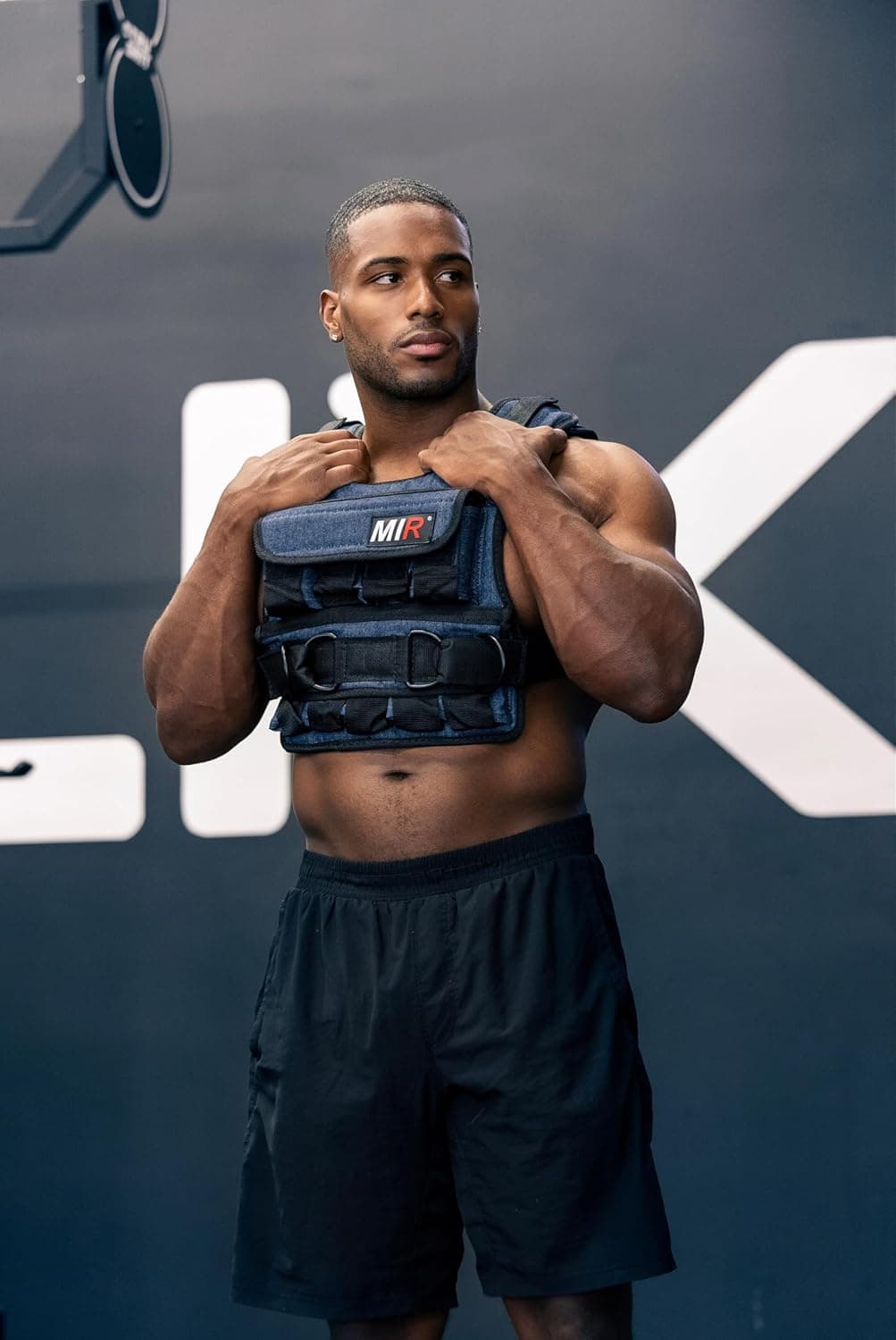
- Weight range
- 20 lb, 30 lb, 40 lb, 50 lb, 60 lb configurations
- Fill type
- Removable 3 lb iron bars
- Vest length
- Short style, approx. 11 in. from collarbone
- Adjustability
- Adjustable shoulder and bottom straps; zipper option available
- Washability
- Machine washable (remove weights first)
- Warranty
- Lifetime
The miR Air Flow uses a short, torso-hugging cut and removable solid iron plug weights to keep load close to center of gravity, which is the core reason it earns the top slot. The hybrid mesh-composite shell pulls moisture off skin and allows circulation, so heat buildup during long walks or outdoor conditioning sets stays manageable.
Best for: Walkers and conditioning athletes who want easy in-session weight changes, lasting build quality, and a vest that stays put without shoulder padding on long efforts.
- Short vest profile rides high and tight, preventing the downward shift and shoulder dig common in longer designs during calisthenics and loaded walks
- Removable 3 lb bars allow repeatable load changes without replacing the vest
- Bulkier silhouette than compression-style or ultra-thin vests, which can limit range of motion in overhead pressing movements

- Available weights
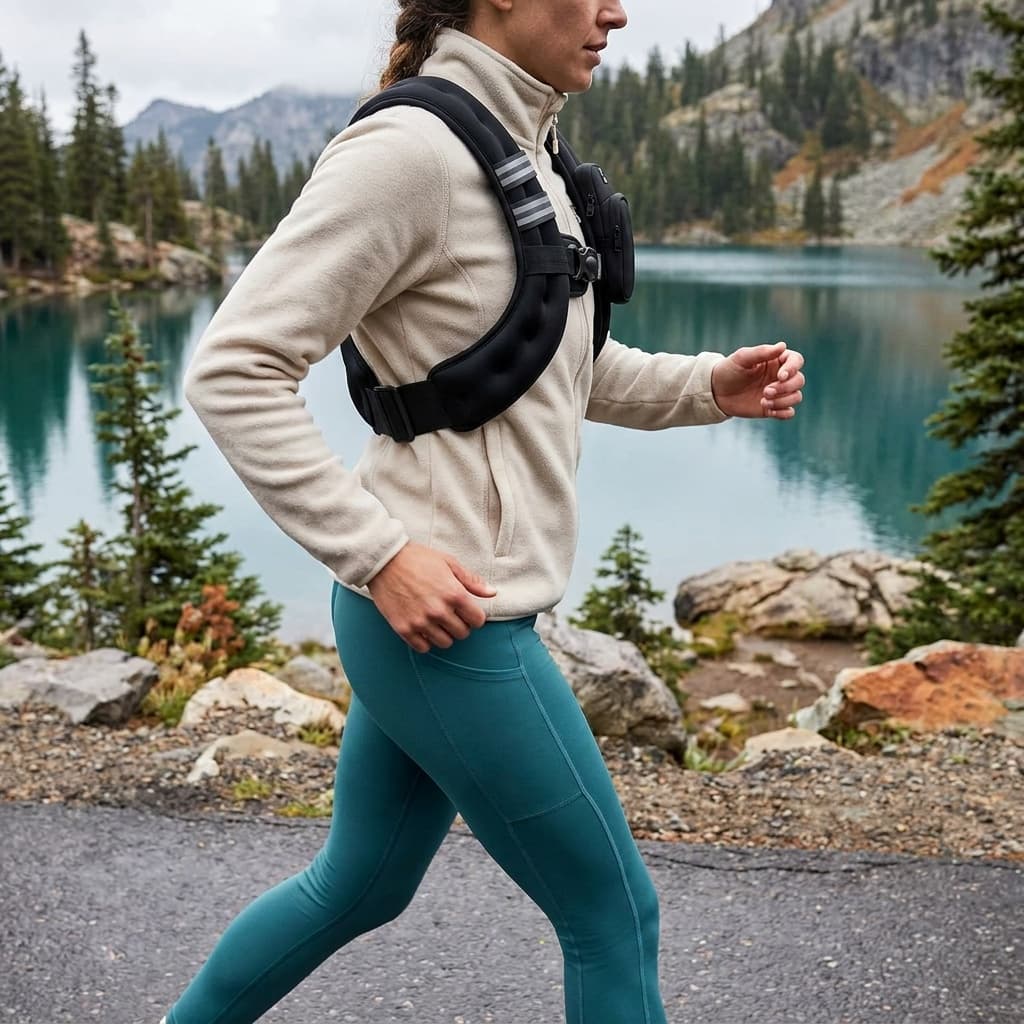
- 6 lb, 8 lb, 12 lb, 16 lb, 20 lb, 25 lb, 30 lb (fixed per unit)
- Fill type
- Iron-sand sewn into vest panels
- Shell material
- Neoprene rubber with double-stitching
- Chest fit range
- 31.5 in. to 47 in.
- Visibility
- 360-degree reflective stripes (front, back, sides)
- Storage
- Back mesh pocket
The ZELUS iron-sand vest earns a strong owner rating from thousands of verified Amazon buyers by doing the core job well: evenly distributed weight, a soft neoprene yoke, and a snug buckle-and-elastic closure that holds the vest flat against the torso. The fixed-weight format keeps the price low and keeps the weight from shifting.
Best for: Walkers, hikers, and home-gym users who want a no-fuss, comfortable vest at a low entry price and do not need to change weight during a session.
- Iron-sand panels keep weight flush against the body rather than in pockets, so the load stays predictably still during walking, jogging, and bodyweight circuits
- 360-degree reflective striping adds meaningful safety for dawn or dusk walking without adding bulk
- Fixed weight per unit means adding load requires buying a heavier vest rather than inserting weights, which raises long-term cost for progressive training

- Weight range
- Up to 20 lb (S), 25 lb (M), 30 lb (L), 40 lb (XL)
- Fill type
- Removable 2.25 oz galvanized steel micro-weights
- Shell material
- Xyflex stretch compression fabric
- Closure
- YKK front zipper, adjustable side lacing
- Sizing
- Small, Medium, Large, X-Large (unisex, 31 to 46 in chest)
- Washability
- Remove weights; hand wash or machine wash gentle/cold, hang dry
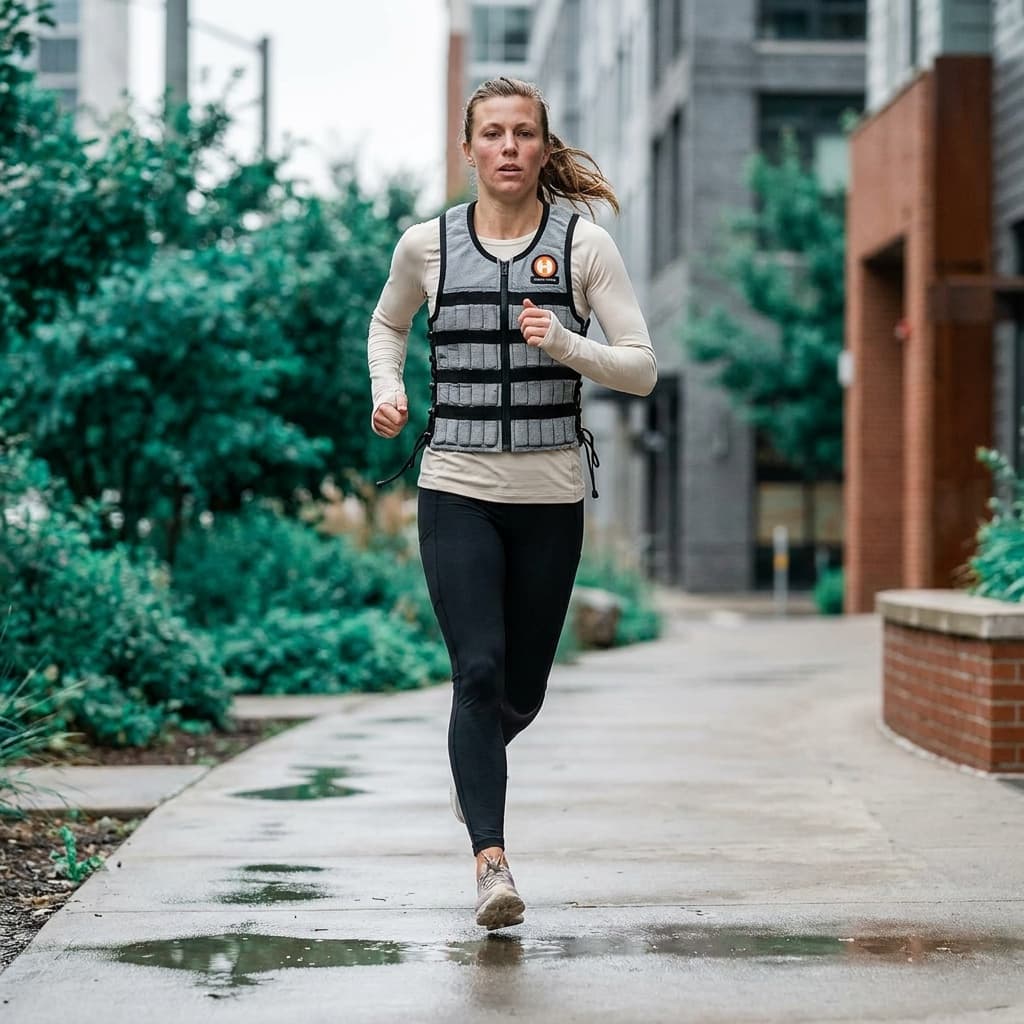
The Hyper Vest PRO distributes load through dozens of removable 2.25 oz steel weights spread across the torso, which spreads force so evenly that most wearers describe the sensation as simply feeling heavier rather than wearing a vest. The patented stretch compression fabric (sold as Xyflex) compresses to the body's contours, which is why bounce is effectively zero and range of motion is uncompromised.
Best for: Serious walkers, runners, and calisthenics athletes who prioritize a low-profile, no-bounce fit over everything else and want a vest that doubles as osteoporosis-prevention exercise equipment.
- Ultra-thin micro-weight distribution across the full torso eliminates shoulder hot spots and prevents the lopsided loading common in pocket-based designs
- Side lace-up system provides a body-specific compression fit that eliminates bounce even during running, pull-ups, and plyometrics
- Adding or removing individual micro-weights to reach a precise target weight requires counting and time; the adjustment system rewards patience
See all picks in Best weighted vests 2026: 4 scored picks from $32 to $240
Keep going
Complete loadoutWeighted-vest starter kitA beginner setup that pairs an adjustable vest with shoes, socks, and tracking for a repeatable walking routine.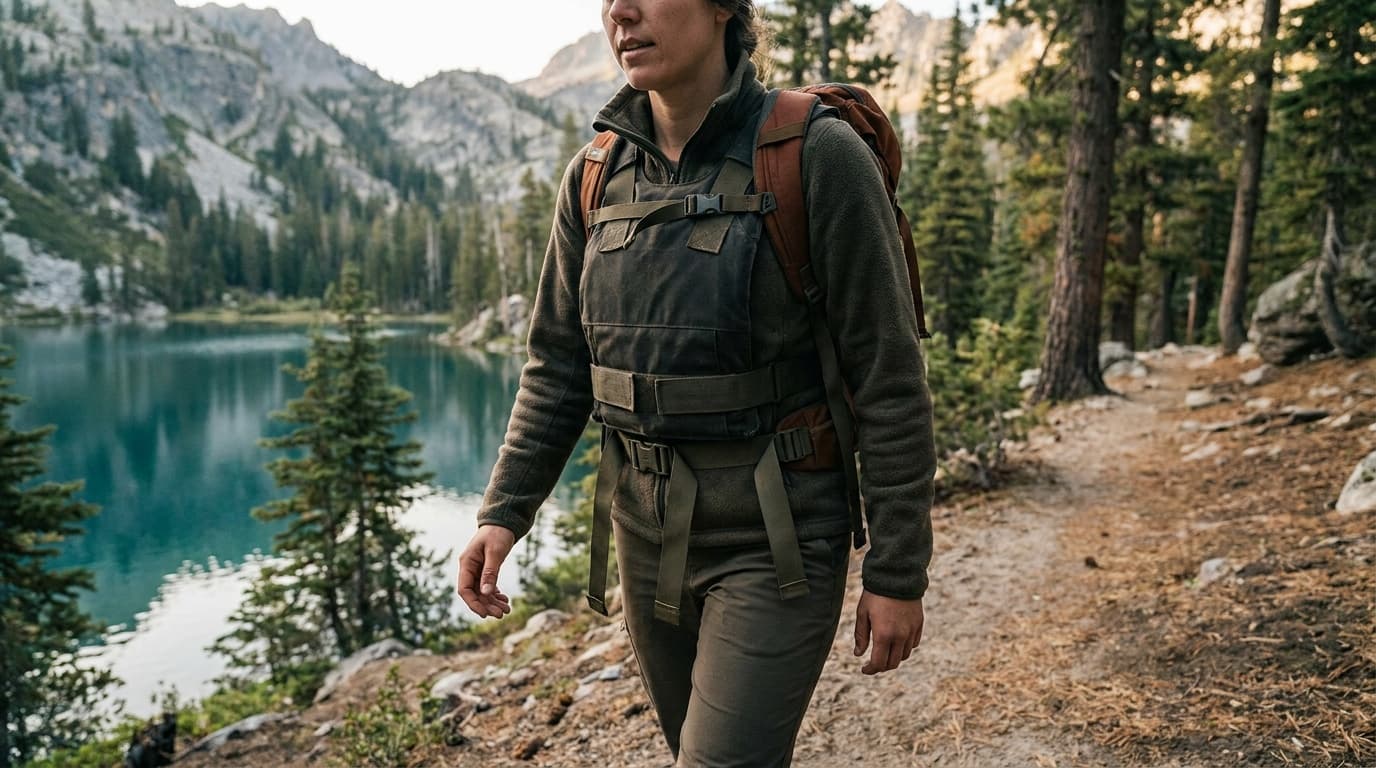
Researched, not hands-on tested
Updated Sep 25, 2026Our recommendations draw on manufacturer documentation, retailer listings, owner feedback, and comparisons with alternatives.
As an Amazon Associate I earn from qualifying purchases. We may earn a commission from links here, at no extra cost to you. How we research →