We may earn a commission from links on this page, at no extra cost to you.
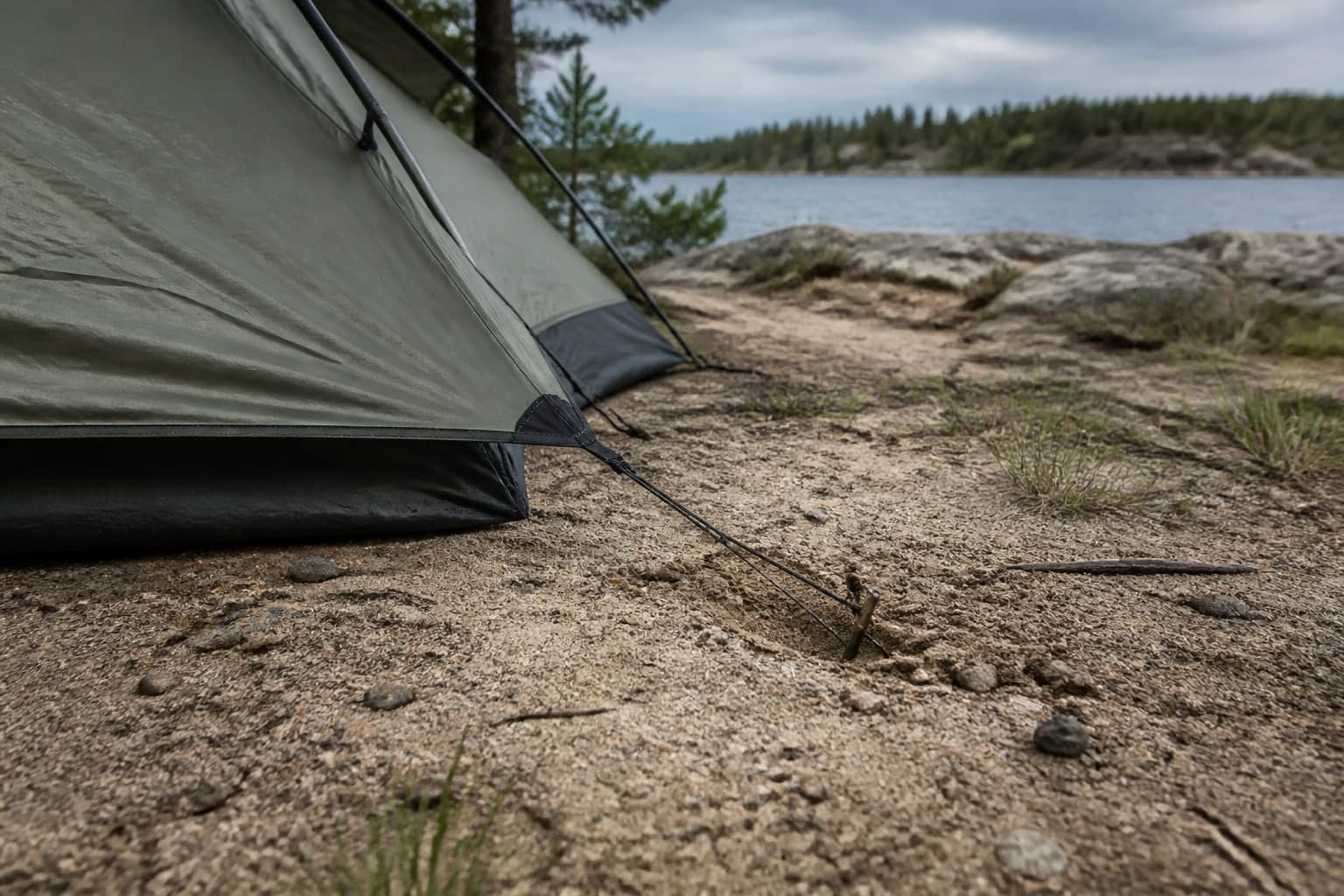
Tent stakes pull out when the soil cannot resist the load being applied to them. Sometimes the stake is too short or narrow. Just as often, the real problem is a loose pitch that repeatedly jerks the line until the hole gets wider.
Quick answer: Drive general-purpose stakes nearly all the way into firm soil, keep the pull low, tension the shelter evenly, and switch to broad sand or snow anchors when the ground will not hold a narrow stake.
Match the fix to the ground
| Ground | Why the stake fails | Better approach |
|---|---|---|
| Loose sand | Narrow stake has too little surface area | Broad sand stake or buried deadman anchor |
| Soft wet soil | Short stake cuts an expanding hole | Longer Y- or V-profile stake in undisturbed soil |
| Hard packed dirt | Light stake bends before seating | Strong nail-style stake and a nearby clear spot |
| Rocky ground | Stake cannot reach useful depth | Shift the pitch, use a rock-compatible anchor, or secure to an approved solid anchor |
| Snow | General-purpose stake has almost no resistance | Snow stake or buried snow anchor |
Start with the pitch, not the hardware
A stake should hold steady tension. It should not absorb a repeating snap every time the fabric moves.
Walk around the tent and tension opposite corners evenly. Align the rainfly seams with the tent body and poles. Attach structural guylines to the manufacturer-designated points, usually over poles, and run them directly outward rather than sideways across the tent.
If the fly or guyline is loose, the wind accelerates the fabric before the line catches it. That shock load can pull out a stake that would hold a smooth load all night. Our guide to stopping tent fabric from flapping covers the full pitch.
How deep and at what angle?
There is no single stake angle for every design and soil. REI's current tent setup guidance recommends driving stakes fully vertical for maximum holding power in most soil, with only enough exposed to attach the cord. Some stake and shelter makers specify a different orientation for their hardware.
Use the instructions for the stake and tent you actually own. The principles that remain consistent are:
- Seat the stake deeply in undisturbed soil
- Keep the cord low on the stake
- Avoid leaving a long lever above ground
- Pull in the direction the stake and shelter are designed to resist
- Recheck tension after rain because many fly fabrics stretch when wet
Fixing loose sand or snow
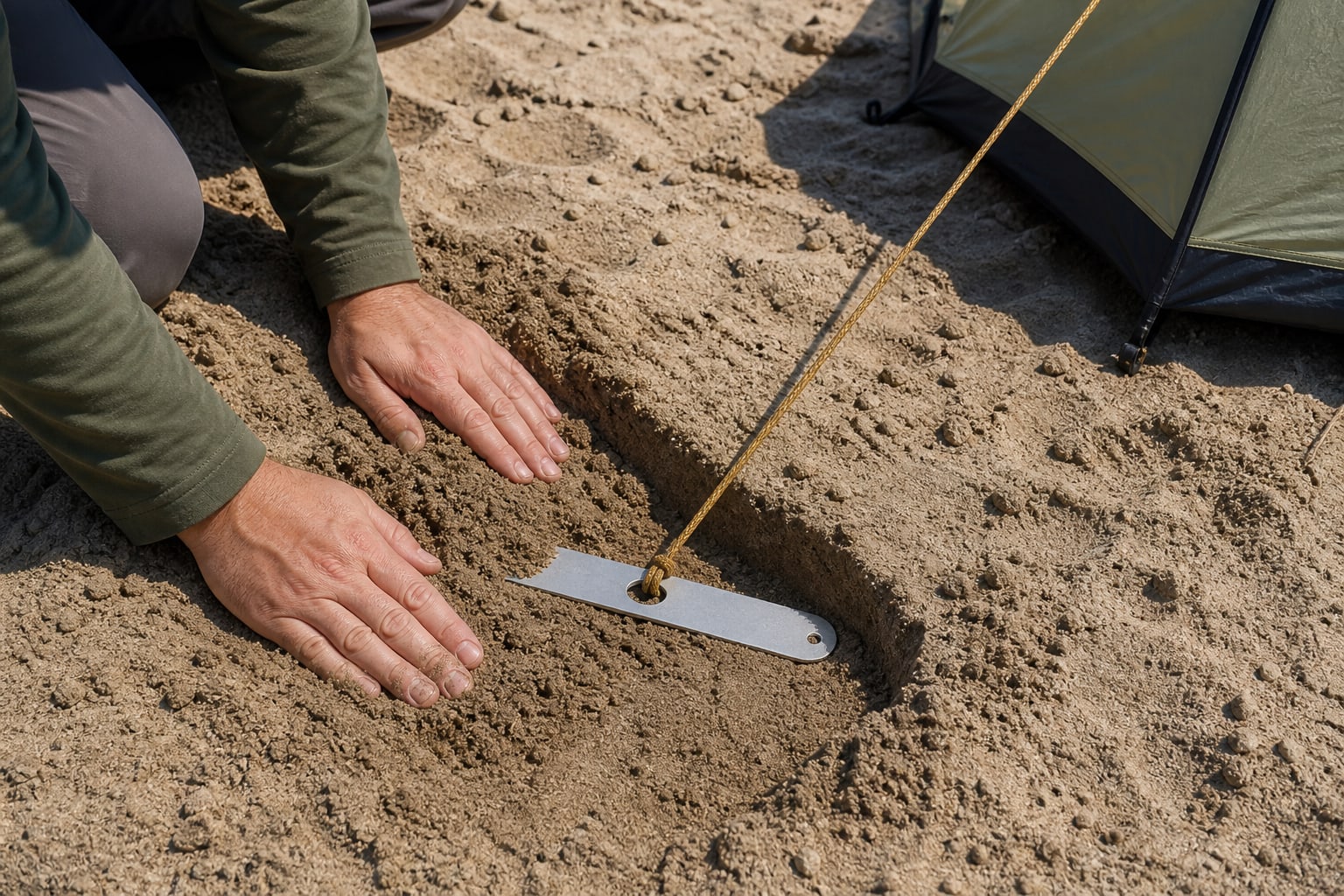
Broad stakes work because they present more area to the loose material. When those still move, use a deadman anchor:
- Tie the guyline securely to a purpose-built anchor, broad stake, or durable sack filled with local sand or snow.
- Bury the anchor horizontally, perpendicular to the direction of pull.
- Pack the material firmly over it before adding full tension.
- Test the anchor gradually instead of yanking the line.
- Remove the entire anchor and restore the site when you leave.
Do not bury food bags, fragile gear, or objects that can tear and remain in the ground.
Fixing soft soil
Move a few inches into untouched soil instead of returning the stake to the enlarged hole. Use a longer stake with a Y or V profile, seat it nearly to the attachment point, and tamp loose surface soil around it. Adding more shallow stakes to the same damaged patch rarely helps.
Fixing hard or rocky ground
Do not keep hammering a light aluminum stake against a buried rock. Move the stake point slightly while preserving the tent geometry. A stronger nail-style stake and a small stake hammer can help in packed campgrounds, but the goal is depth, not brute force.
If the ground simply cannot accept a stake, use a tent-approved alternative anchor around a stable object. Protect trees with wide webbing, avoid damaging vegetation, and never tie to a vehicle that could move.
What to add to your stake bag
A useful mixed kit includes general-purpose Y stakes, two broad sand or snow stakes, spare reflective cord, line tensioners, and a compact stake puller or mallet. The right mix is better than carrying twelve identical stakes everywhere.
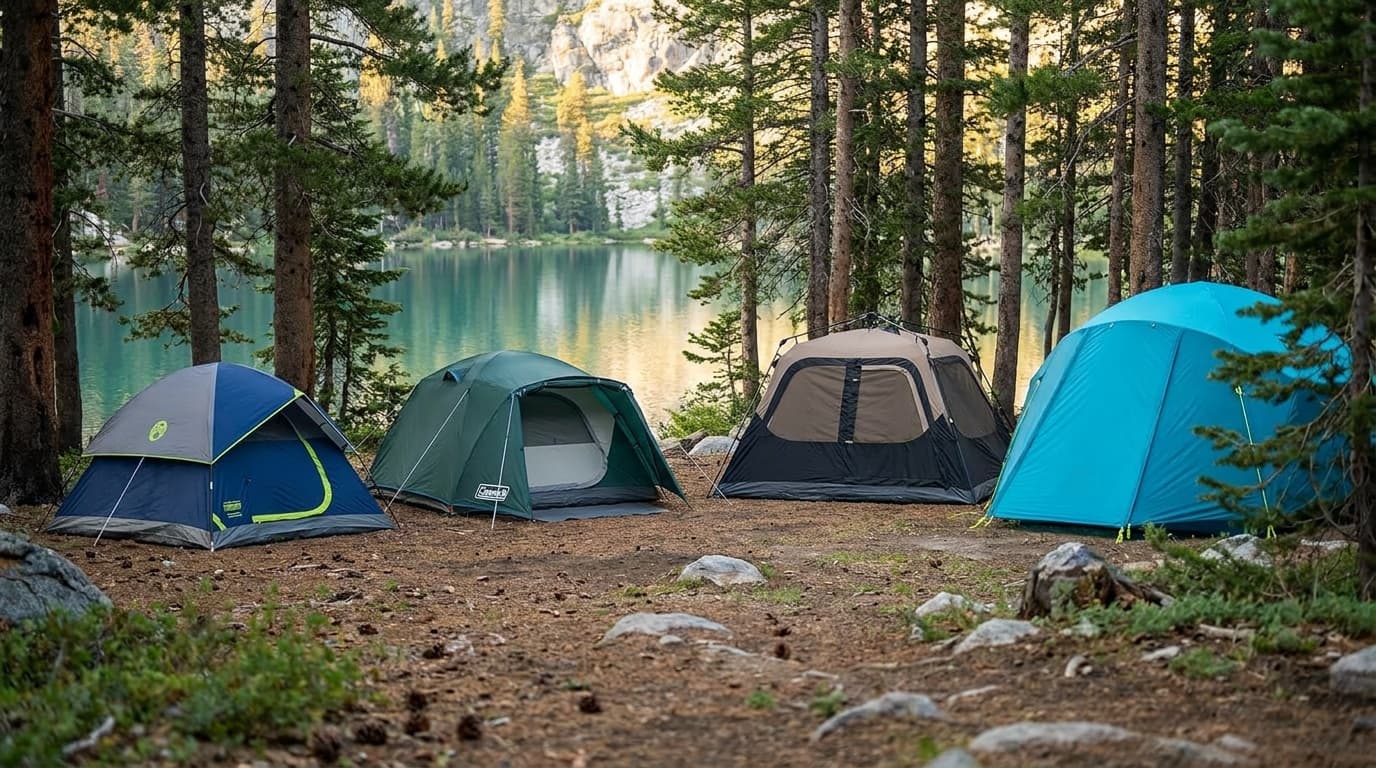
Pair better anchors with a shelter that suits the conditions. See our guides to choosing a camping tent, camping tarps, and four-season tents.
Frequently asked questions
Should tent stakes angle away from the tent?
Not automatically. Stake design, soil, and the shelter manual matter. REI recommends fully vertical stakes in most soils; specialty anchors and individual manufacturers may call for another orientation.
Why does the same stake work at one campsite but not another?
Holding power comes from the ground as much as the stake. A narrow stake can hold firmly in dense soil and fail immediately in sand, snow, or saturated ground.
Will a heavier stake always hold better?
No. Weight can improve strength, but surface area, length, profile, depth, and the direction of pull determine whether the ground can resist the load.
Sources
Keep going
Related buying guideBest 4-season tents of 2026: picks for snow and windRelated guides
 Complete camp loadoutCamp sleep systemBuild the complete kit
Our recommendations draw on manufacturer documentation, retailer listings, owner feedback, and comparisons with alternatives.
As an Amazon Associate I earn from qualifying purchases. We may earn a commission from links here, at no extra cost to you. How we research →
Related buying guide
Best 4-season tents of 2026: picks for snow and wind