We may earn a commission from links on this page, at no extra cost to you.
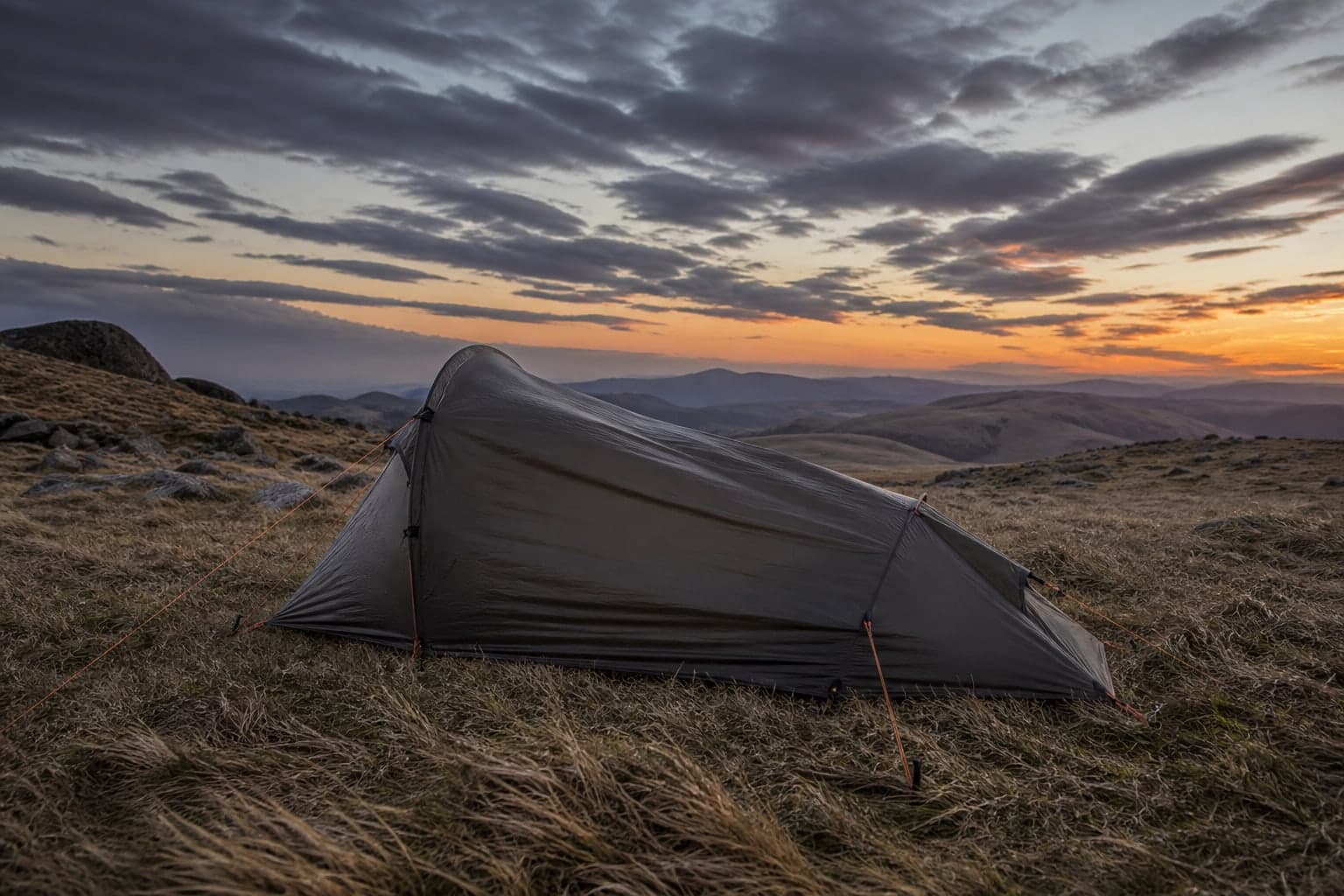
Tent fabric flaps when wind can repeatedly load and unload a loose panel. The noise is annoying, but it is also useful information: the shelter is moving more than it should. Correct the pitch, add guylines at structural points, and reduce the surface area presented to the wind before poles and seams absorb hours of unnecessary stress.
Fix the basic pitch first
Guylines cannot rescue a crooked foundation. Check that the tent body is centered, its corners form the intended rectangle or shape, and each stakeout point pulls in the direction designed by the manufacturer. A corner pulled sideways creates a loose panel somewhere else.
Tension rainfly corners gradually and evenly. Do not crank one corner tight while the opposite side remains slack. Fly seams should generally align with the poles and inner-tent seams. Secure any hook-and-loop wraps beneath the fly around the matching poles; these transfer wind loads into the frame rather than leaving the fabric to snap independently.
A quiet-tent reset
Face the right direction
Put the tent's narrow, low, or manufacturer-designated windward end toward the prevailing wind.
Square the corners
Restake the base so the structure is symmetrical and fabric tension is even.
Attach the fly to the frame
Fasten every internal pole wrap and exterior clip provided by the tent maker.
Tension in small increments
Alternate between opposing corners until broad panels are smooth but not overstretched.
Add structural guylines
Prioritize guyout points directly above poles on the windward side, then balance support around the shelter.
Use the right guyout points
Not every loop on a rainfly performs the same job. Loops directly above a pole or pole intersection usually add structural wind support. Lower edge loops often pull the fly away from the inner tent for ventilation. Follow the tent manual when available.
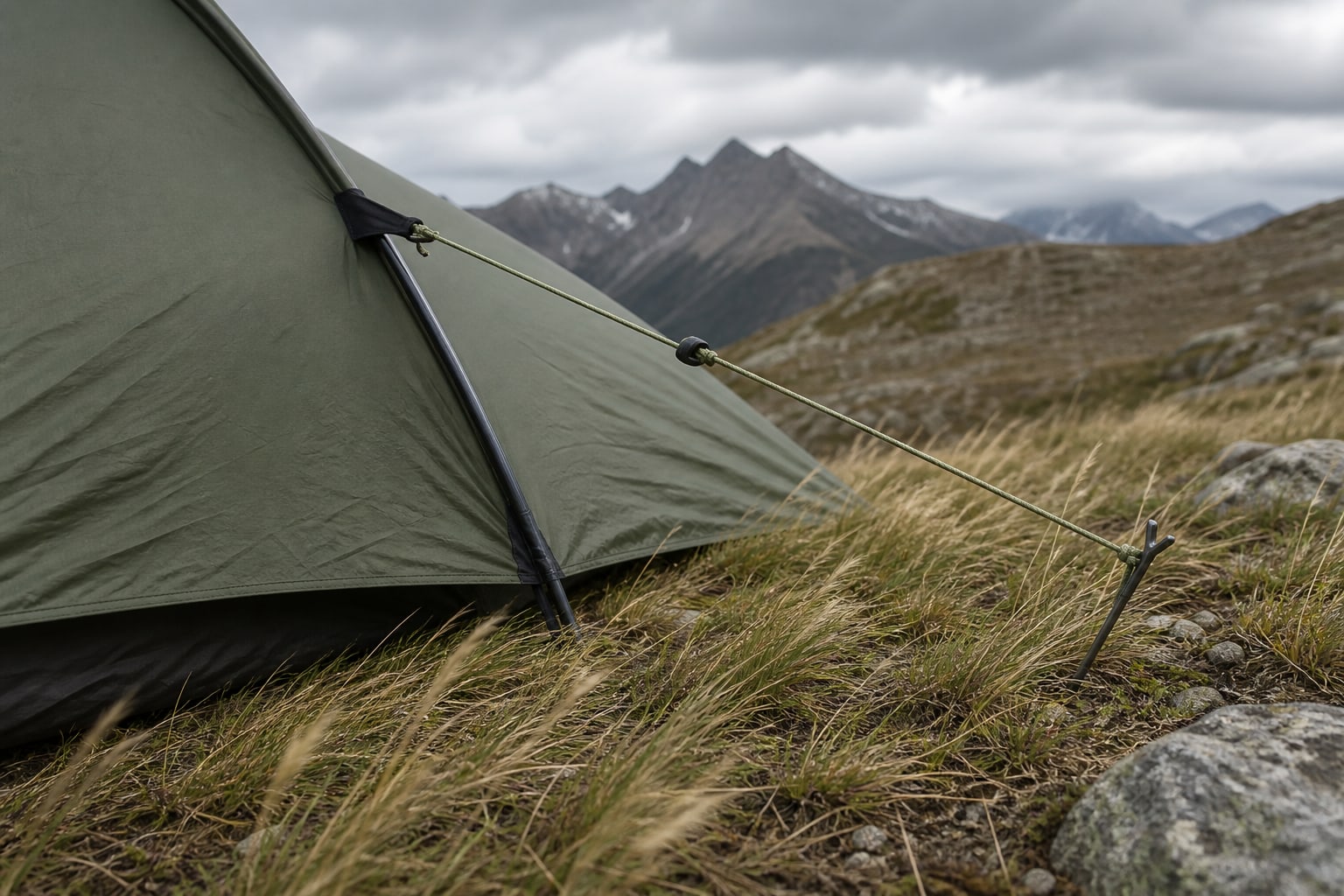
Run a structural guyline in the same direction that the supported pole needs help. REI recommends pulling directly outward from the pole beneath the guyout point and placing the stake well away from the tent corner. A line that runs nearly parallel to the tent wall creates little bracing force.
Use the windward guylines at minimum. In sustained or shifting wind, distribute lines around the shelter so one side is not doing all the work. Lines should be firm, not banjo-string tight. Excessive tension can deform poles before the gust arrives.
Improve weak anchors
A perfectly tied line is useless if its stake rotates or pulls out. Use stakes suited to the ground: broader profiles for soft soil, longer stakes for loose ground, and purpose-built sand or snow anchors where appropriate. Drive ordinary stakes fully and orient them according to the stake maker's guidance.
When the ground is rocky, do not balance a loose cord around a sharp rock edge. Use a protected anchor method that cannot cut the line, and inspect local rules before moving rocks. Established campsites may provide fixed tie-downs.
Retension after weather changes
Many fly fabrics relax when wet, so a taut evening pitch can sag after rain or heavy dew. Recheck corners and guylines before bed and after a major temperature or moisture change. Adjust a little at each point rather than pulling one side far out of shape.
If a panel still flaps despite correct geometry, inspect for a missing clip, stretched shock cord, damaged pole section, or incorrectly routed pole. Compare the pitch with the manufacturer's diagram.
When the campsite is the real problem
Natural wind protection can reduce load, but never pitch beneath dead branches, unstable trees, rockfall, or other overhead hazards. Avoid exposed ridgelines and gaps that funnel wind when safer established sites are available. Do not rely on a campfire windbreak or vehicle placement that creates a new hazard.
If conditions exceed the shelter's design or poles are deforming, leaving is the correct gear decision. MSR does not publish one universal wind-speed limit because soil, pitch, tent design, gust direction, and wear all change the result.
For recurring windy trips, choose a lower-profile shelter with a strong pole structure and ample structural guyout points. Compare options in our four-season tent guide and beginner tent guide. A well-pitched camping tarp can protect a separate living area, but it should not be attached in a way that transfers tarp loads into a tent not designed for them.
Should tent guylines be extremely tight?
They should remove slack and brace the supported pole without deforming the frame. Over-tensioning can distort the tent before a gust arrives. Build even tension across opposing points.
Which direction should a tent face in the wind?
Use the tent maker's guidance when available. Generally, point the narrowest, lowest, or strongest end into the prevailing wind rather than presenting a broad sidewall.
Why did my rainfly become loose after rain?
Many woven fly fabrics stretch as they absorb moisture. Retension the fly corners and guylines gradually after rain or heavy dew while keeping the pitch symmetrical.
Sources: REI tent setup and guyline guidance, MSR wind guidance, and MSR setup guidance for wind.
Keep going
Related buying guideBest 4-season tents of 2026: picks for snow and windRelated guides
 Complete camp loadoutCamp sleep systemBuild the complete kit
Researched, not hands-on tested
Updated Aug 19, 2026Our recommendations draw on manufacturer documentation, retailer listings, owner feedback, and comparisons with alternatives.
As an Amazon Associate I earn from qualifying purchases. We may earn a commission from links here, at no extra cost to you. How we research →
Related buying guide
Best 4-season tents of 2026: picks for snow and wind