Contents
A starting water supply
A four-person example for three days
CDC recommends at least three days and trying for two weeks if possible. Plan additional water for pets and individual needs.
Sources: CDC emergency water supply
Calculate a workable starting supply
Multiply the number of people by the number of days and one gallon. These examples are the human baseline only, before extra needs or pets:
| People | Three days | Two weeks, if possible |
|---|---|---|
| 1 | 3 gallons | 14 gallons |
| 2 | 6 gallons | 28 gallons |
| 4 | 12 gallons | 56 gallons |
The CDC says stored water can be used for drinking, cooking, brushing teeth and other uses. Think through those uses and any other essential needs; an outage in hot weather or a household member's circumstances can change the amount needed. Plan separately for each pet's water and food. Infant feeding has its own requirements: do not treat the gallon figure as an instruction for preparing formula. See the CDC's infant-feeding emergency guidance and discuss individual needs with the appropriate care professional.
If two weeks feels impractical, build toward three days first and add capacity as space allows. The household checklist tracks the baseline and stored gallons; keep storage locations separately on a private paper note. A plan to replenish later is useful, but it is not the same as water already in the house.
Choose containers that protect the water
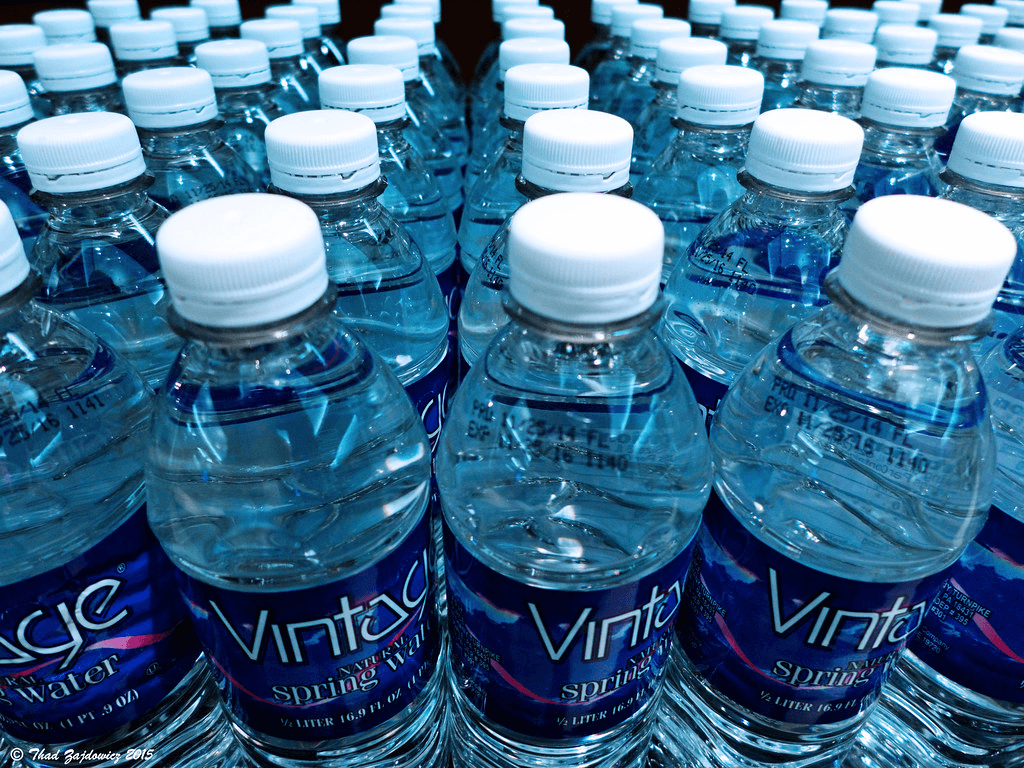
The CDC recommends unopened commercially bottled water as the safest and most reliable emergency supply. Keep it in its original container, follow its date and storage instructions, and keep the seal intact until needed.
For water you fill yourself, choose a food-grade water storage container with a tight-fitting closure. The CDC recommends containers designed for water storage; ask the manufacturer if you cannot tell whether a container is food-grade. A narrow opening that allows water to be poured without dipping hands or utensils inside helps protect the supply. Do not use containers that have ever held toxic chemicals, including bleach or pesticides, even if they appear clean. CDC container guidance explains the alternatives and preparation steps.
Before filling, clean and sanitize the container using the CDC's instructions, then fill it with water from a safe source. Label it as drinking water and write the storage date. If a local water advisory is in effect, do not assume the tap is suitable for filling: follow the water utility or health department's specific directions.
Divide the supply into containers people in the household can actually handle. A single large container may be efficient on paper but difficult to fill, move, pour or clean. Smaller sealed containers also let you open one at a time. Keep a clean pouring method with the supply, and avoid touching the inside of the cap or container.
Put the weight and location into the plan
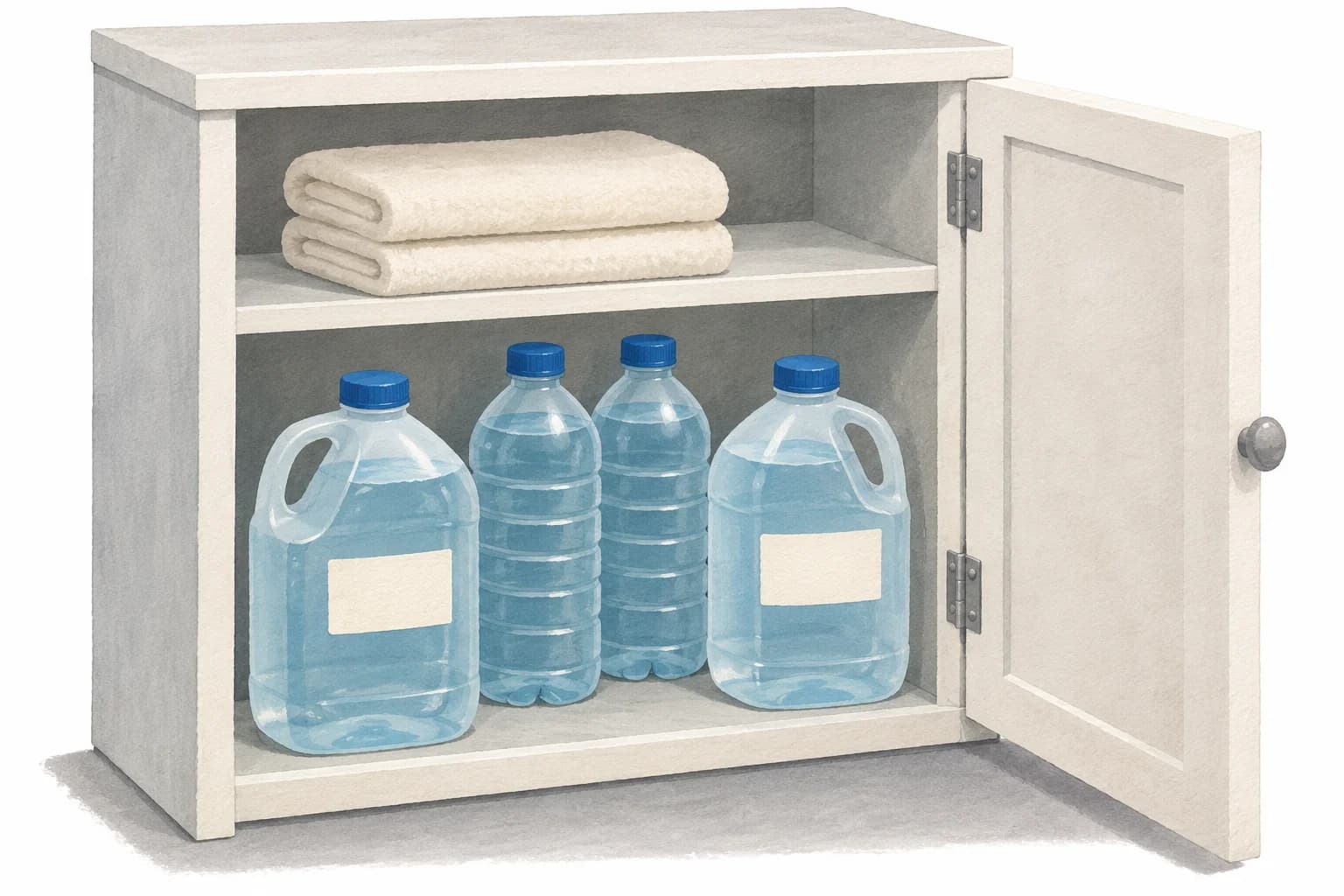
Filled water containers can be heavy. Spread the supply into manageable units; do not stack heavy containers on a shelf or floor whose capacity you do not know. Container size alone does not establish a safe structural load. When in doubt about a concentrated load, ask the building owner or a qualified professional.
Choose a cool location out of direct sunlight, away from gasoline, pesticides and other chemicals. The CDC advises storing water at 50–70°F when possible and away from toxic substances. Protect it from freezing and physical damage, and choose a place as safe from flooding as practical. Keep a portion accessible if stairs, a blocked doorway or an evacuation makes the main storage location hard to reach. Avoid placing the only supply where one leak could damage essential belongings.
Accessibility matters as much as volume. Can everyone who might be home locate a container and pour from it? Is a smaller container available for someone who cannot lift a full one? Write the answers down rather than assuming the person who assembled the supply will be there.
Rotate and check the supply
| Supply | Maintenance |
|---|---|
| Commercially bottled water | Observe the manufacturer's expiration date and storage instructions. Keep unopened until use. |
| Water filled at home | Replace every six months; clean and sanitize containers before refilling. Mark the fill date. |
Those intervals come from the CDC's storage guidance. Set a calendar reminder, inspect containers for damage or leaks, and keep the area clean. FoodSafety.gov says not to use bottled water that has an odor. When a container or its contents are questionable, do not rely on a taste test; replace the water and investigate the container.
Rotation is easier when the supply is part of normal household use. Use and replace unopened bottles before their dates, and schedule a separate six-month task for self-filled containers. Keep the refill date visible so the next person does not have to guess.
Match treatment to the advisory
Match the action to the notice
Water advisories are not interchangeable
Follow the current local notice. Boiling and disinfection do not make water contaminated with fuel, toxic chemicals or radioactive material safe.
Sources: CDC making water safe
An emergency can interrupt water service or make water unsafe in different ways. Check local health department and water utility notices first, including whether the restriction applies to drinking, food preparation, handwashing or other uses. Use a known safe bottled supply when directed. A boil-water notice is not interchangeable with a do-not-drink or do-not-use notice.
For water contaminated with germs, the CDC's emergency treatment guidance describes boiling as the best way to kill germs. Follow the current CDC instructions and local directions for the actual incident, including any elevation or cloudy-water considerations, and use a safe heat source.
Boiling and disinfection do not make water contaminated with fuel, toxic chemicals or radioactive material safe. Use bottled water or another safe source and contact the health department for specific advice. Disinfectants have different limitations against particular germs, and filters are not interchangeable: a filter's label and the specific contaminant matter, and filtered water may still need treatment. Do not assume any filter removes every hazard. If boiling is not possible and authorities permit disinfection, use the current CDC instructions and the product label; bleach concentration and water conditions matter. Never improvise a dose.
Sources and limits
Reviewed November 2, 2026: CDC emergency water supply, CDC making water safe, CDC infant feeding considerations, FoodSafety.gov disaster guidance, and the American Red Cross emergency kit. Container handling suggestions are practical planning guidance, not product tests or engineering assessments. Pair this supply with an emergency no-cook pantry.
Photograph: Thad Zajdowicz / Wikimedia Commons, CC0, unchanged. Brands pictured are examples, not recommendations or endorsements.
Keep going

Our recommendations draw on manufacturer documentation, retailer listings, owner feedback, and comparisons with alternatives.
As an Amazon Associate I earn from qualifying purchases. We may earn a commission from links here, at no extra cost to you. How we research →