Contents
Agree on how to reconnect
Choose two meeting places and an out-of-area contact
For a sudden emergency
If you cannot return home
Agree how to check in
Make the plan together, practice it, and keep specific contact details and locations private.
Sources: Red Cross family plan
Start with the household checklist, then use the decisions below to make it specific to your home. The same approach works for a rented house or a home you own. An outage, fire, flood or severe weather event may call for different actions: follow current directions from local officials and emergency responders.
Make a plan with the people who live there
Talk through the emergencies likely where you live and who will do what. Include children, roommates, people who may need assistance and anyone who spends time away from home. The Red Cross family plan recommends practicing the plan, choosing an out-of-area contact and identifying two meeting places: one outside the home for a sudden emergency and another outside the neighborhood if you cannot return.
Write down the contact's number, building address, meeting places and essential local numbers. Give each person a paper copy as well as a phone copy. Agree how to check in and ask schools or caregivers about their emergency plans.
Pick a safe place to go and an alternate route; save a map on paper as well as on your phone. Review the plan when household needs or building procedures change.
Build a small, usable supply reserve
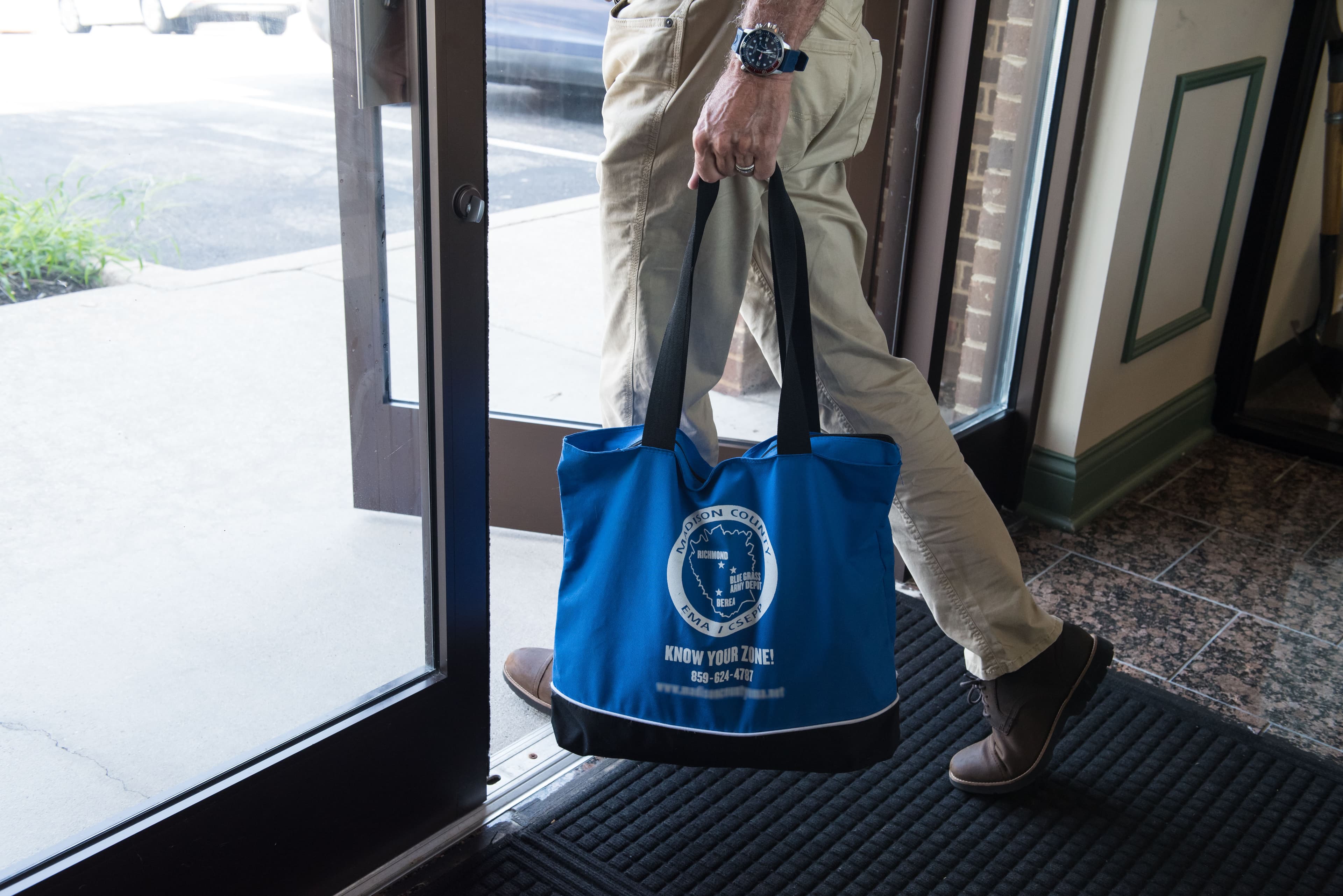
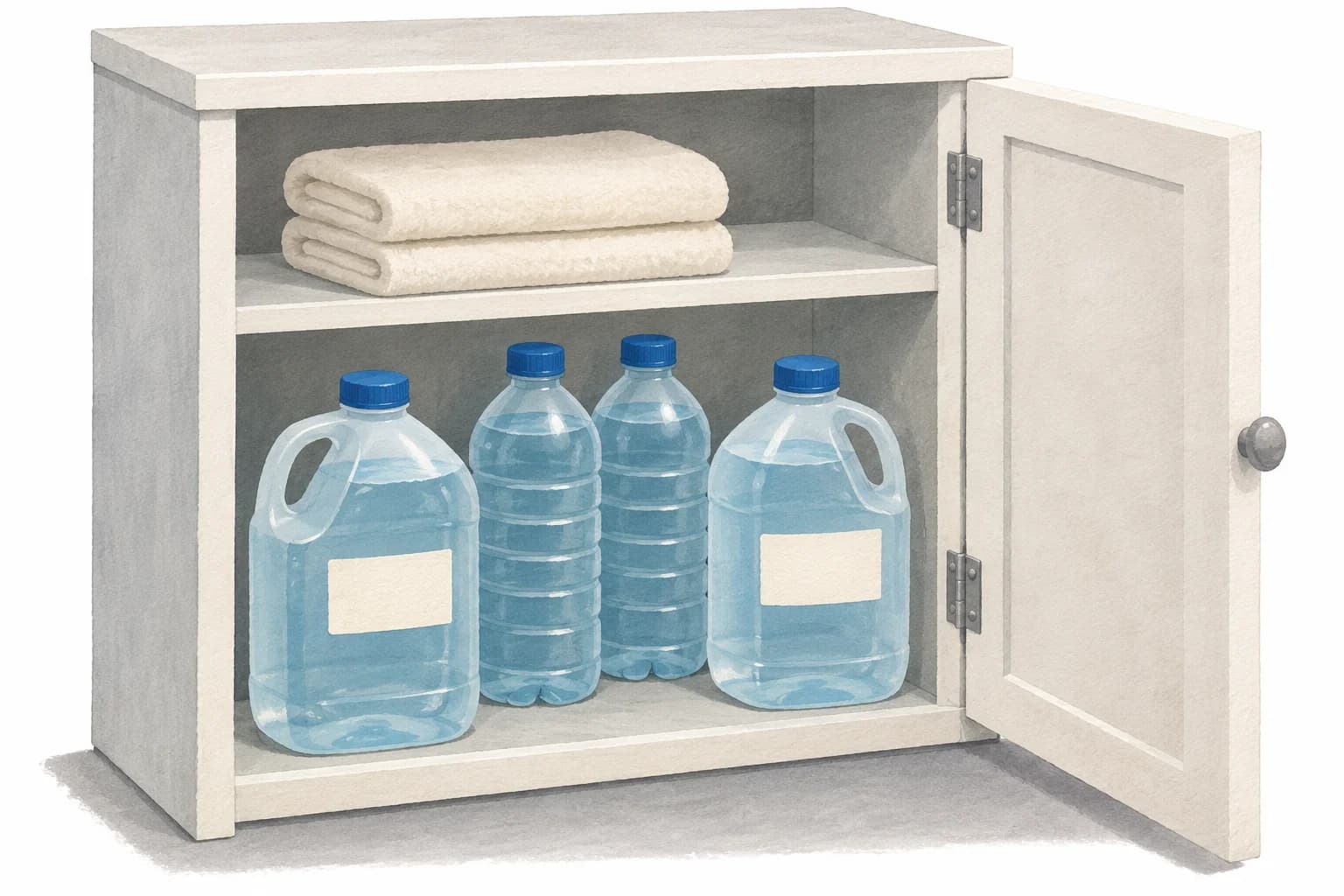
Separate supplies for staying home from a bag you can carry out. The Red Cross supply guide recommends a three-day supply of water and nonperishable food for evacuation and a two-week supply at home. Its water baseline is one gallon per person per day; account for your household's particular needs, including pets. If storage is tight, begin with what fits and build toward that baseline over time.
| Need | Make it work in a small space |
|---|---|
| Water | Store safe drinking water in manageable containers where you can reach them. Keep it away from chemicals and check storage dates. See the emergency water guide. |
| Food | Set aside familiar, shelf-stable food that needs little preparation. Include a manual can opener when needed; rotate food into ordinary meals and replace it. See the emergency pantry guide. |
| Daily essentials | Include hygiene supplies, a first aid kit, glasses and items for infants or other household members as needed. |
| Storage | Divide supplies between accessible shelves or bins, keeping exits clear. Label them so someone else can find them. |
Check supplies periodically and replace expired items. If your water supply is affected, follow the local utility or health department's instructions.
Keep light and information available
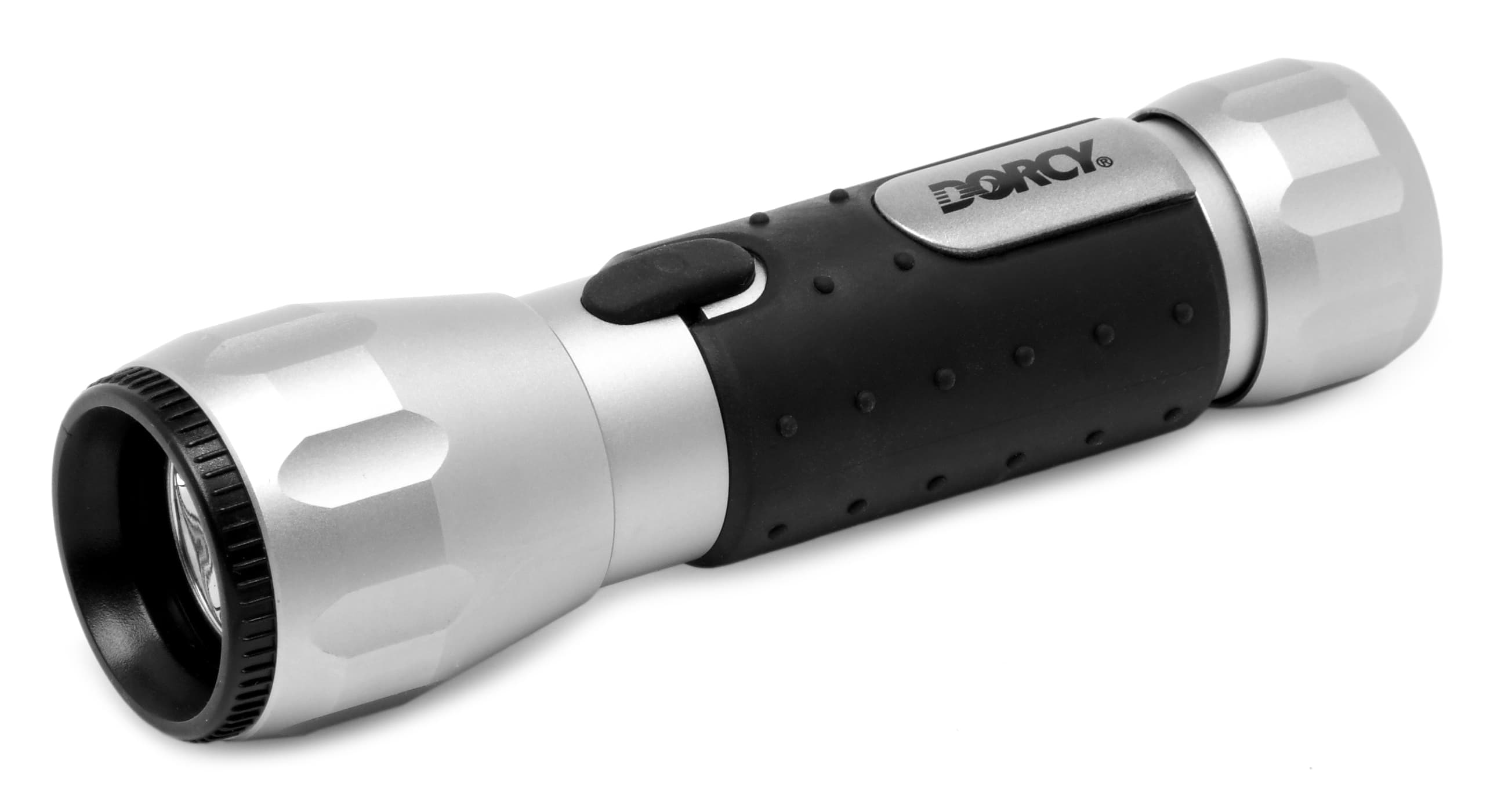
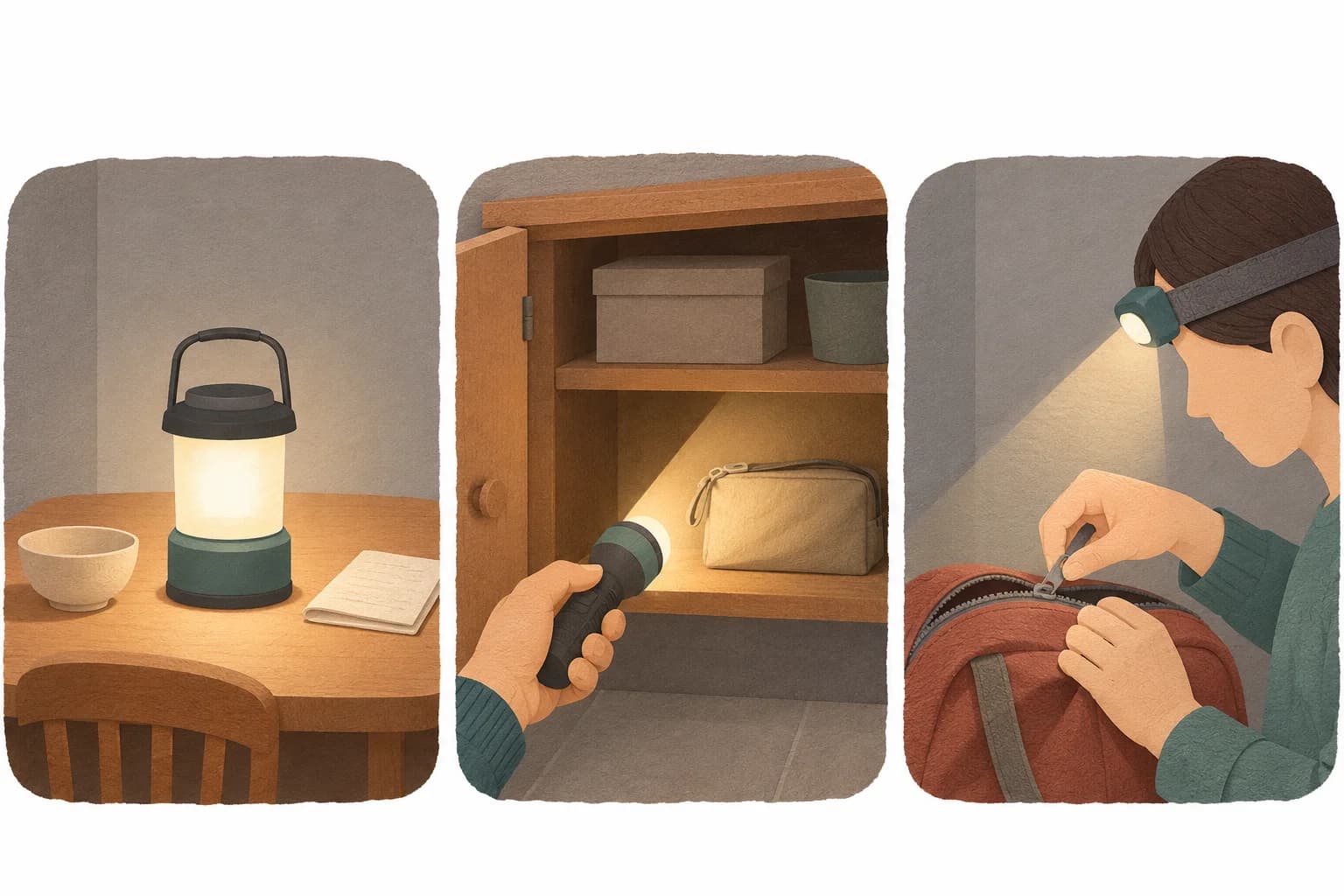
Place a working battery-powered flashlight where you can find it in the dark, with compatible spare batteries or a charging cable. CDC also lists headlamps and battery-powered lanterns. Compare their roles in lantern vs flashlight.
Keep phones charged, with cables and a charged backup battery. Enable emergency alerts and sign up for local alerts where available. Have another way to receive information, such as a battery-powered or hand-crank NOAA Weather Radio where reception is available. The National Weather Service lists these as warning sources. A backup battery cannot guarantee cellular service. For compatibility, see power bank vs portable power station.
Know the building and practice a fire escape
Ask the building manager or property owner for the building's emergency plan, how residents are notified, where exits and stairs are, and whom to contact about a blocked exit or faulty alarm. Ask what happens during an outage and how to coordinate an accessible evacuation. If you use a mobility device or cannot use stairs independently, discuss your specific needs with building management, your support network and the local fire department before an emergency. Identify helpers and a backup; do not assume a lift, a particular waiting area or help from one person will be available.
The U.S. Fire Administration (USFA) recommends mapping doors and windows, finding two ways out of each room where possible, keeping exits clear and practicing together. Learn the exit stairs on your floor. For a high-rise fire, USFA says to use stairs, not an elevator unless directed by the fire department. If you cannot escape, get behind a closed door, call 911 and tell responders where you are. Follow the fire department's instructions for your situation.
Make sure smoke alarms work; test them and report a problem promptly. USFA advises working smoke alarms inside and outside sleeping areas and on every level. Check that carbon monoxide (CO) alarms are working too; CDC recommends battery-operated or battery-backup CO detectors near sleeping areas. Know the sound or accessible alert for each alarm and what your household will do when it sounds. If a CO alarm sounds, leave immediately and call 911, as CDC advises.
Clarify who arranges alarm maintenance, repairs and notices. Requirements vary; ask management and your local fire authority about unresolved problems. This is not legal advice.
Plan for heat, cold and medical needs
An extended outage can make remaining at home unsuitable. Identify accessible places with heating or air conditioning, how you will get there and who can help with transport. Check on neighbors and household members whose needs may make heat or cold especially risky. Follow local alerts and move to a safer place when needed; the CDC outage guide suggests contacting the local health department or finding an air-conditioned shelter when cooling is unavailable.
Never use generators, grills or other portable fuel-burning equipment in a home, garage or carport, even with doors or windows open. Do not use a gas oven to heat the home. These sources can produce deadly, odorless CO; CDC's outage warning also says to keep such equipment away from doors, windows and vents. An apartment may have no appropriate place to operate a generator; plan for relocation instead of assuming a balcony or shared area is safe.
If someone relies on powered medical equipment, ask their clinician, equipment provider and utility about an outage plan, compatible backup power, notification programs and when to relocate. Do not assume an ordinary battery will run a medical device. For refrigerated medication, ask a clinician or pharmacist in advance about storage, transport and replacement after an outage. Keep relevant contacts and device information accessible without exposing private health details. CDC's disability preparedness checklist includes medical supplies, communication aids and a cooler for refrigerated medications; individual instructions must come from the care team.
Pack for leaving, including pets
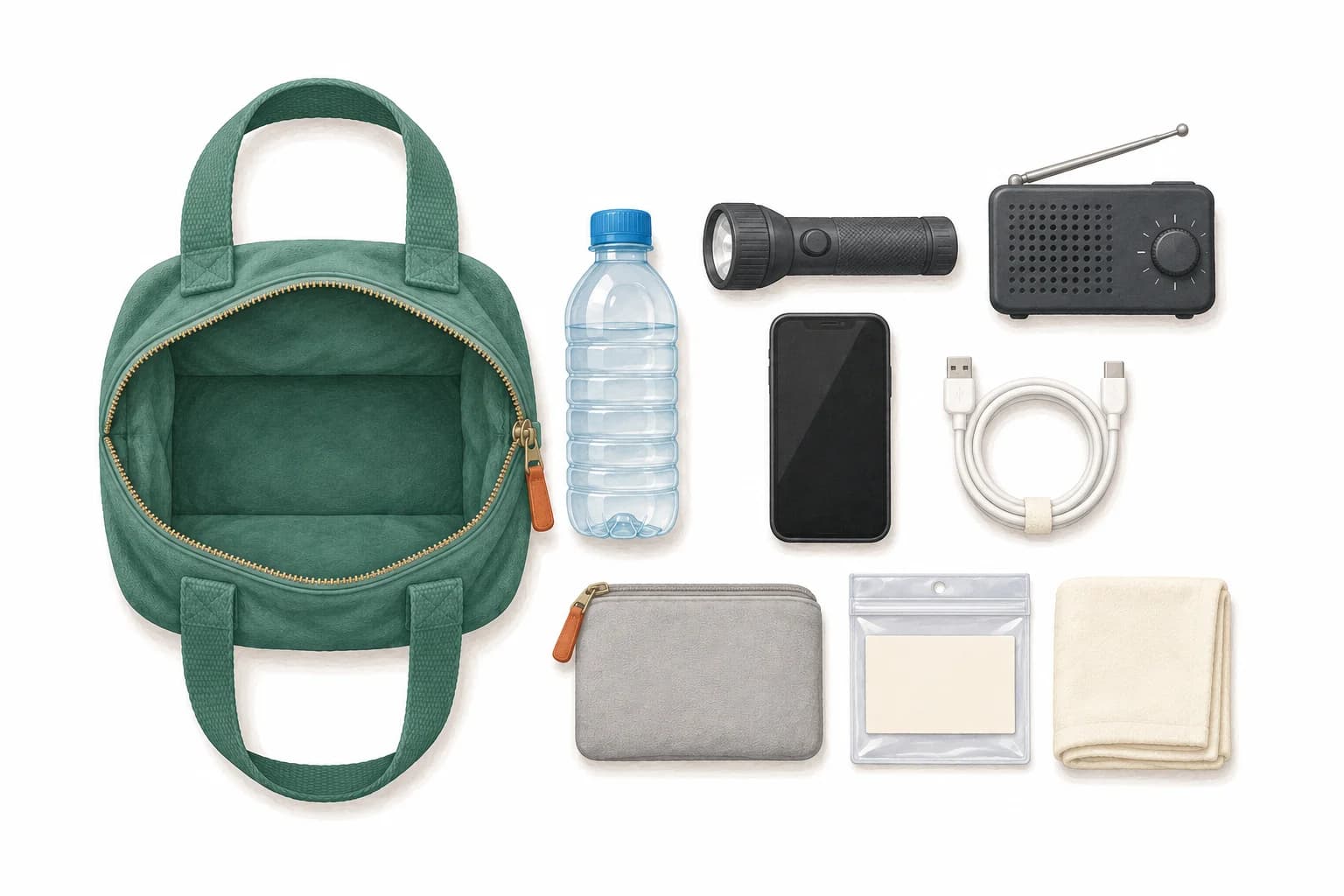
Keep a manageable go-bag near an exit without blocking it. Include a light, phone cable, essential hygiene and first aid supplies, a paper map and contacts, and the personal items you use daily. Keep copies of identification, insurance and other important documents protected from water and stored privately; take originals only when practical and safe. Review the bag as needs and documents change.
For each pet, have a suitable carrier or leash, food, water, bowls, medications and relevant records ready to take. Identify a friend, pet-friendly lodging or other destination in advance and check current shelter arrangements: the Red Cross notes that pets may need separate accommodation, while service animals are welcome in Red Cross shelters. If you must leave, take pets with you when possible; do not delay your own evacuation to collect belongings.
Sources and limits
Photographs: PEO ACWA / Wikimedia Commons, CC BY 2.0, unchanged; no endorsement is implied. Flashlight photograph by Evan-Amos, public domain. These illustrate planning choices, not a tested household kit.
This is general U.S. preparedness guidance, not a substitute for local emergency instructions, a building-specific evacuation plan or individual medical advice. Sources include the Red Cross household plan, supply kit and pet plan; USFA fire escape guidance; National Weather Service preparedness guidance; and CDC disability preparedness and carbon monoxide guidance.
Keep going



Our recommendations draw on manufacturer documentation, retailer listings, owner feedback, and comparisons with alternatives.
As an Amazon Associate I earn from qualifying purchases. We may earn a commission from links here, at no extra cost to you. How we research →