We may earn a commission from links on this page, at no extra cost to you.
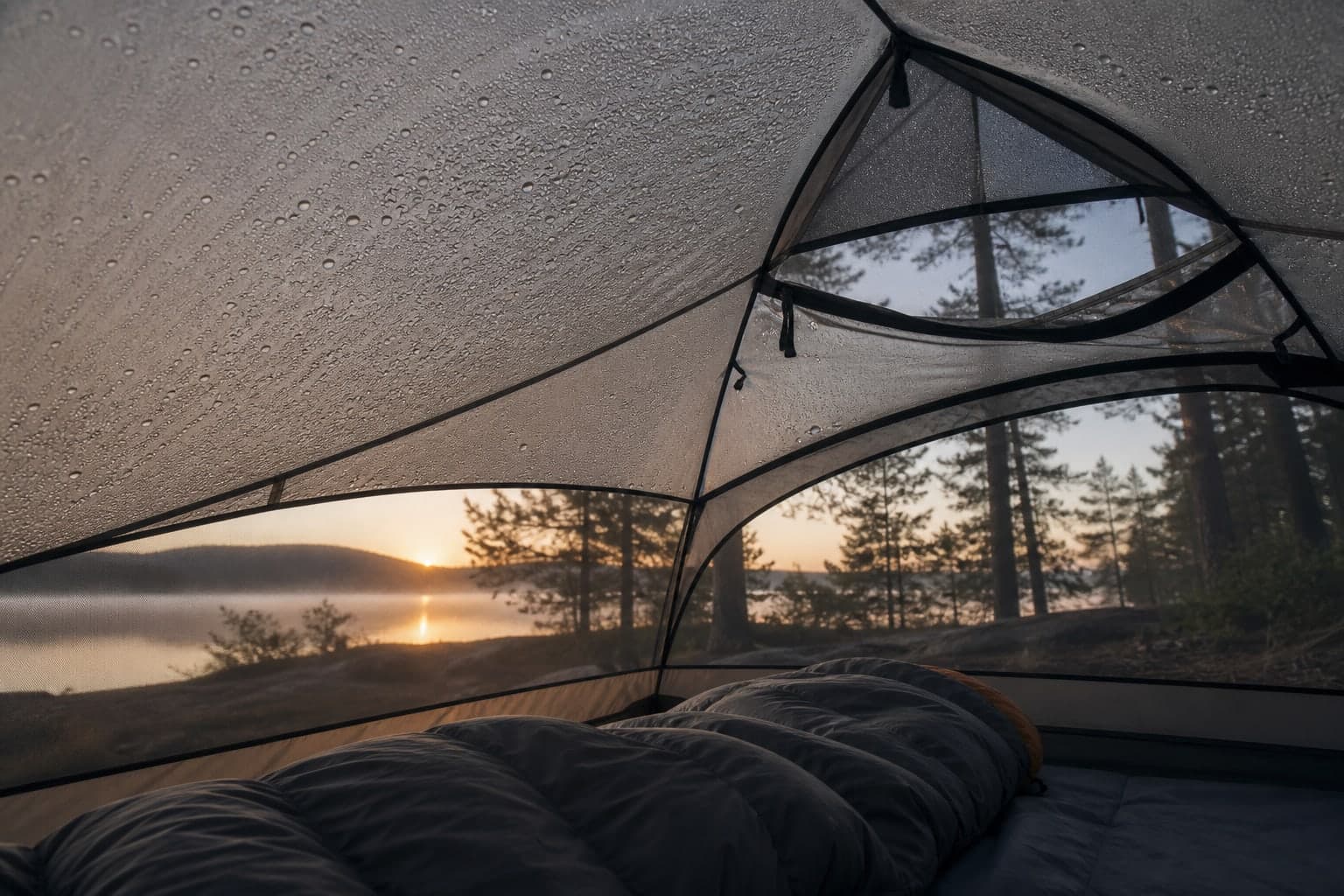
If the inside of your rainfly is wet but the sky stayed dry, the tent probably is not leaking. Warm, moist air from breathing, damp clothing, wet ground, and cooking nearby has reached cold fabric and condensed into water. The fix is usually more airflow and less moisture inside the shelter, not seam sealer.
First, decide whether it is condensation or a leak
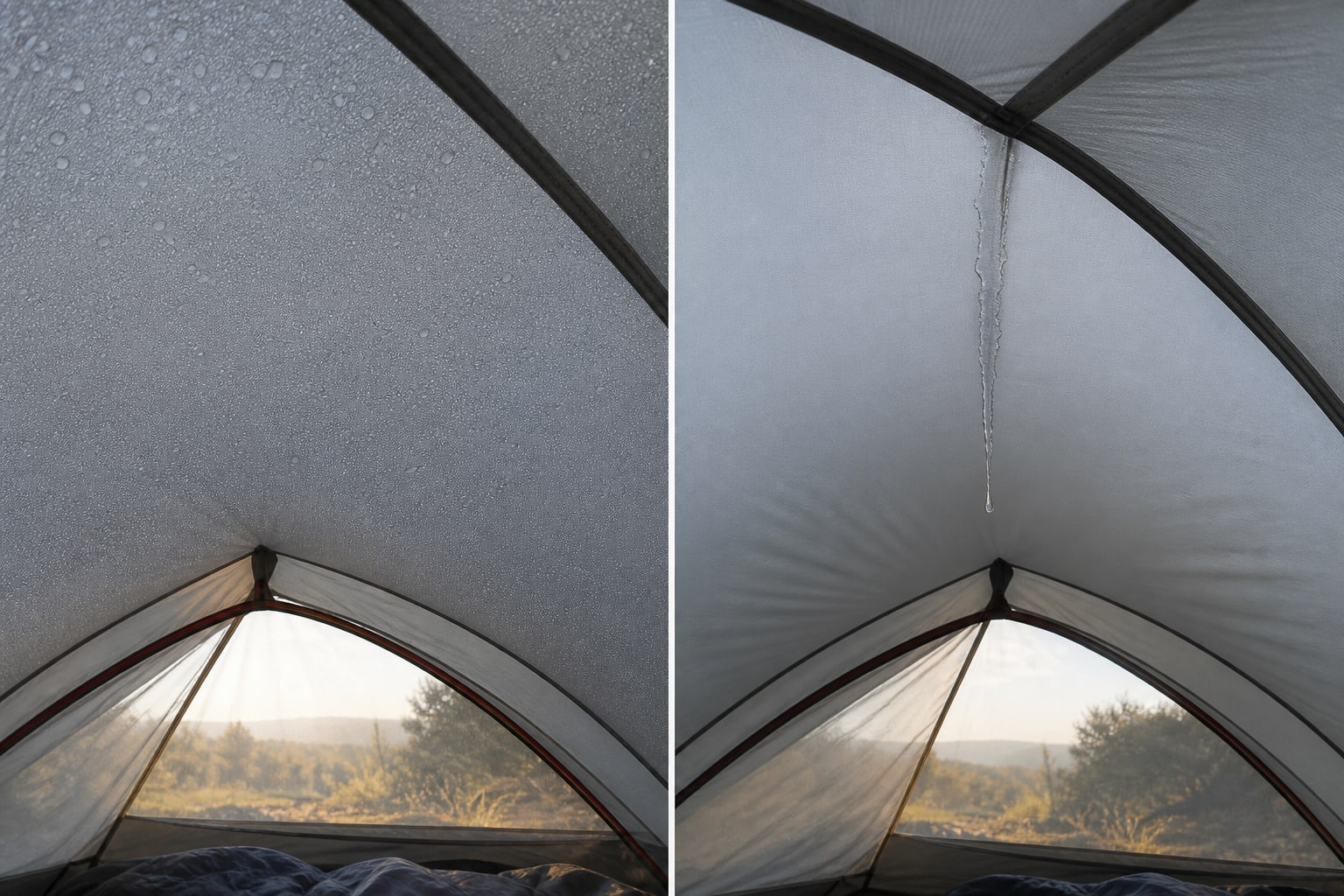
Condensation tends to appear broadly. The underside of the fly looks misted, droplets gather above sleeping positions, and brushing the fabric causes a small shower. It is often worst near dawn, when the fabric is coldest.
A leak is more localized. Water follows a seam, enters around a zipper or vent, or reappears in the same place during rain. Splashback and a footprint extending beyond the tent floor can also send water under the tent and make the floor feel wet.
A two-minute tent moisture check
Look up
Droplets spread across a large section of the fly usually mean condensation. A narrow trail beneath a seam suggests leakage.
Check the gap
The rainfly and inner tent should not touch. Contact transfers condensation directly onto mesh, fabric, and sleeping bags.
Inspect the floor edge
A groundsheet should sit entirely beneath the tent. Any exposed edge can collect rain and funnel it underneath.
Feel your gear
Wet jackets, towels, boots, and clothing release moisture all night. Move them to the vestibule when conditions allow.
What to do tonight
Open every protected vent, even if the air feels cold. Ventilation works best when air can enter low and escape high, so crack the top of a door or fly panel only where rain cannot blow through it. If conditions are calm, orient the largest mesh panel or vent toward the breeze.
Retension the rainfly so it sits away from the inner tent. Wet nylon relaxes and sags, which closes the air gap and increases contact. Tighten each corner gradually and evenly rather than cranking down one side.
Use a small absorbent camp towel to wipe the underside of the fly before droplets fall onto your sleep system. Keep the towel near the door so you can wring it outside. Do not press sleeping bags, pads, or clothing against tent walls.
Why the campsite matters
Low ground, lake edges, river corridors, saturated grass, and dense vegetation often hold more moisture. The prettiest waterside spot can also produce the wettest fly. When possible, choose durable ground slightly above nearby water and outside obvious depressions.
Avoid pitching directly over lush grass if a durable established pad is available. Plants release moisture and the ground below them tends to stay damp. Do not alter a site or clear vegetation just to chase a drier pitch.
Cooking inside a tent adds water vapor and creates a serious carbon-monoxide and fire hazard. Cook outside and away from the shelter. Store wet rainwear, shoes, and towels in the vestibule without blocking ventilation.
When equipment can help
Technique solves most condensation. A tent with large protected vents, generous mesh, and a rainfly that maintains a clear air gap makes the technique easier. Our beginner camping tent guide highlights shelters with usable ventilation rather than treating mesh percentage as a specification on its own.
A compact fan can move humid air toward an open vent during hot, still nights, but it cannot remove moisture from a sealed tent. See our camping fan guide if still air is the recurring problem. For hot-weather campsite strategy, read how to keep a tent cool.
Seam sealer is appropriate only after you have isolated an actual seam leak. Applying it to a tent that is merely condensing adds weight and mess without fixing the source.
Prevent it on the next trip
A drier-tent routine
Choose a breathing site
Favor established ground with some air movement over a sheltered hollow beside water.
Pitch the fly cleanly
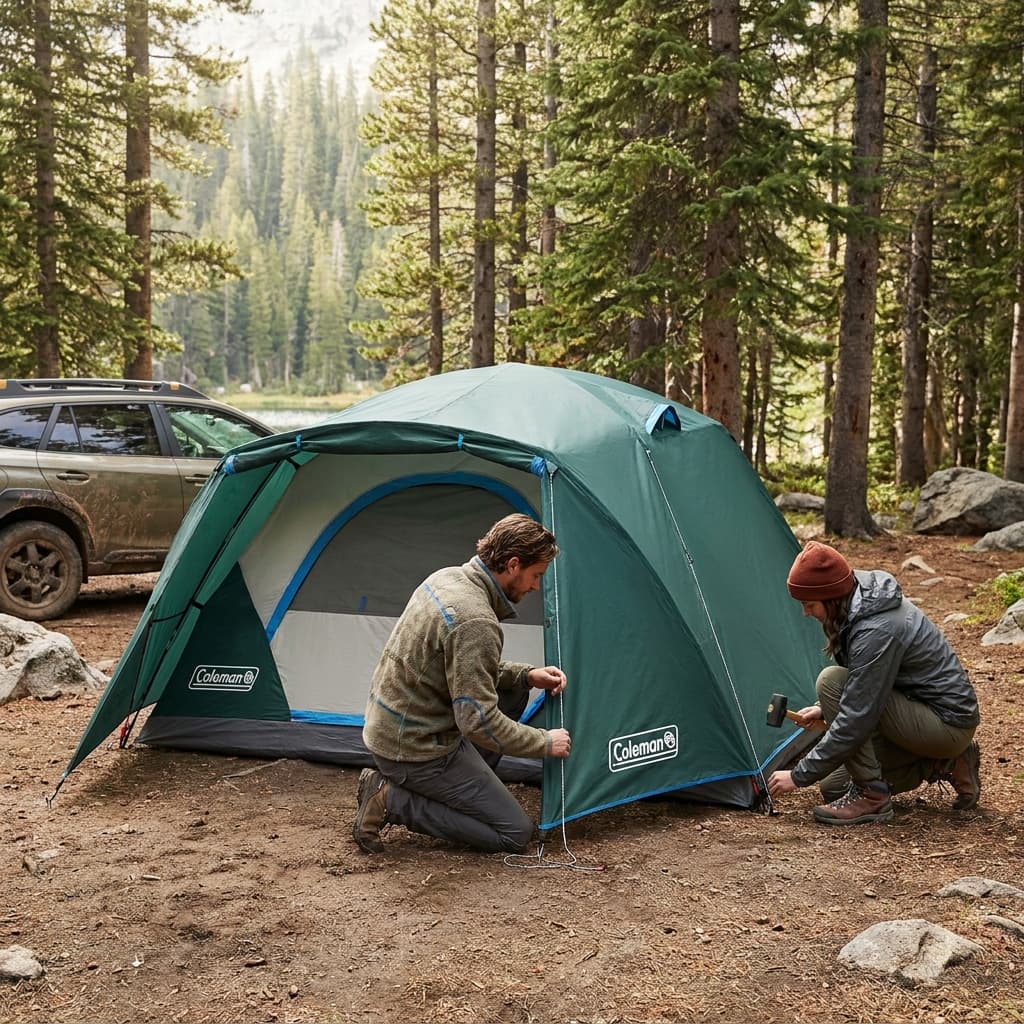
Stake corners square, attach pole wraps, and tension the fly so it remains separated from the inner tent.
Open protected vents early
Do not wait until droplets form. Establish airflow when you pitch.
Keep moisture outside
Put wet layers and towels in the vestibule and never cook in the tent.
Dry before packing
Shake out the fly in the morning and air the tent at home before storage.
Why is my tent wet inside when it did not rain?
Condensation is the usual cause. Moisture from breathing, damp ground, wet equipment, and nearby water collects on cold tent fabric. Broad droplets on the underside of the fly indicate condensation more often than leakage.
Should I close my tent vents when it is cold?
Keep protected vents open. Closing the tent traps humid air and usually makes the interior wetter. Your sleeping bag and insulated pad should provide warmth; the tent primarily blocks wind and precipitation.
Does a tent fan stop condensation?
A fan can improve circulation and move humid air toward an open vent, especially on still summer nights. It will not solve condensation in a sealed shelter or during extremely humid weather.
Sources: MSR tent setup and use manual, NEMO condensation guidance, and REI tent setup guidance.
Recommended gear
Our current top picks from the Best camping tents for beginners in 2026: 7 easy-pitch picks guide, if you are ready to buy.
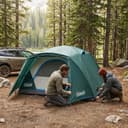
The Skydome's pre-attached poles fold out and lock into corner sleeves without guesswork, making it one of the most foolproof setups at any price. Nearly vertical walls add 20% more headroom than a traditional Coleman dome, and the full-coverage rainfly version includes an 8 x 3.5 ft vestibule for gear storage.
Best for: Beginner couples or small families who want a reliable, fast-pitching shelter with solid rain coverage without spending more than $200.
- Pre-attached poles make solo setup straightforward
- Full-coverage rainfly with integrated 8 x 3.5 ft vestibule for gear storage
- 55-inch peak height means most adults cannot stand up inside
- Capacity
- 4 person
- Floor
- 8 x 7 ft (56 sq ft)
- Peak height
- 55.2 in (4 ft 7 in)
- Weight
- 13.7 lbs
- Wind rating
- Frame tested to 35 mph
- Setup
- Pre-attached poles, under 5 minutes
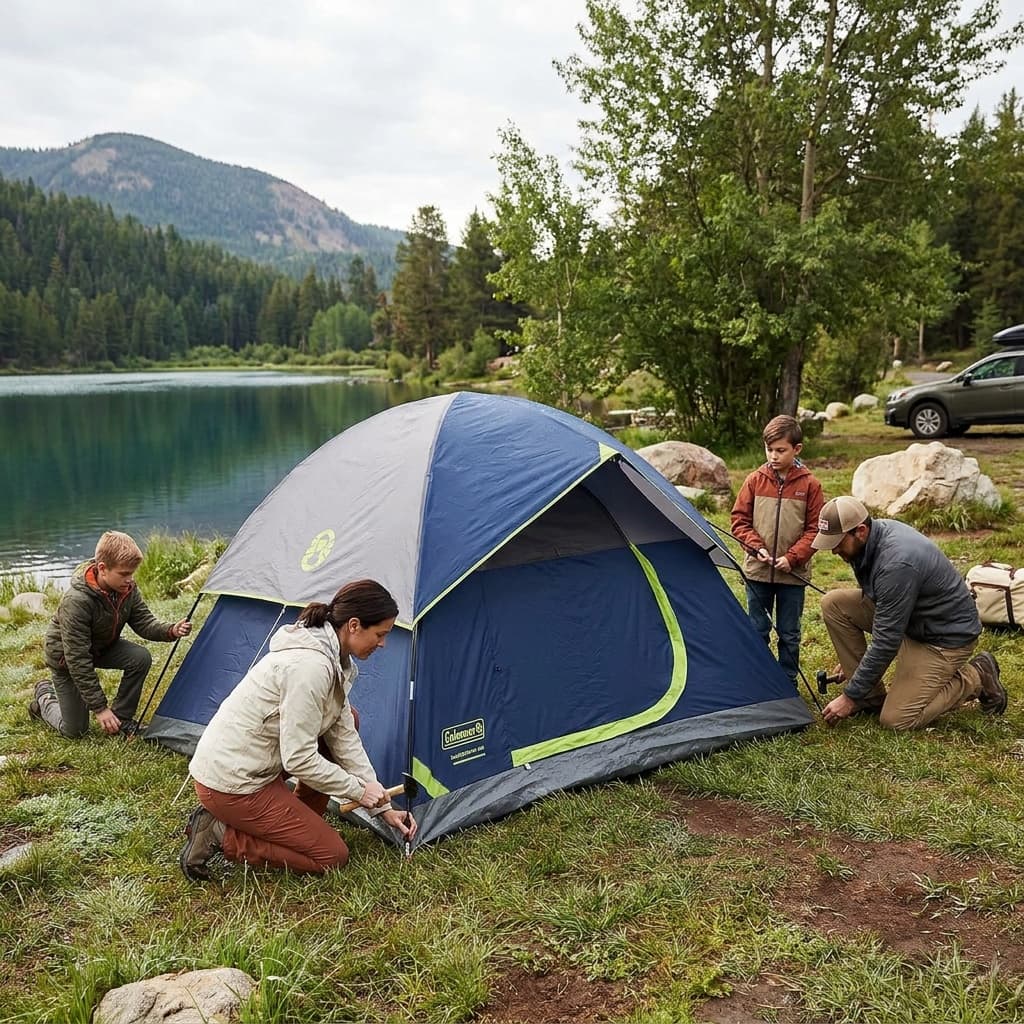
The Sundome is Coleman's entry-level dome tent: a simple, lightweight shelter that sets up solo in under 10 minutes and sells for under $120 most of the year. It handles a typical campground rain shower, but the partial rainfly leaves the lower body exposed in wind-driven rain.
Best for: First-time campers or parents taking kids on a first campout who want a no-risk, low-cost shelter before deciding if camping is a regular habit.
- Solo setup under 10 minutes with color-coded, snag-free poles
- Polyethylene tub floor resists ground moisture
- Partial rainfly leaves the lower tent walls exposed in wind-driven rain
- Capacity
- 4 person (comfortable for 2 adults + gear)
- Floor
- 9 x 7 ft (63 sq ft)
- Peak height
- 59 in (4 ft 11 in)
- Weight
- 10.4 lbs
- Poles
- Fiberglass, continuous sleeves
- Floor material
- Polyethylene tub floor
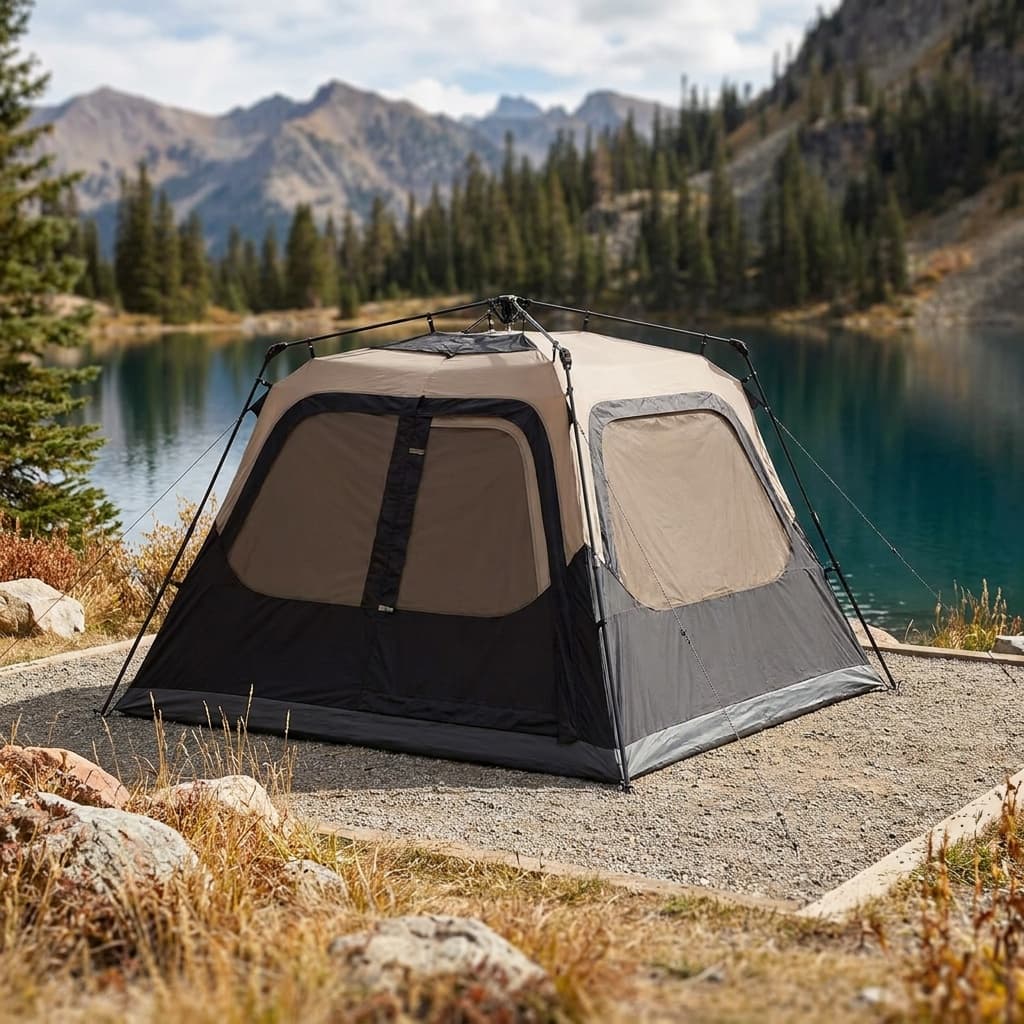
A four-person cabin tent with a pre-attached telescoping frame that unfolds in about a minute. It trades packed weight and full-fly storm coverage for the simplest setup in the beginner field.
Best for: Road trippers, solo parents, and mobility-limited campers who value a one-minute pitch more than compact storage or full-fly storm protection.
- Pre-attached frame removes pole sorting and can be pitched by one person in about a minute
- Eight-by-seven-foot floor fits one queen air bed with a narrow gear margin
- At 19.1 lb and almost 40 inches packed, it is a trunk-only shelter
- Capacity
- 4 person (best for 2 adults plus gear)
- Floor
- 8 x 7 ft (56 sq ft)
- Peak height
- 59 in (4 ft 11 in)
- Packed weight
- 19.1 lb
- Setup
- Pre-attached frame, about 60 seconds
- Packed length
- 39.95 in
See all picks in Best camping tents for beginners in 2026: 7 easy-pitch picks
Keep going
Complete loadoutCamp sleep systemFive coordinated pieces that solve shelter, insulation, cushioning, head support, and light for nights outside.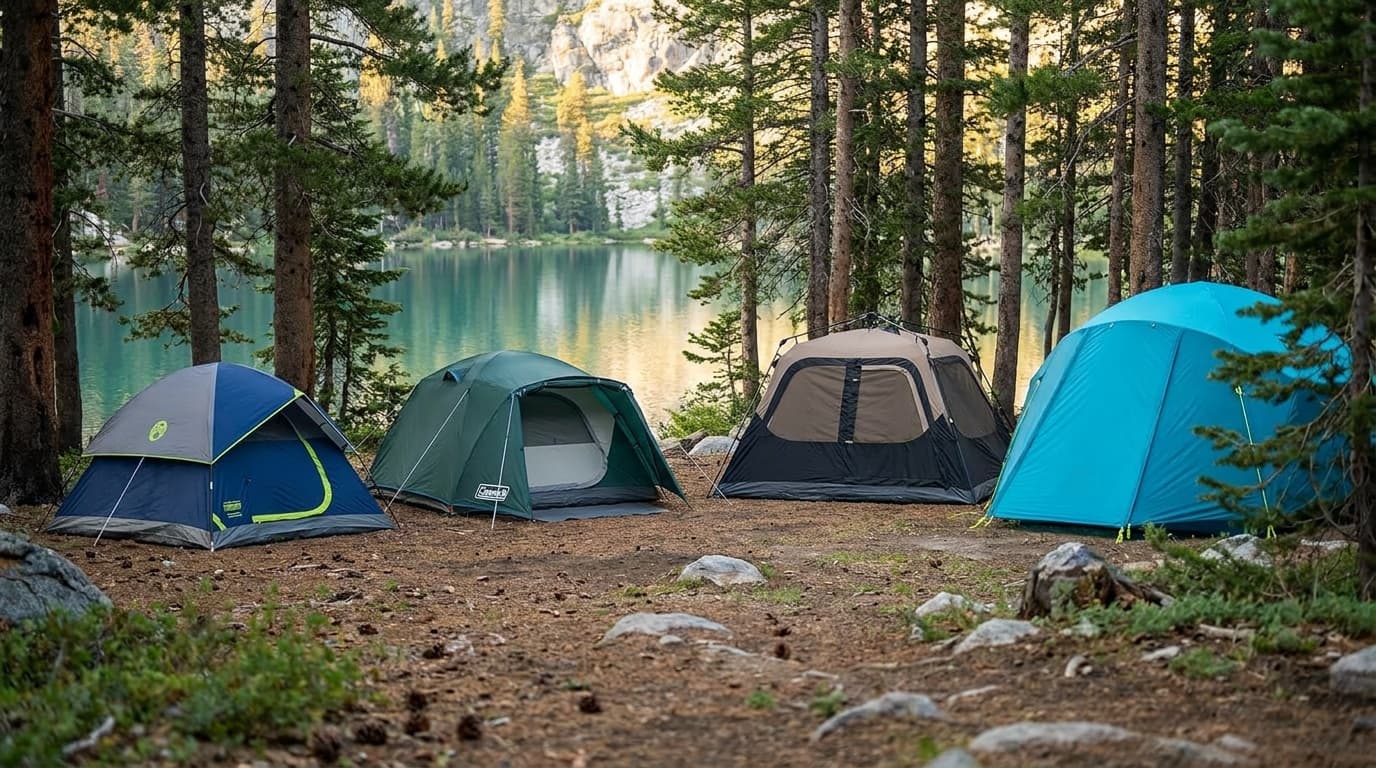
Researched, not hands-on tested
Updated Aug 19, 2026Our recommendations draw on manufacturer documentation, retailer listings, owner feedback, and comparisons with alternatives.
As an Amazon Associate I earn from qualifying purchases. We may earn a commission from links here, at no extra cost to you. How we research →