We may earn a commission from links on this page, at no extra cost to you.
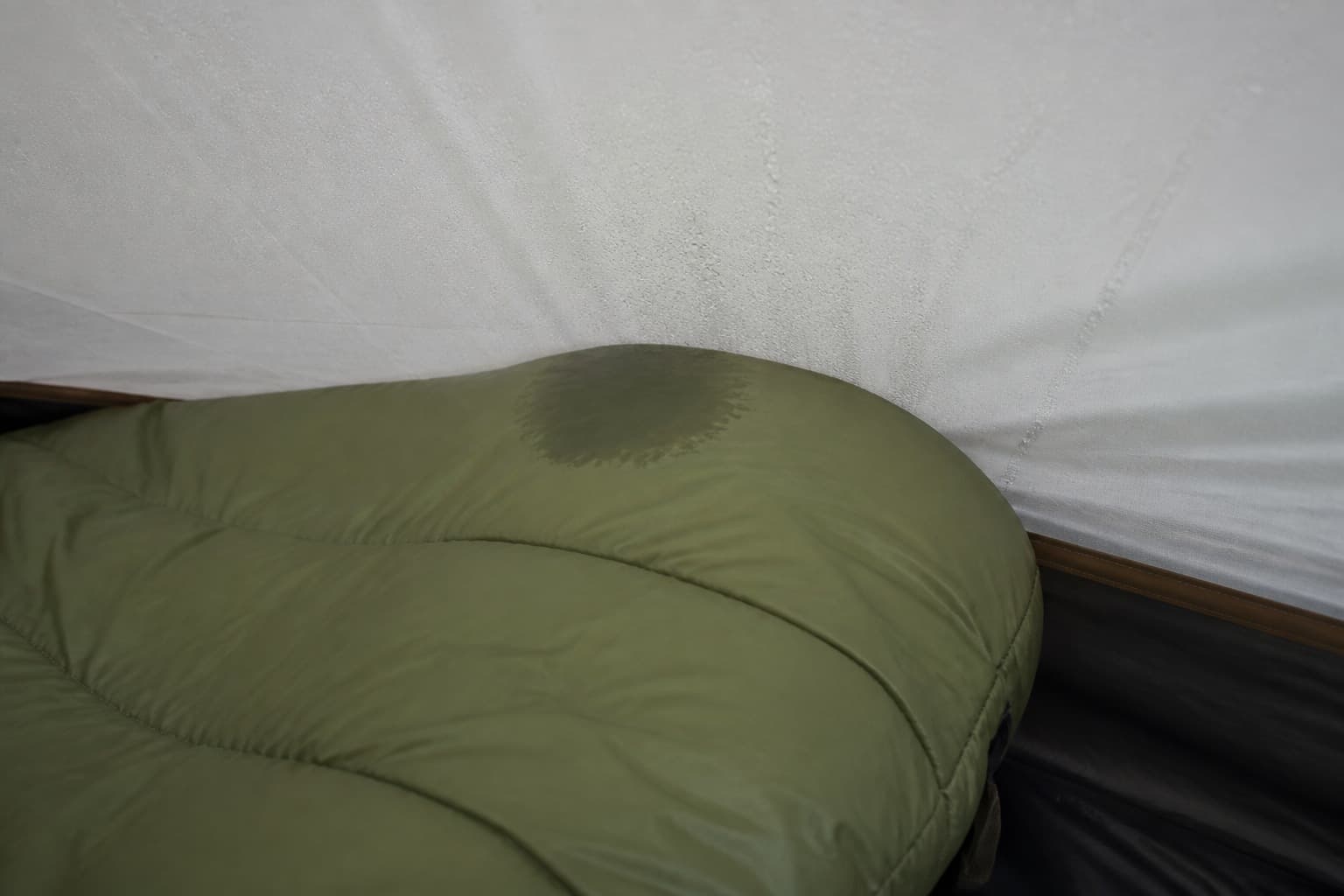
The location of the dampness usually reveals the cause. A wet footbox beside a tent wall points to contact with condensation. A broadly clammy shell suggests humid tent air and body moisture. A wet patch underneath the bag is more likely to come from the floor, pad, clothing, or a spill.
Find the source before packing. A waterproof stuff sack can keep outside rain away, but it cannot dry moisture already trapped in the insulation.
Read the moisture pattern
| What you find | Most likely cause | First correction |
|---|---|---|
| Damp footbox or shoulder beside the wall | Contact with tent condensation | Center the sleep system and keep insulation off the fabric |
| Light moisture across the upper shell | Humid air, breathing, and body vapor | Increase ventilation and air the bag in the morning |
| Wet underside in one area | Floor leak, pad moisture, spill, or wet gear | Inspect the floor and everything beneath or beside the bag |
| Dampness inside near your face | Breathing into the bag or overdressing | Keep your mouth outside and regulate heat earlier |
| Collapsed, cold insulation | Significant moisture in the fill | Stop, dry it promptly, and protect your backup warmth |
Moisture can have more than one source. A cold, still night may create condensation on the fly while an oversized sleeping bag also touches the wall.
The common culprit: touching the tent wall
Warm, humid air can condense on a cold tent surface. A sleeping bag pressed against that surface collects the water directly, often at the footbox where the tent narrows.
Center the sleeping pad, pull spare gear away from the sidewall, and avoid overfilling the tent perimeter. If the shelter is short for your body and bag, sleep diagonally when the layout allows it or use the end with more wall clearance.
Our guide to why a tent gets wet inside explains how site conditions, ventilation, occupants, and cold fabric work together.
Reduce the moisture made overnight
You cannot eliminate breathing or normal perspiration, but you can keep that moisture from accumulating as quickly.
- Open high and low vents when wind and rain direction allow.
- Keep your nose and mouth outside the sleeping bag instead of breathing into the insulation.
- Remove wet rainwear and damp socks before entering the bag.
- Avoid overdressing until you sweat; adjust layers or vent the bag earlier.
- Cook and boil water outside the sleeping compartment.
Pitch the fly with the ventilation gap the shelter was designed to use. Pulling every edge tight to the ground can block airflow on some tents, while pitching too loosely can let the wet fly touch the inner canopy.
Dry the bag before it goes into storage
The morning reset
Inspect it
Check the shell, footbox, hood, underside, and insulation for cold or flattened areas.
Open it fully
Undo the zipper and expose both the liner and shell instead of leaving the bag rolled up.
Support it broadly
Lay it across clean chairs, a dry ridgeline, or another wide surface without snagging the shell.
Use moving air
Open shade or brief gentle morning sun helps; avoid hours of harsh ultraviolet exposure.
Pack it last
Give the bag the longest drying window while breakfast and camp breakdown happen.
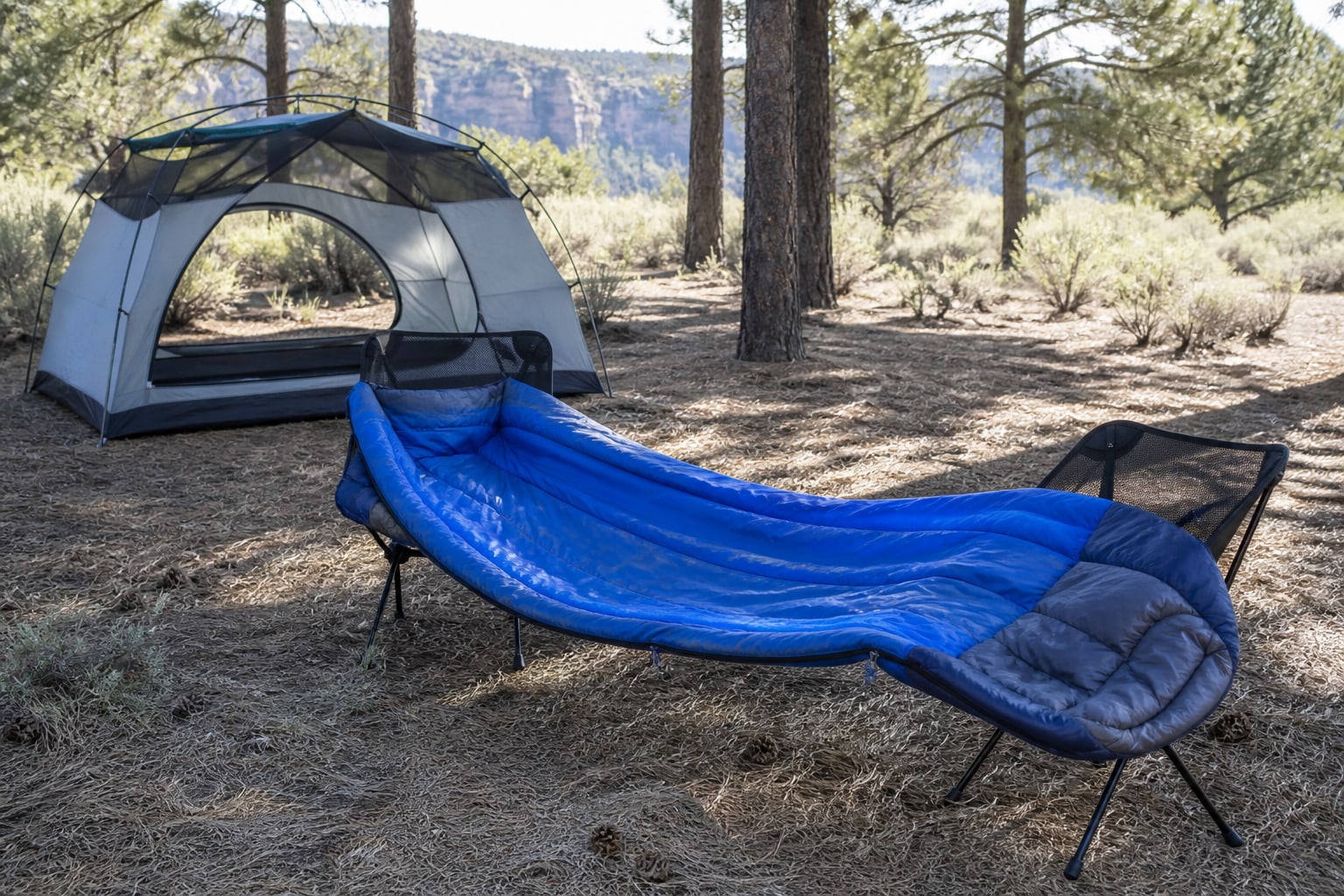
Morning reset: open the bag fully and support it broadly in moving air. Brief gentle sun is useful; do not leave insulation in harsh UV for hours.
Do not assume compression will squeeze the moisture out. Once sealed, the damp air remains with the bag. Pack wet shelters, towels, and clothing separately.
Down and synthetic bags react differently
Both fills need to be dried, but down is especially dependent on loft. As down clusters become damp and clump together, the bag traps less air and provides less warmth. Synthetic insulation often retains more function while damp, but a saturated synthetic bag is still heavier, colder, and slow to recover.
Gently redistribute clumped insulation only as the maker recommends. Do not wring, twist, or forcefully beat a wet bag. If the fill has lost substantial loft, follow the care label and manufacturer cleaning instructions after the trip.
When damp becomes wet
If the insulation is cold, heavy, visibly clumped, or no longer lofting, use the more complete field guide to drying a wet sleeping bag. Protect dry clothing and any backup quilt while you work. In cold conditions, do not continue a night with a sleep system that cannot keep you warm.
If bag length, shell construction, or insulation type is contributing to repeated moisture trouble, our best sleeping bags for camping guide helps match a bag to the shelter, season, and trip style.
Is it normal for a sleeping bag to feel slightly damp in the morning?
It is common in humid or cold conditions, but it should not be ignored. Air the bag before packing and adjust wall clearance and ventilation the next night.
Will a dry bag dry a damp sleeping bag during the day?
No. A dry bag keeps new water out, but it also traps existing moisture. Air and dry the sleeping bag first whenever conditions allow.
Why is only the foot of my sleeping bag wet?
The footbox often touches a condensation-covered tent wall because shelters narrow at the ends. Move the sleep system inward and create more clearance around the bag.
Keep going
Related buying guideBest sleeping bags for camping in 2026Related guides
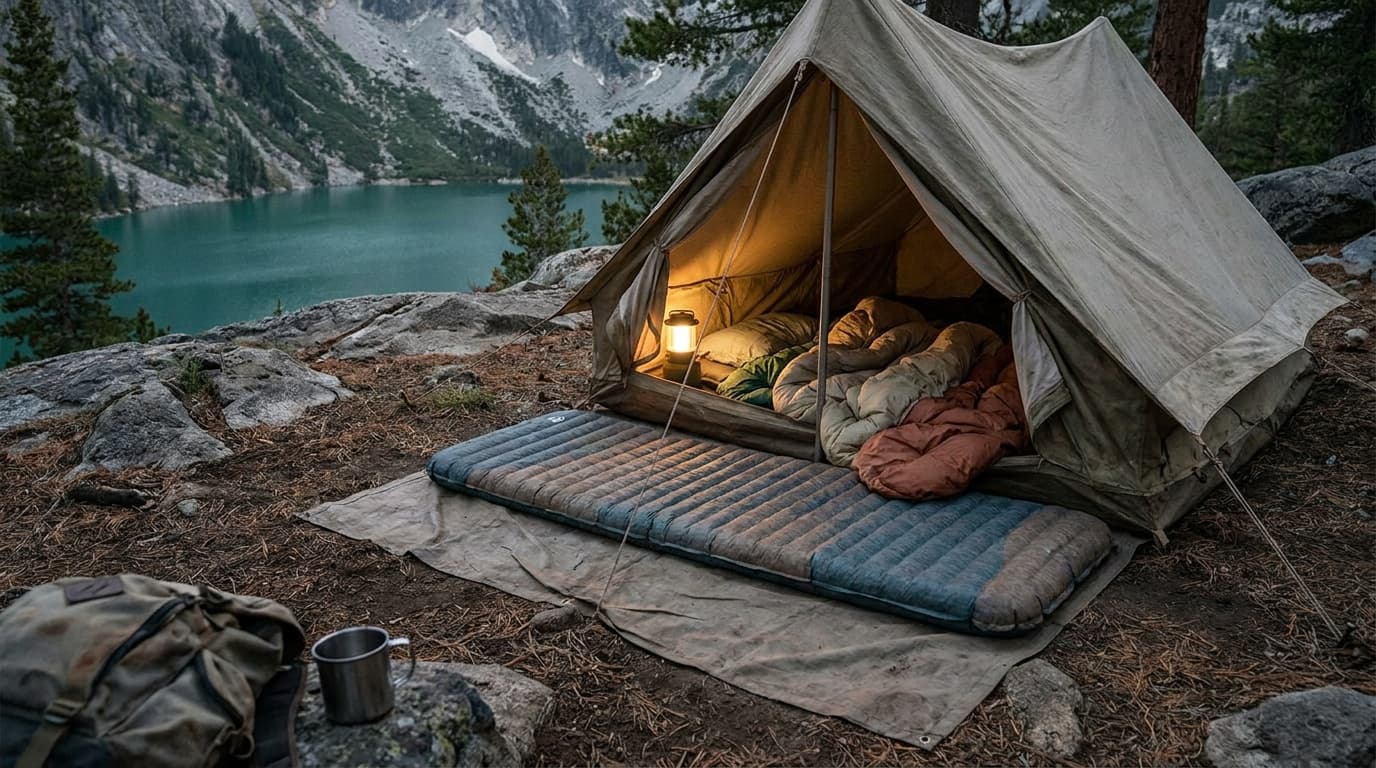
 Complete camp loadoutCamp sleep systemBuild the complete kit
Researched, not hands-on tested
Updated Aug 19, 2026Our recommendations draw on manufacturer documentation, retailer listings, owner feedback, and comparisons with alternatives.
As an Amazon Associate I earn from qualifying purchases. We may earn a commission from links here, at no extra cost to you. How we research →
Related buying guide
Best sleeping bags for camping in 2026