We may earn a commission from links on this page, at no extra cost to you.
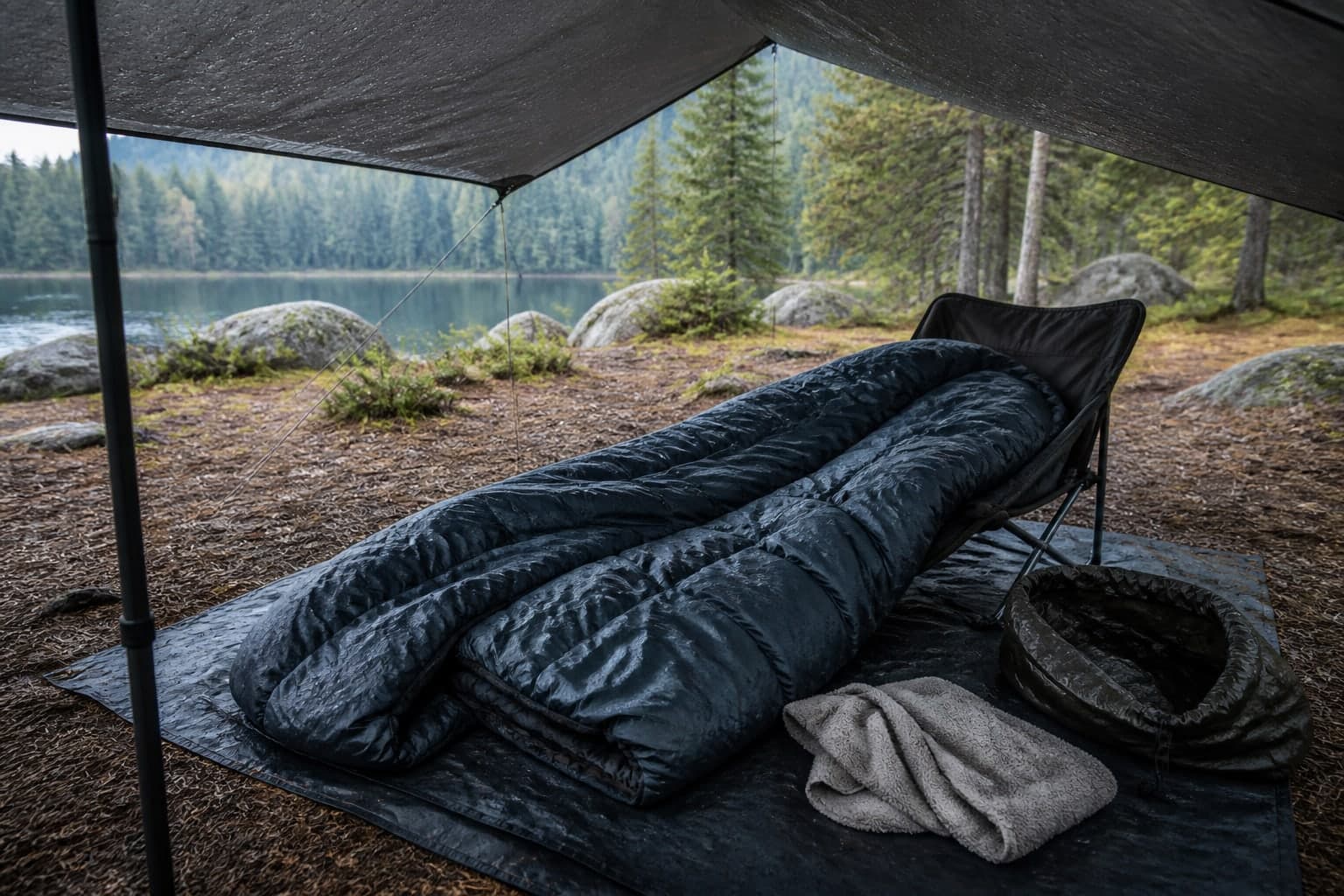
Get a wet sleeping bag out of its stuff sack immediately. Moist insulation loses loft, and lost loft means lost warmth. Your first job is not to make the bag look dry. It is to expose as much insulation as possible to moving air without damaging it.
Quick answer: Move under shelter, blot rather than wring, open every zipper, drape the bag loosely in moving air, turn it often, and do not repack it until it is completely dry.
Decide how wet it really is
Press the shell with a dry towel and inspect the insulation.
| Condition | What it means | Plan |
|---|---|---|
| Droplets only on the shell | Surface moisture or condensation | Blot and air briefly |
| Damp shell with normal loft | Moisture has not saturated the fill | Air under shelter and turn often |
| Clumped down or flattened fill | Insulation is wet enough to lose warmth | Separate clumps gently and plan for a long dry |
| Water squeezes through the fabric | Bag is saturated | Treat the sleep system as unavailable until dry |
If temperatures are dropping and the bag cannot provide safe insulation, change the plan. Use dry backup insulation, move to a warm shelter, or leave the campsite while travel is still safe. A soaked bag is not something to "tough out" in cold weather.
The field-drying sequence
1. Stop the source
Move the bag beneath a tarp, into a dry screen house, or inside a well-ventilated tent after removing the wet item that caused the problem. Keep it off wet soil and away from condensation-coated walls.
If the stuff sack is wet, turn it inside out and dry it separately.
2. Blot without twisting
Lay the bag on a clean groundsheet and press dry towels into the wettest areas. Do not wring or twist the bag. That can stress baffles, shift insulation, and damage delicate down clusters.
3. Open the bag completely
Unzip the main zipper and footbox. Loosen the hood and draft collar. The goal is to eliminate folded, sealed pockets where moisture can remain trapped.
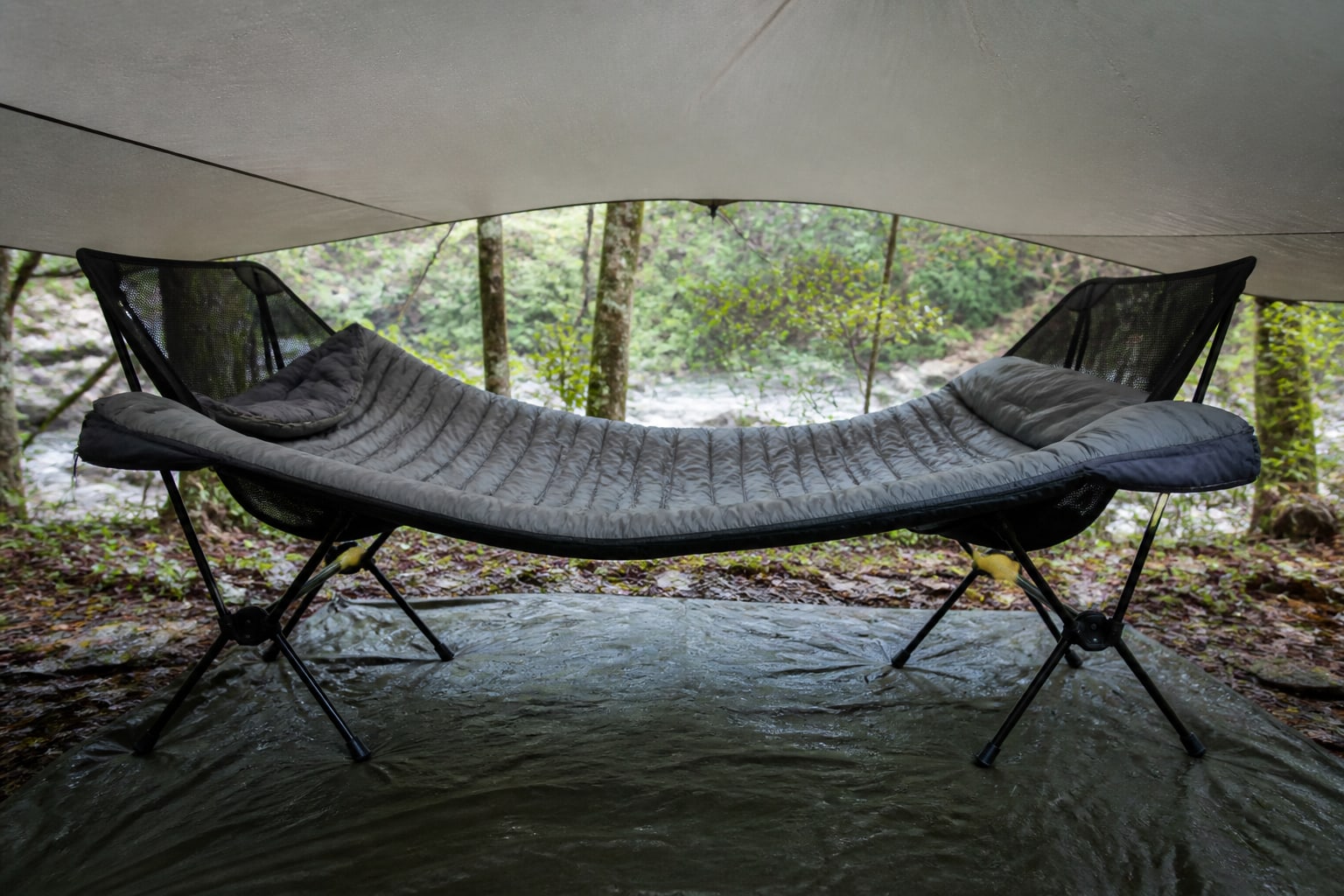
4. Drape it for airflow
Use two parallel lines, several chair backs, or a broad drying rack so the bag is supported at multiple points. A single thin line can compress the same strip of insulation and slow drying.
Keep the bag under shade or gentle indirect sun unless its care label says otherwise. Never put it close to a fire, stove, catalytic heater, vehicle exhaust, or hot lantern.
5. Turn and loosen it
Flip the bag regularly. For down fill, gently massage clumps apart as the bag dries so the down can spread back through each baffle. Do not pull hard on wet insulation through the shell.
Down versus synthetic
Synthetic fill usually retains more useful loft when damp and often dries faster in the field. Down offers excellent warmth for its packed size, but wet down clumps and needs more time and careful handling to recover.
That difference matters when choosing a bag for persistently wet trips. Our down versus synthetic sleeping bag guide explains the tradeoff, and our best sleeping bags guide covers current options.
Do not seal a damp bag in a dry bag
A waterproof sack prevents new water from reaching the sleeping bag. It does not actively dry damp insulation. Sea to Summit notes that damp gear inside an Evac dry bag will remain damp until it is removed and air-dried.
Use the dry bag for prevention and transport only after the sleeping bag is dry. If you must pack a still-damp bag to move out of danger, unpack it again at the first safe opportunity.
Dry it fully at home
Field-dry until the bag is safe to transport, then finish the job at home according to its care label. Sea to Summit recommends making sure a bag is completely dry before packing or storing it; clean dryer balls or tennis balls can help restore loft when the care instructions permit machine drying.
Do not store a sleeping bag compressed. Place it loosely in its storage sack or hang it in a dry space.
Prevent the next wet night
- Pack the sleeping bag inside a waterproof liner or roll-top dry sack
- Keep it away from tent walls and wet rain gear
- Vent the shelter to reduce condensation
- Air the bag during breakfast when weather allows
- Carry a small absorbent towel
- Pack a tarp before trips with sustained rain
See our guides to camping tarps, tent condensation, and staying warm while camping for the rest of the system.
Frequently asked questions
Can I dry a sleeping bag next to a campfire?
No. Sparks, radiant heat, and hot air can melt shell fabric and damage insulation long before the bag feels hot in your hands.
Can I sleep in a damp sleeping bag?
A lightly damp shell may be manageable in mild conditions if the insulation still has full loft. A flattened or saturated bag cannot be trusted for warmth. Use dry backup insulation or move to shelter.
How do I know when down is fully dry?
The bag should feel evenly lofty with no cool, heavy, or clumped sections. Check the footbox, hood, and baffle corners, where moisture often lingers.
Sources
Keep going
Related buying guideBest sleeping bags for camping in 2026Related guides
 Complete camp loadoutCamp sleep systemBuild the complete kit
Our recommendations draw on manufacturer documentation, retailer listings, owner feedback, and comparisons with alternatives.
As an Amazon Associate I earn from qualifying purchases. We may earn a commission from links here, at no extra cost to you. How we research →
Related buying guide
Best sleeping bags for camping in 2026