We may earn a commission from links on this page, at no extra cost to you.
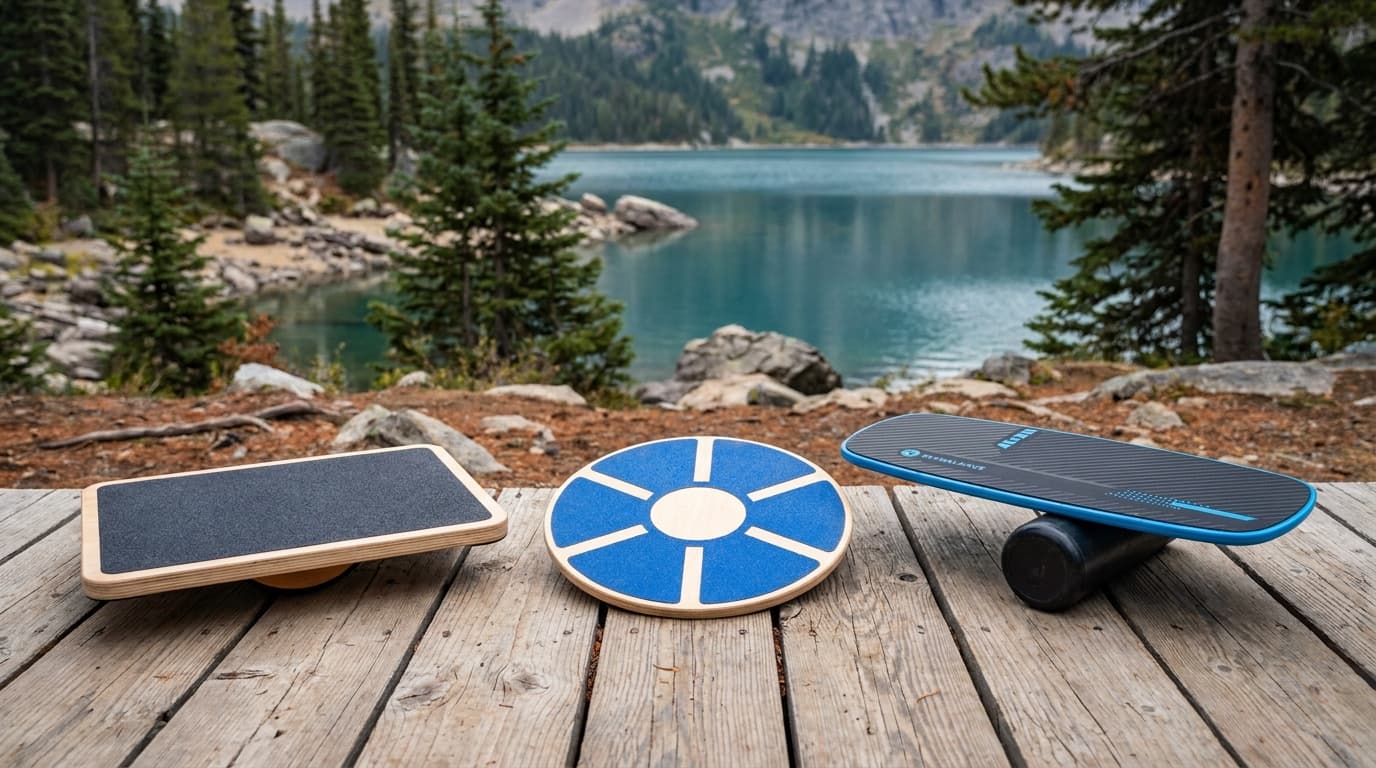
The base determines what a balance board teaches. A rocker constrains motion, a wobble dome adds movement in every direction, a roller travels under the deck, and a spinning board adds rotation around attached pivots. Difficulty rises as movement becomes less bounded.
The four mechanisms at a glance
| Type | Base | Movement | Learning curve | Best fit | Main caution |
|---|---|---|---|---|---|
| Rocker-style | Attached rail or crossed base | Bounded tilt | Lowest | Beginners, desks, controlled drills | Lower long-term ceiling |
| Wobble | Attached central dome | 360-degree tilt | Low to moderate | Compact balance practice | Small decks fatigue quickly |
| Roller | Loose cylinder | Continuous lateral travel | High | Board sports, rola-bola | Roller can accelerate away |
| Spinning | Multiple attached pivots | Tilt, transfer, rotation | High | Tricks, active play | Narrow deck and rotational fall risk |
Rocker-style boards
BEST CONTROLLED BASE
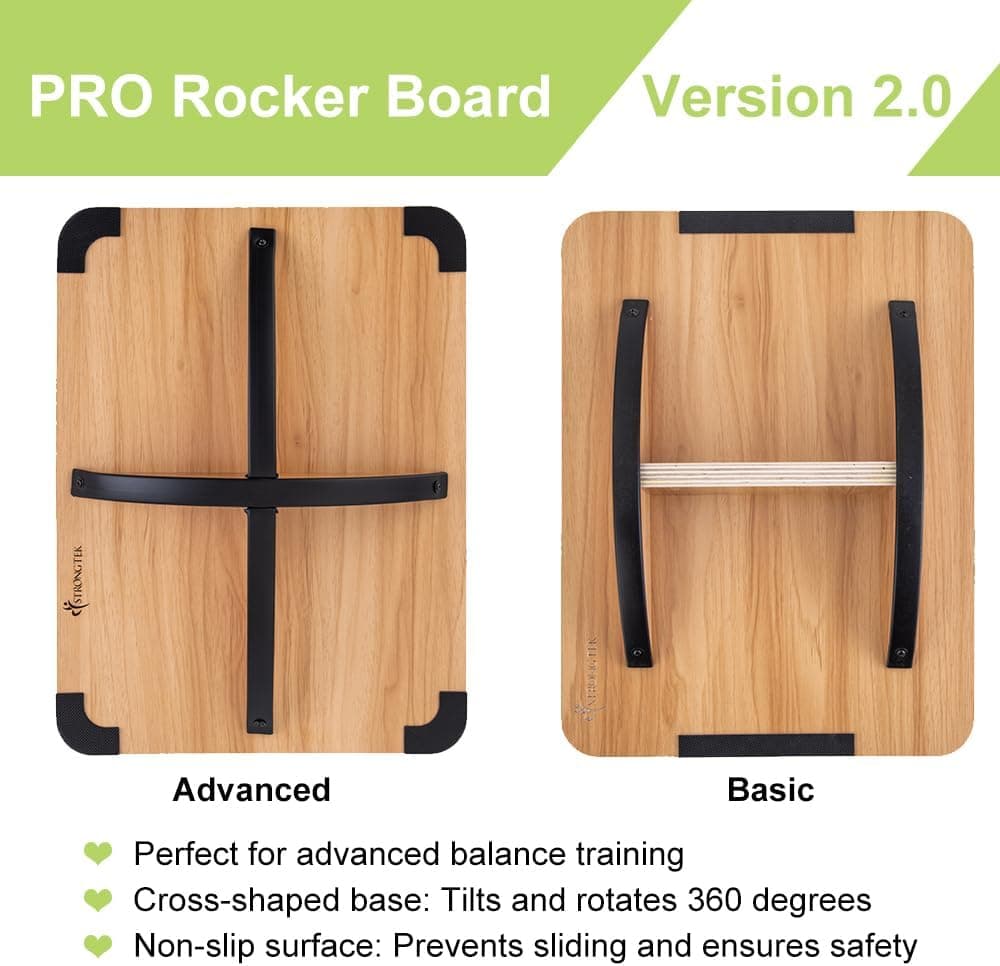
StrongTek Professional Wooden Balance Board, Crossed Hardwood Base (Extra Large)
Best for: Standing-desk workers and early-stage rehab users who want multi-directional challenge without the steep learning curve or fall risk of a roller board.
Kit Score 8.2/10 · Check current price
- Cross base enables 360-degree tilt so users can work all planes without the unpredictability of a free-pivot wobble dome
- Wide deck and solid Lauan construction make it comfortable for extended standing desk sessions and for users with wider stances
- Single-material tilt still has a ceiling for progression: advanced athletes will outgrow it before competitive riders do
A traditional rocker tips along one axis. The StrongTek here uses a crossed base, so it can tilt front to back and side to side while remaining attached to the deck. The movement is broader than a single rail but still bounded by fixed wood.
That predictability makes a rocker the most practical first board. It cannot roll across the room, and the user can learn how pressure moves the deck without managing a separate object. A broad rocker is also the only type in this group that makes sense for regular standing-desk intervals.
The limitation is progression. Once you can control its fixed range, the mechanism cannot become much less stable. Add reaches or shallow bends, or move to a wobble board rather than inventing risky loaded tricks.
Read our StrongTek review for the extra-large platform and current capacity.
Wobble boards
BEST BUDGET ENTRY
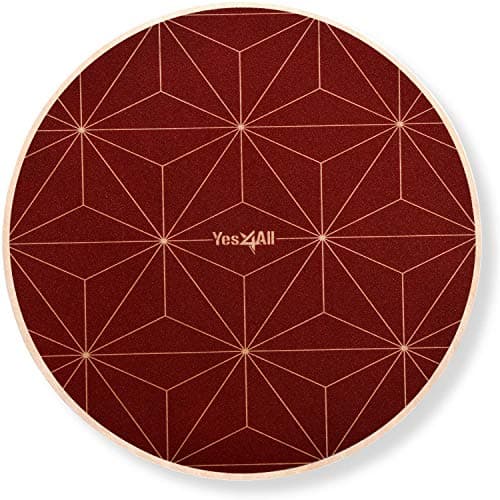
Yes4All Versatile Wooden Wobble Balance Board (15.75 in)
Best for: Anyone starting ankle rehab, adding proprioception work to a home routine, or wanting a low-cost entry point before committing to a higher-tier board.
Kit Score 7.9/10 · Check current price
- Under $25 makes it accessible for anyone starting ankle rehab or physical therapy on a budget
- 360-degree pivot challenges ankle stabilizers in all planes, which is exactly what early proprioception rehab protocols require
- 15.75-inch diameter is tight for larger feet, and the low tilt range limits challenge once basic balance improves
A wobble board balances over a central dome. It can tip in every direction and usually lets the deck rotate slightly, but the outer edge reaches the floor before the base can travel away.
Wobble boards are compact, inexpensive, and useful for focused two-foot or one-foot balance drills. Their multi-axis movement creates a meaningful step up from an attached rocker without the open travel of a roller.
The compact shape is also the drawback. A 15.75-inch disc gives both feet less room than a rectangular deck, and the continuous ankle correction becomes tiring at a desk. Fixed dome height also means most basic boards offer one difficulty level.
Roller boards
BEST PROGRESSIVE ROLLER
Revbalance 101 v2 Balance Board Sports Trainer
Best for: Athletes training for board sports or anyone who wants one board that can grow from beginner ankle rehab to advanced sport-specific balance work.
Kit Score 8.6/10 · Check current price
- Magnetic stops make difficulty progression genuinely seamless, no extra purchases required
- 400 lb rated capacity and heavy-duty USA construction back up the lifetime-use claim from most owners
- Roller boards carry a real fall risk for first-timers, so a spotter or nearby wall is advisable on day one
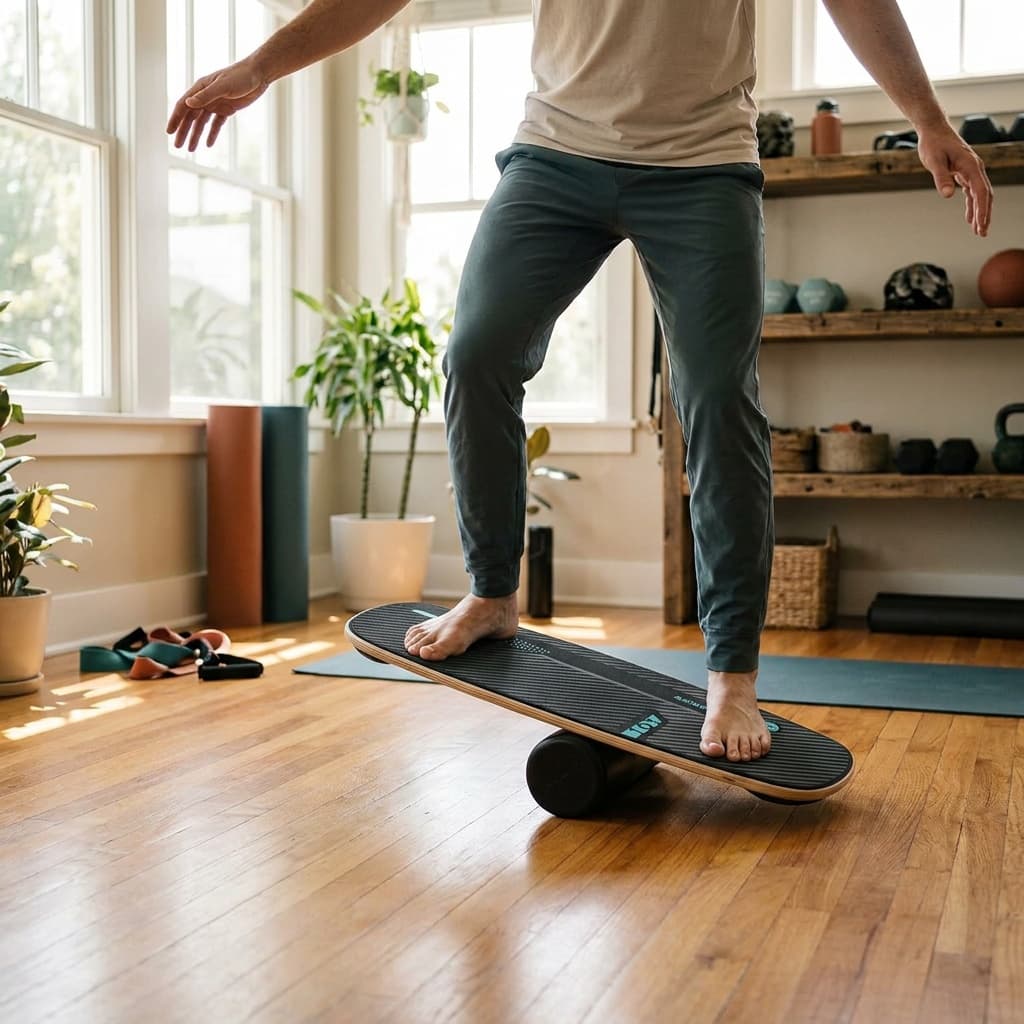
A roller board places a loose cylinder under a flat deck. The roller can continue moving laterally until a stop, friction, or the rider changes direction. That continuous travel creates the strongest crossover to surfing, snowboarding, wakeboarding, skating, and rola-bola.
The Revbalance 101 v2 is the easiest roller in this comparison to scale because magnetic stops shorten or widen the travel. The Indo Board Original uses fixed deck stops and a much wider 30 x 18-inch platform.
Rollers need more clear space, more attention, and a deliberate step-off plan. They are poor passive desk tools and should not be treated as a default injury-rehab surface.
Spinning and multi-pivot boards
The Whirly Board Sport 360 uses three attached half-sphere pivots instead of one dome or a loose roller. The center supports two-foot balance and rotation; the end pivots add transfers, end balances, and spins.
This branch is not simply "harder wobble." Its trick vocabulary is different. A rider who wants turns and active play may prefer it to a roller, while someone preparing for rola-bola or surf-style lateral travel should choose the roller.
See Whirly Board vs Indo Board for a direct rotational-versus-roller comparison.
The correct beginner progression
For general skill practice, move from the most constrained mechanism to the least constrained:
- Rocker: learn mounting, dismounting, soft-knee stance, and slow shifts on an attached base.
- Wobble: repeat those skills with multi-directional movement around a central dome.
- Roller or spinning: choose the advanced branch that matches your goal, then restart with basic mounting and short holds.
Do not use a calendar to force the change. Progress when you can step on and off without jumping, hold a relaxed stance, shift deliberately, and recover from a small disturbance without grabbing or flailing.
An ankle rehabilitation plan is different. The 2021 lateral ankle-sprain clinical practice guideline supports structured balance and neuromuscular exercise in appropriate cases, but exercise selection and timing depend on the injury (JOSPT). A physical therapist may use flat-ground drills, foam, a rocker, or another surface before a retail wobble board, and may never need a roller.
Which type fits your goal?
Match the base to the job
Standing desk
Rocker-style. Choose a broad attached base and alternate it with flat standing.
First board under $30
Wobble. A compact dome board is the lowest-cost multi-directional option.
Ankle rehab
Clinician's choice. A board may be useful, but the diagnosis and stage determine the surface.
Surf, snow, or wake training
Roller. Continuous lateral travel best matches the desired weight shift.
Circus or rola-bola practice
Roller. Use it as training equipment, then verify dedicated prop requirements.
Spins and tricks
Multi-pivot. The Whirly's attached pivots create rotational skills without a loose cylinder.
Floor space and surface
A rocker needs roughly the footprint of its deck. A wobble board needs a clear step-off zone around a compact circle. A roller needs the deck width plus room for lateral travel and recovery. A spinning board needs clearance in every direction because the deck rotates.
Use a surface compatible with the manufacturer instructions. A thin non-slip mat can protect finished floors and reduce migration. Thick foam can change how a base behaves and should not be improvised under a roller.
Frequently asked questions
Is a rocker board easier than a wobble board?
Usually. A rocker-style attached base limits the movement path, while a central wobble dome can tip in every direction. The StrongTek crossed base is more complex than a single-axis rocker, but its movement remains bounded and predictable.
Is a wobble board good preparation for a roller board?
Yes, as a general progression. A wobble board teaches controlled mounting, soft-knee balance, and multi-directional corrections without a loose cylinder. A roller is still a new task, so restart beside a stable support and use travel stops when available.
Which balance board is best for a standing desk?
A broad rocker-style board with an attached base. It allows small weight shifts and an easy step-off without a free roller. Wobble boards can fatigue the feet, and roller or spinning boards demand too much attention for passive desk use.
Are roller boards better for balance?
They are harder at continuous lateral control, but harder is not universally better. Balance gains are partly task-specific. A roller is the right choice for board-sport and rola-bola crossover; a rocker may be more useful for a beginner or desk user.
Where does the Whirly Board fit?
The Whirly is a spinning, multi-pivot board. It belongs after basic rocker and wobble control for most beginners, alongside the roller as an advanced branch. Choose it for transfers and rotation, not for reproducing a free-cylinder movement.
Compare specific products, prices, and capacities in our best balance boards guide, or follow the setup sequence in how to use a balance board.
Related buying guide
Best balance boards: rehab, desk, tricks, circus trainingRelated guides
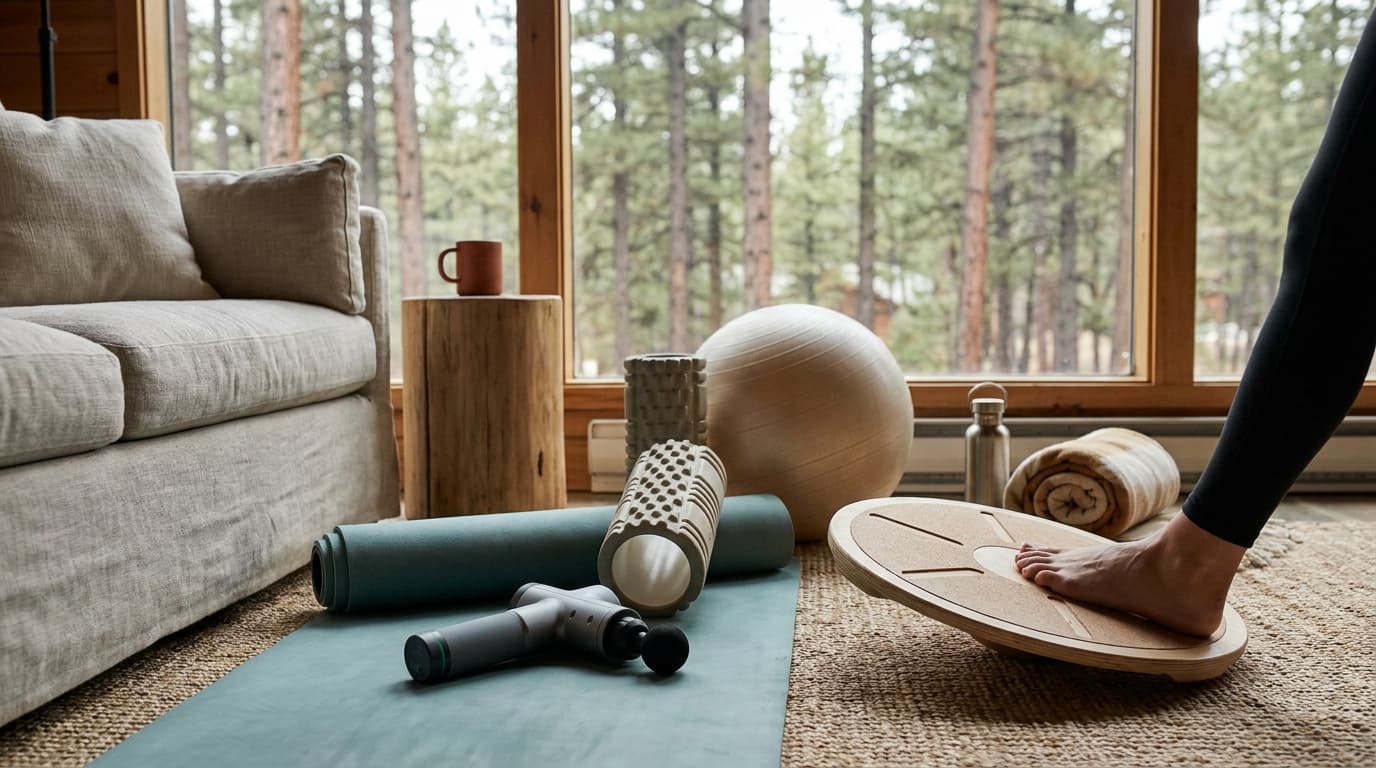
Field guide
How to use a balance board safely: beginner progression
Learn balance-board setup, stance, stepping on and off, and the correct rocker-to-wobble-to-roller progression without rushing harder drills.
Read guide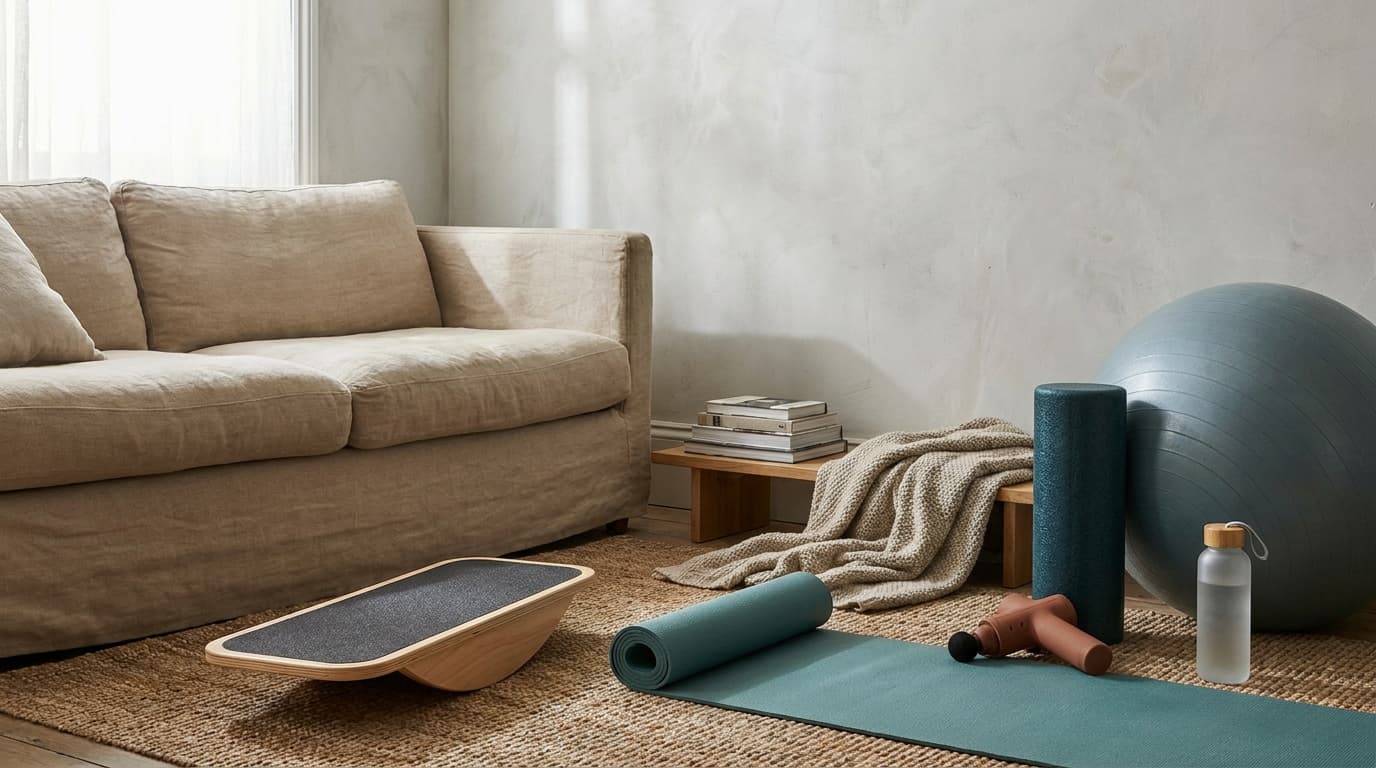
Field guide
Are balance boards good for you? What the evidence supports
Balance boards can improve the balance task you practice and can support some ankle programs. Here is what evidence supports, what remains uncertain, and who should be cautious.
Read guide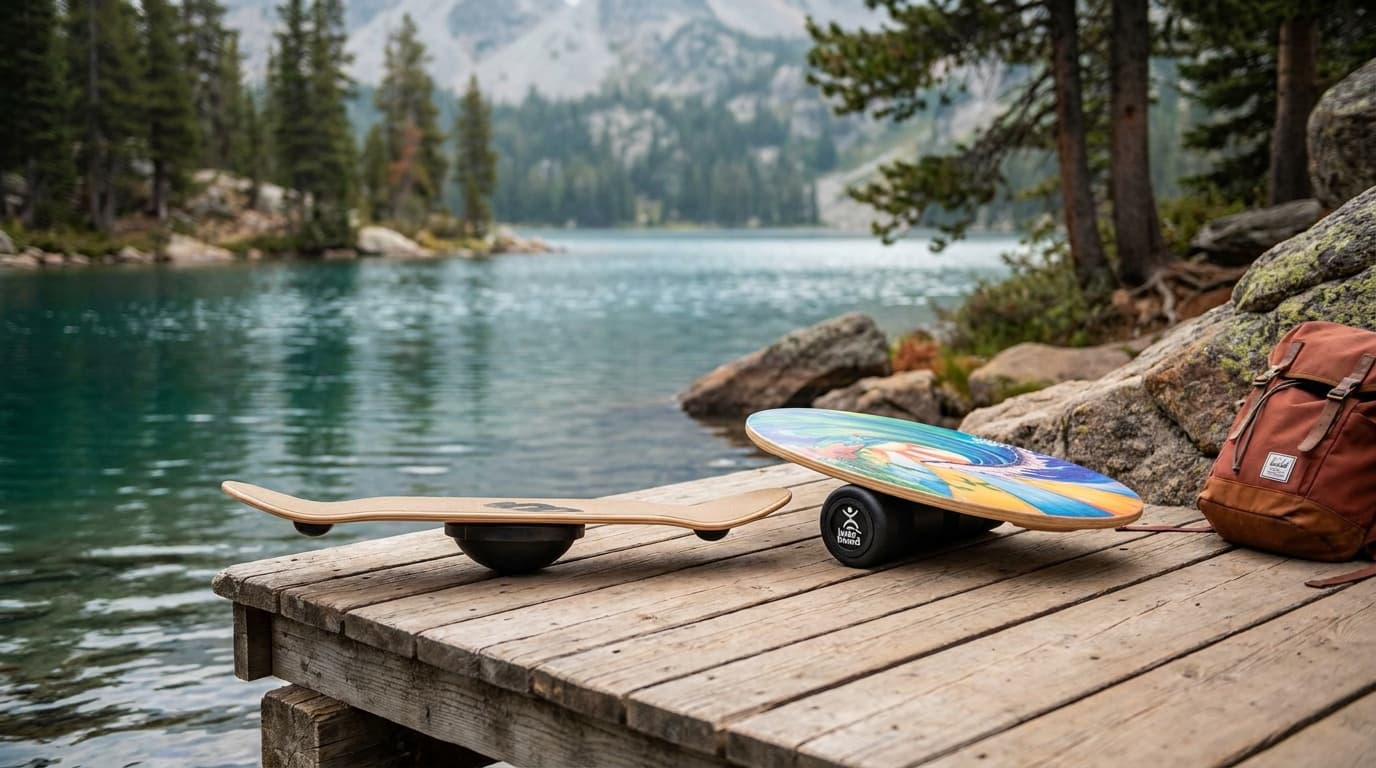
Comparison
Whirly Board vs Indo Board: spins or surf-style rolling?
Whirly Board Sport 360 vs Indo Board Original by mechanism, deck size, learning curve, floor space, tricks, board-sport crossover, and price.
Read guide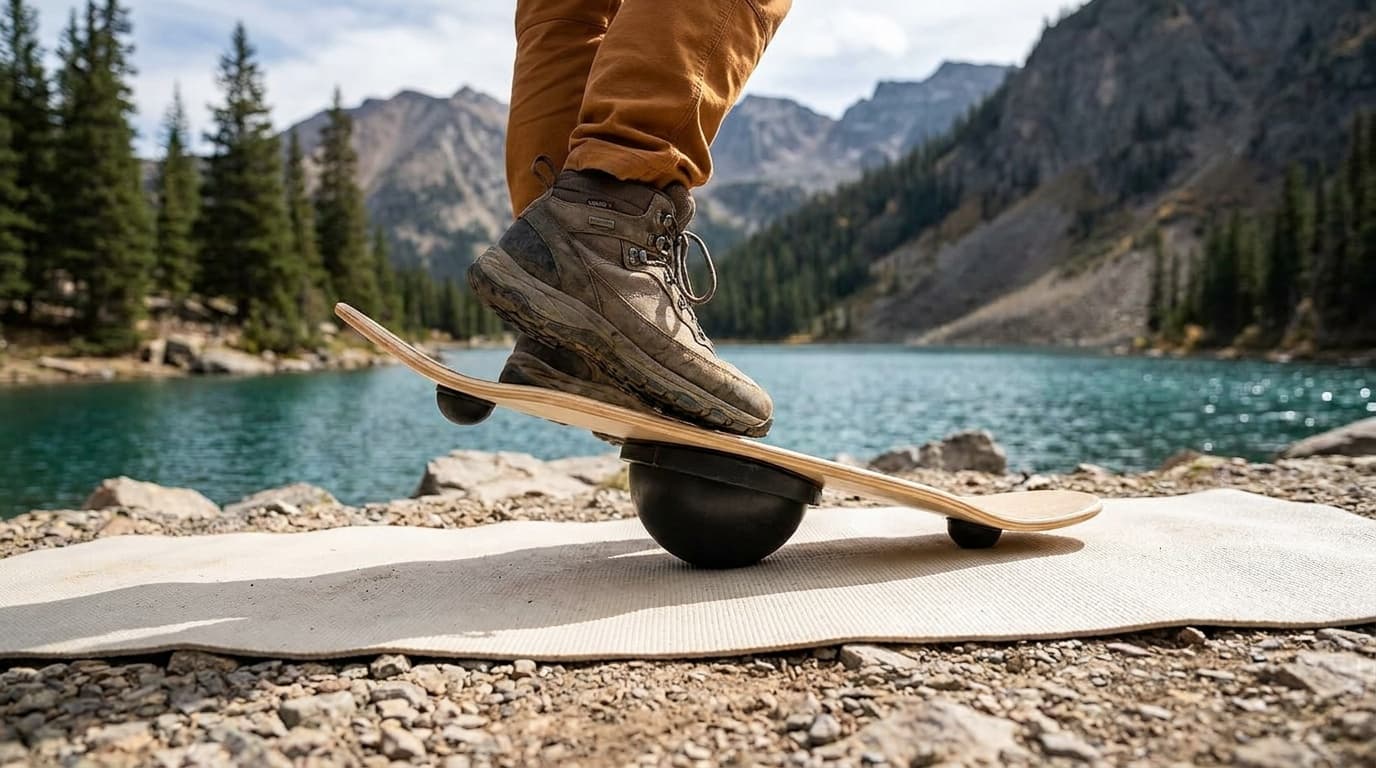
Product review
Whirly Board Sport 360 review: the balance board built for tricks
Kit Score 8.4/10. Three independent pivots, a 31.875 x 8.25-inch maple deck, and full spins make the Whirly Sport the most playful board we rate.
Read guideResearch-based guide
3 products comparedUpdated Jul 29, 2026Our recommendations draw on manufacturer documentation, retailer listings, owner feedback, and comparisons with alternatives.
As an Amazon Associate I earn from qualifying purchases. We may earn a commission from links here, at no extra cost to you. How we research →
Top picks
Related buying guide
Best balance boards: rehab, desk, tricks, circus training