We may earn a commission from links on this page, at no extra cost to you.
Parallette height is not a progression badge. Low bars are not for beginners and high bars are not for experts. Height changes clearance, leverage, fall distance, and storage; the best choice follows the movement you intend to train.
Our quick picks
The short answer
Low bars win when the floor is part of the safety margin. A missed lean or support hold ends close to the ground, the center of gravity stays low, and the pair fits beneath more furniture.
High bars win when the floor is the constraint. They let the hips and heels pass through positions that a short handle can block. The extra room helps only if the movement uses it.
Most buyers who want one pair should choose the middle. The 9.5-inch Teclor can handle basic pressing and most compression work without the footprint of a 12-inch frame.
Side-by-side specifications
| Product | Kit Score | Price | Best for |
|---|---|---|---|
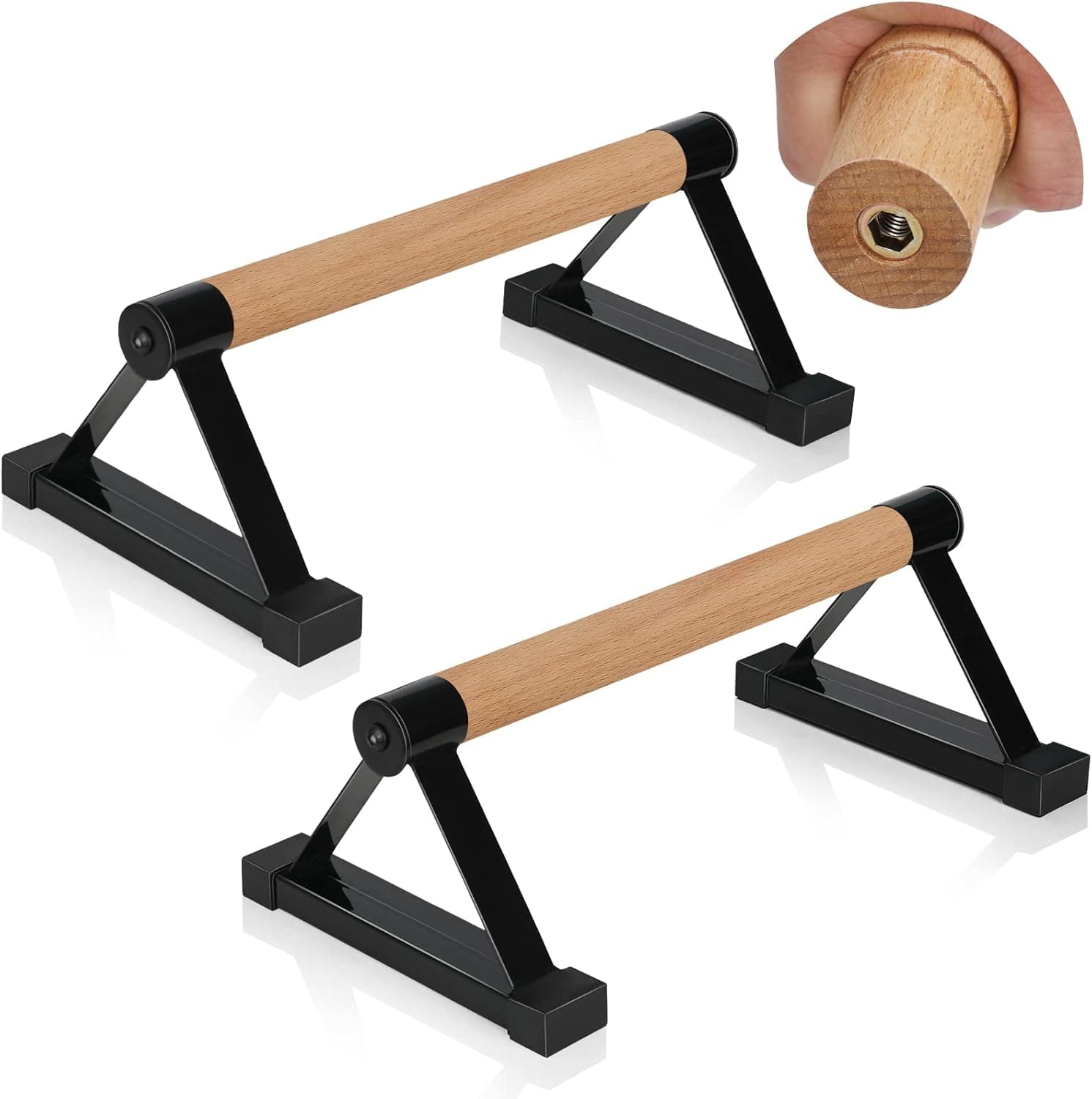
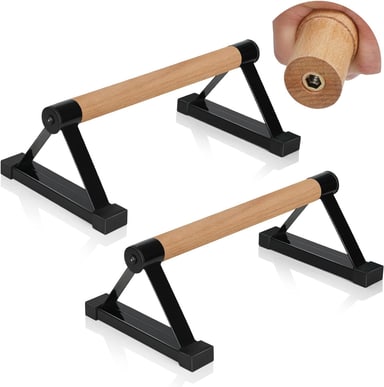
| airogym Wood Parallettes Push Up Bars | 8.5 | Check current price | Beginners and intermediate trainees who want a sturdy, low-profile wood parallette set for push-ups, L-sits, and handstand work without spending over $40. |
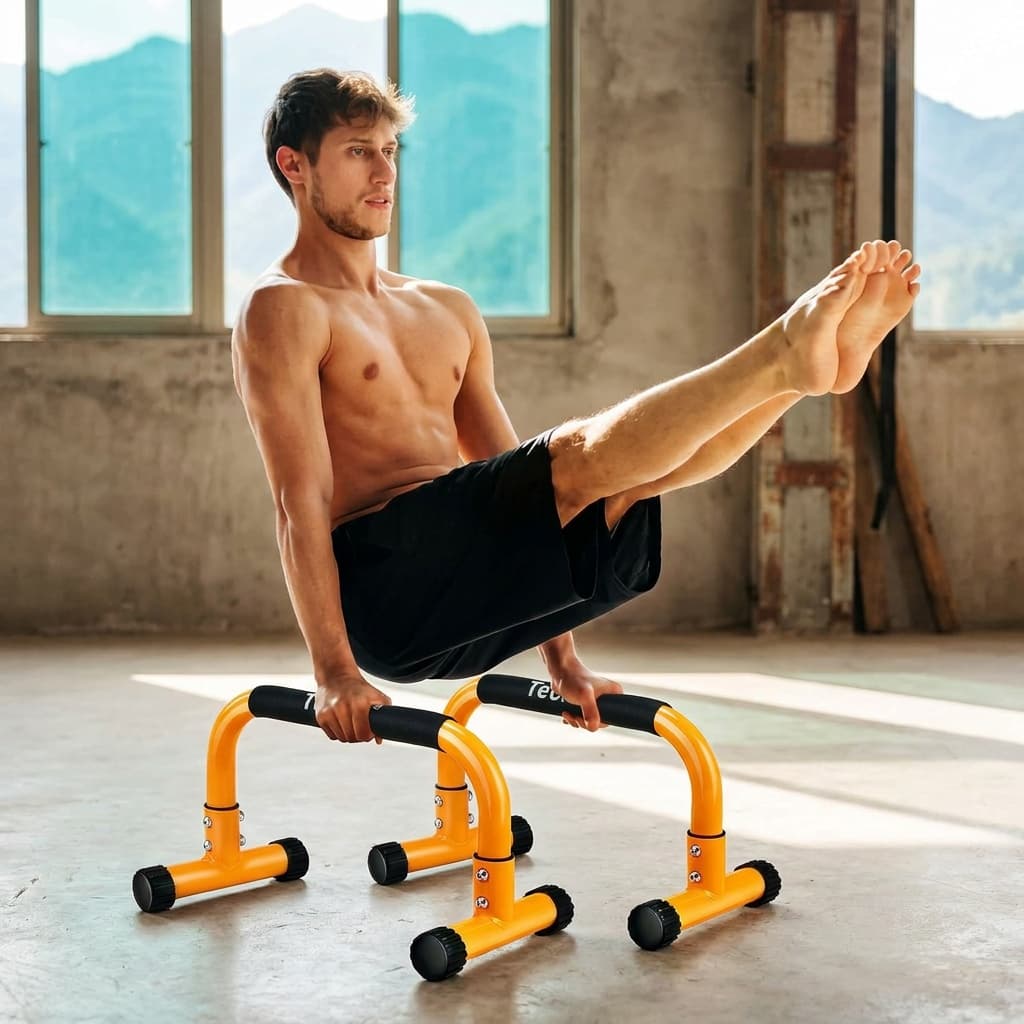
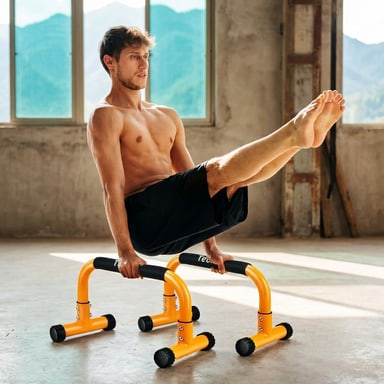
| Teclor Steel Push Up Bar, 9.5in High Parallettes Bars | 8.8 | Check current price | Intermediate to advanced athletes who want a no-compromise steel low parallette for L-sits, planche work, and daily training at home or in the gym. |
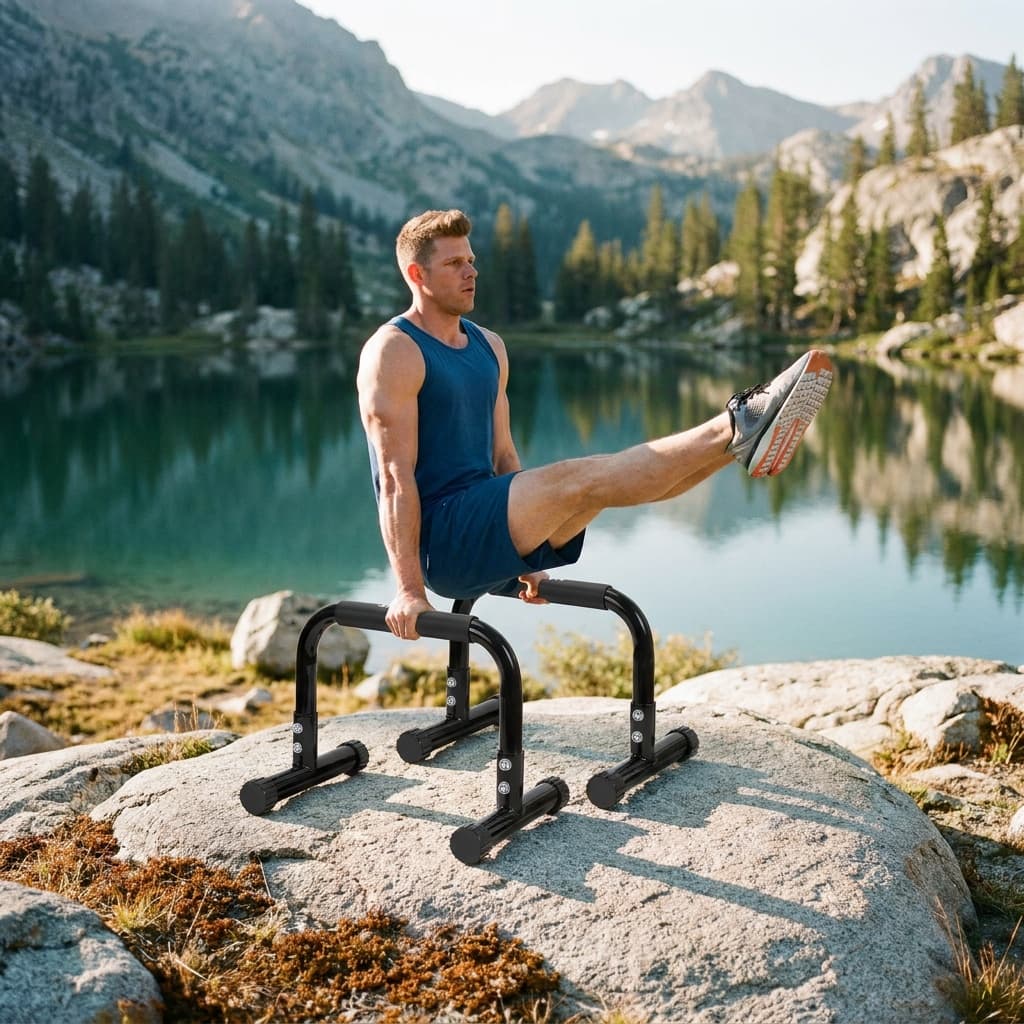
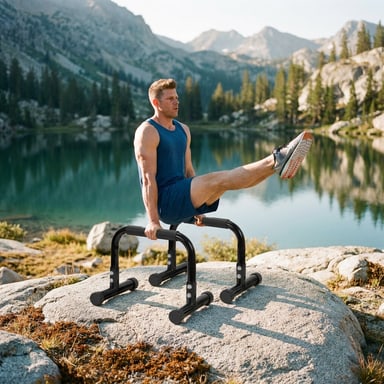
| TABEKE 12-Inch High Parallettes Bars | 8.2 | Check current price | Athletes who want more wrist clearance than a low parallette provides and are training push-up depth, L-sits, and dips on a budget. |
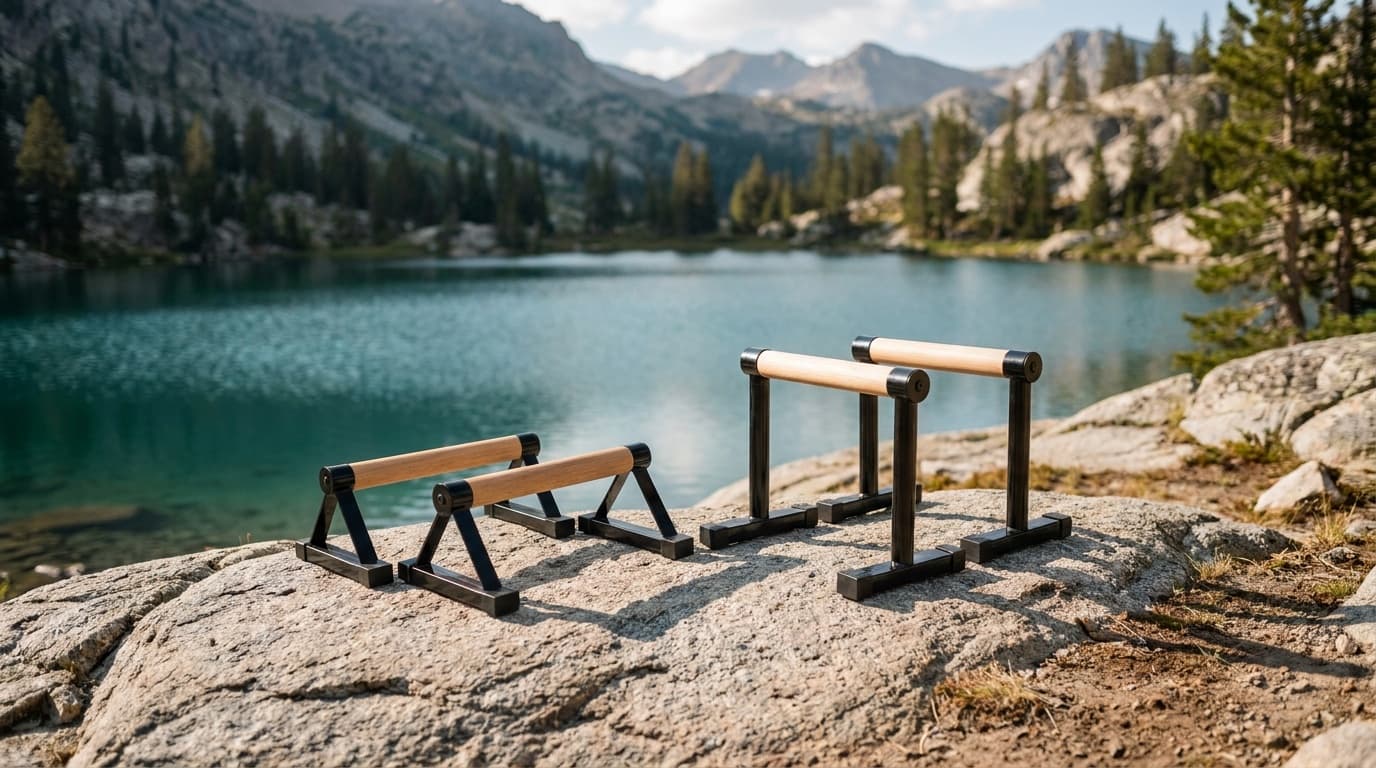
| Decision | Low: airogym | Mid: Teclor | High: TABEKE |
|---|---|---|---|
| Height | 5.9 in | 9.5 in | 12 in |
| Best use | Push-ups and close-floor skills | Mixed home training | Clearance-first training |
| Storage | Easiest | Moderate | Largest |
| Tipping leverage | Lowest | Moderate | Highest |
| Full L-sit room | Body-proportion dependent | Good for many users | Best of the three |
| Grip | Wood | Foam over steel | Foam over steel |
Low parallettes
LOW AND STABLE
airogym Wood Parallettes Push Up Bars
Best for: Beginners and intermediate trainees who want a sturdy, low-profile wood parallette set for push-ups, L-sits, and handstand work without spending over $40.
Kit Score 8.5/10 · Check current price
- Current 500 lb published capacity provides substantial headroom for ordinary bodyweight training
- Wood handles offer natural friction without a foam sleeve that can compress or absorb sweat
- Iron bracket construction adds weight compared to pure-wood parallettes, reducing portability
Low bars are the practical choice for push-up volume, planche leans, and anyone new to elevated support. Their smaller drop and reduced leverage do not make every movement safe, but they make the equipment itself less imposing.
The limitation appears during compression. If the athlete has to bend the knees or round into a poor position only to avoid the floor, the bar is too low for that exercise. Read the full airogym wood parallettes review.
The middle height
BEST ONE-PAIR COMPROMISE
Teclor Steel Push Up Bar, 9.5in High Parallettes Bars
Best for: Intermediate to advanced athletes who want a no-compromise steel low parallette for L-sits, planche work, and daily training at home or in the gym.
Kit Score 8.8/10 · Check current price
- Fully welded 2mm steel frame and dual-screw joints eliminate flex under load
- 660 lb published capacity provides substantial headroom for ordinary bodyweight training
- Fixed height: not suitable if you want high-parallette clearance for deep handstand push-ups
Around 9 to 10 inches is the broadest-use zone. It offers much of the L-sit room of a high pair while keeping the base and center of gravity closer to a low setup. That is why Teclor leads our general roundup.
This is the choice for a buyer who wants to explore several skills before specializing. Read the full Teclor review.
High parallettes
MAXIMUM CLEARANCE
TABEKE 12-Inch High Parallettes Bars
Best for: Athletes who want more wrist clearance than a low parallette provides and are training push-up depth, L-sits, and dips on a budget.
Kit Score 8.2/10 · Check current price
- 12-inch height adds meaningful wrist clearance over standard low parallettes without the bulk of dip-bar stations
- Full-coverage foam handle reduces hand fatigue across high-rep push-up and L-sit sets
- Foam handles wear and collect odor faster than wood or bare steel over time
High bars solve leg and shoulder clearance. They can make a full L-sit physically possible for an athlete whose heels touch on low bars, and they provide more depth for controlled pressing.
They also increase leverage against the base. Use a firm level surface, clear the surrounding area, and do not assume that a large published weight rating prevents a tip. Read the full TABEKE review.
Choose by movement
Match height to the job
Push-ups and planche leans
Start low. You gain stability and need little space below the hands.
Tuck L-sits
Low or mid can work; choose by your body proportions and actual heel clearance.
Full L-sits
Mid or high is usually easier because the legs have room to clear the floor.
Deep pressing
High bars create more range, but only use a depth your shoulders control.
Handstand practice
Mid or high provides room, while a wider stable base and clear fall zone matter more than height alone.
Small apartment storage
Low wins. Measure the shelf or closet slot before buying.
Frequently asked questions
What height parallettes should a beginner buy?
For general training, 6 to 10 inches is the most approachable range. Choose low for push-ups and close-floor work, or a 9.5-inch middle pair if L-sits are a stated goal. Beginners do not automatically need the shortest bars, but should avoid buying height they will not use.
Are high parallettes better for L-sits?
They provide more floor clearance, which helps many athletes. They do not make the compression, shoulder depression, or core strength of the L-sit easier. Use the height to remove a geometric constraint, not to skip the progression.
Are low parallettes safer?
They generally have a lower center of gravity and shorter fall distance, but no elevated bodyweight skill is risk-free. Surface, base width, movement selection, and the athlete's control still matter.
Can one pair cover push-ups and handstands?
Yes. A stable 9- to 12-inch pair can support both types of training. The best one-pair compromise in our current set is the 9.5-inch Teclor; choose the 12-inch TABEKE only when the extra clearance solves a known problem.
See all four scored options in best parallettes and compare handle material in wood vs steel parallettes.
Related buying guide
Best parallettes for L-sits, handstands, and push-upsMake the next decision
Complete fitness loadout
Home calisthenics kit
A compact strength and conditioning setup built around five tools that cover pushing, pulling, assistance, cardio, and floor work.
Build the complete kitRelated guides
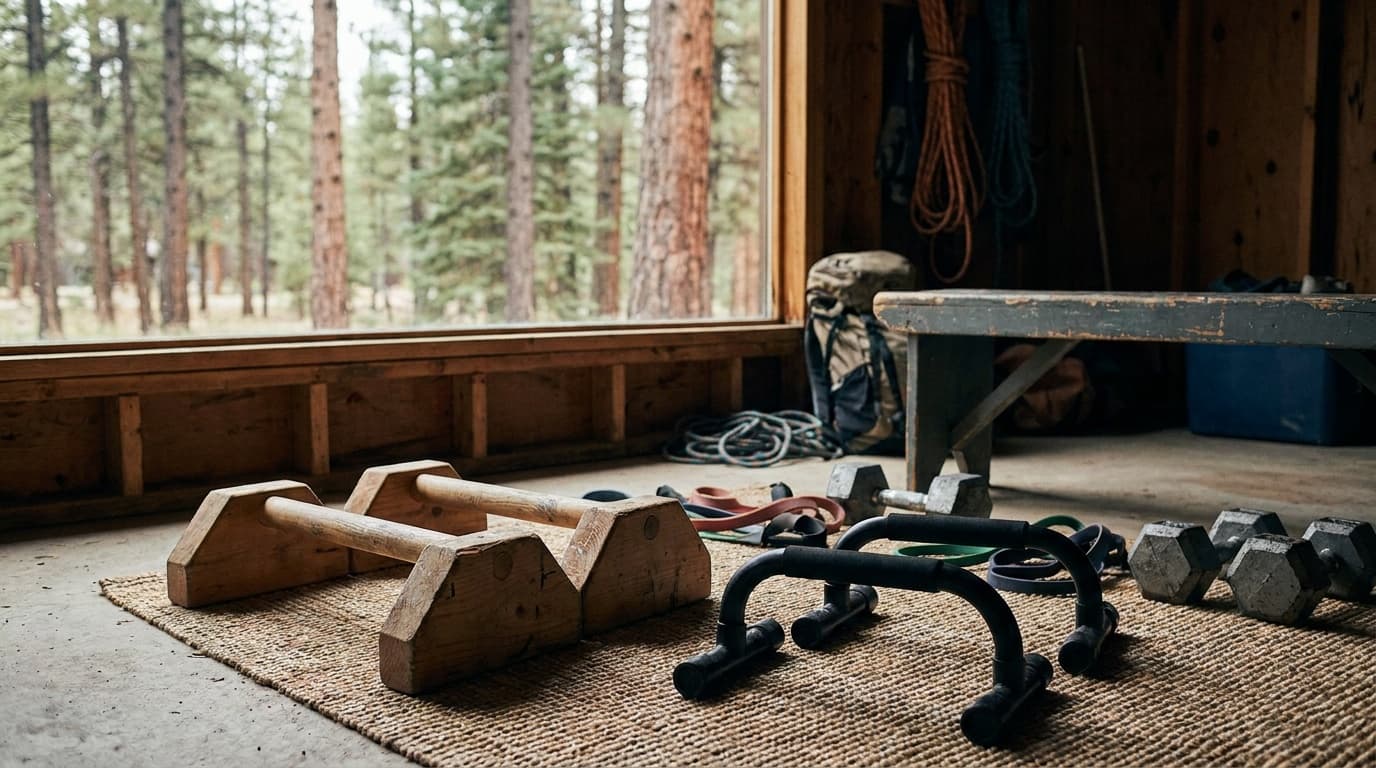
Comparison
Parallettes vs push-up bars: which should you buy?
Choose push-up bars for compact wrist-neutral pressing or parallettes for L-sits, handstands, and skill work. Compare height, stability, space, and price.
Read guide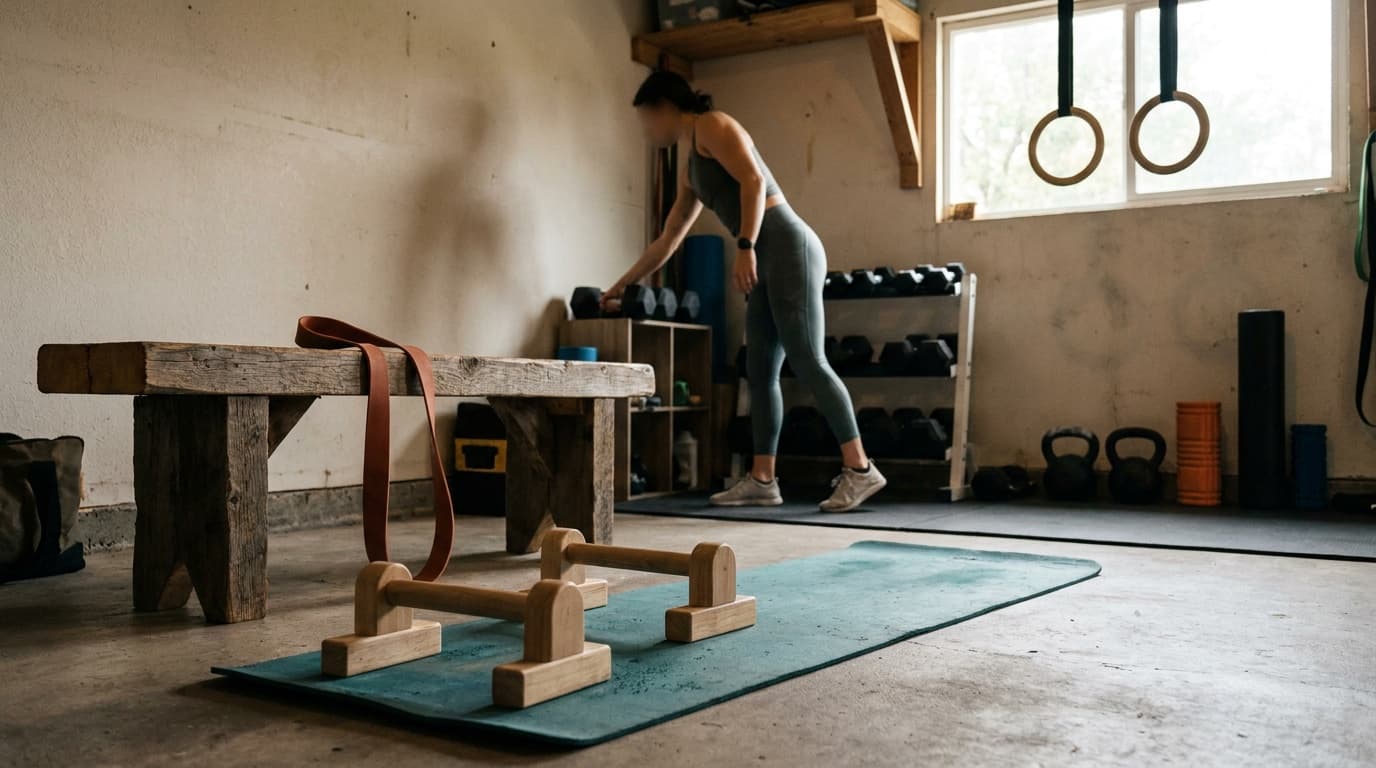
Field guide
Parallettes workout for beginners
Foundational parallettes moves, a simple beginner routine, wrist warm-up, and clear progression steps to build real calisthenics strength.
Read guide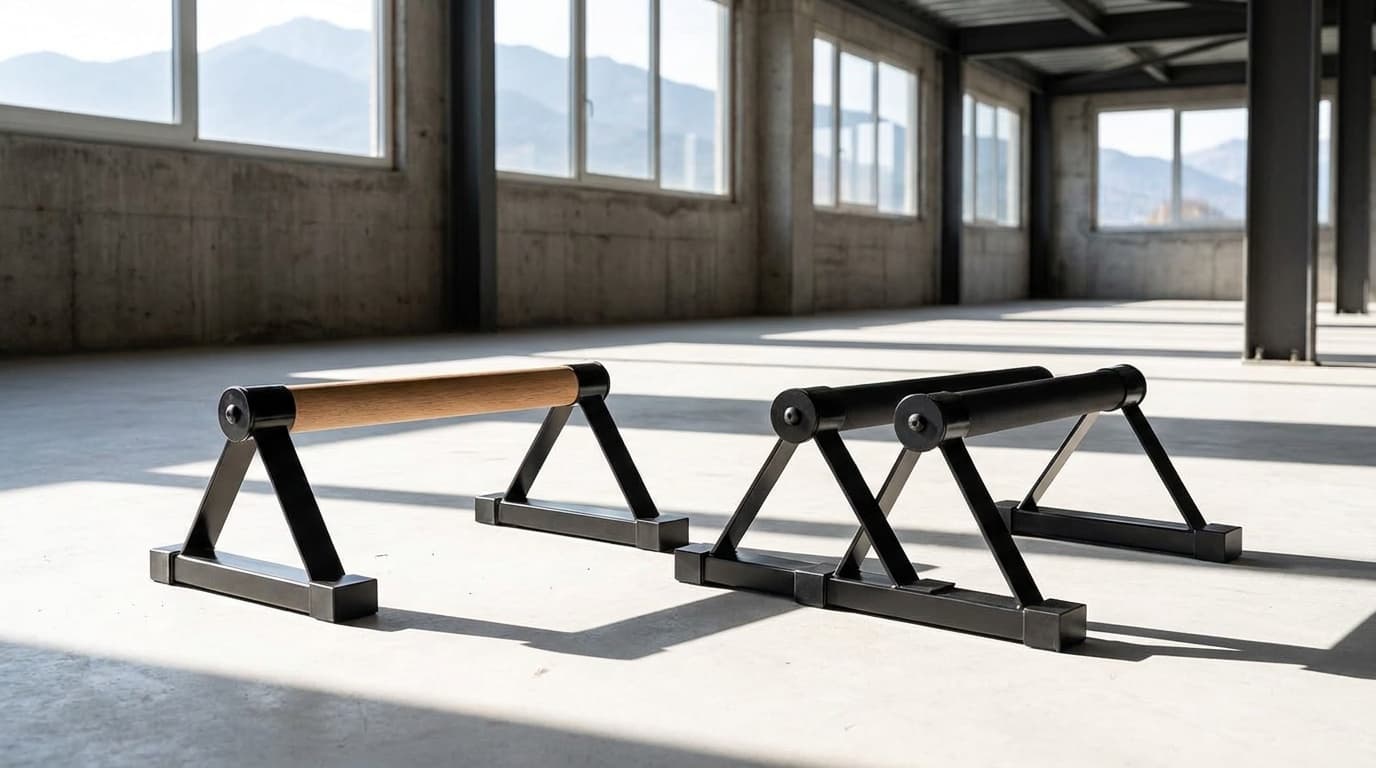
Comparison
Wood vs steel parallettes: grip feel is the real split
Wood gives a firm natural grip; steel offers more shapes and easier cleaning. Compare feel, durability, foam sleeves, weight, height, and value.
Read guide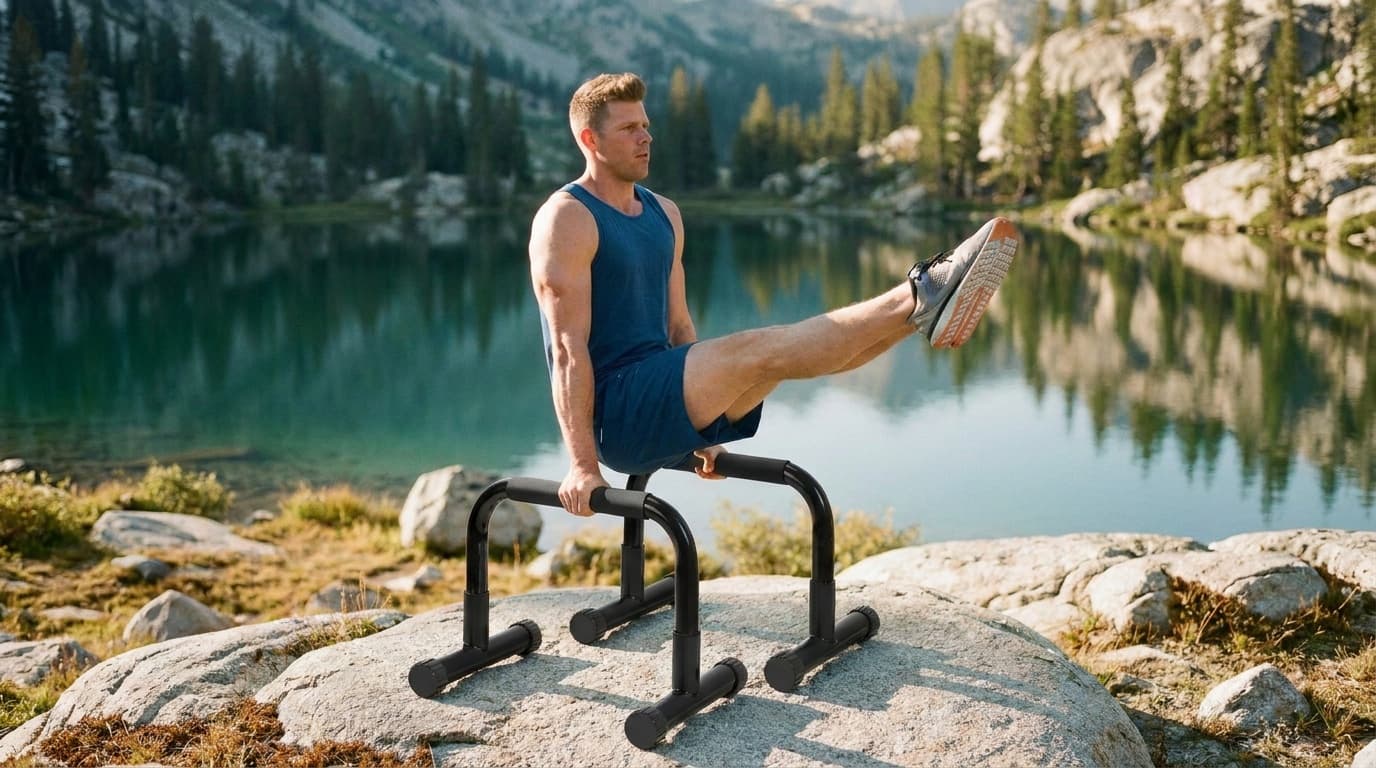
Product review
TABEKE parallettes review: 12 inches of useful clearance
Kit Score 8.2/10. TABEKE's 12-inch steel parallettes add room for L-sits and deep pressing at a budget price. Specs, tradeoffs, and who needs the height.
Read guideResearch-based guide
3 products comparedUpdated Jul 29, 2026Our recommendations draw on manufacturer documentation, retailer listings, owner feedback, and comparisons with alternatives.
As an Amazon Associate I earn from qualifying purchases. We may earn a commission from links here, at no extra cost to you. How we research →