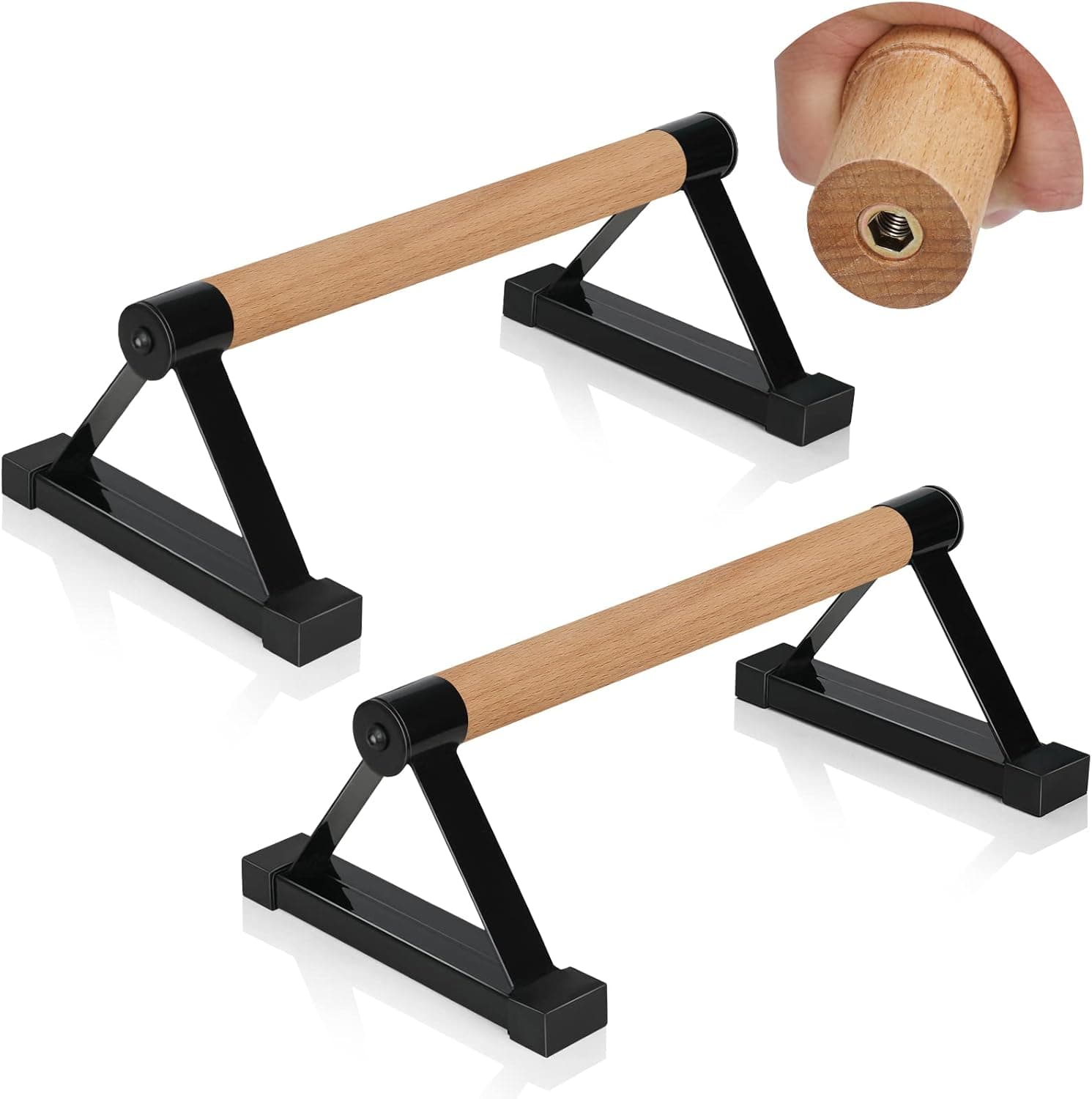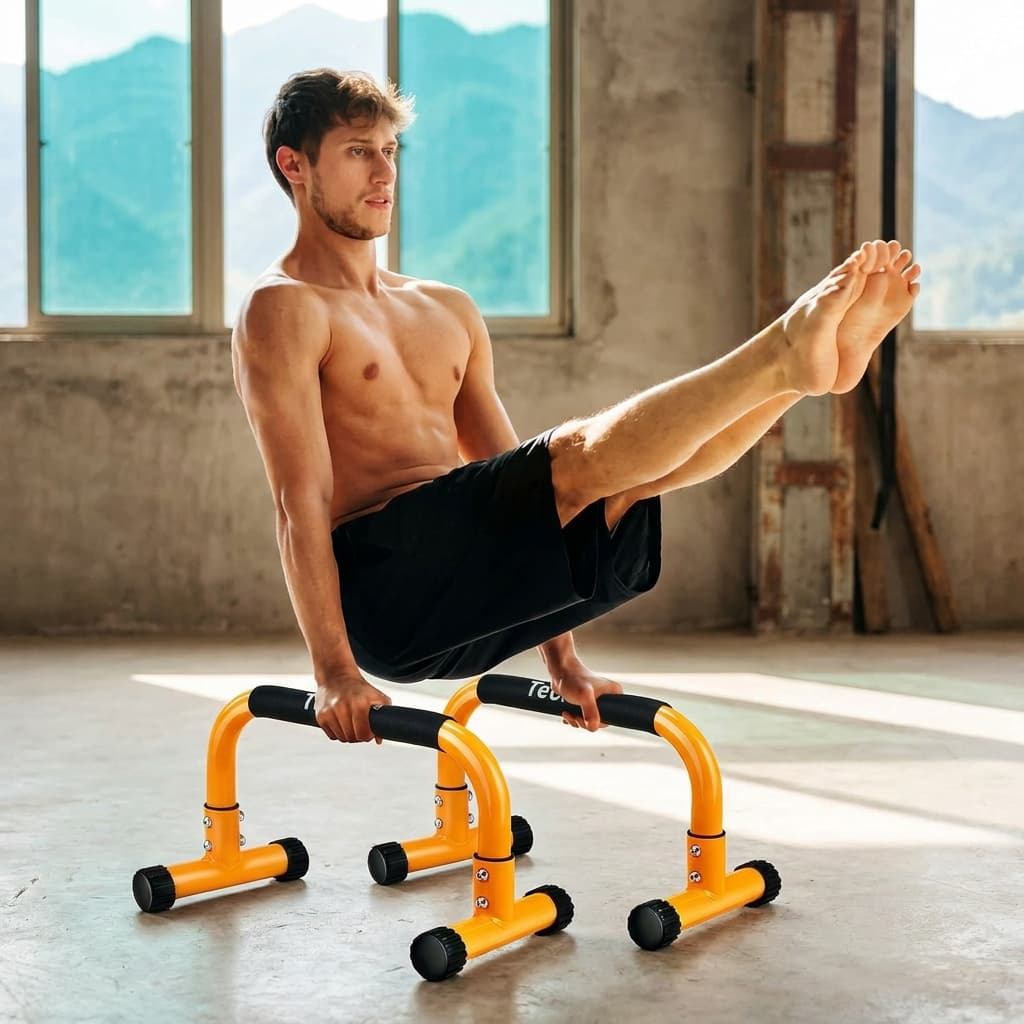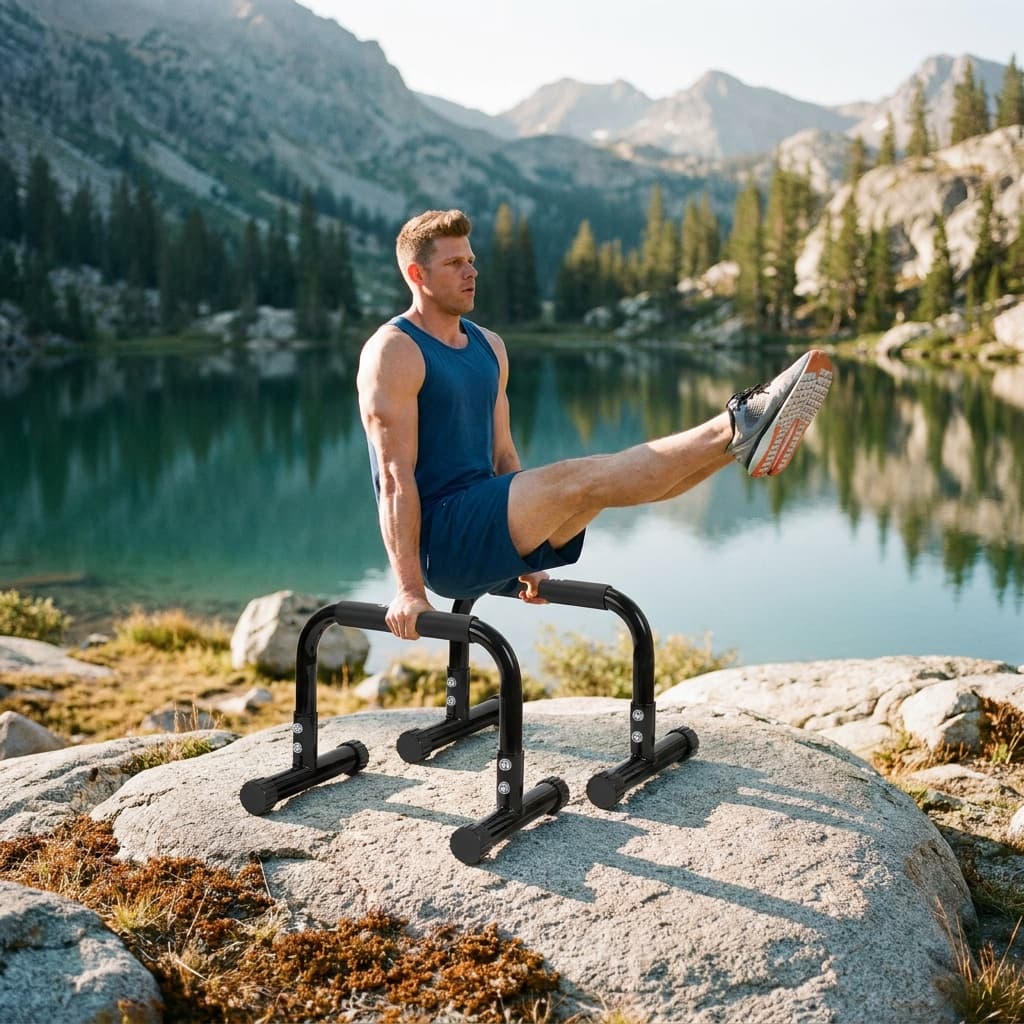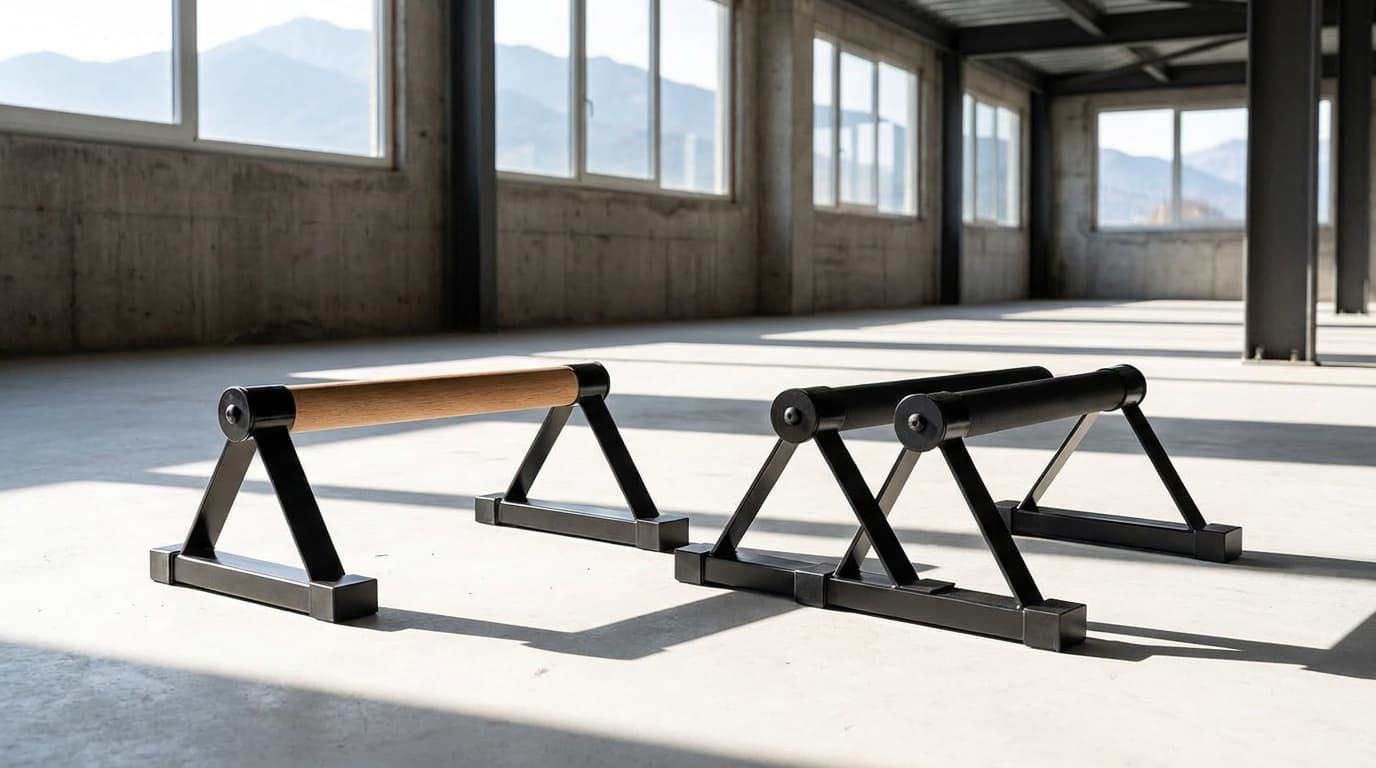
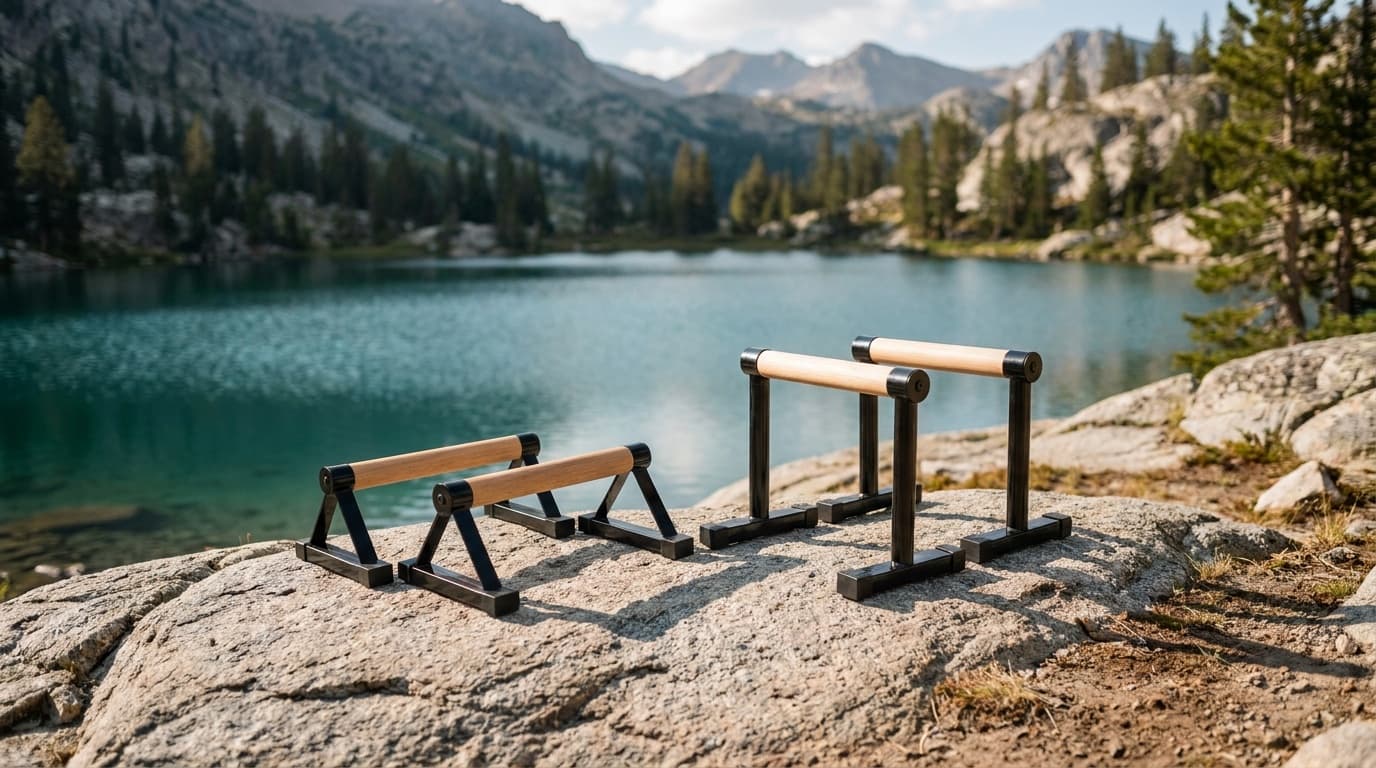
Wood and steel parallettes can support the same movements. The difference the hands notice is not strength; it is the contact surface. Wood is firm, warm, and naturally grippy. Budget steel bars usually add foam, which feels softer at first and ages differently.
Our quick picks
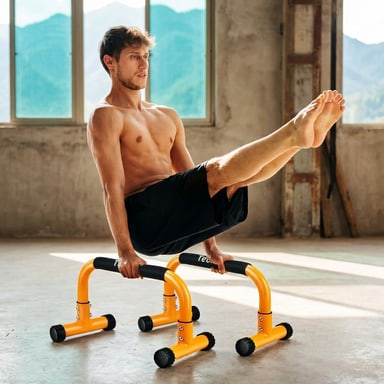
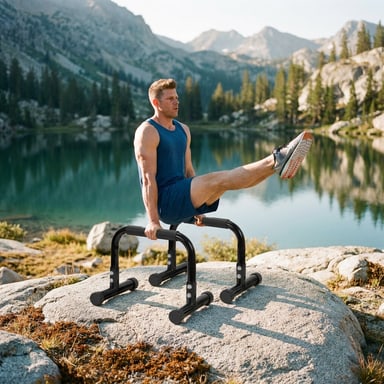
TABEKE 12-Inch High Parallettes Bars
12-inch height adds meaningful wrist clearance over standard low parallettes without the bulk of dip-bar stations
Best for: Athletes who want more wrist clearance than a low parallette provides and are training push-up depth, L-sits, and dips on a budget.
Buy on Amazon →The comparison
| Factor | Wood handle | Steel with foam |
|---|---|---|
| Feel | Firm, warm, natural friction | Soft, forgiving, slightly less precise |
| Sweat | Does not absorb like foam | Foam can hold moisture |
| Cleaning | Wipe gently; avoid soaking | Coated frame wipes easily |
| Wear point | Finish, cracks, hardware | Foam compression, tears, fasteners |
| Height selection | Often low or premium medium | Broad low, medium, and high range |
| Price | Budget hybrids to premium hardwood | Strongest selection under $50 |
Where wood wins
BEST LOW WOOD VALUE
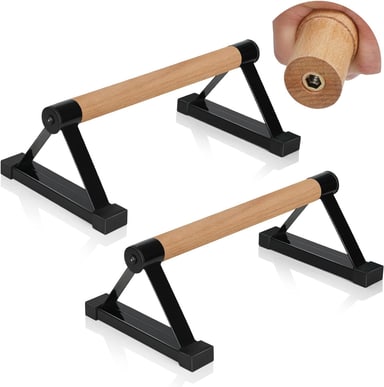
airogym Wood Parallettes Push Up Bars
Best for: Beginners and intermediate trainees who want a sturdy, low-profile wood parallette set for push-ups, tuck L-sits, and planche leans on a budget.
- Current 600 lb published capacity provides substantial headroom for ordinary bodyweight training
- Iron bracket construction adds weight compared to pure-wood parallettes, reducing portability
Kit Score 8.5/10 · $36.99 Price checked Oct 26, 7:39 AM CDT · how we score gear
Buy on AmazonProduct details
A solid-wood parallette set with heavy-duty iron brackets and a current published 600 lb (270 kg) capacity. The 5.9 in handle height gives knuckle clearance for deeper push-ups and compact tuck work, while the smooth wood handles avoid the foam wear of budget steel bars.
- Height
- 5.9 in (approx. 6 in)
- Length x Width
- 13.4 in x 8.9 in
- Bar Diameter
- 1.5 in (3.8 cm)
- Weight Capacity
- 600 lb (270 kg)
- Material
- Solid wood handles, iron metal bracket base
- Non-Slip Base
- Foam-padded metal feet
More strengths
- Wood handles offer natural friction without a foam sleeve that can compress or absorb sweat
- Metal bracket base with foam padding protects floors and prevents sliding during dynamic movements
Other tradeoffs
- Brand has limited independent review history outside of Amazon
Wood wins on a consistent bare-hand connection. It does not need a soft sleeve to create friction, and it does not rotate independently of the bar beneath it. For static holds and repeated skill practice, that predictability matters.
Wood does require inspection. A handle should remain smooth, tight, and free of cracks or splinters. Do not soak it during cleaning, and do not leave it in a damp garage where the finish and joinery can change.
The airogym wood parallettes use a hybrid design: wood handles mounted to iron bracket bases. That delivers the hand feel without depending on an all-wood frame.
Where steel wins
BEST ALL-AROUND STEEL
Teclor Steel Push Up Bar, 9.5in High Parallettes Bars
Best for: Intermediate to advanced athletes who want a no-compromise steel low parallette for L-sits, planche work, and daily training at home or in the gym.
- Fully welded 2mm steel frame and dual-screw joints eliminate flex under load
- Fixed height: not suitable if you want high-parallette clearance for deep handstand push-ups
Kit Score 8.8/10 · $35.99 Price checked Oct 26, 7:39 AM CDT · how we score gear
Buy on AmazonProduct details
A low steel parallette built on a fully welded 2mm frame with dual-screw corner joints and 660 lb capacity. The 9.5-inch clearance suits L-sits, planche training, and push-up variations, and the adjustable rubber feet stay planted on uneven surfaces.
- Height
- 9.5 in (low)
- Dimensions
- 17 in L x 8.3 in W x 9.5 in H
- Weight capacity
- 660 lbs
- Frame material
- Fully welded 2mm heavy-duty steel
- Handle diameter
- 1.5 in
- Feet
- Textured rubber, adjustable edge thickness for uneven floors
More strengths
- 660 lb published capacity provides substantial headroom for ordinary bodyweight training
- Rotatable rubber feet self-level on uneven floors without shimming
Other tradeoffs
- Foam handle adds grip cushion but absorbs less sweat than bare steel or wood over long sessions
Steel wins on geometry and value. Manufacturers can produce compact welded frames, taller uprights, adjustable feet, and detachable joints at prices that are difficult for finished hardwood equipment to match.
The bar surface matters. Bare powder-coated steel can feel secure with chalk but unforgiving without it. The Teclor and TABEKE use foam sleeves, which make the first session comfortable and lower the entry barrier. Foam is also the part most likely to compress, tear, or hold odor.
Read the full Teclor review for the 9.5-inch middle height, or the TABEKE review for a 12-inch option.
Durability
Neither material is automatically more durable. A well-finished hardwood handle on a rigid base can last for years. A steel frame can do the same, but its foam grip may need attention first. Cheap wood can split; cheap welded steel can flex; loose fasteners undermine both.
Inspect the complete system:
- The handle stays fixed relative to the base.
- The feet sit flat without rocking.
- Fasteners remain tight.
- Wood has no cracks or sharp fibers.
- Foam has no rotation, deep compression, or tears.
- Steel coating has no serious corrosion at joints.
Weight and storage
Low wood-handle hybrids can be compact but surprisingly heavy because of their iron brackets. Detachable steel frames may pack flatter even when they stand taller. Premium wood parallettes with welded steel bases are usually the least travel-friendly option.
Measure the storage slot and check whether the bar disassembles. "Portable" in a listing often means movable around the house, not pleasant to carry in a backpack.
One wood set is built for the backpack. The Xtenia Antlettes V2 pair 35 mm beech handles with powder-coated steel bases, weigh 1.1 kg (2.4 lb) for the pair, and ship with a carry bag. The trade-off is height: at 10.5 cm (4.1 inches) they suit push-ups and planche leans more than full L-sits. The Xtenia Antlettes V2 review covers the specs and the independent SGS load test; it is based on published data, since the sample Xtenia is supplying has not been used yet. Kit Authority earns a commission on Xtenia purchases.
Choose by priority
Make the material choice
Bare-hand grip feel
Choose wood. It stays firm and naturally tactile without a sleeve.
Soft first-session comfort
Choose foam-covered steel.
Maximum height selection
Choose steel; the market offers more 9- to 12-inch options.
Lowest-cost wood experience
Choose the airogym hybrid.
One versatile pair
Choose the 9.5-inch Teclor steel set.
Long daily skill sessions
Favor a quality wood handle, then choose the height separately.
Frequently asked questions
Are wooden parallettes less slippery than steel?
Wood often provides more natural friction than smooth coated steel and avoids a separate foam sleeve. Actual grip depends on the finish, cleanliness, moisture, chalk use, and the athlete's hands.
Do foam parallette grips wear out?
They can. Foam may compress, absorb sweat, rotate, or tear before the steel frame wears out. Wipe it after training and replace or retire the equipment if the grip moves unpredictably.
Are steel parallettes stronger than wood parallettes?
Material alone does not answer that. Frame geometry, wall thickness, wood species, joinery, hardware, and load direction all matter. Compare the complete construction and published limit rather than assuming one material wins.
Which material is better for handstands?
Choose the handle that feels secure and the base that remains stable. Many athletes prefer wood for tactile feedback, while others prefer a familiar foam or coated-steel grip. Base width, floor contact, and height are at least as important as material.
Material decides feel; height decides clearance. Use low vs high parallettes for the geometry decision and best parallettes for the complete scored field.
Keep going
Related buying guideBest parallettes for L-sits, handstands, and push-upsRelated guides
 Complete fitness loadoutHome calisthenics kitBuild the complete kit
Our recommendations draw on manufacturer documentation, retailer listings, owner feedback, and comparisons with alternatives.
As an Amazon Associate I earn from qualifying purchases. We may earn a commission from links here, at no extra cost to you. How we research →