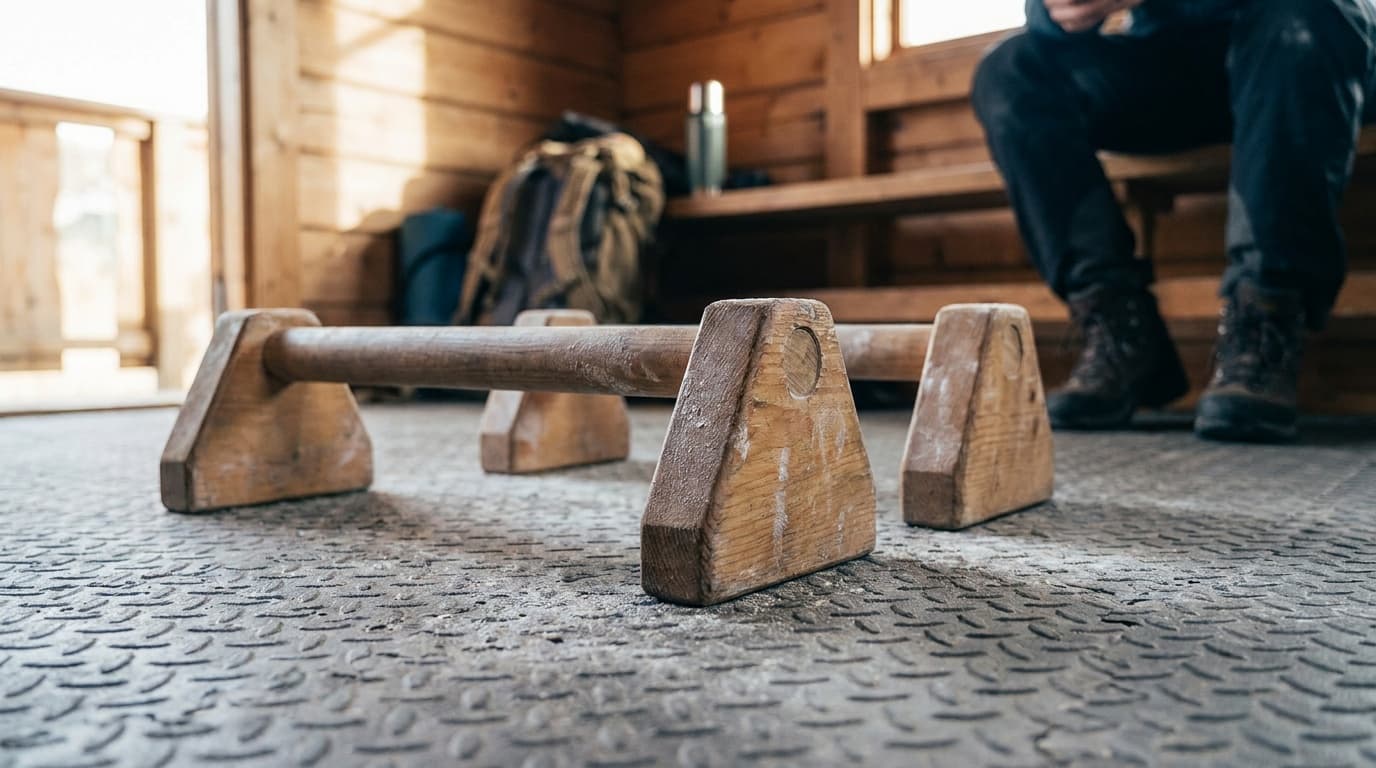
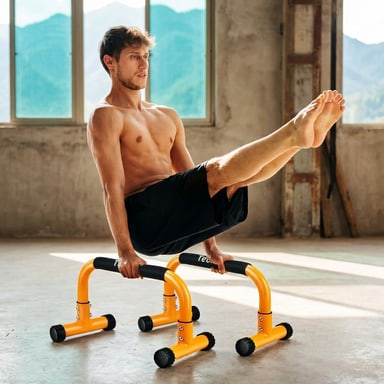
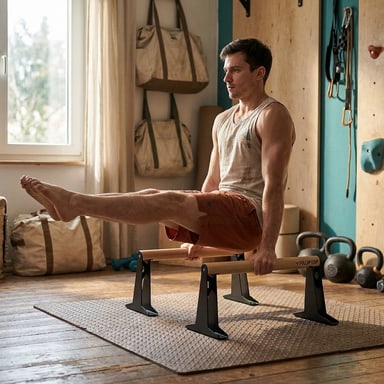
The Teclor 9.5-inch steel pair is the best parallette set for most home athletes. Its middle height covers push-ups, tuck and L-sit work, and introductory balance practice without the bulk of tall bars. The other picks solve specific problems: more clearance, wood grip, portability, or premium construction.
Our quick picks
How we picked
Every pick was evaluated against the Kit Score: grip diameter and material, bar height and clearance for target skills, frame stability under load, non-slip feet performance, portability, and value relative to build quality. We cross-referenced manufacturer specs with verified owner feedback and calisthenics coach guidance.
The picks
Teclor 9.5in Steel Parallettes: best all-round steel set
The Teclor bars sit at 9.5 inches tall, a height that works for most L-sit progressions without the leverage of a very tall set. The published 2 mm steel frame, dual-screw joints, and adjustable rubber feet create an unusually complete specification set for this price tier.
The 1.5-inch handle uses a foam sleeve. It feels approachable without chalk, but the foam is also the likely wear point. Buyers who prefer a firm bare surface should choose wood.
The 17 x 8.3-inch footprint is compact enough to move between rooms and store without dedicating a permanent station.
For mixed home training, the Teclor represents the best combination of height, footprint, and value in this group. Read the full Teclor parallettes review.
BEST OVERALL
Teclor Steel Push Up Bar, 9.5in High Parallettes Bars
Best for: Intermediate to advanced athletes who want a no-compromise steel low parallette for L-sits, planche work, and daily training at home or in the gym.
- Fully welded 2mm steel frame and dual-screw joints eliminate flex under load
- Fixed height: not suitable if you want high-parallette clearance for deep handstand push-ups
Kit Score 8.8/10 · $35.99 Price checked Oct 23, 6:22 AM CDT · how we score gear
Buy on AmazonProduct details
A low steel parallette built on a fully welded 2mm frame with dual-screw corner joints and 660 lb capacity. The 9.5-inch clearance suits L-sits, planche training, and push-up variations, and the adjustable rubber feet stay planted on uneven surfaces.
- Height
- 9.5 in (low)
- Dimensions
- 17 in L x 8.3 in W x 9.5 in H
- Weight capacity
- 660 lbs
- Frame material
- Fully welded 2mm heavy-duty steel
- Handle diameter
- 1.5 in
- Feet
- Textured rubber, adjustable edge thickness for uneven floors
More strengths
- 660 lb published capacity provides substantial headroom for ordinary bodyweight training
- Rotatable rubber feet self-level on uneven floors without shimming
Other tradeoffs
- Foam handle adds grip cushion but absorbs less sweat than bare steel or wood over long sessions
Tabeke 12in High Parallettes: best for taller athletes and deep skill work
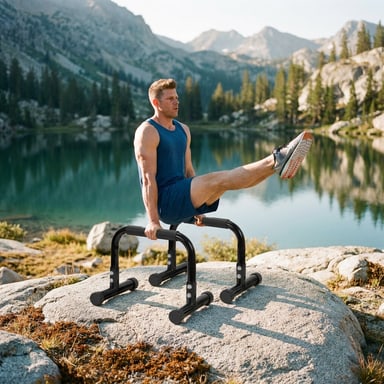
Twelve inches of clearance is the key differentiator. Athletes whose heels contact the floor on low or middle-height bars gain room for tuck-to-extended L-sit progressions and deeper pressing.
The frame is 1.5 mm steel, thinner than the Teclor's 2 mm, on an extended base meant to resist tipping. Tall bars are inherently more tippable, so set them on a level floor and check for rock before loading them.
Grip diameter and surface finish are comparable to the Teclor. The extra height does add weight and slightly reduces packability compared to lower bars, so if your training space is fixed and you are above average height, that is an acceptable trade. Athletes who also use parallettes for deep dips and want maximum shoulder engagement at the bottom of the range of motion benefit from the additional clearance as well.
The TABEKE belongs in a cart only when the extra height solves a known problem. Read the full TABEKE parallettes review or compare low vs high parallettes.
BEST VALUE
TABEKE 12-Inch High Parallettes Bars
Best for: Athletes who want more wrist clearance than a low parallette provides and are training push-up depth, L-sits, and dips on a budget.
- 12-inch height adds meaningful wrist clearance over standard low parallettes without the bulk of dip-bar stations
- Foam handles wear and collect odor faster than wood or bare steel over time
Kit Score 8.2/10 · $28.99 Price checked Oct 23, 6:22 AM CDT · how we score gear
Buy on AmazonProduct details
A 12-inch steel parallette with full-coverage foam handles and 660 lb capacity, priced to compete with low-clearance options. The extra height adds wrist clearance for deeper push-up range and makes L-sit holds more comfortable for taller athletes.
- Height
- 12 in (medium)
- Weight capacity
- 660 lbs
- Frame material
- 1.5mm thickened heavy-duty steel with baked-paint coating
- Handle
- 1.5 in diameter, full-coverage foam grip
- Feet
- Premium rubber non-slip, adjustable-thickness base
- Assembly
- Approx. 1 minute
More strengths
- Full-coverage foam handle reduces hand fatigue across high-rep push-up and L-sit sets
- 660 lb rated capacity and anti-loosening hardware keep the frame firm under dynamic loading
Other tradeoffs
- Owners report a strong rubber or paint smell for the first week after unboxing
airogym Wood Parallettes: best budget wood set
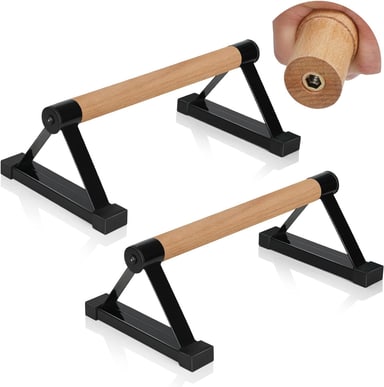
Wood parallettes occupy a different feel category to steel. The airogym set uses a solid wood bar, and the slightly higher natural friction of wood means grip feels more secure on sweaty palms even without chalk. For beginners who are still developing calluses and grip strength, that surface quality matters during longer practice sessions.
The airogym set is a low parallette design with a straightforward rectangular frame. The bars are not adjustable in height, which keeps the structure simple. The current listing publishes a 600 lb (270 kg) maximum. That is ample for ordinary bodyweight training, but it remains a manufacturer claim rather than an independent dynamic-load certification.
The metal brackets have protective foam tape on the bottom to limit sliding and floor scratches. The low height makes these a natural choice for push-up focused training, planche progressions, and beginners working through the early L-sit tuck progressions where clearance is less critical. The compact, low profile also stacks neatly and takes almost no storage space.
This is the most accessible wood option in the current group. It does not have the height or premium construction of the PULLUP & DIP set, but it delivers a firm wood grip at a first-pair price. Read the full airogym wood parallettes review.
BEST BUDGET
airogym Wood Parallettes Push Up Bars
Best for: Beginners and intermediate trainees who want a sturdy, low-profile wood parallette set for push-ups, tuck L-sits, and planche leans on a budget.
- Current 600 lb published capacity provides substantial headroom for ordinary bodyweight training
- Iron bracket construction adds weight compared to pure-wood parallettes, reducing portability
Kit Score 8.5/10 · $36.99 Price checked Oct 23, 6:22 AM CDT · how we score gear
Buy on AmazonProduct details
A solid-wood parallette set with heavy-duty iron brackets and a current published 600 lb (270 kg) capacity. The 5.9 in handle height gives knuckle clearance for deeper push-ups and compact tuck work, while the smooth wood handles avoid the foam wear of budget steel bars.
- Height
- 5.9 in (approx. 6 in)
- Length x Width
- 13.4 in x 8.9 in
- Bar Diameter
- 1.5 in (3.8 cm)
- Weight Capacity
- 600 lb (270 kg)
- Material
- Solid wood handles, iron metal bracket base
- Non-Slip Base
- Foam-padded metal feet
More strengths
- Wood handles offer natural friction without a foam sleeve that can compress or absorb sweat
- Metal bracket base with foam padding protects floors and prevents sliding during dynamic movements
Other tradeoffs
- Brand has limited independent review history outside of Amazon
PULLUP & DIP Wooden Parallettes (Medium): best premium set
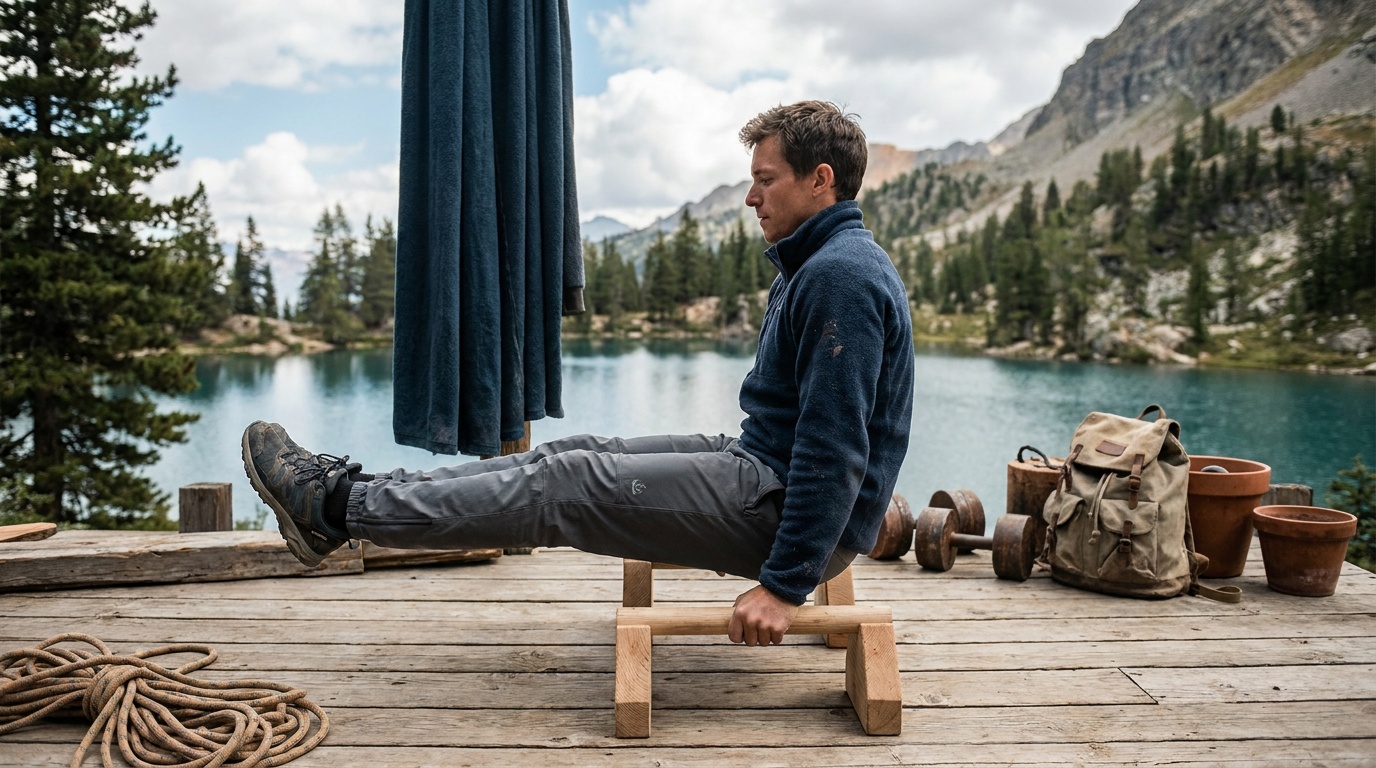
PULLUP & DIP is a German calisthenics equipment brand, and the medium wooden parallettes are a clear step up in material and execution. The bars use beechwood, a dense hardwood that feels warm and firm in the hand and does not depend on a foam sleeve for traction.
The beech handle is mounted between heavy-duty steel side panels with non-slip pads, and the pair arrives assembled. A rigid bar-to-frame joint matters most during static holds like an extended L-sit or a handstand where any micro-movement in the bar undermines balance. The medium grip height of 30 cm (11.8 inches) provides good clearance for L-sits without the instability trade-off of very tall bars.
The medium set is currently unavailable on Amazon, so our link goes to PULLUP & DIP's own store, where it is in stock. The brand also sells a low 10 cm push-up handle version on the same page, so choose the medium 30 cm height before you check out. PULLUP & DIP backs the set with a 5-year warranty and lists a 200 kg maximum load.
For athletes who are already training L-sits, handstands, and dips consistently and want equipment that matches that commitment level, the PULLUP & DIP set is the cleanest upgrade path.
BEST PREMIUM
PULLUP & DIP Wooden Parallettes (Medium)
Best for: Athletes who train L-sits, handstands, or dip progressions regularly and want a no-compromise wood-handle bar that will outlast plastic or foam alternatives.
- Beechwood handle is naturally grippy even with sweaty hands, removing the need for chalk on most sessions
- Premium price sits at the high end of the parallettes market, which may be hard to justify for beginners
Kit Score 8.4/10 · Check current price · how we score gear
Buy at PULLUP & DIPProduct details
The PULLUP & DIP Wooden Parallettes in medium height combine a natural beechwood handle mounted between heavy-duty steel side panels, giving you a stable, wrist-friendly platform for L-sits, handstands, deep push-ups, and seated dips. The 11.8-inch grip height is versatile enough for skill work and strength training without the floor clearance limitations of low bars.
- Handle Height
- 11.8 in (30 cm)
- Handle Length
- 19 in (50 cm)
- Handle Material
- Natural beechwood, ergonomic shape
- Frame Material
- Heavy-duty steel side panels
- Weight Capacity
- 440 lb (200 kg)
- Assembly
- Pre-assembled, no tools required
More strengths
- Steel base sits flat without rocking and supports up to 440 lb for heavy bodyweight loading
- Pre-assembled and ready to use immediately, with non-slip floor pads included and a 5-year warranty
Other tradeoffs
- The ergonomic wooden handle shape suits most users but can feel less neutral for athletes accustomed to perfectly round bars
Xtenia Antlettes V2: best portable wood set
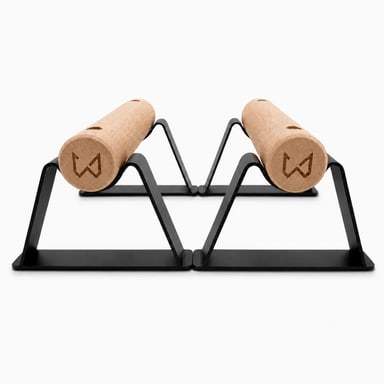
The Antlettes V2 take the opposite approach from tall skill bars. Each handle sits only 10.5 cm (4.1 inches) high, and the pair weighs 1.1 kg (2.4 lb). That geometry keeps the footprint compact enough for a backpack and puts the bars close to the floor for push-ups, planche leans, tuck holds, and travel workouts. It also means less clearance for a full L-sit than the Teclor, TABEKE, or PULLUP & DIP sets.
The construction evidence is unusually specific for this price tier. Xtenia publishes 35 mm beech handles, powder-coated steel bases, large anti-slip pads, an SGS compression test to 12.55 kN, and a lifetime structural guarantee. The store currently shows 34 reviews, 32 of them five-star. That is encouraging, but it is still a small owner sample.
Our Xtenia Antlettes V2 review goes through the SGS report and the height trade-off in detail. Xtenia is providing Kit Authority with a sample for evaluation. That does not guarantee coverage or a favorable verdict. The current score uses published specifications, the independent compression-test report, warranty terms, and verified owner feedback. We will add measured dimensions, grip and stability notes, long-session observations, and original video after using the supplied sample.
BEST PORTABLE WOOD SET
Xtenia Antlettes V2 Wooden Parallettes
Best for: Athletes who prioritize a compact, backpack-friendly wooden set for push-ups, planche work, tuck holds, and travel over maximum L-sit clearance.
- The 1.1 kg pair weight and removable construction make this one of the most portable wood-handle options in the current field
- The 4.1-inch handle height offers less leg clearance for full L-sits and deep pressing than the 9.5- to 12-inch picks
Kit Score 8.5/10 · Check current price · how we score gear
Buy at XteniaProduct details
A compact low-profile wooden parallette set built around 35 mm beech handles and powder-coated steel bases. Xtenia publishes a 1.1 kg pair weight, large anti-slip pads, independent SGS compression-test documentation, and a lifetime structural guarantee. A supplied sample is scheduled for direct-use evaluation; the current score is based on verified specifications and owner feedback, not field testing.
- Handle height
- 10.5 cm (4.1 in)
- Handle length
- 23 cm (9.1 in)
- Handle diameter
- 35 mm (1.38 in)
- Pair weight
- 1.1 kg (2.4 lb)
- Materials
- Beech wood handles, powder-coated steel bases
- Verification
- SGS compression test, one bar: 12.55 kN peak (about 1,280 kgf); Xtenia daily rating 300 kg
More strengths
- SGS compression-test documentation and a lifetime structural guarantee provide stronger evidence than an unsupported marketplace load claim
- The 35 mm beech handle avoids foam wear and gives a compact, wrist-neutral platform for push-ups and planche progressions
Other tradeoffs
- The current owner-review pool is small, and Kit Authority has not completed its supplied-sample evaluation yet
- Orders ship from Spain, so US delivery cost and timing need to be checked at checkout
Comparing the picks
| Product | Kit Score | Price | Best for |
|---|---|---|---|
| Teclor Steel Push Up Bar, 9.5in High Parallettes Bars | 8.8 | $35.99 Price checked Oct 23, 6:22 AM CDT | Best for: Intermediate to advanced athletes who want a no-compromise steel low parallette for L-sits, planche work, and daily training at home or in the gym. Why it stands out: Fully welded 2mm steel frame and dual-screw joints eliminate flex under load Tradeoff: Fixed height: not suitable if you want high-parallette clearance for deep handstand push-ups |
| TABEKE 12-Inch High Parallettes Bars | 8.2 | $28.99 Price checked Oct 23, 6:22 AM CDT | Best for: Athletes who want more wrist clearance than a low parallette provides and are training push-up depth, L-sits, and dips on a budget. Why it stands out: 12-inch height adds meaningful wrist clearance over standard low parallettes without the bulk of dip-bar stations Tradeoff: Foam handles wear and collect odor faster than wood or bare steel over time |
| airogym Wood Parallettes Push Up Bars | 8.5 | $36.99 Price checked Oct 23, 6:22 AM CDT | Best for: Beginners and intermediate trainees who want a sturdy, low-profile wood parallette set for push-ups, tuck L-sits, and planche leans on a budget. Why it stands out: Current 600 lb published capacity provides substantial headroom for ordinary bodyweight training Tradeoff: Iron bracket construction adds weight compared to pure-wood parallettes, reducing portability |
| PULLUP & DIP Wooden Parallettes (Medium) | 8.4 | Check current price | Best for: Athletes who train L-sits, handstands, or dip progressions regularly and want a no-compromise wood-handle bar that will outlast plastic or foam alternatives. Why it stands out: Beechwood handle is naturally grippy even with sweaty hands, removing the need for chalk on most sessions Tradeoff: Premium price sits at the high end of the parallettes market, which may be hard to justify for beginners |
| Xtenia Antlettes V2 Wooden Parallettes | 8.5 | Check current price | Best for: Athletes who prioritize a compact, backpack-friendly wooden set for push-ups, planche work, tuck holds, and travel over maximum L-sit clearance. Why it stands out: The 1.1 kg pair weight and removable construction make this one of the most portable wood-handle options in the current field Tradeoff: The 4.1-inch handle height offers less leg clearance for full L-sits and deep pressing than the 9.5- to 12-inch picks |
Teclor Steel Push Up Bar, 9.5in High Parallettes Bars
- Best for
- Intermediate to advanced athletes who want a no-compromise steel low parallette for L-sits, planche work, and daily training at home or in the gym.
- Why it stands out
- Fully welded 2mm steel frame and dual-screw joints eliminate flex under load
- Tradeoff
- Fixed height: not suitable if you want high-parallette clearance for deep handstand push-ups
TABEKE 12-Inch High Parallettes Bars
- Best for
- Athletes who want more wrist clearance than a low parallette provides and are training push-up depth, L-sits, and dips on a budget.
- Why it stands out
- 12-inch height adds meaningful wrist clearance over standard low parallettes without the bulk of dip-bar stations
- Tradeoff
- Foam handles wear and collect odor faster than wood or bare steel over time
airogym Wood Parallettes Push Up Bars
- Best for
- Beginners and intermediate trainees who want a sturdy, low-profile wood parallette set for push-ups, tuck L-sits, and planche leans on a budget.
- Why it stands out
- Current 600 lb published capacity provides substantial headroom for ordinary bodyweight training
- Tradeoff
- Iron bracket construction adds weight compared to pure-wood parallettes, reducing portability
PULLUP & DIP Wooden Parallettes (Medium)
- Best for
- Athletes who train L-sits, handstands, or dip progressions regularly and want a no-compromise wood-handle bar that will outlast plastic or foam alternatives.
- Why it stands out
- Beechwood handle is naturally grippy even with sweaty hands, removing the need for chalk on most sessions
- Tradeoff
- Premium price sits at the high end of the parallettes market, which may be hard to justify for beginners
Xtenia Antlettes V2 Wooden Parallettes
- Best for
- Athletes who prioritize a compact, backpack-friendly wooden set for push-ups, planche work, tuck holds, and travel over maximum L-sit clearance.
- Why it stands out
- The 1.1 kg pair weight and removable construction make this one of the most portable wood-handle options in the current field
- Tradeoff
- The 4.1-inch handle height offers less leg clearance for full L-sits and deep pressing than the 9.5- to 12-inch picks
Two decisions that settle the category
Choose height first. Our low vs high parallettes comparison explains when 5.9, 9.5, or 12 inches makes sense.
Choose contact material second. Wood vs steel parallettes compares bare wood with foam-covered steel by grip feel, cleaning, wear, and price.
How to choose the right parallettes for your training
How to match parallettes to your goals
Match height to your primary skill
For push-up volume and planche work, low bars (under 10 in) are more stable. For L-sits and handstands, mid-height bars (10 to 12 in) give the clearance you need without sacrificing balance.
Choose material based on grip preference
Steel with a textured finish works well with chalk and suits athletes who prefer a firm, neutral feel. Wood offers natural friction that is forgiving on sweaty palms and gentler on long skill sessions.
Check the load rating against your body weight
Explosive push-ups and jumps load the bars harder than static holds, so if you train dynamically, choose a published rating well above your body weight. Every pick here lists at least 200 kg (440 lb).
Weigh portability against footprint stability
Wider-base frames are more stable but less portable. If you train in a fixed space, prioritize base width. If you move your gear between locations, a lighter folding steel set is the practical choice.
Bar height is the single variable most athletes underestimate: the right clearance turns an L-sit from a grinding struggle into a trainable skill.
Where these numbers come from
| Claim | Source | Checked |
|---|---|---|
| Teclor: 9.5 in tall, 17 x 8.3 in, 2 mm fully welded steel, 1.5 in foam handles, rotatable rubber feet, 660 lb rating | Teclor listing on Amazon, ASIN B09N77Z84N | Sep 2026 |
| TABEKE: 12 in tall, 1.5 mm steel, 1.5 in foam handles, extended base, 660 lb rating | TABEKE listing on Amazon, ASIN B0D2XWGJRR | Sep 2026 |
| airogym: 5.9 in tall, 1.5 in beech bar, foam-taped metal brackets, 600 lb (270 kg) rating | airogym listing on Amazon, ASIN B0BWRRR77D | Sep 2026 |
| PULLUP & DIP medium: 30 cm (11.8 in) grip height, 50 cm length, beech handle, steel side panels, 200 kg maximum load, pre-assembled | PULLUP & DIP medium listing on Amazon, ASIN B07CM2DXGM | Sep 2026 |
| PULLUP & DIP wooden parallettes: low (10 cm) and medium (30 cm) versions, 5-year warranty | PULLUP & DIP, wooden parallettes | Sep 2026 |
| Xtenia Antlettes V2: 10.5 cm tall, 35 mm beech handles, powder-coated steel, 1.1 kg pair, 300 kg rating, SGS compression test peak 12.55 kN, lifetime structural warranty, 34 store reviews | Xtenia, Antlettes V2 product page | Sep 2026 |
Load ratings are the manufacturers' figures, not independent certifications, except where the Xtenia SGS report is named. Nothing here is a Kit Authority measurement.
Frequently asked questions
What height parallettes are best for beginners?
Low parallettes in the 6 to 10 inch range are the most practical starting point. They are more stable than taller bars, suit push-up and tuck L-sit progressions well, and the lower center of gravity means less wobble during early handstand drills. As you progress to full L-sits and extended handstand work, mid-height bars in the 10 to 12 inch range become worthwhile.
Are wood or steel parallettes better?
Both materials work well; the choice depends on preference and budget. Wood provides natural grip friction that reduces chalk dependency and is slightly warmer and more forgiving on the hands during long sessions. Steel is typically more affordable, easier to clean, and available in more height options. Premium wood sets like the PULLUP & DIP bars combine both by pairing a beechwood bar with a steel base frame.
Can I use parallettes for handstand training?
They can support handstand practice because the athlete grips a handle instead of placing a flat palm on the floor. Elevated balance work carries fall risk. Use a wide, non-slip base, a clear practice area, and a progression appropriate to your experience.
Parallettes are a compact, effective investment for any calisthenics practice at any level. For more fitness equipment guides and training resources, browse the fitness hub or learn about how we research and rate gear.
Keep going
Complete loadoutHome calisthenics kitA compact strength and conditioning setup built around five tools that cover pushing, pulling, assistance, cardio, and floor work.
Our recommendations draw on manufacturer documentation, retailer listings, owner feedback, and comparisons with alternatives.
As an Amazon Associate I earn from qualifying purchases. We may earn a commission from links here, at no extra cost to you. How we research →
Top picks
 Best OverallTeclor Steel Push Up Bar, 9.5in High Parallettes Bars8.8/10
 Best ValueTABEKE 12-Inch High Parallettes Bars8.2/10
 Best Budgetairogym Wood Parallettes Push Up Bars8.5/10
 Best PremiumPULLUP & DIP Wooden Parallettes (Medium)8.4/10
 Best Portable Wood SetXtenia Antlettes V2 Wooden Parallettes8.5/10