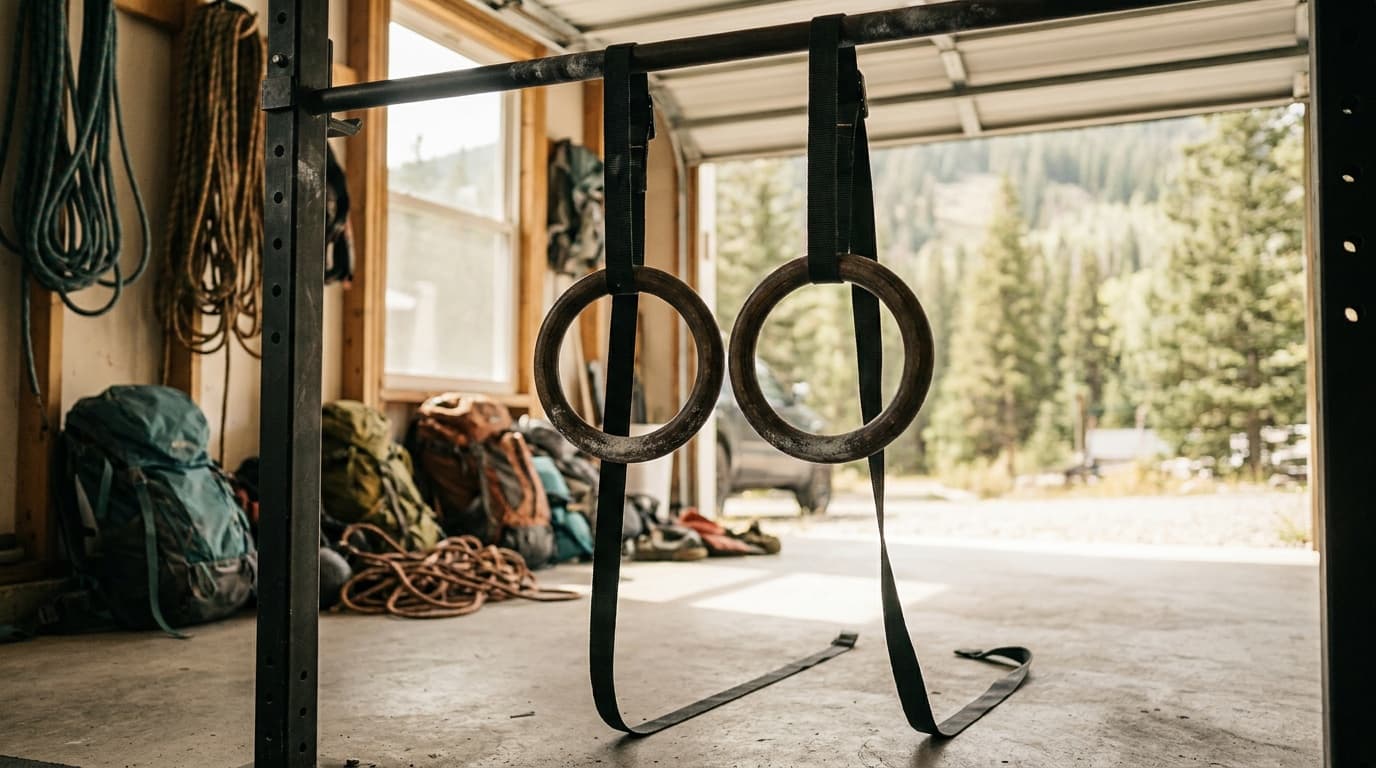
Gymnastic rings are the most versatile piece of kit in a home gym: one set handles dips, rows, push-up progressions, ring support holds, and eventually muscle-ups. The catch is that cheap rings with stiff straps and bad buckles make every height change a fight, and that friction costs you reps and patience.
Our quick picks
How we picked
Every pick below was evaluated against our Kit Score: verified owner reviews aggregated across retailers, published specs cross-checked against manufacturer data, and community feedback from calisthenics forums and training subreddits. We score on ring diameter, strap usability, grip texture, weight rating, and durability for both indoor and outdoor use.
The picks
Best overall
BEST OVERALL
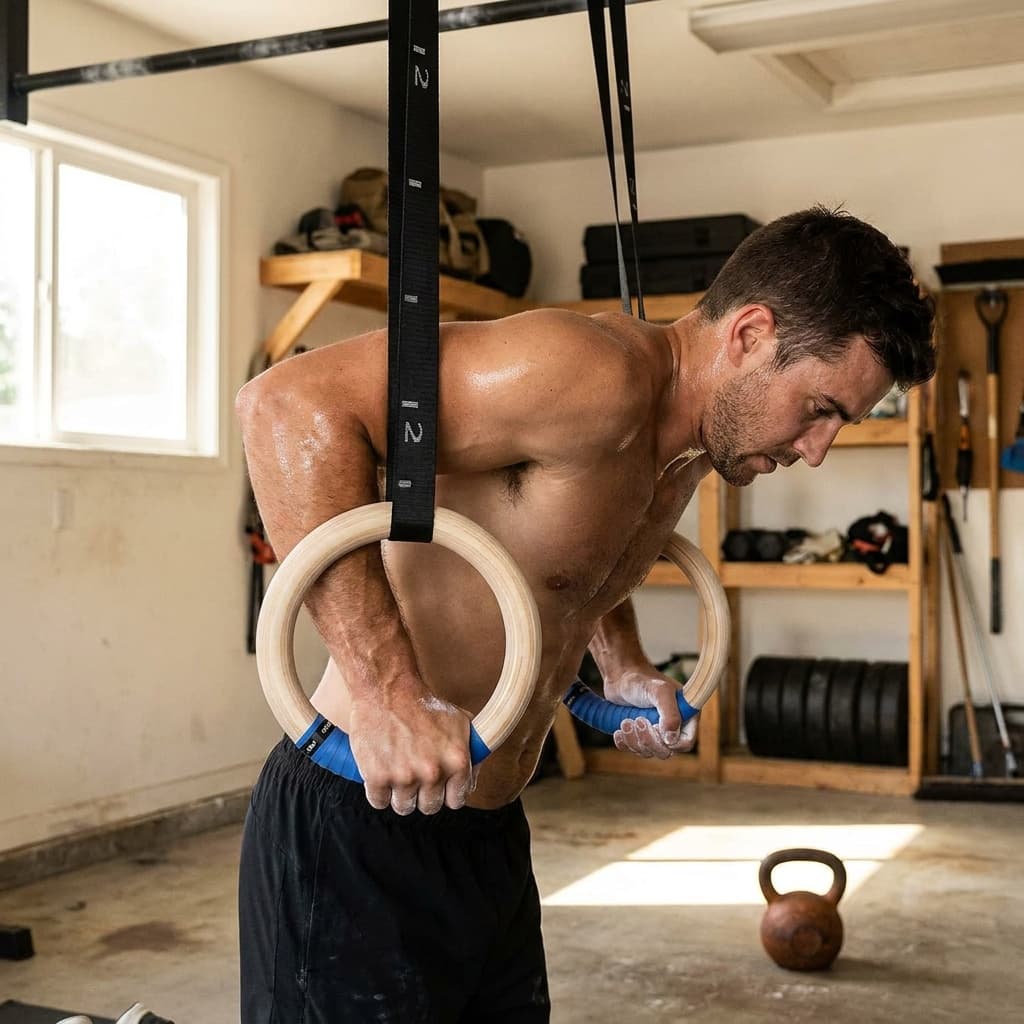
PACEARTH Gymnastics Rings Wooden Olympic Rings with Adjustable Cam Buckle 14.76ft Long Straps
Best for: Home or garage gym athletes who want one set that handles the full calisthenics progression: dips, rows, ring support work, and muscle-up training, with quick height changes between sets.
- Scale markings on 14.76 ft straps allow fast, repeatable height matching across both rings
- Newer listing with a smaller review base compared to category veterans
Kit Score 8.5/10 · $28.99 Price checked Oct 23, 4:16 PM CDT · how we score gear
Buy on AmazonProduct details
Birch wood rings at 32mm, paired with extra-long scaled straps and serrated cam buckles that lock securely and let you reproduce the same ring height every session. The 32mm diameter suits dips, rows, ring support holds, and muscle-up progressions without the grip fatigue that thinner rings create.
- Ring diameter
- 32mm (1.25 in)
- Material
- Birch wood
- Strap length
- 14.76 ft each
- Weight capacity
- 1,500 lb
- Buckle system
- Cam buckle with serrated contact surface and scale markings
- Includes
- 2 rings, 2 cam buckle straps, 2 rolls grip tape
More strengths
- Birch wood absorbs sweat and stays grippy without chalk, unlike plastic surfaces
- 1,500 lb rated capacity well above any realistic load for home or gym use
Other tradeoffs
- Wood requires occasional light sanding and oiling if used outdoors in wet conditions
PACEARTH's birchwood rings thread the needle between a grippy surface, a sane price, and straps that actually work. The cam-buckle closure adjusts in seconds, and the 14.76 ft strap length clears most pull-up rigs and ceiling-mounted anchor points without excess slack flopping around. They come in 28 mm and 32 mm sizes, and the linked listing can open on the 28 mm (1.1 in) size, so select 32 mm (1.25 in) if that is the grip you want.
The 32mm diameter suits the widest range of athletes. Beginners can lock in a solid ring support hold without needing chalk every set. Intermediate athletes progressing through dips and rows will find the diameter forgiving on wrists and palms. The wood develops a natural grip patina with use, so rings that feel slightly slick new will improve over weeks.
Reviewed owners cite the buckles as genuinely quick, not just labeled quick, and note the rings handle sweat better than plastic at the same price point. The listing advertises capacity of up to 1,500 lb, far more than weighted dips or kipping muscle-up attempts demand, and the cam buckles have a serrated inner surface for bite.
The one trade-off: leave these outside and they will degrade. Bring them in after sessions or go plastic for a permanent outdoor rig.
Best value
BEST VALUE
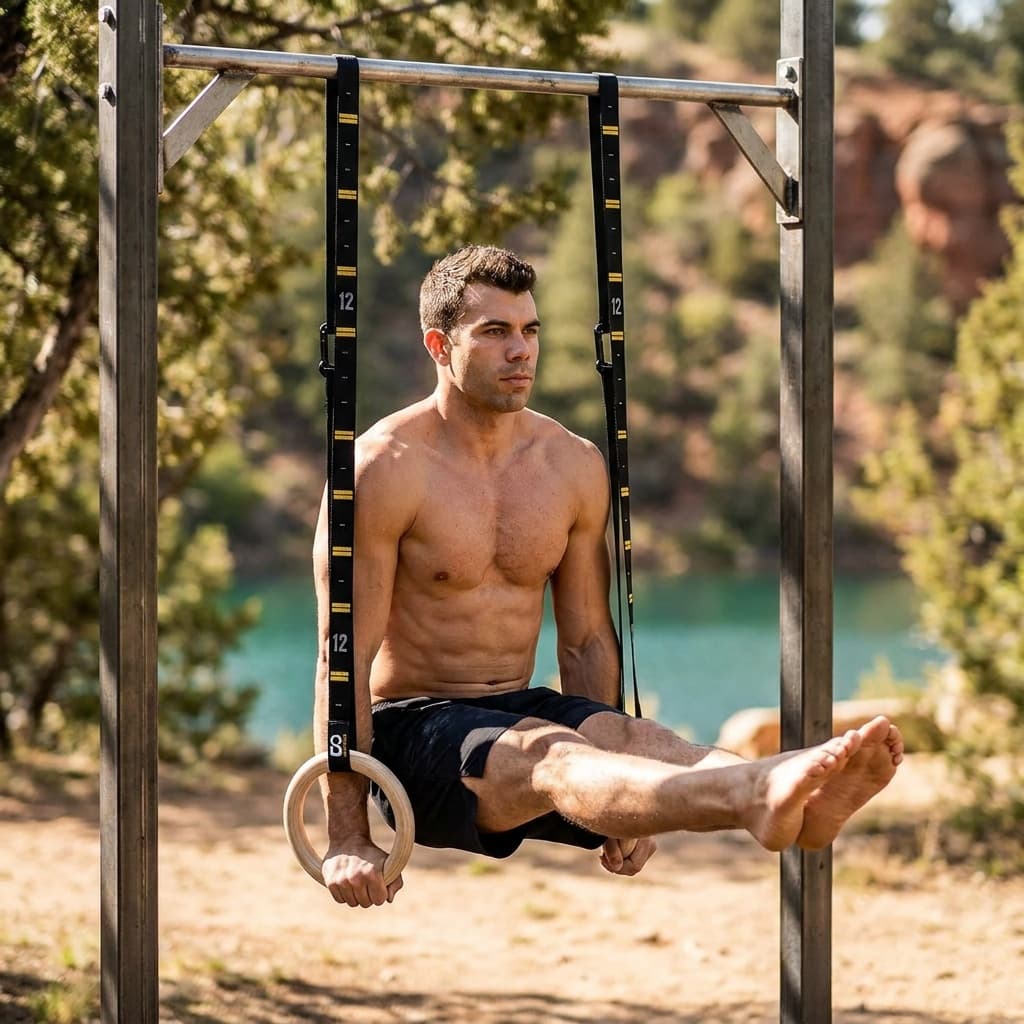
Double Circle Wood Gymnastics Rings with Quick Adjust Numbered Straps and Exercise Videos Guide
Best for: Athletes who rotate frequently between exercises and want a strap system that makes matching ring height fast and foolproof without eyeballing or counting slots.
- Numbered carabiner strap system eliminates guesswork when transitioning between dips, rows, and ring support holds
- 9.2 ft straps limit maximum hang height compared to sets with 14–16 ft straps
Kit Score 8.5/10 · $47.97 Price checked Oct 23, 4:16 PM CDT · how we score gear
Buy on AmazonProduct details
Wood rings at 32mm with a numbered strap system that clips into anchor slots so both rings land at exactly the same height every time. The carabiner-based numbered design allows 4-inch adjustments, and Double Circle also sells a 28mm (1.1 in) variant for athletes who want the FIG competition diameter.
- Ring diameter
- 32mm (1.25 in)
- Material
- Wood
- Strap length
- 9.2 ft (assembled)
- Weight capacity
- Not published on the current listing
- Buckle system
- Numbered straps with dual metal carabiners
- Includes
- 2 rings, numbered nylon straps, exercise video guide, travel case
More strengths
- Wood grain grips progressively better as hands sweat, a real advantage in longer strength sessions
- Travel case included for portability
Other tradeoffs
- Newer parent listing (B097C1V3P2) has a smaller review base than the legacy ASIN it replaced
The Double Circle rings solve a real training problem: when you superset ring rows and ring push-ups and you need the rings at two different heights, matching them precisely by feel wastes time and breaks concentration. The numbered strap system gives you a reference point you can call out between sets and return to exactly, every time.
The wood rings come in 32 mm (1.25 in) and 28 mm (1.1 in) versions, so check the size on the listing before you order. The 9.2 ft straps use four carabiners and numbered hooks for 4-inch adjustments, and a travel case is included. Double Circle does not publish a load rating on its current listing. The included exercise video guide adds genuine value for athletes who are new to ring programming and want a structured starting point rather than hunting YouTube.
The price premium over budget options is real but justified by the strap system alone for anyone doing circuit or superset-style training. If you switch between ring rows, dips, and support holds in a single session, numbered straps pay back their cost in time and frustration within the first week.
A note on plastic rings
Plastic rings have a specific use case. For a beginner who is genuinely uncertain whether they will stick with ring training, a cheaper plastic set can prove the habit before you commit to wood. We are not naming a plastic pick right now: the set we recommended is no longer available.
More practically: if your pull-up rig lives on a patio or outdoor frame and you are not willing to bring rings in after every session, plastic is the correct material choice. Rain and temperature swings that crack and splinter wood rings are far less of a problem for plastic.
The grip trade-off is real. Plastic rings become slick with sweat in ways wood does not, and there is no patina effect over time. Chalk helps significantly, and most owners doing serious training keep a bag nearby regardless of ring material. The straps are functional. The rings are light enough that packing them for travel is genuinely easy.
Verified owners note these work fine for all the foundational movements: dips, rows, push-up progressions, and L-sit practice. For skill work where ring stability and texture matter more, wood is worth the upgrade.
Editor's choice
EDITOR'S CHOICE
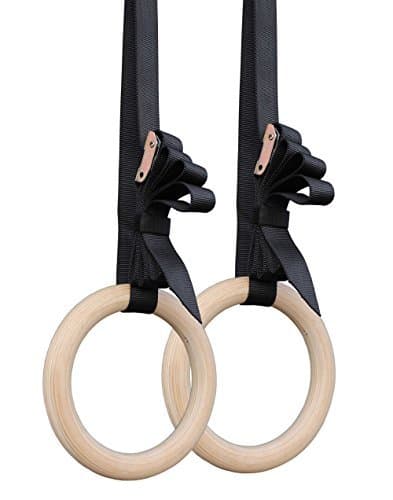
Titan Fitness 28mm Gymnastics Rings, Non-Slip Wooden Rings with 16 FT Nylon Straps
Best for: Intermediate to advanced calisthenics athletes who train specifically for muscle-ups, ring handstands, or strict ring strength work and want the FIG-standard 28mm diameter to build grip and technique.
- 28mm FIG standard develops grip strength faster than 32mm, a deliberate training advantage for skill-focused athletes
- 600 lb weight rating is lower than competing wood sets, though sufficient for bodyweight training
Kit Score 8.1/10 · $49.99 Price checked Oct 23, 4:16 PM CDT · how we score gear
Buy on AmazonProduct details
FIG-standard 28mm solid wood rings from Titan Fitness, with 16 ft straps, among the longest in this roundup, and a cam buckle system built for fast height changes. The 28mm diameter makes grip training harder, which is exactly the point for athletes working toward strict muscle-ups, ring handstands, or advanced calisthenics skills.
- Ring diameter
- 28mm (1.11 in, FIG competition standard)
- Material
- Solid wood
- Strap length
- 16 ft
- Weight capacity
- 600 lb
- Buckle system
- Cam buckle system
- Strap width
- 1.5 in nylon
More strengths
- 16 ft straps cover the widest range of anchor heights, from pull-up bar to high beam
- Solid wood with natural non-slip surface works with or without chalk across dips, rows, and ring support
Other tradeoffs
- 28mm diameter is less comfortable for high-rep ring dips and rows compared to 32mm
The Titan Fitness rings are built to FIG competition spec: 28mm diameter, 600 lb weight rating, and 16 ft nylon straps that give you more clearance options than shorter sets. The 28mm diameter is the detail that matters here.
Most training rings sold for home gyms use 32mm because it is more accessible. The 28mm diameter demands more from your grip and your fingers, which is precisely the point for athletes training toward strict muscle-ups, ring handstands, or false-grip work. You cannot fake grip strength on a 28mm ring the way you can compensate on a thicker surface. That is a feature, not a flaw, for athletes at the right level.
Titan describes the wood as smooth with a non-slip feel that works with or without chalk. The 16 ft straps are among the longest in this group (only Xtenia's 5 m straps run longer), useful for anchoring to high beams or loading up for weighted ring support work with a belt and plates.
This is not the pick for day one. It is the pick for athletes who have already logged time on 32mm rings and are ready to address the specific grip and technique demands that 28mm training exposes.
Best direct-order pick: Xtenia Wooden Gymnastic Rings V2
BEST DIRECT-ORDER PICK
Xtenia Wooden Gymnastic Rings V2
Best for: Athletes who want wood rings with marked straps and a choice of grip size, and do not mind ordering direct from Europe.
- Woven height markings on the straps make even setup fast and repeatable
- Only 10 store reviews on the V2 so far, so the owner record is short
Kit Score 8.2/10 · Check current price · how we score gear
Buy at XteniaProduct details
Xtenia's V2 rings are solid birch in a choice of 28 mm or 32 mm grip, hung from 5 m straps with woven height markings so both rings set to the same height without a tape measure. Xtenia rates them to 300 kg per pair and backs them with a lifetime structural guarantee. Orders ship from Europe; US buyers should check shipping at checkout.
- Ring material
- 100% solid birch wood
- Grip sizes
- 28 mm (about 266 g per ring) or 32 mm (about 330 g per ring)
- Straps
- 5 m reinforced straps with jacquard-woven height markings, metal buckles
- Rated load
- 300 kg per pair (Xtenia spec)
- Includes
- 2 rings, 2 straps with buckles, instruction manual
- Guarantee
- Lifetime structural guarantee (terms apply)
More strengths
- Choice of 28 mm competition grip or 32 mm thicker grip in the same model
- Lifetime structural guarantee and a published 300 kg per pair rating
Other tradeoffs
- Ships from Spain; US delivery cost and time need checking at checkout
- Xtenia lists metal buckles but does not publish strap width or buckle design
Xtenia's V2 rings are the one set here that solves the setup problem at the strap rather than the ring. The 5 m straps carry jacquard-woven height markings, so both rings land at the same height without a tape measure, and the markings are part of the weave rather than printed numbers that wear off. The rings are solid birch and come in a choice of 28 mm competition grip or 32 mm thicker grip in the same model, at about 266 g and 330 g per ring respectively. Xtenia rates the pair to 300 kg and backs them with a lifetime structural guarantee.
The trade-offs are the same ones that apply to any small European brand: the V2 has only ten store reviews so far, Xtenia lists metal buckles but does not publish strap width or buckle design, and orders ship from Spain, so US buyers should check the shipping total at checkout. Bought direct, they land close to the Amazon wood sets once shipping is added, with the marked straps and the two grip sizes as the reasons to choose them.
Disclosure: Kit Authority earns a commission on purchases through the Xtenia links on this page. Xtenia is also supplying a set of its parallettes for evaluation; that does not affect this pick, which is based on published specifications.
How to choose
| Product | Kit Score | Price | Best for |
|---|---|---|---|
| PACEARTH Gymnastics Rings Wooden Olympic Rings with Adjustable Cam Buckle 14.76ft Long Straps | 8.5 | $28.99 Price checked Oct 23, 4:16 PM CDT | Best for: Home or garage gym athletes who want one set that handles the full calisthenics progression: dips, rows, ring support work, and muscle-up training, with quick height changes between sets. Why it stands out: Scale markings on 14.76 ft straps allow fast, repeatable height matching across both rings Tradeoff: Newer listing with a smaller review base compared to category veterans |
| Double Circle Wood Gymnastics Rings with Quick Adjust Numbered Straps and Exercise Videos Guide | 8.5 | $47.97 Price checked Oct 23, 4:16 PM CDT | Best for: Athletes who rotate frequently between exercises and want a strap system that makes matching ring height fast and foolproof without eyeballing or counting slots. Why it stands out: Numbered carabiner strap system eliminates guesswork when transitioning between dips, rows, and ring support holds Tradeoff: 9.2 ft straps limit maximum hang height compared to sets with 14–16 ft straps |
| Titan Fitness 28mm Gymnastics Rings, Non-Slip Wooden Rings with 16 FT Nylon Straps | 8.1 | $49.99 Price checked Oct 23, 4:16 PM CDT | Best for: Intermediate to advanced calisthenics athletes who train specifically for muscle-ups, ring handstands, or strict ring strength work and want the FIG-standard 28mm diameter to build grip and technique. Why it stands out: 28mm FIG standard develops grip strength faster than 32mm, a deliberate training advantage for skill-focused athletes Tradeoff: 600 lb weight rating is lower than competing wood sets, though sufficient for bodyweight training |
| Xtenia Wooden Gymnastic Rings V2 | 8.2 | Check current price | Best for: Athletes who want wood rings with marked straps and a choice of grip size, and do not mind ordering direct from Europe. Why it stands out: Woven height markings on the straps make even setup fast and repeatable Tradeoff: Only 10 store reviews on the V2 so far, so the owner record is short |
PACEARTH Gymnastics Rings Wooden Olympic Rings with Adjustable Cam Buckle 14.76ft Long Straps
- Best for
- Home or garage gym athletes who want one set that handles the full calisthenics progression: dips, rows, ring support work, and muscle-up training, with quick height changes between sets.
- Why it stands out
- Scale markings on 14.76 ft straps allow fast, repeatable height matching across both rings
- Tradeoff
- Newer listing with a smaller review base compared to category veterans
Double Circle Wood Gymnastics Rings with Quick Adjust Numbered Straps and Exercise Videos Guide
- Best for
- Athletes who rotate frequently between exercises and want a strap system that makes matching ring height fast and foolproof without eyeballing or counting slots.
- Why it stands out
- Numbered carabiner strap system eliminates guesswork when transitioning between dips, rows, and ring support holds
- Tradeoff
- 9.2 ft straps limit maximum hang height compared to sets with 14–16 ft straps
Titan Fitness 28mm Gymnastics Rings, Non-Slip Wooden Rings with 16 FT Nylon Straps
- Best for
- Intermediate to advanced calisthenics athletes who train specifically for muscle-ups, ring handstands, or strict ring strength work and want the FIG-standard 28mm diameter to build grip and technique.
- Why it stands out
- 28mm FIG standard develops grip strength faster than 32mm, a deliberate training advantage for skill-focused athletes
- Tradeoff
- 600 lb weight rating is lower than competing wood sets, though sufficient for bodyweight training
Xtenia Wooden Gymnastic Rings V2
- Best for
- Athletes who want wood rings with marked straps and a choice of grip size, and do not mind ordering direct from Europe.
- Why it stands out
- Woven height markings on the straps make even setup fast and repeatable
- Tradeoff
- Only 10 store reviews on the V2 so far, so the owner record is short
Wood vs plastic
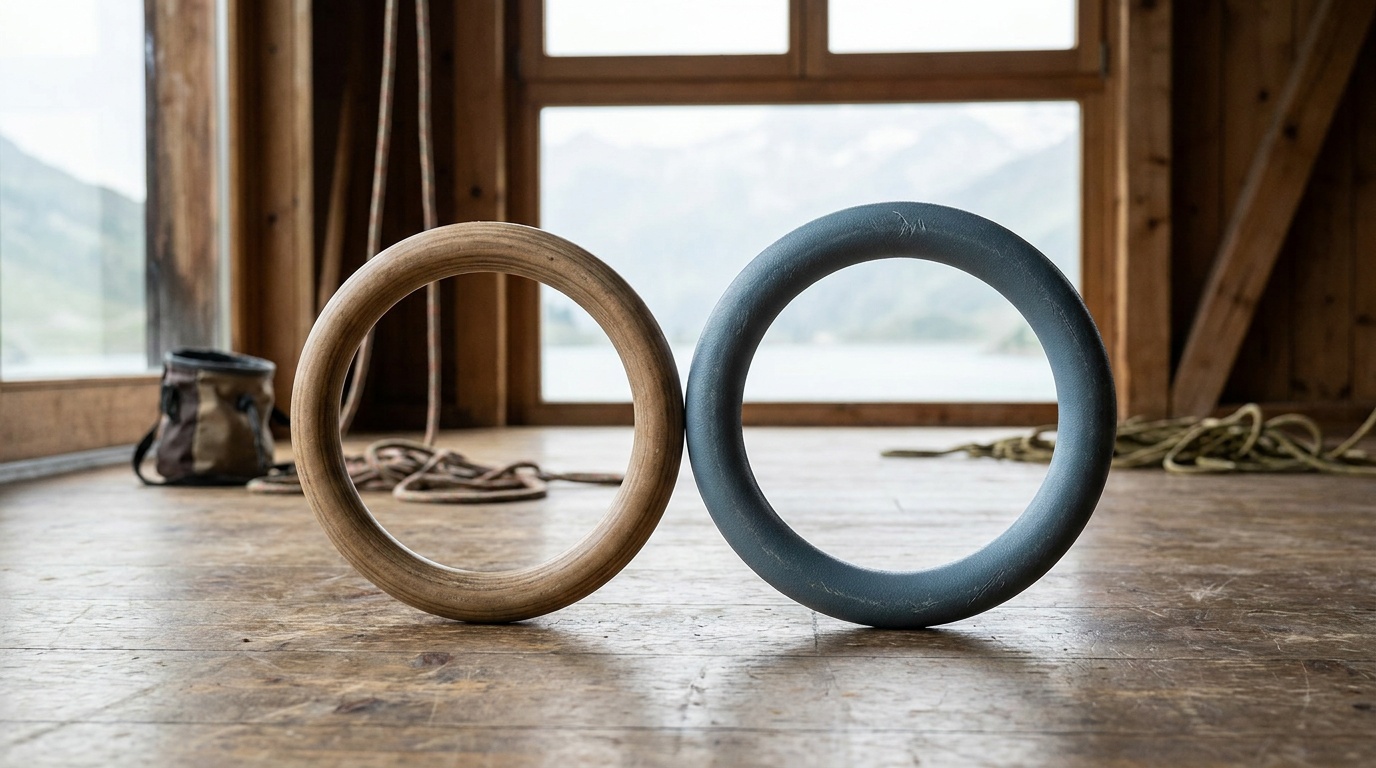
Wood is better for grip in most training conditions. It absorbs small amounts of moisture, which improves the feel mid-set, and it develops a surface texture with use. Plastic is the right call for permanent outdoor rigs and for athletes who genuinely do not want to manage equipment care.
Ring diameter: 28mm vs 32mm
Start at 32mm. The wider diameter is more forgiving on wrists and palms while you build the movement patterns for dips, rows, and support holds. Move to 28mm when your technique is solid and you want to specifically address grip strength, false-grip development, or competition-standard training.
Strap length
Strap length depends on your anchor height: the picks here range from 9.2 ft (Double Circle) to 5 m, about 16.4 ft (Xtenia). Around 16 ft gives you meaningful extra range for high ceilings, loaded exercises with a dip belt, and overhead anchor points. If you know your anchor point is high, start with the longer strap; you can always double it back.
Numbered vs plain straps
Numbered straps are worth paying for if you change ring height frequently. If you set your rings once and leave them there for weeks at a time, the premium is hard to justify.
Weight capacity
Three of the four publish a rating: Titan 600 lb, Xtenia 300 kg (about 660 lb) per pair, and PACEARTH up to 1,500 lb. Double Circle does not list one on its current listing. For bodyweight training, any of them handles the load; for weighted ring dips, the PACEARTH has the most published headroom.
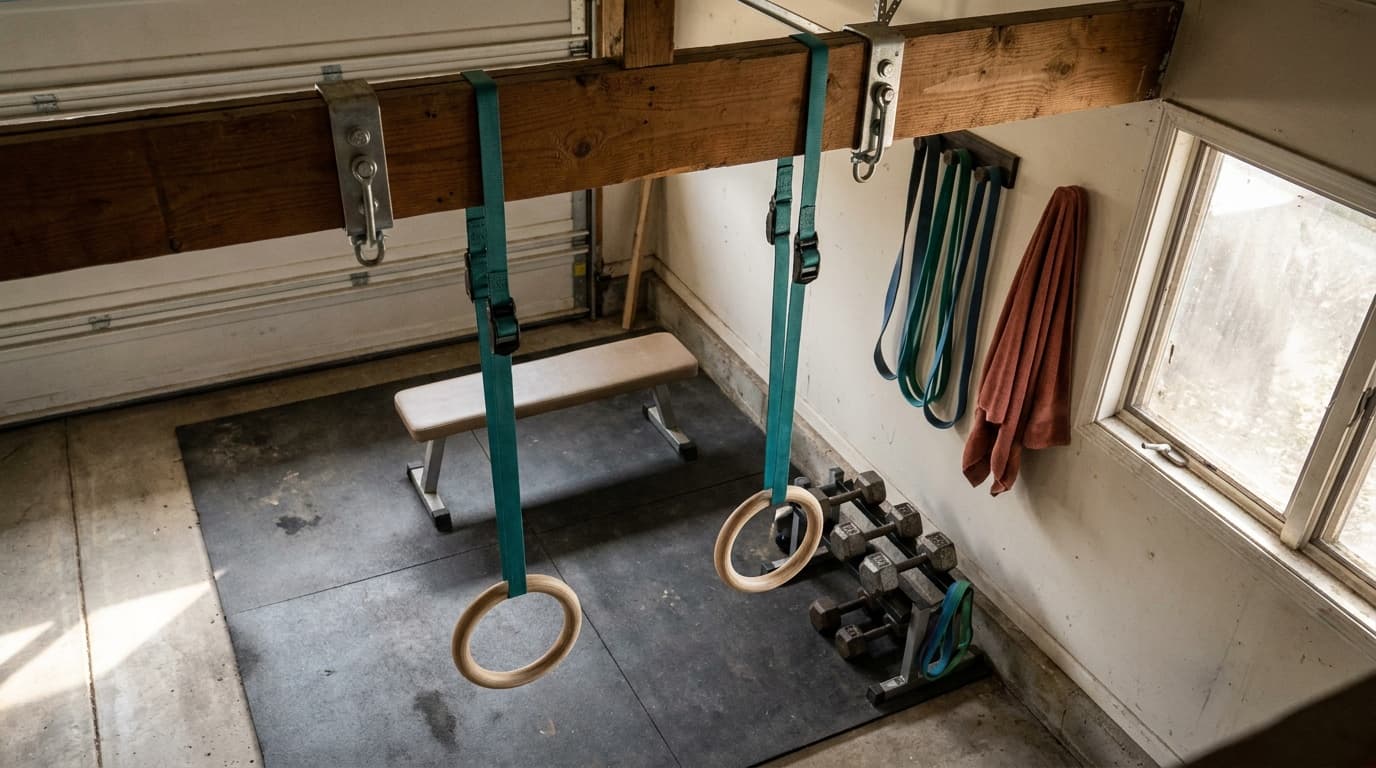
Setting up rings for the first time
Anchor your pull-up bar or beam first
confirm the anchor point is rated for your load, including any kipping or dynamic movement, before hanging anything from it.
Thread straps through the rings
pass the strap through the ring's channel and back through the buckle, leaving the numbered side facing outward if you have numbered straps.
Set both rings to the same reference
for numbered straps, note the number at the buckle; for plain straps, mark with a strip of tape at the same slot on each strap.
Start high for rows
ring rows at hip height are more accessible for beginners; lower the rings as strength improves or move to a lower anchor point.
Test stability before loading
do one unweighted set and check that neither strap has slipped before adding load or attempting dynamic movements.
The most common ring setup mistake is setting them at two different heights and spending the first set correcting balance rather than training.
Where these numbers come from
| Claim | Source | Checked |
|---|---|---|
| FIG competition rings: 2.8 cm (28 mm) profile diameter, 18 cm inner diameter; rings must absorb moisture | FIG, Apparatus Norms, rings section | Sep 2026 |
| PACEARTH: birch wood, capacity up to 1,500 lb (680 kg), 14.76 ft straps, serrated cam buckles; 28 and 32 mm sizes | PACEARTH listing on Amazon, ASIN B0861BPMNK | Sep 2026 |
| Double Circle: 1.1 in and 1.25 in versions, 9.2 ft straps, 4 carabiners, numbered hooks for 4 in adjustments, travel case, video guide; no load rating published | Double Circle listings on Amazon, ASINs B097C1V3P2 and B076X32LFY | Sep 2026 |
| Titan: 28 mm FIG-standard wood rings, 16 ft nylon straps, 1.5 in strap width, 600 lb rating | Titan Fitness, 28mm wood gymnastic rings | Sep 2026 |
| Xtenia V2: solid birch, 28 or 32 mm (about 266 g / 330 g per ring), 5 m jacquard-marked straps, metal buckles, 300 kg per pair, lifetime structural warranty, 10 store reviews | Xtenia, Wooden Gymnastic Rings V2 | Sep 2026 |
Load ratings are the manufacturers' figures. Grip and strap-handling notes summarize owner feedback, not a Kit Authority test.
Frequently asked questions
Are wooden gymnastic rings worth it over plastic?
For most indoor training, yes. Wood grips better in sweaty conditions without chalk, improves with use, and handles the full range of ring exercises without the surface becoming slick mid-set. Plastic earns its place for outdoor rigs and travel, where durability against weather and light weight matter more than grip texture.
What is the difference between 28mm and 32mm gymnastics rings?
The diameter affects grip demand and technique ceiling. The 32mm diameter is more forgiving and suits beginners through intermediate athletes doing dips, rows, and support holds. The 28mm FIG-standard diameter requires more grip strength and precise hand positioning, which makes it better for muscle-up and ring handstand progressions but harder to start on.
How long should gymnastic ring straps be?
It depends on how high your anchor is. For a pull-up bar at normal height, the 9.2 ft Double Circle straps can work; for ceiling-mounted anchor points above 9 ft, or if you want room for loaded exercises with a dip belt, 14 to 16 ft straps give you more flexibility. Strap lengths in this guide run from 9.2 ft (Double Circle) to about 16.4 ft (Xtenia's 5 m straps).
Gymnastic rings reward consistent practice more than almost any piece of equipment: the same set carries you from your first ring row to ring support holds, muscle-up training, and beyond. Start with a pair that has solid buckles and straps that stay put, and the movement work will take care of the rest.
Browse more training equipment recommendations in our fitness hub, or learn more about how we research and rate every pick on Kit Authority.
Keep going
Our recommendations draw on manufacturer documentation, retailer listings, owner feedback, and comparisons with alternatives.
As an Amazon Associate I earn from qualifying purchases. We may earn a commission from links here, at no extra cost to you. How we research →
Top picks
 Best OverallPACEARTH Gymnastics Rings Wooden Olympic Rings with Adjustable Cam Buckle 14.76ft Long Straps8.5/10
 Best ValueDouble Circle Wood Gymnastics Rings with Quick Adjust Numbered Straps and Exercise Videos Guide8.5/10
 Editor's ChoiceTitan Fitness 28mm Gymnastics Rings, Non-Slip Wooden Rings with 16 FT Nylon Straps8.1/10
 Best Direct-order PickXtenia Wooden Gymnastic Rings V28.2/10