
We may earn a commission from links on this page, at no extra cost to you.
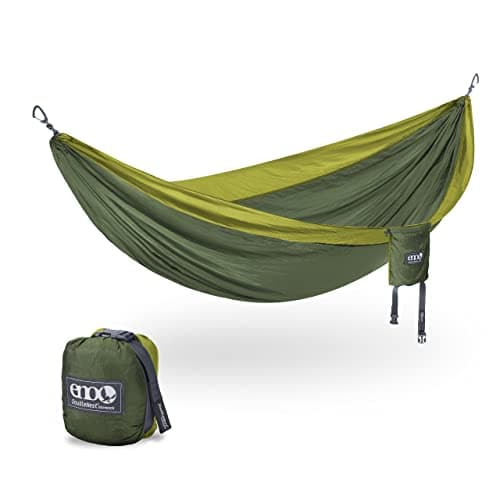
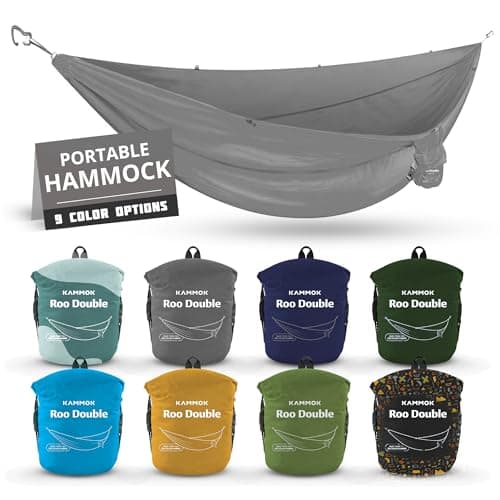
ENO DoubleNest and Kammok Roo Double look nearly interchangeable online, but their dimensions point to different priorities. ENO provides a wider, thicker body. Kammok provides a longer, lighter body with a higher listed capacity.
Our quick picks

The direct comparison
| Decision factor | ENO DoubleNest | Kammok Roo Double |
|---|---|---|
| Dimensions | 9 ft 6 in x 6 ft 2 in | 10 ft x 69.3 in |
| Weight | 19 oz | 17.1 oz |
| Capacity | 400 lb | 500 lb |
| Fabric | 70D FreeWave nylon | 40D recycled GravitasX |
| Connectors | Aluminum carabiners | Kanga Claws |
| Tree straps | Sold separately | Sold separately |
| Better fit | Durable mainstream system | Premium fabric and spec efficiency |
Why Kammok wins on performance
Roo Double is 6 inches longer, nearly 2 ounces lighter, and rated to carry 100 lb more. The longer body gives a tall solo sleeper more room to rotate diagonally, while the 40D fabric packs efficiently and feels less coarse.
Kammok is the better purchase when those gains matter more than fabric thickness and accessory familiarity. Read the full Kammok Roo Double review for the suspension and shelter costs that sit outside the headline weight.
Why ENO can still be the better ownership choice
DoubleNest is nearly 5 inches wider and uses thicker 70D material. Wider fabric provides more diagonal room, and the heavier denier is reassuring for frequent park use, shared lounging, and owners who are not chasing the smallest possible stuff sack. Read the denier figure as a description of yarn thickness rather than a durability rating: our sister site Stitch Authority's ripstop nylon fabric profile sets out what a ripstop label actually establishes, and which claims about coating, weight, and seam behavior still need checking on the specific product.
ENO also has an unusually visible ecosystem of compatible straps, tarps, nets, and insulation. The ENO DoubleNest review explains what is included and what the first overnight build still needs.
Which one should you buy?
Choose by priority
Choose Kammok Roo Double
You are tall, value a softer fabric feel, want the higher 500 lb rating, or care about trimming ounces without moving to a narrow single hammock.
Choose ENO DoubleNest
You value a wider body, thicker fabric, mainstream availability, and an accessory system that is easy to expand over time.
Choose neither
You want one low checkout price that includes suspension, or you need an integrated bug net. The Wise Owl and Grand Trunk options in our camping hammock guide solve those jobs more directly.
Frequently asked questions
Which is more comfortable, ENO DoubleNest or Kammok Roo Double?
Kammok is longer and uses a softer-feeling 40D fabric, while ENO is wider. Tall sleepers may prefer Kammok's length; sleepers who use a pronounced diagonal position may value ENO's extra width.
Do either of these hammocks include tree straps?
No. ENO includes carabiners and Kammok includes Kanga Claw connectors, but both require separately purchased tree straps.
Can either hammock sleep two people overnight?
Both can support many pairs within their listed capacities, but gathered-end hammocks pull two sleepers into the same low point. They are better as two-person loungers or roomy overnight beds for one.
For the budget and integrated-net alternatives, see best camping hammocks. For a complete shelter decision, compare a hammock with a bug net vs a separate net.
Related buying guide
Best camping hammocks 2026: from $24, plus a treeless pick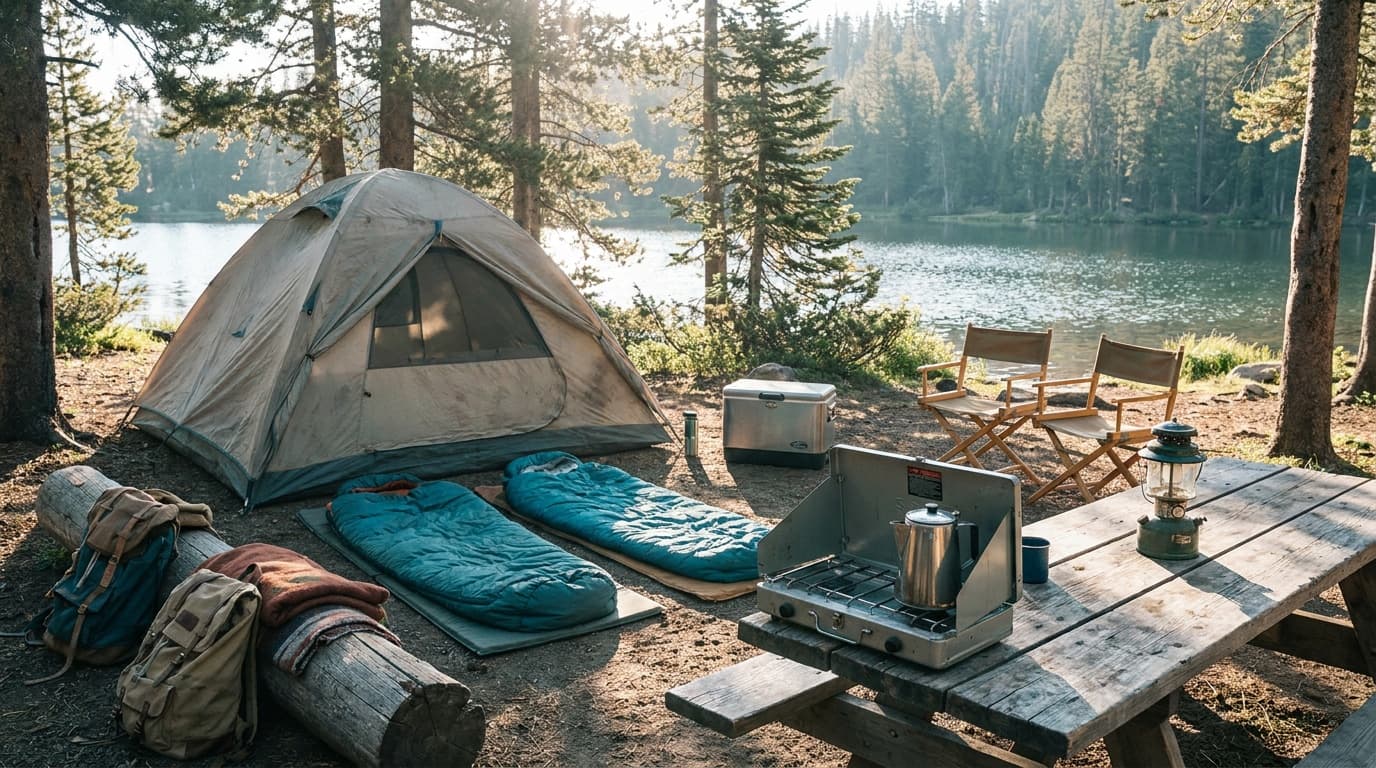
Complete camp loadout
Car-camping starter kit
The first-trip essentials across shelter, sleep, cooking, lighting, seating, and water, with the extras left out.
Build the complete kitRelated guides

Comparison
Hammock vs tent camping: weight, comfort, weather, and cost
Choose a hammock for tree-rich, fair-weather trips or a tent for the most dependable all-terrain shelter. Compare weight, comfort, weather, and cost.
Read guide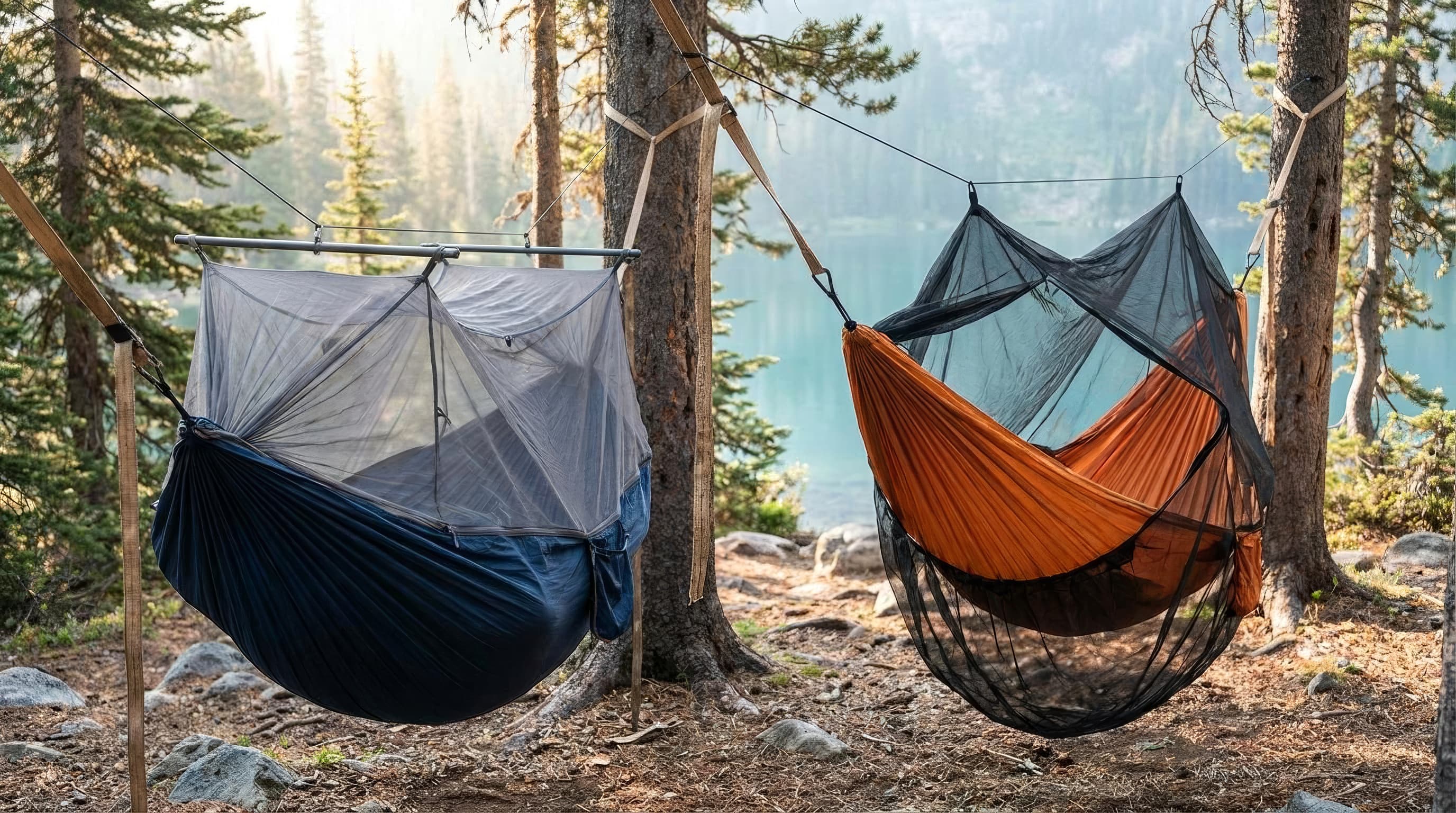
Comparison
Hammock with bug net vs separate net: which system wins?
Integrated nets are faster and harder to forget. Separate nets are modular and replaceable. Compare weight, coverage, weather protection, and cost.
Read guide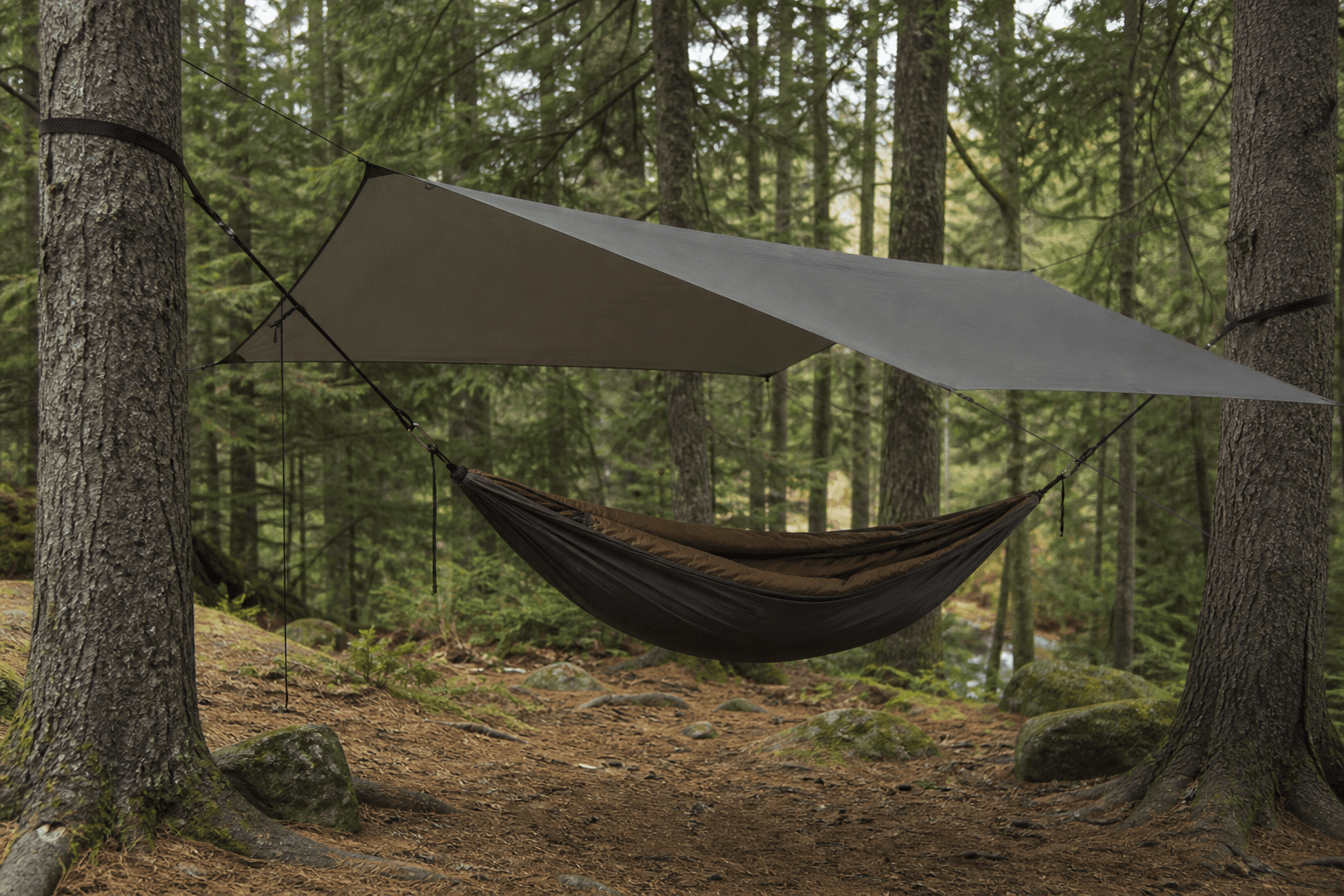
Field guide
How to hang a camping hammock
Get your hammock hang right the first time: the 30-degree strap angle, ideal tree spacing, correct sag, and the diagonal lie that turns a banana-tight hang into a flat, all-night sleep.
Read guide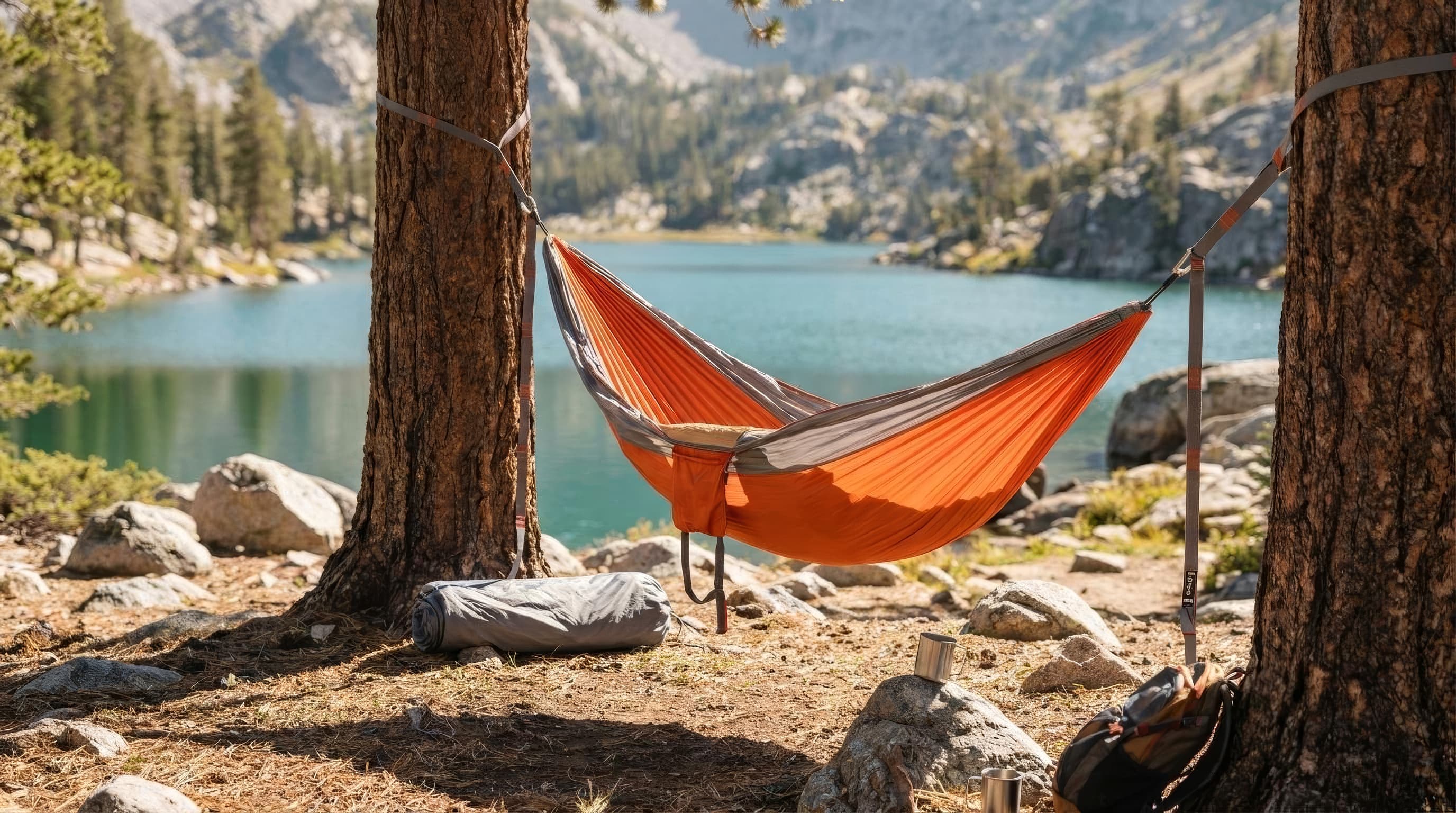
Product review
Kammok Roo Double review: weight, capacity, fabric, and straps
Review the Kammok Roo Double's 17.1 oz weight, 500 lb capacity, 10-foot recycled 40D body, included connectors, missing straps, and value.
Read guideResearch-based guide
2 products comparedUpdated Aug 1, 2026Our recommendations draw on manufacturer documentation, retailer listings, owner feedback, and comparisons with alternatives.
As an Amazon Associate I earn from qualifying purchases. We may earn a commission from links here, at no extra cost to you. How we research →