We may earn a commission from links on this page, at no extra cost to you.
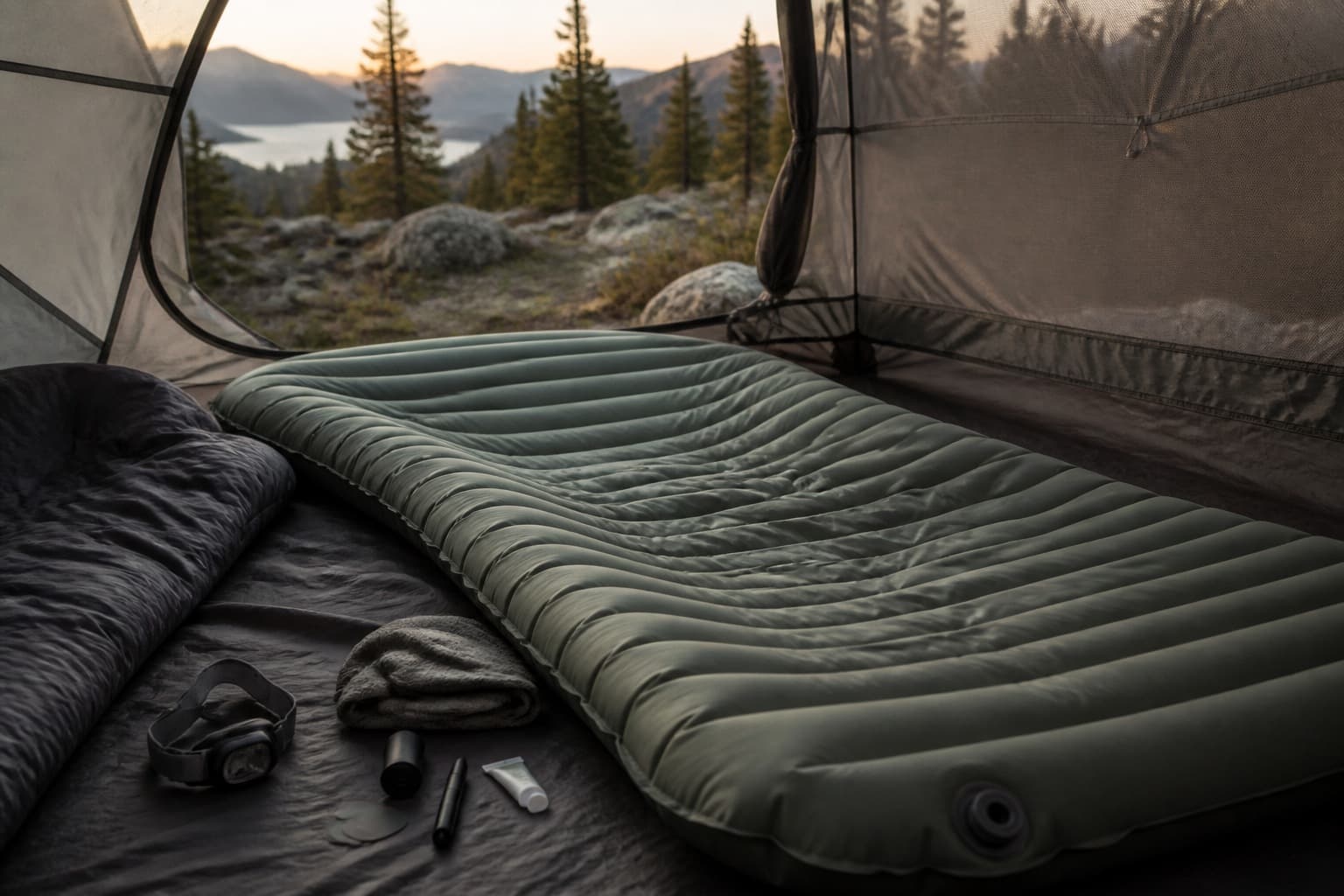
A sleeping pad that feels slightly softer after sunset may not be leaking. Air contracts as the temperature drops, and a pad inflated in warm afternoon air can feel noticeably less firm by midnight. If it continues collapsing, needs air every night, or bottoms out under your hips, assume a valve or fabric leak until you prove otherwise.
Rule out temperature first
Air pressure drops as the air inside the pad cools. This is most obvious when you inflate a pad in direct sun, a warm car, or a heated tent and then sleep through a cold night. The pad should lose some firmness, but it should not become flat.
Inflate it to your preferred firmness after the evening temperature settles. Lie on it for ten minutes, then leave it untouched for an hour. If it feels essentially the same, the earlier softness was likely temperature-related. If it continues losing structure, move to leak detection.
Check the valve before hunting for a pinhole
Open the valve, inspect the sealing surfaces for grit, hair, and folded gasket material, then close it exactly as the manufacturer specifies. A small grain of sand can prevent a valve from seating. Make sure a two-stage valve has both caps secured.
Bring your ear close to the valve while putting gentle pressure on the pad. A faint hiss identifies the problem quickly. If the valve body is loose, cracked, or separating from the fabric, use the brand's valve-repair instructions rather than covering the assembly with general-purpose glue.
Find a fabric leak
How to locate a sleeping-pad leak
Inflate the pad
Make it firm enough to create pressure without overinflating it.
Start with likely areas
Inspect the valve, welded seams, underside, and the section beneath your hips and shoulders.
Use bubbles
Apply a thin film of mild soapy water or submerge one section at a time. Escaping air produces growing bubbles.
Mark the spot
Circle the puncture with a marker or a small piece of tape before drying the pad.
Check for a second leak
One thorny campsite can create more than one puncture. Continue inspecting after finding the first.
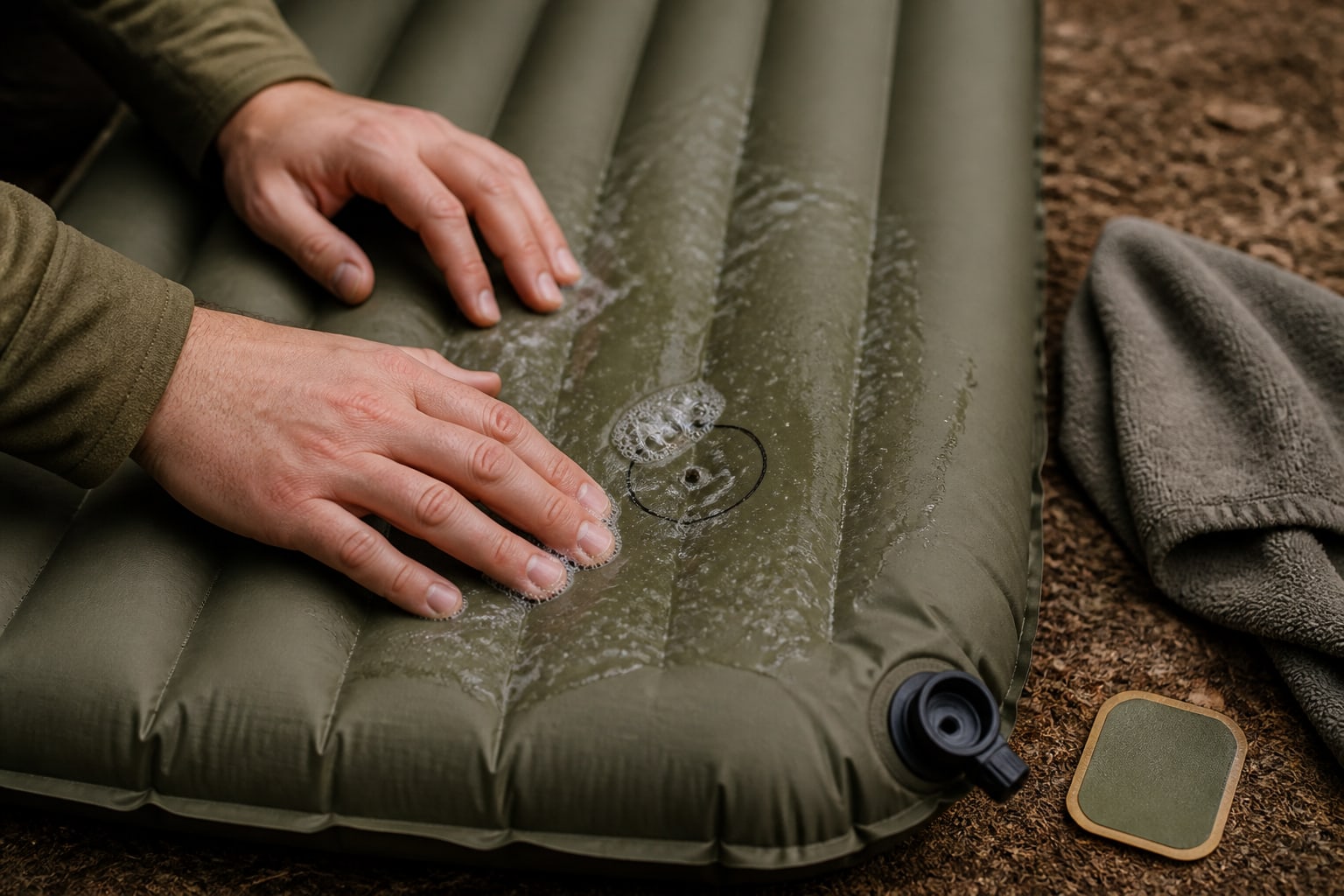
If you cannot submerge the full pad, spray or wipe soapy water onto small sections. Flex welded seams gently while watching for bubbles. Very slow leaks can take several seconds to show themselves.
Patch it so the repair lasts
Cleanliness matters more than patch size. Therm-a-Rest says poor surface preparation is a frequent reason repairs fail. Remove dirt and body oils with the cleaning method specified by the pad manufacturer, then let the area dry fully.
Use the patch and adhesive designed for the pad's fabric. Field patches are intended to get you through a trip; a permanent kit may require more curing time at home. Keep pressure off the repair until it has cured according to its instructions.
When the pad should be replaced or professionally repaired
A clean pinhole is a normal repair. Multiple seam failures, a separating valve base, widespread coating failure, or a large internal bulge are different. A bulge usually means an internal baffle has failed; an exterior patch will not restore that structure.
Check the manufacturer's warranty or repair service before throwing the pad away. NEMO and Therm-a-Rest both provide repair guidance, and some failures may qualify for service depending on age and cause.
If reliability matters more than minimum packed size, self-inflating and closed-cell foam designs remove some failure points. Our sleeping-pad guide explains the tradeoffs. The NEMO Tensor All-Season review covers a lightweight inflatable option, while sleeping-pad R-values addresses warmth rather than air retention.
Prevent the next puncture
Clear sharp sticks, thorns, and angular stones without disturbing the campsite more than necessary. Keep the pad entirely inside the tent, and use a footprint that does not extend beyond the tent floor. Never drag an inflated pad across the ground or use it as a camp chair unless the manufacturer explicitly allows it.
At home, store the pad dry with the valve open when the manufacturer recommends doing so. Moisture trapped inside can encourage mold, while tight long-term compression can be hard on self-inflating foam.
Why does my sleeping pad get softer when it gets cold?
The air inside contracts as its temperature falls, lowering pressure. Top the pad up after the evening cool-down. If it then stays stable, it probably is not leaking.
Can I use duct tape to repair a sleeping pad?
Duct tape can be a temporary emergency cover, but its adhesive often leaves residue and may not hold on coated pad fabric. Use the manufacturer's field patch whenever possible and complete a permanent repair at home.
How do I find a very slow sleeping-pad leak?
Inflate the pad firmly and inspect it in sections with mild soapy water or clean-water submersion. Watch each valve, seam, and high-wear area for slowly growing bubbles rather than expecting an obvious hiss.
Sources: Therm-a-Rest repair guidance and NEMO sleeping-pad cleaning and repair guidance.
Recommended gear
Our current top picks from the Best sleeping pads for camping in 2026 guide, if you are ready to buy.

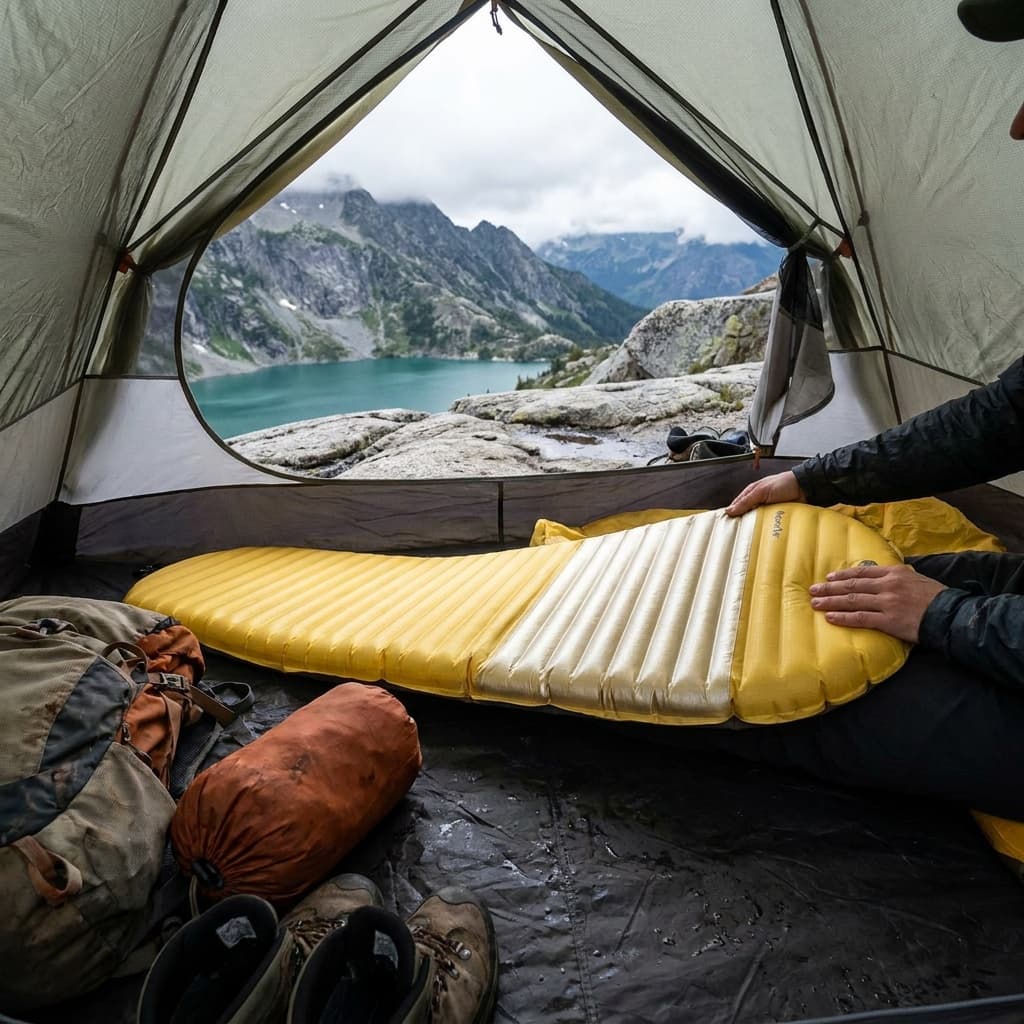
At 13 oz with a 4.5 R-value, the NeoAir XLite NXT has one of the tightest warmth-to-weight ratios available and packs to roughly the size of a 1-liter water bottle. The NXT generation cut noise by 83% versus its predecessor through revised Triangular Core Matrix construction, addressing the one complaint that had followed the XLite line for years.
Best for: Weight-conscious backpackers and thru-hikers who need four-season-adjacent warmth in the smallest, lightest package possible.
- Best-in-class warmth-to-weight ratio: 4.5 R-value at just 13 oz
- Packs to 1-liter bottle size, the smallest footprint among insulated 3-inch air pads
- Still slightly louder than the NEMO Tensor on movement, per independent reviewers
- Type
- Air pad (inflatable)
- R-Value
- 4.5
- Weight
- 13 oz (370 g), Regular
- Packed Size
- 9 x 4.1 in
- Thickness (inflated)
- 3 in
- Dimensions (inflated)
- 72 x 20 in, Regular

The Trail Pro uses StrataCore construction, pairing insulating compressible foam with air pockets to deliver mattress-like stability and a 4.4 R-value without requiring a pump sack or lung power. It is substantially heavier than air-only pads at the same price, but owners who prioritize a stable, no-fuss sleep surface rate it among the most comfortable self-inflating options in this price range.
Best for: Car campers and comfort-focused backpackers who want solid three-season warmth and a stable, firm sleep surface without learning to manage an air pad valve system.
- Self-inflates on unroll with no pump required: open the valve, lay it out, done
- 4.4 R-value covers three seasons; foam core eliminates the instability of pure air pads
- At 1 lb 13 oz, it is nearly double the weight of the NeoAir XLite NXT for the same warmth rating
- Type
- Self-inflating (foam + air)
- R-Value
- 4.4
- Weight
- 1 lb 13 oz (822 g), Regular
- Packed Size
- 11 x 8.8 in
- Thickness (inflated)
- 3 in
- Dimensions (inflated)
- 72 x 20 in, Regular

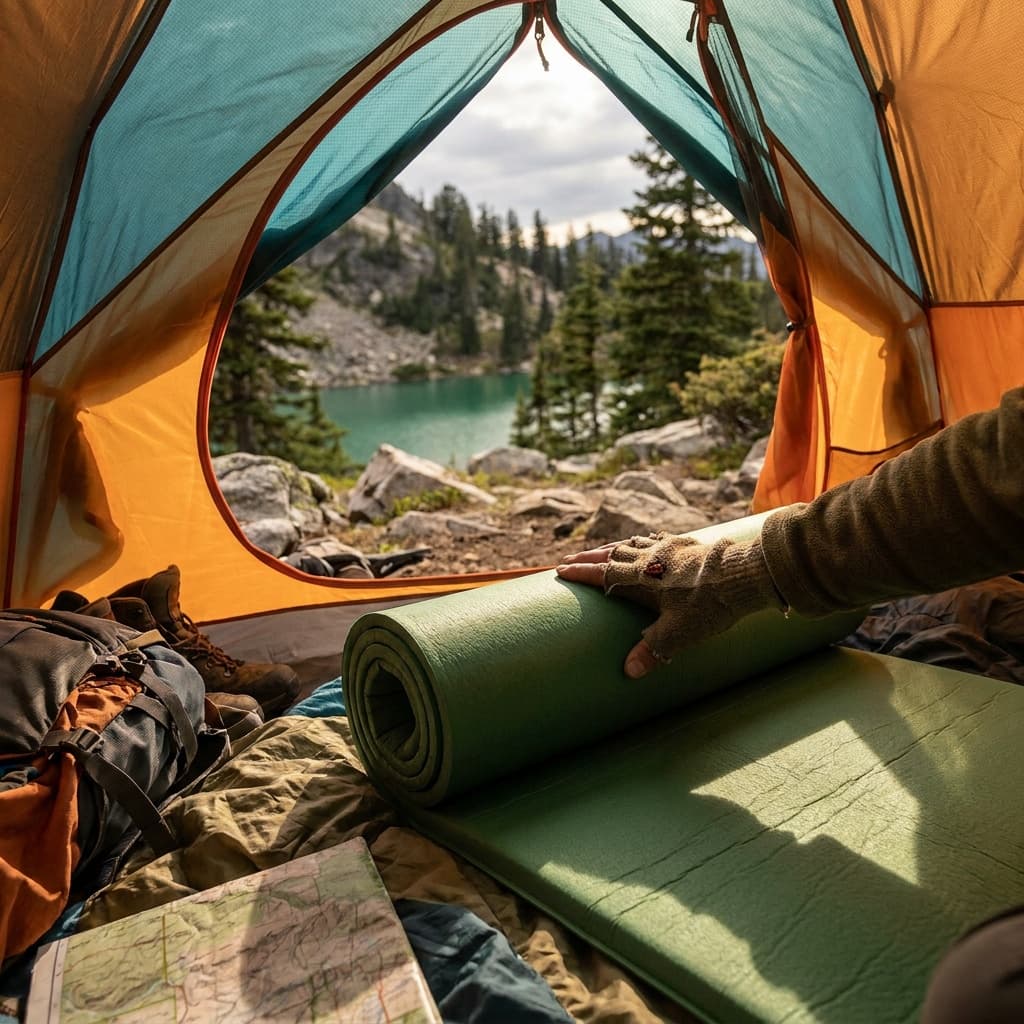
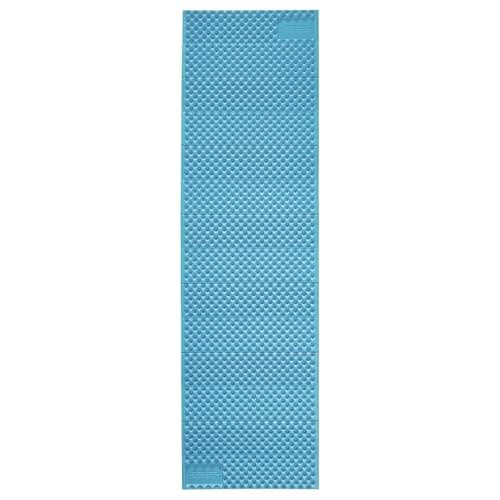
The Z Lite Sol is a closed-cell foam pad with a ThermaCapture reflective surface that adds roughly 20% warmth over the standard Z Lite, accordion-folds for fast setup, and is effectively indestructible. The trade-off is a 2.0 R-value that limits it to warm-weather camping on its own and less cushion than any inflatable option.
Best for: Warm-weather campers and backpackers who want a bulletproof, no-inflation pad for summer trips, or anyone building a layered cold-weather system by combining it with a second insulating pad.
- Zero inflation and zero failure modes: unfold and lie down, no valves or puncture risk
- ThermaCapture reflective coating boosts warmth by about 20% over standard foam at no weight penalty
- R-value of 2.0 is adequate only for warm-weather camping above roughly 40 degrees Fahrenheit without a layered setup
- Type
- Closed-cell foam
- R-Value
- 2.0
- Weight
- 14 oz (397 g), Regular
- Packed Size
- 20 x 5.5 x 5 in (accordion-folded)
- Thickness
- 0.75 in
- Dimensions
- 72 x 20 in, Regular
Keep going
Complete loadoutCamp sleep systemFive coordinated pieces that solve shelter, insulation, cushioning, head support, and light for nights outside.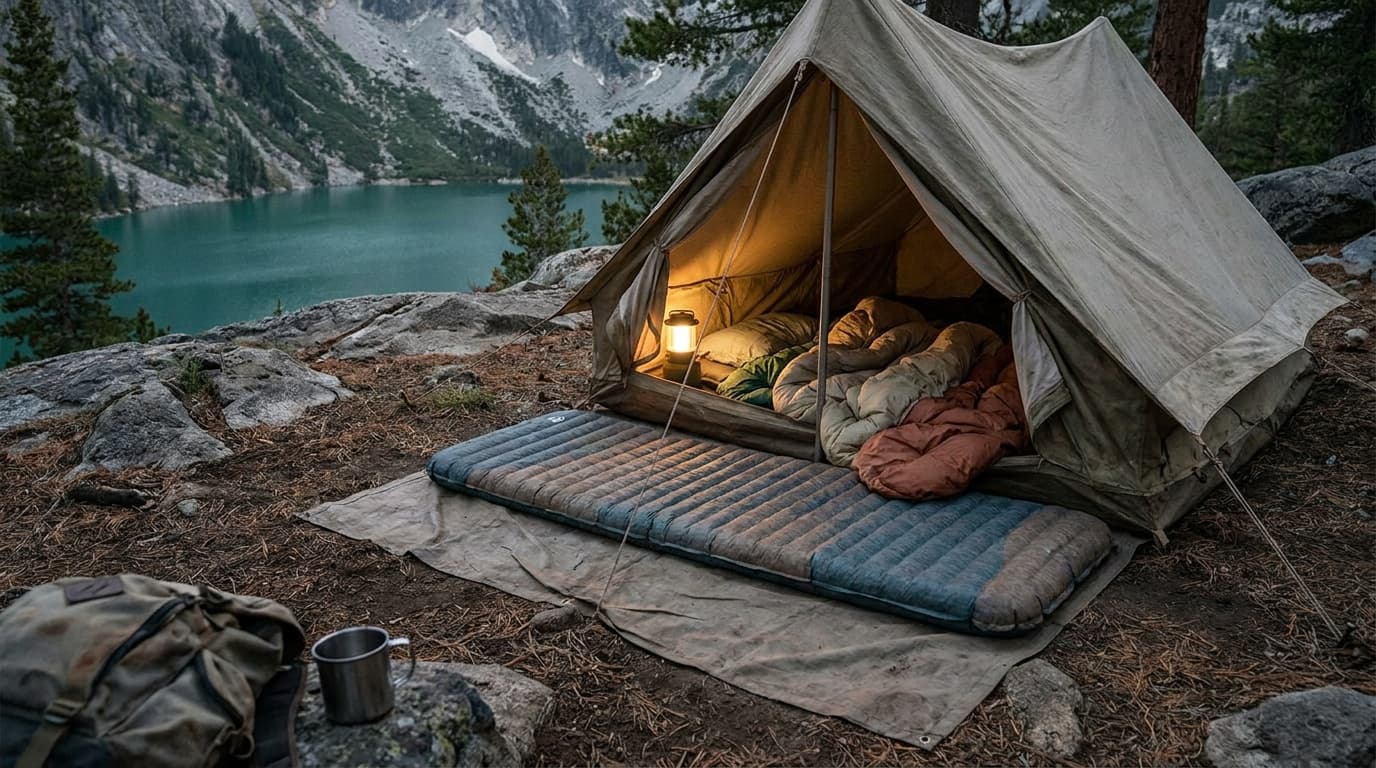

Researched, not hands-on tested
Updated Aug 19, 2026Our recommendations draw on manufacturer documentation, retailer listings, owner feedback, and comparisons with alternatives.
As an Amazon Associate I earn from qualifying purchases. We may earn a commission from links here, at no extra cost to you. How we research →