

We may earn a commission from links on this page, at no extra cost to you.
Choose memory foam when surface comfort, quiet resistance, and immediate use matter more than bag space. Choose an inflatable when the pillow must disappear into a personal item and you want to adjust firmness on every trip.
The short comparison
| Question | Memory foam | Inflatable |
|---|---|---|
| Smallest packed size | Poor | Excellent |
| Surface feel | Plush and quiet | Taut and air-supported |
| Firmness adjustment | Fixed | Excellent |
| Setup | None | Inflate and tune |
| Failure mode | Compression and wear | Puncture or valve leak |
| Cleaning | Usually removable cover | Usually hand wash complete pillow |
| Typical weight | Medium-high | Very low |
| Best buyer | Comfort-first traveler | Space-first traveler |
Why memory foam feels more settled
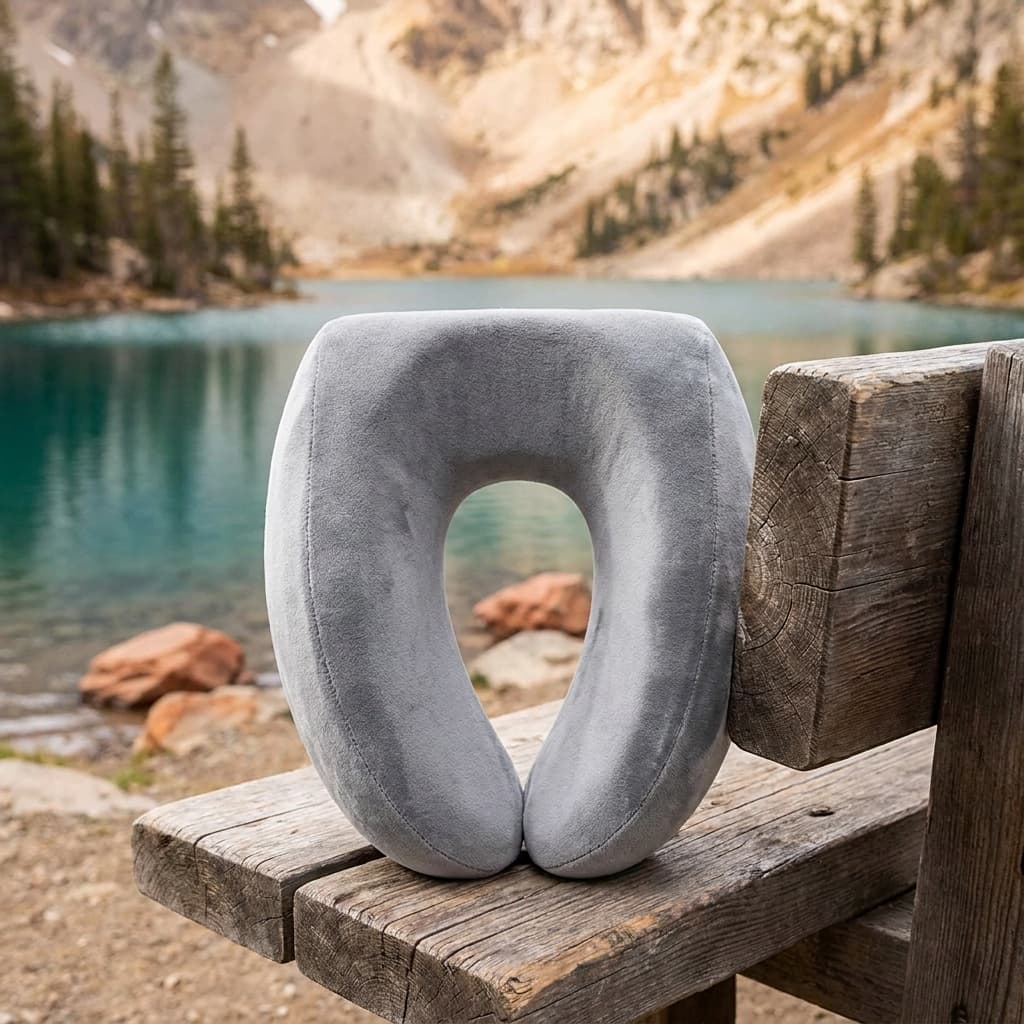
Memory foam compresses locally beneath the head and rebounds slowly. Movement does not push air toward another part of the pillow, so the support feels quieter and less reactive. It is also ready as soon as the traveler sits down.
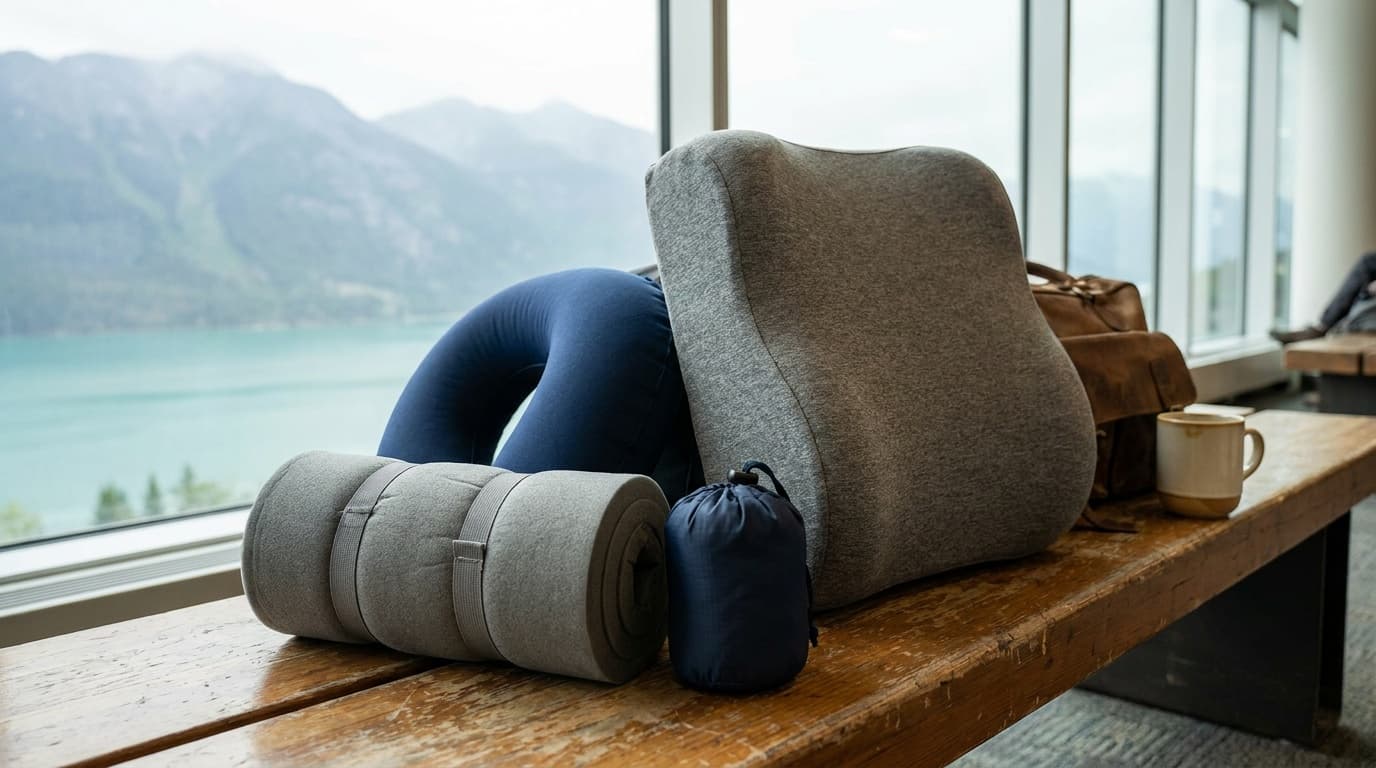
The cost is volume. A compression sack can remove air between the foam cells, but the material needs enough structure to rebound. Even compressed foam occupies a much larger bundle than an empty bladder.
MEMORY FOAM PICK
Travelrest Nest Ultimate Memory Foam Travel Pillow
Best for: Long-haul flyers who want substantial memory-foam support and a flatter rear profile, and who can spare more bag volume than an inflatable requires.
Kit Score 8.3/10 · Check current price
- Flat rear profile avoids adding a thick foam roll between the head and seat
- High side walls and non-slip backing create steadier support than a loose horseshoe pillow
- No seat strap, so the pillow can still move against a slick headrest
The Travelrest Nest improves the traditional foam form with a flat back, high side walls, and non-slip backing. It is a good representation of what foam does well and what it cannot hide in a bag.
Why inflatable wins the packing contest
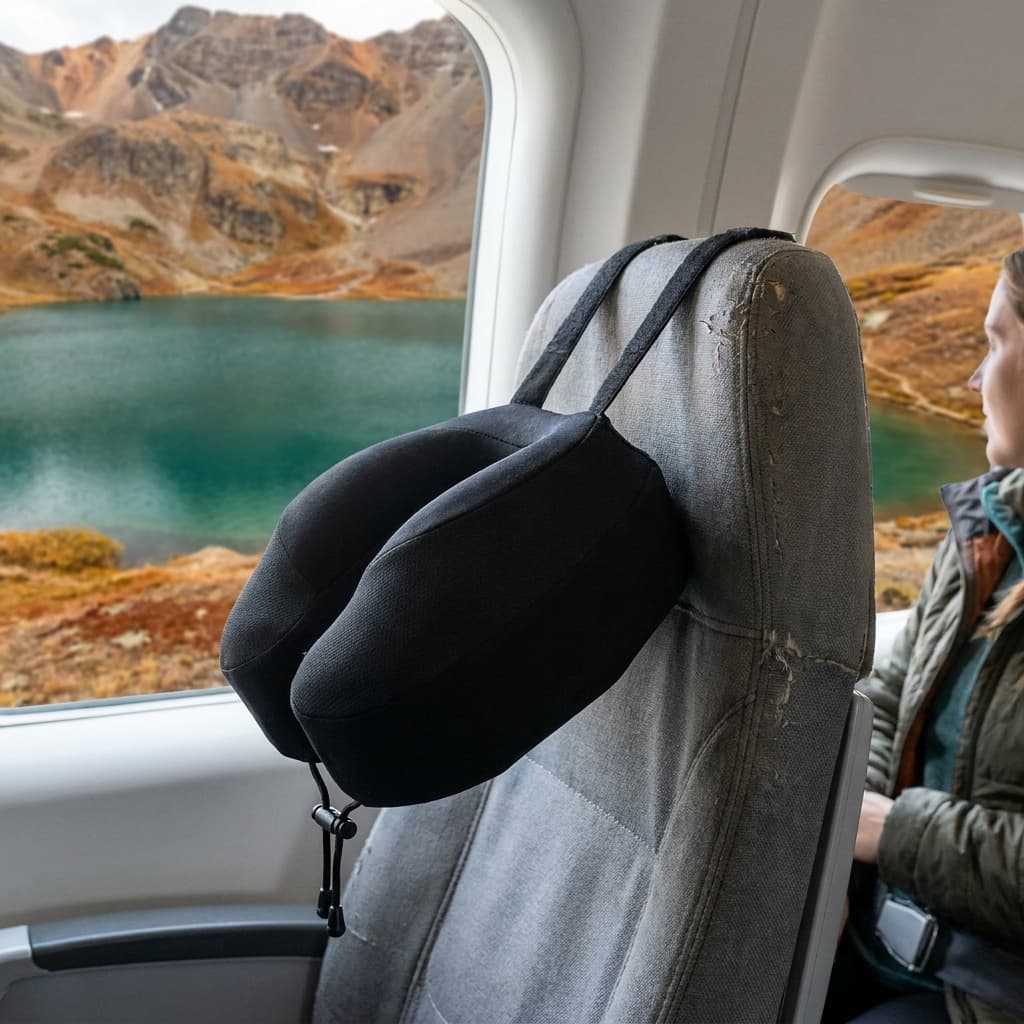
An inflatable carries only its thin bladder, face fabric, valve, and sack after the air is released. The Sea to Summit Aeros Premium Traveller packs to 4 by 3 by 2 inches at 3.3 oz including its sack.
Air pressure also creates continuous firmness adjustment. A traveler can underinflate for a softer cradle or add pressure for more lift. Foam density is fixed at purchase.
Shape still matters more than the material label
A thick round foam tube behind the neck can create worse geometry than a well-shaped inflatable. A flat-back foam pillow can feel more natural than either. Compare the rear profile, side height, chin closure, and how the pillow relates to the seat.
The Aeros narrows behind the neck and enlarges its side arms. Travelrest flattens the rear and raises its foam sides. Those are design decisions. "Foam" and "inflatable" only describe the support medium.
Durability and ownership
Foam can soften, take a set if stored compressed, or degrade after repeated moisture and heat exposure. Keep it outside the compression sack between trips and never wash the core unless the manufacturer explicitly permits it.
An inflatable can puncture or develop a valve leak. Keep pins, grooming tools, and sharp charger edges away from the bladder. Do not overinflate before cabin pressure changes. A reputable manufacturer and careful storage matter more than adding material weight.
Cleaning
Many foam pillows use a removable machine-washable or hand-washable cover. The core stays dry. Verify the exact instruction: Travelrest currently specifies hand washing for its removable cover, while Cabeau and Ostrichpillow permit machine washing of their covers.
Sea to Summit says to close the Aeros valve, hand wash it with warm water and gentle kneading, then air dry. A one-piece inflatable should never be machine washed by assumption.
Choose from the constraint
Pick the material
Your personal item is already full
Choose inflatable. The packed-size advantage is overwhelming.
You hate setup after boarding
Choose foam. It is ready immediately and needs no pressure tuning.
You cannot predict preferred firmness
Choose inflatable and adjust it in the seat.
You want a plush, quiet surface
Choose memory foam and accept the storage burden.
You use a pillow only occasionally
Choose from price and fit; a budget foam pillow may be simpler than maintaining an inflatable.
Frequently asked questions
Are inflatable travel pillows comfortable?
They can be, especially when slightly underinflated and shaped with a narrow rear section. They do not feel identical to memory foam. The best choice depends on whether adjustable lift or a plush settled surface matters more.
Will an inflatable pillow burst on a plane?
Normal cabin use should not burst a properly used pillow. Do not inflate it rock-hard, leave room for pressure adjustment, and follow the manufacturer's instructions. Protect the bladder from sharp objects in the bag.
Can memory foam travel pillows stay compressed?
Use the compression sack for travel, not long-term storage. Leaving foam compressed can slow rebound and may shorten its useful life. Store it open and dry between trips.
Which type is better for a long-haul flight?
Foam is generally easier to settle into for many hours, while inflatable is more likely to make the trip when bag space is tight. A pillow left at home provides no support, so the packing constraint is part of performance.
Compare exact models in best travel pillows, then plan the rest of the sleep setup with how to sleep on a plane.
Related buying guide
Best travel pillows for flights in 2026: 6 picks by sleep styleMake the next decision
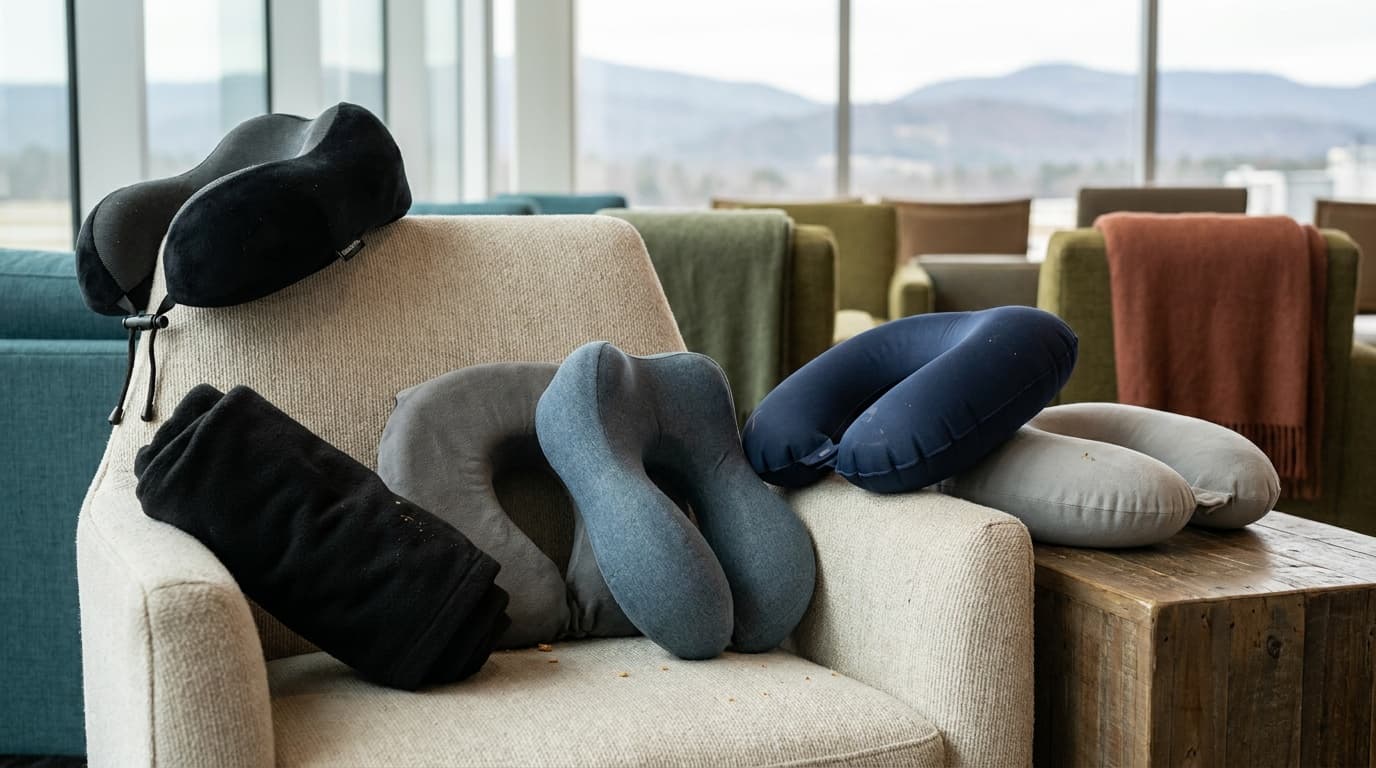
Complete travel loadout
Long-flight comfort kit
Five packable pieces for neck support, darkness, quieter cabins, leg comfort, and more consistent sleep away from home.
Build the complete kitRelated guides
Comparison
Trtl vs Cabeau: which travel pillow is better?
Buy Trtl for 4.7 oz packability and one-sided support or Cabeau for memory foam, 360-degree support, and compatible-seat anchoring.
Read guide
Field guide
How to sleep on a plane: what actually works
A practical system for sleeping on a plane: choose the seat, control light and noise, support your neck, time caffeine, and protect the sleep window.
Read guide
Field guide
How to prevent jet lag: the evidence-based guide
Light exposure, sleep shifting, melatonin timing, hydration and the right gear: a practical system to reduce jet lag on your next long-haul flight.
Read guide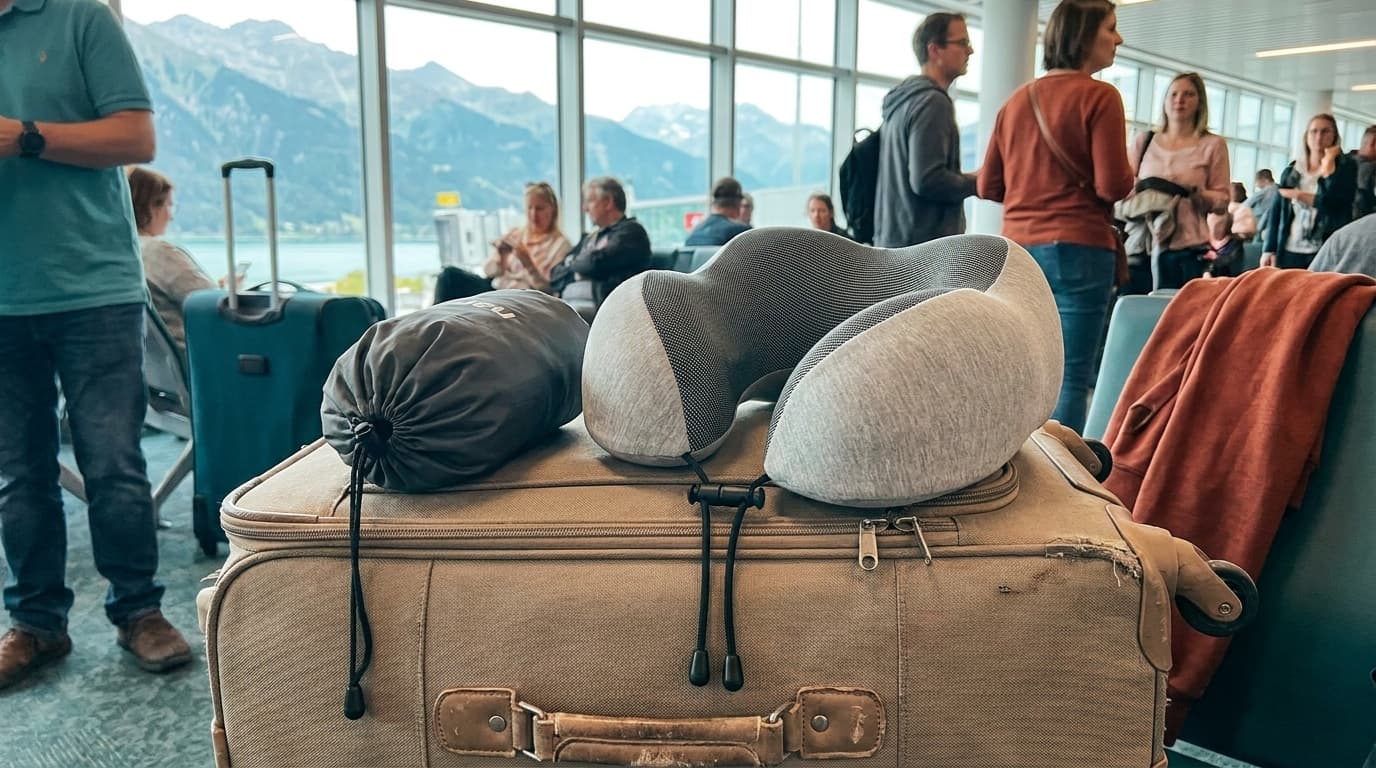
Product review
napfun Neck Pillow review: budget memory foam, honestly
Kit Score 7.7/10. napfun delivers shaped memory foam, raised sides, a washable cover, and a pouch at a low price. Fit remains the compromise.
Read guideResearch-based guide
4 products comparedUpdated Jul 29, 2026Our recommendations draw on manufacturer documentation, retailer listings, owner feedback, and comparisons with alternatives.
As an Amazon Associate I earn from qualifying purchases. We may earn a commission from links here, at no extra cost to you. How we research →
Top picks
Related buying guide
Best travel pillows for flights in 2026: 6 picks by sleep style