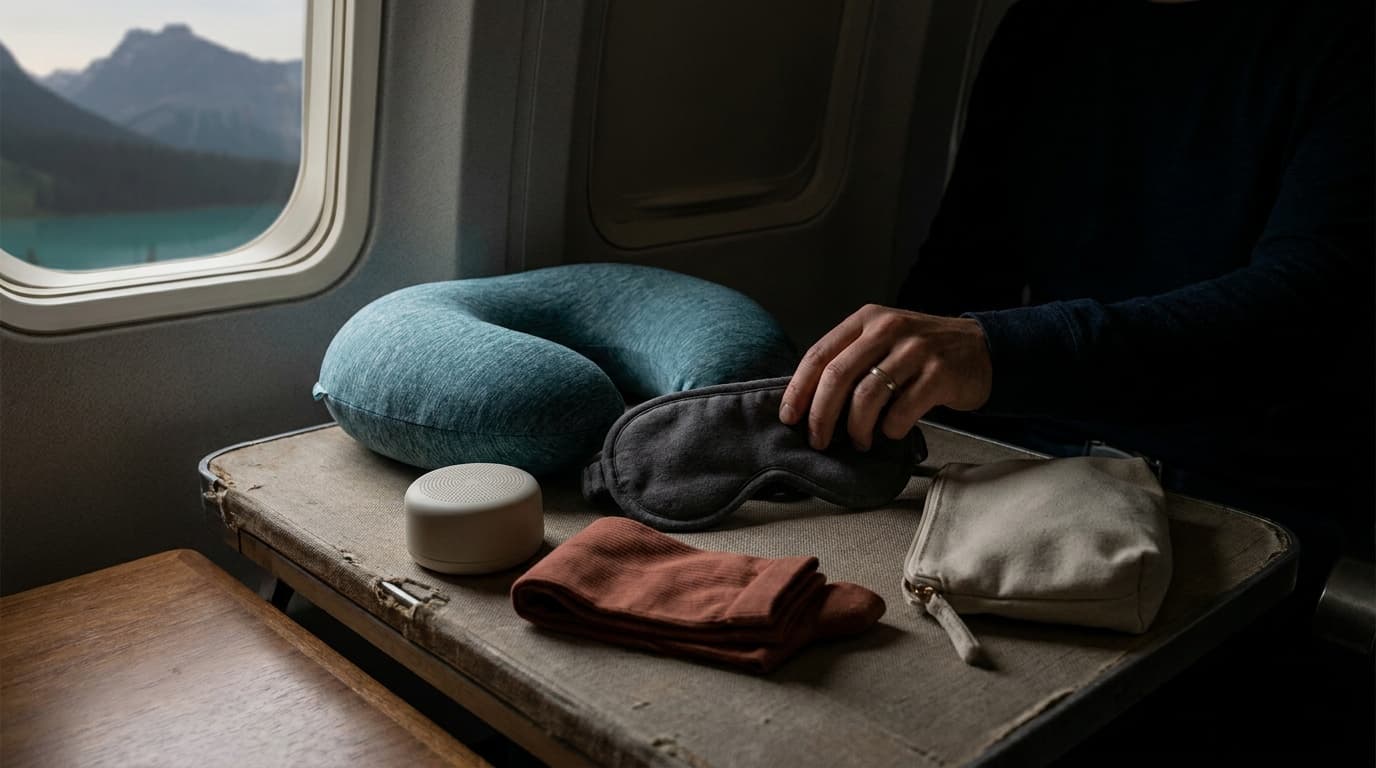
Sleeping on a plane is genuinely hard, and the environment is working against you from the moment the door closes. Here is what the research says, translated into decisions you can act on before and during your next long-haul flight.
Why sleeping on a plane is so hard
The cabin environment stacks several obstacles on top of each other.
That 85 dB ambient roar, cited by the American Speech-Language-Hearing Association as the threshold above which prolonged exposure risks hearing damage, is the primary acoustic barrier. The altitude effect is subtler but real: cabin pressurization to the equivalent of 6,000–8,000 feet reduces blood oxygen saturation by up to 4.4 percentage points. A New England Journal of Medicine study and subsequent PMC reviews confirm this hypobaric hypoxia fragments sleep and compounds fatigue, independent of noise or discomfort.
Seat pitch and recline losses matter too. Research cited by National Geographic shows sleep quantity and quality rise as recline angle increases, so losing two inches of recline travel over the past decade directly degrades sleep quality for economy passengers.
None of this means sleep is impossible. It means the countermeasures need to address real causes, not just feel reassuring.
Seat selection: where you sit changes what you can do
The single highest-leverage pre-flight decision is seat choice.
Window seat, front half of the cabin. The window gives you a fixed surface to lean against without a seatmate waking you every hour. The forward cabin sits ahead of the wing engines, which meaningfully reduces engine noise, and well away from the rear galley and lavatory traffic that creates constant light and movement.
Avoid bulkhead rows (no under-seat storage, often near galleys or lavatories), rear galley adjacents, and any seat marked as limited recline or near a bassinet position.
The aisle exception: if you know you need the bathroom frequently on long flights, the aisle eliminates awkward climb-overs that cost you and your seatmates sleep. For most people optimizing for sleep on a long-haul, window in the first third of economy is the right call. If you sleep on your side, the seat also changes which pillow works: our guide to travel pillows for side sleepers is organized by window, middle, and aisle.
Blocking noise: layer, do not choose
Most travelers pick either foam earplugs or ANC headphones. The research argues for both.
Foam earplugs with a noise reduction rating (NRR) of 33 dB outperform typical consumer ANC headphones, which deliver 15–25 dB of reduction concentrated in low frequencies. Cabin noise at 85 dB contains significant mid- and high-frequency content: crying infants, trolley wheels, conversation. Foam earplugs handle those frequencies more effectively than most ANC hardware.
Layering foam earplugs under over-ear ANC headphones like the Bose QuietComfort Ultra can deliver approximately 45 dB of total reduction, bringing an 85 dB cabin closer to the 60–65 dB range where sleep becomes realistic for most people. That combination costs very little if you already own ANC headphones and a pack of foam earplugs. Make sure your neck pillow leaves room for the earcups, too: our guide to travel pillows that work with over-ear headphones shows which shapes stay under the cup.
Foam earplugs with NRR 33 outperform most consumer ANC headphones on mid- and high-frequency noise. Layer both for roughly 45 dB total reduction.
Neck support: shape matters more than brand
A neck pillow only helps if its geometry fits both your body and the seat. A thick, fully rounded section behind the neck can push the head away from the headrest. A flat rear profile, directional side support, or adjustable air chamber can reduce that conflict.
Start with the direction your head actually moves. If it falls forward or changes sides, the Cabeau Evolution S3 adds high foam walls, a front clasp, and straps for a compatible headrest. The four chin-support designs are compared in travel pillows that stop your head falling forward. If you consistently lean toward a window or one shoulder, the Trtl Original provides one-sided structure with much less packed bulk. A strict one-bag traveler may get more use from an inflatable that actually fits the bag.
For a detailed comparison, see the six support architectures in best travel pillows, the direct Trtl vs Cabeau decision, and memory foam vs inflatable travel pillows.
Light and temperature
Cabin lights go off on long overnight flights, but ambient light does not disappear: screens across the aisle, lavatory indicator lights, early window openers. A contoured, compression-fit sleep mask like the Nidra Contoured Sleep Mask blocks light more completely than a flat cloth one because it maintains a seal against the face rather than resting on the eyelids.
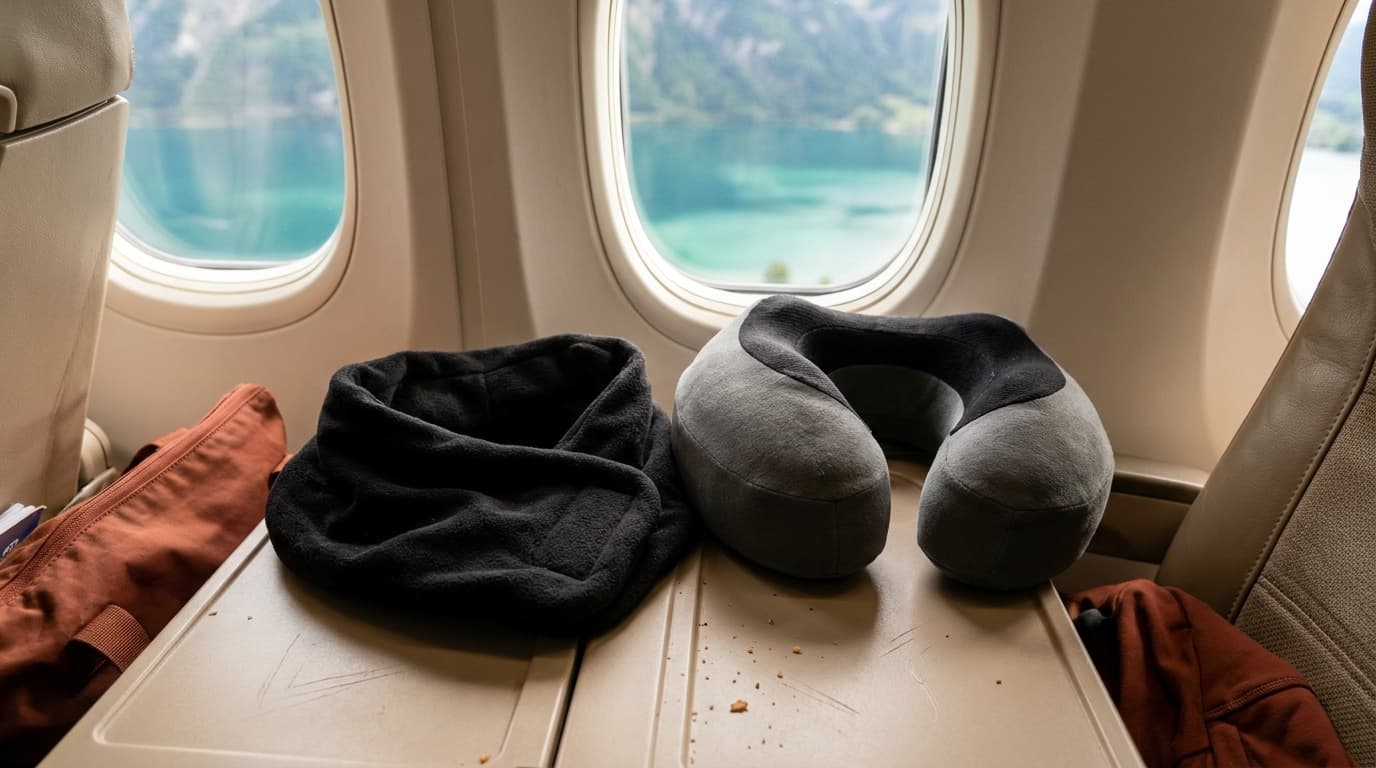
Temperature is worth planning for. Cabin temperature typically runs 71–75 degrees F during service, then drops after lights-out. The body's ideal sleep temperature range is 65–68 degrees F, so the cabin runs warmer than ideal during the lead-up to sleep and can swing cold once crew activity drops. A light packable layer (travel scarf, hoodie) handles the cold swing; the sleep mask handles the light. If you fly long-haul often, one of the best travel blankets packs down small and is warmer than the thin synthetic blanket the airline hands out.
Caffeine and alcohol timing
Cut caffeine at least 8 hours before the sleep window you are targeting on the plane, not 8 hours before landing. If your flight departs at 9 pm and you want to sleep by 11 pm, your last coffee should be no later than 3 pm. A 400 mg dose within 12 hours of sleep shows measurable impact; even a 100 mg dose within 4 hours measurably cuts sleep efficiency.
Alcohol deserves equal attention. It may feel like a sedative, but it fragments sleep architecture and worsens breathing, particularly at altitude. Skip it on any flight where sleep is the goal.
Hydration helps. Cabin air at altitude is extremely dry. Boarding well-hydrated and drinking roughly 8 oz of water per hour in flight supports circulation and reduces the fatigue that dehydration compounds on top of altitude effects.
Melatonin: when it helps and when it does not
A Cochrane Database systematic review found melatonin at 0.5–5 mg significantly reduces jet lag when taken close to the destination's local bedtime (10 pm to midnight at the destination) on eastbound flights crossing five or more time zones. Eight of ten trials in that review confirmed the effect. The critical variable is timing to destination bedtime, not your home-clock time.
Lower doses (0.5–1 mg) are effective for circadian timing; higher doses up to 5 mg also induce sleep faster. Doses above 5 mg show no added benefit. Start the night of travel and continue for 3–5 nights post-arrival for full jet lag suppression.
For westbound flights or short time-zone crossings, melatonin's value is modest. Its mechanism is circadian resetting, not sedation.
A practical pre-flight checklist
How to set up your flight for sleep
Book the right seat
Window seat, front half of the cabin, away from bulkheads and lavatory rows. Check SeatGuru or the airline's own seat map for legroom and recline flags.
Time your caffeine cutoff
Count 8 hours back from your target sleep window on the plane. Note the time and stop there, regardless of how long until boarding.
Pack sleep gear in your personal item
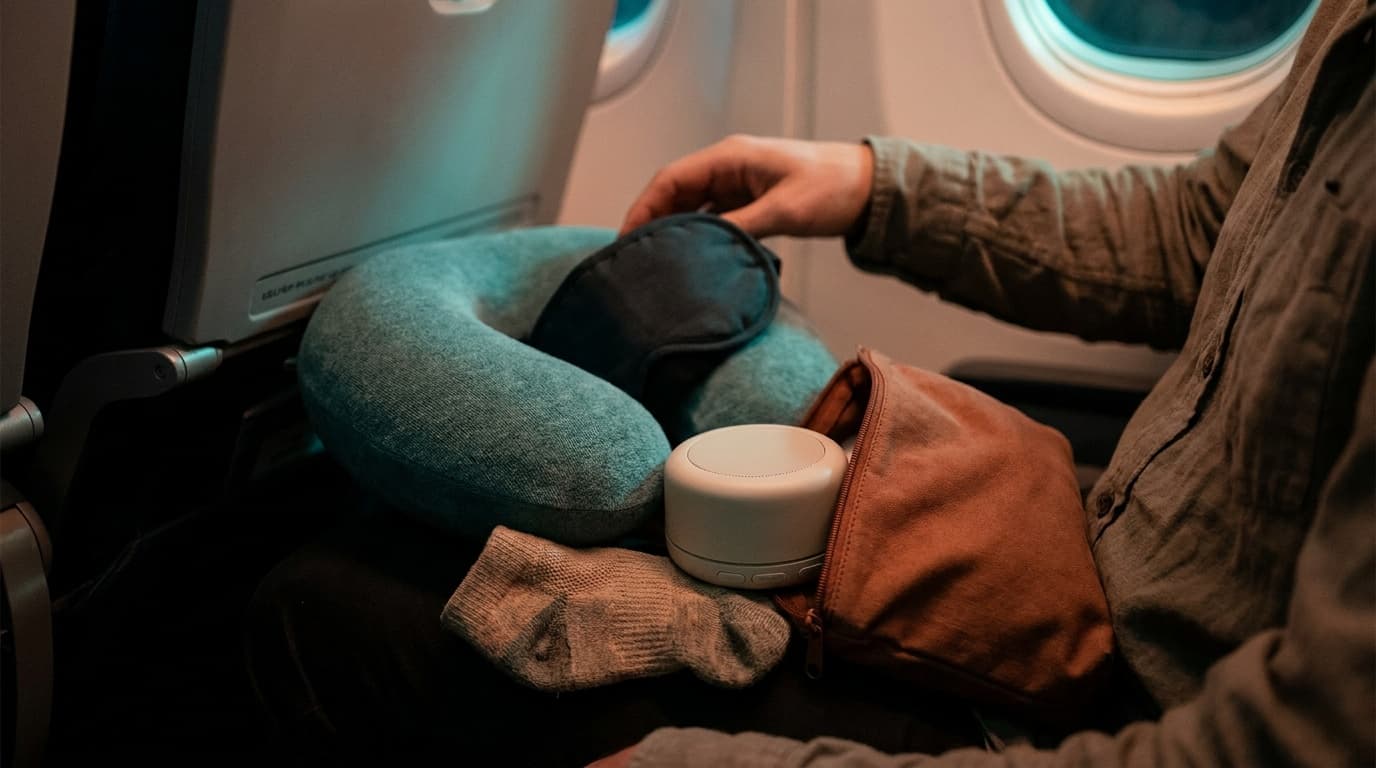
Foam earplugs (NRR 33), contoured sleep mask, neck pillow with lateral support, compression socks, and a light layer. All should be reachable from your seat.
Pre-hydrate before boarding
Arrive at the gate already well-hydrated. Order water, not alcohol or a second coffee, after takeoff.
Set your melatonin alarm
If you are crossing five or more time zones eastbound, calculate 10 pm at your destination in local time. Set a reminder to take 0.5–5 mg at that moment, wherever you are in the flight.
Layer your noise blocking
Insert foam earplugs first, then put on ANC headphones over them. Use a sleep playlist or white noise, or simply leave the ANC running with nothing playing.
Control your window and light
Close your window shade before other passengers do. Put on your sleep mask when cabin lights dim. Avoid looking at your phone screen after your target sleep window opens.
Compression socks earn their place
A Journal of Physiological Anthropology study found that wearing feet-warming socks in bed added 32 minutes of sleep and cut nighttime awakenings by 7.5 times compared to not wearing them. The mechanism is peripheral vasodilation: warming the feet draws blood away from the core and accelerates the drop in core temperature that signals sleep onset. Compression socks on a flight address circulation and the DVT risk of prolonged immobility, so the sleep benefit comes alongside a safety benefit. Pack them.
Window or aisle seat for sleeping?
Window, almost always. You get a solid surface to lean against, control over the window shade, and you will not be woken every time a seatmate needs to get up. The one exception: if you know you need the bathroom frequently, the aisle avoids the awkward climb-over that costs you sleep too. For most people optimizing for sleep on a long flight, window in the front half of the plane is the right call. Side sleepers stuck in a middle or aisle seat should pick a pillow that holds the lean without a wall; see travel pillows for side sleepers, seat by seat.
Do neck pillows actually help, or are they mostly airport theater?
They can help when the design matches the traveler's body, normal lean, and seat. Check the rear profile, side height, chin support, and whether the pillow relies on a compatible headrest. A soft generic horseshoe is not equivalent to a directional frame, a seat-anchored foam pillow, or a firmness-adjustable inflatable.
Should I take a sleep aid or melatonin on a long flight?
Melatonin is the lowest-risk option with real evidence behind it. The Cochrane review supports 0.5–5 mg taken close to the destination's local bedtime on eastbound crossings of five or more time zones. For in-flight sleep on a single-time-zone or westbound leg, melatonin's value is modest. Prescription sleep aids carry real risks on flights: confined seating, DVT risk, and impaired response to emergencies mean most travel medicine doctors advise against them. If you are considering a prescription aid, discuss it with your doctor with those specific risks on the table.
For more on what to bring, see our full travel gear guides. Questions about how we evaluate gear and research sources are covered at how we research and rate.
Recommended gear
Our current top picks from the Best travel pillow 2026: 6 neck pillows for flights guide, if you are ready to buy.
CABEAU
Cabeau Evolution S3 Travel Pillow
Best Overall
Kit Score 8.6/10
$39.99 Price checked Oct 23, 4:16 PM CDT
Best for: Long-haul economy flyers whose seats have a usable headrest and who want support anchored to the seat rather than resting loosely around the neck.
- Seat straps create the most stable headrest connection in this comparison
- Straps cannot anchor usefully to every shell seat or headrest design
- Support type
- Memory foam with 360-degree side and chin support
- Seat connection
- Twin S3 straps wrap around compatible headrests
- Rear profile
- Thin, flat back
- Fit
- Adjustable sliding front clasp; fits neck sizes 12 to 18 in, per listing
- Cover
- Removable and machine-washable
- Packed volume
- Included bag compresses pillow to about one-third size
About this pick
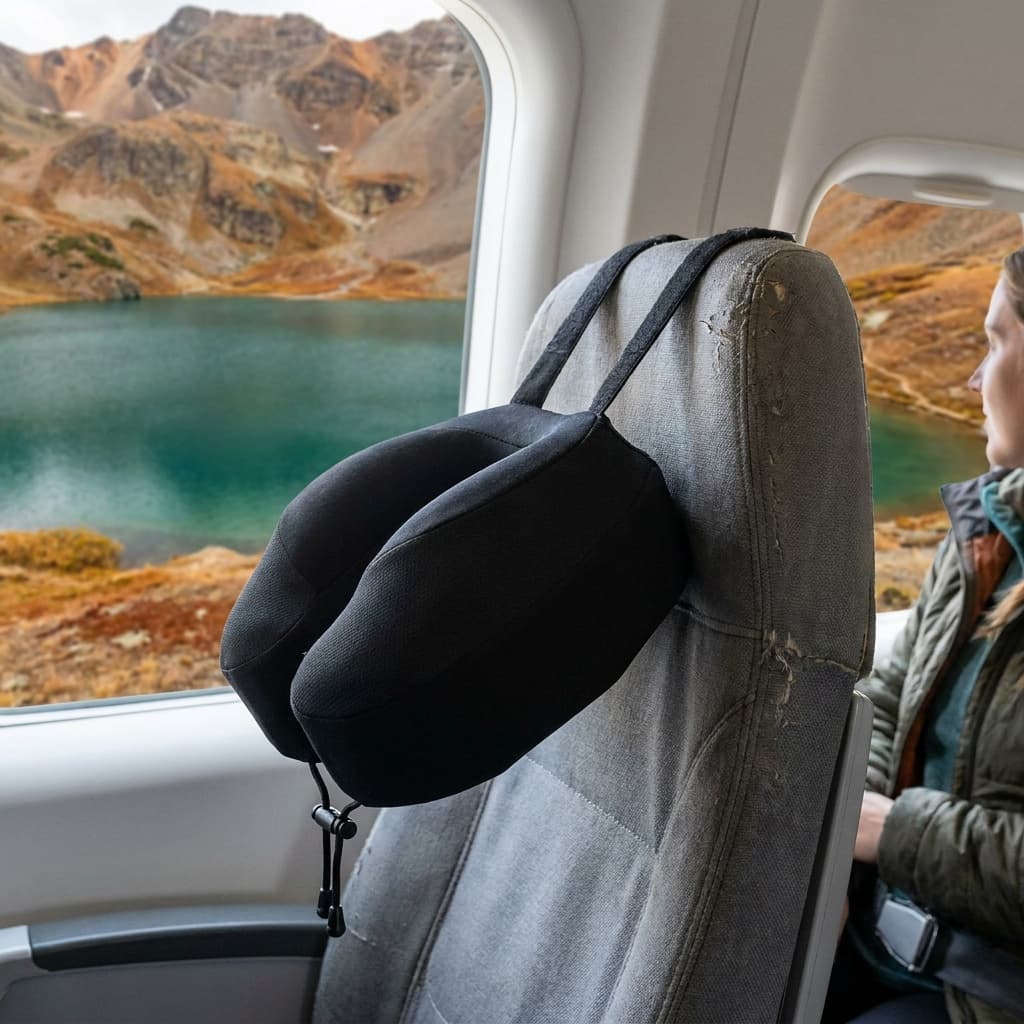
The Cabeau Evolution S3 combines a flat-back memory-foam shape with raised side support, an adjustable front clasp, and twin straps that wrap around a compatible seat headrest. The anchor is its defining advantage: it reduces pillow and head movement instead of relying only on pressure around the neck.
Strengths
- Seat straps create the most stable headrest connection in this comparison
- Flat back avoids stacking a thick foam roll behind the neck
- Removable machine-washable cover and compression case support repeat travel
Weaknesses
- Straps cannot anchor usefully to every shell seat or headrest design
- High side walls can crowd over-ear headphones and may feel too tall on a short neck
Kit Score breakdown
TRTL
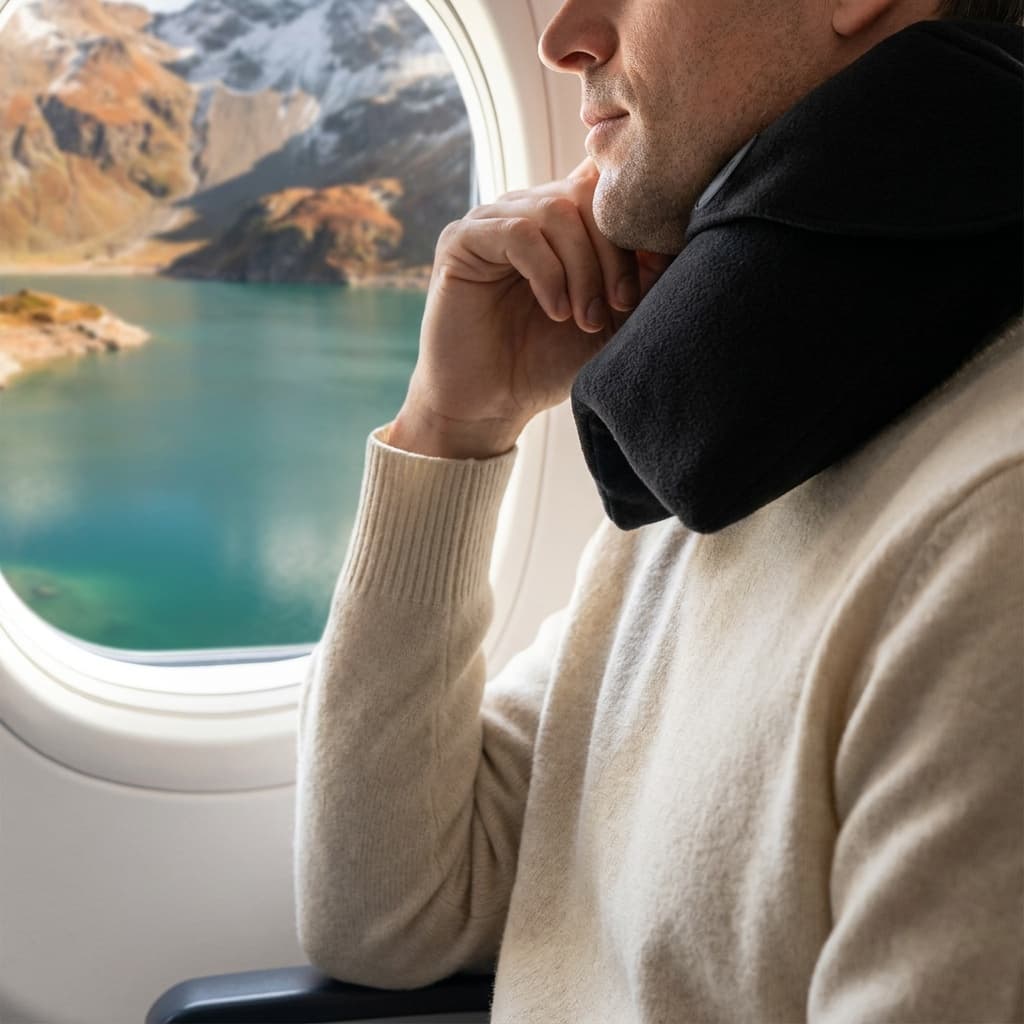
Trtl Travel Pillow Original
Best Compact Support
Kit Score 8.3/10
$59.99 Price checked Oct 23, 4:16 PM CDT
Best for: One-bag and frequent travelers who normally lean to one side, want structured support, and refuse to carry a large foam ring.
- Internal support holds one side of the head without adding bulk behind the neck
- It takes practice to place and tighten correctly before a flight
- Support type
- Internal side support inside a fleece wrap
- Weight
- 4.7 oz (133 g)
- Size
- 8.7 x 9.5 x 3.6 in
- Sizing
- Linked listing is Regular; Small recommended for about 5 ft 7 in (170 cm) and under
- Position
- Can be worn left, right, or toward the front
- Cleaning
- Remove support; machine wash shell cold at 30 C
About this pick
The Trtl Travel Pillow Original replaces a U-shaped cushion with an internal support wrapped in soft fleece. At 4.7 oz and roughly book size, it is dramatically easier to pack than memory foam while providing firmer one-sided support than an unstructured scarf.
More specifications
- Carry
- Water-resistant bag with carabiner
Strengths
- Internal support holds one side of the head without adding bulk behind the neck
- At 4.7 oz, it is much lighter than every foam pillow in this comparison
- The shell separates from the support for cold machine washing
Weaknesses
- It takes practice to place and tighten correctly before a flight
- The fleece wrap can feel warm, and one-sided support is not for travelers who change lean direction often
Kit Score breakdown
TRAVELREST
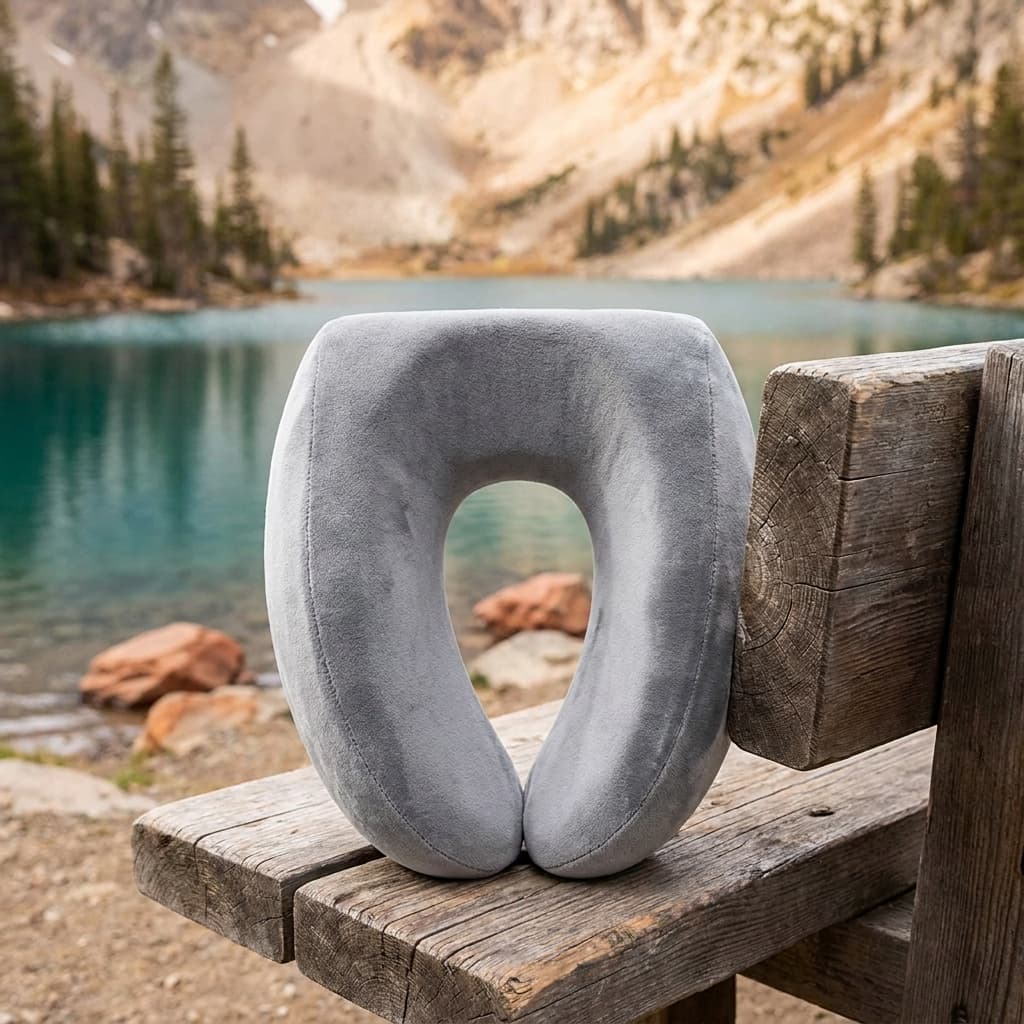
Travelrest Nest Ultimate Memory Foam Travel Pillow
Best Traditional Foam
Kit Score 8.3/10
$49.99 Price checked Oct 23, 4:16 PM CDT
Best for: Long-haul flyers who want substantial memory-foam support and a flatter rear profile, and who can spare more bag volume than an inflatable requires.
- Flat rear profile avoids adding a thick foam roll between the head and seat
- No seat strap, so the pillow can still move against a slick headrest
- Support type
- Memory foam
- Weight
- 13.6 oz (385 g)
- Packed volume
- Included stuff sack compresses pillow to about 1/4 size
- Cover
- Removable, hand-washable microfiber
- Backing
- Anti-slip silicone dots
- Included
- Compression stuff sack and foam earplugs
About this pick
The Travelrest Nest Ultimate combines thermo-sensitive memory foam, a flat rear profile, high side support, and non-slip backing. Its included stuff sack compresses the pillow to about one-quarter of its open volume, while the removable microfiber cover is hand-washable.
Strengths
- Flat rear profile avoids adding a thick foam roll between the head and seat
- High side walls and non-slip backing create steadier support than a loose horseshoe pillow
- Compression sack attaches to a luggage handle and includes a pair of foam earplugs
Weaknesses
- No seat strap, so the pillow can still move against a slick headrest
- Foam remains heavier and bulkier than Trtl or an inflatable even after compression
Kit Score breakdown
See all picks in Best travel pillow 2026: 6 neck pillows for flights
Keep going
Complete loadoutLong-flight comfort kitFive packable pieces for neck support, darkness, quieter cabins, leg comfort, and more consistent sleep away from home.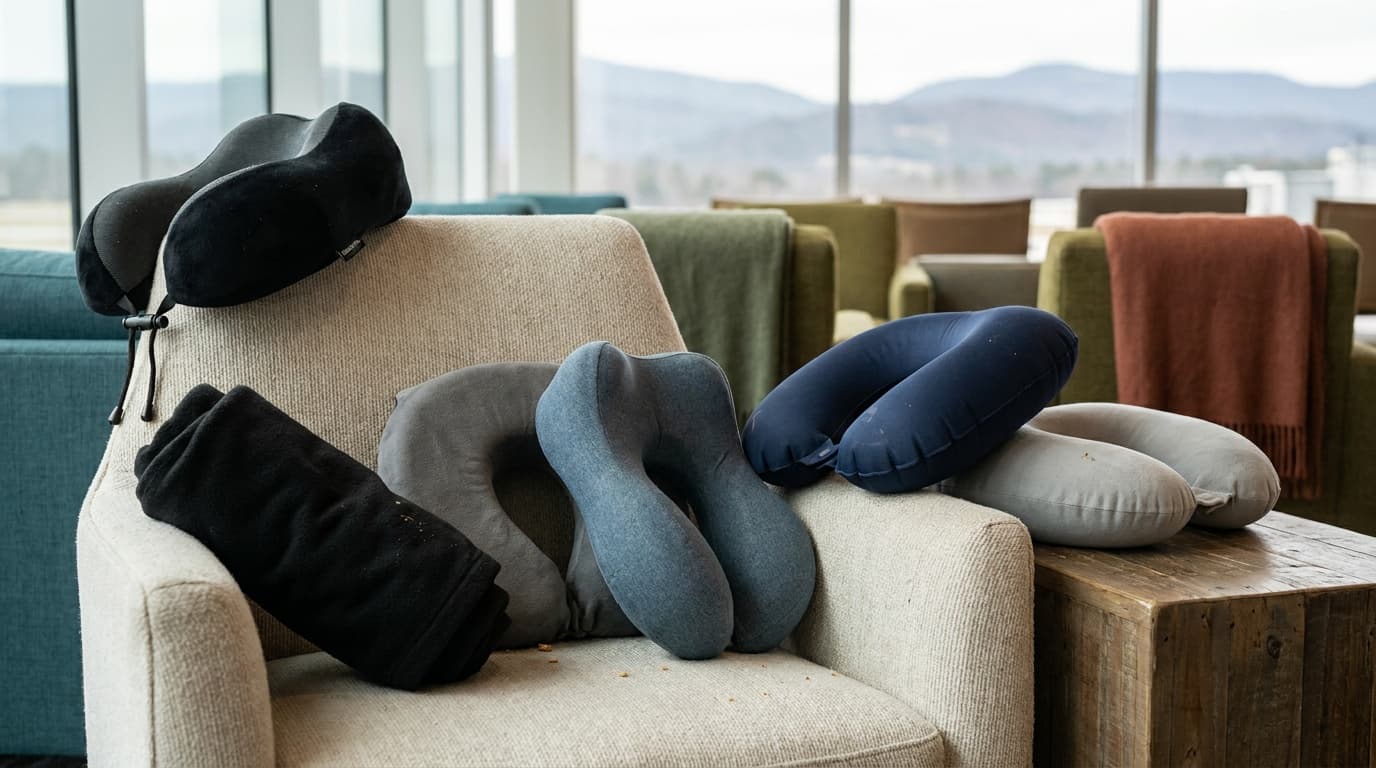
Researched, not hands-on tested
Updated Oct 7, 2026Our recommendations draw on manufacturer documentation, retailer listings, owner feedback, and comparisons with alternatives.
As an Amazon Associate I earn from qualifying purchases. We may earn a commission from links here, at no extra cost to you. How we research →