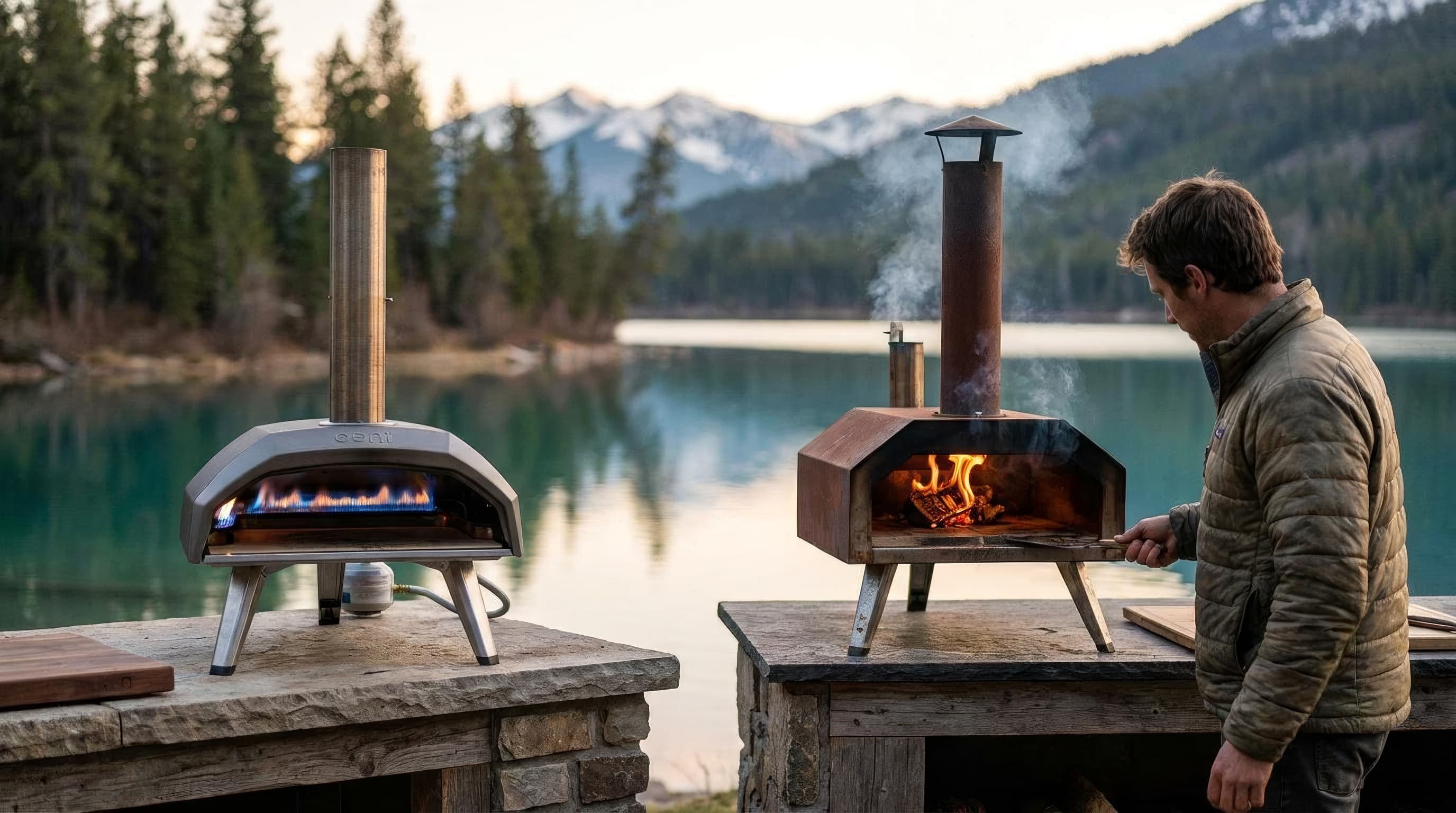
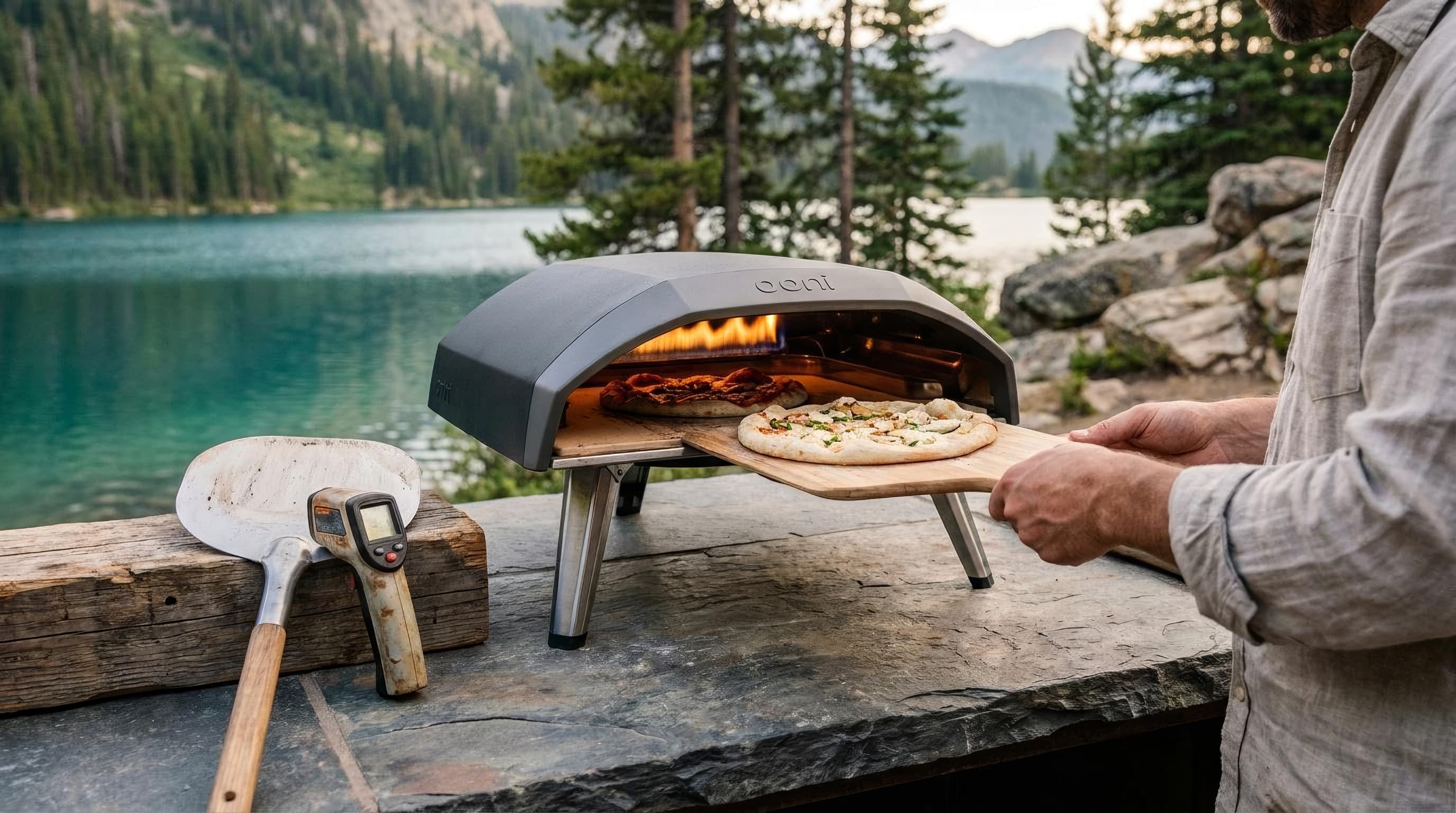
Buy a gas pizza oven if the goal is to make pizza often. Buy wood or pellets if tending the fire is part of why you want the oven. Both can cook excellent pizza; the meaningful difference is how much of your attention goes to the flame instead of the dough.
Compare current gas, wood, pellet, and electric models in our guide to the best outdoor pizza ovens.
Heat is not the deciding difference
Well-designed gas and wood ovens both reach the 750 to 950 F range used for fast pizza. A product page that claims 950 F has not told you whether the flame spreads evenly, the stone recovers after a cold dough lands, or the controls let you hold a lower New York-style bake.
Gas makes the heat curve easier to manage. Turn the burner high for preheat, lower it before launch if the top is cooking too fast, then raise it to finish the rim. Between pizzas you can drive the stone without feeding a firebox.
Wood and pellets can reach the same temperatures, but the curve follows the fuel. A small fire burns hot and fast, then drops as the load collapses. The operator becomes the control system. That is rewarding once learned and distracting while you are also learning dough, flour, launch, and turning.
The flavor difference is smaller for fast pizza
Smoke needs time and a moist surface to leave a strong flavor. A thin Neapolitan-style pizza spends roughly one to two minutes in the chamber, much of it while steam is rapidly leaving the crust. Wood contributes aroma and atmosphere, but fuel alone does not transform ordinary dough into a smoky restaurant pie.
The difference becomes more meaningful for longer cooks: vegetables, meat, bread, and lower-temperature pizza styles spend enough time in the chamber to pick up more live-fire character. Wood also changes how the cook experiences the evening, which is a valid reason even when a blind taste difference would be modest.
Do not burn treated wood, construction offcuts, charcoal lighter fluid, or unknown pellets. Follow the oven maker's fuel list.
Gas is easier across several pizzas
The first pizza receives a fully preheated stone. The second receives a stone that has just given up heat to cold dough. This is where fuel behavior matters most.
A gas burner can stay high while you prepare the next pizza, with a predictable recovery pause measured by an infrared thermometer. A pellet oven may need fresh fuel, time for the flame to establish, and extra attention to ash or bridging in a small hopper. Dense wood ovens recover well, but small portable wood ovens are often less forgiving than their maximum-temperature claim suggests.
For a party where six people are waiting, repeatability is not a luxury. It is the difference between a cooking station and a queue.
Wood asks more and gives more process
Wood and pellet ovens create a stronger sense of occasion. You choose fuel, build a flame, watch the draft, and learn the oven's rhythm. The fire is visible and audible. For people who already enjoy charcoal grilling or tending a smokeless fire pit, this can be the feature that makes the oven worth owning.
The additional work is practical:
- Fuel must stay dry
- Ash needs somewhere safe to cool
- The firebox needs cleaning
- Wind changes draft and flame behavior
- A small hopper needs frequent attention
- Lighting takes longer than turning a dial
If those points read like a checklist you want to master, wood is a good fit. If they read like reasons pizza night will be postponed, choose gas.
Cost is more than fuel price
Propane needs a cylinder, regulator, and safe hose. A 20 lb tank supports many sessions and is easy to replace, but it occupies space and must be stored correctly.
Wood or pellet fuel can be inexpensive per cook, yet dry storage and fire tools add their own footprint. Cheap pellet ovens lower the purchase price but often require an infrared thermometer, a turning peel, and more operator time to deliver consistent results.
Multi-fuel ovens add option value only when you use both modes. The optional wood burner for the Gozney Roccbox is sensible for an owner who cooks on gas most weeks and wants occasional live fire. It is wasted money when the attachment stays in a box.
Where electric fits
Electric ovens are not a weak version of gas. They are the control-first alternative. The Ninja Artisan Outdoor Pizza Oven reaches 700 F rather than 950 F, but it can hold temperatures from proofing through baking without combustion. Where lease rules, local restrictions, or household preference rule out flame, electric is the practical answer.
The compromise is speed and crust style. A 700 F bake takes longer and develops differently from a 900 F bake. The advantage is that bread, pan pizza, roasting, and warming are easier to repeat.
| Priority | Best fuel |
|---|---|
| Weeknight frequency | Gas |
| Lowest operator effort | Electric |
| Fast Neapolitan-style pizza | Gas or wood |
| Live-fire ritual | Wood or pellets |
| Exact lower-temperature baking | Electric |
| Back-to-back party service | Gas |
| Flavor in longer roasts | Wood |
Frequently asked questions
Does wood-fired pizza taste better than gas pizza?
Not automatically. A fast pizza spends too little time in the oven to absorb a dramatic amount of smoke. Dough fermentation, stone temperature, toppings, and timing usually matter more. Wood contributes aroma and can affect longer cooks more strongly, but choose it because you enjoy live-fire cooking, not because gas cannot make excellent pizza.
Is a gas pizza oven easier to use?
Yes. Gas removes fuel loading and draft management, responds immediately to a control dial, and makes heat recovery easier to repeat between pizzas. You still need to learn stone temperature, launching, and turning, but you are learning fewer variables at once.
Are pellet pizza ovens good for beginners?
They are affordable but not the easiest. A small pellet fire can reach useful temperatures, yet it needs regular feeding and responds to wind, pellet moisture, and hopper flow. A patient beginner can learn one quickly; a beginner who wants predictable Tuesday-night dinner will be happier with gas or electric.
Can a gas pizza oven produce a charred crust?
Yes. Char comes from dough chemistry, stone heat, and intense top heat, not from wood touching the pizza. A gas oven at proper temperature can produce a spotted, risen rim. Manage the flame and turn the pizza before one side burns.
See the fuel choices in context in our best outdoor pizza ovens, then confirm the oven size before ordering.
Recommended gear
Our current top picks from the Best outdoor pizza ovens: 5 picks from $120 to $500 guide, if you are ready to buy.
Best for: Families and frequent hosts who want 16-inch capacity, fast gas control, and enough room to make pizza without feeling cramped.
- A 16-inch stone leaves real room to launch, turn, and retrieve a pizza
- The 25 by 23.2 inch footprint needs a deep, sturdy outdoor counter
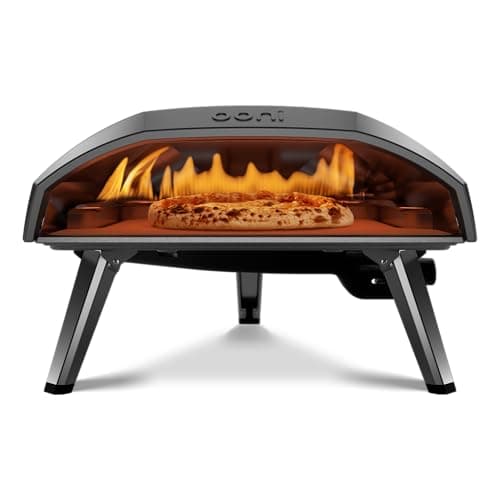
- Fuel
- Propane gas
- Maximum pizza
- 16 in
- Maximum heat
- Up to 950 F
- Unboxed size
- 25 x 23.2 x 14.7 in
- Weight
- 40.1 lb
- Stone
- 0.6 in cordierite
About this pick
The roomy gas oven for people who want to make full 16-inch pizzas without fighting a small mouth. It is large and heavy for a portable oven, but the working space and L-shaped flame make it the easiest all-round choice for a family patio.
More specifications
- Warranty
- 1 year; 5 years with registration
Strengths
- A 16-inch stone leaves real room to launch, turn, and retrieve a pizza
- L-shaped gas burner covers more of the chamber than a narrow rear flame
- Gas control makes repeatable back-to-back pizzas easier than tending a small wood fire
- Registered five-year warranty adds useful protection to a high-ticket appliance
Weaknesses
- The 25 by 23.2 inch footprint needs a deep, sturdy outdoor counter
- At 40.1 lb it moves around a patio, but it is not an oven most people will carry to a picnic
- Gas convenience does not provide the fire-tending ritual some buyers want
Kit Score breakdown
Best for: Frequent pizza makers who value heat retention, durable construction, and repeatability more than maximum pizza size.
- Excellent heat retention supports consistent back-to-back cooking
- The 11.9 inch mouth caps practical pizza size near 12 inches
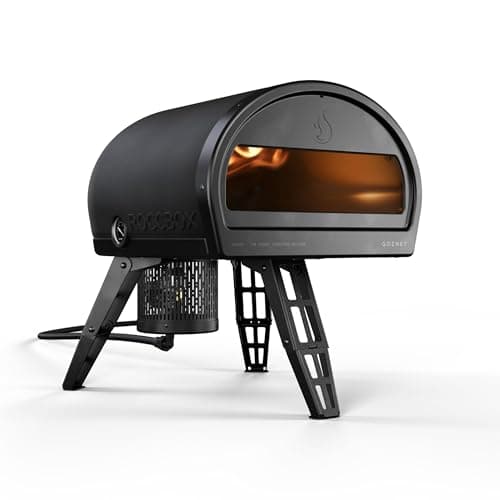
- Fuel
- Propane; optional wood burner
- Maximum pizza
- 12 in
- Maximum heat
- Up to 950 F
- Assembled size
- 18.5 x 16.1 x 21.2 in
- Weight
- 44 lb
- Thermometer
- Built-in underfloor dial
About this pick
A compact oven built like a commercial appliance, with dense insulation and a thick stone floor that recover heat well between pizzas. The body travels, but its 44 lb weight makes it better for serious cooks than casual picnics.
More specifications
- Warranty
- 1 year; 5 years with registration
Strengths
- Excellent heat retention supports consistent back-to-back cooking
- Retractable legs and detachable burner make a dense oven easier to store
- Built-in underfloor thermometer gives a useful read on stone recovery
- Optional wood burner adds a second fuel path without replacing the core oven
Weaknesses
- The 11.9 inch mouth caps practical pizza size near 12 inches
- A 44 lb oven is transportable, not lightweight
- Premium construction costs more than many larger gas-only ovens
Kit Score breakdown
SOLO STOVE
Solo Stove Pi Prime
Easiest to Use
Kit Score 8.8/10
$359.99 Price checked Oct 26, 7:39 AM CDT
Best for: First-time outdoor pizza makers who want a forgiving gas oven, a wide mouth, and minimal setup.
- One-dial propane setup is easy to learn and repeat
- Limited to roughly 12-inch pizzas despite a fairly broad exterior diameter
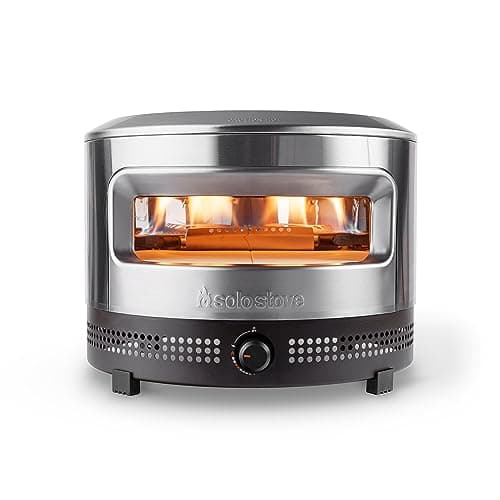
- Fuel
- Propane gas
- Maximum pizza
- 12 in
- Maximum heat
- Over 950 F
- Size
- 20.5 in diameter x 15.5 in high
- Weight
- 30 lb
- Opening
- 13 x 3.5 in
About this pick
The low-friction first pizza oven: connect propane, turn one dial, and work through a broad 13-inch mouth. Its round stainless body is compact and the lifetime warranty is unusually strong, though it stays in the 12-inch pizza class.
More specifications
- Warranty
- Lifetime limited warranty
Strengths
- One-dial propane setup is easy to learn and repeat
- Wide panoramic opening makes launches and turns less intimidating
- 30 lb weight is manageable for storage and occasional transport
- Lifetime limited warranty is the strongest coverage in this group
Weaknesses
- Limited to roughly 12-inch pizzas despite a fairly broad exterior diameter
- Propane-only design has no path to wood or pellet cooking
- Round body uses counter depth less efficiently than a rectangular oven
Kit Score breakdown
See all picks in Best outdoor pizza ovens: 5 picks from $120 to $500
Keep going
Researched, not hands-on tested
Updated Aug 14, 2026Our recommendations draw on manufacturer documentation, retailer listings, owner feedback, and comparisons with alternatives.
As an Amazon Associate I earn from qualifying purchases. We may earn a commission from links here, at no extra cost to you. How we research →