A 12-inch oven is enough for one or two people and for parties built around a stream of personal pizzas. A 16-inch oven feeds a family with one pie and gives every cook more room to launch and turn. The size difference is larger than the diameter suggests.
The serving math
Pizza area follows the square of the radius:
| Pizza diameter | Surface area | Practical serving |
|---|---|---|
| 12 in | About 113 sq in | One hungry adult or two light portions |
| 14 in | About 154 sq in | Two adults with sides |
| 16 in | About 201 sq in | Two hungry adults or a small family with sides |
A 16-inch pizza is not one-third larger than a 12-inch pizza. It has roughly 78 percent more surface area. Toppings, dough weight, and serving style vary, but the geometry explains why a family can finish a 12-inch pie while the next one is still cooking.
Twelve inches: compact and social
A 12-inch oven is the right choice when:
- You usually cook for one or two
- Everyone builds a personal pizza
- Storage space is tight
- The oven travels by car
- You prefer several quick pies to one large pie
- Your largest peel is already sized for 12 inches
Small pizzas are easier to launch because they weigh less and spend less time sitting on the peel. They are also easier to rotate inside a narrow chamber once the technique is familiar. A sequence of personal pizzas turns dinner into an activity, which is often the appeal.
The drawback is throughput. Even a 90-second bake has setup, launch, retrieval, stone recovery, and topping time around it. Four people may not eat together unless pizzas are shared as they emerge.
The Gozney Roccbox, Solo Stove Pi Prime, Ninja Artisan, and BIG HORN in our roundup all live in this class.
Sixteen inches: easier cooking, not only more food
A 16-inch chamber does two jobs.
First, it accepts a family-size pie. Second, it gives a 12-inch pizza room around the edges. The second advantage matters while learning. A slightly oval launch does not touch the wall. A rim that catches the peel has somewhere to land. You can turn the pizza before the hot side blackens without scraping the opposite side of the chamber.
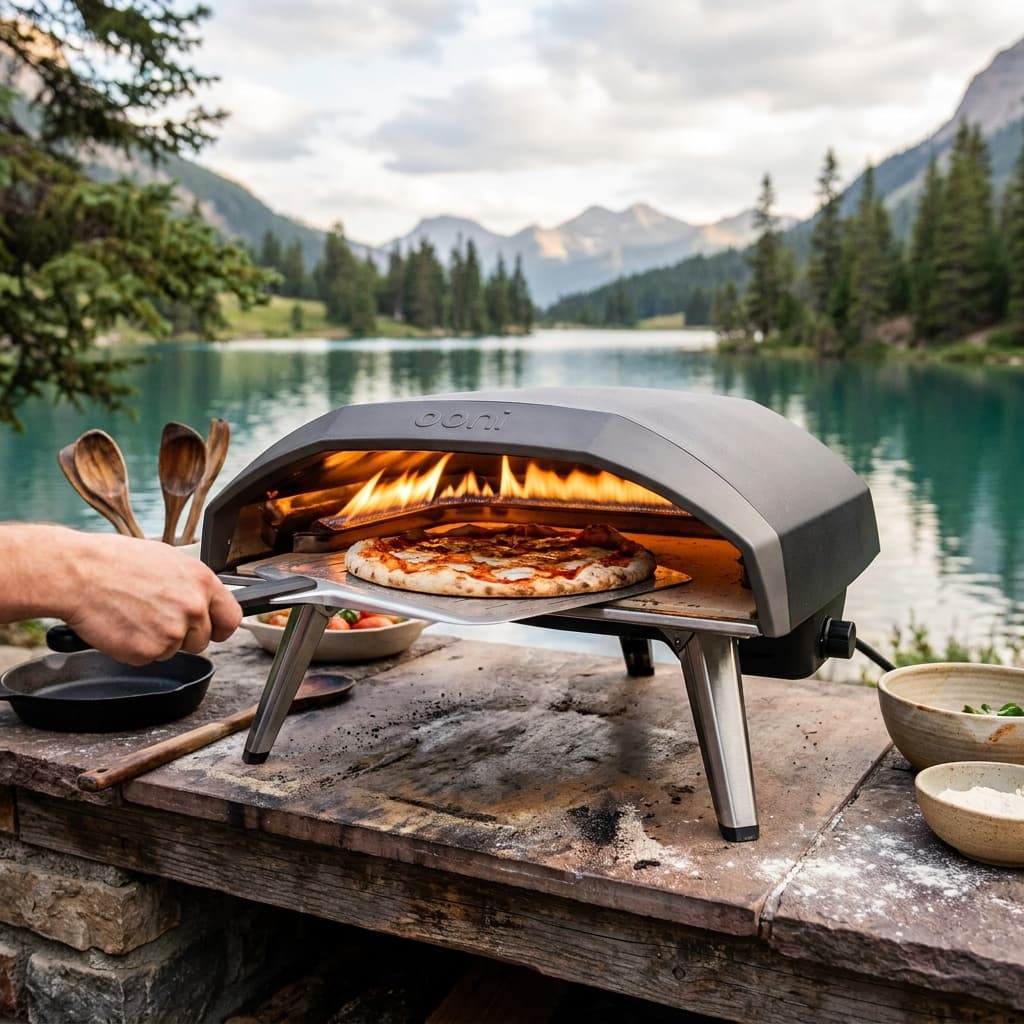
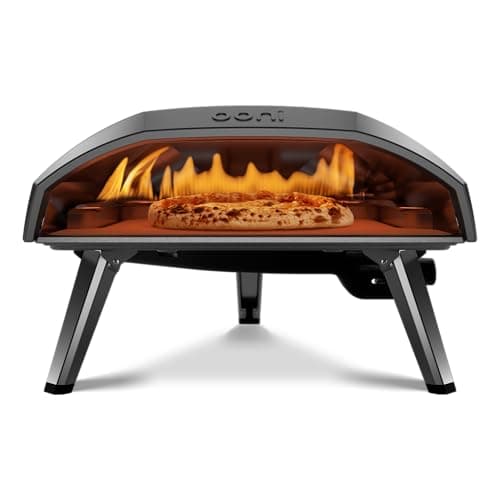
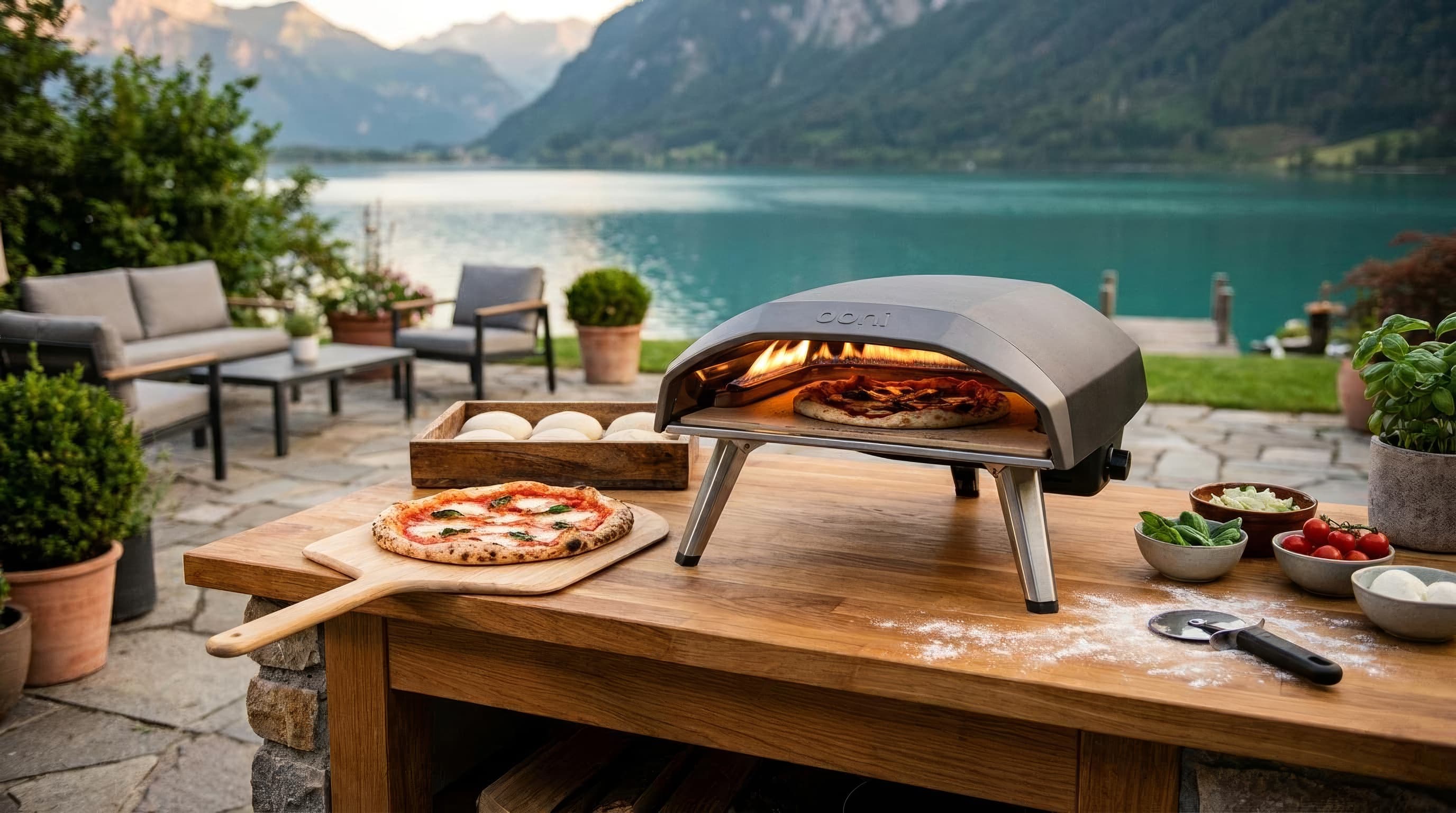
The Ooni Koda 16 is 25 inches wide and 23.2 inches deep before clearance. Its 40.1 lb body also belongs on a stronger surface than a lightweight camp table. You are buying a larger workflow, not just a larger stone.
Counter depth is the hidden measurement
Manufacturers lead with pizza size because it is appetizing. Your patio cares about exterior depth.
Measure:
- The oven body from front lip to rear housing
- The manufacturer's side, rear, and overhead clearance
- The distance a peel handle needs in front of the mouth
- A safe route for a gas hose or power cord
- Prep space for dough that does not cross the hot zone
Tape the footprint onto the counter. Stand where the cook would stand and move a full-length peel through the launch. If a wall or chair blocks the handle, the surface is too shallow even if the oven's feet technically fit.
Oven mouth and stone are different
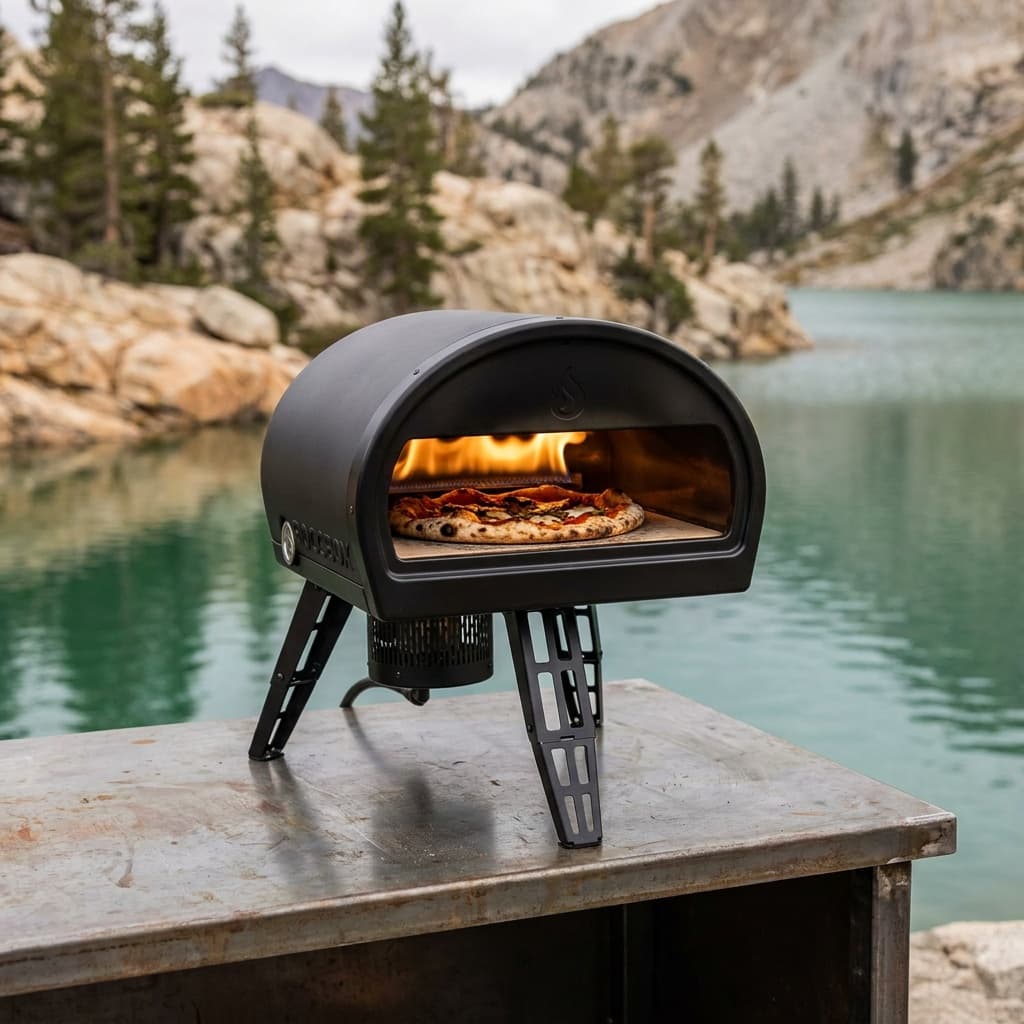
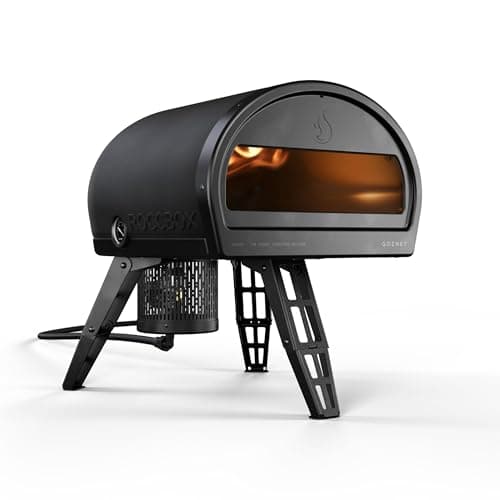
A nominal 12-inch stone may sit behind an 11.9-inch mouth, as on the Roccbox. That is enough for a 12-inch pizza because the dough can flex slightly during launch, but it gives no reason to build a pie larger than the opening.
Look for:
- Mouth width
- Mouth height
- Stone width and depth
- Burner intrusion into usable space
- Shape of the hot zone
A broad opening makes turning easier. A low mouth can limit tall cookware even when the stone area looks generous.
Bigger is not automatically better
A larger oven:
- Takes more counter space
- Usually weighs more
- Uses more fuel during preheat
- Needs larger peels and covers
- Takes more effort to store
Buy 16 inches for the room you will use, not because it is the higher number. A two-person household with a small covered patio may use a 30 lb Solo Stove every week and avoid a 40 lb Koda that never gets uncovered.
Choose your size
One or two eaters
A 12-inch oven is enough and easier to store.
Family dinner
A 16-inch pie reduces the queue and lets more people eat together.
Pizza party
Either works; 12 inches suits personal pizzas, while 16 inches increases throughput.
Beginner margin
A larger stone makes the same 12-inch dough easier to launch and turn.
Small patio
Measure exterior depth and peel travel before choosing by food size.
Frequently asked questions
Is a 12-inch pizza oven too small?
Not for one or two people. It becomes small when one pie needs to feed a family, when guests expect to eat together, or when a beginner wants margin around the dough. For personal-pizza parties and compact storage, 12 inches is often the right size.
Can you cook a 12-inch pizza in a 16-inch oven?
Yes, and it is easier. The extra stone gives room around the dough for a crooked launch, an early turn, and retrieval. A 16-inch oven does not require 16-inch pizzas; much of its value is making ordinary pizzas less cramped.
How many people does a 16-inch pizza feed?
Usually two hungry adults or a small family with sides. A 16-inch pizza has about 201 square inches of surface, compared with about 113 square inches for a 12-inch pizza. Appetite and crust thickness vary, but the area is roughly 78 percent greater.
How large should an outdoor pizza oven table be?
Large enough for the full body, the manufacturer's safe clearance, and stable support, with separate prep space outside the hot zone. For the Ooni Koda 16, begin with its 25 by 23.2 inch body and add clearance rather than choosing a table that matches those dimensions exactly.
Compare the current 12-inch and 16-inch models in best outdoor pizza ovens, or use the complete pizza oven buying guide.
Recommended gear
Our current top picks from the Best outdoor pizza ovens: 5 picks from $120 to $500 guide, if you are ready to buy.
Best for: Families and frequent hosts who want 16-inch capacity, fast gas control, and enough room to make pizza without feeling cramped.
- A 16-inch stone leaves real room to launch, turn, and retrieve a pizza
- The 25 by 23.2 inch footprint needs a deep, sturdy outdoor counter
- Fuel
- Propane gas
- Maximum pizza
- 16 in
- Maximum heat
- Up to 950 F
- Unboxed size
- 25 x 23.2 x 14.7 in
- Weight
- 40.1 lb
- Stone
- 0.6 in cordierite
About this pick
The roomy gas oven for people who want to make full 16-inch pizzas without fighting a small mouth. It is large and heavy for a portable oven, but the working space and L-shaped flame make it the easiest all-round choice for a family patio.
More specifications
- Warranty
- 1 year; 5 years with registration
Strengths
- A 16-inch stone leaves real room to launch, turn, and retrieve a pizza
- L-shaped gas burner covers more of the chamber than a narrow rear flame
- Gas control makes repeatable back-to-back pizzas easier than tending a small wood fire
- Registered five-year warranty adds useful protection to a high-ticket appliance
Weaknesses
- The 25 by 23.2 inch footprint needs a deep, sturdy outdoor counter
- At 40.1 lb it moves around a patio, but it is not an oven most people will carry to a picnic
- Gas convenience does not provide the fire-tending ritual some buyers want
Kit Score breakdown
Best for: Frequent pizza makers who value heat retention, durable construction, and repeatability more than maximum pizza size.
- Excellent heat retention supports consistent back-to-back cooking
- The 11.9 inch mouth caps practical pizza size near 12 inches
- Fuel
- Propane; optional wood burner
- Maximum pizza
- 12 in
- Maximum heat
- Up to 950 F
- Assembled size
- 18.5 x 16.1 x 21.2 in
- Weight
- 44 lb
- Thermometer
- Built-in underfloor dial
About this pick
A compact oven built like a commercial appliance, with dense insulation and a thick stone floor that recover heat well between pizzas. The body travels, but its 44 lb weight makes it better for serious cooks than casual picnics.
More specifications
- Warranty
- 1 year; 5 years with registration
Strengths
- Excellent heat retention supports consistent back-to-back cooking
- Retractable legs and detachable burner make a dense oven easier to store
- Built-in underfloor thermometer gives a useful read on stone recovery
- Optional wood burner adds a second fuel path without replacing the core oven
Weaknesses
- The 11.9 inch mouth caps practical pizza size near 12 inches
- A 44 lb oven is transportable, not lightweight
- Premium construction costs more than many larger gas-only ovens
Kit Score breakdown
SOLO STOVE
Solo Stove Pi Prime
Easiest to Use
Kit Score 8.8/10
$359.99 Price checked Oct 26, 7:39 AM CDT
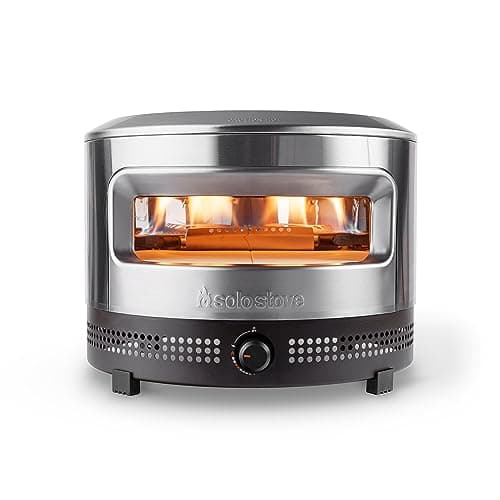
Best for: First-time outdoor pizza makers who want a forgiving gas oven, a wide mouth, and minimal setup.
- One-dial propane setup is easy to learn and repeat
- Limited to roughly 12-inch pizzas despite a fairly broad exterior diameter
- Fuel
- Propane gas
- Maximum pizza
- 12 in
- Maximum heat
- Over 950 F
- Size
- 20.5 in diameter x 15.5 in high
- Weight
- 30 lb
- Opening
- 13 x 3.5 in
About this pick
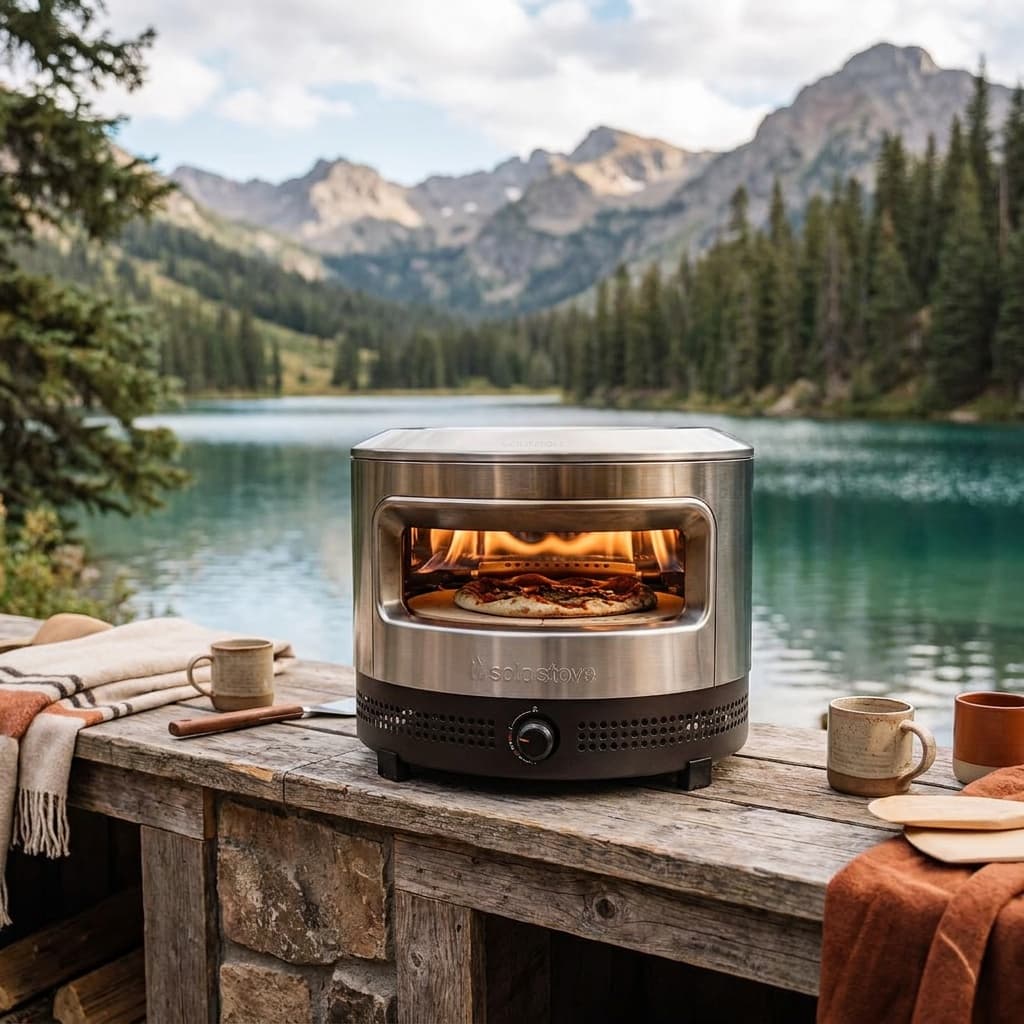
The low-friction first pizza oven: connect propane, turn one dial, and work through a broad 13-inch mouth. Its round stainless body is compact and the lifetime warranty is unusually strong, though it stays in the 12-inch pizza class.
More specifications
- Warranty
- Lifetime limited warranty
Strengths
- One-dial propane setup is easy to learn and repeat
- Wide panoramic opening makes launches and turns less intimidating
- 30 lb weight is manageable for storage and occasional transport
- Lifetime limited warranty is the strongest coverage in this group
Weaknesses
- Limited to roughly 12-inch pizzas despite a fairly broad exterior diameter
- Propane-only design has no path to wood or pellet cooking
- Round body uses counter depth less efficiently than a rectangular oven
Kit Score breakdown
See all picks in Best outdoor pizza ovens: 5 picks from $120 to $500
Keep going
Researched, not hands-on tested
Updated Jul 28, 2026Our recommendations draw on manufacturer documentation, retailer listings, owner feedback, and comparisons with alternatives.
As an Amazon Associate I earn from qualifying purchases. We may earn a commission from links here, at no extra cost to you. How we research →