We may earn a commission from links on this page, at no extra cost to you.
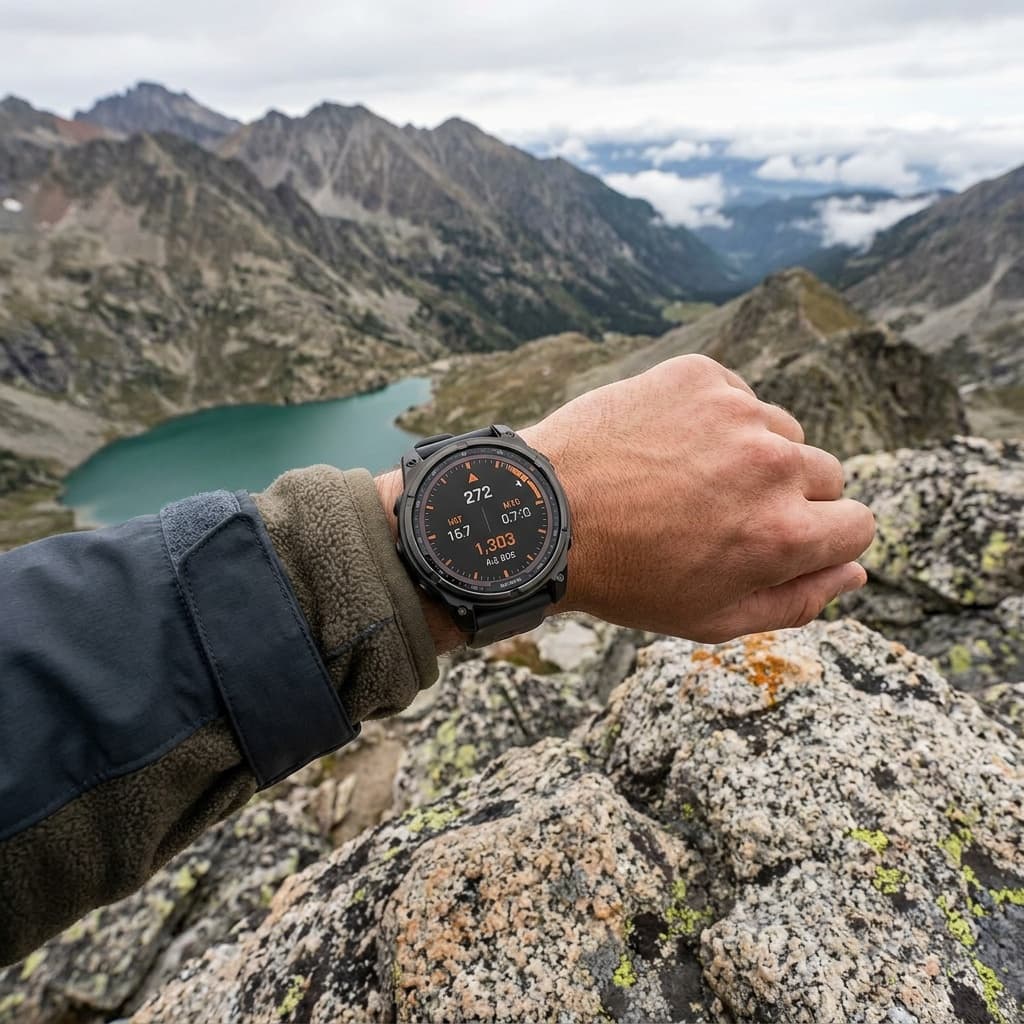
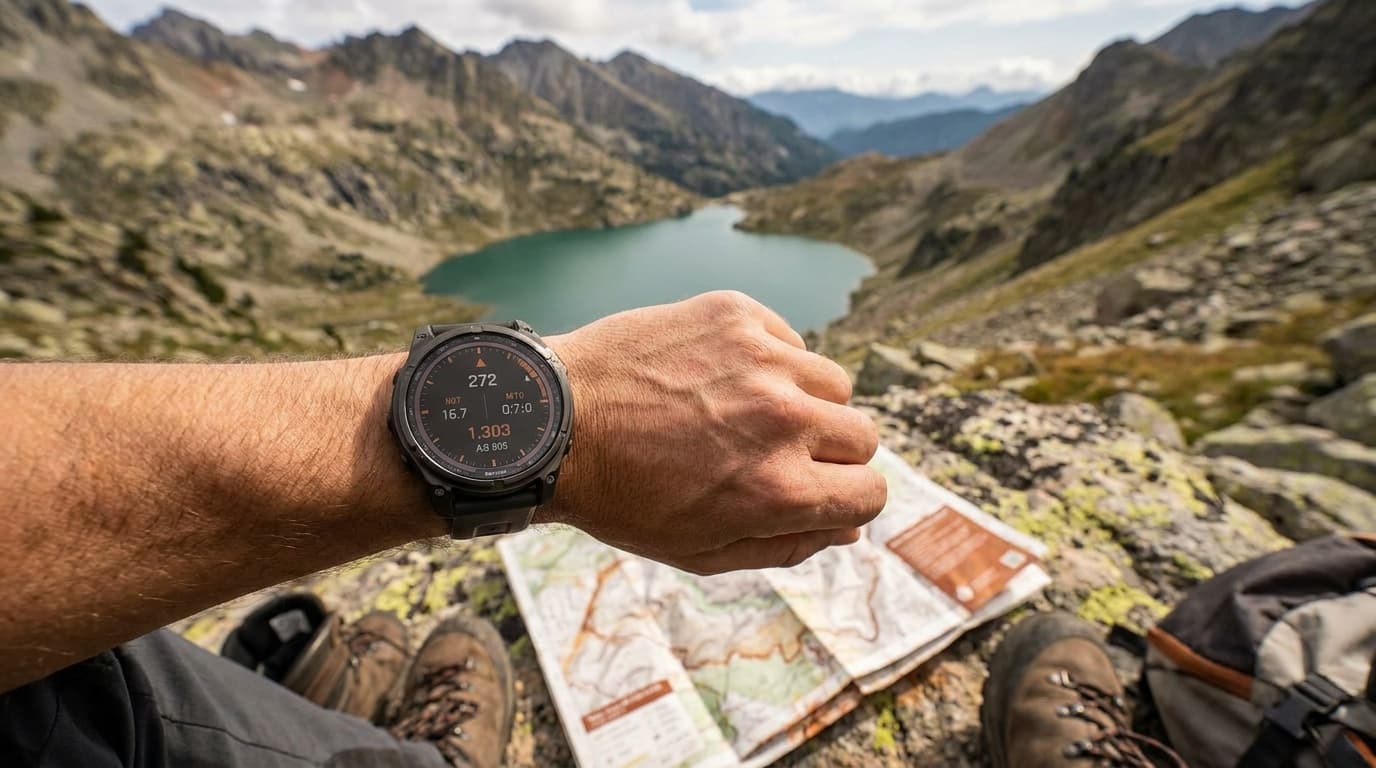
The Garmin Fenix 8 Solar is a premium navigation instrument before it is a smartwatch. It earns the top position in our best GPS watches for hiking guide because it combines on-wrist topo maps, multi-band positioning, solar-assisted battery life, and a sapphire lens in one 47mm case.
BEST OVERALL
Garmin Fenix 8 Solar Sapphire 47mm
Best for: Hikers and backpackers who want on-wrist topo mapping, top-tier GPS accuracy, and a watch capable of replacing a handheld GPS on technical multi-day routes.
Kit Score 9.0/10 · Check current price
- Preloaded TopoActive maps with ClimbPro elevation profiles work without cell service
- Multi-band GNSS with SatIQ delivers class-leading accuracy in canyons and dense tree cover
- Price exceeds $1,000, which is hard to justify unless you regularly push into multi-day backcountry
Who it is for
The Fenix 8 fits hikers who navigate from the wrist rather than merely record a route. Preloaded TopoActive maps, turn guidance, contour detail, and ClimbPro make it possible to evaluate the next junction or climb without taking out a phone.
It also makes sense for a multi-sport buyer. The speaker, microphone, dive rating, training metrics, and daily health features spread the high price across more jobs than hiking alone.
It is excessive for marked day hikes. If the watch mainly needs to record distance, elevation, and a breadcrumb route, the Fenix price buys features that may stay buried in menus.
Verified specifications
| Spec | Detail |
|---|---|
| Kit Score | 9.0 / 10 (researched, not personally tested) |
| Case | 47mm titanium bezel |
| Display | 1.3-inch sunlight-visible MIP, 260 x 260 |
| Lens | Power Sapphire solar charging lens |
| GPS-only battery | 67 hours, up to 92 with solar |
| Multi-band battery | 37 hours, up to 43 with solar |
| Navigation | Preloaded TopoActive maps and turn guidance |
| Weight | 57 g case only |
| Water rating | 10 ATM and dive-rated |
Solar figures require Garmin's stated outdoor light exposure. Treat them as an upper boundary, not a promise for shaded forest or winter trips.
Why it works for hiking
The strongest feature is not a sensor in isolation. It is the way the maps, buttons, touchscreen, altimeter, compass, and satellite receiver work together. Touch helps pan a map quickly; physical buttons remain usable with rain, sweat, or gloves.
Garmin's SatIQ system can choose the satellite mode needed for current conditions. Multi-band helps in canyons and under tree cover, while less demanding modes conserve power on open trail.
The sapphire lens is also a practical upgrade. A watch worn through rock scrambles and brush takes more direct contact than a phone protected inside a pocket.
The price problem
At roughly $1,100, the Fenix 8 has to replace several weaker purchases to make sense. A hiker who already owns a reliable watch and a handheld navigator gains convenience, not a new capability. A buyer who wants one durable watch for maps, workouts, swimming, calls, and everyday use can make a stronger value case.
The closest alternative is the Garmin Enduro 3. It keeps full mapping, sheds the speaker and dive features, and extends battery life. Our Fenix 8 vs Enduro 3 comparison makes that trade explicit.
What works
- Full topo maps and turn guidance work without a cellular connection.
- Multi-band GNSS improves positioning in difficult terrain.
- The MIP display remains readable in direct sun without an always-lit AMOLED panel.
- Sapphire, titanium, and 10 ATM protection suit rough outdoor use.
- GPS-only battery can cover long weekends without charging.
Tradeoffs
- The price is difficult to justify for marked day hikes.
- Garmin's feature depth creates a real setup and menu-learning burden.
- Solar gains depend on light exposure and can be modest under tree cover.
- The 47mm case is still substantial on a small wrist.
Frequently asked questions
How long does the Fenix 8 Solar last while hiking?
Garmin rates the 47mm Solar model for 67 hours in GPS-only mode and up to 92 hours with sufficient solar exposure. Multi-band mode is rated for 37 hours or up to 43 with solar. Maps, backlight, music, temperature, and satellite settings change real runtime.
Does the Garmin Fenix 8 have offline maps?
Yes. It supports preloaded TopoActive mapping, route guidance, contour information, and Garmin navigation features without a cellular connection. Download and verify the region and route before leaving home.
Is the Fenix 8 better than the Enduro 3?
It is broader, not automatically better. Choose Fenix 8 for the speaker, microphone, diving features, and multiple case sizes. Choose Enduro 3 for lower weight and much longer battery, provided its 51mm case fits.
Is the Fenix 8 Solar worth it over the Instinct 3 Solar?
Only if you will use on-watch maps or the additional sport and communication features. The Instinct 3 retains multi-band GPS, ABC sensors, solar charging, and rugged construction, but navigation is breadcrumb-based.
See all four price tiers in best GPS watches for hiking, or compare the two value options in Garmin Instinct 3 vs Amazfit T-Rex 3.
Related buying guide
Best GPS watches for hiking 2026: 4 picks from $252
Complete hike loadout
Day hike kit
Seven slots for a full trail day, from the pack and water system to light and weather protection.
Build the complete kitRelated guides
Comparison
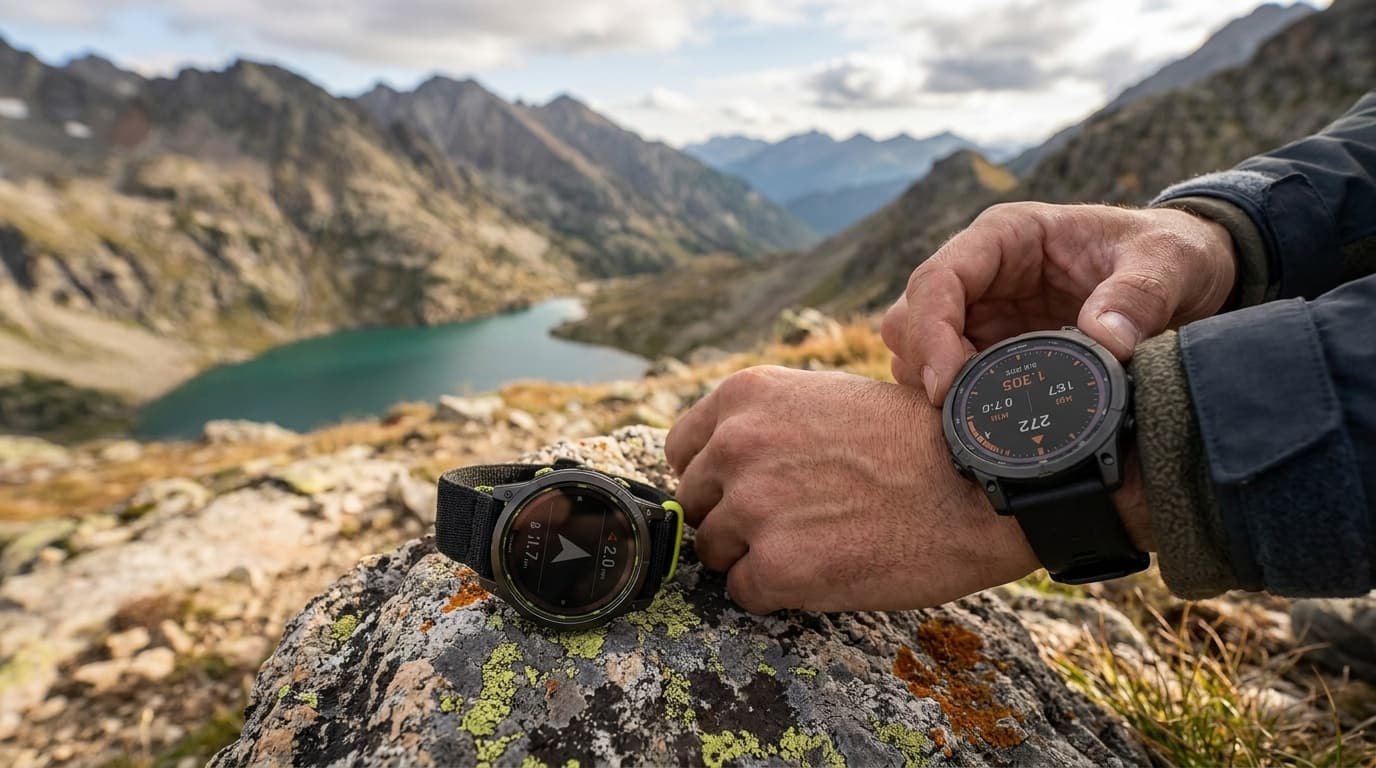
Garmin Fenix 8 vs Enduro 3: features or 320-hour battery?
Fenix 8 wins on sizes, voice, and diving. Enduro 3 wins on weight and battery while keeping full topo maps. Compare the hiking differences.
Read guide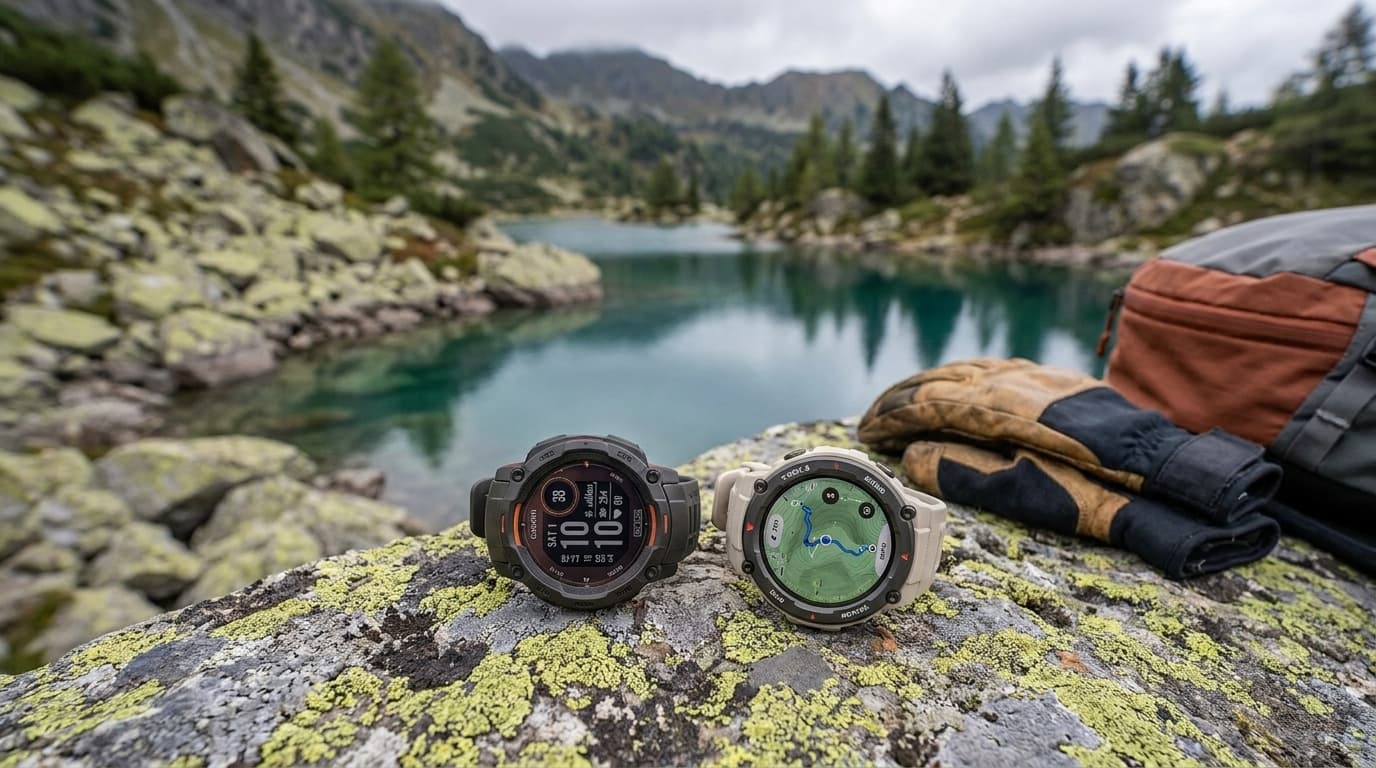
Comparison
Garmin Instinct 3 vs Amazfit T-Rex 3: maps or maturity?
Instinct 3 wins on ecosystem, buttons, and solar potential. T-Rex 3 wins on offline maps, AMOLED, and price. Choose by navigation needs.
Read guide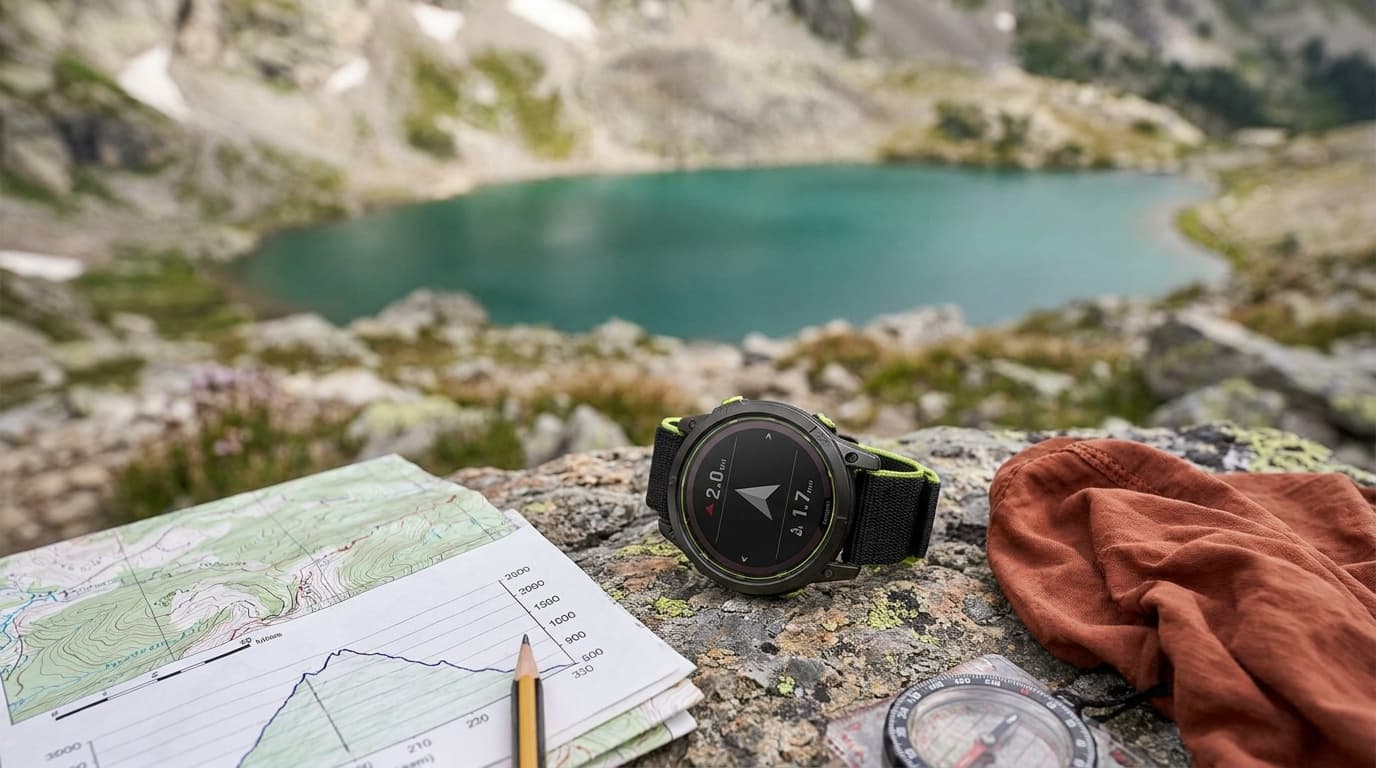
Product review
Garmin Enduro 3 review: 320-hour solar GPS, one huge catch
Kit Score 9.1/10. Enduro 3 pairs full Garmin topo maps with up to 320 solar GPS hours at 63 grams. The 51mm-only case is the deciding constraint.
Read guide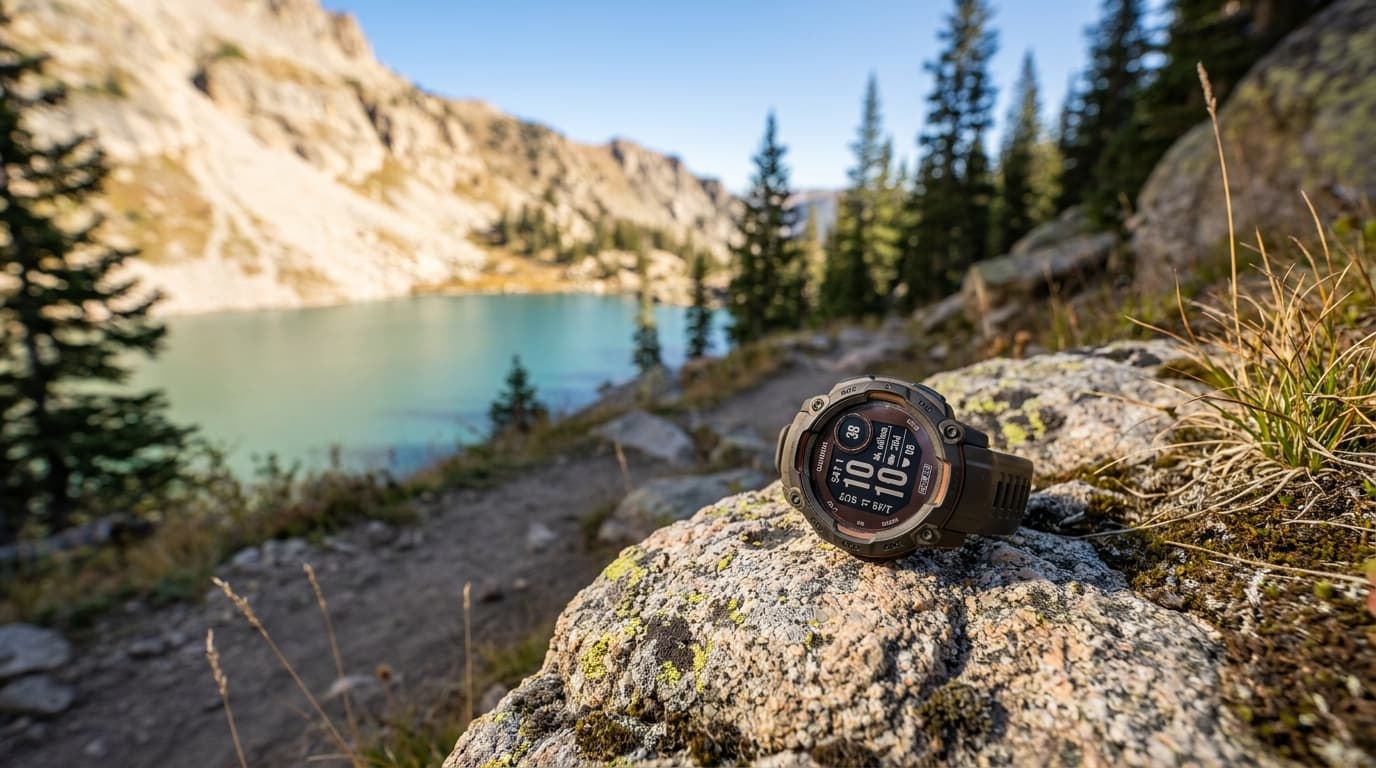
Product review
Garmin Instinct 3 Solar review: the right watch without maps?
Kit Score 8.7/10. Instinct 3 Solar brings multi-band GPS, rugged construction, and up to 130 GPS hours with solar. Breadcrumb navigation is the trade.
Read guideResearch-based review
Updated Jul 29, 2026Our recommendations draw on manufacturer documentation, retailer listings, owner feedback, and comparisons with alternatives.
As an Amazon Associate I earn from qualifying purchases. We may earn a commission from links here, at no extra cost to you. How we research →
Top picks
Related buying guide
Best GPS watches for hiking 2026: 4 picks from $252