We may earn a commission from links on this page, at no extra cost to you.
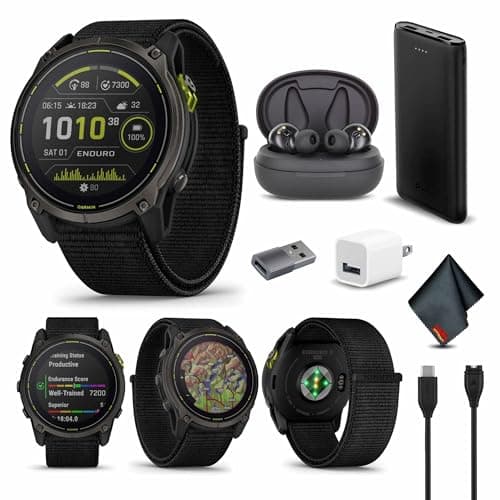
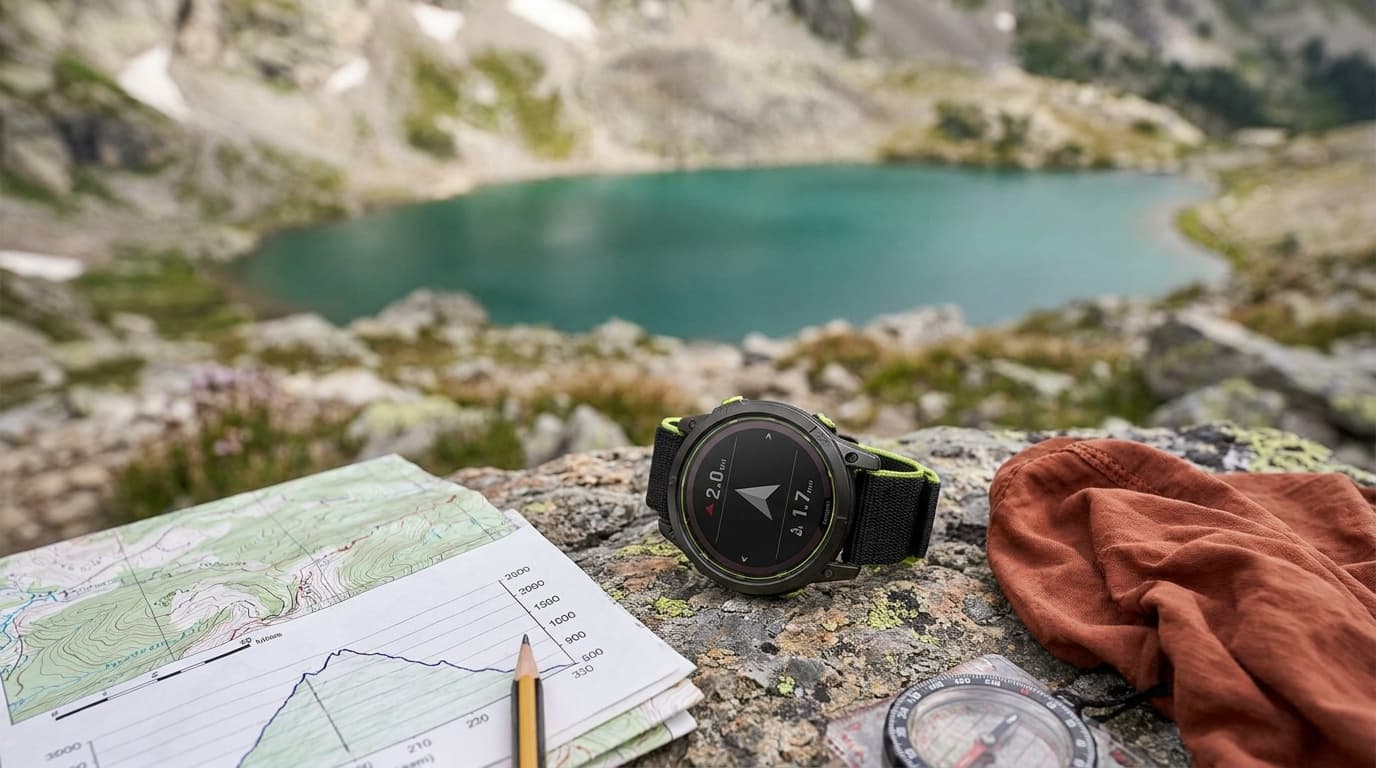
The Garmin Enduro 3 is the long-distance answer in Garmin's outdoor line. It retains full topo mapping and multi-band positioning, weighs 63 grams with its nylon strap, and is rated for up to 320 GPS hours with solar in ideal conditions.
LONGEST BATTERY
Garmin Enduro 3
Best for: Thru-hikers, multi-week backpackers, and ultra-endurance athletes who need full topo mapping and can live without a speaker or microphone in exchange for the longest GPS battery on the market.
Kit Score 9.1/10 · Check current price
- 320-hour solar GPS battery is unmatched among mapping watches, making it the only watch that survives a thru-hike segment without a resupply charge
- Preloaded topo maps, barometric altimeter, barometer, and compass match the Fenix 8 feature-for-feature at a lower price
- Only one case size (51mm), which runs large; owners with wrists under approximately 165 mm circumference should try it before buying
Who it is for
Enduro 3 is for a buyer who measures battery in route segments rather than days. A long GPS ceiling reduces power-bank demand, cable management, and the need to pause tracking at camp.
It also suits anyone who wants Garmin's map system without paying for Fenix features that do not help on foot. The Enduro retains TopoActive mapping, multi-band GNSS, ClimbPro, altimeter, barometer, and compass.
The physical catch is immediate: it only comes in a 51mm case. That improves screen area and battery volume, but it is a large watch. Try a similar 51mm Garmin before ordering if your wrist is small.
Verified specifications
| Spec | Detail |
|---|---|
| Kit Score | 9.1 / 10 (researched, not personally tested) |
| Case | 51mm with titanium bezel |
| Display | 1.4-inch MIP, 280 x 280 |
| Lens | Power Sapphire |
| GPS-only battery | 120 hours, up to 320 with solar |
| Multi-band battery | 60 hours, up to 90 with solar |
| Navigation | Preloaded TopoActive maps and ClimbPro |
| Weight | 63 g with UltraFit nylon strap |
| Water rating | 10 ATM |
The large solar number assumes sustained exposure at Garmin's published light threshold. Tree cover, sleeves, clouds, and high-power features reduce the gain.
Battery changes the packing list
Battery life matters most when charging has a weight or schedule cost. A weekend hiker can charge almost any current watch at home. A thru-hiker may have to allocate battery-bank capacity between a phone, headlamp, communicator, and watch.
Enduro 3's 120-hour GPS-only rating is already substantial before solar. The 320-hour maximum shows what is possible in favorable sun with the right mode, but the non-solar baseline is the safer planning figure.
Maps without the Fenix extras
Enduro 3 does not reduce navigation to breadcrumb lines. It carries full topo maps and route tools, which is why it remains a serious Fenix alternative rather than a stripped-down tracker.
What it removes is equally important: no speaker, microphone, or recreational dive feature set. Those exclusions simplify the decision. If they sound irrelevant, Enduro is likely the more efficient purchase.
What works
- Garmin rates GPS-only tracking for 120 hours before solar assistance.
- Full maps and ClimbPro support unfamiliar and elevation-heavy routes.
- The included nylon strap helps keep a 51mm mapping watch to 63 grams.
- Sapphire and titanium suit repeated trail exposure.
- Buttons preserve reliable control in weather and with gloves.
Tradeoffs
- The single 51mm size is too large for some wrists.
- MIP looks less vivid indoors than an AMOLED display.
- Solar performance varies sharply with exposure.
- The official price remains high even though it undercuts comparable Fenix configurations.
Enduro 3 or Fenix 8?
Choose Enduro 3 for battery and lower weight. Choose Fenix 8 for smaller case options, voice features, and diving support. Both include the core navigation system.
The detailed numbers are in Garmin Fenix 8 vs Enduro 3. The wider field, including options below $400, is in best GPS watches for hiking.
Frequently asked questions
Does Garmin Enduro 3 have maps?
Yes. Enduro 3 includes TopoActive maps, route guidance, and ClimbPro. It is a full mapping watch, unlike Garmin models that only display breadcrumb courses.
Can Enduro 3 really last 320 hours in GPS mode?
Garmin publishes up to 320 hours in GPS-only mode with solar under its stated light conditions. Use the 120-hour non-solar rating for conservative planning, then treat solar as additional margin.
Is Enduro 3 too large for a small wrist?
It can be. The only case is 51mm. The nylon strap reduces weight, but it does not change the footprint. Buyers with smaller wrists should try a 51mm Garmin case locally before ordering.
Why buy Enduro 3 instead of Instinct 3 Solar?
Enduro 3 adds full topo maps, a larger color display, substantially more GPS battery, and premium materials. Instinct 3 costs much less and retains accurate tracking, but uses breadcrumb navigation.
For a lower-cost Garmin, read the Instinct 3 Solar review. For every current recommendation, start with best GPS watches for hiking.
Related buying guide
Best GPS watches for hiking 2026: 4 picks from $252
Complete hike loadout
Day hike kit
Seven slots for a full trail day, from the pack and water system to light and weather protection.
Build the complete kitRelated guides
Comparison
Garmin Fenix 8 vs Enduro 3: features or 320-hour battery?
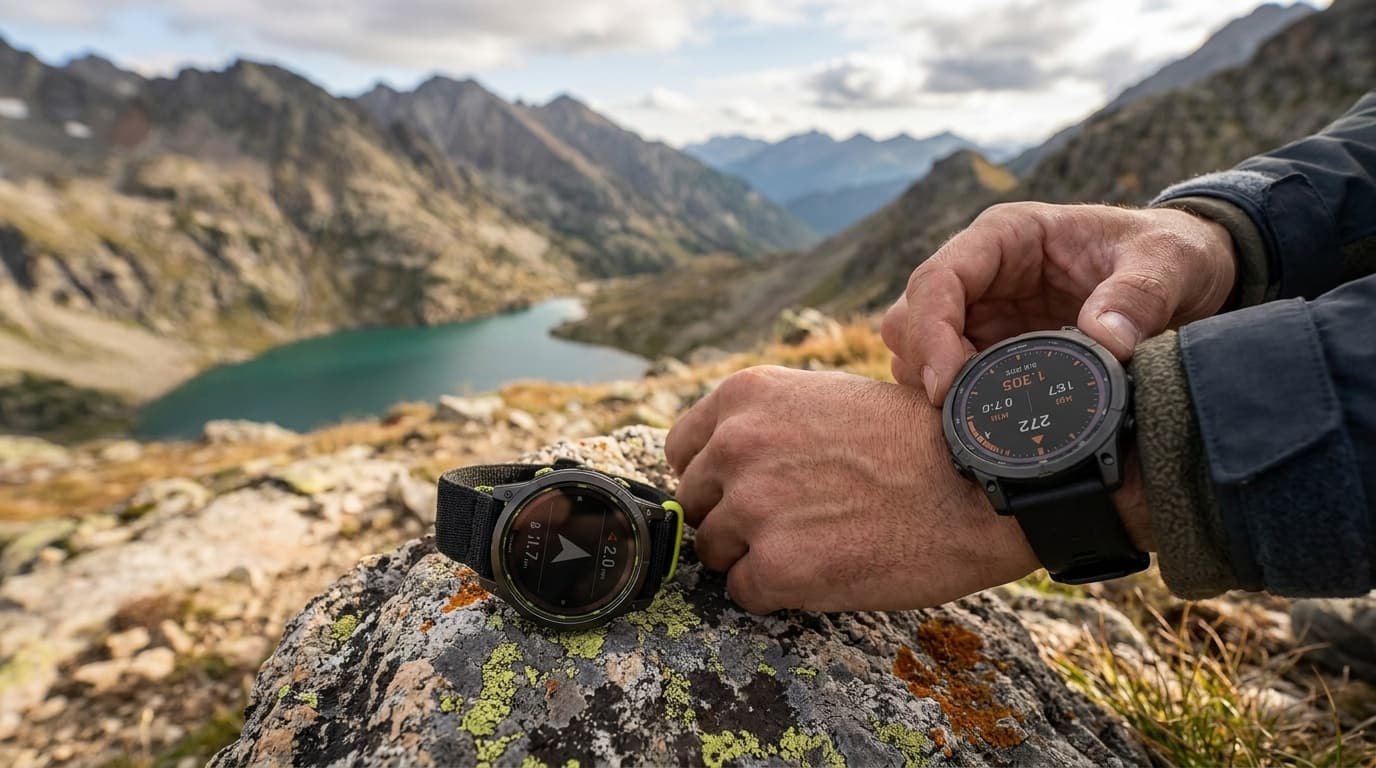
Fenix 8 wins on sizes, voice, and diving. Enduro 3 wins on weight and battery while keeping full topo maps. Compare the hiking differences.
Read guide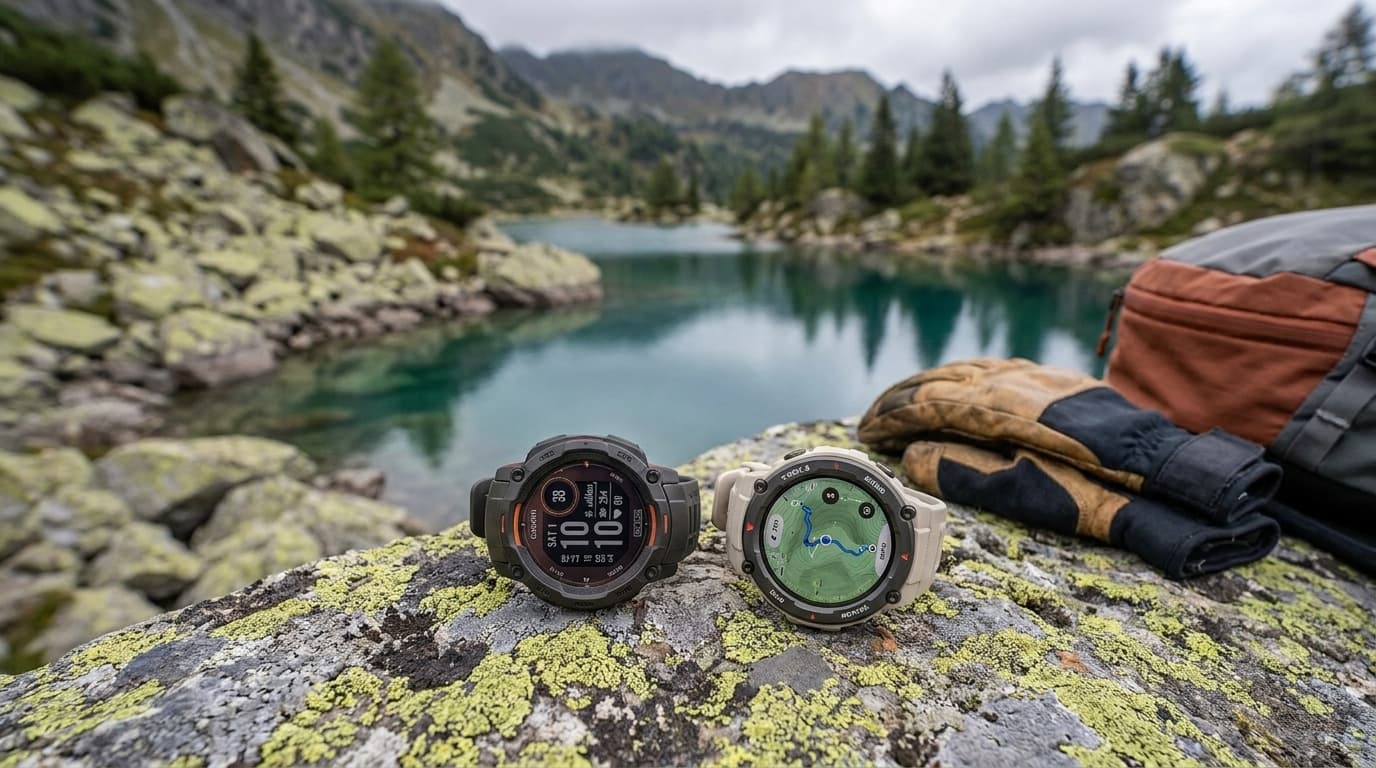
Comparison
Garmin Instinct 3 vs Amazfit T-Rex 3: maps or maturity?
Instinct 3 wins on ecosystem, buttons, and solar potential. T-Rex 3 wins on offline maps, AMOLED, and price. Choose by navigation needs.
Read guide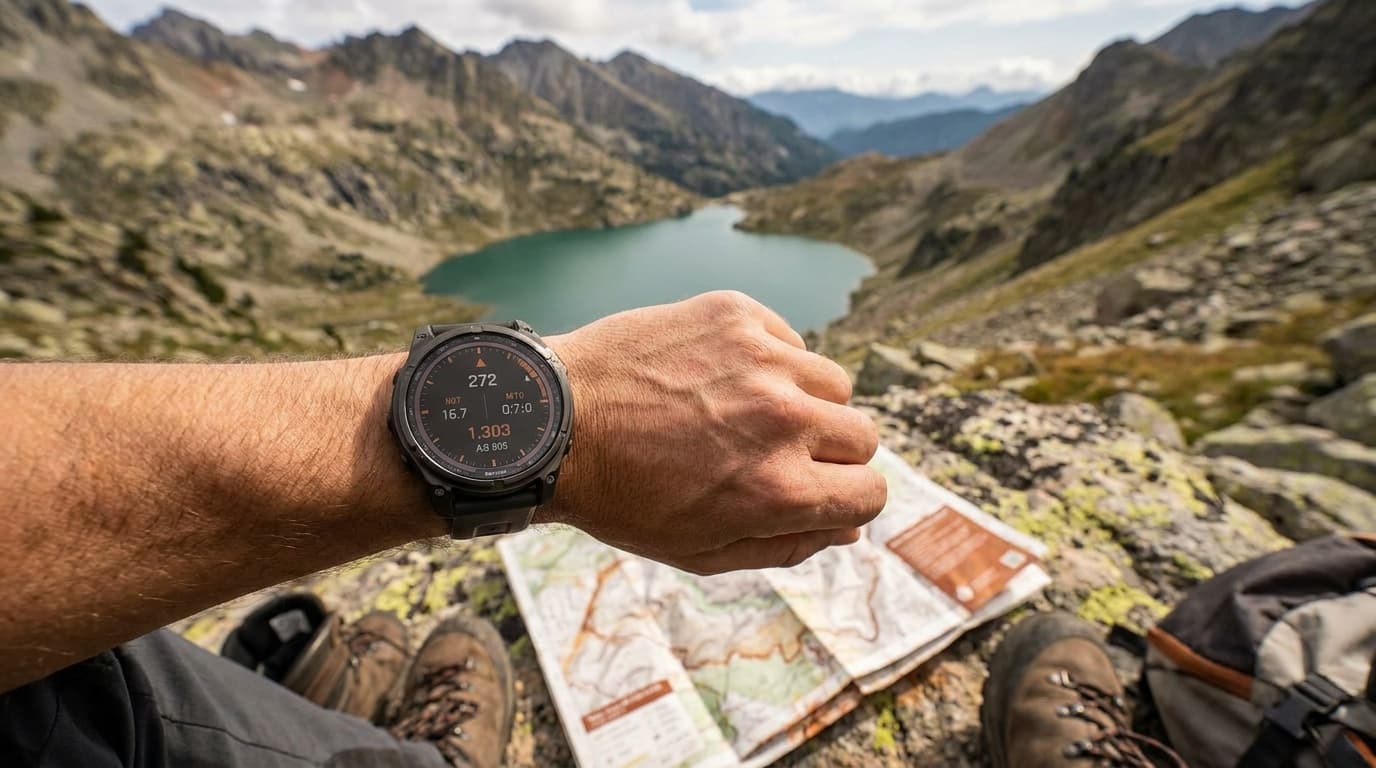
Product review
Garmin Fenix 8 Solar review: worth $1,100 for hikers?
Kit Score 9.0/10. The Fenix 8 Solar 47mm has full topo maps, sapphire protection, and up to 92 GPS hours with solar. Here is who should pay for it.
Read guide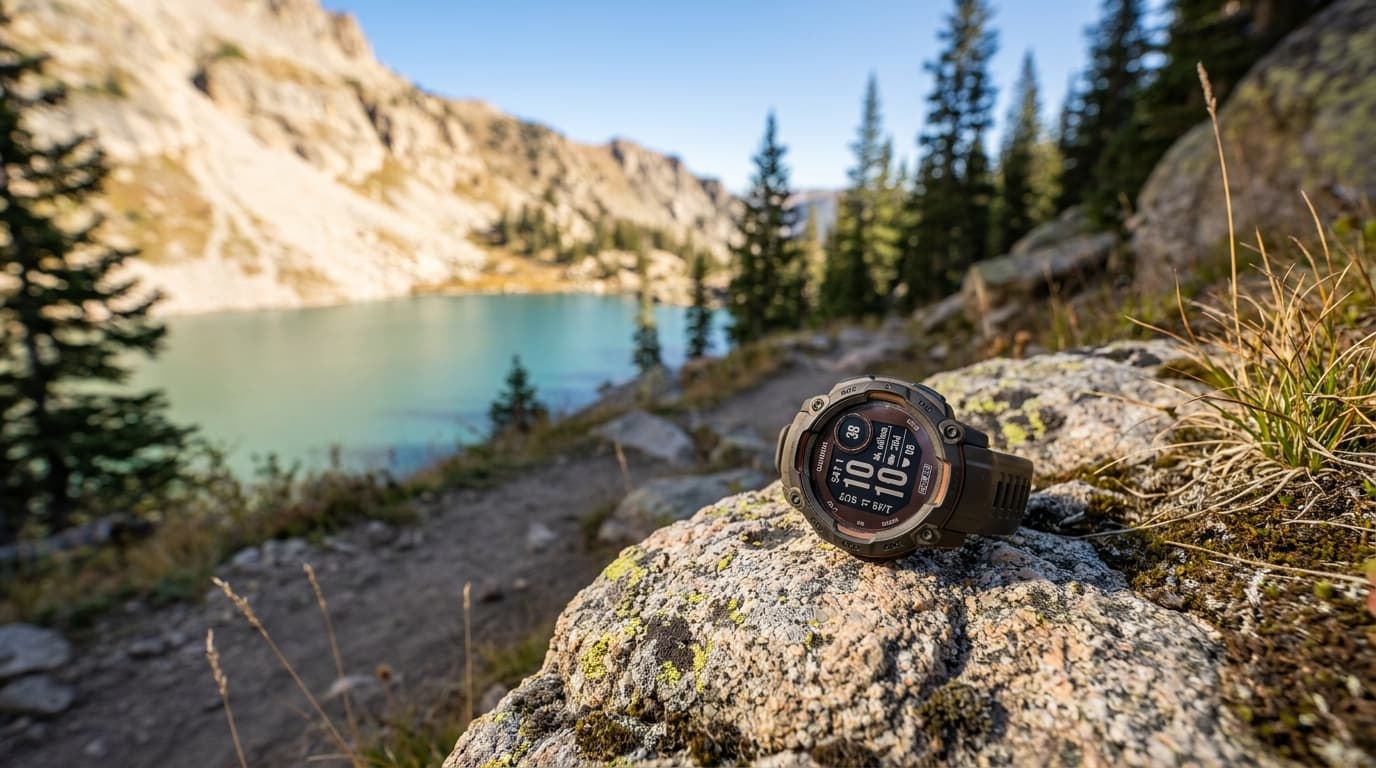
Product review
Garmin Instinct 3 Solar review: the right watch without maps?
Kit Score 8.7/10. Instinct 3 Solar brings multi-band GPS, rugged construction, and up to 130 GPS hours with solar. Breadcrumb navigation is the trade.
Read guideResearch-based review
Updated Jul 29, 2026Our recommendations draw on manufacturer documentation, retailer listings, owner feedback, and comparisons with alternatives.
As an Amazon Associate I earn from qualifying purchases. We may earn a commission from links here, at no extra cost to you. How we research →
Top picks
Related buying guide
Best GPS watches for hiking 2026: 4 picks from $252