A women's hiking boot is not a smaller men's boot. The last is cut narrower through the heel and proportionally wider at the forefoot, and the difference is what stops your heel lifting on a climb. These four picks are all built on women's lasts, and they are separated by foot shape and load rather than by which is objectively best.
How we picked
Every pick is scored against the Kit Score: fit for purpose, verified owner feedback, build quality, and value at typical street price. Ratings are carried at the model level and the fit assessment is specific to the women's last. No boot was chosen on marketing claims.
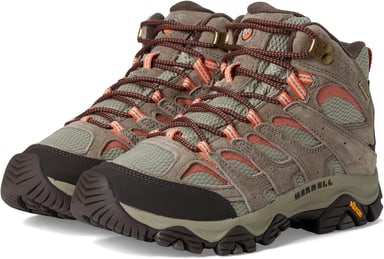
Best overall: Merrell Moab 3 Mid WP
BEST OVERALL
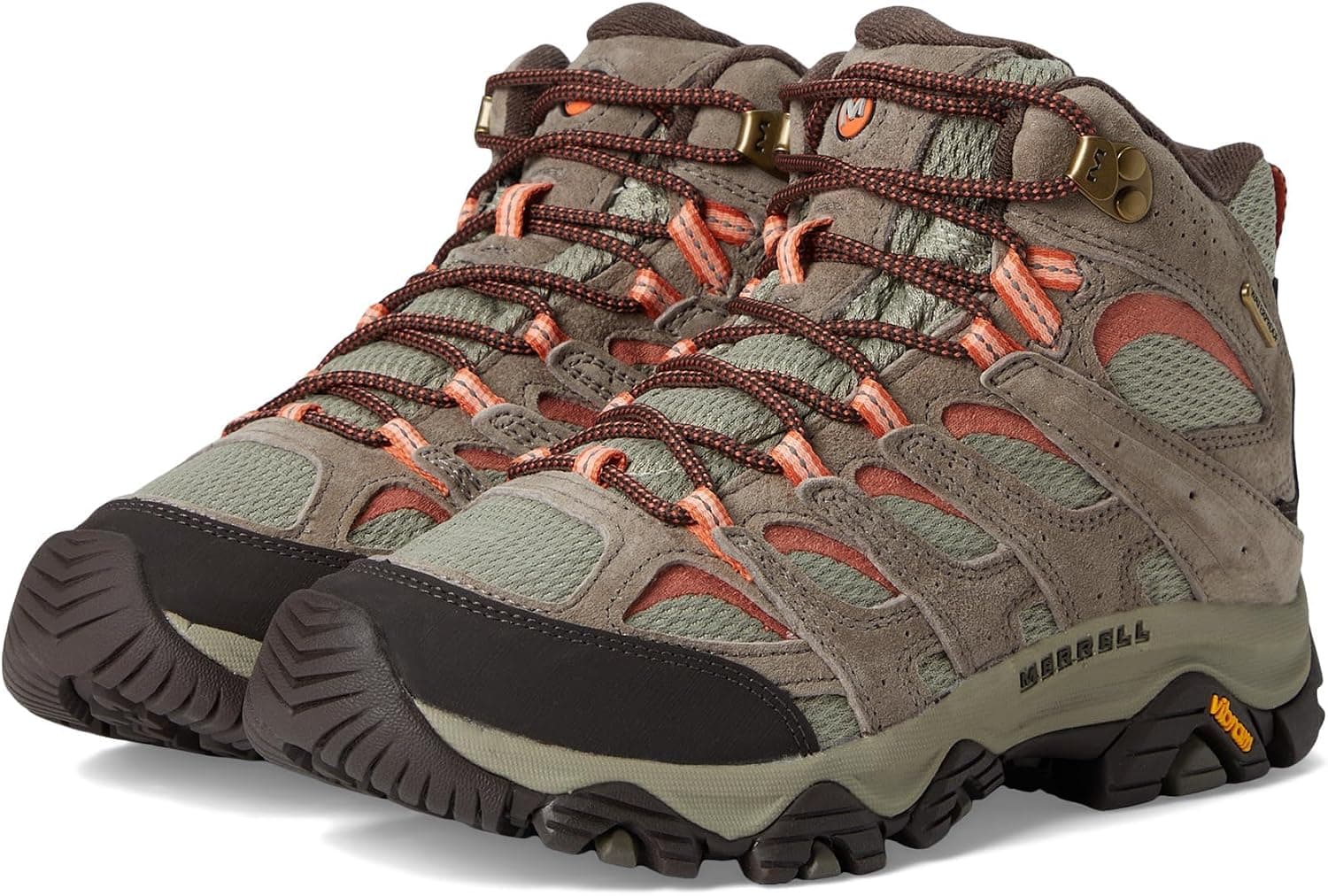
Merrell Moab 3 Mid WP (Women's)
Best for: Women who want one dependable, waterproof boot for most hikes.
- The most-owned boot on the trail, in women's lasts
- Heavier than trail-runner alternatives
Kit Score 8.0/10 · $170.00 Price checked Oct 26, 7:39 AM CDT · how we score gear
Buy on AmazonProduct details
Women who want one dependable, waterproof boot for most hikes. The most-owned boot on the trail, in women's lasts.
- Height
- Mid, ankle support
- Waterproof
- Yes, membrane
- Outsole
- Vibram TC5+
- Best use
- All-around hiking
More strengths
- Comfortable out of the box, no break-in ritual
- Waterproof membrane plus Vibram grip at a fair price
Other tradeoffs
- Runs warm in summer heat
The Moab is the default answer for a reason. It arrives comfortable, with no break-in ritual, which is unusual in a waterproof mid boot and matters most to anyone whose last pair took three painful hikes to soften. The waterproof membrane and Vibram TC5+ outsole cover the conditions most people actually hike in, and the price sits well below the technical boots.
The trade is weight and heat. It is heavier than a trail runner and runs warm in summer, so if most of your hiking is dry-weather day walking, a lighter shoe may serve you better. For one boot that handles most of the year, this is the one to beat.
Best for: Women who want one dependable waterproof boot for most hikes.
Best for wide feet: KEEN Targhee III Mid WP
BEST FOR WIDE FEET
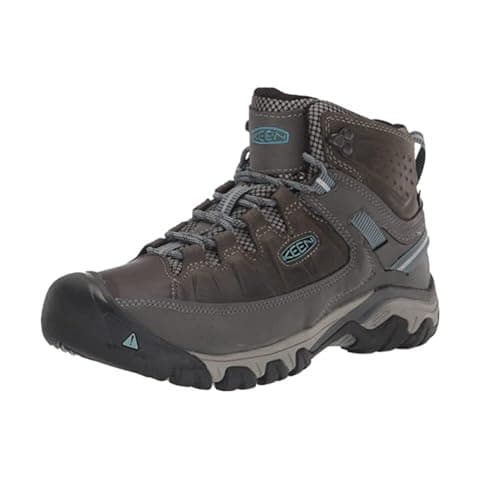
KEEN Targhee III Mid WP (Women's)
Best for: Women with wider feet who find most boots too narrow.
- KEEN's famously roomy toe box in a supportive mid boot
- Roomy fit is a drawback for narrow feet
Kit Score 8.2/10 · $142.50 Price checked Oct 26, 7:39 AM CDT · how we score gear
Buy on AmazonProduct details
Women with wider feet who find most boots too narrow. KEEN's famously roomy toe box in a supportive mid boot.
- Height
- Mid
- Waterproof
- KEEN.Dry
- Fit
- Roomy KEEN toe box
- Best use
- Wide feet, day hikes
More strengths
- KEEN.Dry waterproofing plus 4 mm multi-directional lugs
- The wide-foot answer in hiking boots
Other tradeoffs
- Availability shifts by size and color: check the current listing
If you have tried boots and concluded that hiking simply hurts, this is the pair to try before you give up. KEEN's toe box is famously roomy, and the Targhee III applies it to a genuinely supportive mid boot rather than a sandal-adjacent shoe. KEEN.Dry handles wet ground and the 4 mm multi-directional lugs hold on loose surfaces.
That roominess cuts both ways. On a narrow foot the extra volume becomes movement, and movement becomes blisters, so this is the wrong boot if standard widths already fit you well. Availability also rotates by size and colour, so check current stock rather than assuming your size is there.
Best for: Women with wider feet who find most boots too narrow through the forefoot.
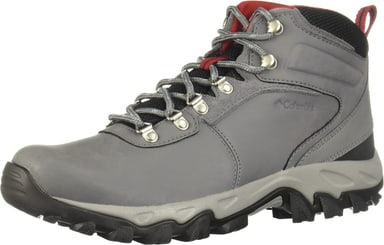
Best budget: Columbia Newton Ridge Plus II
BEST BUDGET
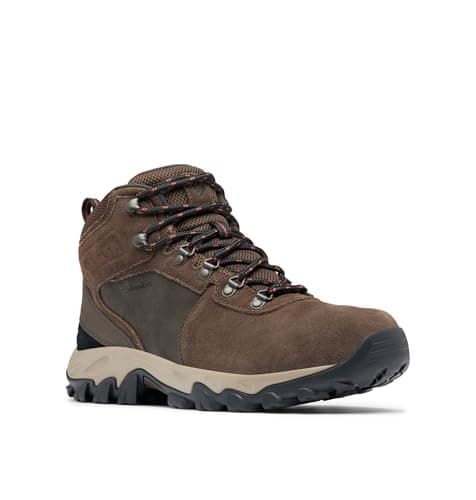
Columbia Newton Ridge Plus II WP
Best for: First boots, occasional hikers, and gift buyers on a budget.
- The best-selling budget waterproof boot on Amazon
- Less support than the Moab or Quest under load
Kit Score 8.2/10 · $110.00 Price checked Oct 26, 7:39 AM CDT · how we score gear
Buy on AmazonProduct details
First boots, occasional hikers, and gift buyers on a budget. The best-selling budget waterproof boot on Amazon.
- Height
- Mid
- Waterproof
- Seam-sealed leather
- Outsole
- Omni-Grip
- Best use
- Budget waterproof boot
More strengths
- Full-grain leather looks and wears above its price
- Light for a leather boot
Other tradeoffs
- Availability rotates across listings: check current stock
The best-selling budget waterproof boot on Amazon, and the sensible first pair. Seam-sealed full-grain leather looks and wears better than the price suggests, the Omni-Grip outsole is adequate on maintained trail, and it is light for a leather boot.
The limit is support under load. It has noticeably less structure than the Moab or the Quest once a pack is involved, so treat it as a day-hiking and occasional-use boot rather than a backpacking one. Listings rotate, so check current stock.
Best for: First boots, occasional hikers, and gift buyers working to a budget.
How to choose
Choosing women's hiking boots
Start with foot width
This decides more than brand does. If your forefoot has been pinched by past boots, start with the KEEN. If standard widths fit you, the extra room will cause blisters rather than prevent them.
Match the boot to the load
Ankle structure earns its weight only when there is weight to carry. Day hiking suits a mid boot; a loaded multi-day pack justifies the high cut and chassis of the Quest 4.
Size for the end of the day
Feet swell over miles. Fit with the socks you will actually hike in, and leave a thumb's width in front of your longest toe so descents do not bruise your toenails.
Do not assume waterproof is always right
A membrane keeps water out and heat in. In consistently hot, dry conditions a ventilated non-waterproof boot is more comfortable.
Frequently asked questions
Are women's hiking boots different from men's?
Yes, and not just in size. Women's lasts are typically cut narrower through the heel and proportionally wider at the forefoot, matching the average difference in foot shape. That heel fit is what stops your foot lifting on a climb, which is a common cause of blisters when wearing a downsized men's boot.
What are the best hiking boots for women with wide feet?
The KEEN Targhee III Mid WP. KEEN's toe box is the roomiest in this category and the Targhee applies it to a properly supportive mid boot. If standard widths already fit you, avoid it, because the extra volume lets the foot move and that causes the blisters it is meant to prevent.
Do I need waterproof hiking boots?
It depends on your conditions rather than being universally better. A waterproof membrane keeps water out and also holds heat in, so in reliably hot and dry weather a ventilated boot is more comfortable. In wet grass, mud, or shoulder-season conditions, waterproofing is worth the warmth penalty.
How should hiking boots fit?
Snug at the heel with no lift, and roughly a thumb's width of space in front of your longest toe. Fit them in the evening, once your feet have swollen, wearing the socks you will hike in. The toe space is what protects your toenails on long descents.
Are hiking boots or trail runners better for women?
Boots for load carrying, wet ground, and ankle support; trail runners for speed, heat, and dry maintained trail. Most people who day hike in fair weather are better served by a lighter shoe than they assume. See our best trail running shoes picks for that side of the decision.
For the men's and unisex field scored the same way, see our best hiking boots guide. If blisters are your recurring problem, best hiking socks matters as much as the boot.
Keep going
Related guides
 Complete hike loadoutDay hike kitBuild the complete kit
Our recommendations draw on manufacturer documentation, retailer listings, owner feedback, and comparisons with alternatives.
As an Amazon Associate I earn from qualifying purchases. We may earn a commission from links here, at no extra cost to you. How we research →