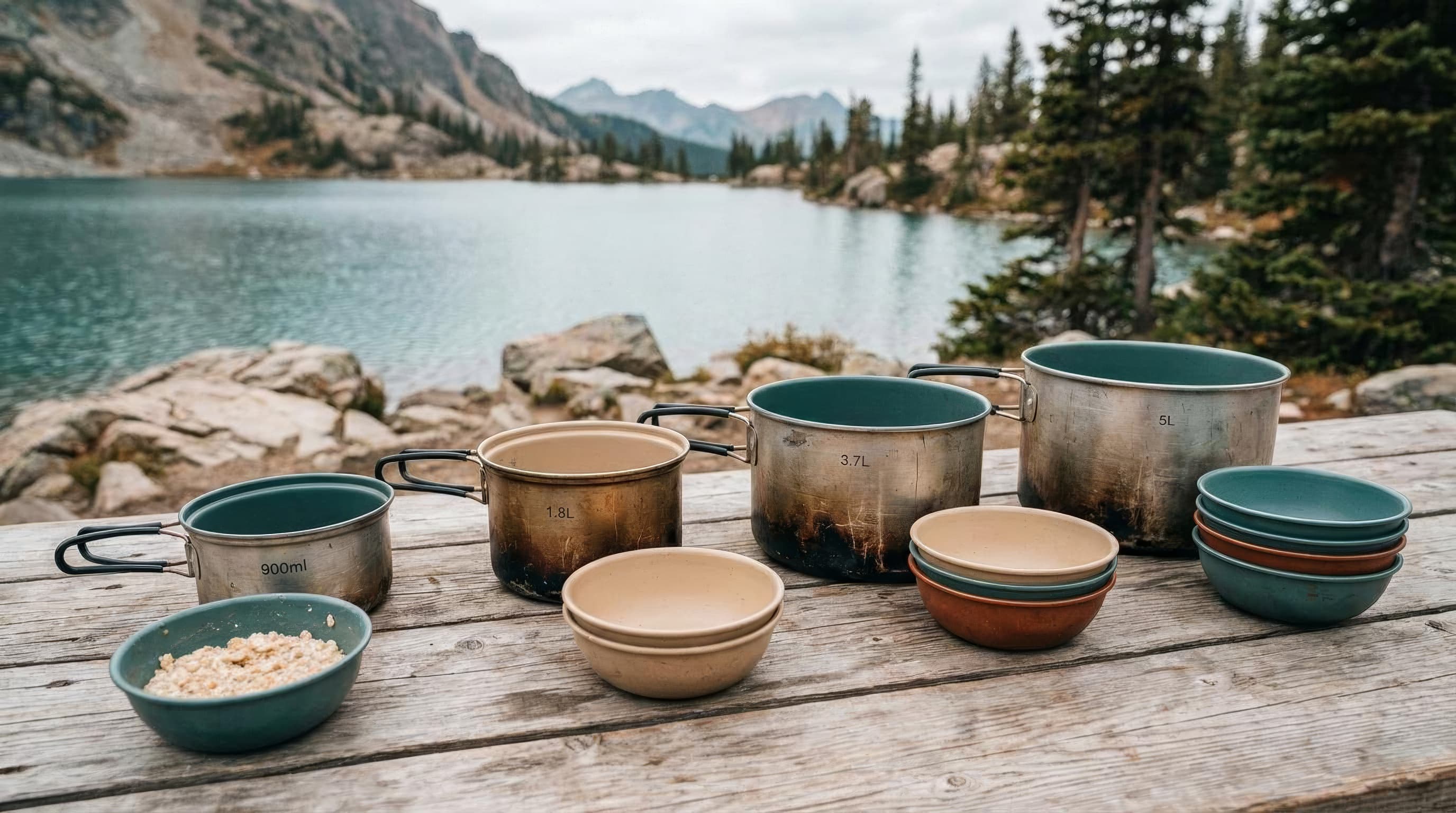
Use a 0.75 to 1 L pot for one person, 1.5 to 2 L for two, and at least 3 L for three or four people. Increase the size when the meal expands, needs vigorous stirring, includes shared hot drinks, or requires melting snow. Capacity should follow the largest normal meal, not the largest group you can imagine.
The quick size chart
| Group and menu | Useful primary pot |
|---|---|
| One person, boil water only | 0.75 to 1 L |
| One person, cook in the pot | 1 to 1.3 L |
| Two people, boil and rehydrate | 1.5 to 1.8 L |
| Two people, cook a shared meal | 1.8 to 2.5 L |
| Three people | 2.5 to 3 L |
| Four people, normal one-pot meal | 3 to 4 L |
| Four people, pasta or soup | 4 to 5 L |
| Snow melting or large batch water | Add at least 1 L of headroom |
These are starting points, not a universal one-liter-per-person law. Oatmeal and dehydrated meals demand less vessel volume than pasta, chili, or food that must be stirred aggressively.
Best pot size for one person
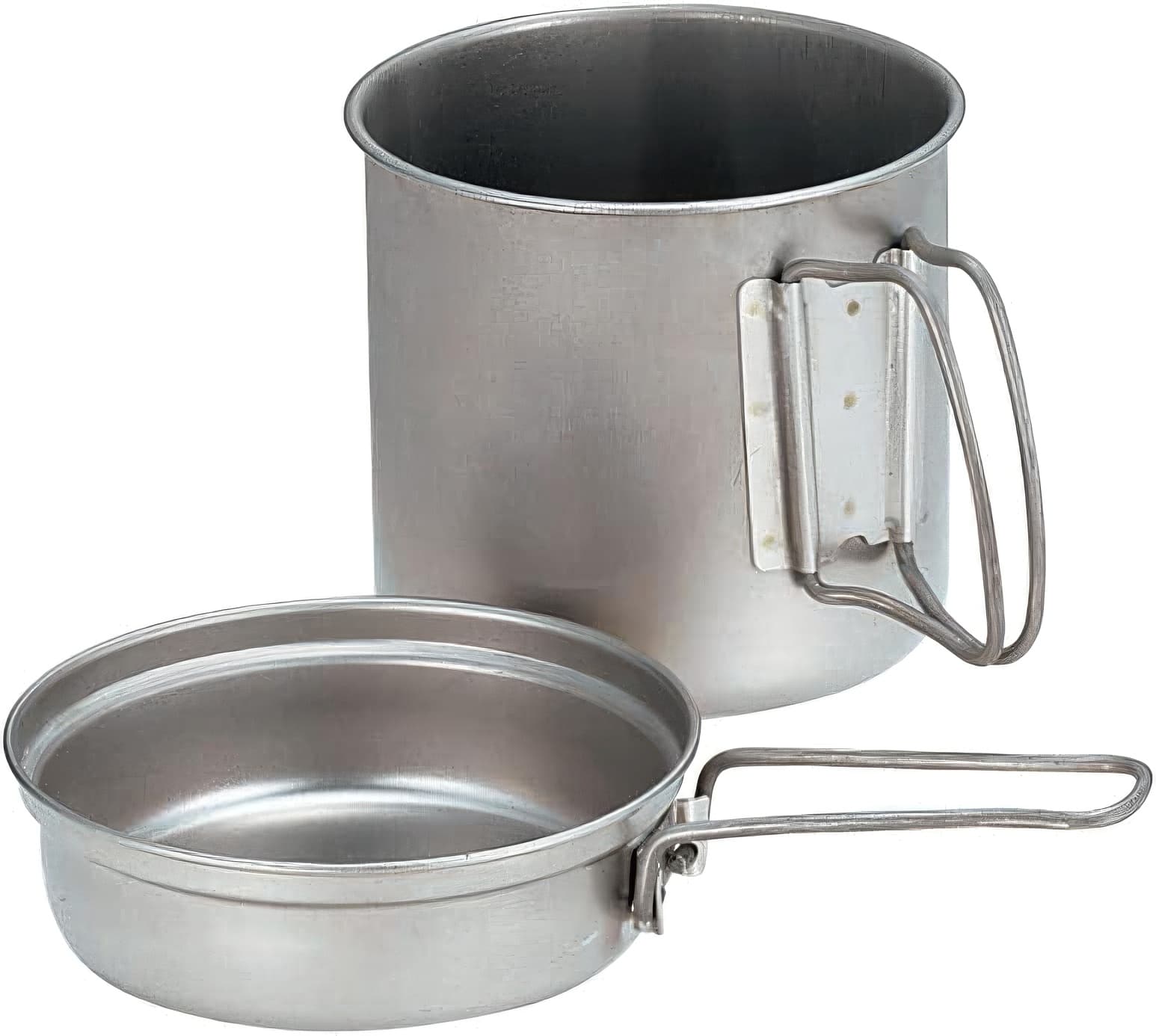
Nine hundred milliliters is the most useful solo middle ground. It can boil enough water for a meal and hot drink, hold a full package of noodles, or cook oatmeal with room above the food. A 550 to 750 mL mug is lighter but gives little spill margin and may force two boils.
SOLO 900 ML PICK
Snow Peak Trek 900 Titanium Cookset
Best for: Solo backpackers and ultralight hikers who prioritize the lowest possible carried weight and want cookware that lasts decades.
- At 6.2 oz for the full set, weight savings over stainless or aluminum are significant on multi-day trips
- No nonstick coating means food sticks more than on anodized or ceramic alternatives
Kit Score 8.8/10 · $54.95 Price checked Oct 26, 7:39 AM CDT · how we score gear
Buy on AmazonProduct details
Snow Peak's Trek 900 is a two-piece Japanese titanium pot-and-pan set that weighs a fraction of stainless alternatives while offering corrosion immunity and a lifetime durability guarantee. It is sized for one serious cook or two on simple meals.
- Material
- Japanese titanium (no coating)
- Weight
- (no change requested) note: Snow Peak's spec table did not render to fetch; 6.2 oz matches retailer and Amazon listings
- Capacity
- 30.4 fl oz (900ml) pot; 5-inch frying pan lid
- Packed dimensions
- Pot: 4.75 x 4.25 in; pan: 5 x 1.5 in
- Pieces
- Titanium pot, titanium frypan (doubles as lid), mesh stuff sack
- Fuel canister fit
- Stores 250g canister and GigaPower stove inside when packed
More strengths
- Titanium is inert: no metallic taste, no rust, no coating to chip or degrade over time
- Nests a stove and 250g canister inside for a clean single-unit kit
Other tradeoffs
- The frying pan is 5 inches across, which limits it to a lid or heating small portions rather than full cooking tasks
The Snow Peak Trek 900 weighs 6.2 oz with its lid-pan and stores a fuel canister and compact stove. Its titanium construction suits boil-first trips. Choose a slightly larger aluminum pot if rice, sauce, or mixed meals are normal.
Read the Snow Peak Trek 900 review.
Best pot size for two people
A 1.5 L pot can boil water for two efficient meals, but 1.8 to 2 L gives better stirring room and accommodates shared drinks. Two liters is also a more forgiving ceiling for a one-pot dinner after ingredients expand.
TWO-PERSON 1.8 L PICK
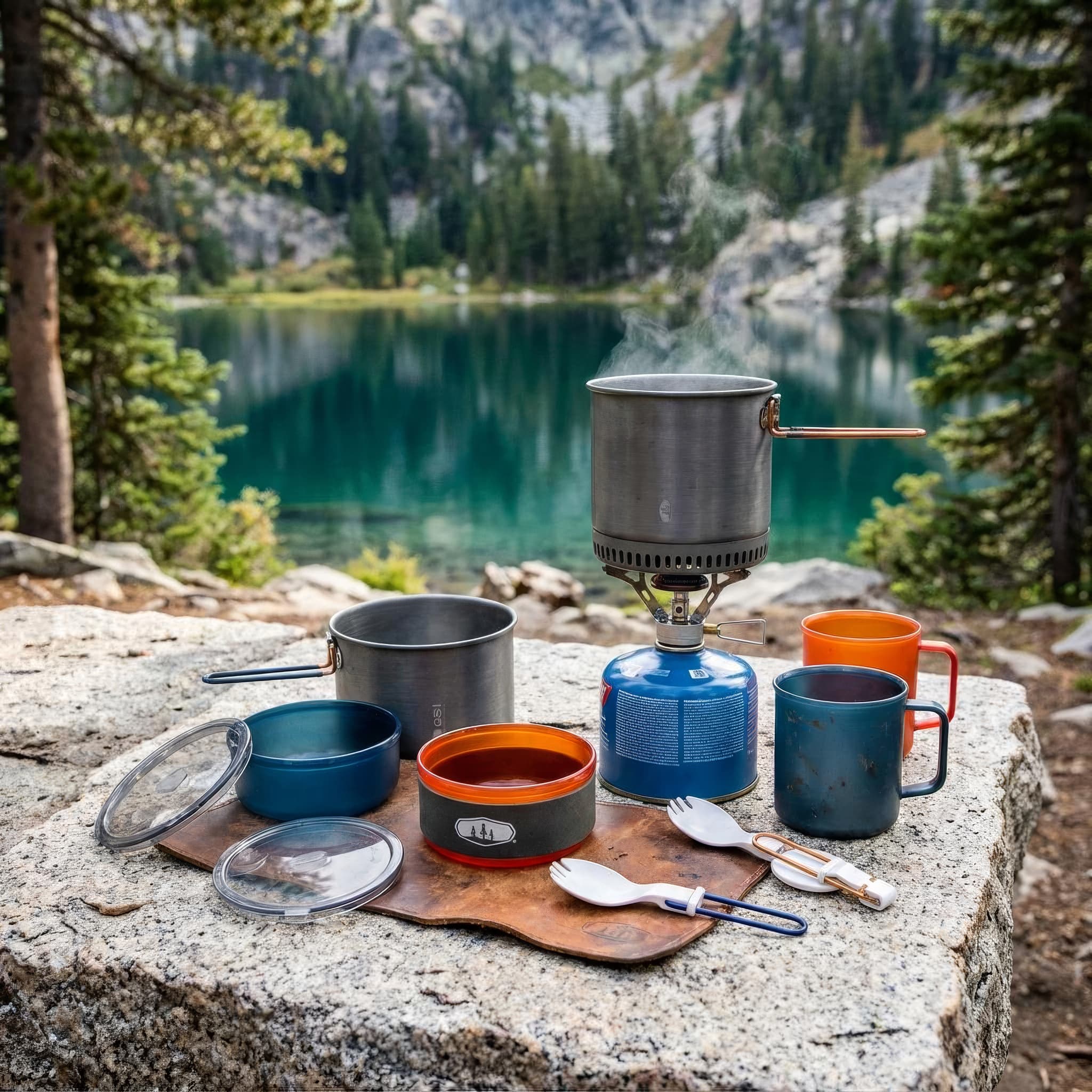
GSI Outdoors Halulite Dualist HS
Best for: Two backpackers who share a stove and want fast boils, complete tableware, and a tidy nested system.
- Complete tableware for two nests with the pot rather than occupying separate pack space
- No frying pan is included
Kit Score 8.6/10 · $99.95 Price checked Oct 26, 7:39 AM CDT · how we score gear
Buy on AmazonProduct details
A two-person hard-anodized aluminum cook-and-eat system with a 1.8 L heat-exchanger pot, insulated mugs, bowls, folding sporks, and a sink bag packed into one compact cylinder.
- Material
- Hard-anodized aluminum
- Weight
- 23.1 oz (654 g)
- Packed size
- 6.2 x 5.8 x 5.9 in
- Pot capacity
- 1.8 L
- Included
- Pot, strainer lid, 2 mugs/bowls, 2 lids, 2 sporks, sink bag
- Group size
- 2 people
More strengths
- Heat-exchanger base is designed to reduce boil time and fuel use by about 30 percent
- Hard-anodized aluminum spreads heat better than a thin titanium pot for simple one-pot meals
Other tradeoffs
- Heavier and more expensive than a minimalist solo pot
The GSI Halulite Dualist HS builds a full two-person system around a 1.8 L pot. It is well sized for shared boiling and simple dinners, and its bowls, insulated mugs, lids, sporks, and wash bag nest inside. It becomes tight when the meal must serve two large portions from one vessel without a side.
Read the GSI Halulite Dualist HS review.
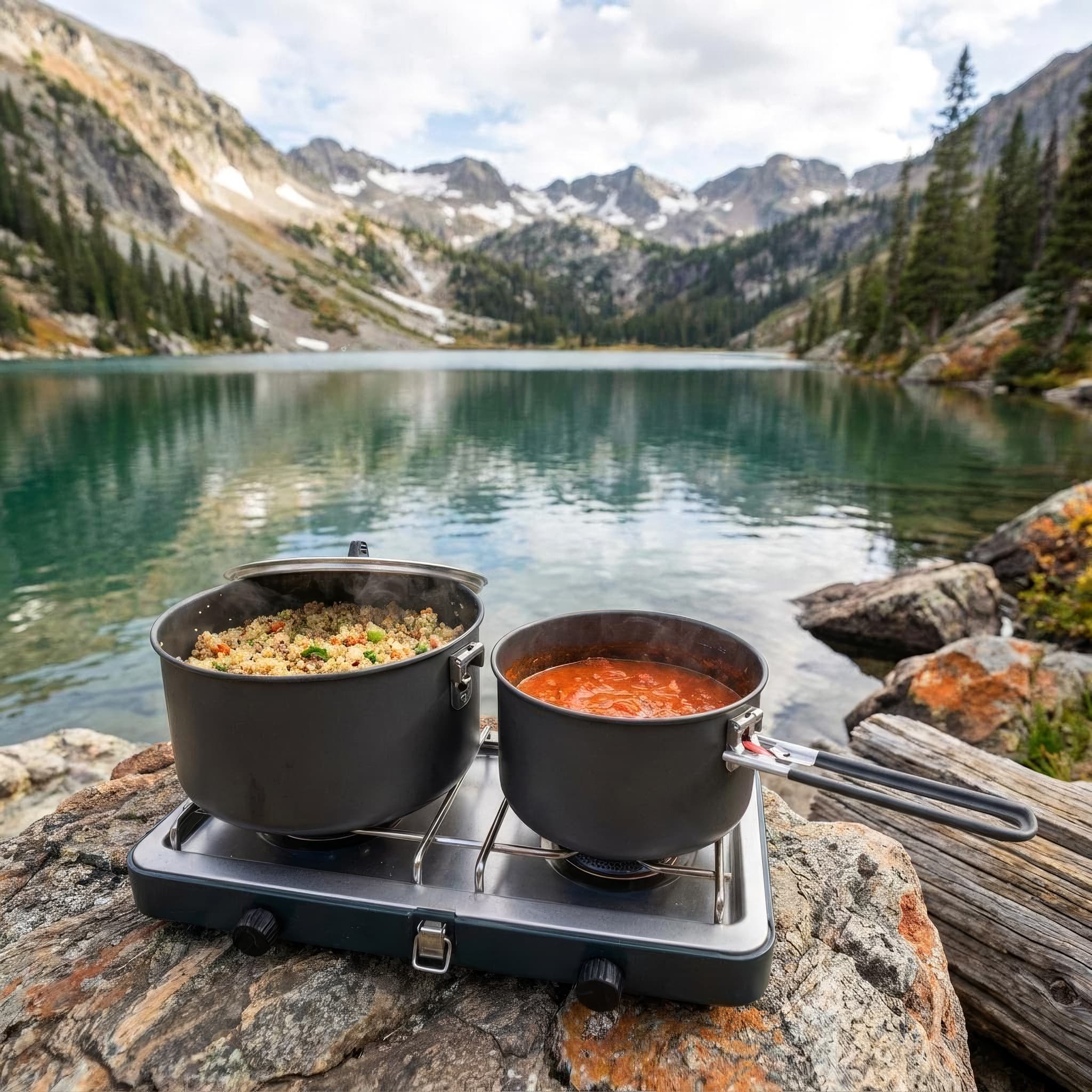
Two people who cook a main and side should consider the MSR Ceramic 2-Pot Set: a 2.5 L main pot and 1.5 L secondary vessel at 15.6 oz.
Best pot size for a family of four
Three liters is the minimum comfortable primary pot for four modest portions. Four quarts, about 3.7 L, gives more room for pasta, soup, rice, chili, or group water without making the pot unwieldy on a two-burner camp stove.
FOUR-PERSON 4 QT PICK
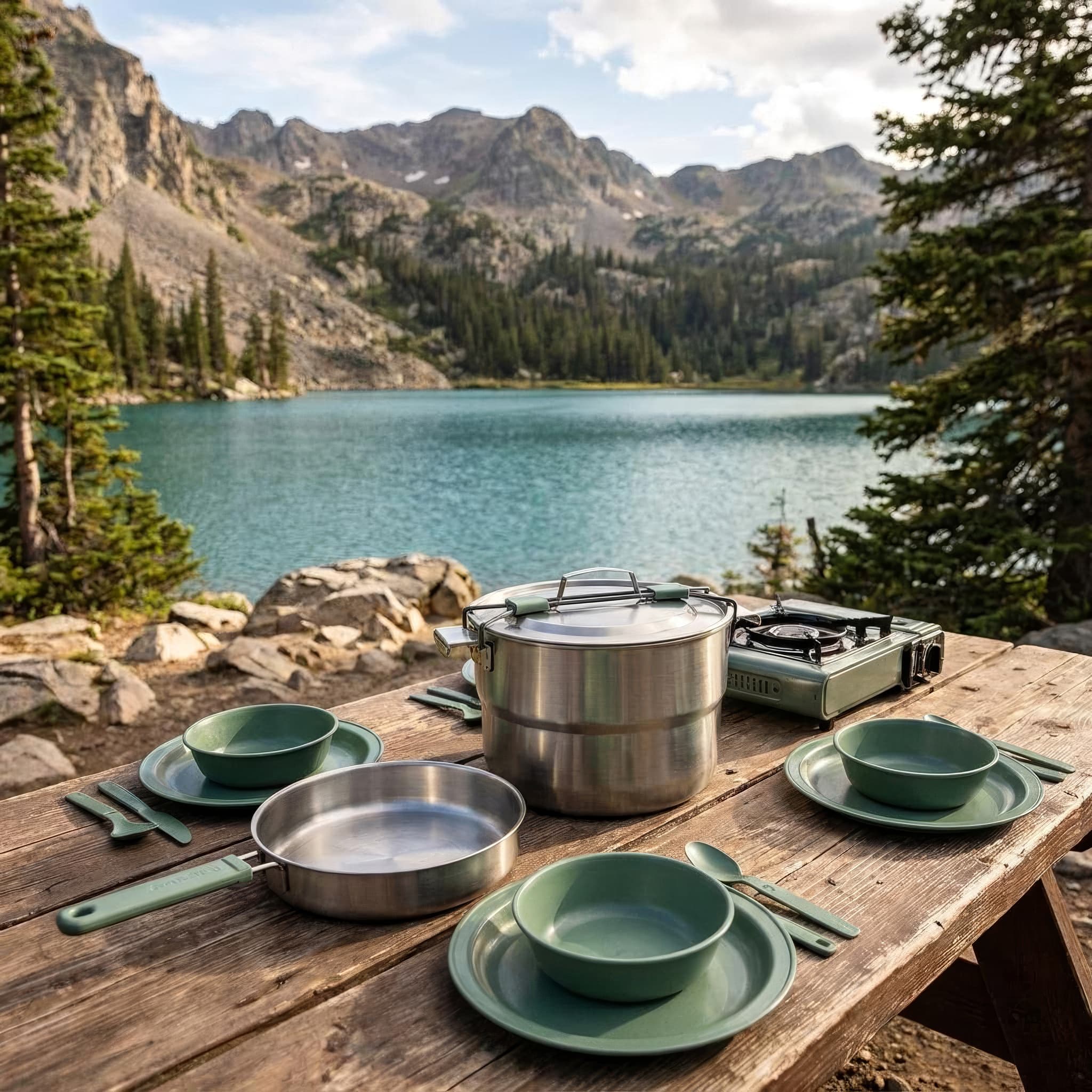
Stanley Wildfare Core 26-Piece Camp Kitchen
Best for: Families and groups who want a durable, complete car-camping kitchen for less than most premium coated sets.
- One purchase covers prep, cooking, serving, and tableware for four
- At 4.70 lb it belongs near a vehicle, not in a backpack
Kit Score 8.8/10 · Check current price · how we score gear
Buy on AmazonProduct details
A 26-piece stainless car-camping kitchen with a 4 qt pot, tri-ply fry pan, prep tools, and four complete table settings that nest into one durable package.
- Material
- 18/8 stainless steel and BPA-free tableware
- Weight
- 4.70 lb
- Packed size
- 8.52 x 10.65 x 6.14 in
- Cookware
- 4 qt pot and 8 in tri-ply fry pan
- Pieces
- 26
- Group size
- 4 people
More strengths
- Stainless steel tolerates metal utensils and more aggressive cleaning
- Tri-ply fry pan is more useful for browning than a thin stamped camp pan
Other tradeoffs
- The full set is excessive for couples who cook simple one-pot meals
The Stanley Wildfare Core uses a 4 qt pot and eight-inch tri-ply fry pan, then nests prep tools and tableware for four around them. It is heavy, durable car-camping cookware with enough room to stir a group meal.
Read the Stanley Wildfare Core review.
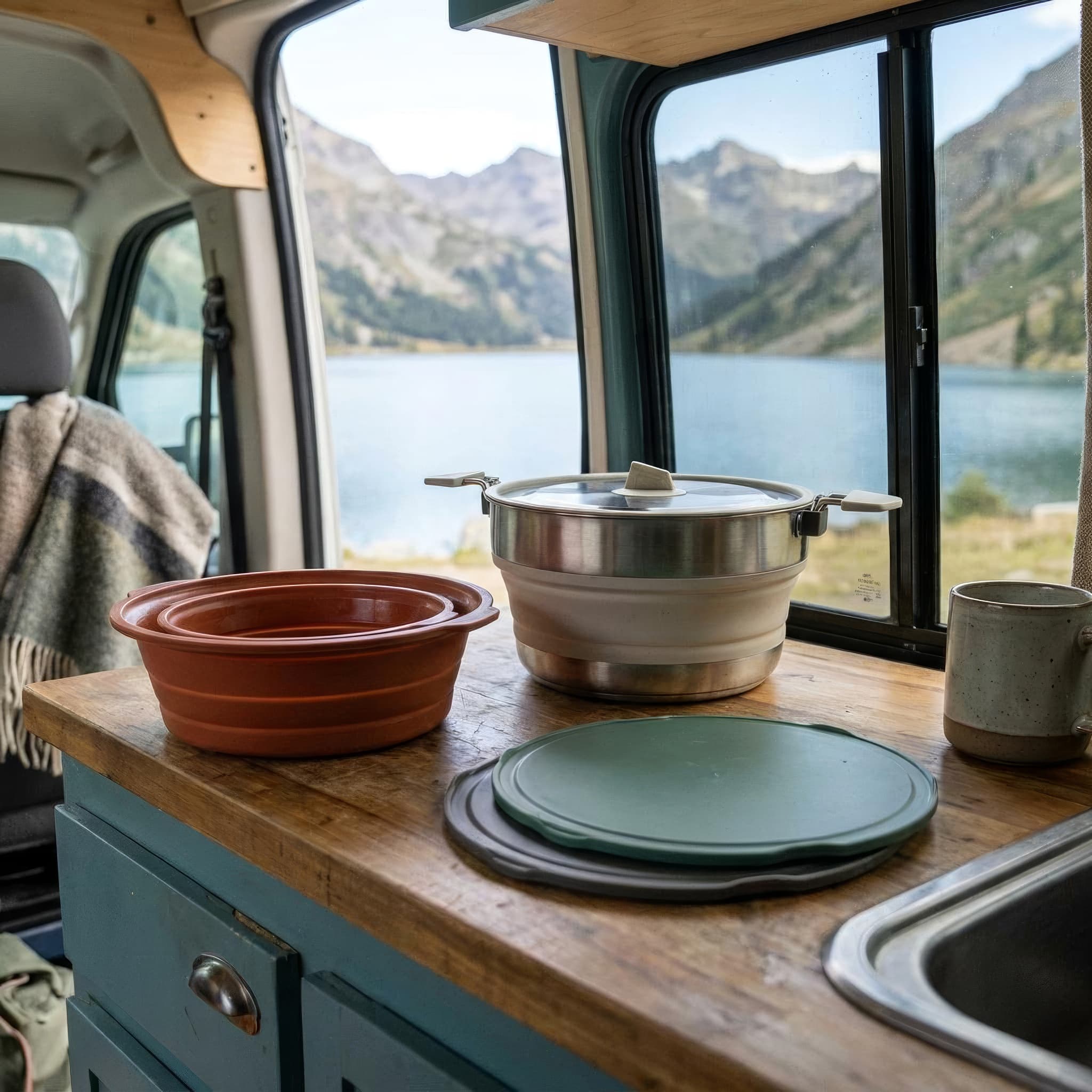
A five-liter pot makes sense for a family that cooks pasta, large soups, or batch water. The Sea to Summit Detour Essentials provides that volume while collapsing to three inches high for vehicle storage.
Why listed capacity is not usable capacity
A pot measured to the rim cannot be safely cooked at the rim. Boiling water moves, pasta foams, rice expands, and a spoon displaces volume. A practical meal needs empty space above the food.
As a rule of thumb, plan to use roughly 70 to 80 percent of the stated capacity for a calm liquid and less for foamy pasta or vigorous stirring. This is planning guidance, not a fill line. Follow any maximum marking or manufacturer instruction on the exact pot.
A 1.8 L pot may therefore be a comfortable 1.3 to 1.5 L cooking vessel. A 3.7 L pot may provide around three liters of relaxed working space. The menu determines whether that is enough.
The meal changes the math
Dehydrated meals: The pot only heats water, so capacity can stay close to the volume needed for one round of meals and drinks.
Pasta: Water plus expanding pasta needs generous headroom, and draining is safer when the pot is not full. Size up.
Rice and grains: Expansion and stirring matter. Choose more room than the dry ingredient volume suggests.
Soup and chili: The final meal volume sits in the pot at once. Use the real serving volume plus headroom.
Snow melting: Loose snow contains far less water than its volume implies. A small pot forces many cycles and awkward feeding. Size up and begin with liquid water in the bottom when possible.
Coffee and shared drinks: Add the drink water to the meal water if one boil must serve both.
Pot width and stove stability
Capacity alone does not prove compatibility. A tall narrow pot may sit well on a small burner but provide less surface area for stirring. A wide group pot may overhang a compact backpacking stove and become unstable.
Check the stove maker's maximum cookware diameter and weight. A four- or five-liter pot filled with food can exceed what a tiny canister-top burner safely supports. Large pots belong on broad two-burner stoves or systems specifically rated for them.
Packed dimensions matter too. A one-liter pot that fits a fuel canister may consume less pack volume than a shorter but wider alternative. In a van, a collapsible pot may be more valuable than a conventional nested set.
Choose the size in four steps
Turn your menu into a pot
Count routine eaters
Size for the normal group, not the once-a-year guest. Add a second pot when group size changes often.
Measure the largest meal
Estimate the cooked food and water, then leave headroom for expansion, foam, and stirring.
Check the burner
Confirm the stove can support the pot diameter and filled weight without unstable overhang.
Check the packed home
Fit the pot to the pack pocket, kitchen tote, drawer, or vehicle box that will actually carry it.
Frequently asked questions
Is a one-liter camping pot big enough for two people?
It can boil a limited amount of water for two people in repeated batches, but it is too tight for most shared meals. A 1.5 to 2 L pot is more practical for two, with 1.8 L a useful middle ground.
What size pot should I use for four campers?
Start at 3 L for modest meals and choose 3.5 to 4 L for more comfortable stirring and larger portions. A 5 L pot is useful for pasta, soup, batch water, or meals where generous headroom matters.
Is a 750 mL pot enough for solo backpacking?
It is enough for a minimalist hiker who only boils water and accepts a tight margin. A 900 mL pot is more forgiving for noodles, oatmeal, a meal plus drink, and stirring without spills.
Should I carry one large pot or two smaller pots?
Carry one pot for boil-and-eat trips and simple one-pot menus. Carry two when a main and side cook separately, one vessel must stay hot, or the group needs a backup. Two useful sizes are better than a large set of redundant pieces.
See the recommended pots in best camping cookware, then choose the base metal with titanium vs aluminum camping cookware.
Keep going
Related buying guideBest camping cookware sets 2026: 8 picks, cast iron to titaniumRelated guides
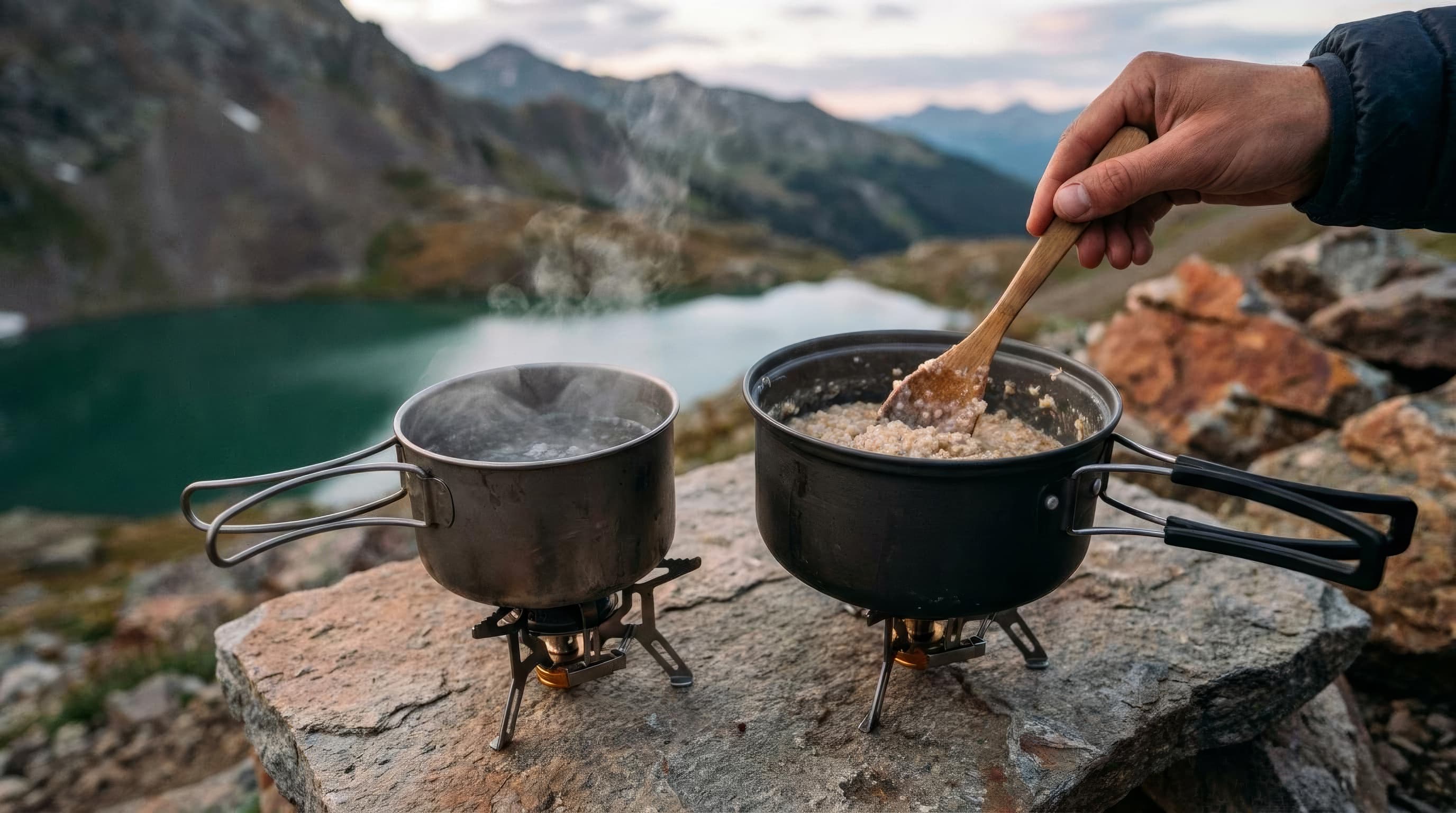
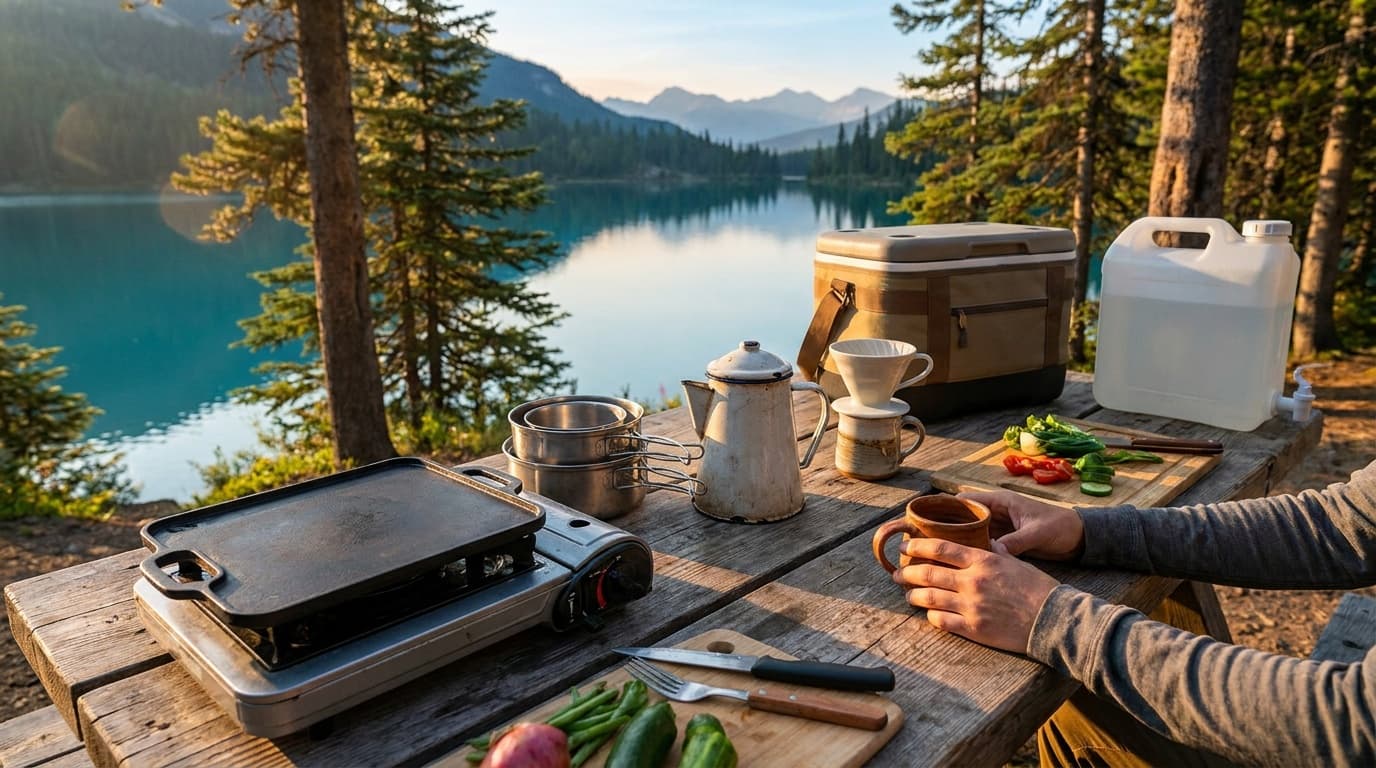
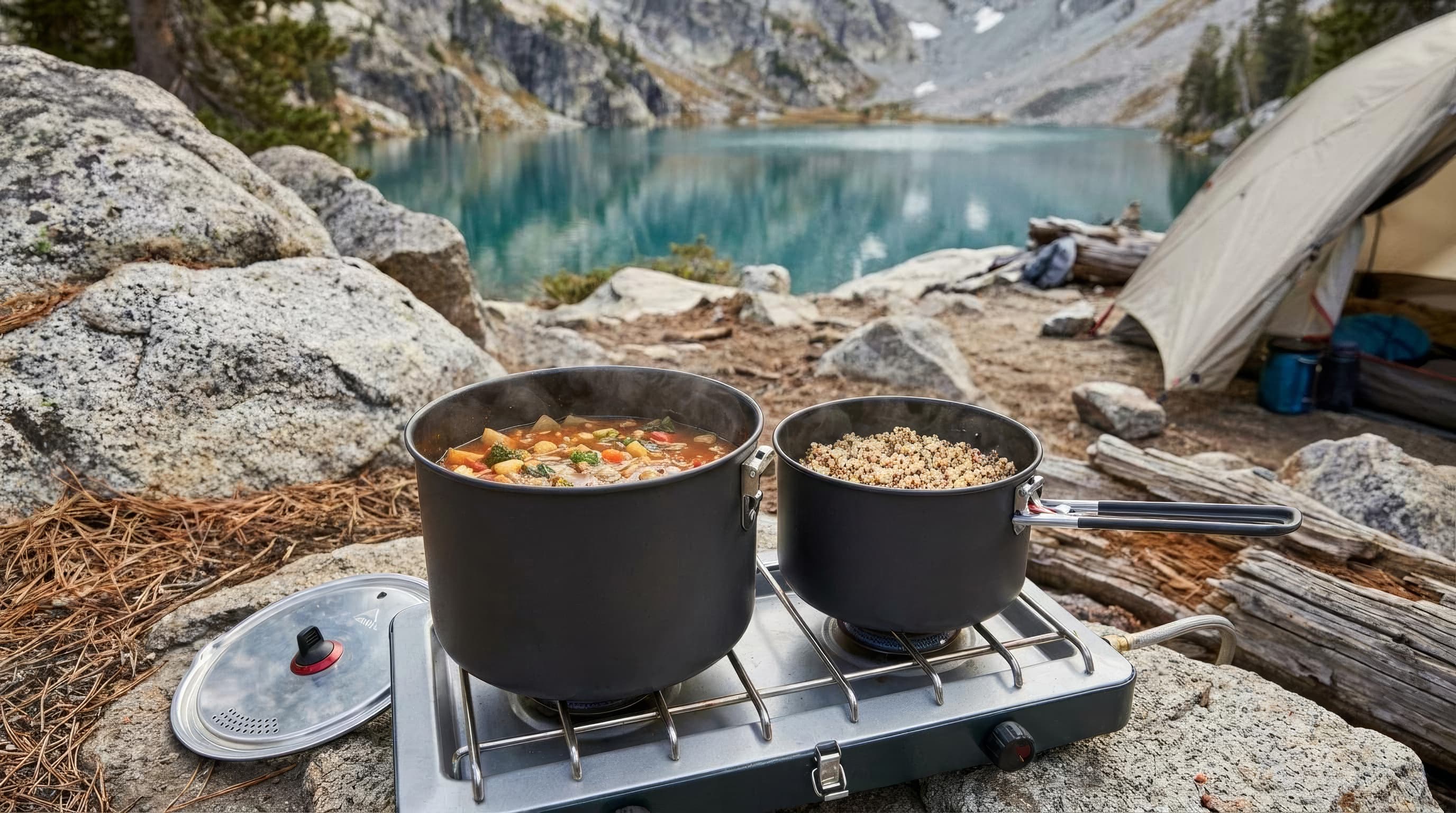
 Complete camp loadoutCar-camping starter kitBuild the complete kit
Our recommendations draw on manufacturer documentation, retailer listings, owner feedback, and comparisons with alternatives.
As an Amazon Associate I earn from qualifying purchases. We may earn a commission from links here, at no extra cost to you. How we research →
Top picks
 Solo 900 Ml PickSnow Peak Trek 900 Titanium Cookset8.8/10
 Two-person 1.8 L PickGSI Outdoors Halulite Dualist HS8.6/10
 Best for Real CookingMSR Ceramic 2-Pot Set8.3/10
 Four-person 4 Qt PickStanley Wildfare Core 26-Piece Camp Kitchen8.8/10
 Best Space-SavingSea to Summit Detour Essentials Camp Kitchen8.4/10
Related buying guide
Best camping cookware sets 2026: 8 picks, cast iron to titanium