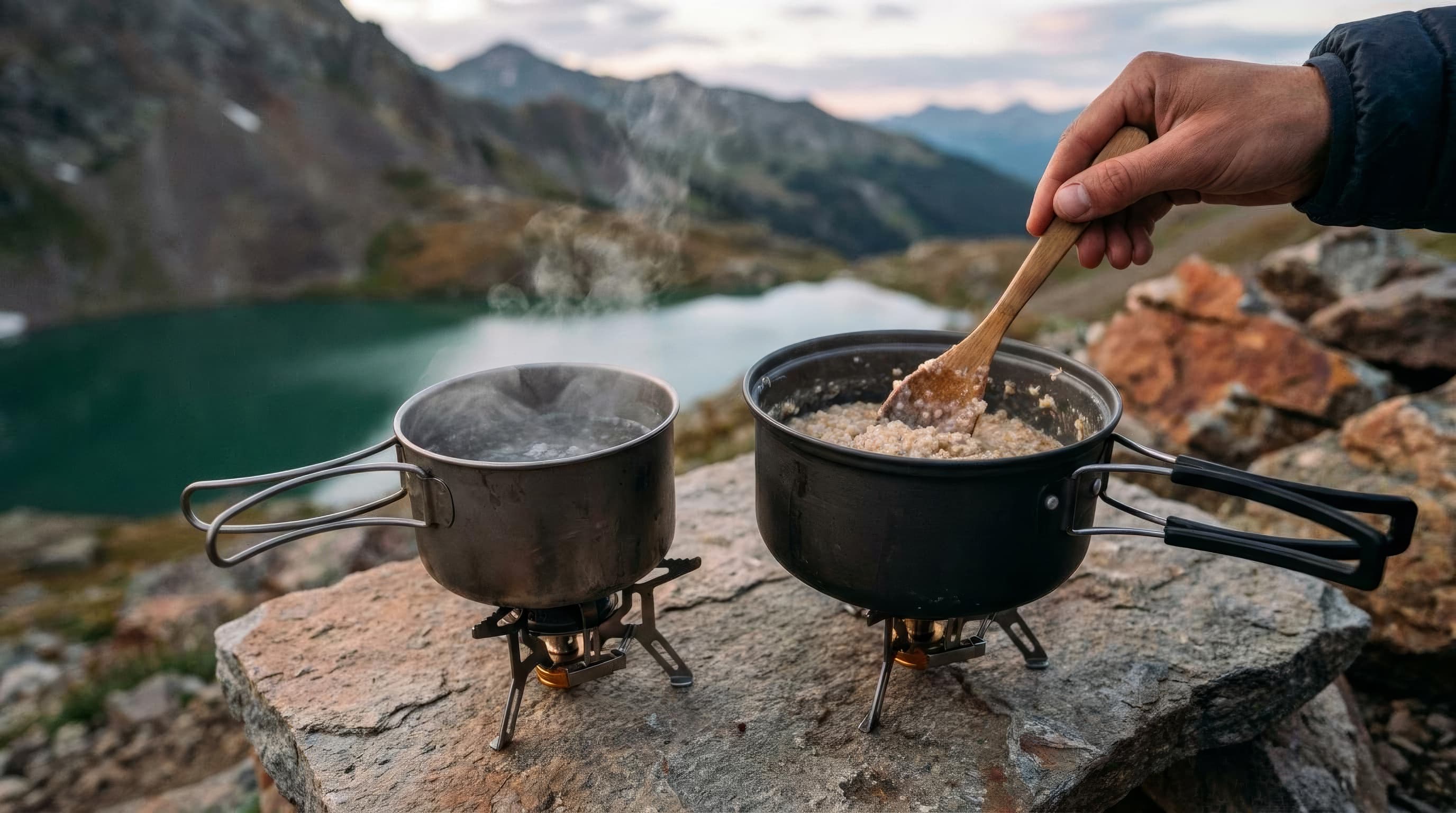
Choose titanium when the trip is carried on your back and the menu starts with boiling water. Choose hard-anodized aluminum when you cook oatmeal, rice, pasta, sauce, eggs, or a shared one-pot meal. Titanium minimizes weight and survives hard use; aluminum spreads heat better and costs less.
The short comparison
| Question | Titanium | Hard-anodized aluminum |
|---|---|---|
| Lowest possible weight | Best | Good |
| Even heat across the base | Poorer | Better |
| Boiling water | Excellent | Excellent |
| Simmering and real meals | Requires attention | More forgiving |
| Surface durability | Excellent, no coating | Excellent base material; coating varies |
| Price per liter | High | Moderate |
| Car camping value | Usually poor | Strong |
| Best buyer | Solo boil-first backpacker | Most shared and mixed-menu campers |
Neither material is automatically nonstick. Titanium is normally sold bare. Hard-anodized aluminum may be bare or carry a PTFE or ceramic cooking surface. Treat the base metal and the coating as separate decisions.
Why titanium is lighter
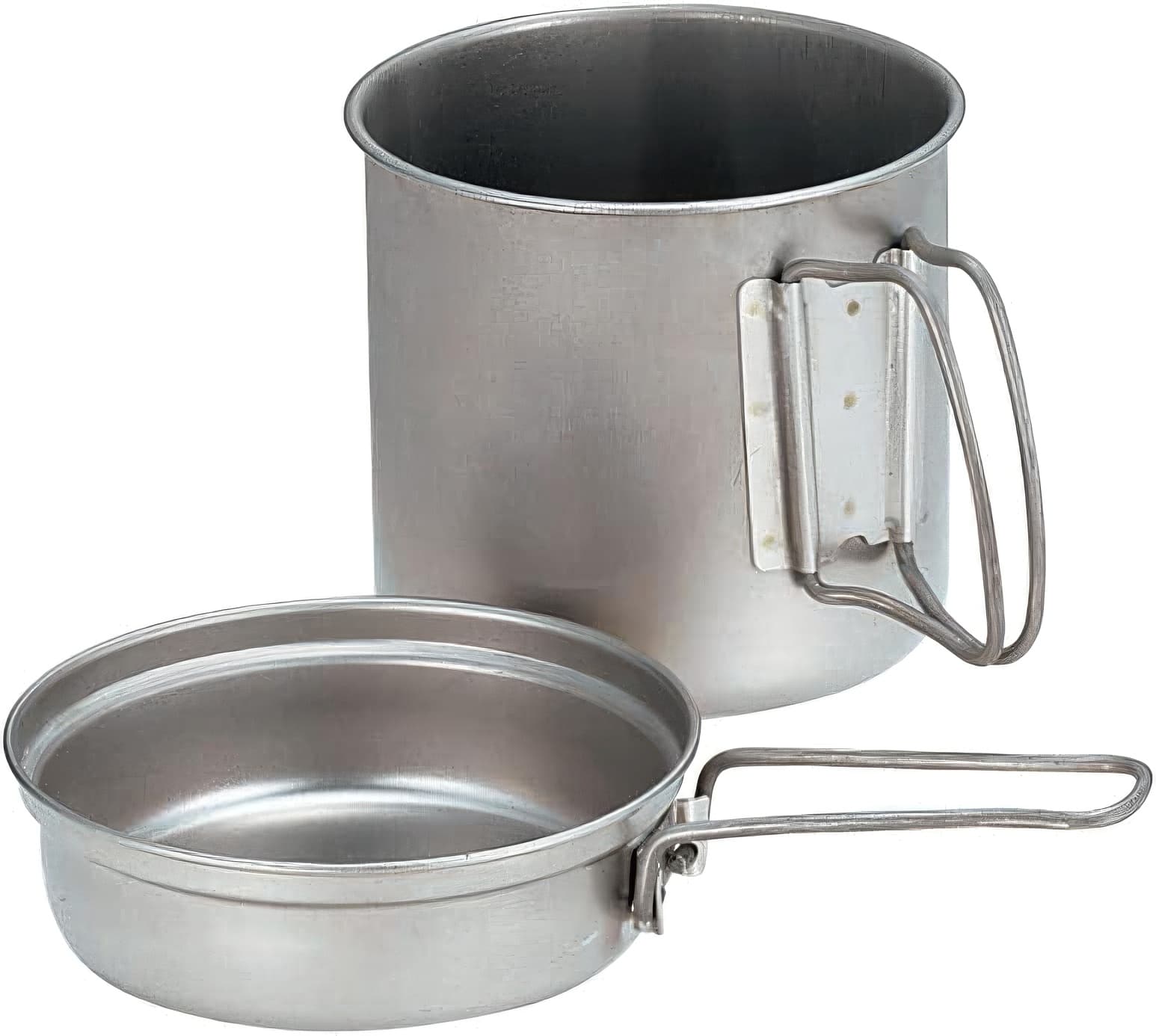
Titanium is strong enough that a manufacturer can form a very thin pot wall without making the vessel fragile in normal use. The result is an entire solo cookset such as the Snow Peak Trek 900 at 6.2 oz, including its lid-pan.
The advantage is system weight, not a magical ability to heat water. Water still needs the same energy to reach a boil. A very thin titanium pot has little thermal mass, but it also transfers heat less readily across its base. A stove's concentrated flame heats one zone intensely instead of spreading that energy outward.
TITANIUM PICK
Snow Peak Trek 900 Titanium Cookset
Best for: Solo backpackers and ultralight hikers who prioritize the lowest possible carried weight and want cookware that lasts decades.
- At 6.2 oz for the full set, weight savings over stainless or aluminum are significant on multi-day trips
- No nonstick coating means food sticks more than on anodized or ceramic alternatives
Kit Score 8.8/10 · $54.95 Price checked Oct 26, 7:39 AM CDT · how we score gear
Buy on AmazonProduct details
Snow Peak's Trek 900 is a two-piece Japanese titanium pot-and-pan set that weighs a fraction of stainless alternatives while offering corrosion immunity and a lifetime durability guarantee. It is sized for one serious cook or two on simple meals.
- Material
- Japanese titanium (no coating)
- Weight
- (no change requested) note: Snow Peak's spec table did not render to fetch; 6.2 oz matches retailer and Amazon listings
- Capacity
- 30.4 fl oz (900ml) pot; 5-inch frying pan lid
- Packed dimensions
- Pot: 4.75 x 4.25 in; pan: 5 x 1.5 in
- Pieces
- Titanium pot, titanium frypan (doubles as lid), mesh stuff sack
- Fuel canister fit
- Stores 250g canister and GigaPower stove inside when packed
More strengths
- Titanium is inert: no metallic taste, no rust, no coating to chip or degrade over time
- Nests a stove and 250g canister inside for a clean single-unit kit
Other tradeoffs
- The frying pan is 5 inches across, which limits it to a lid or heating small portions rather than full cooking tasks
The Snow Peak earns its place when six ounces and a 900 mL capacity fit the trip. It stores a canister and compact stove, has no coating to protect, and is large enough for one person's meal and drink. Its five-inch lid is not a real skillet, and the pot needs low heat and stirring for anything thick.
Read the full Snow Peak Trek 900 review.
Why aluminum cooks more evenly
Aluminum conducts heat across a surface far better than titanium. On a small camp burner, that means more of the pot base participates in cooking instead of one central circle. Rice, oatmeal, sauce, and mixed meals are less likely to scorch in the center while remaining cool at the edge.
Hard anodization converts the surface into a controlled oxide layer that improves wear and corrosion resistance. It is not paint and does not make the metal indestructible. A separate ceramic or PTFE cooking surface may still be applied on top and will have its own heat and utensil limits.
ALUMINUM COOKING PICK
MSR Ceramic 2-Pot Set
Best for: Two or three campers who prepare real meals and want low weight without giving up a second pot.
- Two capacities let a cook prepare a main and side without carrying a full dinnerware system
- Ceramic coating requires soft utensils and careful heat management
Kit Score 8.3/10 · $94.95 Price checked Oct 26, 7:39 AM CDT · how we score gear
Buy on AmazonProduct details
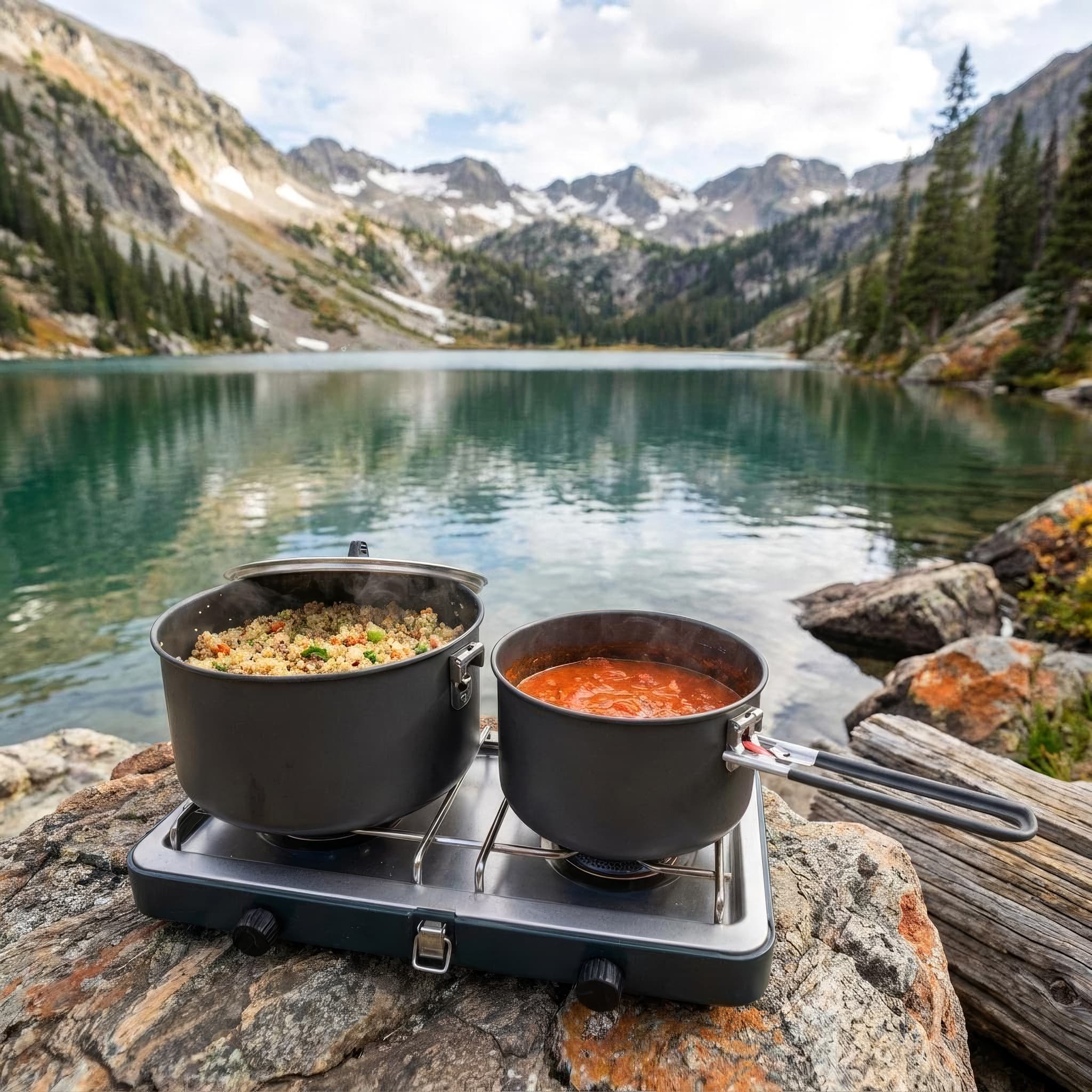
Two useful ceramic-coated aluminum pots, 2.5 L and 1.5 L, share a strainer lid and removable handle in a 15.6 oz nested package for meals beyond boiling water.
- Material
- Hard-anodized aluminum with ceramic nonstick
- Weight
- 15.6 oz (443 g)
- Packed size
- 7.2 x 7.7 x 5 in
- Capacity
- 2.5 L and 1.5 L pots
- Included
- 2 pots, strainer lid, Talon handle
- Coating
- PTFE- and PFOA-free ceramic
More strengths
- Ceramic surface makes rice, eggs, and sauces easier to release and clean
- At 15.6 oz, the set is unusually light for four liters of combined capacity
Other tradeoffs
- No frying pan, bowls, or eating utensils are included
The MSR Ceramic 2-Pot Set demonstrates the aluminum case: 2.5 L and 1.5 L vessels weigh 15.6 oz together, spread heat well, and use a ceramic surface for easier food release. That is more capacity and cooking flexibility than most small groups need, at less than a pound before bowls.
Read the full MSR Ceramic 2-Pot Set review.
Boiling is not the same as cooking
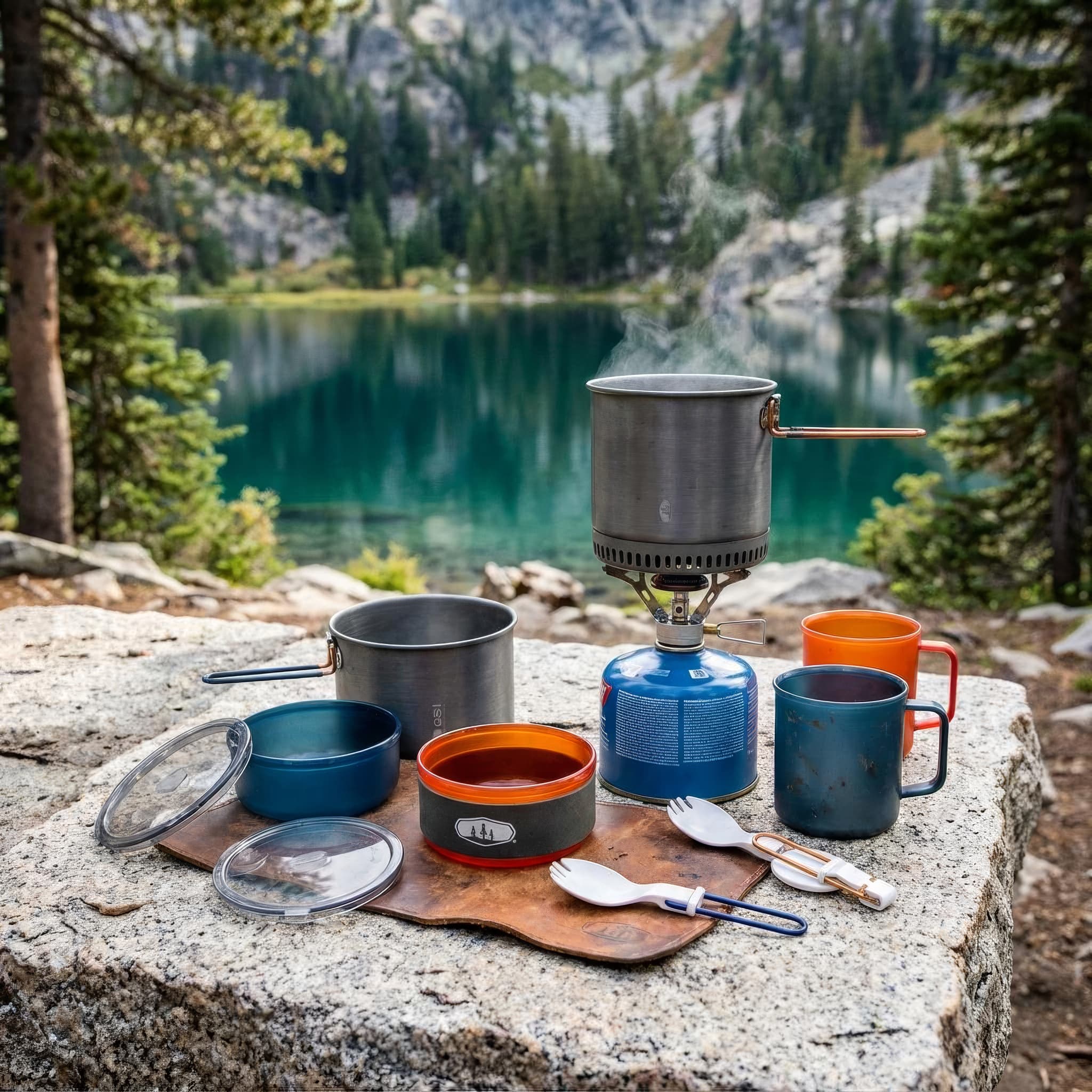
For boiling water, both materials work. Wind protection, pot width, lid fit, flame setting, and a heat exchanger can matter more than the base metal. The GSI Halulite Dualist HS uses hard-anodized aluminum plus fins under the pot to capture more heat that would otherwise escape around the sides.
For cooking, material behavior becomes obvious. A thick sauce does not circulate heat like water. Food sitting against a titanium hot spot can burn while the rest of the pot warms. Aluminum reduces the gradient, giving the cook more margin.
This is why a titanium owner can be delighted on a dehydrated-meal trip and frustrated while making the same rice dinner that an aluminum owner handles easily. The materials are serving different menus.
Durability needs context
Titanium has no coating to peel, tolerates normal scraping, and resists corrosion. The thin walls can still deform, and folding handles, welds, and lids remain mechanical parts. "Titanium" does not make poor construction excellent.
Hard-anodized aluminum is durable enough for years of camp-stove use, but a nonstick layer changes the weakest point. Use wood, silicone, or plastic utensils, avoid empty high-heat preheating, and clean with a soft pad. Bare anodized aluminum tolerates more abrasion but may release sticky food less easily.
Direct fire is a separate question. Handles, coatings, silicone parts, and heat-exchanger fins can all be damaged even when the base metal survives. Never assume either material is approved for an open campfire.
What about stainless steel?
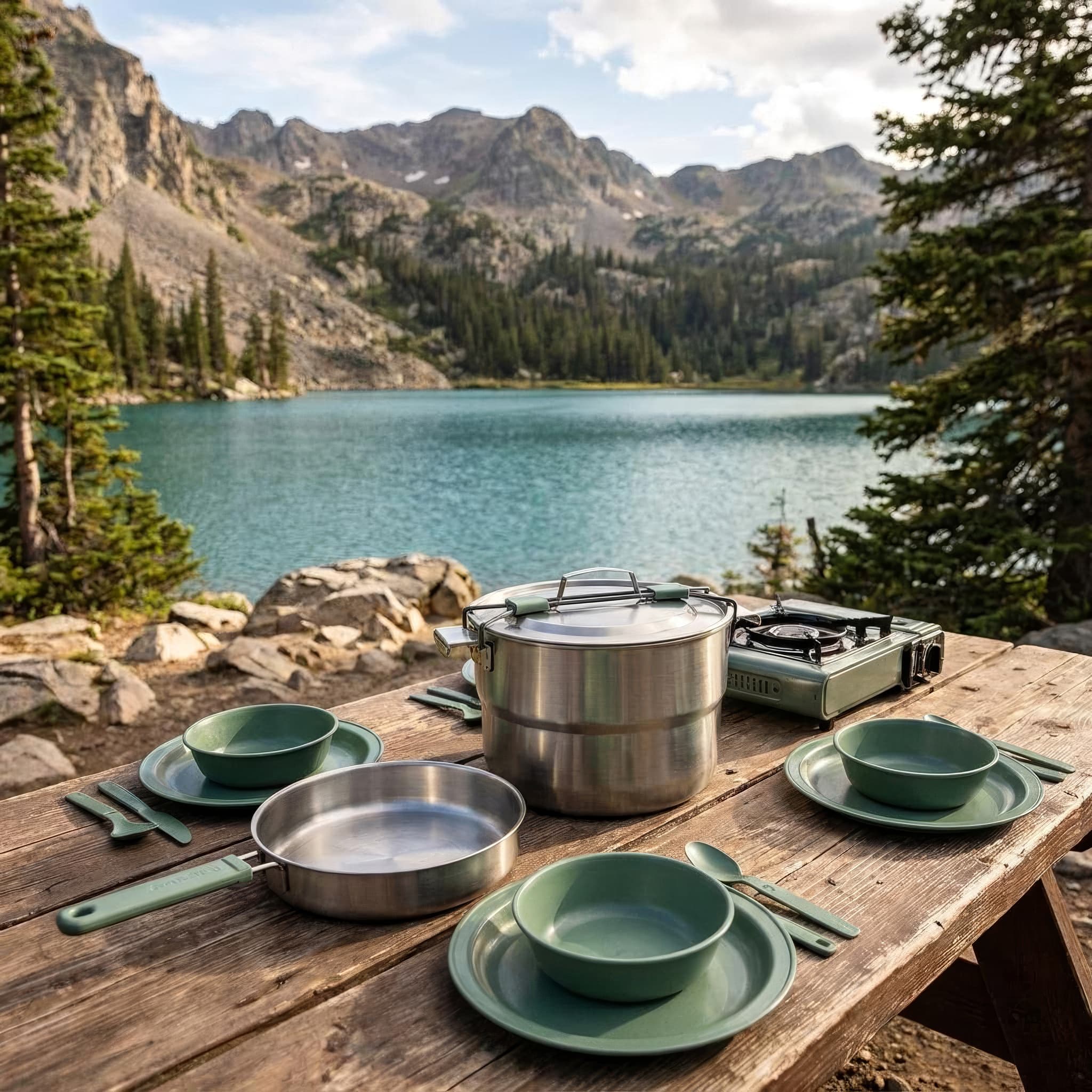
Stainless makes sense when a vehicle carries the weight. It tolerates hard use, metal utensils, and aggressive cleaning; some sets work on induction. It is heavier and can still develop concentrated heat on a thin base, which is why a tri-ply pan is more useful than a stamped single-wall pan.
The Stanley Wildfare Core is our stainless value pick for four. It weighs 4.70 lb but includes a 4 qt pot, tri-ply fry pan, prep tools, and tableware at a price below many two-person backpacking systems.
Choose from your actual trip
Pick the metal in four decisions
Count the carry
If the cookware spends hours in a backpack, titanium can earn its price. If it moves from a car to a table, save the money.
Write the menu
Boiling and rehydrating favor titanium. Simmering, frying, rice, oatmeal, and sauce favor aluminum.
Decide on coating care
Bare titanium accepts hard cleaning. Coated aluminum releases food more easily but needs softer tools and controlled heat.
Size the vessel
A material cannot rescue the wrong capacity. Confirm the pot volume after the menu and group size are known.
Frequently asked questions
Is titanium camping cookware worth it?
It is worth it for hikers who carry the pot long distances and mostly boil water. The low system weight and durable bare surface are real benefits. It is usually poor value for car camping or cooking meals that need even heat.
Does titanium boil water faster than aluminum?
Not inherently. Actual boil time depends on pot geometry, lid, burner, flame setting, wind, starting water temperature, and heat-exchanger design. Aluminum spreads heat better; titanium pots can be thinner and lighter. Do not choose from a generic boil-time claim.
Is hard-anodized aluminum safe for camping cookware?
It is widely used for camp cookware. Follow the exact manufacturer's guidance, especially when a ceramic or PTFE surface is applied. Avoid overheating an empty coated pot, keep flame under the base, and retire cookware with significant surface damage.
Can titanium camping cookware go directly in a fire?
Only if the manufacturer approves the exact product and its handles, lid, and construction for that use. Titanium metal tolerates high heat, but a complete cookset may include parts or joints that do not. Controlled stove use is the default.
See the six resulting recommendations in best camping cookware, then use the camping pot size guide to avoid buying the right metal in the wrong volume.
Keep going
Related buying guideBest camping cookware sets 2026: 8 picks, cast iron to titaniumFree tool: Base-Weight BuilderRelated guides
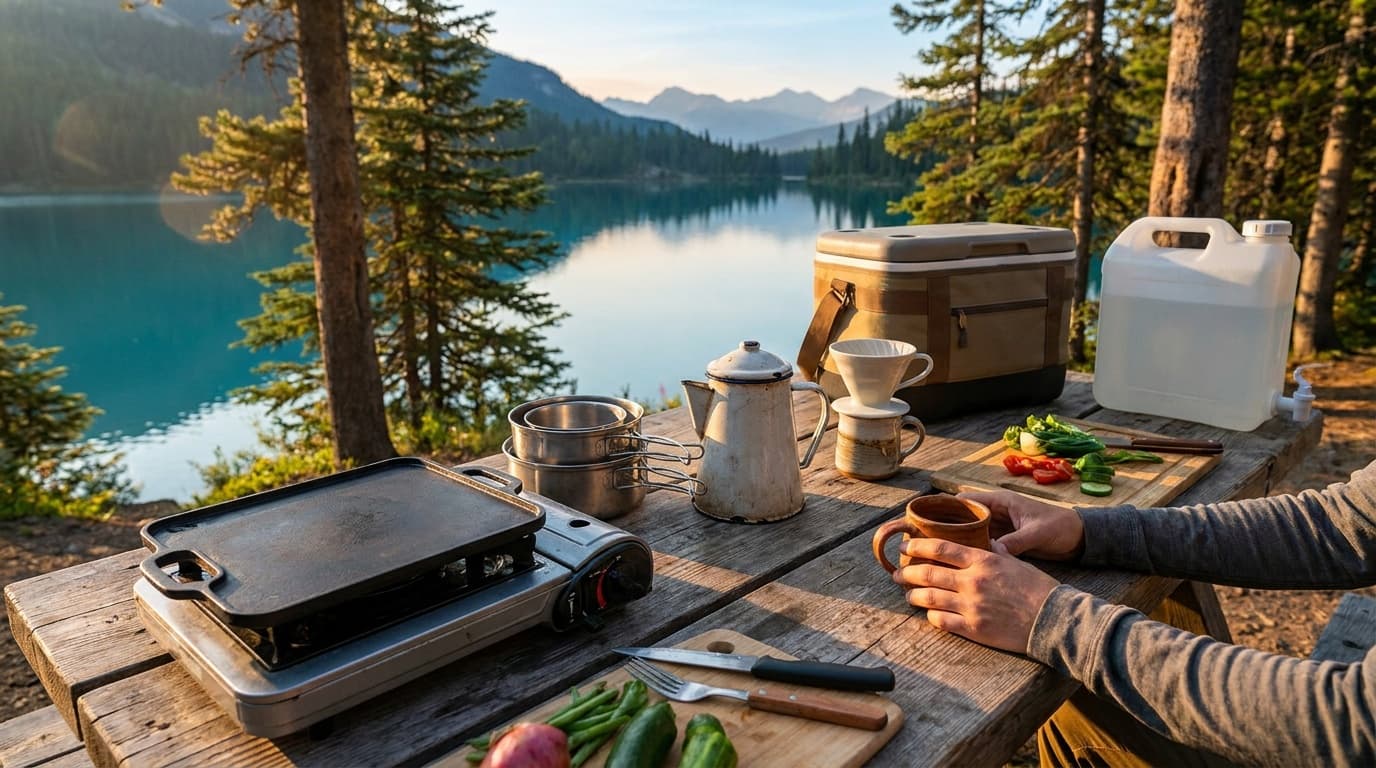
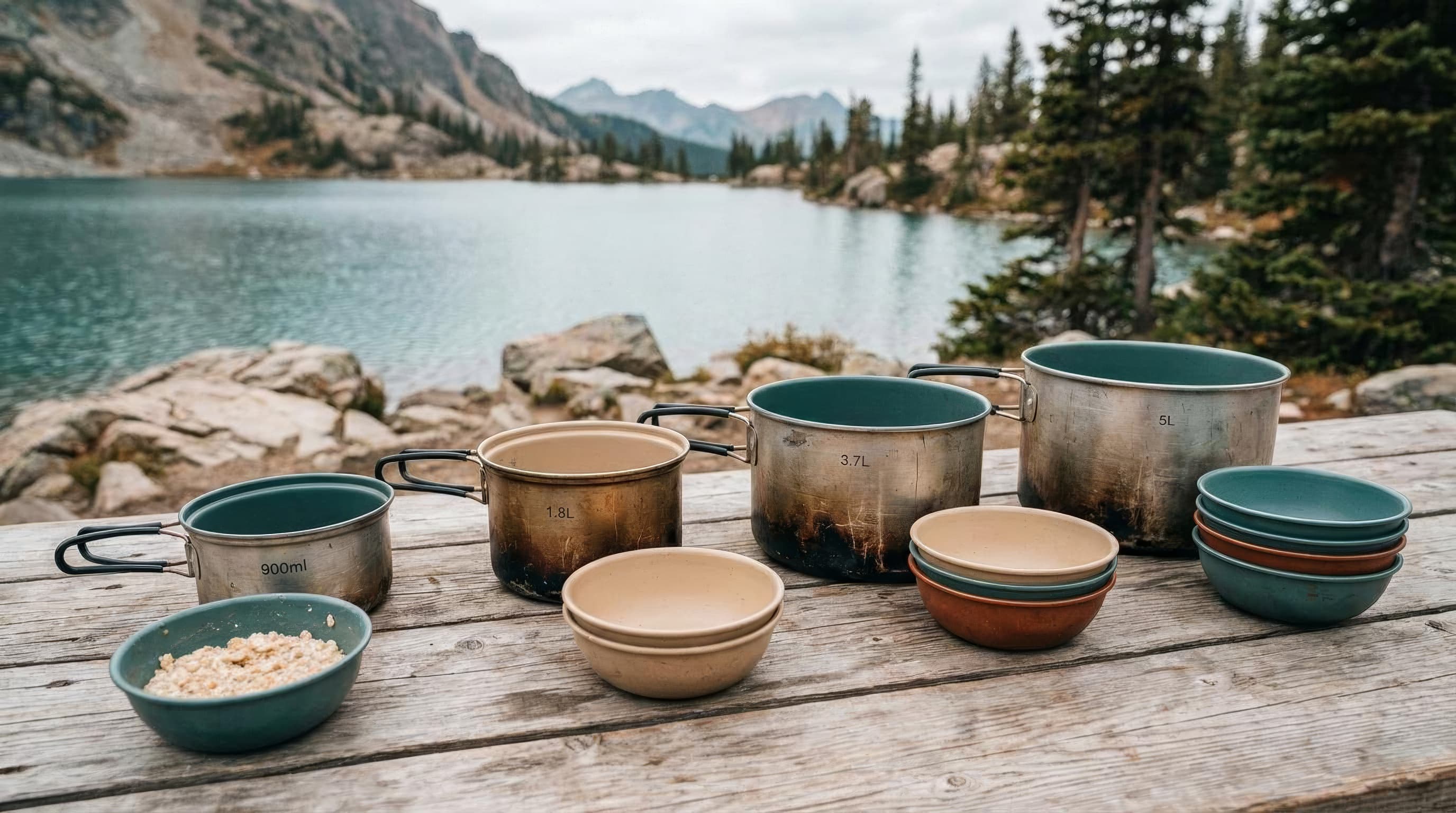
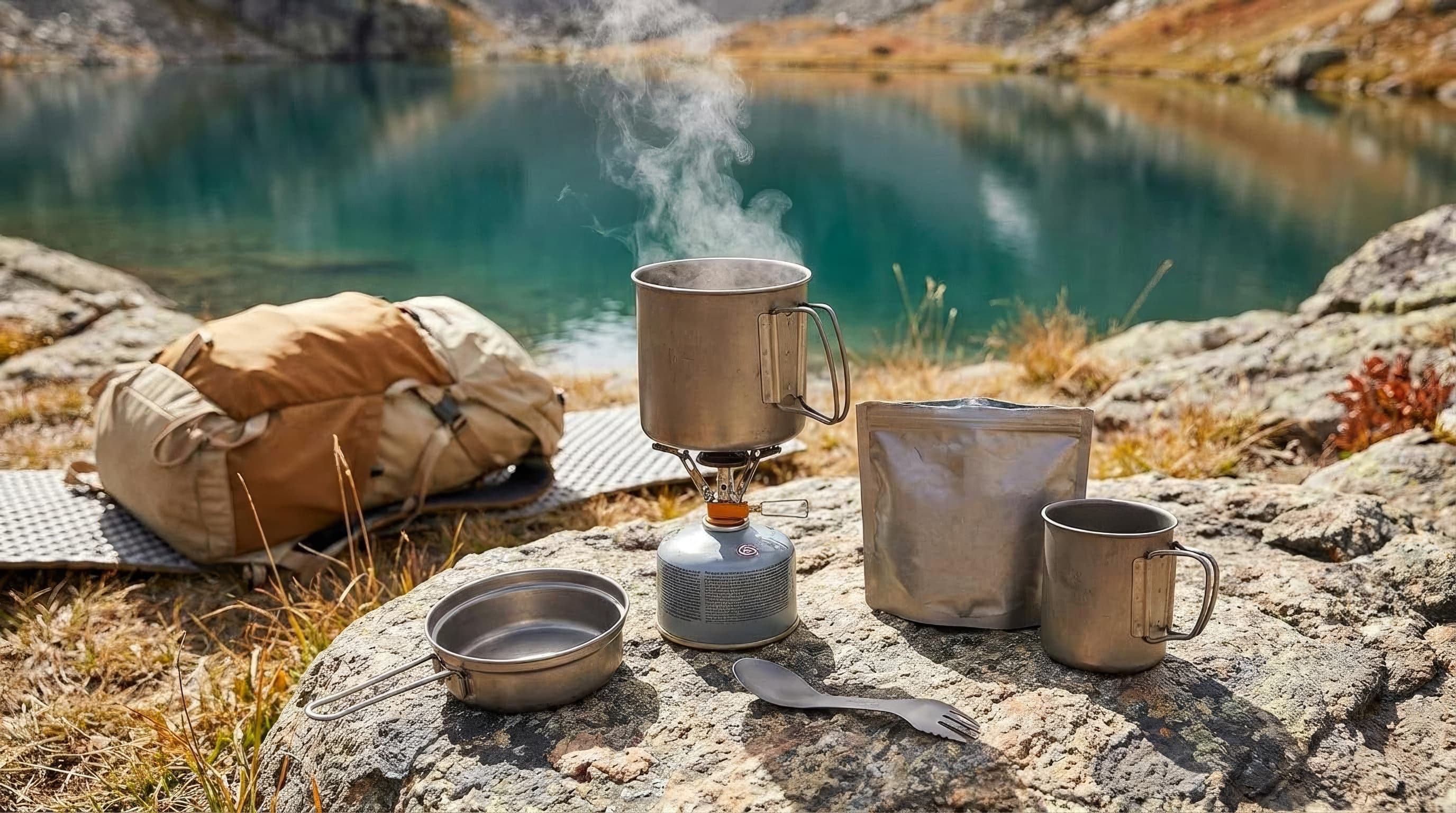
 Complete camp loadoutCamp kitchen kitBuild the complete kit
Our recommendations draw on manufacturer documentation, retailer listings, owner feedback, and comparisons with alternatives.
As an Amazon Associate I earn from qualifying purchases. We may earn a commission from links here, at no extra cost to you. How we research →
Top picks
Related buying guide
Best camping cookware sets 2026: 8 picks, cast iron to titanium