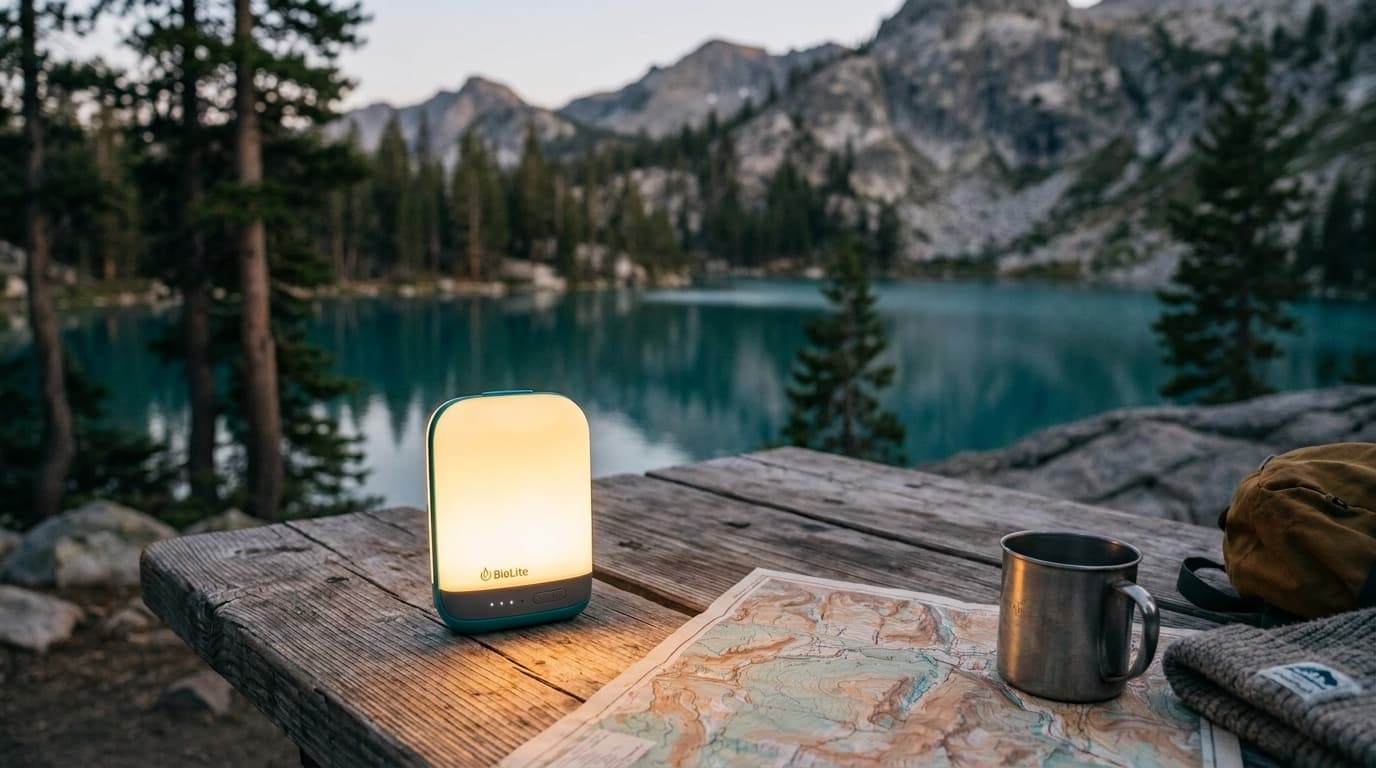
The BioLite AlpenGlow 500 is the best camping lantern for most car campers who value light quality and runtime over minimum weight. It leads our best camping lanterns guide because it combines smooth dimming, warm and color modes, CRI 90 light, a 6,400 mAh power bank, and up to 200 hours on low. Its micro-USB input and IPX4 rating are the dated limitations.
BEST OVERALL
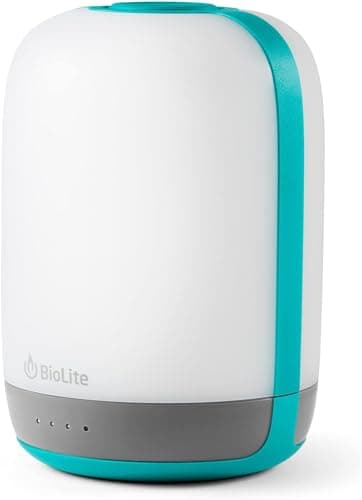
BioLite AlpenGlow 500 Lantern
Best for: Car campers and tent campers who want versatile ambiance lighting, a reliable power bank backup, and the widest set of modes in a mid-size package.
- Dims from 500 lumens down to 5, so one lantern covers cooking light and a soft in-tent glow
- Micro-USB charge port is outdated compared to competitors moving to USB-C, and the port seal has shown minor water ingress in heavy rain
Kit Score 8.5/10 · $79.95 Price checked Oct 25, 3:41 PM CDT · how we score gear
Buy on AmazonProduct details
The AlpenGlow 500 balances genuine campsite brightness with a wide range of lighting modes, from dimmable cool and warm white down to candle flicker and full multicolor cycling. Its 6,400 mAh battery doubles as a power bank and the ChromaReal LEDs (CRI 90) render colors accurately in low-light conditions.
- Max Lumens
- 500 (manufacturer rating)
- Runtime
- 5 hrs (high) / 200 hrs (low)
- Battery
- 6,400 mAh Li-Ion, micro-USB charge-in
- Weight
- 13.4 oz (380 g)
- Water Resistance
- IPX4
- Charge Out
- USB-A 5V/2.4A (device charging)
More strengths
- 200-hour low-end runtime means you can run it at ambient brightness for a full weekend trip without recharging
- ChromaReal broad-spectrum LEDs produce warmer, more natural light than most lanterns at this price
Other tradeoffs
- Single-button interface with shake activation has a learning curve and occasionally requires a repeat shake to change modes
Who it is for
This lantern fits one buyer especially well: the car camper or basecamp user who wants one light to cover everything from reading in a tent to lighting a picnic table for a group. The range is the point. At 5 lumens it is a nightlight that will not wake anyone; at full output it genuinely lights a campsite, and the 200-hour low-end runtime means a weekend of ambient light without touching a charger. The CRI 90 ChromaReal LEDs matter more than the spec sheet suggests, because food and faces look normal rather than the sickly blue-white most cheap lanterns produce.
It is less ideal if you count grams. At 13.4 oz it is a car-camping and basecamp light, not something to carry on a thru-hike, where a headlamp and a 3 oz collapsible lantern make more sense. It is also not the one to buy if you will be out in sustained heavy rain, since the IPX4 rating covers splashes rather than downpours and the port seal is the weak point. For lighting decisions more broadly, our how many lumens do you need for camping guide sets expectations.
Full specifications
| Spec | Detail |
|---|---|
| Kit Score | 8.5 / 10 (researched, not lab-tested) |
| Max output | 500 lumens rated, measured up to 690 |
| Runtime | 5 hours on high, 200 hours on low |
| Battery | 6,400 mAh Li-Ion, micro-USB charge in |
| Charge out | USB-A 5V/2.4A for devices |
| Weight | 13.4 oz (380 g) |
| Water resistance | IPX4 |
| Price | $75–$85 |
The spec worth weighing carefully is IPX4. That covers splashing from any direction, which is fine for dew, spray, and a passing shower. It does not cover a lantern sitting out through a night of hard rain, and the micro-USB port seal is where owners have reported minor water getting in. Bring it under cover when the weather turns.
Pros and cons
What it does well:
- Measured output exceeds the rating, with independent testing logging 690 lumens against a stated 500, and the dimming is smooth all the way down to 5 lumens rather than stepping between fixed levels.
- The 200-hour low runtime covers a full weekend at ambient brightness on one charge, which removes the lantern from your charging queue entirely.
- ChromaReal LEDs at CRI 90 render warmer, more natural colour than nearly anything at this price, and the difference is obvious once you have cooked under both.
- The 6,400 mAh battery is large enough to be a genuine phone top-up rather than a token power bank feature.
Where it falls short:
- Micro-USB charging is dated now that competitors have moved to USB-C, so it is one more cable to keep track of.
- The port seal has shown minor water ingress in heavy rain despite the IPX4 rating.
- The single-button interface with shake activation takes some learning, and occasionally needs a second shake to change mode.
How it compares
Against a budget rechargeable lantern, the trade is light quality and runtime versus price. Cheaper lanterns reach a usable brightness and cost a third as much, but they step between fixed levels rather than dimming smoothly, run cold and blue, and rarely hold a weekend of low-level light. If the lantern is an occasional-use item in a car boot, that is a reasonable saving. If it comes out every trip, the AlpenGlow is the one that stops annoying you.
Against a premium compact lantern, the trade is versatility versus packability. Smaller collapsible lights weigh a fraction as much and pack flatter, which matters on foot. They do not carry a 6,400 mAh battery, will not charge a phone, and do not offer the colour range. Choose on whether the light lives in a pack or a vehicle.
For the full field scored the same way, see our best camping lanterns guide. If you are building out a basecamp setup, the car camping starter kit covers what goes with it.
Frequently asked questions
Is the BioLite AlpenGlow 500 worth it?
For car camping and basecamp use, yes. You are paying for light quality and runtime rather than raw output: smooth dimming from 690 measured lumens down to 5, 200 hours on low, CRI 90 colour rendering, and a battery large enough to top up a phone. If you need something to carry on foot, a lighter collapsible lantern makes more sense.
How long does the AlpenGlow 500 battery last?
About 5 hours at full output and up to 200 hours on its lowest setting. In practice most people run it well below maximum, so a weekend of evening use on one charge is realistic. Using it as a power bank to charge a phone will cut that significantly.
Is the BioLite AlpenGlow 500 waterproof?
It is IPX4 rated, which means splash resistant rather than waterproof. It handles dew, spray, and a passing shower. It is not designed to sit out through sustained heavy rain, and the micro-USB port seal is the point where owners have reported minor ingress.
Can the AlpenGlow 500 charge a phone?
Yes. It has a USB-A output at 5V/2.4A and a 6,400 mAh battery, so it delivers a meaningful phone charge rather than a token one. Bear in mind that every mAh spent on your phone comes out of your lantern runtime.
Keep going
Related buying guideBest camping lanterns 2026: 5 picks by budget and useFree tool: Power Bank Size CalculatorRelated guides
 Complete camp loadoutCar-camping starter kitBuild the complete kit
Researched, not hands-on tested
Updated Aug 14, 2026Our recommendations draw on manufacturer documentation, retailer listings, owner feedback, and comparisons with alternatives.
As an Amazon Associate I earn from qualifying purchases. We may earn a commission from links here, at no extra cost to you. How we research →
In this review
Related buying guide
Best camping lanterns 2026: 5 picks by budget and use