
We may earn a commission from links on this page, at no extra cost to you.
Choose an inflatable paddleboard for flexible solo lake days, swimming access, fitness, dogs, and a platform you can stand, kneel, or sit on. Choose an inflatable kayak for easier balance, seated comfort, passengers, cargo, wind tolerance, and covering distance. Both fit in a trunk and store in a closet, but they create different days on the water.
Our quick picks
The short answer
A SUP has the lower equipment barrier. One board, one paddle, one fin, and an open deck create a flexible lake toy. You can stand, kneel, sit, swim from it, or let another person try without rearranging a cockpit.
A kayak has the lower balance barrier. Sitting lowers the center of gravity, side chambers add security, and a double-bladed paddle supplies power on both sides. That makes it the more practical choice in breeze, for longer outings, and for a passenger.
Side-by-side
| Decision | Inflatable paddleboard | Inflatable kayak |
|---|---|---|
| Learning curve | Balance first | Steering first |
| Wind | More exposed | Lower seated profile |
| Passengers | Limited on standard boards | Tandem models designed for two |
| Cargo | Open bungee storage | Cockpit and bow/stern storage |
| Swimming access | Excellent | More awkward to re-enter |
| Distance | Moderate | Better for sustained seated paddling |
| Carry | Often 18-25 lb board plus kit | Often heavier and bulkier |
| Dry ride | Feet and legs exposed | Better protected, though still wet |
| Fitness | Full-body balance and standing | Seated torso and upper-body work |
Why choose a paddleboard
BEST FIRST SUP
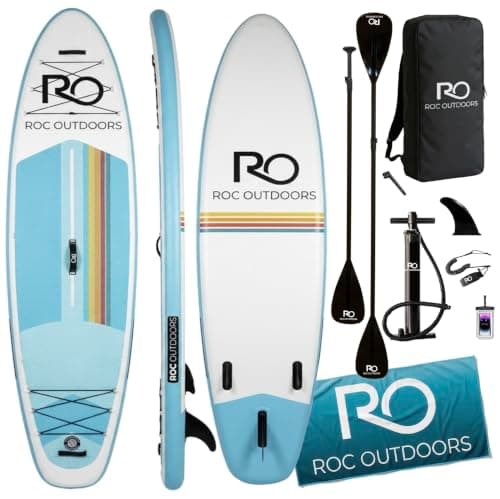
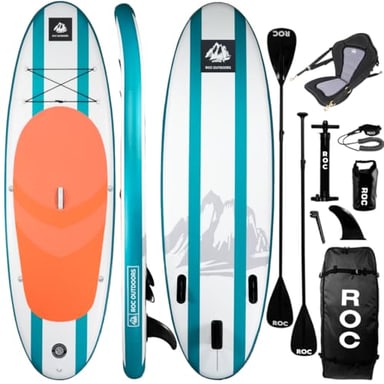
Roc Inflatable Paddle Board 10'6"
Best for: First-time paddlers and families who want one affordable board that handles calm lakes, slow rivers, and guests.
Kit Score 8.5/10 · Check current price
- Board, paddle, pump, leash, and carry bag cover the essential first-day setup
- 33 inch width and full deck pad make it forgiving for first-timers, kids, and dogs
- The included aluminum paddle is heavy; it is the first thing owners upgrade
The open deck is the attraction. A beginner can start kneeling, progress to standing, sit when tired, and climb back aboard without entering a cockpit. For warm lake days, swimming, yoga, or a dog passenger, that flexibility wins.
SUPs also pack simply. The single main chamber and open shape are easy to rinse and dry. The tradeoff is exposure. Wind catches the standing paddler and broad board, and the body must keep balancing even during a rest.
Our best inflatable paddleboards guide ranks the current all-around choices.
Why choose a kayak
BEST FAMILY INFLATABLE KAYAK
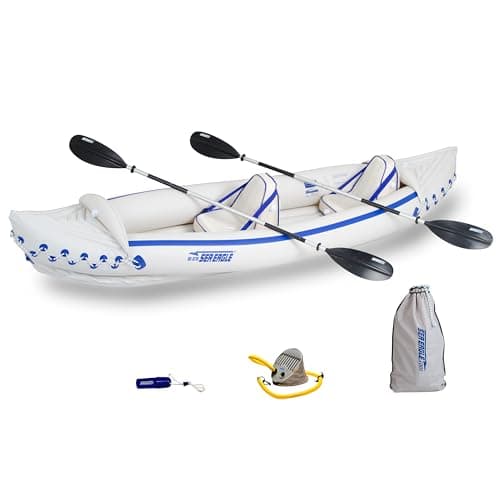
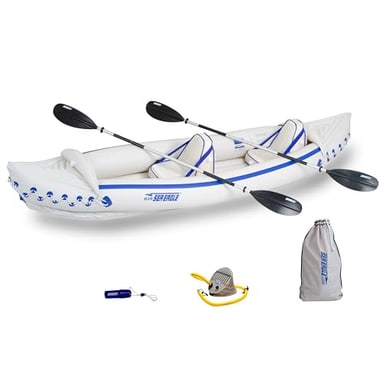
Sea Eagle 370 Pro
Best for: Buyers who want one durable, do-everything inflatable that will still be on the water in ten summers.
Kit Score 8.3/10 · Check current price
- 650 lb capacity swallows two paddlers, a cooler, and a dog with room left
- PolyKrylar hull is dramatically more abrasion-tolerant than budget vinyl
- At about 32 lb it is a heavier carry from the car than the Intex tier
A recreational inflatable kayak is the more practical small boat. A seated paddler has a lower center of gravity, a backrest, and a double-bladed paddle that alternates power efficiently. Tandem models are built around two people rather than merely allowing a passenger on spare deck space.
Kayaks carry more loose gear but can take longer to dry. Water settles in seams, beneath seats, and along the floor. The complete package is often heavier than a single all-around SUP.
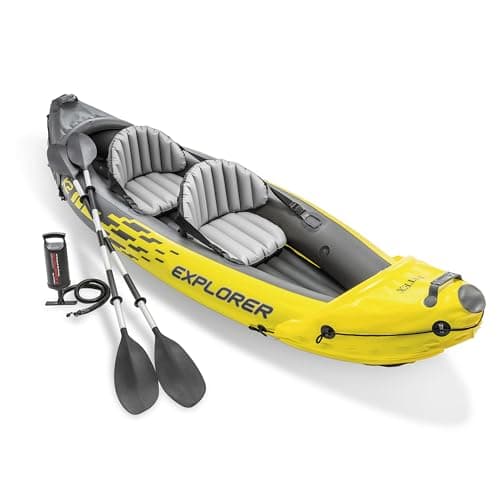
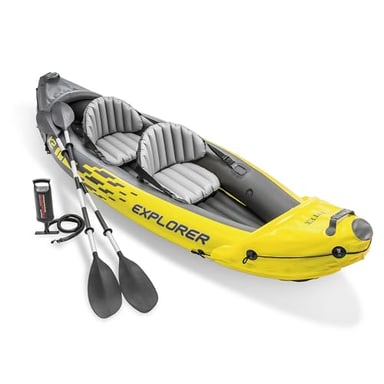
Our best inflatable kayaks guide compares the low-cost Intex boats with more durable platforms.
Wind and water conditions
Wind changes the decision quickly. A standing paddler presents a larger profile and a SUP can drift downwind faster than expected. Kneeling lowers the profile, but a kayak remains the more efficient windy-water shape for most recreational users.
Neither craft belongs in conditions beyond its design or the paddler's skill. Check the forecast, begin close to shore, tell someone the plan, and turn around before fatigue becomes the return strategy.
One person, two people, or a dog
For one adult and a dog, a wide SUP can be wonderfully simple. The dog can move, lie down, and enter the water without climbing over a cockpit rim. Protect the deck pad from claws and keep total load conservative.
For two adults, choose a tandem kayak or a SUP designed specifically for tandem volume. A standard 10'6-inch board may publish a high maximum but still handle poorly when two adult bodies compete for stance and trim.
For one adult with a child, either can work. A kayak provides a defined passenger position; a SUP makes swimming and rotation easier. Use appropriate personal flotation devices and follow all federal, state, and local rules.
Safety equipment
The U.S. Coast Guard classifies paddlecraft within federal recreational-vessel requirements outside exempt swim or surf areas. Its current boater guide says recreational vessels must carry one wearable approved PFD for each person, while state rules can add requirements. The Coast Guard also urges paddlers to wear the life jacket rather than merely stow it.
Leash choice is condition-specific. A coiled SUP leash can help on flat open water, while moving water can create entanglement hazards. Learn the local guidance for the exact water and activity.
Make the choice
Pick the craft that fits the day
Warm solo lake play
Choose a paddleboard.
Two adults and a cooler
Choose a tandem kayak.
Wind is common
Choose a kayak and still respect the forecast.
Swimming and easy re-entry
Choose a paddleboard.
Long seated outings
Choose a kayak with supportive seats.
Dog passenger
Choose a wide SUP for movement or a roomy tandem kayak for containment.
Smallest drying job
Choose the SUP's open single-platform shape.
Frequently asked questions
Is an inflatable kayak easier than a paddleboard?
For balance, usually yes. The seated position lowers the center of gravity and the side tubes add stability. A SUP is simpler to climb on, move around, and re-enter after swimming.
Which is faster, an inflatable paddleboard or inflatable kayak?
Shape and construction matter, but a recreational kayak usually maintains distance speed more comfortably because the paddler sits low and uses a double-bladed paddle. A touring SUP can be fast, but that is a different category from the broad beginner boards discussed here.
Can a paddleboard be used like a kayak?
Many boards have D-rings for an optional seat and a paddle that converts to two blades. The result can be comfortable for casual sitting, but it does not create the side chambers, cockpit support, or protected cargo layout of a purpose-built kayak.
Which is better for a family?
A tandem or three-person inflatable kayak is usually the more practical people carrier. A paddleboard is the more flexible shared toy when family members take turns and swim from shore.
Choose the platform in best inflatable paddleboards or the boat in best inflatable kayaks, then complete the day with the lakefront packing list.
Related buying guide
Best inflatable paddleboards in 2026: 6 honest picksMake the next decision
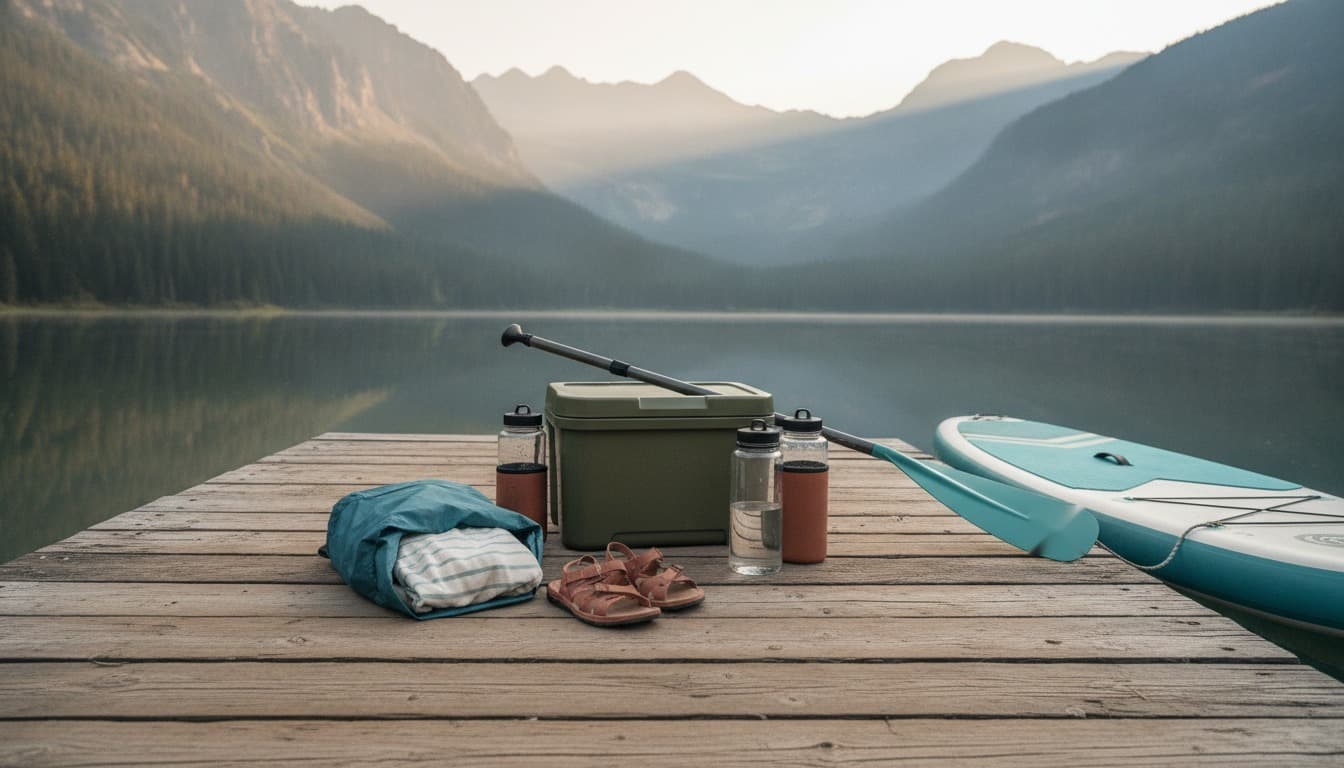
Complete water loadout
Complete lake-day kit
Eight slots covering the float, safety, inflation, dry storage, food, water, phone protection, and sun cover.
Build the complete kitRelated guides

Buying guide
Best inflatable kayaks in 2026
Four inflatable kayak picks from the $100 starter to a decade-lasting workhorse, rated on durability, capacity, and what the kit really includes.
Read guide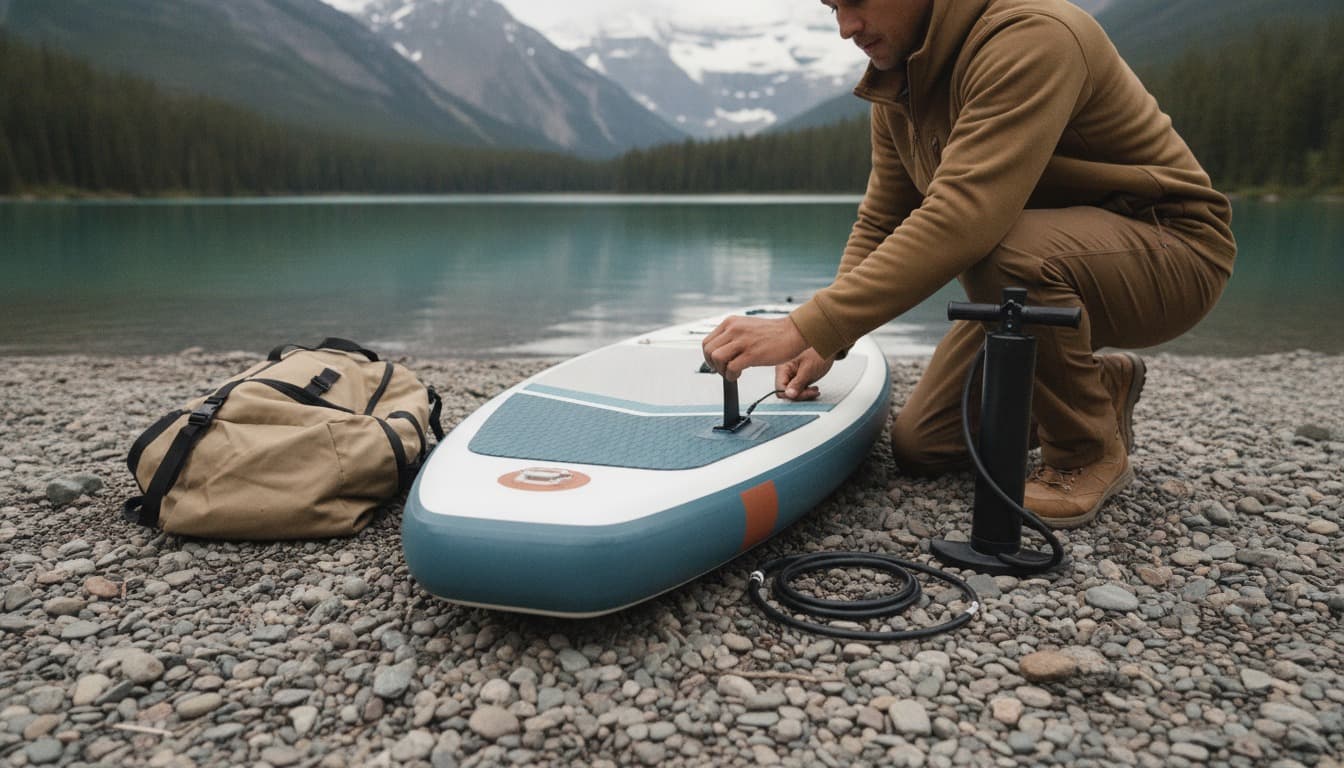
Field guide
How to choose an inflatable paddleboard
The specs that actually matter in an inflatable SUP: volume and weight capacity, real PSI, fin setups, board shape, pump options, and storage care.
Read guide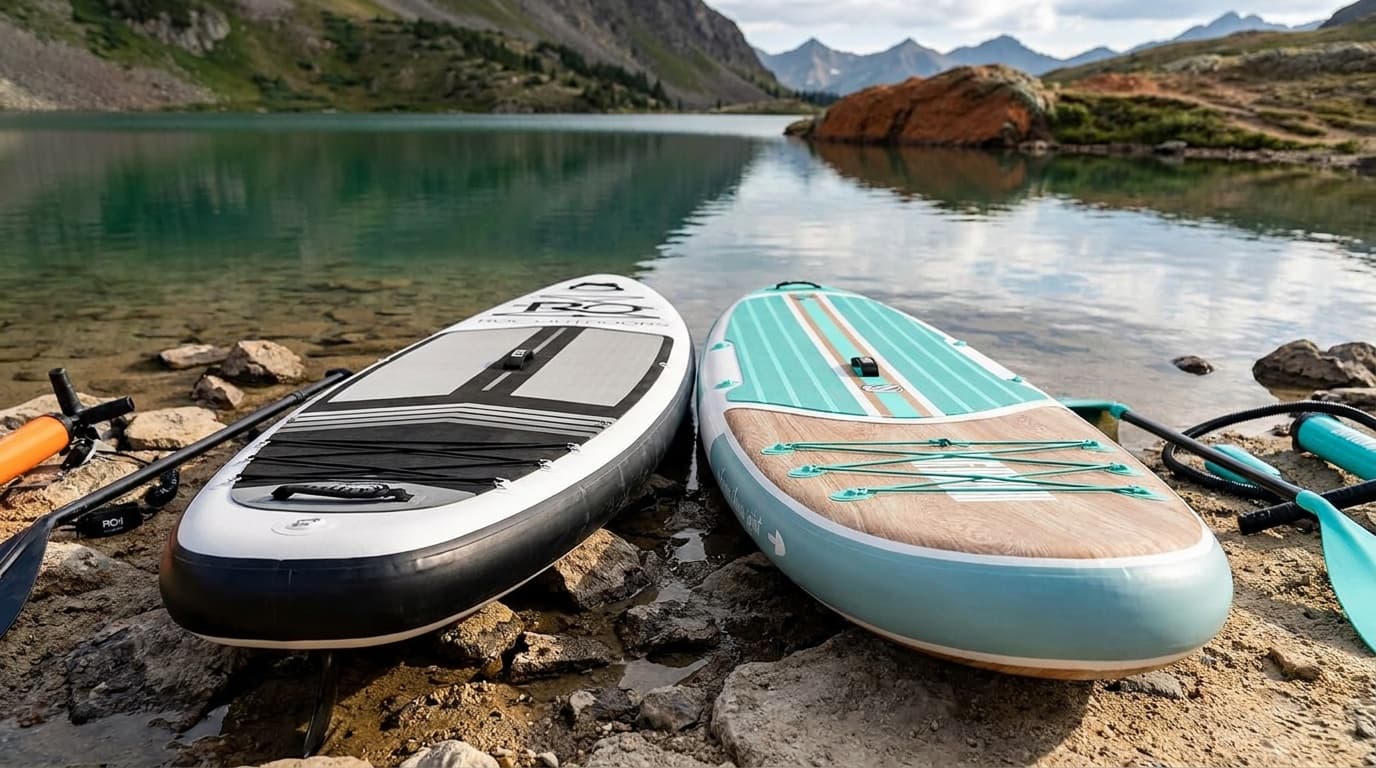
Comparison
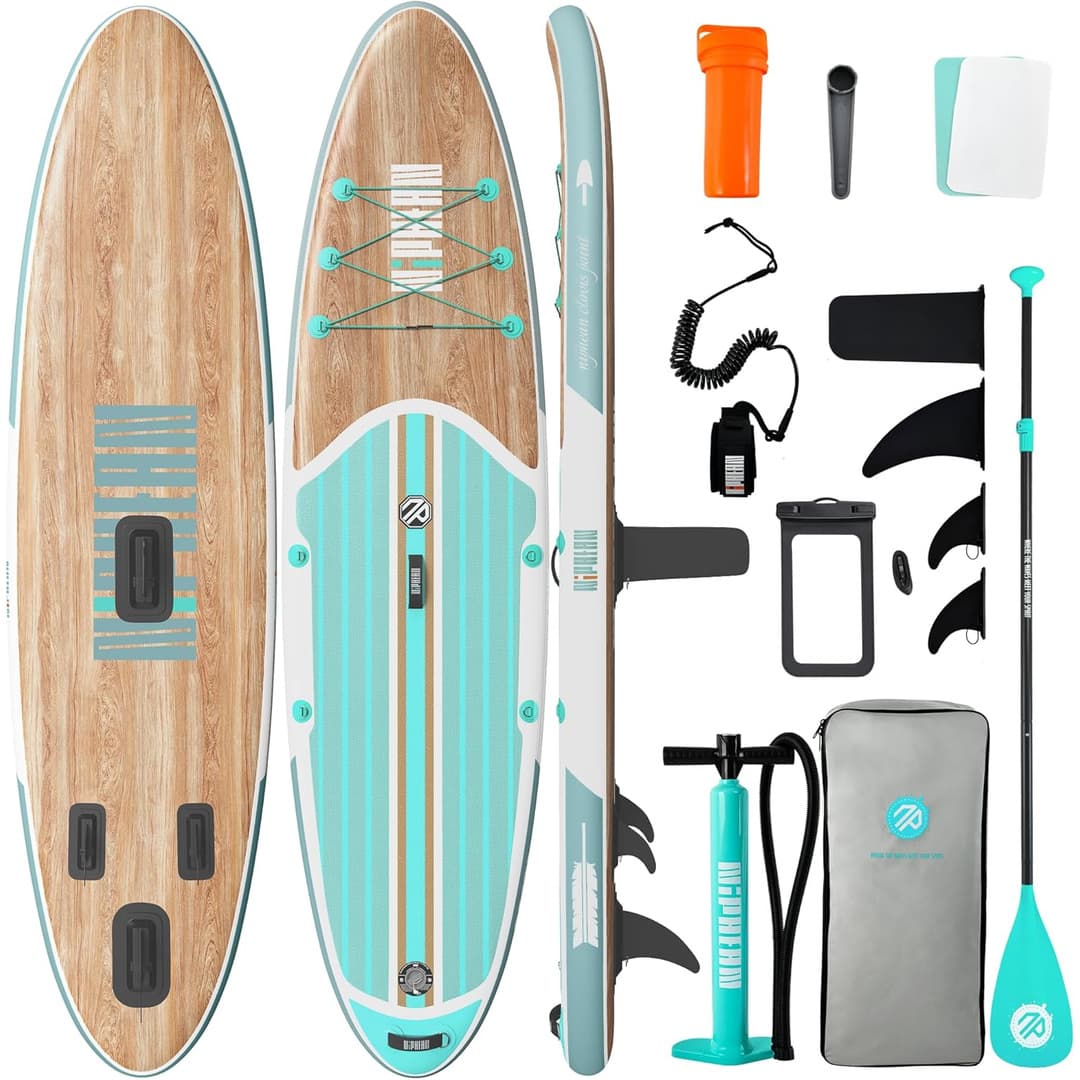
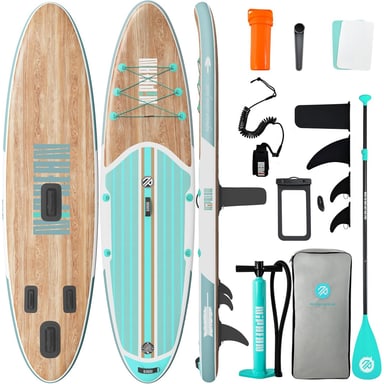
Roc vs Niphean paddle board: which beginner SUP is better?
Buy Roc for the safer first-board recommendation or Niphean for more attachments and accessories. Compare capacity, weight, fins, bundles, and warranties.
Read guide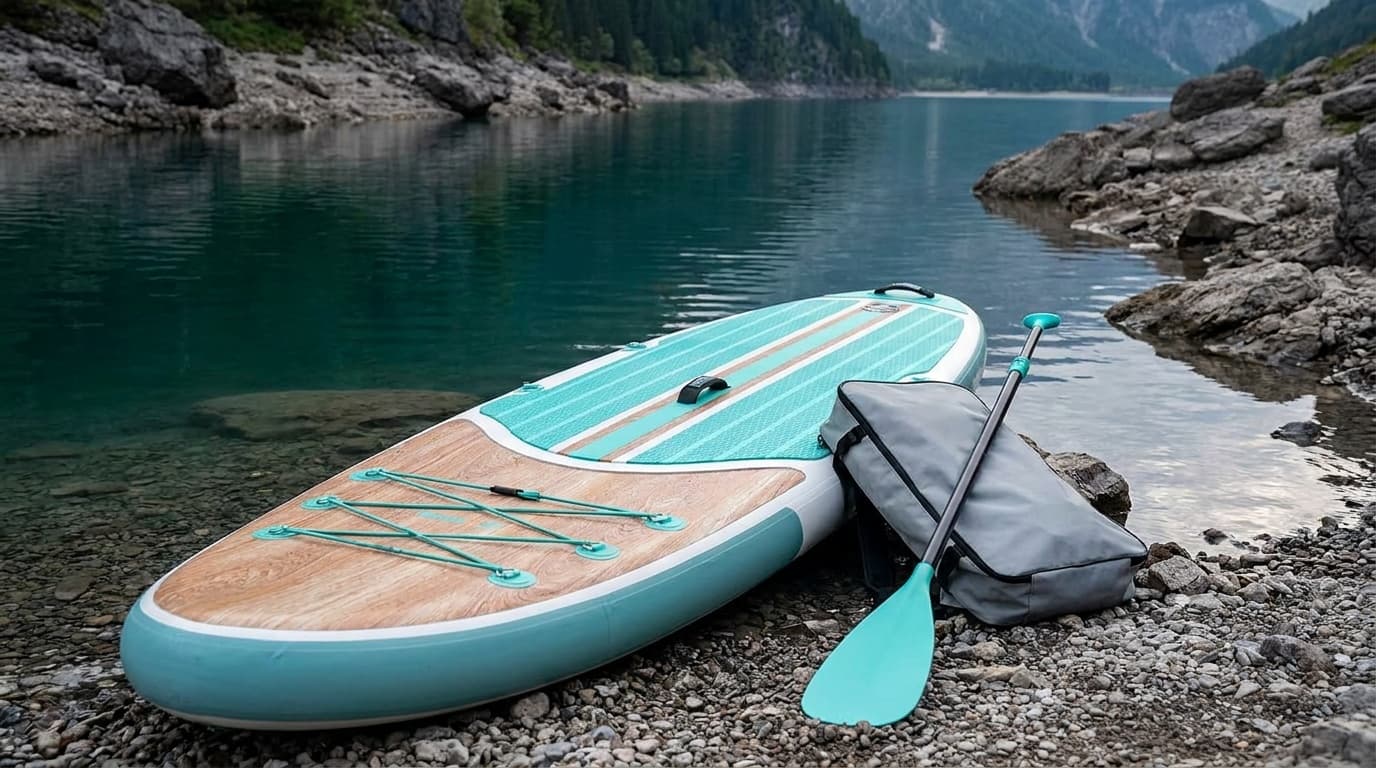
Product review
Niphean paddle board review: specs, 450 lb claim, and kit
Review the Niphean 10'6 x 33-inch paddleboard's 19 lb weight, 11 D-rings, three-year warranty, 450 lb published limit, and accessory bundle.
Read guideResearch-based guide
4 products comparedUpdated Aug 14, 2026Our recommendations draw on manufacturer documentation, retailer listings, owner feedback, and comparisons with alternatives.
As an Amazon Associate I earn from qualifying purchases. We may earn a commission from links here, at no extra cost to you. How we research →