When to go
Weather, crowds, and what the season changes about the trip.
Spring
Mild and green by badlands standards, with the best wildflowers and comfortable hiking.
Pack Layers, sturdy footwear for clay trails, and water.
Summer
Hot, dry, and exposed on the badlands, with little shade and afternoon heat.
Pack Lots of water, sun protection, and early or late hiking to dodge the heat.
Fall
Cool, clear, and excellent for hiking and the scenic drive, the calmest good window.
Pack Warm layer, headlamp for shorter days, and footwear for loose clay.
Winter
Cold and quiet, with snow, slick clay roads, and possible closures on the upper drive.
Pack Insulation, traction, and a check on road conditions before driving in.
Top things to do
Cap Rock Nature Trail
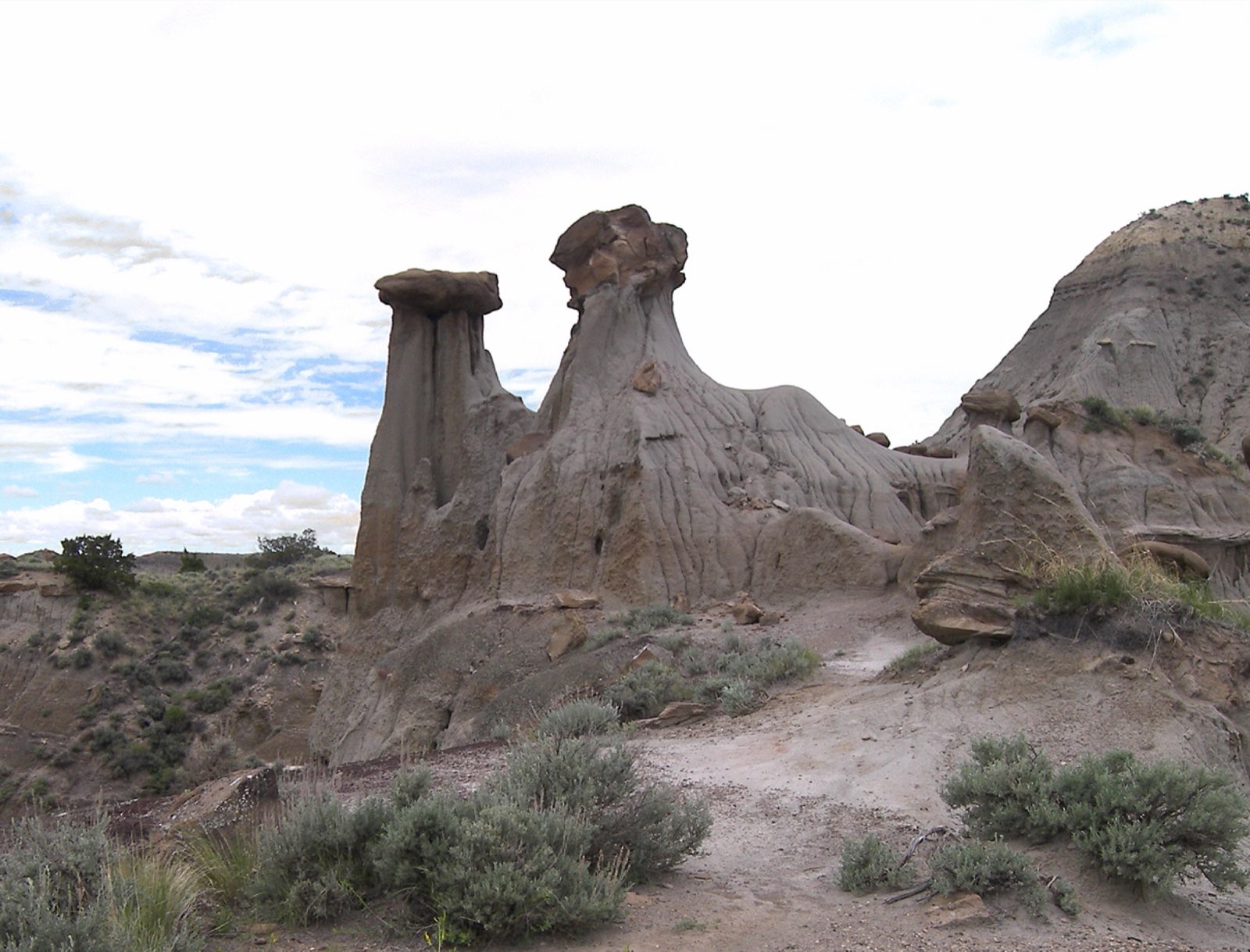
A short loop in the upper park to the Cap Rock formation, a natural bridge among the eroded badlands spires, with interpretive signs on the geology.
Badlands scenic drive
The main park road climbs from the visitor center through pine-and-juniper badlands to overlooks, trailheads, and the upper campground. The low-effort way to see the formations.
Dinosaur fossils and the visitor center
Makoshika has yielded fossils of Tyrannosaurus, Triceratops, and other dinosaurs, and the visitor center displays a Triceratops skull and badlands interpretation.
Anchor the day around Cap Rock Nature Trail
Move exposed miles to the morning and keep water, shade, and storm checks ahead of the wish list. For one day in Makoshika State Park, make Cap Rock Nature Trail the non-negotiable, add Badlands scenic drive only if the first stop runs clean, and keep Dinosaur fossils and the visitor center as the flexible finish.
- 1Start with Cap Rock Nature Trail: A short loop in the upper park to the Cap Rock formation, a natural bridge among the eroded badlands spires, with interpretive signs on the geology.
- 2Add Badlands scenic drive: The main park road climbs from the visitor center through pine-and-juniper badlands to overlooks, trailheads, and the upper campground. The low-effort way to see the.
- 3Use Dinosaur fossils and the visitor center as the optional finish, not as a reason to rush the whole day.
Where to stay
Camp in the park's small campground for the badlands quiet and dark skies, or stay in Glendive a few minutes away for motels, food, and fuel. The campground is small, so on summer weekends or during the local dinosaur events, have a backup in town. There are no cabins or lodge here; it is a campground-or-town decision.
Camping reservations
Camping reservations
Makoshika's campground is small, so reserve ahead in summer or keep Glendive as a backup.
Montana's largest state park has a modest campground of about 15 sites among the badlands, with a group shelter and an amphitheater. It is first come for some sites and reservable for others through Montana's system, and it can fill on summer weekends and event dates.
Reviewed June 8, 2026
Booking window
Montana state park campsites can be reserved up to three months in advance through montanastateparks.reserveamerica.com, with a one-day minimum. Verify which Makoshika sites are reservable versus first come before relying on a site.
- Day use is free for Montana-resident vehicles and $8 per non-resident vehicle. Camping fees run roughly $4 to $34 depending on season and amenities.
- The campground is small (about 15 sites), with the Artist's Vista and Pine On The Rocks areas in the upper park near the Cap Rock trailhead.
- Clay roads and trails turn slick and can close after rain or snow. Check conditions before driving the upper scenic road, especially off-season.
Where to book or verify
Official Montana reservation portal for reservable state park campsites.
Park page with the campground, trails, scenic drive, fees, and visitor center.
Check for federal campground, backcountry, tour, and permit inventory tied to this park.
Campgrounds to know
Makoshika campground
Details- Booking
- Reservable sites up to three months ahead; some sites first come.
- Season
- Primarily spring through fall, weather and road dependent.
- Sites
- About 15 sites in the upper park, including the Artist's Vista and Pine On The Rocks areas, plus a group shelter.
- Small and quiet with dark skies. Have a Glendive backup on summer weekends and during dinosaur events.
Getting there and practical info
Plan the handoff from arrival to shuttle.
Parking, pedestrian entrances, and shuttle timing decide how calmly the first morning starts.
Getting there
Get to Makoshika State Park, then remove the first-morning friction.
- Access rhythm
- Car required
- Region
- Montana
Arrival note
Makoshika sits just southeast of Glendive in far eastern Montana, a few minutes from Interstate 94 and the town's services.
Car strategy
Glendive is the practical base for fuel, food, and lodging, and a car is essential both to reach the park and to drive the scenic road up into the badlands.
Car strategy
After rain or snow, the clay roads can be too slick to drive safely.
Book ahead
- Guided tours in Makoshika State ParkPaid link, Viator
Paid links: we may earn a commission if you book, at no extra cost to you.
Pair this with lodging: sleep where the park transfer is simple, especially if your route needs an early start.
Plan your trip
Turn Makoshika's conditions into water, pack, and sleep-system decisions.
Build around conditions
Let season, elevation, and weather set the plan.
Plan your trip
4 quick tools, already seeded for Makoshika State Park. Tune the numbers around temperature swings, footing, layers, and how much margin the route needs.
What to pack
Start with the gear decisions this park changes: footing, weather, camping, and water.
Kit Authority
Makoshika State Park packing list
0 of 22 packed. Check items as you pack, then take this list to the store, trailhead, or campsite.
Pack planning
Decide what Makoshika State Park asks of your kit before you start checking boxes.
Use this as a constraint check while you are still shaping the trip. The active checklist becomes useful once your route, dates, and sleep plan are set.
- First constraintHydration and exposureWater, Electrolyte mix, hat, sunscreen, sunglasses, 4 more
- Route realityFooting and tractionHiking boots, Hiking socks, Trekking poles
- Load choicePack and carry systemDaypack
- If overnightSleep and shelterTent, Sleeping bag, Sleeping pad
Checklist mode
22 items, grouped for the trip you are actually taking.
- Dates and season are set.
- Primary route, campground, or lodge is chosen.
- Water, footwear, and overnight needs are sized.
One researched pick
The first gear decision for Makoshika
A stable daypack is the one purchase that organizes water, layers, food, first aid, and the small safety margin.
We may earn a commission from links on this page, at no extra cost to you. Product prices and availability are accurate as of the date/time indicated and are subject to change. Any price and availability information displayed on Amazon at the time of purchase will apply to the purchase of this product.
THE DAY-HIKE PICK
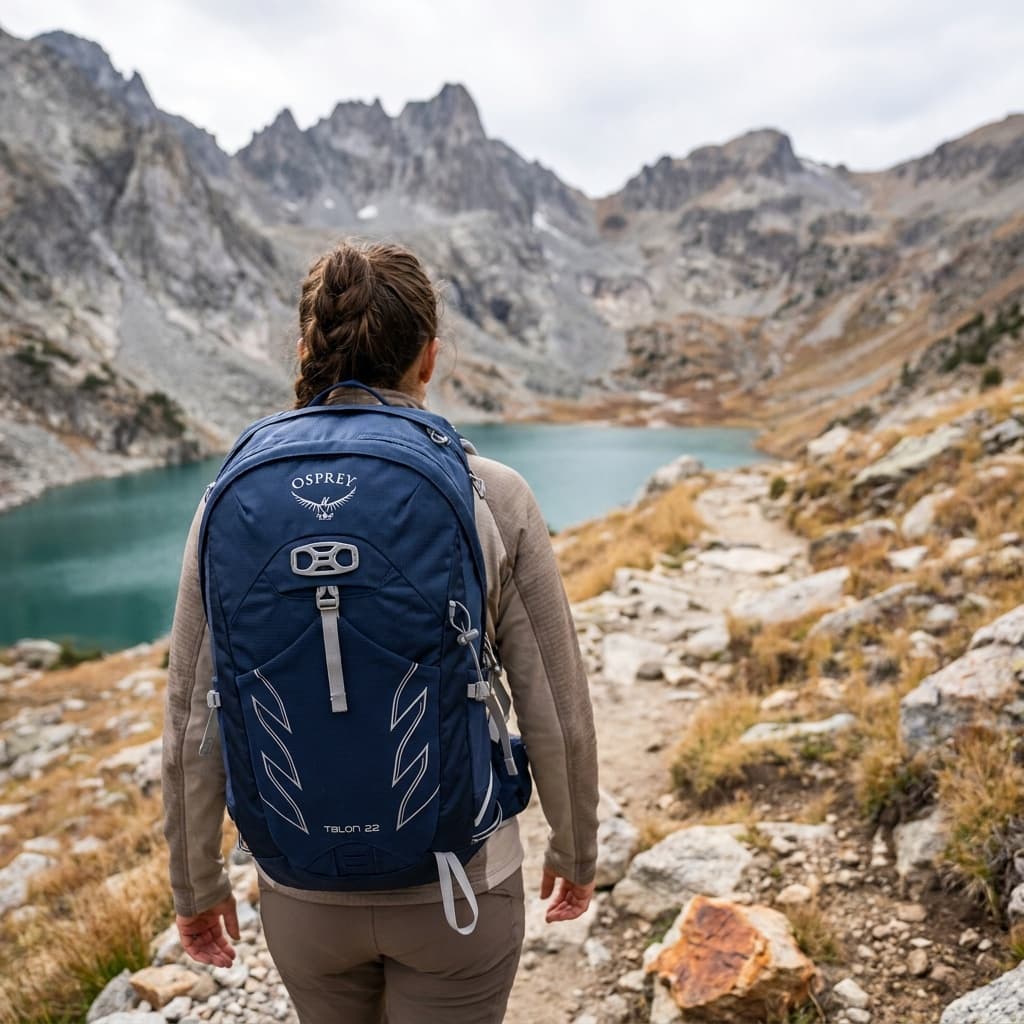
Osprey Talon 22
Best Overall
Kit Score 8.6/10
$169.95 Price checked Oct 26, 7:39 AM CDT
Best for: Hikers who want a proven all-around daypack with solid load support, plenty of adjustment, and a warranty they can actually use.
- Adjustable torso fit covers a wide range of body sizes
- At 2 lb 1 oz it runs heavier than ultralight rivals for the same volume
- Volume
- 22 L
- Weight
- 2 lb 1 oz (945 g)
- Back Panel
- AirScape foam with ventilation channels
- Hipbelt Pockets
- 2 zippered
- Hydration
- Compatible up to 3 L reservoir (sold separately)
- Warranty
- All Mighty Guarantee (lifetime repair or replace)
About this pick
The Talon 22 is the daypack you see on the trail more than any other for good reason: it packs in a padded hipbelt, adjustable torso harness, and dual hipbelt pockets into a 22-liter package that handles loads up to 20 lb without complaint. Owners across hundreds of Amazon ratings consistently cite its adjustability and durability as standouts.
Strengths
- Adjustable torso fit covers a wide range of body sizes
- Padded hipbelt and dual hipbelt pockets at this size are rare
- Osprey lifetime warranty backs years of hard use
Weaknesses
- At 2 lb 1 oz it runs heavier than ultralight rivals for the same volume
- AirScape back panel ventilation is functional but not class-leading compared to suspended-mesh designs
Kit Score breakdown
Gear for Makoshika
The buying guides that match what Makoshika asks of your kit, with our current top picks across budget and use case.
Can you photograph here? Permit and drone rules
Montana has no statewide photo permit; the film office coordinates, FWP permits state parks, and only Bozeman and Livingston mandate city film permits.
- Permit
- Usually fine for personal shoots; commercial or large productions can need a permit
- Drones
- Commercial drone work requires FAA Part 107
- Land
- Yes: you can photograph what is visible from public space in the US
From our photography sister site, Aperture Authority. Verified 2026-07-01.
Frequently asked questions
What is Makoshika State Park known for?
It is Montana's largest state park, known for pine-studded badlands, dinosaur fossils including Tyrannosaurus and Triceratops, the Cap Rock natural bridge, a scenic drive, and dark night skies, all just outside Glendive in eastern Montana.
Can you camp at Makoshika State Park?
Yes, in a small campground of about 15 sites in the upper park, with some sites reservable through Montana's system and some first come. It can fill on summer weekends and during dinosaur events, so keep Glendive as a backup.
How much does Makoshika State Park cost?
Day use is free for Montana-resident vehicles and $8 per non-resident vehicle. Camping fees run roughly $4 to $34 per night depending on the season and the site's amenities.
Is the Makoshika scenic drive paved?
The lower road is improved, but the upper badlands road is largely unpaved clay that turns slick and can close after rain or snow. Check conditions before driving up, especially in spring, winter, or after a storm.