We may earn a commission from links on this page, at no extra cost to you.
A portable door lock and a door alarm solve different problems. A compatible mechanical lock or brace tries to slow inward movement. An alarm tries to wake the occupant and create attention. A device that does one job should not be credited with the other.
Compare complete lock, brace, wedge, and alarm options in our guide to the best hotel door locks and alarms.
The products behind the decision
MECHANICAL BRACE
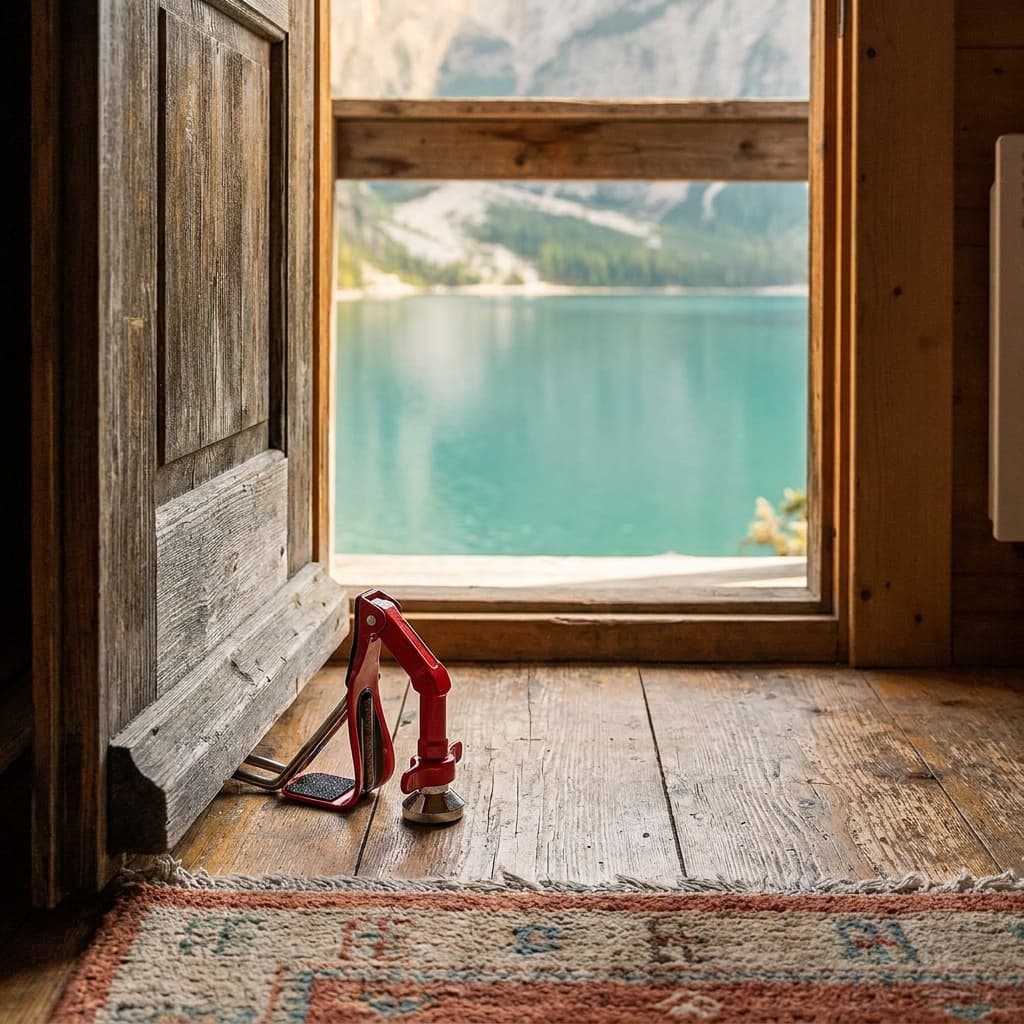
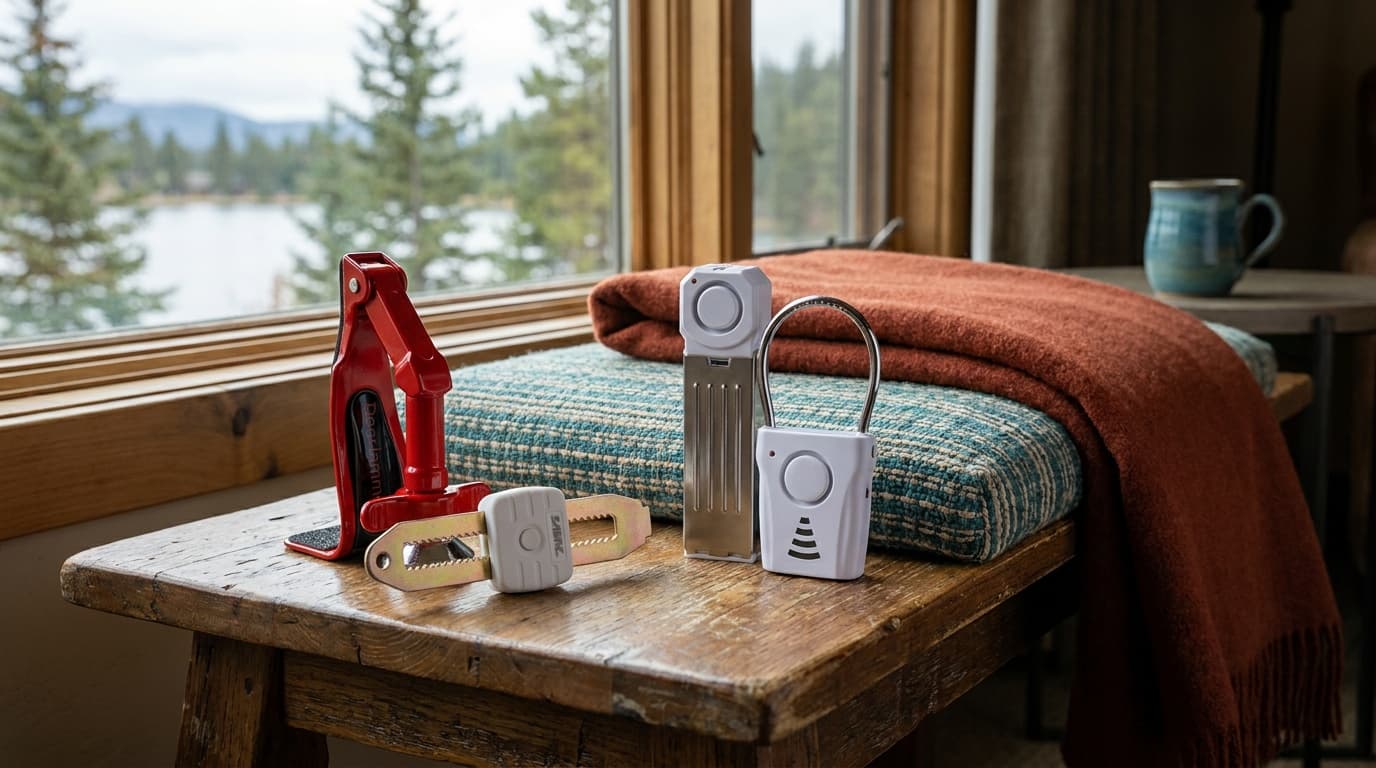
DoorJammer Portable Door Lock
Best for: Travelers who prioritize a substantial mechanical brace over minimum packing weight and can confirm under-door clearance.
Kit Score 8.7/10 · Check current price
- Steel brace creates a direct mechanical load path without depending on the existing strike plate
- Adjustable foot handles a useful range of door gaps and floor surfaces
- It cannot secure an outward-opening door and needs at least 0.25 inch of under-door clearance
LATCH INSERT
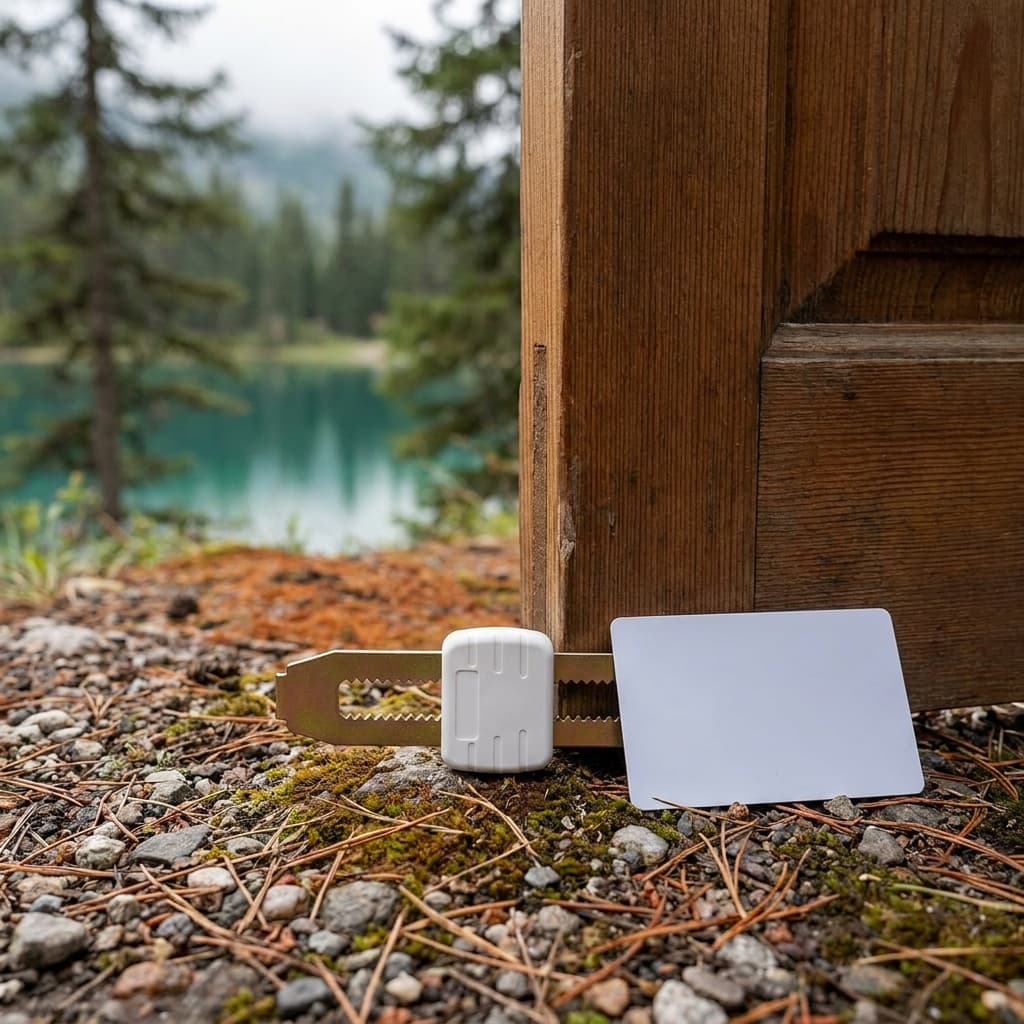
SABRE Compact Travel Door Lock
Best for: Travelers who want the smallest possible mechanical backup and can verify that their room has a compatible inward-opening hinged door.
Kit Score 8.7/10 · Check current price
- The lightest mechanical lock in this guide and easy to justify in a one-bag packing list
- Tool-free installation leaves the host property's hardware untouched
- It only works when the latch plate, door gap, opening direction, and frame geometry are compatible
WEDGE ALARM
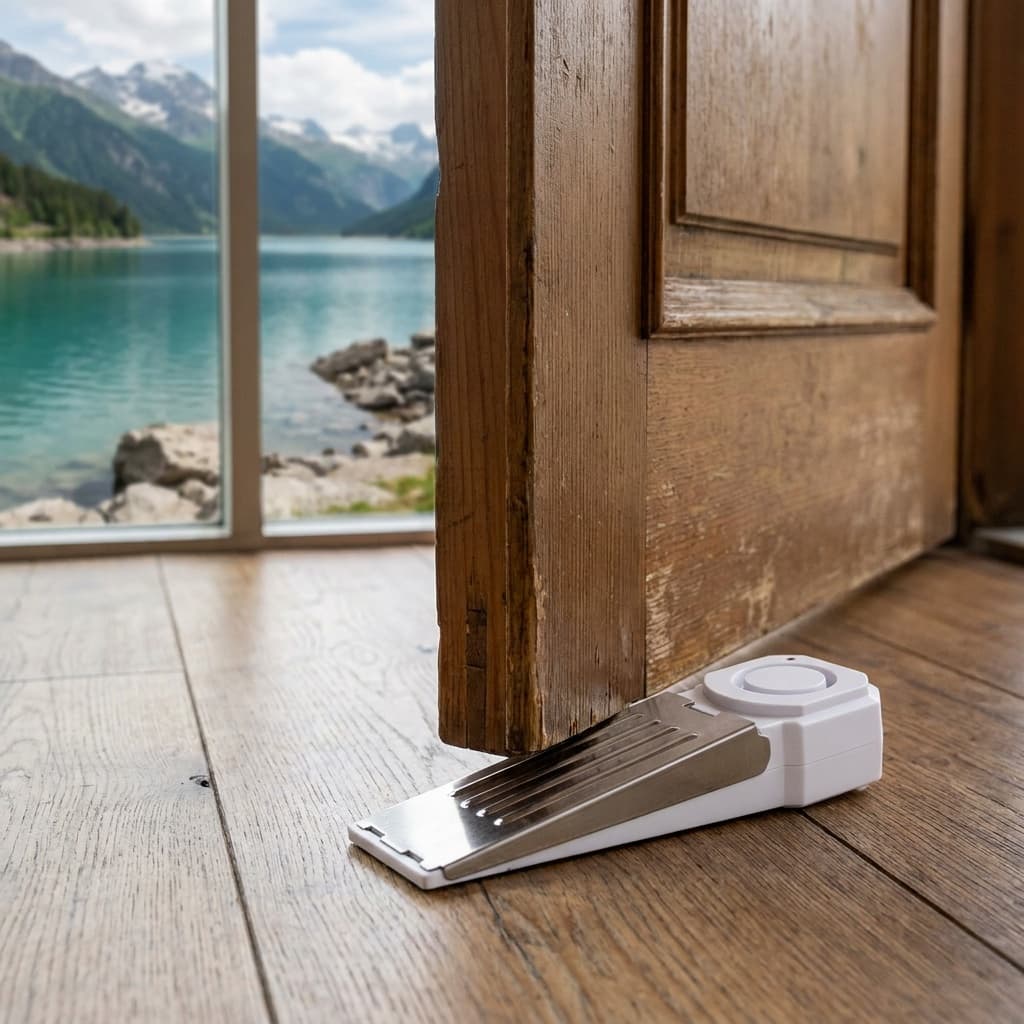
SABRE 120 dB Wedge Door Stop Alarm
Best for: Travelers who want an audible warning as well as extra door friction and are willing to test the battery and placement every night.
Kit Score 8.6/10 · Check current price
- Pairs a basic physical wedge with a loud audible warning
- Fast placement and no dependence on the room's latch-plate shape
- Performance depends on the floor surface and a door gap no larger than 0.75 inch
HANDLE ALARM
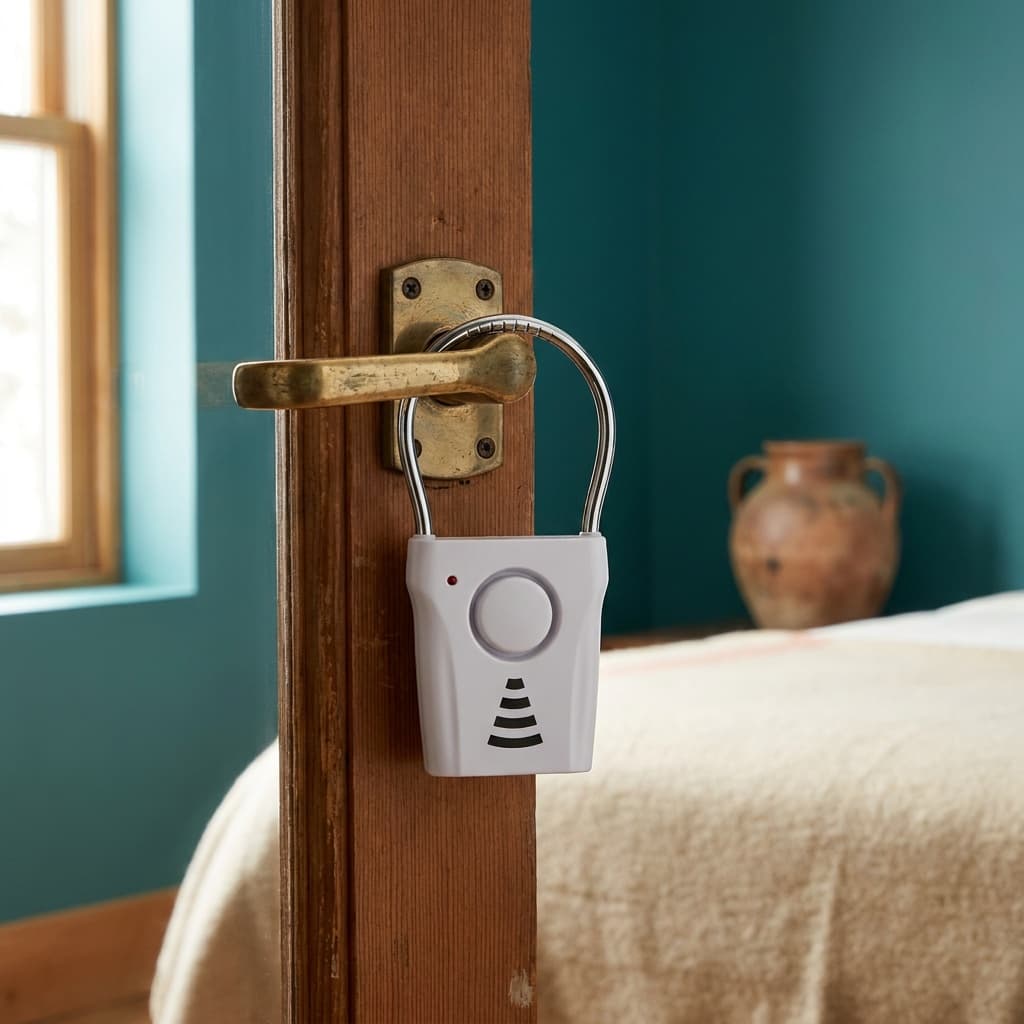
SABRE 110 dB Door Handle Alarm
Best for: Travelers who want the smallest possible audible warning or need an option for a door that does not accept a wedge or portable latch.
Kit Score 8.0/10 · Check current price
- Works without relying on under-door clearance or strike-plate geometry
- Three modes support hotel alarm use and simple entry chimes at home
- It does not slow or block the door, so it should be paired with the installed lock or a compatible mechanical device
What a portable lock does
The SABRE Compact Travel Lock uses the door's strike opening to create a second interior latch. DoorJammer uses a steel body beneath the door to create a floor brace. Both are intended for compatible inward-opening hinged doors.
The latch insert packs much smaller and lighter. The floor brace does not depend on strike-plate shape, but it needs at least 0.25 inch beneath the door and suitable floor contact.
Neither device can be assumed to fit before seeing the room. A low sweep, tight frame, outward-opening door, sliding panel, or unusual trim can reject the product immediately.
What an alarm does
SABRE's wedge alarm sits beneath an inward-opening door and triggers a manufacturer-rated 120 dB sound when pressure reaches its top plate. Its non-skid base adds friction, but the warning is its primary job.
The handle alarm reacts to vibration and has a manufacturer-rated 110 dB output. It requires no floor gap and can work where a wedge or brace cannot. It does not mechanically reinforce the door.
Both depend on battery condition, correct placement, and sensitivity. A loud sound does not guarantee outside intervention.
Compatibility comparison
| Question | Mechanical latch | Floor brace | Wedge alarm | Handle alarm |
|---|---|---|---|---|
| Inward-opening door required | Yes | Yes | Yes | Usually not for trigger |
| Strike plate matters | Yes | No | No | No |
| Floor gap matters | No direct floor contact | At least 0.25 in | No more than 0.75 in | No |
| Battery required | No | No | 9V | Check current instructions |
| Adds physical delay | Yes | Yes | Some friction | No |
| Creates audible notice | No | No | Yes | Yes |
When pairing makes sense
A mechanical device and alarm are complementary on a compatible inward-opening door. The brace or latch adds resistance, while the alarm creates notice. Pairing may be reasonable for a ground-floor rental, solo trip, or room with a working but basic installed lock.
More equipment is not automatically safer. Two devices can complicate a rushed exit. Practice removal in the exact installed order and keep the path clear. Never block a required emergency route or prevent another occupant from leaving.
The installed lock comes first
Close the door fully and confirm the latch catches. Engage the deadbolt and any installed swing bar. Report loose strike plates, missing screws, damaged frames, or a door that does not close on its own.
A portable accessory cannot repair structural damage. A room change is more appropriate than adding equipment to obviously failed hardware.
Packing burden
The SABRE latch lock weighs 0.12 lb. DoorJammer weighs 0.46 lb. The alarms are small, but batteries and protective storage still belong in the kit.
For one-bag travel, the lightweight latch plus handle alarm creates both functions at minimum bulk, with the largest compatibility uncertainty. DoorJammer plus wedge alarm is a more substantial setup with stricter floor requirements.
Choose in five questions
Build the right layer
Does the door open inward?
If not, these mechanical picks and the wedge alarm are not the answer.
Can you inspect the strike opening?
Choose a latch insert only when it sits and releases without forcing the door.
Is there at least 0.25 inch below the door?
DoorJammer needs that clearance.
Do you want delay, notice, or both?
Mechanical devices create delay; alarms create notice.
Can everyone exit quickly?
If removal is uncertain, use the installed lock and change the room rather than adding an obstacle.
Frequently asked questions
Is a door stop alarm as good as a portable lock?
No. The wedge adds floor friction and a loud alert, but it is not equivalent to a fitted mechanical latch or steel brace. It may be the better choice when notice is the priority or a lock is incompatible.
Can I use a portable lock and alarm together?
Yes when both fit, the installed lock is engaged, property and safety rules permit them, and every occupant has practiced quick removal. Pairing covers both physical delay and audible notice.
Which option works on the most hotel doors?
The handle alarm has the fewest fit requirements because it detects vibration and does not use the floor or strike opening. It also provides no mechanical reinforcement. Broad compatibility is not the same as stronger protection.
What should I do if the hotel door hardware is damaged?
Ask for repair or a different room. Do not use a portable accessory to rationalize a loose frame, failed deadbolt, or door that does not latch.
See the current device picks and exact specifications in best hotel door locks and alarms.
Related buying guide
Best hotel door locks and alarms for travel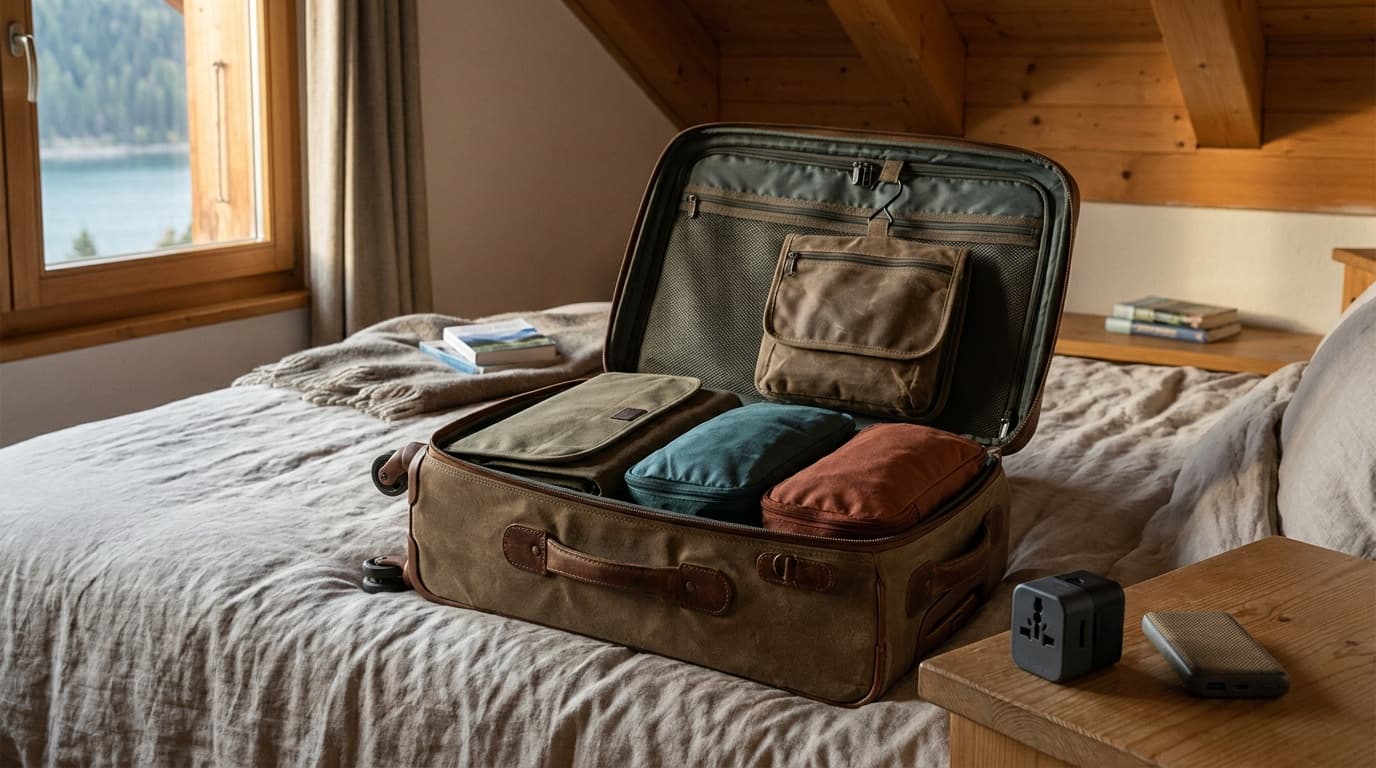
Complete travel loadout
Carry-on travel kit
A one-week suitcase system with the bag, organization, laundry, toiletries, security, scale, and power.
Build the complete kitRelated guides
Product review
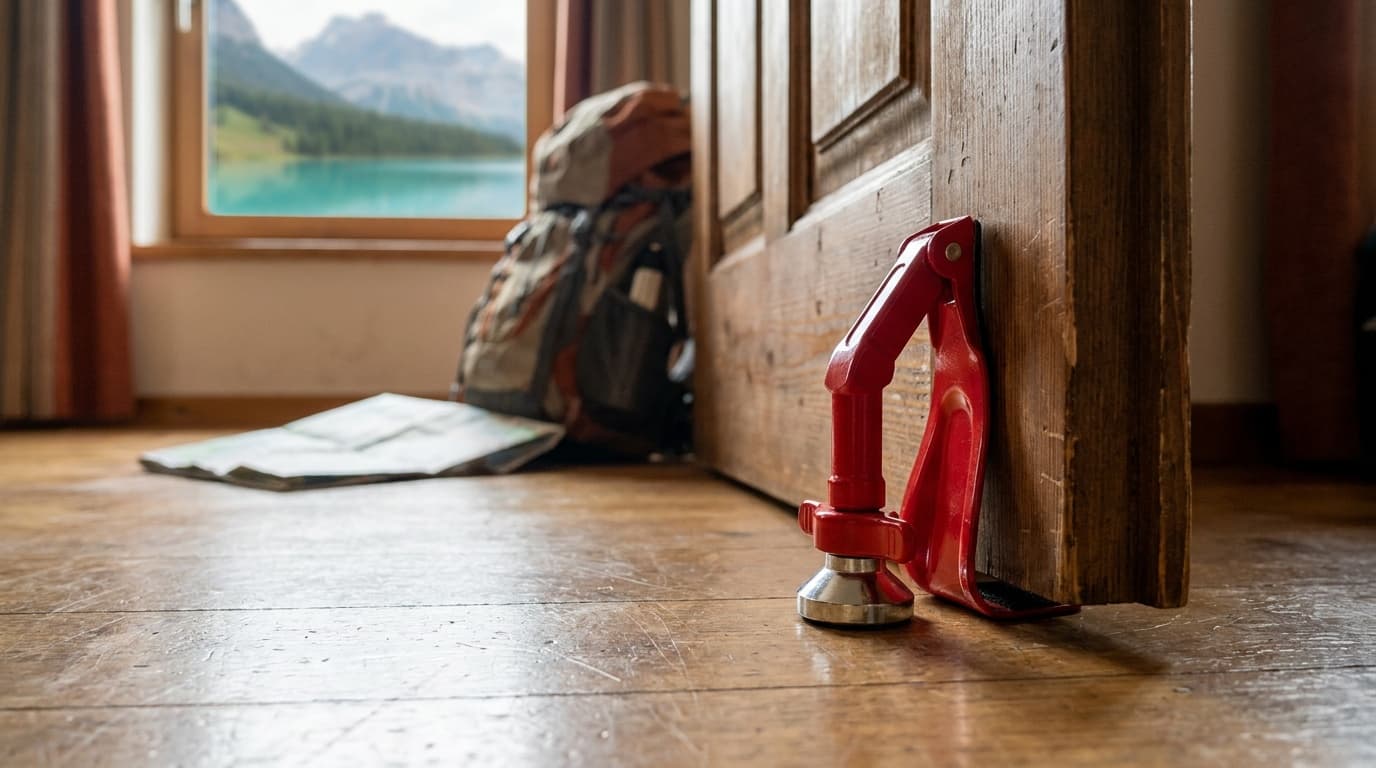
DoorJammer Portable review: check the gap first
Kit Score 8.7/10. DoorJammer is a compact steel floor brace for inward-opening doors with at least 0.25 inch of under-door clearance.
Read guide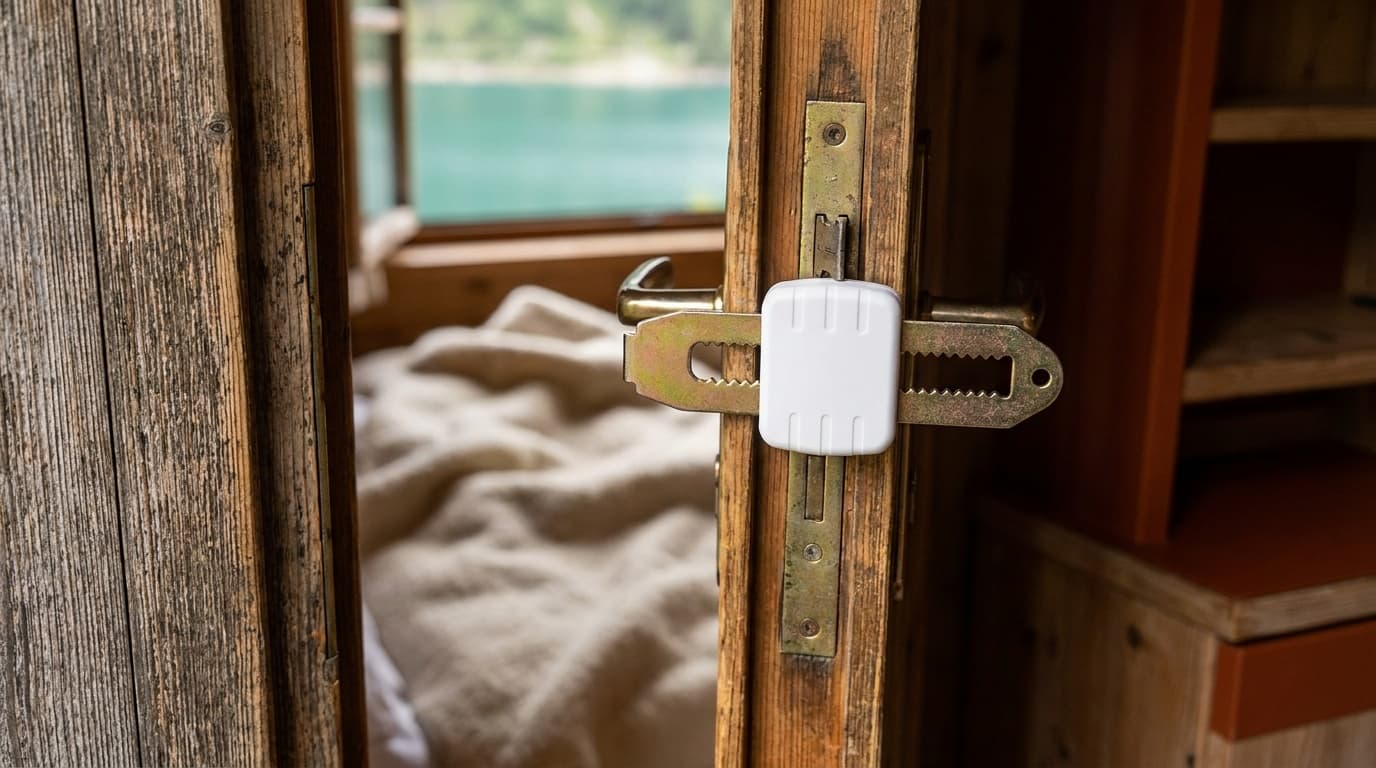
Product review
SABRE Compact Travel Door Lock review
Kit Score 8.7/10. SABRE's 0.12 lb latch lock is tiny and inexpensive, but inward-opening door and strike-plate compatibility decide the purchase.
Read guide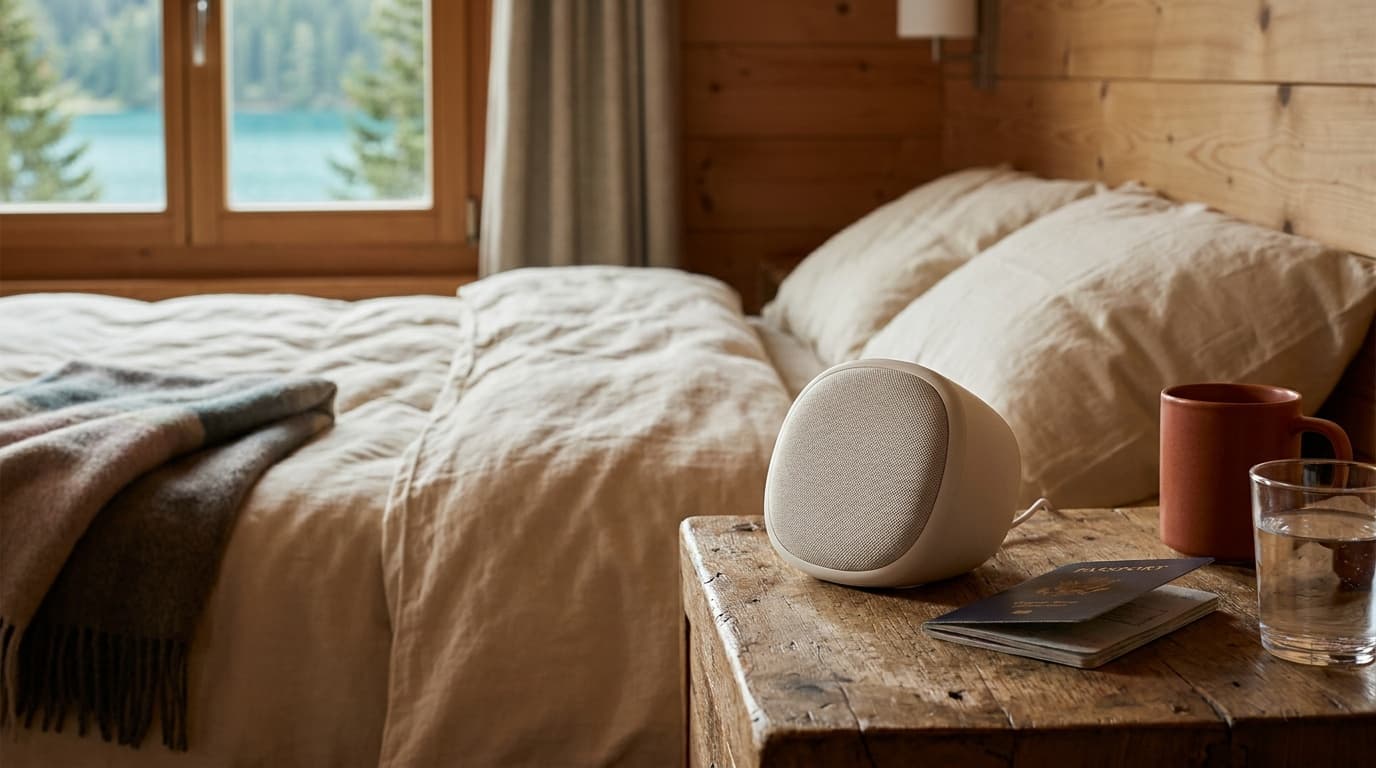
Buying guide
Best portable white noise machines for hotels and travel
Four travel white noise machines compared on rated battery hours, charging, weight, size, sounds and price, with manufacturer figures and clear picks for solo travelers and parents.
Read guide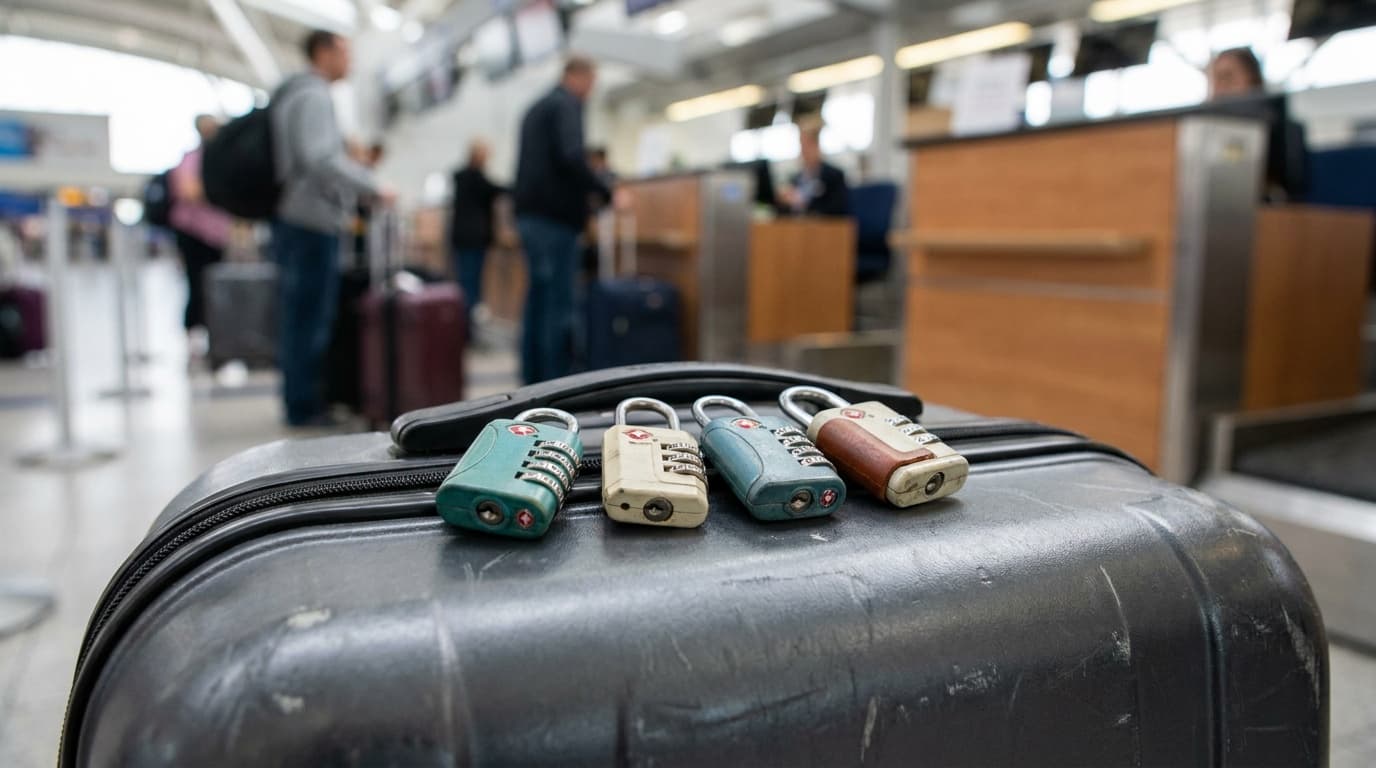
Buying guide
Best TSA-approved luggage locks: 3 reliable picks
Three Travel Sentry locks compared on zipper fit, inspection indicator, cable versus shackle, and what a TSA lock can and cannot protect. Sourced specs and limits.
Read guideResearch-based guide
4 products comparedUpdated Aug 14, 2026Our recommendations draw on manufacturer documentation, retailer listings, owner feedback, and comparisons with alternatives.
As an Amazon Associate I earn from qualifying purchases. We may earn a commission from links here, at no extra cost to you. How we research →