We may earn a commission from links on this page, at no extra cost to you.
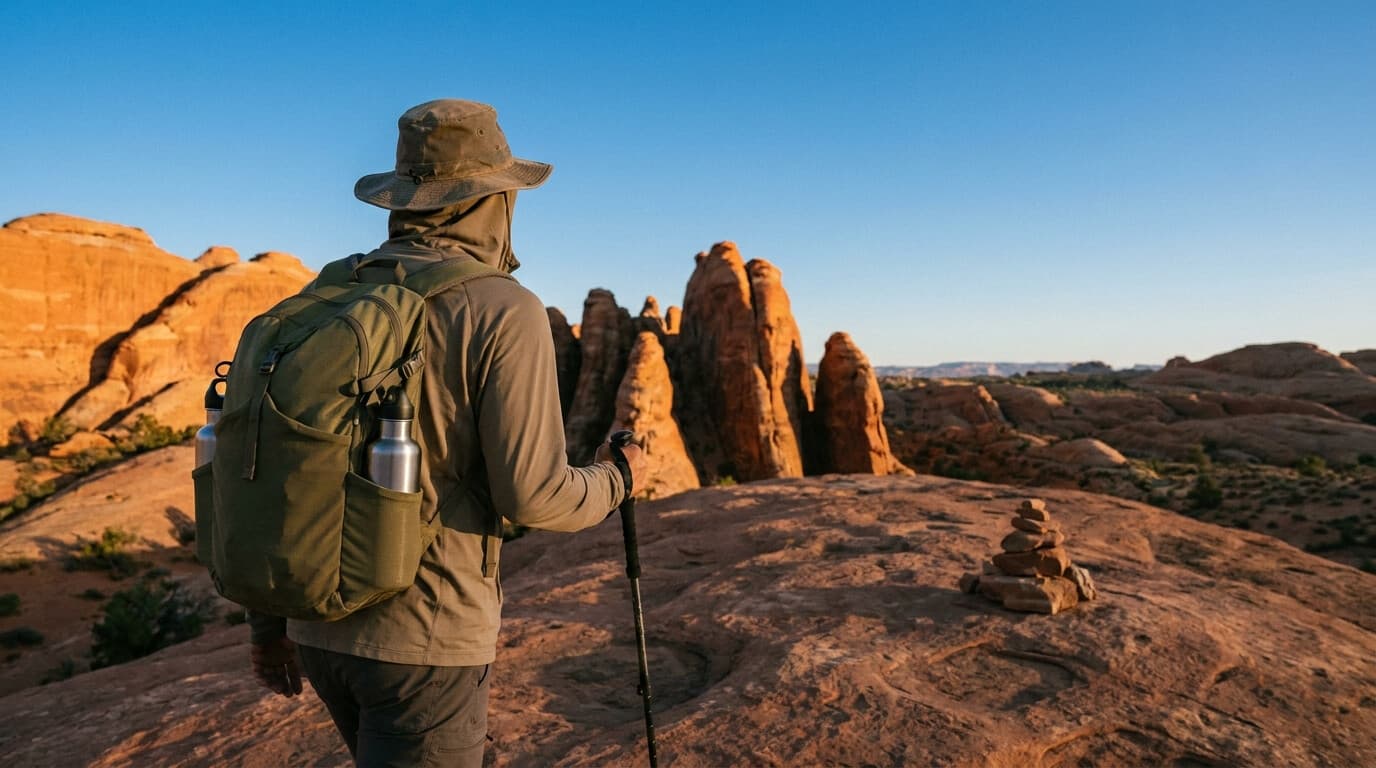
Desert parks punish two mistakes above all others: carrying too little water and treating sun protection as an afterthought. Get those two systems right, then plan for temperature swings that can run 40 degrees between a July afternoon and the same night's low.
This guide covers the gear logic for the Utah Mighty 5, Grand Canyon, Joshua Tree, Big Bend, and Saguaro. If you are still choosing which parks to string together, the Utah Mighty 5 road trip shortlist, the southwest canyon country itinerary, and the broader southwest national parks overview map the trips this packing list is built for.
Water: do the math before you do the miles
The working numbers park rangers use are simple. Plan on roughly one liter per two hours of hiking in moderate conditions, and double the rate when temperatures pass 90 degrees or the trail is exposed and climbing. On top of trail water, budget a gallon per person per day as the base camp supply for drinking, cooking, and washing.
Run that math against a real day and the volumes get serious fast. A six-hour hike in the Grand Canyon in May is three to six liters per person on the trail alone, before the gallon back at camp. Two people on a three-day Big Bend trip should be rolling in with six gallons minimum in the vehicle, and Big Bend specifically has almost no reliable backcountry water, so what you carry is what you have.
Structure the supply in three tiers:
- Vehicle storage: rigid 5 to 7 gallon containers that live in the car and refill everything else. Most desert park campgrounds have potable spigots, but never assume; check the park site the week you go.
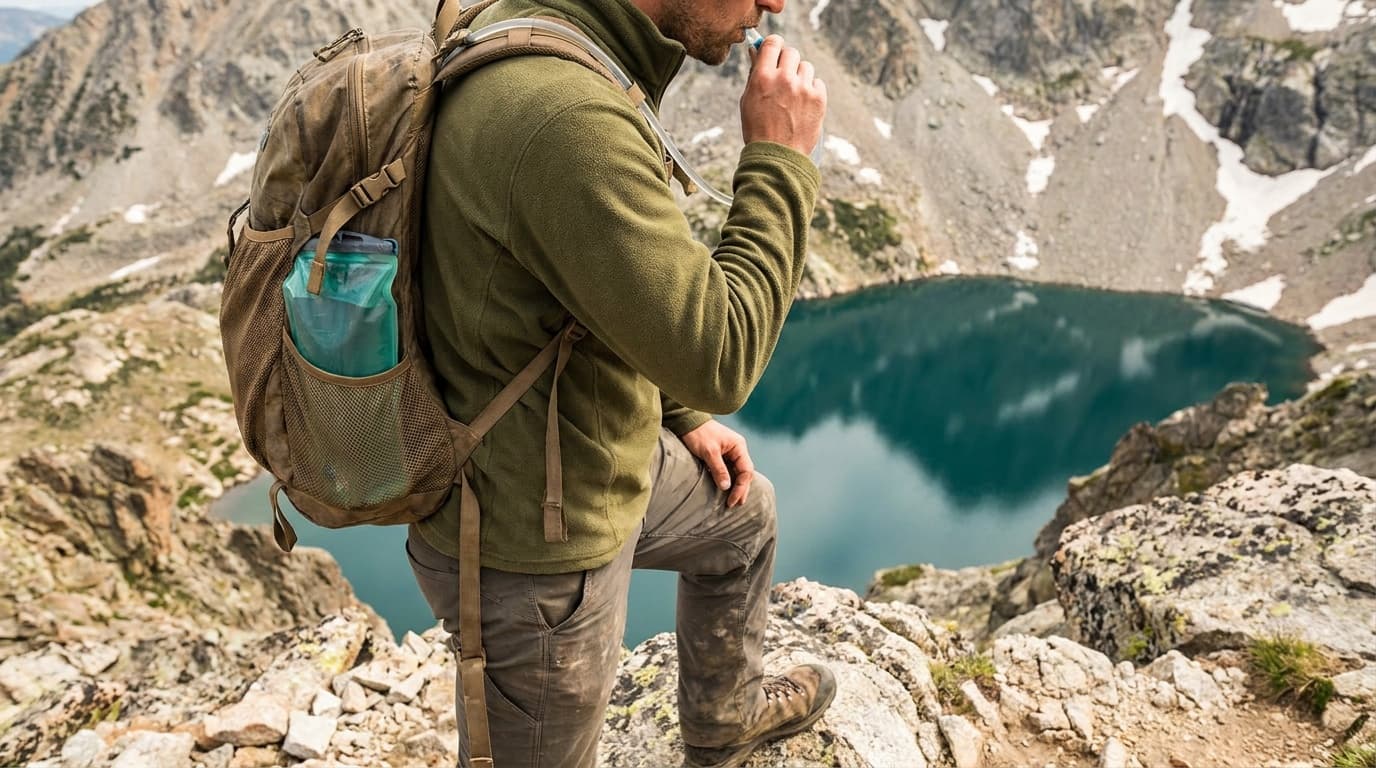
- On-body carry: a 2 or 3 liter reservoir carries the volume, and our hydration bladder roundup covers the reliable ones. A bottle rides alongside it as backup, because a bladder failure with no second container is a trip-ender in the desert.
- Cold reserve: heat kills the urge to drink lukewarm water. An insulated bottle like the Hydro Flask 32 oz Wide Mouth keeps water genuinely cold through an afternoon at 100 degrees, which means you actually drink it. The insulated bottle roundup compares sizes and lids.
For a personalized number based on your route length, temperature, and pace, the hiking water calculator does the arithmetic for you. Add electrolytes on any day over two hours: sweat in dry air evaporates instantly, so you lose salt without ever feeling wet.
The sun system: shade you wear
Desert sun protection works as a system of coverage, not a bottle of sunscreen. UPF-rated clothing blocks UV all day without reapplication, keeps blowing sand off your skin, and, counterintuitively, a loose light layer is often cooler than bare skin in direct sun.
Four pieces do the work:
- A hooded UPF sun shirt is the anchor. Something like the Outdoor Research ActiveIce Spectrum Sun Hoodie covers arms, neck, and ears in one garment and wicks fast enough to cool you as it dries. The best sun shirts roundup ranks the current field, and what UPF ratings actually mean explains the numbers on the tag.
- A wide-brim hat, not a ball cap. A 3-inch brim shades the ears and neck that a cap leaves exposed. Options in the sun hat roundup include chin cords, which matter more than you expect on canyon rims where wind funnels.
- A neck gaiter closes the gap between collar and hat, doubles as a dust filter when wind picks up sand, and turns into evaporative cooling when soaked at a water stop. The neck gaiter roundup covers the UV-rated versions.
- Sunscreen and SPF lip balm for the hands, face, and lips the clothing misses. Reapply every two hours; dry air strips it faster than humidity does.
Sunglasses are not optional. Slickrock and light-colored sand reflect UV upward, so you take the dose twice.
Lightweight full-length pants keep sun and blowing sand off your legs. On trips with cold starts and hot afternoons, convertible hiking pants let you change coverage without packing a second bottom.
Layers: the desert is not always hot
The 40-degree day-to-night swing is the finding that surprises first-time desert campers most. Bryce Canyon sits above 8,000 feet and drops below freezing at night well into May. Joshua Tree in March can hit 80 in the afternoon and 38 at 2 a.m. The dry air that makes afternoons brutal also releases heat the moment the sun drops.
Pack a genuine three-season layer kit even for a summer trip: a fleece or light insulated jacket, a warm hat, and a wind shell. Camp mornings in the desert are cold enough that coffee happens in a puffy, then the same day requires the full sun system by 10 a.m. For shoulder-season trips, add a real layering plan for cold conditions and check your sleeping bag rating against the park's overnight lows at elevation, not the daytime forecast.
Footwear: slickrock grips, sand infiltrates
Slickrock is misnamed; dry sandstone offers outstanding grip to a rubber outsole with decent surface area. What it punishes is stiff, smooth-soled footwear and anything with worn tread. Trail runners or light hikers with sticky rubber outperform heavy boots on most Mighty 5 trails, and the trail runner vs hiking boot decision leans even further toward runners in dry country.
Sand is the second problem. Fine desert grit works through mesh uppers and over low collars, and grit inside a sock is how blisters start. Low hiking gaiters seal the shoe collar for washes and dune sections, and a spare pair of hiking socks in the pack lets you reset mid-day. In cactus country like Saguaro, gaiters also stop the casual ankle-height spine encounter.
Cooler strategy: ice is fuel
In desert camping, ice is a consumable you budget like water. A quality rotomolded cooler such as the YETI Tundra 45 holds ice three to five days in 90-degree heat if you work it right; a cheap cooler in the same conditions is a warm lunchbox by day two. The camping cooler roundup compares retention claims against real-world numbers.
The technique matters as much as the box. Pre-chill the cooler overnight before packing, use block ice as the base with cube ice filling gaps, keep the cooler in the shade of the vehicle and rotate it as the sun moves, and open it on a schedule instead of grazing. A separate cheap cooler for drinks protects the food cooler from the constant lid-lifting. More tricks live in the guide to keeping ice longer while camping.
Navigation when the trail is a line of rock piles
Many desert park routes cross bare rock where no footpath can form. Instead, routes are cairned: stacks of rocks mark the line, and losing the cairn line on open slickrock is the classic way people get lost in Canyonlands and Arches.
The protocol: never leave one cairn until you have visually located the next, and turn around to memorize the reverse view at junctions, because the route looks different going back. Carry the park map downloaded offline before you arrive; cell coverage inside most desert parks rounds to zero. A phone in the heat also drains and overheats faster than usual, so a paper map backup and a power bank belong in the pack. For remote routes in Big Bend or the Maze district, a dedicated satellite messenger is cheap insurance where help is a very long way off.
Desert park packing checklist
Water
- Rigid 5-7 gallon vehicle containers (1 gallon/person/day base)
- 2-3L hydration reservoir plus a backup bottle
- Insulated bottle for cold reserve
- Electrolyte tabs or powder
Sun
- Hooded UPF sun shirt
- Wide-brim hat with chin cord
- UV-rated neck gaiter
- Sunglasses, sunscreen, SPF lip balm
Layers
- Fleece or light puffy for nights
- Wind shell
- Warm hat for camp mornings
Feet
- Sticky-rubber trail runners or light hikers
- Low gaiters for sand and cactus country
- Spare socks in the daypack
Camp and safety
- Rotomolded cooler, block ice base
- Offline park map plus paper backup
- Power bank, headlamp
- First aid kit with tweezers (cactus spines) and blister care
FAQ
How much water do I need for desert hiking?
Use one liter per two hours of hiking as the baseline and double it above 90 degrees or on exposed climbing trails. A full hiking day in a park like the Grand Canyon can require four to six liters per person on the trail, plus a gallon per person per day back at camp for drinking and cooking. The hiking water calculator gives a number tuned to your route and forecast.
Is it better to wear long sleeves or short sleeves in the desert?
Long sleeves, as long as they are loose, light-colored, and breathable. A UPF sun hoodie blocks UV all day without reapplying sunscreen, keeps blowing sand off your skin, and shades you in a way bare skin cannot. Desert cultures have dressed in loose full coverage for millennia for exactly this reason. Save short sleeves for shaded canyon bottoms and evenings.
Do I need hiking boots for slickrock?
No. Dry sandstone grips soft rubber extremely well, so trail runners or light hikers with sticky outsoles handle most Mighty 5 and Grand Canyon trails better than stiff boots. What matters is fresh tread and a snug fit; worn-smooth soles are genuinely dangerous on steep slickrock like Angels Landing. Add low gaiters if your route crosses sandy washes.
How cold does it get at night in desert national parks?
Expect swings of 30 to 40 degrees between the afternoon high and the overnight low. High-elevation desert parks such as Bryce Canyon (8,000+ feet) drop below freezing at night into late spring, and even Joshua Tree in March can fall from 80 by day to the high 30s before dawn. Pack a fleece, a warm hat, and a sleeping bag rated for the overnight low at your campsite's elevation.
How do I keep ice from melting while camping in the desert?
Start with a well-insulated rotomolded cooler, pre-chill it overnight, and build the load on block ice with cubes filling the gaps. Keep it in vehicle shade and move it as the sun tracks, open it on a schedule rather than constantly, and run a second cheap cooler for drinks so the food cooler stays shut. Done right, a quality cooler holds ice three to five days in 90-degree heat.
Planning the route itself? Start with the Utah Mighty 5 trip page or the wider southwest parks overview, then browse more camping gear guides or read how we research and rate.
Recommended gear
Our current top picks from the Best hydration bladders for hiking (2026) guide, if you are ready to buy.
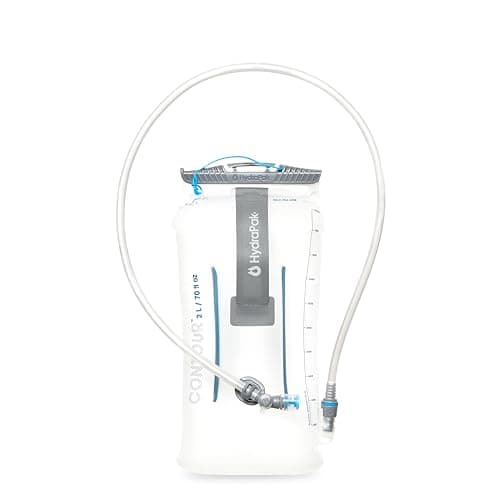
The Contour's 3D-welded shell and internal Shape-Loc baffles keep it flat and slim so it slides into a loaded pack without fighting the sleeve. Its fully reversible body and dishwasher-compatible materials make it the easiest bladder on the market to clean and dry completely.
Best for: Weight-conscious day hikers and backpackers who want the fastest, easiest clean-and-dry routine.
- Reverses inside-out for thorough drying in under 90 minutes, far faster than twist-cap designs
- 3D-welded slim profile slides into stuffed pack sleeves where other bladders bind
- Slide-Seal opening can be harder to fill from shallow water sources than a wide-mouth screw cap
- Capacity
- 1.5L / 2L / 3L
- Weight (3L)
- 5.5 oz (155 g)
- Closure
- Zip Slide-Seal, fully reversible
- Bite valve
- Comet self-sealing, thumb shutoff
- Dishwasher safe
- Yes (top rack)
- Hose connection
- Quick-disconnect, magnetic clip
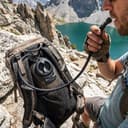
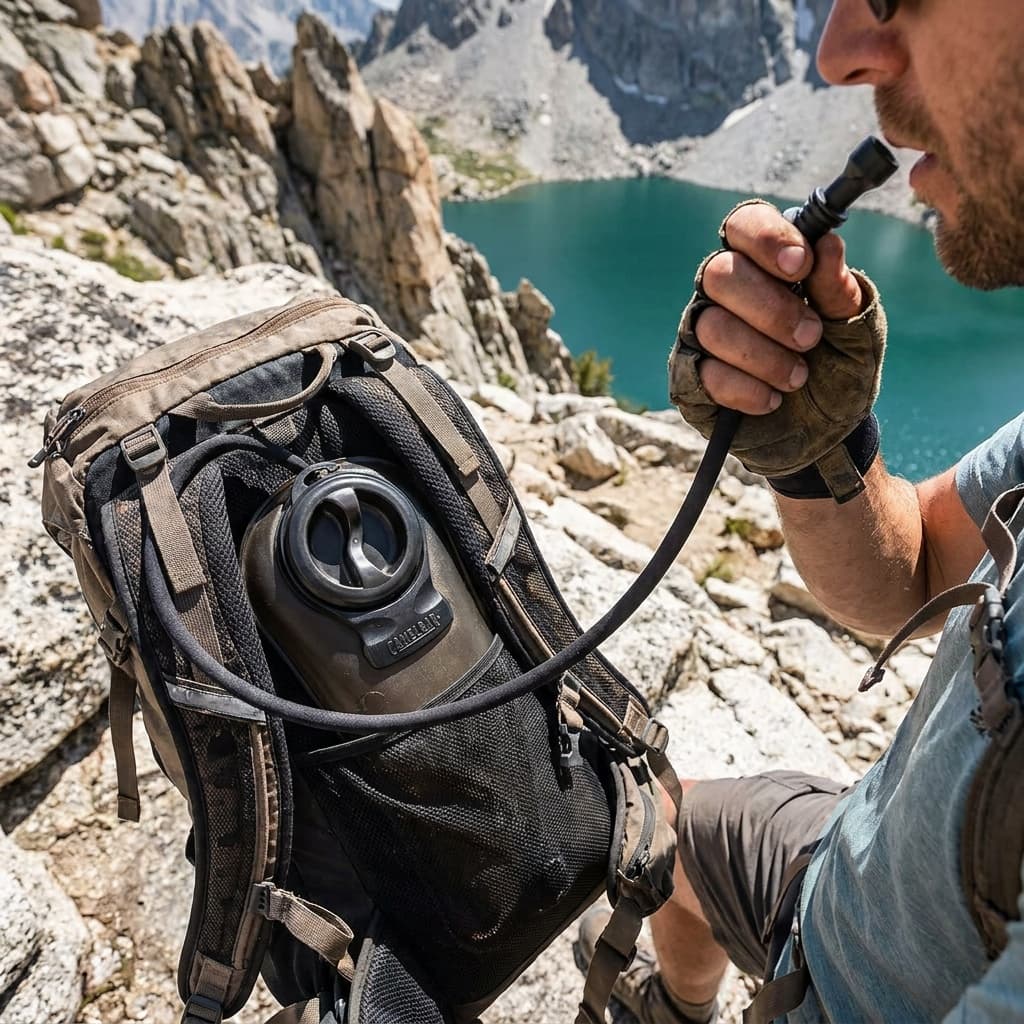
The Crux is a proven performer with the highest measured flow rate among major bladders tested, a large ergonomic handle that simplifies stream fills, and clean-tasting water straight out of the packaging. At around $42, it delivers genuine all-around reliability at an honest price.
Best for: Day hikers and weekend backpackers who want a reliable, fast-flowing bladder at a wallet-friendly price.
- Best-in-class flow rate delivers noticeably more water per sip than competing designs
- Large twist handle makes one-handed stream and sink fills straightforward
- Heavier and bulkier than ultralight alternatives; the rigid handle reduces packability
- Capacity
- 1.5L / 2L / 3L
- Weight (2L)
- 7 oz
- Closure
- Twist screw-cap with ergonomic handle
- Bite valve
- Big Bite Valve, on/off lever
- Flow rate
- Highest tested: 1.25 cups per 10 sec
- BPA/BPS/BPF
- Free
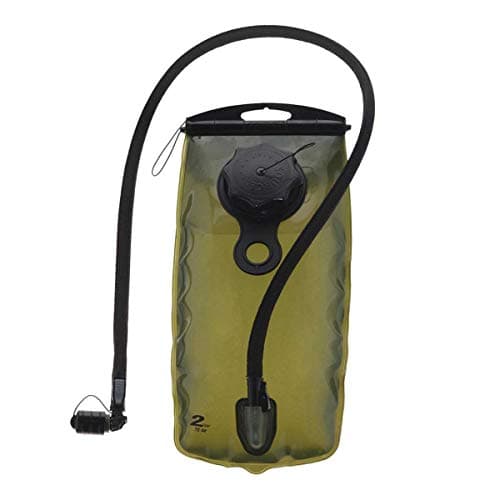
SOURCE's co-extruded polyethylene film is 2,000% smoother than standard TPU and adds zero plastic taste to water, even after months of use. The wide-mouth Slide Closure opens wide enough for ice cubes and makes cleaning and draining fast and mess-free.
Best for: Hikers who prioritize neutral-tasting water and want a durable, easy-to-clean bladder that works well in any season.
- Glass-Like PE film technology delivers genuinely taste-free water over the long term, outperforming most TPU-based competitors
- Wide Slide Closure opens fully for easy ice filling, cleaning, and draining
- Wider body profile can conflict with narrow pack sleeves designed for slimmer bladders
- Capacity
- 1.5L / 2L / 3L
- Closure
- Widepac Slide Closure (wide-mouth)
- Film technology
- Multi-layer PE, Glass-Like coating
- Bite valve
- Helix high-flow self-sealing
- Antimicrobial
- Yes, built into film
- BPA/Phthalates
- Free
Keep going
Related guides
 Complete camp loadoutCar-camping starter kitBuild the complete kit
Researched, not hands-on tested
Updated Jul 8, 2026Our recommendations draw on manufacturer documentation, retailer listings, owner feedback, and comparisons with alternatives.
As an Amazon Associate I earn from qualifying purchases. We may earn a commission from links here, at no extra cost to you. How we research →