Destinations
Hawaii outdoors
Six islands of volcanoes, rainforest, and sea cliffs, with two national parks and 50 state parks across roughly 30,000 acres.
Top parks in Hawaii
See all 53 parks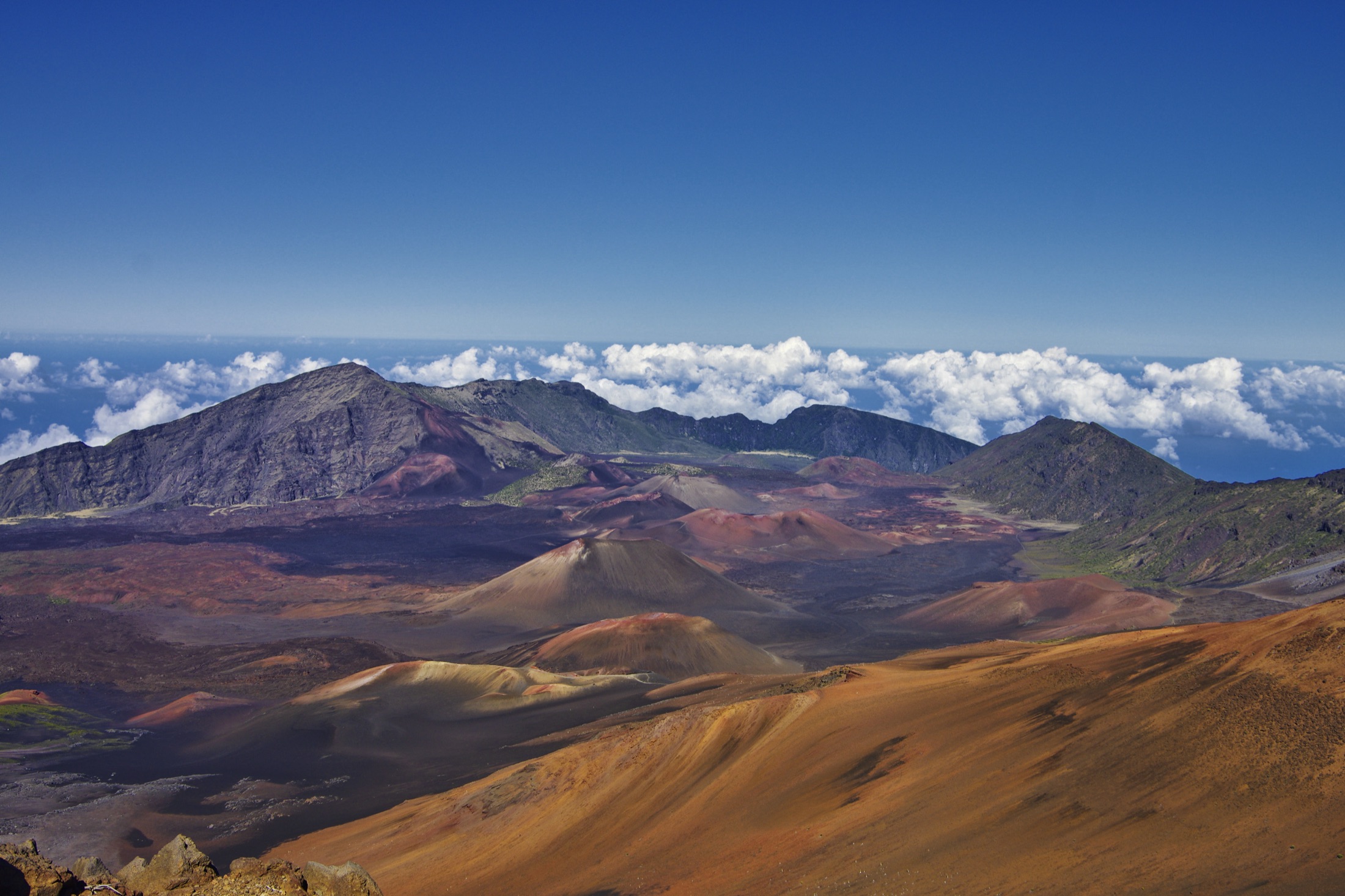
Haleakala
A 10,023-foot volcanic summit on Maui where you watch sunrise above the clouds, then a lush coastal rainforest district below.
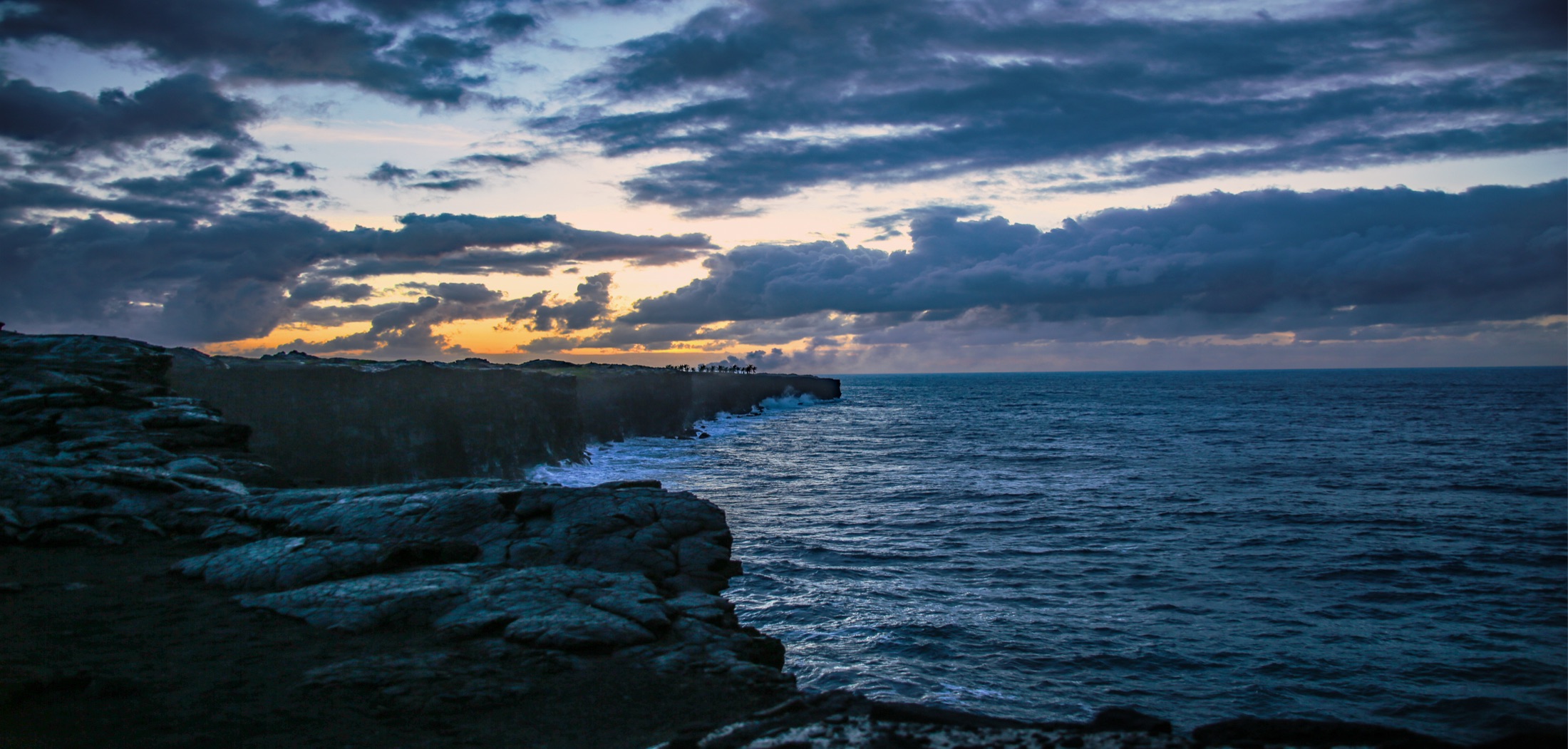
Hawaii Volcanoes
Two of the world's most active volcanoes, walkable lava tubes, and a summit caldera that has been erupting on and off since late 2024.
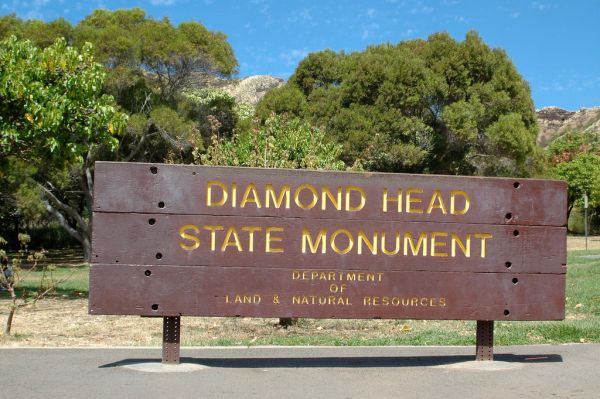
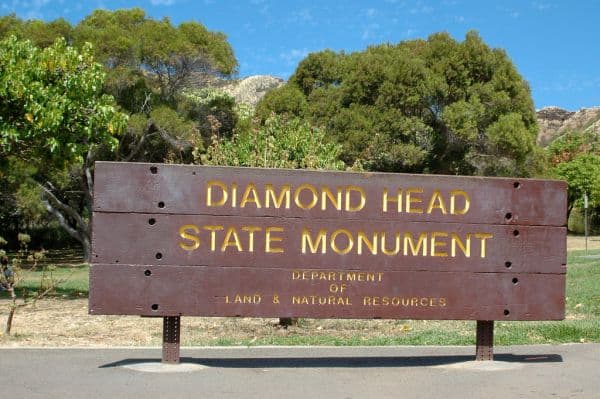
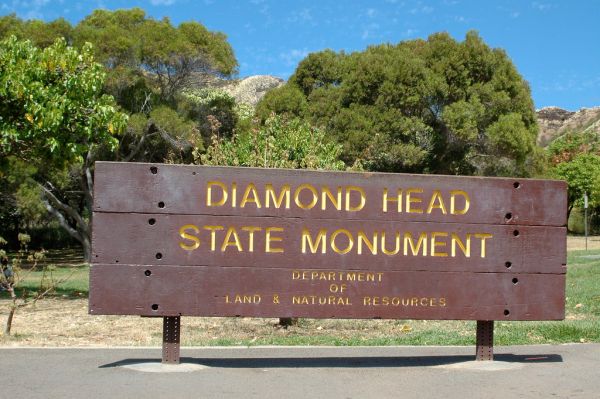
Diamond Head State Monument
Oahu's iconic volcanic crater rising above Waikiki: a 1.6-mile round-trip summit hike with stairs and a tunnel to a 560-foot rim with sweeping coastline views. A day-use monument requiring advance reservations and a fee for out-of-state visitors. No camping.
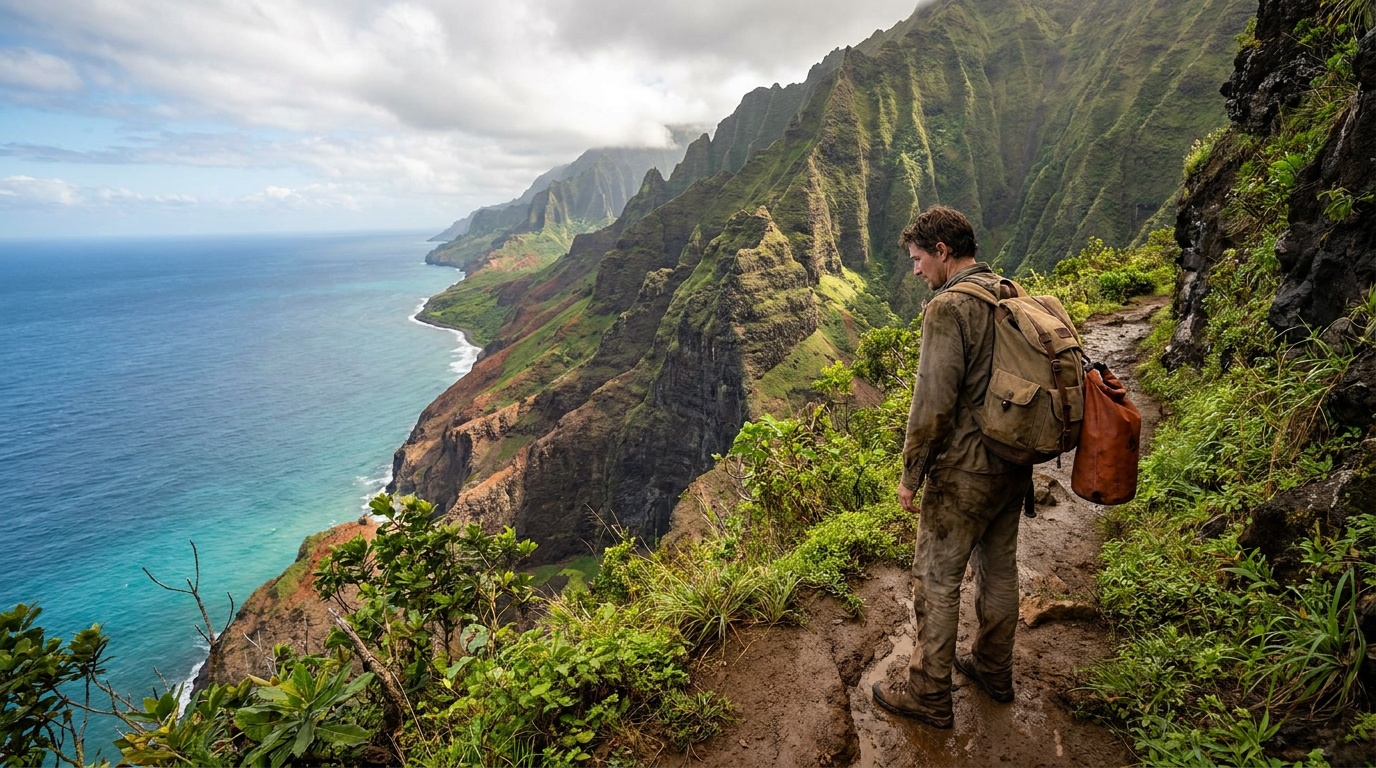
Nāpali Coast State Wilderness Park
Kauai's inaccessible cathedral coastline of 3,000-foot fluted sea cliffs, reachable only by the 11-mile Kalalau Trail, by kayak in summer, or by boat tour, demanding a permit for anyone going beyond the first valley.
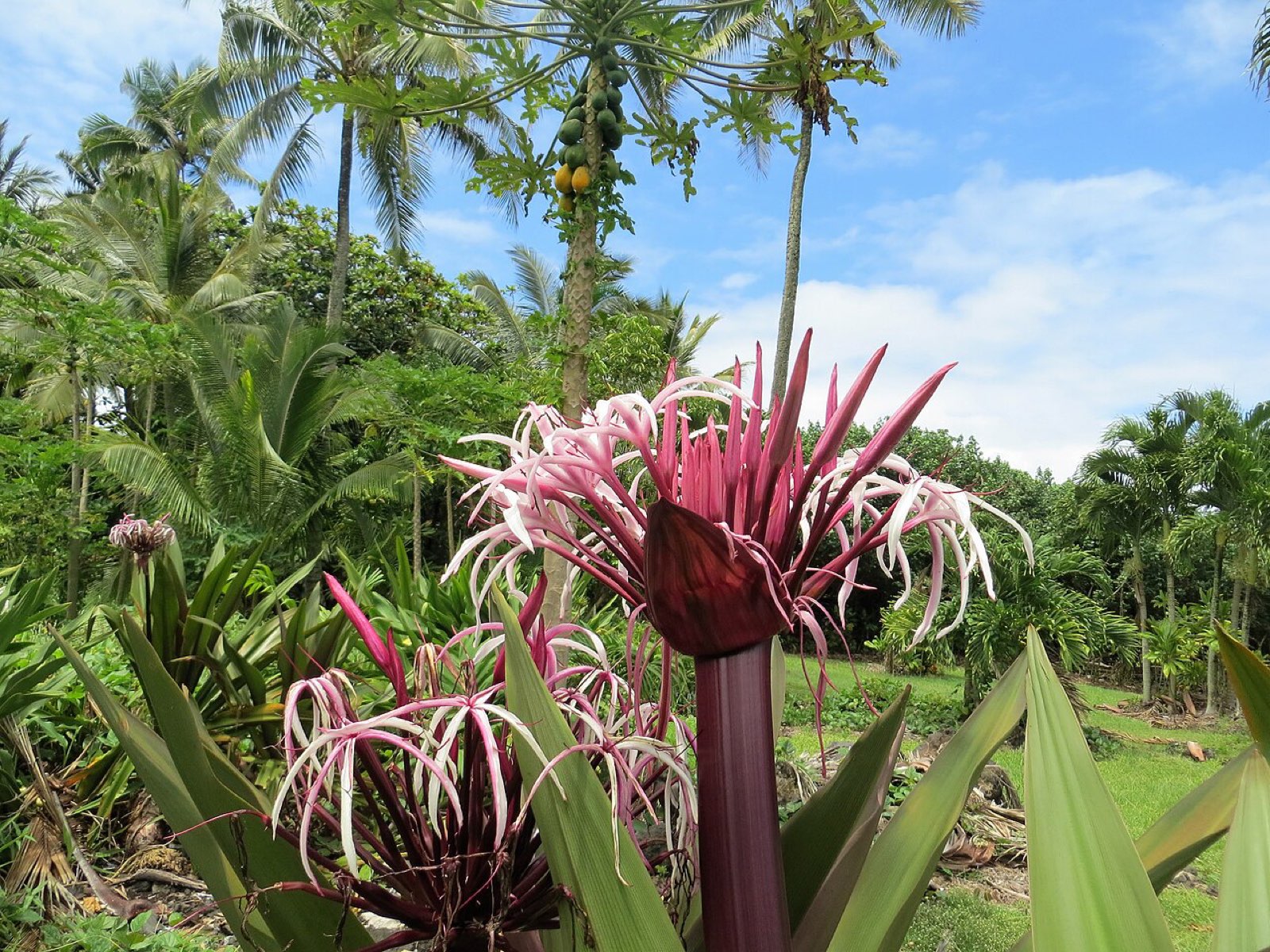
Wai'anapanapa State Park
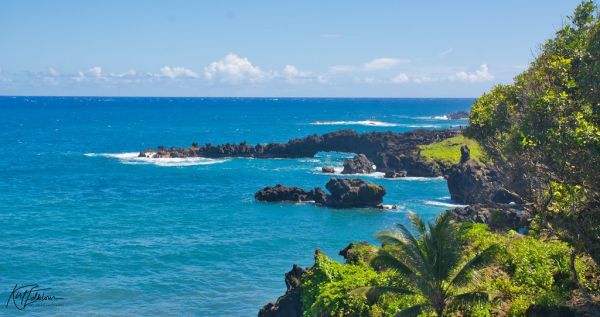
Maui's Road to Hana showstopper: Pa'iloa black sand beach, lava tubes, sea caves, and an arch, where non-residents must book a timed parking and entry reservation in advance.
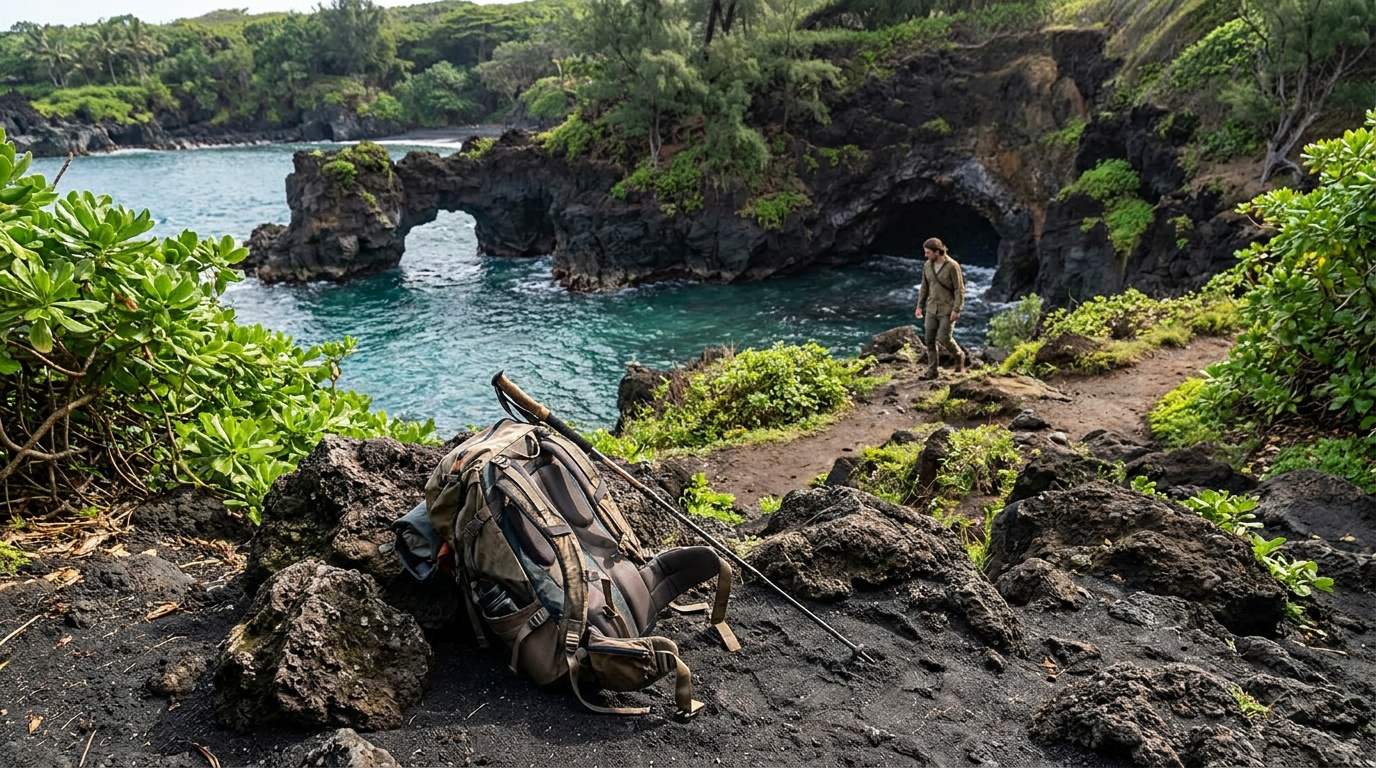
Waiʻānapanapa State Park
Maui's most striking coastal scene: a black lava sand beach, sea arches, freshwater lava-tube caves, and a section of the ancient King's Highway trail, all within 122 acres three miles from Hana.
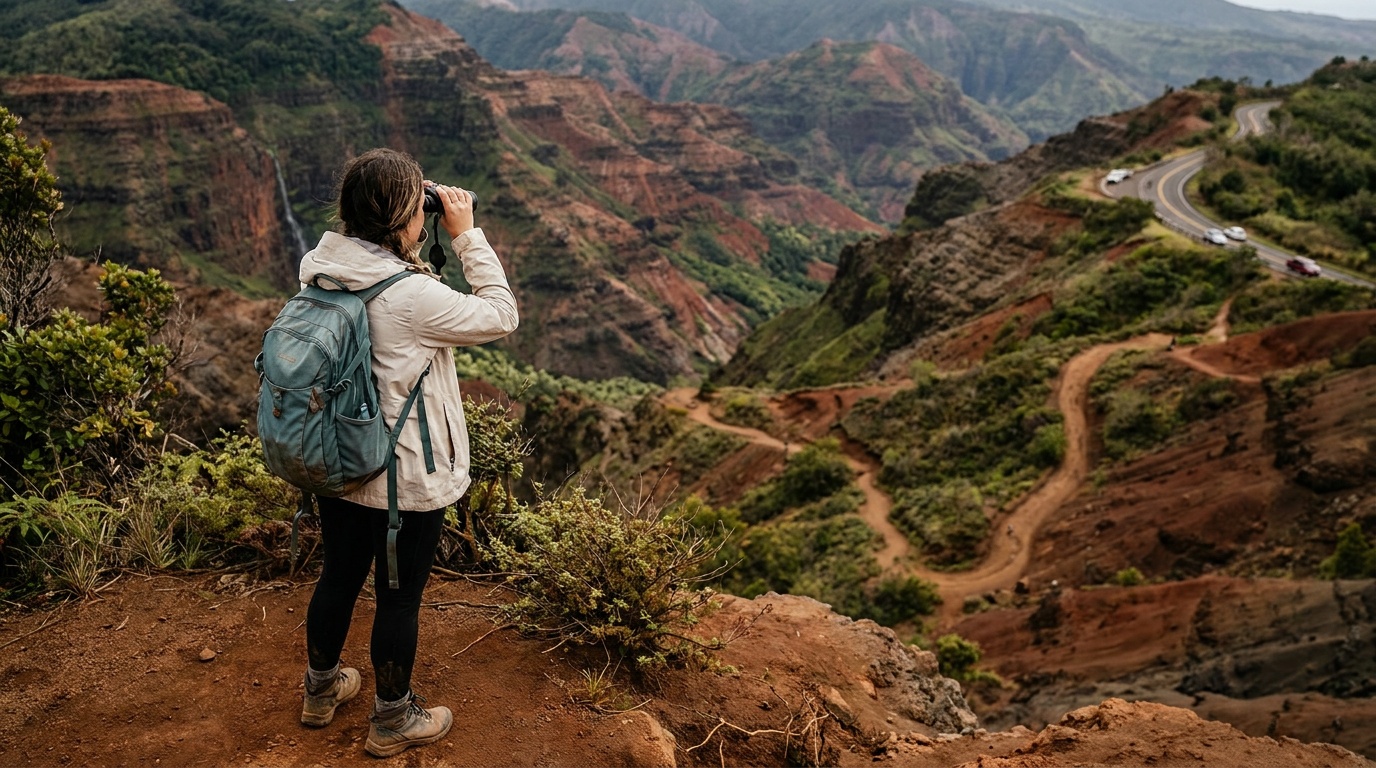
Waimea Canyon State Park
The Grand Canyon of the Pacific: a 14-mile-long, 3,600-foot-deep volcanic canyon on Kauai's west side, with layered red and green walls, a dozen hiking trails descending to the canyon floor, and panoramic overlooks accessible by car.

Hāpuna Beach State Recreation Area
A landscaped beach park offering swimming during calm seas, bodysurfing, sunbathing, picnicking, A-frame shelter lodging, and coastal trail hiking.

Kōkeʻe State Park
At 4000 feet elevation, the park offers commanding views of Kalalau Valley, native rain forest hiking, camping, lodging, and observation of native plants and birds.
Planning a Hawaii trip
Hawaii packs more landscape into a short trip than almost anywhere in the country. Across the main islands you get active volcanoes, 4,000-foot cliff overlooks, 442-foot waterfalls, rainforest, and reef-fringed coast, often within an hour of each other. The state runs about 50 parks spread over roughly 30,000 acres, and the two national parks anchor the high-elevation, volcanic end of that range.
If you only have time for a few areas, build around the island that fits your trip. Oahu is the most hiker-friendly, with two mountain ranges and trails for every level, plus the classic Diamond Head crater climb. The Big Island has over 300 miles of trail and most of the world's climate zones, from coastal lava to cool upland forest. On Kauai, Kokee State Park hands you Kalalau Valley views from 4,000 feet, and the rugged Na Pali Coast is reachable only on foot or by boat. Maui pairs beach time with a high volcanic summit.
The best windows are the shoulder months: April through May and September through October bring the most reliable weather, thinner crowds, and fairer prices. May sits neatly between the wet winter and humid summer. Winter is warm at sea level but can turn harsh up high, and summer overlaps hurricane season.
Packing is about range, not bulk. Coastal trails run hot and humid, so plan for sun, water, and reef-safe sunscreen. The high country is a different world: park summits sit above 5,000 feet, and sunrise temperatures can hover near freezing, so a warm layer and a rain shell belong in the same daypack as your swimsuit. Sturdy shoes handle wet, rooty, and lava-rock trails far better than sandals.
Getting around Hawaii
There is no single front door to Hawaii's outdoors, so your plan starts with which island you fly into. The main hubs are Honolulu (HNL) on Oahu, Kahului (OGG) on Maui, Lihue (LIH) on Kauai, and two on the Big Island: Kona (KOA) on the west side and Hilo (ITO) on the east. For volcano country, Hilo is the closer landing; for the Kona coast and west-side beaches, fly into KOA.
Getting between islands means flying, not driving. Hawaiian Airlines runs well over 170 short interisland hops a day, and most are quick: Honolulu to Maui or Kauai runs about 30 minutes, Honolulu to Hilo about 50, and Honolulu to Kona about 45. Molokai and Lanai are served by smaller carriers like Mokulele. Treat each island as its own trip rather than trying to chain several in a few days.
Once you land, a rental car does the work. On the Big Island, plan for real distance: it is roughly 90 minutes to two hours from Kona over to the Hilo and volcano side, so many visitors base near whichever they came to see. On Kauai, the drive from the coast up to Kokee State Park climbs to about 4,000 feet and takes well over an hour of winding road. On Maui, the road to the volcanic summit is a long, switchbacked climb, often started before dawn for sunrise. On Oahu, distances are short and trailheads like Diamond Head sit close to Honolulu, but traffic can stretch a 20-mile hop well past the map estimate.
All 7 Hawaii park guides
State park directory
Every Hawaii state park
A source-backed inventory layer for planning breadth. Full Kit Authority guides are marked when a park has camping detail, rules, and packing notes; the rest link straight to the official page. Looking for rail trails and state trails? They have their own Trail Guide.
53 parks
4 full guides · 32 with photos
Diamond Head State Monument
State Monument
Hawaii's most recognized landmark, this saucer-shaped crater near Waikiki is known for its historic summit hiking trail, coastal views, and military history.
- Hiking
- Historic Site
- Wildlife Viewing
Hawaii Division of State Parks
Full guideNāpali Coast State Wilderness Park
State Wilderness Park
One of the world's most recognizable coastlines, with rugged cliffs forming deep narrow valleys, waterfalls, streams, and the Kalalau Trail.
- Hiking
- Backpacking
- Camping
- Wildlife Viewing
Hawaii Division of State Parks
Full guideWaiʻānapanapa State Park
State Park
A remote, wild volcanic coastline offering lodging, camping, picnicking, shore fishing, hiking, a seabird colony, a natural stone arch, and a small black sand beach.
- Camping
- Cabins
- Picnicking
- Fishing
Hawaii Division of State Parks
Full guideWaimea Canyon State Park
State Park
Overlooking the deep, colorful gorge of Waimea Canyon, the park offers a scenic drive, canyon lookouts, a Ni'ihau Island viewpoint, wildland picnicking, and trails.
- Hiking
- Picnicking
- Fishing
- Hunting
Hawaii Division of State Parks
Full guideAhupuaʻa ʻO Kahana State Park
State Park
A relatively unspoiled windward Oahu valley, one of few publicly owned ahupua'a, encompassing nearly 5,300 acres from Kahana Bay to the Ko'olau crest.
- Hiking
- Camping
- Fishing
- Paddling
Hawaii Division of State Parks
Official pageHāʻena State Park
State Park
On Kauai's north shore, the park offers restored lo'i kalo, Napali Coast views, beach activities at Ke'e Beach, and the Kalalau Trail trailhead.
- Hiking
- Fishing
- Swimming
- Beach
Hawaii Division of State Parks
Official pageHalekiʻi-Pihana Heiau State Monument
State Monument
Remains of two important heiau (places of worship) rededicated as war temples by Kahekili, Maui's last ruling chief, with a viewpoint of Central Maui.
- Historic Site
- Wildlife Viewing
Hawaii Division of State Parks
Official pageHāpuna Beach State Recreation Area
State Recreation Area
A landscaped beach park offering swimming during calm seas, bodysurfing, sunbathing, picnicking, A-frame shelter lodging, and coastal trail hiking.
- Swimming
- Beach
- Picnicking
- Cabins
Hawaii Division of State Parks
Official pageHeʻeia State Park
State Park
A coastal site with picnicking and good views of Kane'ohe Bay and He'eia Fishpond, with community programs and banquet hall rental available.
- Picnicking
- Wildlife Viewing
Hawaii Division of State Parks
Official pageHuliheʻe Palace
State park system area
Once a summer home for Hawaiian royalty in Kailua-Kona, Hulihe'e Palace is now a museum showcasing Victorian artifacts from the era of King Kalakaua and Queen Kapi'olani.
- Historic Site
Hawaii Division of State Parks
Official pageʻAkaka Falls State Park
State Park
A self-guided walk through lush tropical vegetation reaches vista points overlooking Kahuna Falls and the free-falling 442-foot 'Akaka Falls.
- Hiking
- Nature Trails
Hawaii Division of State Parks
Official pageKaʻena Point State Park
State Park
A remote, wild coastline park wrapping Oahu's northwest corner, with hiking, picnicking, shoreline fishing, and a gateway to Ka'ena Point Natural Area Reserve.
- Hiking
- Picnicking
- Fishing
- Swimming
Hawaii Division of State Parks
Official pageKalōpā State Recreation Area
State Recreation Area
Lodging, picnicking, and an easy family nature hike in a native 'ohi'a forest at 2000-foot elevation, with an arboretum of the island's native plants.
- Hiking
- Camping
- Cabins
- Picnicking
Hawaii Division of State Parks
Official pageKaumahina State Wayside
State Wayside
A forested rest stop with exotic plants, offering picnicking and a scenic viewpoint of the northeast Maui coastline.
- Picnicking
- Wildlife Viewing
Hawaii Division of State Parks
Official pageKeaīwa Heiau State Recreation Area
State Recreation Area
A 384-acre forest park near a medicinal healing heiau, with groves of Norfolk pine and eucalyptus, campsites, picnic areas, and the 'Aiea Loop Trail.
- Hiking
- Camping
- Picnicking
- Historic Site
Hawaii Division of State Parks
Official pageKealakekua Bay State Historical Park
State Historical Park
Site of the first extensive contact between Hawaiians and Westerners with Captain Cook's 1779 arrival, featuring Hikiau Heiau and the Captain Cook monument across the bay.
- Historic Site
- Paddling
- Wildlife Viewing
Hawaii Division of State Parks
Official pageKekaha Kai (Kona Coast) State Park
State Park
A wilderness coastal park with sandy beaches and dunes offering swimming, bodysurfing, picnicking, and a 4.5-mile coastal trail past a cinder cone summit.
- Swimming
- Beach
- Picnicking
- Hiking
Hawaii Division of State Parks
Official pageKohala Historical Sites State Monument
State Monument
Viewing of Mo'okini Heiau, a National Historic Landmark and famous luakini heiau, and the Kamehameha I Birthsite memorial.
- Historic Site
Hawaii Division of State Parks
Official pageKōkeʻe State Park
State Park
At 4000 feet elevation, the park offers commanding views of Kalalau Valley, native rain forest hiking, camping, lodging, and observation of native plants and birds.
- Hiking
- Camping
- Cabins
- Picnicking
Hawaii Division of State Parks
Official pageLapakahi State Historical Park
State Historical Park
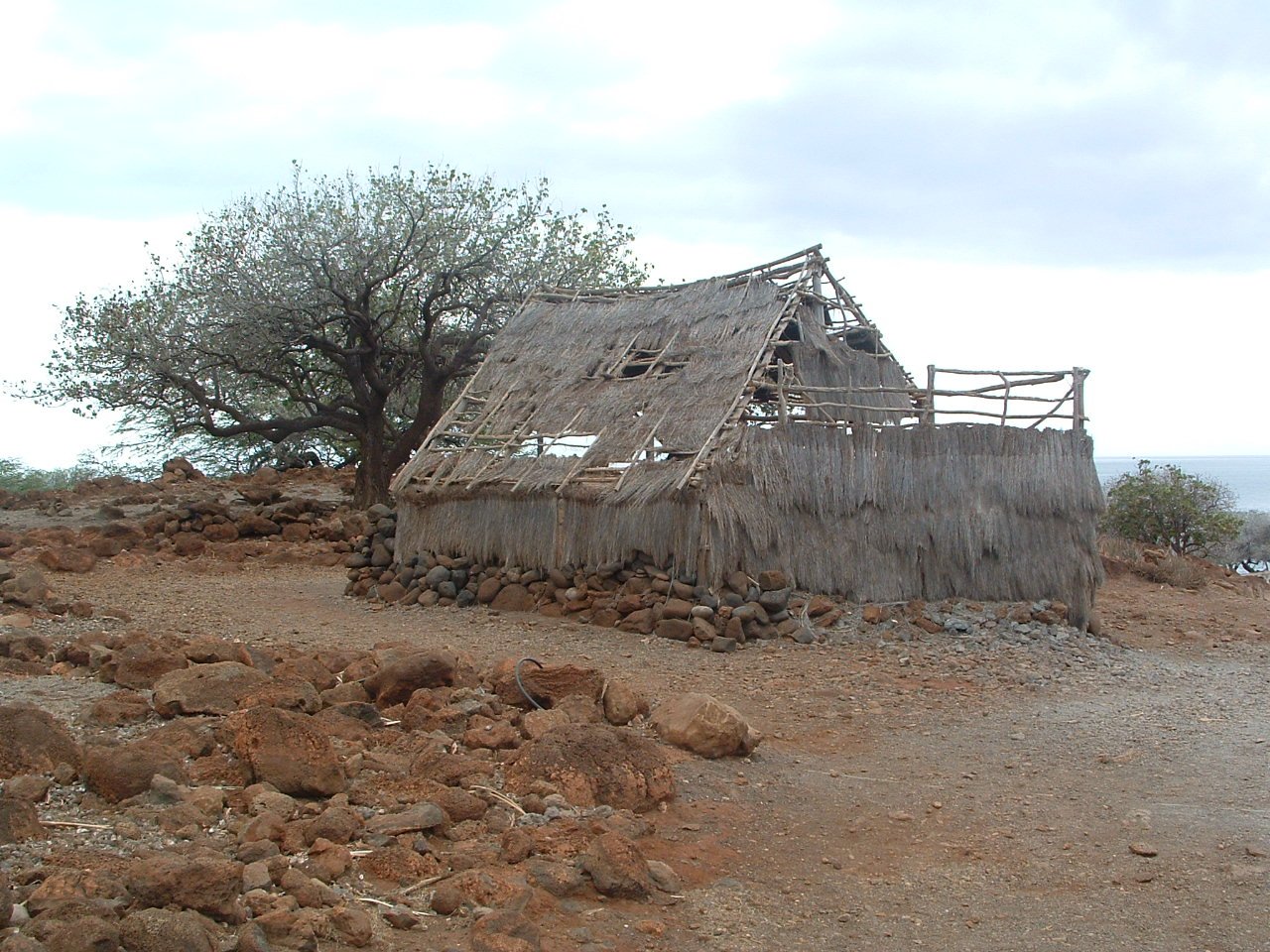
A self-guided tour through the partially restored remains of an ancient Hawaiian coastal settlement, with nearby ocean waters forming a marine preserve.
- Hiking
- Historic Site
- Nature Trails
Hawaii Division of State Parks
Official pageLava Tree State Monument
State Monument
Viewing of a forest of lava trees along a 0.7 mile loop trail, where a lava flow left behind molds of tree trunks, with picnicking opportunities.
- Hiking
- Picnicking
- Nature Trails
Hawaii Division of State Parks
Official pageMacKenzie State Recreation Area
State Recreation Area
A low-cliffed, wild volcanic coastline with picnicking in an ironwood grove, good shore fishing, and an old Hawaiian coastal trail traversing the park.
- Picnicking
- Fishing
- Hiking
Hawaii Division of State Parks
Official pageMākena State Park
State Park
A scenic wildland beach park with the prominent cinder cone Pu'u Ola'i and a large white sand beach, offering swimming, bodysurfing, board surfing, and shore fishing.
- Swimming
- Beach
- Fishing
Hawaii Division of State Parks
Official pagePolihale State Park
State Park
A stunning beach park reached by a long dirt road, with picnicking and tent camping on a wild coastline with a large sand beach, dunes, and Napali Coast views.
- Beach
- Picnicking
- Camping
- Swimming
Hawaii Division of State Parks
Official page





Inventory source: USGS PAD-US 4.1. Photos are public-domain or Creative Commons via Wikimedia Commons, credited per image. Official reservations and rules remain state-specific, so use the state booking links before committing to dates.
Frequently asked questions
When is the best time to visit Hawaii's parks?
The shoulder seasons are the sweet spot: April through May and September through October combine reliable weather, thinner crowds, and better prices. May in particular falls between the rainy winter and the humid summer, so you get fewer wet days. Sea level stays warm year-round, but the high-elevation parks can be cold or stormy in winter, and summer overlaps hurricane season.
Which is the best national park in Hawaii?
It depends on what you want to see. Hawaii Volcanoes National Park on the Big Island is the headliner for active volcanism, with Kilauea erupting on and off since late 2024 and good odds of seeing activity in 2026. Haleakala National Park on Maui is built around a massive volcanic summit and is famous for its high-altitude sunrise. Both sit at high elevation, so pack a warm layer even in a tropical trip.
Do I need a car to explore Hawaii's outdoors?
Yes, on most islands. Trailheads, state parks, and the national parks are spread out, and public transit does not reach most of them, so a rental car is the practical way to get around once you land. Between islands you fly rather than drive, since the islands are separated by open ocean and short flights connect the main airports.
How cold does it get at the summit parks?
Much colder than the beach. The national parks sit above 5,000 feet, and at sunrise temperatures can drop near freezing, around 32 to 40 F, even when the coast is in the 80s F. Bring a warm jacket, a hat, and a rain shell if you plan to be up high early or late in the day.