When to go
Weather, crowds, and what the season changes about the trip.
Spring
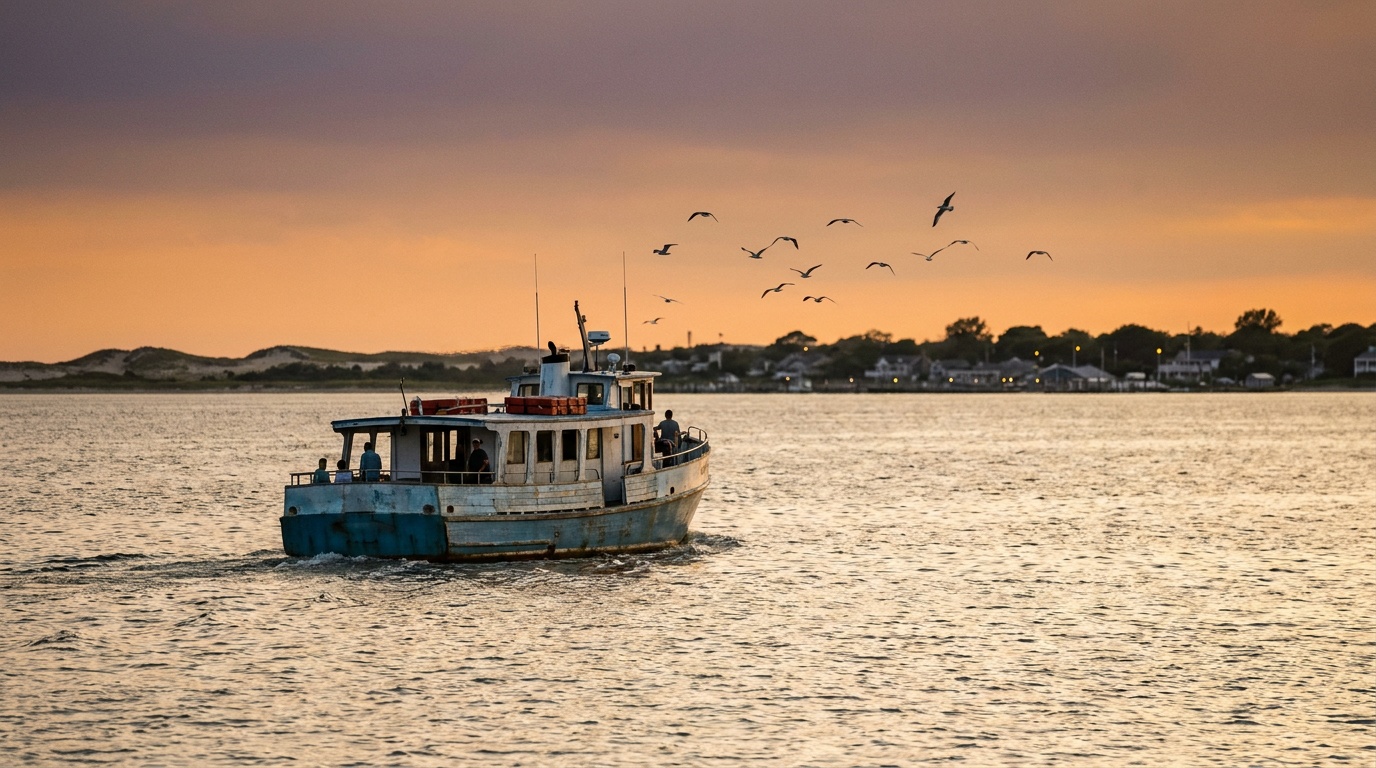
Cool and breezy with highs in the 50s and 60s, ferries starting up in mid to late May.
Pack Windproof layer, closed shoes for cool boardwalk mornings, and a check of the ferry start dates.
Summer
Warm and humid, highs in the 80s, strong sun on open beach and biting insects in the marsh.
Pack Sun shirt, hat, plenty of water, and insect repellent for the Sunken Forest boardwalk.
Fall
Mild, clear, and often the best beach weather, with ferries tapering off through October.
Pack Light layers, a wind shell for the ferry crossing, and a confirmed return-trip schedule.
Winter
Cold, windy, and quiet, with no ferry service and minimal facilities. The boardwalks stay open but you must walk in or boat in.
Pack Full wind and cold protection, and a plan that does not depend on any island services.
Top things to do
Sunken Forest
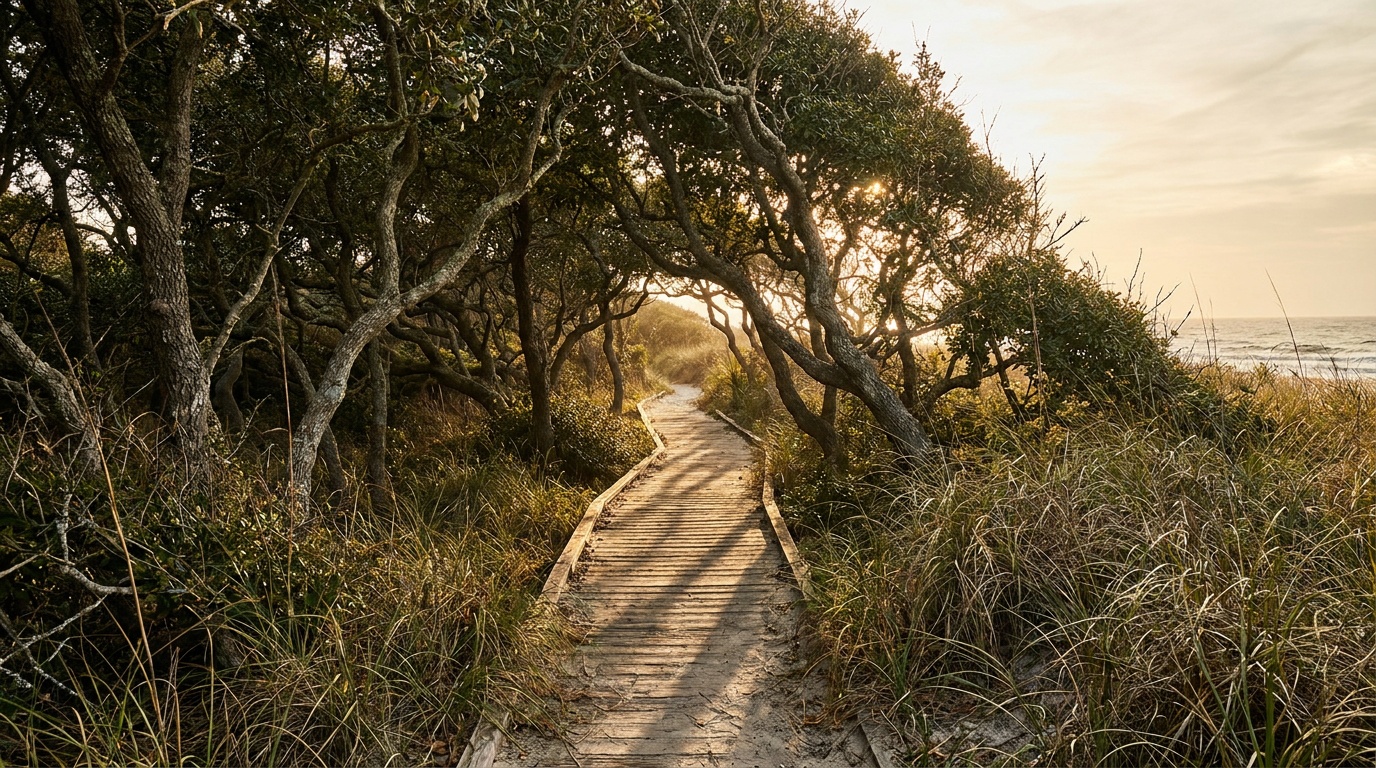
A globally rare maritime holly forest tucked behind a double dune, with 300-year-old hollies. Reached by ferry to Sailors Haven, then a level boardwalk loop.
Watch Hill
The other ferry-served hub, with a marina, a marsh boardwalk, the only car-free lifeguarded beach, and the gateway to the wilderness.
Otis Pike Fire Island High Dune Wilderness
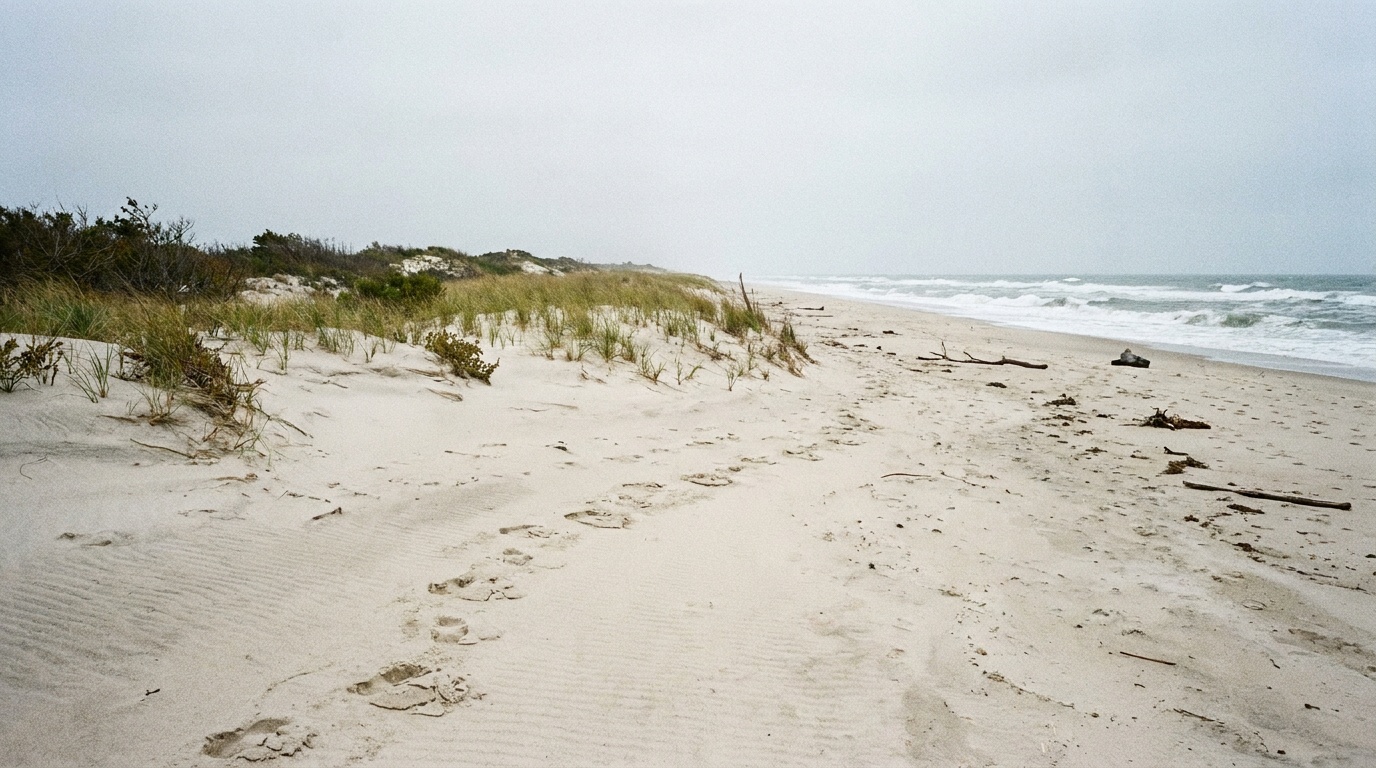
New York State's only federally designated wilderness, seven roadless miles of dune and beach east of Watch Hill, hiked along the open shore.
Fire Island Lighthouse
The 1858 black-and-white tower near Robert Moses State Park, reached on foot along the beach or boardwalk rather than by ferry.
Anchor the day around Sunken Forest
Put permit timing ahead of ambition, then build the route around what is actually approved. For one day in Fire Island National Seashore, make Sunken Forest the non-negotiable, add Watch Hill only if the first stop runs clean, and keep Otis Pike Fire Island High Dune Wilderness as the flexible finish.
- 1Start with Sunken Forest: A globally rare maritime holly forest tucked behind a double dune, with 300-year-old hollies. Reached by ferry to Sailors Haven, then a level boardwalk loop.
- 2Add Watch Hill: The other ferry-served hub, with a marina, a marsh boardwalk, the only car-free lifeguarded beach, and the gateway to the wilderness.
- 3Use Otis Pike Fire Island High Dune Wilderness as the optional finish, not as a reason to rush the whole day.
Where to stay
There is no NPS lodge or developed drive-in campground at Fire Island, and the island communities are car-free. The one in-park overnight option is backcountry camping in the Otis Pike Wilderness, which needs a free permit and is hiked in from Watch Hill. Most visitors base on Long Island in Sayville, Patchogue, or Bay Shore near the ferry terminals, or stay in one of the private Fire Island community rentals served by the commuter ferries. Watch Hill has a small concession-run campground reached by the Patchogue ferry, reserved separately through the concessioner.
Camping reservations
Camping reservations
No drive-in NPS campground. The two overnight options are a ferry-served concession campground at Watch Hill and free wilderness camping in the Otis Pike dunes.
Fire Island has no road-accessible NPS campground. Watch Hill offers a small developed campground reached by the Patchogue ferry and booked through the concessioner, and the Otis Pike Wilderness east of Watch Hill allows free backcountry camping by permit. Everything else is mainland lodging or private community rentals.
Reviewed June 11, 2026
Booking window
Watch Hill campground reservations are made through the concessioner ahead of the May to October season. Wilderness backcountry permits are free and obtained from the seashore.
- There is no vehicle access to the campground or the wilderness; you arrive by ferry and carry your gear.
- Wilderness camping requires a free backcountry permit and follows leave-no-trace and dune-protection rules.
- Confirm ferry schedules in both directions, since a missed last boat can strand you for the night.
Where to book or verify
Official overview of frontcountry (Watch Hill) and backcountry wilderness camping.
Sailors Haven and Watch Hill visitor information, including the Patchogue ferry.
Check for federal campground, backcountry, tour, and permit inventory tied to this park.
Campgrounds to know
Watch Hill Campground (concession)
Details- Season
- Roughly mid-May to mid-October, in line with the Patchogue ferry season.
- Sites
- Walk-in tent sites reached by ferry from Patchogue.
- The only developed campground in the seashore. No cars; you ferry in and carry gear.
Otis Pike Wilderness (backcountry)
Details- Season
- Year-round, but realistically accessed by the May to October ferry.
- Sites
- Dispersed backcountry sites in the dunes east of Watch Hill.
- New York State's only federal wilderness. Hike in along the beach from Watch Hill.
Getting there and practical info
Make the transfer plan before the trail plan.
Weather windows, boat schedules, flight buffers, and backup days shape what is realistic.
Getting there
Get to Fire Island National Seashore by solving the transfer first.
- Nearest airport
- Islip MacArthur (ISP) about 30 minutes to the ferry terminals; New York JFK about 1 hour 30 minutes
- Access rhythm
- Transfer time matters
- Region
- New York
Arrival note
Fire Island sits just south of Long Island, separated by the Great South Bay.
Transfer plan
There is no bridge to the central communities, so most visitors drive or take the Long Island Railroad to one of the bay-side towns, Sayville for the Sailors Haven and Sunken Forest ferry or Patchogue for the Watch Hill ferry, then cross by boat.
Car strategy
The Fire Island Lighthouse and the eastern Smith Point end are the two car-accessible exceptions, reached through Robert Moses State Park and the William Floyd Parkway.
Book ahead
- Rental cars at Islip MacArthur (ISP)Paid link, Economybookings
- Guided tours in Fire Island National SeashorePaid link, Viator
Paid links: we may earn a commission if you book, at no extra cost to you.
Pair this with lodging: the best base is the one that protects the departure window, pickup point, or weather buffer.
Plan your trip
Turn Fire Island's conditions into water, pack, and sleep-system decisions.
Build around access
Plan the transfer before the trail list.
Plan your trip
4 quick tools, already seeded for Fire Island National Seashore. Tune the route, pack weight, weather margin, and overnight setup after the access plan is real.
What to pack
Start with the gear decisions this park changes: footing, weather, camping, and water.
Kit Authority
Fire Island National Seashore packing list
0 of 21 packed. Check items as you pack, then take this list to the store, trailhead, or campsite.
Pack planning
Decide what Fire Island National Seashore asks of your kit before you start checking boxes.
Use this as a constraint check while you are still shaping the trip. The active checklist becomes useful once your route, dates, and sleep plan are set.
- First constraintHydration and exposureWater, hat, sunscreen, sunglasses, Navigationmap, downloaded GPS, or a GPS watch, 3 more
- Route realityFooting and tractionHiking boots, Hiking socks, Trekking poles
- Load choicePack and carry systemBackpacking pack
- If overnightSleep and shelterBackpacking tent, Sleeping bag, Sleeping pad, 1 more
Checklist mode
21 items, grouped for the trip you are actually taking.
- Dates and season are set.
- Primary route, campground, or lodge is chosen.
- Water, footwear, and overnight needs are sized.
One researched pick
The first gear decision for Fire Island National Seashore
A stable daypack is the one purchase that organizes water, layers, food, first aid, and the small safety margin.
We may earn a commission from links on this page, at no extra cost to you. Product prices and availability are accurate as of the date/time indicated and are subject to change. Any price and availability information displayed on Amazon at the time of purchase will apply to the purchase of this product.

THE DAY-HIKE PICK
Osprey Talon 22
Best Overall
Kit Score 8.6/10
$169.95 Price checked Oct 26, 7:39 AM CDT
Best for: Hikers who want a proven all-around daypack with solid load support, plenty of adjustment, and a warranty they can actually use.
- Adjustable torso fit covers a wide range of body sizes
- At 2 lb 1 oz it runs heavier than ultralight rivals for the same volume
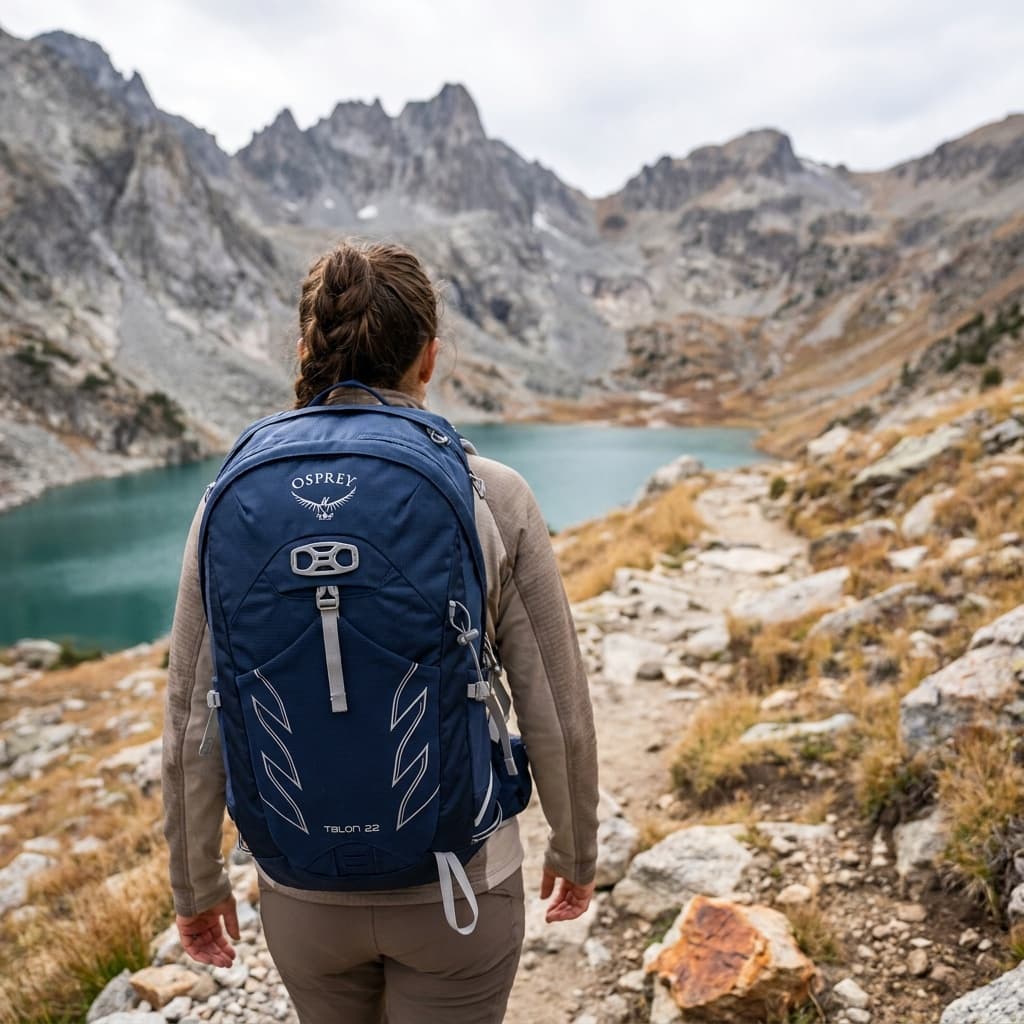
- Volume
- 22 L
- Weight
- 2 lb 1 oz (945 g)
- Back Panel
- AirScape foam with ventilation channels
- Hipbelt Pockets
- 2 zippered
- Hydration
- Compatible up to 3 L reservoir (sold separately)
- Warranty
- All Mighty Guarantee (lifetime repair or replace)
About this pick
The Talon 22 is the daypack you see on the trail more than any other for good reason: it packs in a padded hipbelt, adjustable torso harness, and dual hipbelt pockets into a 22-liter package that handles loads up to 20 lb without complaint. Owners across hundreds of Amazon ratings consistently cite its adjustability and durability as standouts.
Strengths
- Adjustable torso fit covers a wide range of body sizes
- Padded hipbelt and dual hipbelt pockets at this size are rare
- Osprey lifetime warranty backs years of hard use
Weaknesses
- At 2 lb 1 oz it runs heavier than ultralight rivals for the same volume
- AirScape back panel ventilation is functional but not class-leading compared to suspended-mesh designs
Kit Score breakdown
Gear for Fire Island
The buying guides that match what Fire Island asks of your kit, with our current top picks across budget and use case.
Can you photograph here? Permit and drone rules
New York State runs no statewide photo permit; OPRHP permits shoots in state parks region by region, and New York City is an entirely separate permitting regime.
- Permit
- Usually fine for personal shoots; commercial or large productions can need a permit
- Drones
- Commercial drone work requires FAA Part 107
- Land
- Yes: you can photograph what is visible from public space in the US
From our photography sister site, Aperture Authority. Verified 2026-07-01.
Frequently asked questions
Do you need a ferry to visit Fire Island National Seashore?
For the best-known parts, yes. The Sunken Forest at Sailors Haven and the Otis Pike Wilderness at Watch Hill are reached only by seasonal passenger ferry from Sayville and Patchogue. The Fire Island Lighthouse and the Smith Point area at the two ends are the exceptions, reachable by car.
Is there an entrance fee for Fire Island National Seashore?
No. There is no entrance fee. You do pay to park at the mainland ferry terminals and for a round-trip ferry ticket, which together are the real cost of a Sunken Forest or Watch Hill visit.
Can you camp at Fire Island?
Yes, in two ways. Watch Hill has a small concession-run campground reached by the Patchogue ferry and reserved through the concessioner, and the Otis Pike Wilderness allows free backcountry camping by permit. There is no road-accessible drive-in campground.
What is the Sunken Forest?
The Sunken Forest is a globally rare maritime holly forest growing behind a double dune system, with American hollies up to 300 years old. You reach it by ferry to Sailors Haven, then walk a level boardwalk loop through the canopy.