We may earn a commission from links on this page, at no extra cost to you.
Top picks
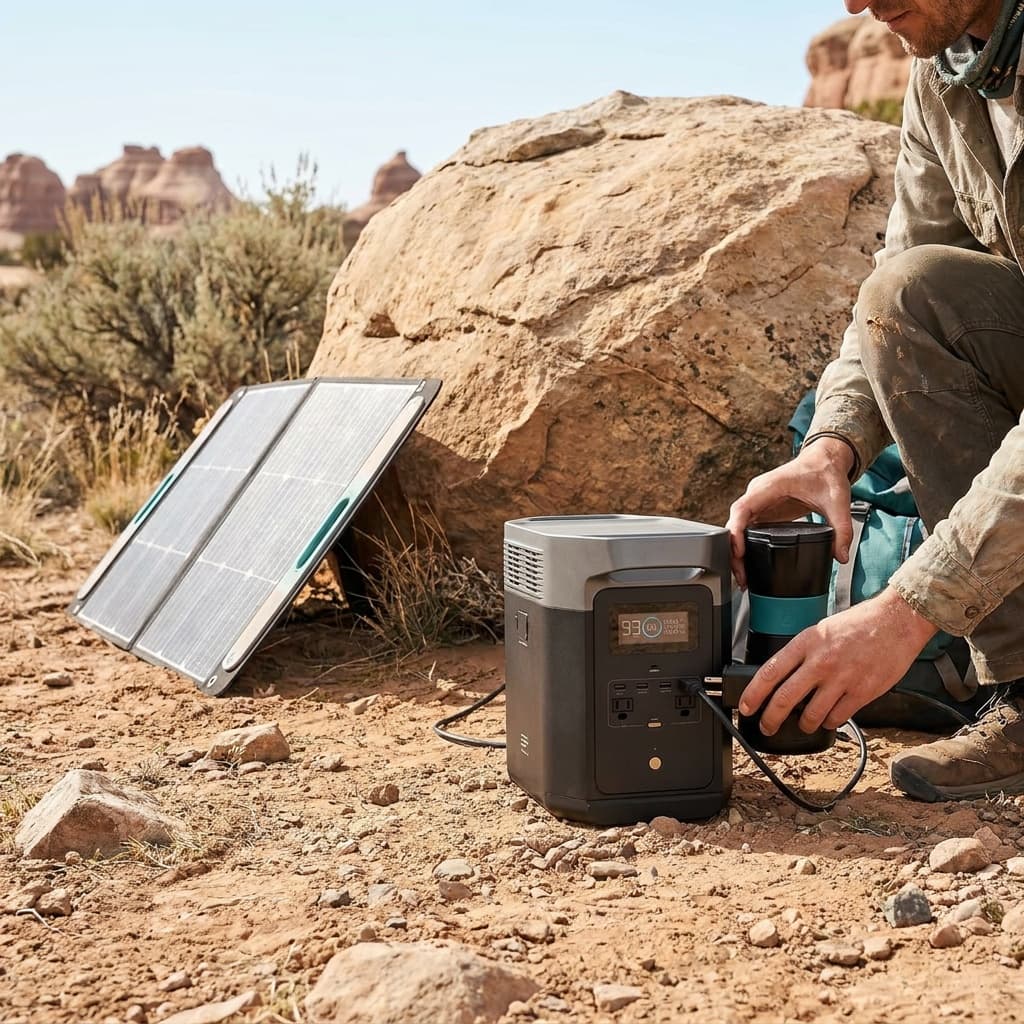
The EcoFlow DELTA 2 is the station we recommend first in our best portable power stations guide, and it is the unit most car campers and home-backup buyers should look at before anything pricier or more specialized. This review covers exactly what you get, the spec details people get wrong, and where it wins or loses against the alternatives.
BEST OVERALL
EcoFlow DELTA 2 Portable Power Station
Best for: Car campers, van-lifers, and overlanders who want the fastest-recharging 1 kWh station and may want to expand capacity later.
Kit Score 8.8/10 · $250–$500
- Faster recharge than any rival at this capacity: 0–80% in 50 minutes keeps downtime minimal on back-to-back days
- 15 output ports and a 2,700W surge handle demanding appliances that would trip lesser units
- At 27 lbs it is a haul for solo carry over any real distance; best treated as a basecamp unit
Who it is for
This station fits one buyer especially well: someone who wants a single unit that does almost everything. The 1,024 Wh capacity and 1,800W output cover the loads that matter at a campsite, a cooler running overnight, a CPAP machine, phone and laptop charging, and the occasional small appliance, for two or more nights before a recharge. The 15 output ports mean you rarely run out of places to plug in, and the 2,700W surge headroom handles motors and compressors that trip smaller units.
It is also the unit we point home-backup buyers toward, because the expandable architecture lets you bolt on an extra battery later rather than re-buying. The 50-minute wall recharge is the standout: on back-to-back camping days, or during a rolling outage, you can top it off in a coffee break rather than waiting hours.
It is less ideal if you need to carry power on foot. At 27 lbs it is a basecamp or vehicle unit, not something you backpack in. If you want to keep your station charged off-grid, pair it with a panel and read how to choose a solar panel for camping first: the DELTA 2 accepts up to 500W of solar input, so panel selection matters.
Full specifications
| Spec | Detail |
|---|---|
| Kit Score | 8.8 / 10 (researched, not lab-tested) |
| Capacity | 1,024 Wh (LiFePO4 / LFP chemistry) |
| AC output | 1,800W continuous, 2,700W surge |
| Solar input | Up to 500W |
| Fast charge | 0 to 80% in about 50 minutes |
| Weight | 27 lbs (12.2 kg) |
| Ports | 15 total: 4x AC, 2x USB-C (100W), 2x USB-A, DC car, DC barrel |
| Cycle life | Rated for 3,000 cycles |
| Warranty | 5 years |
| Expandable | Yes, accepts an add-on battery |
| Price | $389–$499 depending on sale pricing |
The spec people undervalue is the chemistry. The DELTA 2 uses LiFePO4 (LFP) cells rated for 3,000 cycles and backed by a 5-year warranty, the strongest coverage in the 1 kWh class. That is the difference between a station you replace in a few years and one that lasts a decade of weekend use.
Pros and cons
What it does well:
- Recharges faster than any rival at this capacity: 0 to 80% in roughly 50 minutes keeps downtime minimal on back-to-back days or during a rolling outage.
- 15 output ports and a 2,700W surge handle demanding appliances, including motors and compressors, that would trip lesser units.
- LFP chemistry rated for 3,000 cycles with a 5-year warranty signals genuine long-term durability, not a two-season disposable.
- Expandable design lets you add a second battery later, so the station grows with your power needs instead of being replaced.
Where it falls short:
- At 27 lbs it is a haul for solo carry over any real distance, so treat it as a basecamp or vehicle unit rather than a portable one.
- The cooling fans audibly spin up under high charge load, which some owners find distracting inside a tent or van.
How it compares
Against the Jackery Explorer 1000 v2, the trade is versatility versus simplicity. The Jackery is lighter and easier to grab-and-go, with a cleaner, more streamlined feature set that suits campers who just want reliable power without thinking about expansion. The DELTA 2 gives up a little of that simplicity but wins on recharge speed, port count, surge headroom, and the ability to add capacity later. If you want one station to keep for years and grow into, the DELTA 2 is worth the step up.
Against the Anker Solix C1000, the comparison is closer, because the C1000 is the genuine fast-recharge rival in this class and competes directly on wall-charge speed. Where the DELTA 2 pulls ahead for most buyers is the expandable architecture and the deep, well-reviewed EcoFlow ecosystem of add-on batteries and panels. If you know you may scale up to whole-home loads, the DELTA 2 is the more future-proof platform; if you want maximum capacity in a single fixed unit, the C1000 is worth a direct look.
For solar pairing specifically, our how to choose a solar panel for camping guide goes deeper on matching panel wattage to a station's input, and the DELTA 2's 500W solar ceiling makes it a flexible host for everything from a single 100W panel to a multi-panel array.
Frequently asked questions
How long does the EcoFlow DELTA 2 take to recharge?
From a wall outlet, the DELTA 2 charges from 0 to 80% in about 50 minutes, and a full charge follows shortly after. This is the fastest recharge of any station we researched at this 1 kWh capacity, which is the main reason it suits back-to-back camping days and rolling power outages where downtime matters.
What can the EcoFlow DELTA 2 actually run?
With 1,024 Wh of capacity and 1,800W of continuous output (2,700W surge), it covers nearly all camping loads: a cooler overnight, a CPAP machine, phones and laptops, and small appliances, typically for two or more nights before a recharge. The surge headroom also lets it start motors and compressors that smaller stations cannot.
Is the EcoFlow DELTA 2 worth it?
For most car campers, van-lifers, and home-backup buyers, yes. It earns our top portable-station Kit Score (8.8) because it combines class-leading recharge speed, a high port count, strong surge headroom, durable LFP chemistry with a 5-year warranty, and an expandable design. The main reasons to look elsewhere are if you need something lighter to carry or want maximum capacity in a single non-expandable unit.
Can the EcoFlow DELTA 2 be charged by solar?
Yes. It accepts up to 500W of solar input, which is a generous ceiling for a 1 kWh station and lets you keep it topped off off-grid with anything from a single panel to a multi-panel array. Because panel selection drives real-world charge speed, it is worth reading our solar panel guide before buying panels to pair with it.
EcoFlow DELTA 2 vs Jackery Explorer 1000 v2: which is better?
The Jackery Explorer 1000 v2 is lighter and simpler, which makes it the easier grab-and-go choice for campers who just want power without extras. The DELTA 2 recharges faster, offers more ports and surge headroom, and can expand with an add-on battery, which makes it the better all-around value for buyers who want one versatile station that doubles as home backup.
For the full field, including lighter and faster alternatives scored the same way, see our best portable power stations guide.

Complete camp loadout
Car-camping starter kit
The first-trip essentials across shelter, sleep, cooking, lighting, seating, and water, with the extras left out.
Build the complete kitRelated guides
Comparison
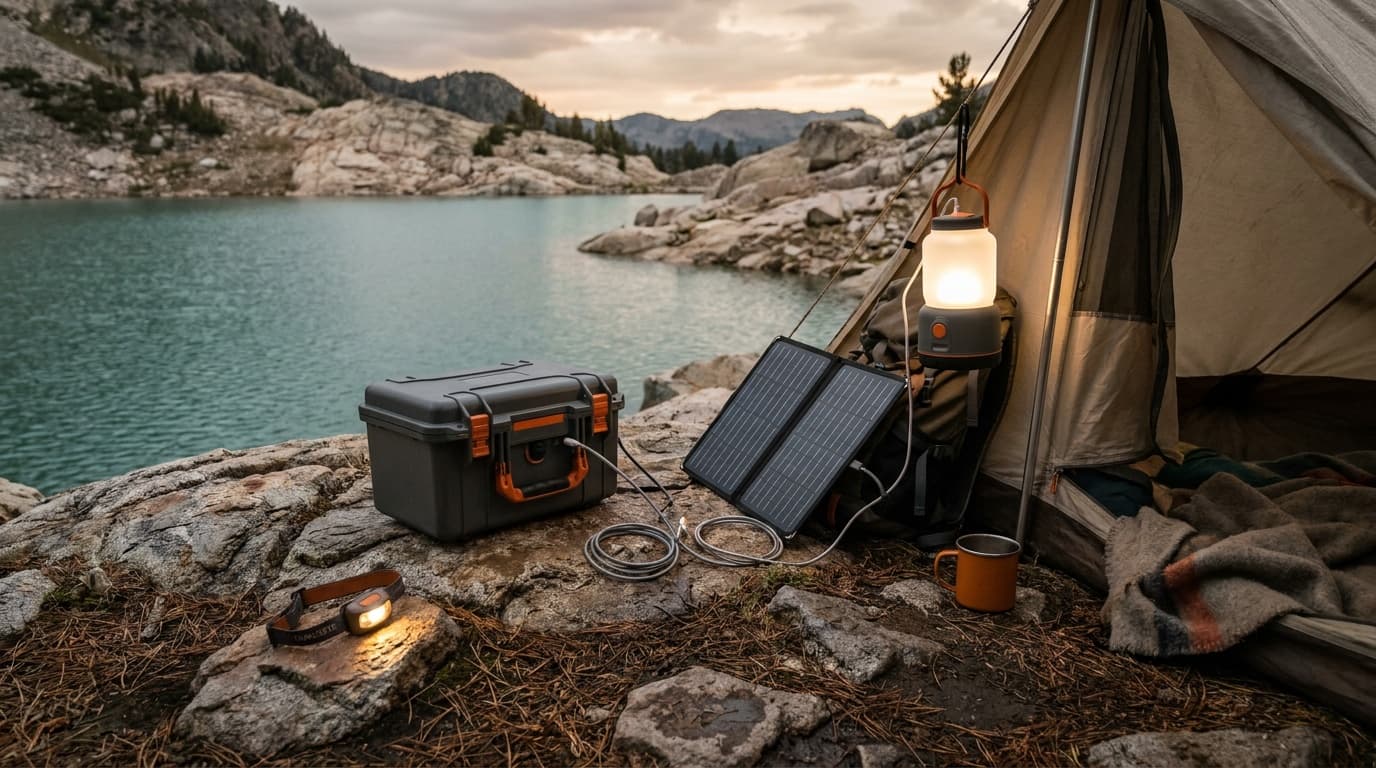
Jackery vs EcoFlow: which power station for camping
Jackery vs EcoFlow compared on battery chemistry, charge speed, app features, expandability, and weight. Which brand to buy for camping, and which models to avoid.
Read guide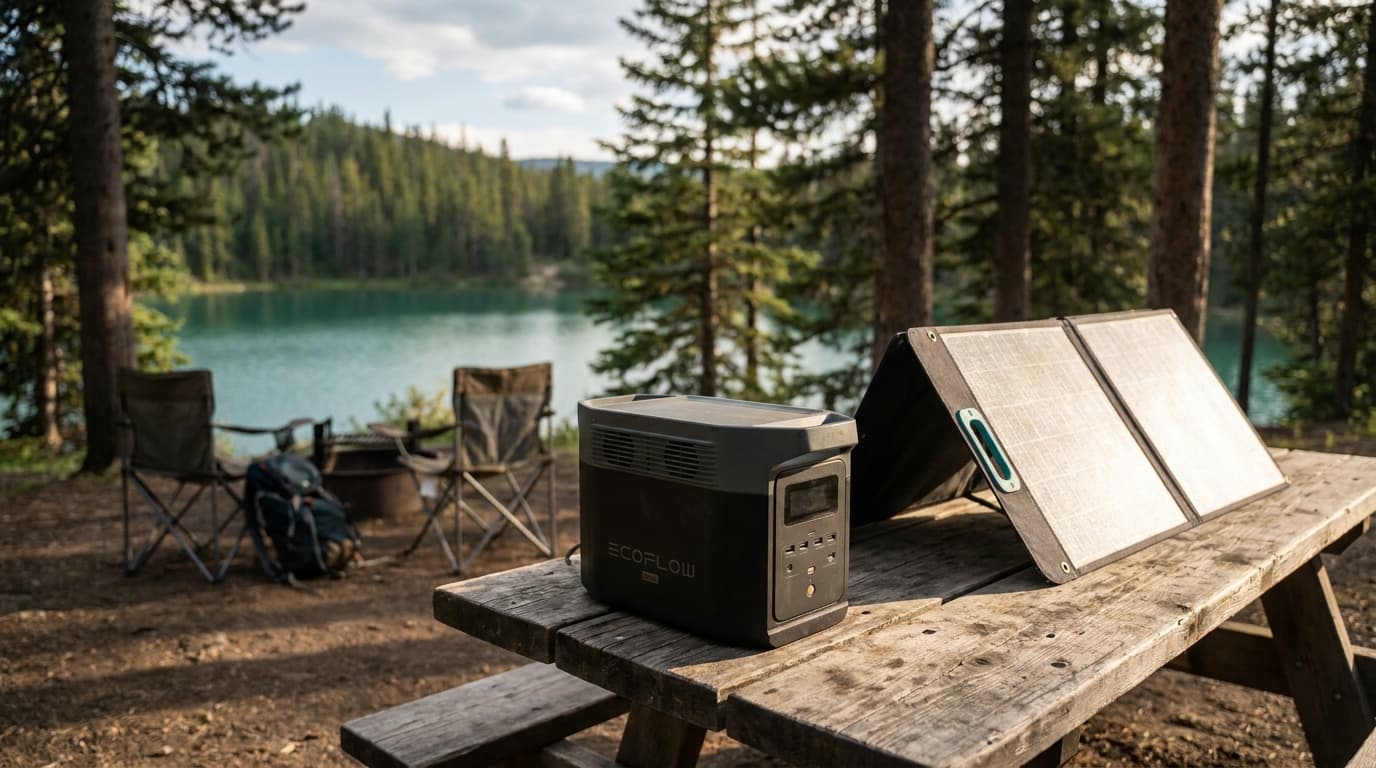
Buying guide
Best portable power stations for camping in 2026
The best portable power stations for camping, from a 256 Wh weekend unit to a 1 kWh van-life workhorse. Real specs, solar input, and weight compared.
Read guide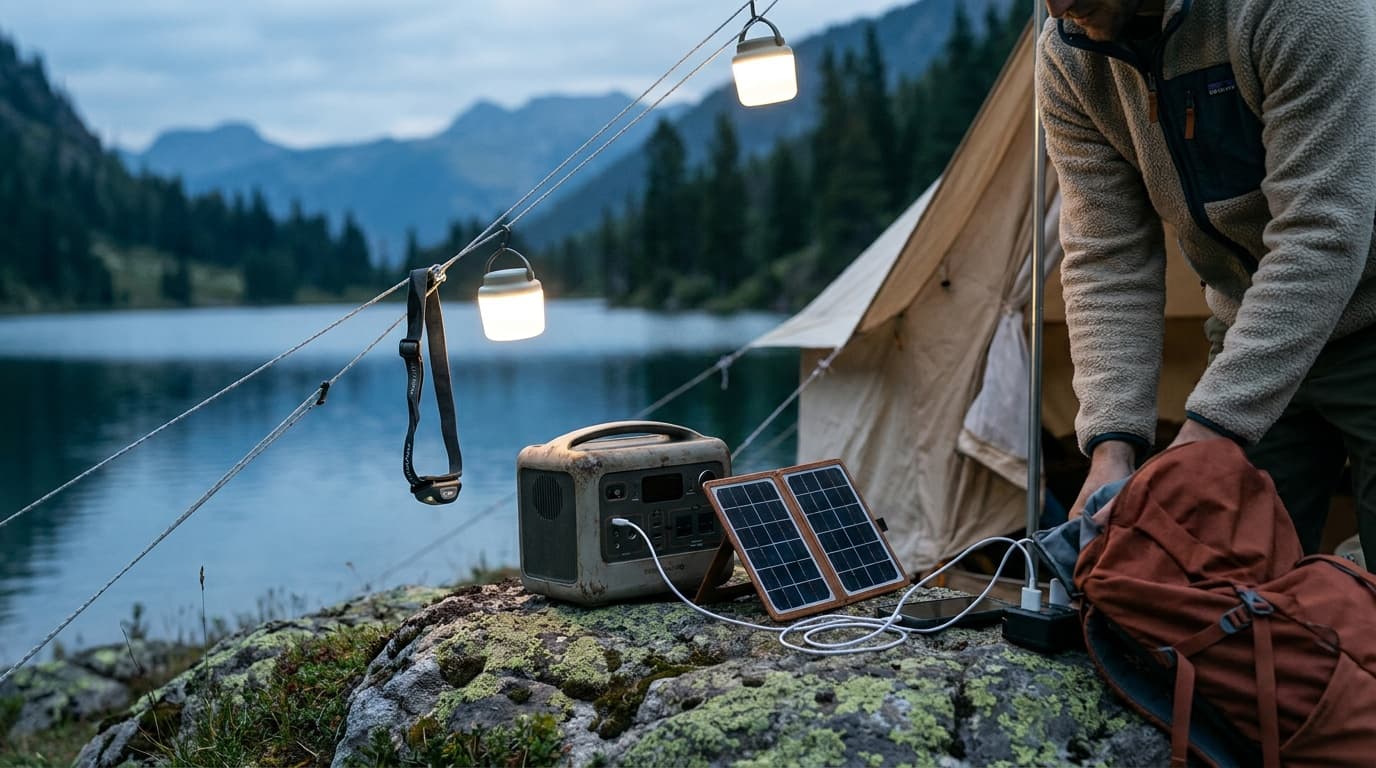
Field guide
What size power station do I need for camping?
A practical guide to sizing a portable power station: calculate watt-hours, check output watts, plan for solar recharge, and avoid buying more than you need.
Read guide
Buying guide
Best portable camping toilets 2026
Flush-style, bucket, and folding options compared for car camping, van life, and overlanding. Real specs, odor control, and capacity ranked by Kit Score.
Read guideResearched, not personally tested: picks come from specs, verified-owner reviews, and expert sources, scored into the Kit Score. As an Amazon Associate I earn from qualifying purchases. We may earn a commission from links here, at no extra cost to you. How we research →