We may earn a commission from links on this page, at no extra cost to you.
Washing clothes on the road is a 15-minute skill that cuts your packing list roughly in half. Master the sink wash and a smart drying setup, and a week of outfits fits in a carry-on for a month-long trip.
The sink wash method, step by step
Every hotel, hostel, and campsite version of travel laundry is a variation on this routine. It takes about 15 minutes of active work for a day's clothes.
The 15-minute sink wash
Plug the sink and add warm water
Many hotel sinks have leaky or missing stoppers, which is why a flat universal drain stopper is a standard travel laundry item. Warm water dissolves detergent faster; cold protects delicate fabrics and merino.
Dose the soap small
A quarter of a detergent sheet, a pea-size drop of concentrate, or a few swipes of a bar is enough for a sink. Oversudsing is the number one beginner mistake, because every extra bubble costs you a rinse cycle.
Wash for 2–3 minutes
Swish, knead, and press the clothes against the basin. Focus on collars, cuffs, and underarms. Let heavily worn items soak 10–15 minutes first.
Rinse until the water runs clear
Drain, refill, and press the clothes through clean water once or twice. Squeeze gently; wringing hard stretches knits and shortens garment life.
Towel-roll to remove most of the water
Lay each garment flat on a dry towel, roll the towel up tightly, and press or stand on the roll for 30 seconds. This single trick removes more water than any amount of squeezing and is the difference between clothes drying overnight and clothes still damp at checkout.
Hang with airflow
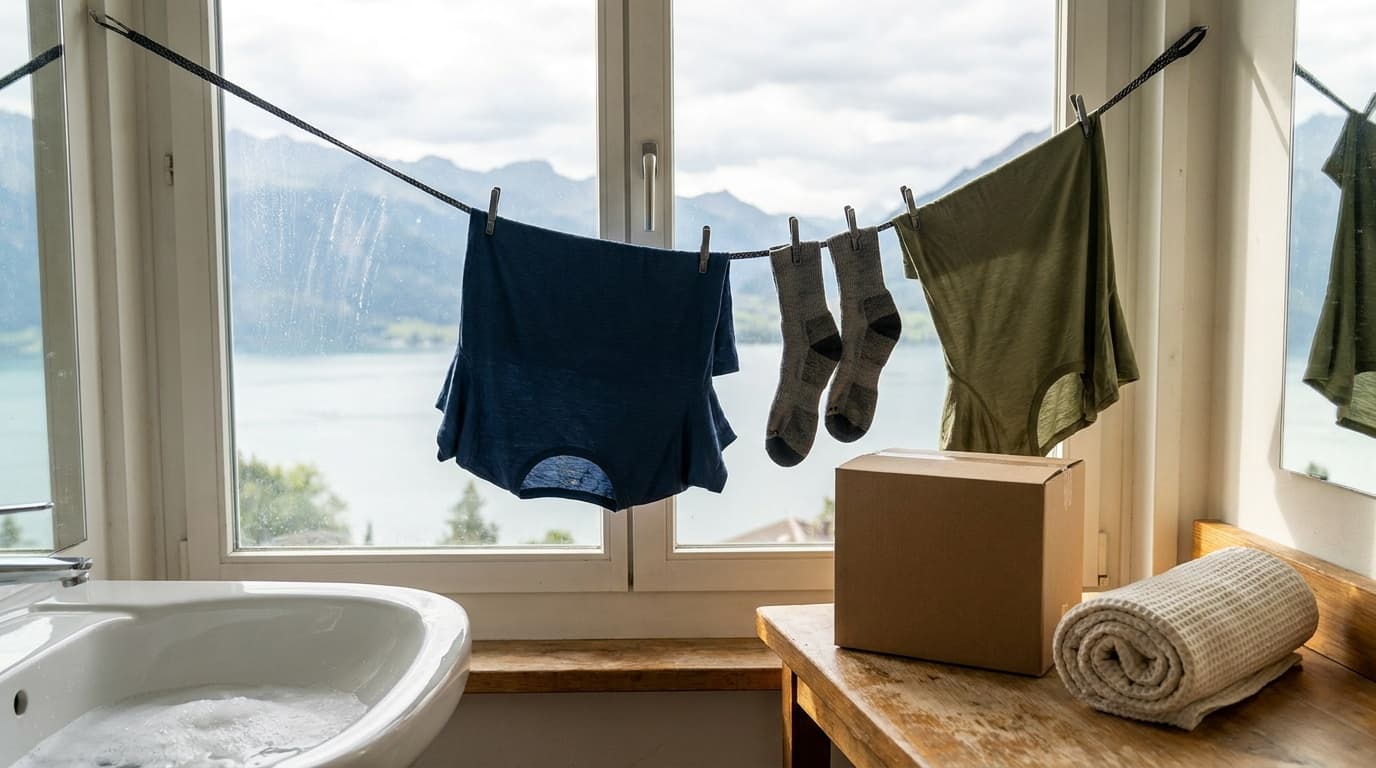
String a clothesline across the shower or near a window, space items out, and point a fan or the room's air conditioning at them if you have it. Thin synthetics and merino dry in 4–8 hours; cotton can take a full day or more.
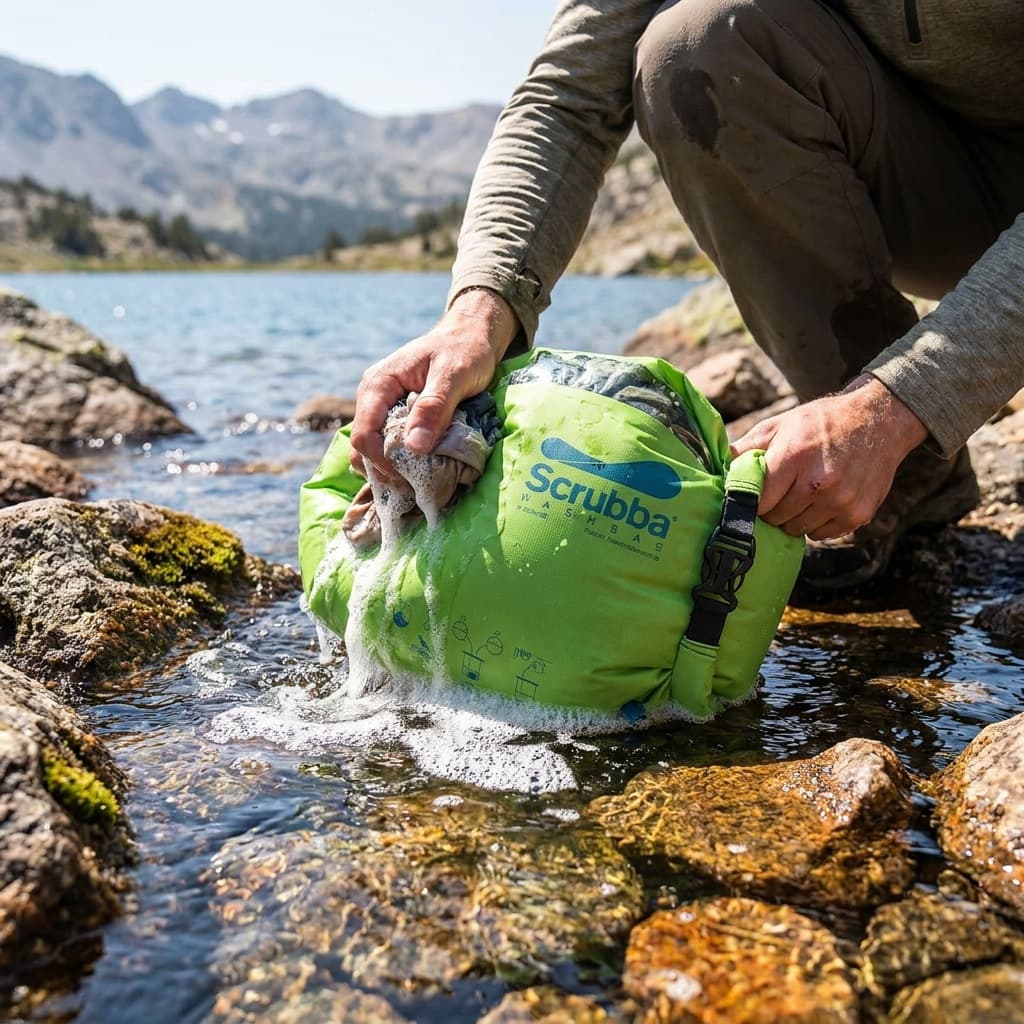
If you handwash more than occasionally, a dedicated wash bag improves both cleaning and dignity: the Scrubba Wash Bag is a roll-top dry bag with an internal washboard, so you get a genuine scrubbing action in about three minutes, in any room, with no sink required. It doubles as a dry bag and weighs about 5 oz.
Travel laundry soap formats compared
Any real detergent beats hotel shampoo, which is formulated to rinse out of hair fast rather than lift oils from fabric. The three formats worth packing:
Detergent sheets or strips are the best default for most travelers. They are paper-thin, dry, pre-dosed, and invisible to TSA liquid limits: a resealable pack the size of a passport holds 30-plus loads. Tear off what you need (a quarter to half a sheet per sink load) and the sheet dissolves in warm or cold water. Fragrance-free versions like Tru Earth Eco-Strips also work for anyone sharing hostel dorms with scent-sensitive roommates, and they double for machine loads when you do find a laundromat.
Liquid concentrate (camp suds and multi-purpose soaps) cleans heavily soiled or greasy clothes better than sheets and can also handle dishes and bodies in camp contexts. The costs: it counts against your 3.4 oz liquids allowance, and a loose cap turns your packing cube into a laundry load of its own. Decant into a small leakproof bottle.
Bar soap (laundry-specific bars, not body soap) is the budget long-haul option: it cannot leak, lasts months, and scrubs stains directly. It is slower to dose, wet bars need a drainable container, and dissolving enough soap in a basin takes more effort than a strip.
Skip pods for sink washing: they are pre-dosed for 15 gallons of machine water, far too much for a basin, and they do not split.
Drying: the part that actually limits you
Washing is easy; drying is the constraint that shapes your packing list. Three rules cover it.
First, favor quick-dry fabrics. Merino wool and synthetic blends dry overnight and resist odor between washes; heavy cotton (jeans, thick tees, terry socks) can hang damp for two days in humid climates. A laundry-cycle wardrobe is mostly merino and synthetics for exactly this reason.
Second, always towel-roll before hanging. It cuts drying time roughly in half and is the step most beginners skip.
Third, create airflow. A braided travel clothesline (no clips needed, anchors to shower rails and door frames) lets you space garments where air actually moves. Hanging clothes on hotel hangers in a still closet is the slowest possible option. If the room has air conditioning or a fan, point it at the line; moving air matters more than warm air.
Hotel, hostel, and camp: adjusting the routine
Hotels are the easy mode: private sink, towels you can sacrifice to the roll trick, and a shower rail for the line. Just check the towel supply before using one as a wringer, and never leave clothes dripping onto carpet.
Hostels usually mean shared bathrooms, so the wash bag approach beats occupying a communal sink for 20 minutes. Wash in the bag in your room or a corner, rinse quickly at the sink, and dry on your bunk frame or a line strung inside your locker area. Fragrance-free soap is basic courtesy in a dorm. Many hostels also have cheap machine laundry; a strip-format detergent pack means you are ready for either.
Camp replaces the sink entirely with the wash bag or a collapsible bucket. Wash at least 200 feet from lakes and streams, use biodegradable soap, and scatter your gray water on soil rather than pouring it back into the water source. Even biodegradable soap does not break down in water, only in soil.
Packing for a laundry cycle: how many clothes you actually need
The math that makes one-bag travel work: with a wash every two or three evenings, 5–7 outfits cover any trip length. A workable template is 5–7 pairs of underwear and socks, 4–5 tops, 2–3 bottoms, and one warm layer, washed in small nightly or every-other-night batches so nothing critical is ever wet at once. Wash underwear and socks daily in 5 minutes and everything else twice a week, and you will never face a laundry emergency.
That wardrobe plus a laundry kit weighing under a pound replaces an entire checked bag. Our one-bag travel kit guide builds out the full packing list around this cycle, and the best travel laundry kits roundup ranks the specific wash bags, detergent strips, clotheslines, and sink stoppers that make up the kit itself.
FAQ
What is the best soap for washing clothes while traveling?
Detergent sheets or strips are the best all-around format: flat, lightweight, pre-dosed, TSA-proof, and usable in both sinks and machines. Choose liquid concentrate if you expect heavily soiled clothes or want one soap for dishes and laundry at camp, and a laundry bar if you want the cheapest option that can never leak. Any of the three outperforms hotel shampoo, which is designed to rinse out fast rather than clean fabric.
How long do clothes take to dry after a sink wash?
Thin synthetics and merino wool dry in 4–8 hours with a towel-roll first and decent airflow, so an evening wash is dry by morning. Cotton takes 12–24 hours or more, and longer in humid climates. The towel-roll step (roll the garment in a dry towel and press) roughly halves drying time, and pointing a fan or air conditioner at the clothesline halves it again.
Can you wash clothes in a hotel sink without a stopper?
Often yes, but do not count on it: hotel stoppers are frequently missing or leak slowly enough to drain your wash water mid-scrub. A flat silicone universal drain stopper weighs about an ounce and fixes every sink and tub you will meet. A gallon zip bag or a wash bag also works as a portable basin when the sink is unusable.
How many clothes should I pack if I plan to do laundry while traveling?
Plan around a two-to-three-day wash cycle: 5–7 pairs of underwear and socks, 4–5 tops, 2–3 bottoms, and one warm layer covers trips of any length. Favor merino and synthetics that dry overnight, wash small batches in the evening, and stagger washes so a full outfit is always dry. This is the core math that lets a carry-on replace a checked bag.
Is a wash bag like the Scrubba worth it over just using the sink?
For occasional trips, the sink is fine and free. A wash bag earns its space if you handwash more than a couple of times per trip: the internal washboard cleans noticeably better than sink swishing, it works where sinks are shared (hostels) or absent (camp), it contains the mess, and it doubles as a dry bag. At around 5 oz, the cost of carrying it is close to zero.
For the specific gear that makes this routine painless, see the best travel laundry kits. Browse more travel gear guides, or read how we research and rate.
Recommended gear
Our current top picks from the Best travel laundry kit: 4 pieces for sink washing guide, if you are ready to buy.
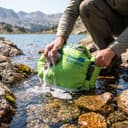
The Scrubba uses an internal flexible washboard to scrub clothes in 3 minutes or less, without needing a sink or machine. It rolls down to about 6.3 x 2.4 x 2.4 in when packed.
Best for: One-bag travelers and long-haul backpackers who want machine-quality results from any bathroom sink, tub, or water source.
- Internal washboard nubs clean significantly more effectively than hand-wringing in a sink
- Compresses to near-nothing and weighs under 6 oz, making it genuinely carry-on compatible
- Load limit is tight: roughly 2 shirts, 2 pairs of socks, and 2 underwear per cycle
- Weight
- 5.3 oz (150 g)
- Capacity
- 13 liters
- Packed size
- 6.3 x 2.4 x 2.4 in
- Material
- Polyether TPU
- Wash cycle time
- 30 seconds to 3 minutes
- Warranty
- 2 years
TRU EARTH
Tru Earth Compact Dry Laundry Detergent Strips (Fragrance-Free, 32 Sheets)
EDITOR'S CHOICE
Kit Score 8.4/10
Tru Earth strips dissolve fully in hot or cold water, work in sinks and machines alike, and ship plastic-free. Each 3g strip weighs less than a paperclip, making them the lightest laundry solution you can pack.
Best for: Eco-conscious travelers, sensitive-skin packers, and anyone doing a mix of sink washing and coin laundry on a long trip.
- 30,000+ Amazon reviews at 4.5 stars confirms long-track-record reliability across diverse trip types
- Fragrance-free variant is genuinely safe for sensitive skin and merino wool without conditioning agents that damage fibers
- Higher cost per load than generic detergent sheets from no-name brands
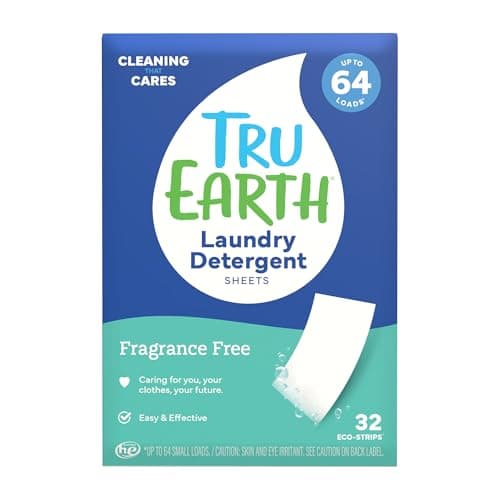
- Sheet count
- 32 sheets (up to 64 loads when torn in half)
- Weight per strip
- 3 g
- Formula
- Liquidless, paraben-free, phosphate-free
- Water temperature
- Works in hot or cold water
- Skin rating
- Hypoallergenic
- TSA compliance
- Solid sheets, outside the 3-1-1 liquids rule
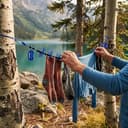
HAWATOUR
HAWATOUR Portable Retractable Clothesline with Clothespins (2-Pack)
BEST VALUE
Kit Score 9.0/10
HAWATOUR's elastic braid stretches to 12 feet and hooks onto bathroom fixtures, balcony rails, or any anchor point. The positioning beads stop clips from bunching at the center, a problem that plagues cheaper alternatives.
Best for: Travelers who hand-wash regularly and want two lines with real clip retention at a price where losing one is not a disaster.
- Two lines for under $15 provides both a backup and capacity to handle a full day's hand-wash
- Positioning beads are a genuine functional upgrade over smooth elastic lines that let everything slide to the middle
- Stainless hooks can scratch painted or lacquered surfaces in hotel rooms
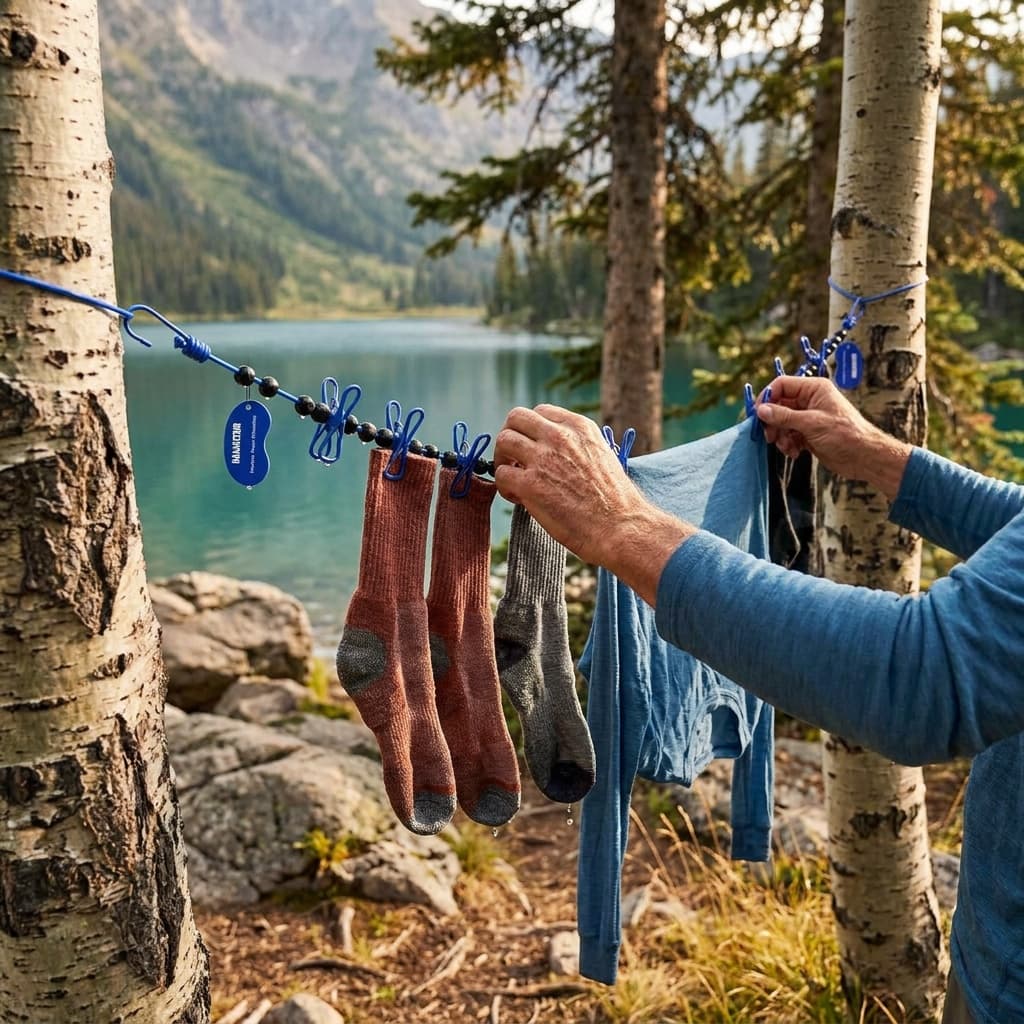
- Quantity
- 2 clotheslines per pack
- Stretched length
- Up to 10 – 12 feet per line
- Weight (both lines)
- 6.5 oz
- Clothespins included
- 12
- Positioning beads
- 12 (prevent clip sliding)
- Hooks
- Stainless steel, removable
See all picks in Best travel laundry kit: 4 pieces for sink washing
Keep going
Complete loadoutCarry-on travel kitA one-week suitcase system with the bag, organization, laundry, toiletries, security, scale, and power.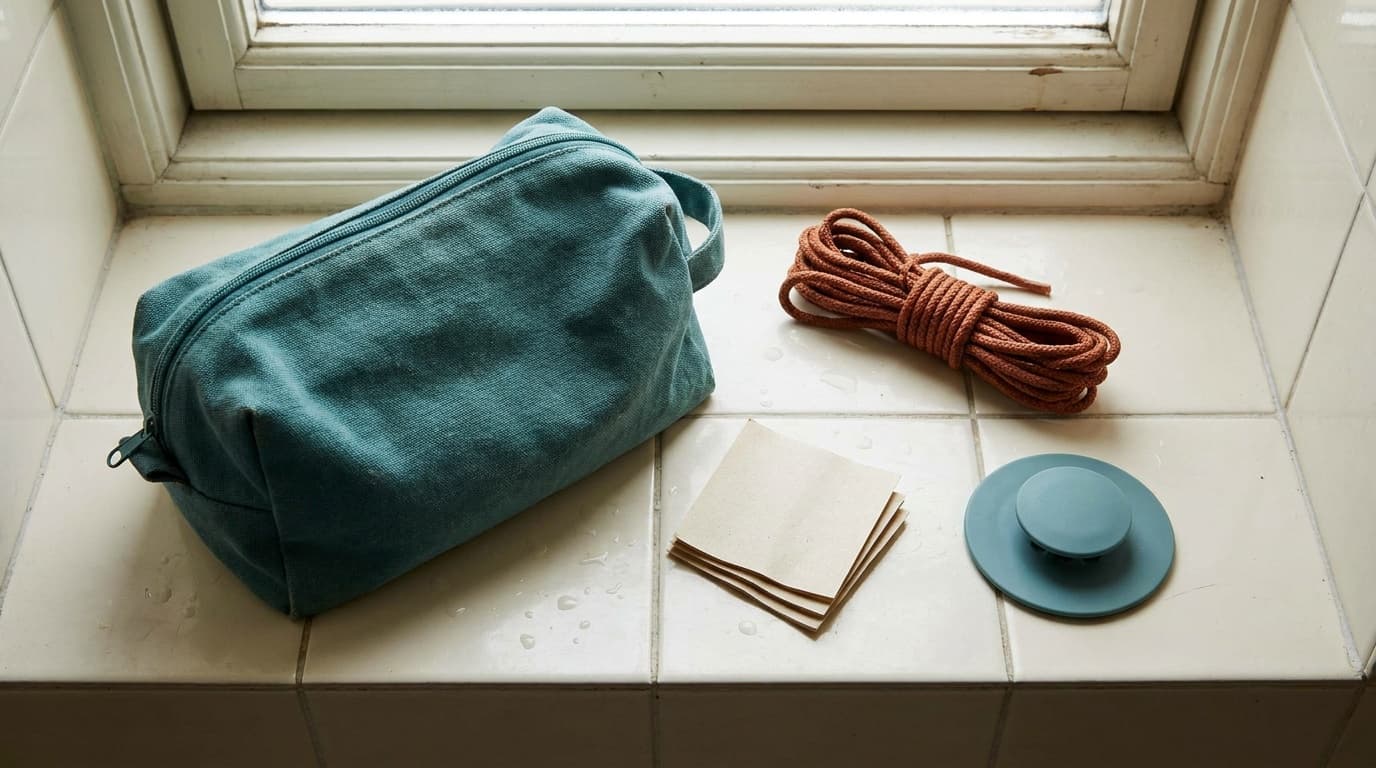
Researched, not hands-on tested
Updated Jul 7, 2026Our recommendations draw on manufacturer documentation, retailer listings, owner feedback, and comparisons with alternatives.
As an Amazon Associate I earn from qualifying purchases. We may earn a commission from links here, at no extra cost to you. How we research →