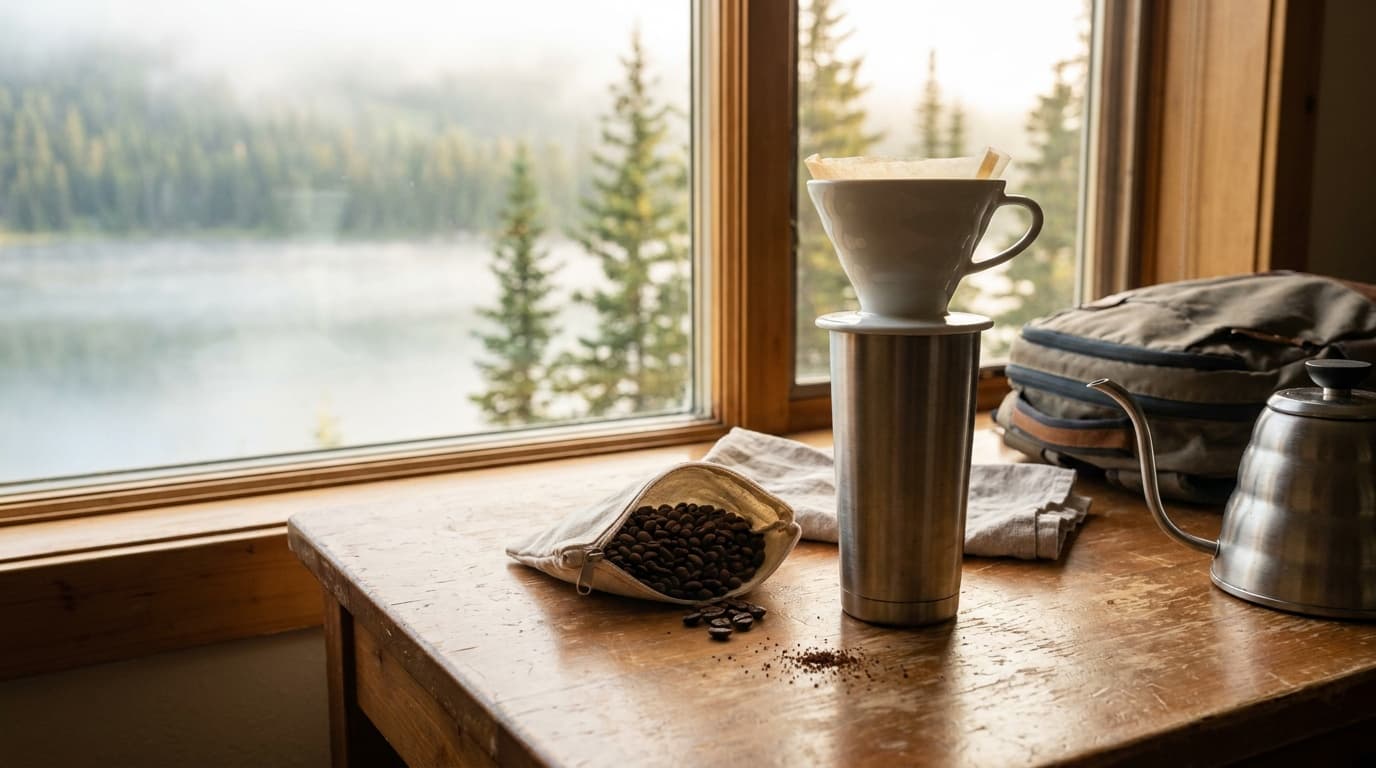
Good coffee on the road is not a luxury problem, it is a solvable logistics problem, and the fix is usually lighter and cheaper than you expect.
Choosing your brew method
Every portable method trades off weight, brew time, and cleanup effort differently. Here is how the main options stack up.
AeroPress is the most versatile option for travelers who care about cup quality. It brews in about 60–90 seconds under gentle hand pressure, tolerates a wide grind range, and the grounds eject cleanly into a bin with one push. The standard model fits in a medium packing cube; the AeroPress Go is slightly smaller and includes a mug.
Collapsible pour-over drippers (silicone cones that fold flat) weigh almost nothing and produce a clean, bright cup. The trade-off is that they demand a steady pour and a burr-ground or consistent pre-ground, sloppy technique shows up in the cup.
Travel French press (a double-wall press with a plunger lid, like the GSI Outdoors JavaPress) doubles as a travel mug. No filters to pack. The downside: the plunger needs a real rinse, and if you let the coffee sit, it keeps extracting and goes bitter.
Immersion steel brewers like the Espro Travel Press use a fine-mesh micro-filter inside a press bottle. They are self-contained, no paper filters, and the fine screen stops over-extraction better than a standard French press.
Instant coffee packets are the right call when weight and security lines matter most. Modern specialty instant (Cometeer frozen pods, Swift Cup, Waka) starts with quality beans and freeze-dries or micro-grounds them at origin. The result is genuinely good in a way that Nescafe packets are not.
Heating water in a hotel room
Most hotel rooms outside North America supply a kettle. Inside North America, you often get nothing useful. Two reliable options:
Getting hot water without a hotel kettle
Travel kettle
A foldable silicone kettle (Bonavita, Collapsible Travel Kettle) packs to roughly the size of a paperback. Check the voltage before you travel: a dual-voltage model (100–240 V) works worldwide with the right plug adapter.
Immersion heater
A coil immersion heater (around $10–15) drops into any mug of water and brings it to near-boil in 3–5 minutes. Pack it in a zip-top bag. Fragile if bent, but very light.
Request from the front desk
Many hotels will bring a hot-water carafe or a kettle if you ask. Worth a quick call before unpacking gear.
Coffee machine without a pod
Hotel room drip machines without a pod can run plain water through an empty basket to produce hot (not boiling, around 185–195 °F / 85–90 °C) water for any pour-over or AeroPress brew.
Grind and ratio basics
Getting the ratio right matters more than gear. A standard starting point is 1:15 by weight, 1 gram of coffee for every 15 grams (roughly 15 ml) of water. For a 250 ml cup, that is about 17 grams of coffee, or roughly 2.5 level tablespoons of medium ground.
Grind size by method:
- AeroPress: medium-fine (like table salt)
- Pour-over: medium (like coarse sea salt)
- French press or immersion: coarse (like raw sugar)
If you cannot grind yourself, buy pre-ground labeled for the method you are using. Grocery-store pre-ground is usually a medium grind and works acceptably for AeroPress.
The single biggest upgrade you can make to hotel-room coffee is using a consistent grind and weighing your coffee once so you know what your scoop actually holds.
Packing beans and grounds
Whole beans stay fresh for 2–3 weeks after the roast date if kept in an opaque, sealed container away from heat. For trips under four days, pre-grinding the night before and storing in a zip-top bag works fine.
For longer trips:
- Pack whole beans in their original valve-sealed bag inside a hard-sided container (an AeroPress tube works well).
- Grind at the hotel using the property's lobby grinder if available, or at a local cafe for a small fee.
- A hand grinder (Timemore C2, Hario Mini Mill) adds about 200–300 grams to your bag but gives you freshly ground coffee anywhere. Hand-grinding 18 grams takes about 60–90 seconds.
TSA allows coffee beans and grounds in both carry-on and checked bags with no quantity restrictions. International customs rules vary; some countries restrict fresh agricultural products, but roasted coffee is almost universally admitted.
Cleanup on the road
Cleanup is where most setups fail in practice. Keep it simple:
- AeroPress: eject the puck into a bin, rinse the chamber and plunger under the tap, dry with a hand towel. Under 60 seconds.
- Pour-over dripper: discard the paper filter with grounds, rinse the dripper. Reusable metal filters need a better rinse but still take under 90 seconds.
- French press or immersion brewer: dump grounds into a bin (never down the sink, grounds clog drains), rinse, and wipe. Avoid leaving grounds in the screen overnight.
- Instant: there is no cleanup. The packet goes in the bin.
Keep a small dedicated cloth or silicone drying mat in your kit. It keeps your coffee gear from sitting wet on hotel surfaces.
Frequently asked questions
Can I bring an AeroPress or French press in carry-on luggage?
Yes. Both are permitted in carry-on bags by TSA and most international aviation security agencies. Metal French press plungers occasionally get a second look at screening, but they are not prohibited items. Pack coffee gear where it is easy to remove if an agent asks to inspect the bag.
What is the lightest possible coffee setup for a weekend trip?
Two or three instant coffee packets add under 15 grams and zero cleanup. If you want a brewed cup, a collapsible silicone pour-over cone plus a handful of paper filters and a small bag of pre-ground coffee comes in under 50 grams total. Add a single-coil immersion heater if your destination likely lacks a kettle.
How do I keep ground coffee fresh for a week-long trip?
Store pre-ground coffee in a small airtight container, a screw-top tin or a zip-top bag with the air pressed out. Keep it away from direct sunlight and heat. Coffee ground fresh before your trip will taste noticeably better on day 1 and 2; by day 6 or 7 it will have lost brightness but will still be drinkable. For a week-long trip, grinding in small daily batches from whole beans (if you carry a hand grinder) is the better approach.
For specific gear picks across all these methods, see our guide to the best travel coffee makers. Browse all travel guides or read how we research and rate gear.
Recommended gear
Our current top picks from the Best travel coffee makers: AeroPress, pour-over, and espresso guide, if you are ready to buy.
Best for: Solo and duo campers who want excellent coffee with minimal weight and cleanup.
- Packs into its own 15 oz mug
- Brews one mug at a time
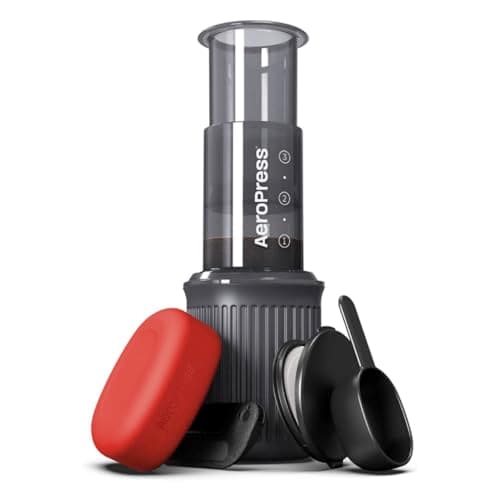
- Brew style
- Immersion / press
- Packed weight
- 11.4 oz
- Capacity
- 1 large mug
- Filters
- Paper (reusable available)
About this pick
A travel-sized version of the cult AeroPress, fast, forgiving, and nearly indestructible. The default answer for one or two campers who want good coffee with no fuss.
Strengths
- Packs into its own 15 oz mug
- Very forgiving brew, hard to make a bad cup
- Easy one-rinse cleanup
Weaknesses
- Brews one mug at a time
- Paper filters are a consumable to remember
Kit Score breakdown
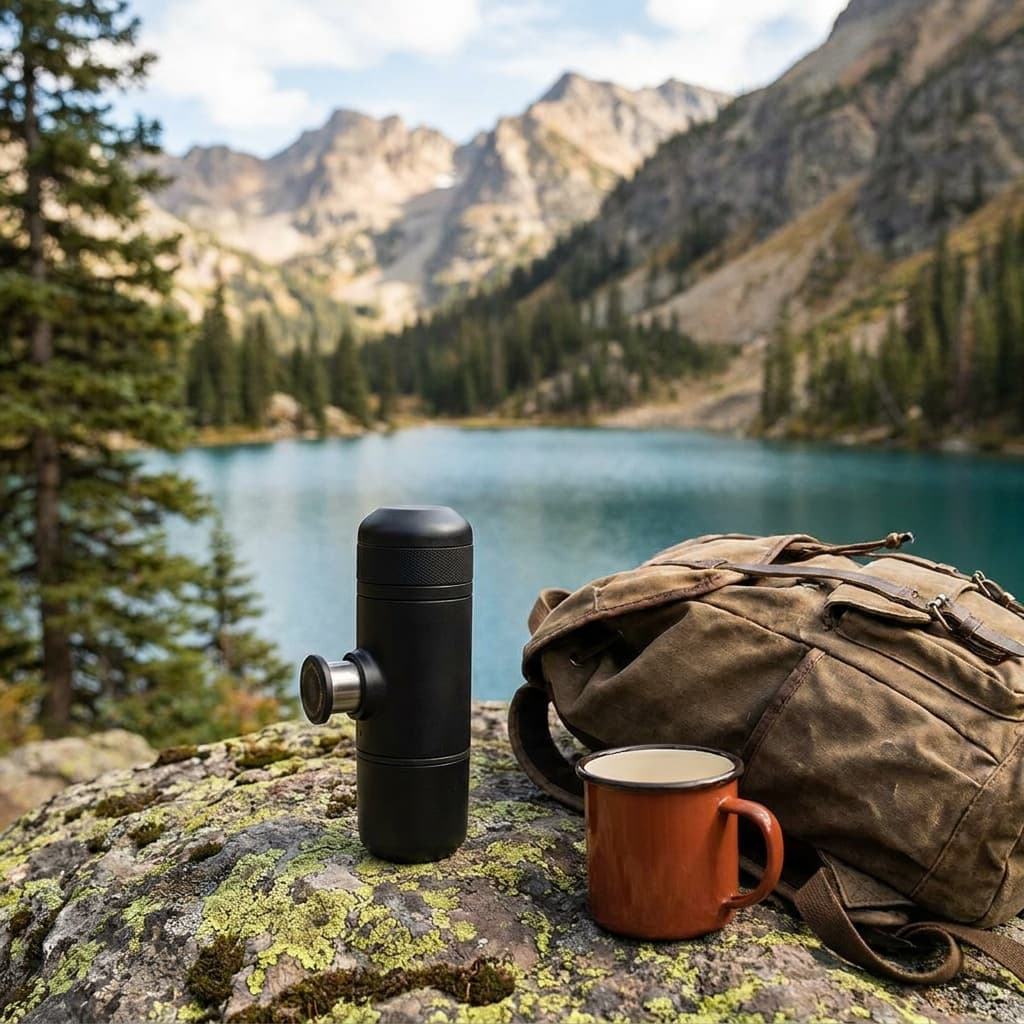
Best for: Espresso devotees who want a proper shot at the trailhead or campsite.
- Real pressurized espresso with no power
- Single small shot at a time
- Brew style
- Hand-pump espresso
- Pressure
- Up to 18 bar
- Packed weight
- 11.9 oz (336 g)
- Water
- 80 ml reservoir
About this pick
A hand-pumped espresso maker that pulls a genuinely respectable shot off-grid, no power, no cartridges. For campers who refuse to compromise on espresso.
Strengths
- Real pressurized espresso with no power
- Self-contained and pocketable
- Strong owner satisfaction
Weaknesses
- Single small shot at a time
- Priciest pick; finicky to dial in
Kit Score breakdown
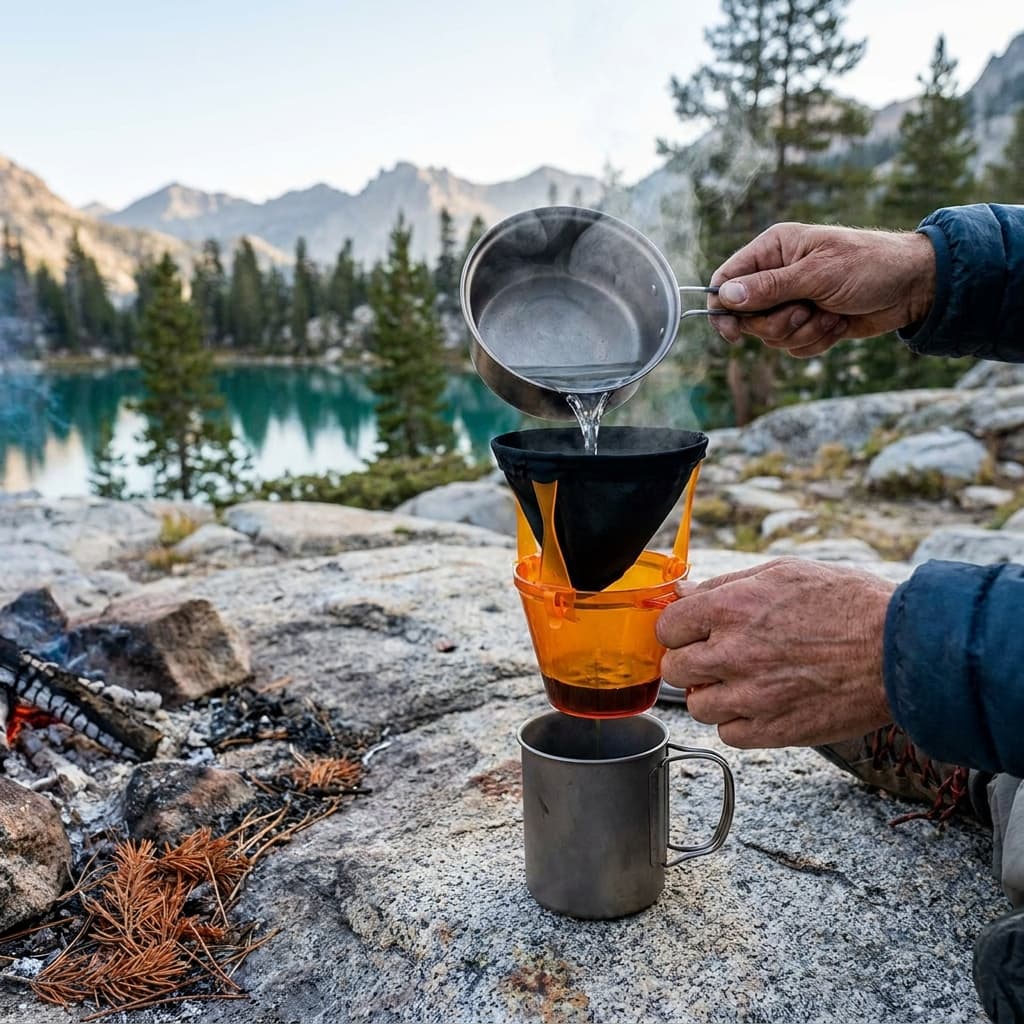
Best for: Ultralight backpackers and minimalist travelers who want any decent hot coffee at the lowest possible weight and cost, and are willing to pour carefully.
- At roughly 1 oz and collapsible flat, it is the lightest and most packable travel coffee solution on the market
- The plastic clip arms are fragile and prone to breaking if the dripper gets caught in a packed bag or forced onto a thick-rimmed mug
- Weight
- 1.1 oz (31 g)
- Packed size
- Fits flat under a standard fuel canister
- Filter type
- Reusable nylon mesh basket, no paper needed
- Compatibility
- Clips onto most standard mugs and cups
- Material
- Nylon mesh, plastic frame
- Brew time
- 3 to 5 minutes
About this pick
A clip-on pour-over filter that weighs just over an ounce and collapses flat. Three plastic arms grip the rim of almost any mug or cup, the nylon mesh basket holds grounds, and you pour hot water straight through: no pump, no fuss, no paper filters.
Strengths
- At roughly 1 oz and collapsible flat, it is the lightest and most packable travel coffee solution on the market
- No paper filters required and no moving parts to break or lose
- Sub-$20 price means it can live permanently in a travel kit, bag, or emergency drawer without a second thought
Weaknesses
- The plastic clip arms are fragile and prone to breaking if the dripper gets caught in a packed bag or forced onto a thick-rimmed mug
- Brew quality depends heavily on slow, careful pouring; a rushed pour produces a thin, under-extracted cup
Kit Score breakdown
See all picks in Best travel coffee makers: AeroPress, pour-over, and espresso
Keep going
Researched, not hands-on tested
Updated Jun 5, 2026Our recommendations draw on manufacturer documentation, retailer listings, owner feedback, and comparisons with alternatives.
As an Amazon Associate I earn from qualifying purchases. We may earn a commission from links here, at no extra cost to you. How we research →