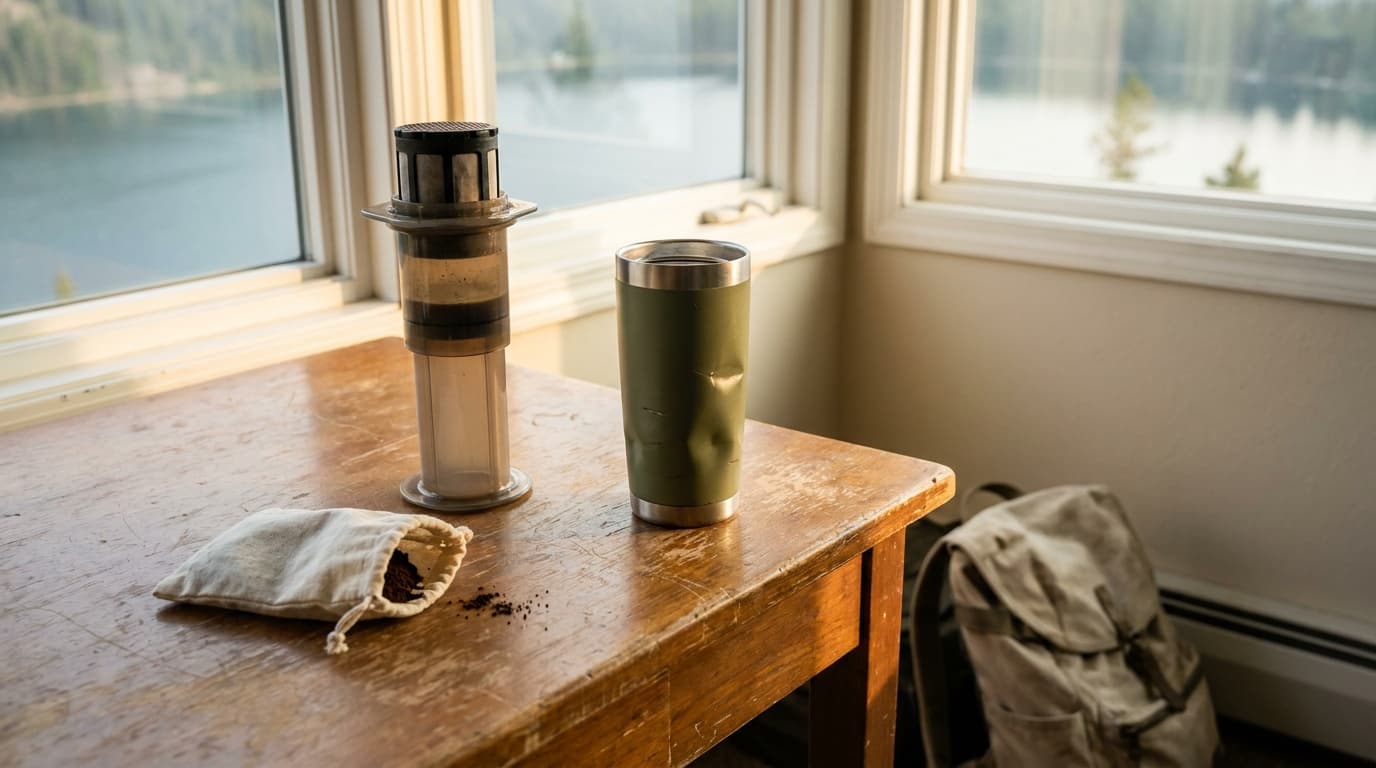
Choosing between an AeroPress and a French press for travel comes down to a few honest trade-offs: how much space you have, how much fuss you want at camp or in a hotel room, and the kind of cup you love.
Packability and durability
The original AeroPress weighs about 200 g (7 oz) and packs to roughly the size of a wide travel mug. The AeroPress Go, designed specifically for travel, includes a mug that doubles as the carry case and weighs around 300 g with mug. Neither has glass parts. The plastic is a co-polyester that handles drops, rattles in a pack, and checked luggage without complaint.
Travel French presses come in two main forms. Borosilicate glass carafes in a stainless steel frame (like the classic Bodum Chambord) look great but crack if they hit a hard floor or get packed without serious padding. Full stainless steel double-wall travel presses (GSI Outdoors, Stanley, and similar) solve the fragility problem, but they are heavier: a 470 ml (16 oz) stainless press runs 350–500 g on its own.
For ultralight backpackers and carry-on-only travelers, the AeroPress is the clear winner here. For car campers or checked-bag travelers who want to share coffee, a stainless French press is durable enough.
Cleanup in the real world
This is where AeroPress pulls away from the field. You press, pop the puck into the trash (or a bag if you're in the backcountry), rinse the rubber seal, and you're done in under 30 seconds. No wet grounds sitting in water, no fine sediment to scrub off glass.
A French press requires you to decant all the coffee immediately or the grounds keep steeping and the cup turns bitter. Then you have to deal with the wet puck: tipping it into a trash can usually works at a hotel, but at a trailhead or campsite it becomes a leave-no-trace question. Rinsing the mesh plunger assembly requires real water pressure to clear fine grounds from the mesh. In a hotel sink or at a bear-box campsite, that is a bigger job than it sounds.
Brew quality and cup style
French press produces a full-bodied, textured cup because no paper filter removes the coffee oils. You also get a small amount of fine sediment in the bottom of the cup, which some people love and others find gritty.
AeroPress is more versatile. A standard brew uses a paper micro-filter, producing a cleaner, brighter cup with less sediment than French press but more body than a drip machine. Swap in a reusable metal filter and you get a cup much closer to French press character, with oils and a bit of texture. The ability to switch filter styles in a single device is a genuine advantage.
Both methods work well at altitude, which matters for backcountry travelers. Water boils at lower temperatures at elevation (about 93°C at 3,000 m), and both methods tolerate that without the consistency problems that some automatic machines show.
AeroPress with a metal filter gives you French press character in a smaller, lighter, faster-cleaning package.
Single cup vs sharing
AeroPress brews one cup at a time, 200–250 ml per press (roughly 7–9 oz). You can brew two rounds back-to-back in about five minutes, but if you are making coffee for three or four people, that is a real bottleneck in the morning.
A 1-liter stainless French press brews three or four full cups in a single steep. For group travel, basecamp trips, or vacation rentals where everyone wants coffee at once, the French press is the more practical tool.
Picking the right brewer for your trip
Solo carry-on trip
Take the AeroPress Go. It fits in your quart bag column and cleans in any sink.
Backpacking solo or with one partner
AeroPress. Lighter, no fragile parts, puck packs out cleanly.
Car camping with a group
Stainless French press. Brew everyone's cup at once, no multiple rounds.
Hotel stay, two people
Either works. AeroPress is faster to clean; French press skips the second brew round.
Checked-bag family trip
Stainless French press if you value sharing ritual; AeroPress if one person is the coffee maker.
The clear verdict
For most travelers, the AeroPress is the better default. It is lighter, tougher, faster to clean, and flexible enough to mimic French press character if you carry a metal filter. The AeroPress Go model removes the last real objection (needing a separate mug) and is worth the slight weight premium over the original.
Choose a French press, like the GSI Outdoors JavaPress, if you are regularly brewing for two or more people and prefer a single-step group brew over multiple AeroPress rounds. In that case, a full stainless double-wall model is the only type worth packing: glass travel presses are a risk not worth taking on any trip where the bag gets handled roughly.
If you already own a French press and love it at home, it can work fine for travel. But if you are buying something new specifically for travel, the AeroPress earns the recommendation.
Frequently asked questions
Can I bring an AeroPress through TSA in a carry-on?
Yes. The AeroPress is a non-pressurized plastic device with no restricted components. TSA has no category that would flag it. Pack your ground coffee in a sealed bag and you will move through security without issue.
Do I need to use boiling water for either method?
Neither requires a full rolling boil. Most coffee professionals recommend water around 90–96°C (195–205°F) for both methods. At altitude where water boils below 93°C, both still work well, though extraction may be slightly lighter. A simple travel kettle with a temperature setting, or letting boiled water sit for 30–45 seconds, gets you into the right range.
Which method works better for making a large amount of coffee to share?
A French press is the practical choice for groups. A 1-liter press brews 3–4 cups in a single 4-minute steep. AeroPress brews one cup at a time, so serving four people means four sequential rounds. For basecamp or group travel, the French press's multi-cup yield outweighs its cleanup disadvantage.
For specific picks across both categories and other portable options, see our guide to the best travel coffee makers. Browse all travel guides or read how we research and rate gear.
Recommended gear
Our current top picks from the Best travel coffee makers: AeroPress, pour-over, and espresso guide, if you are ready to buy.
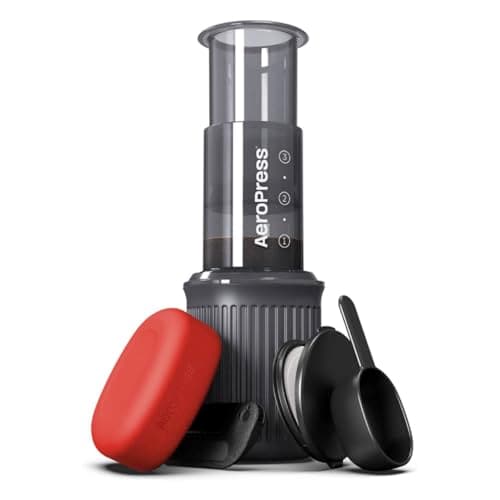
Best for: Solo and duo campers who want excellent coffee with minimal weight and cleanup.
- Packs into its own 15 oz mug
- Brews one mug at a time
- Brew style
- Immersion / press
- Packed weight
- 11.4 oz
- Capacity
- 1 large mug
- Filters
- Paper (reusable available)
About this pick
A travel-sized version of the cult AeroPress, fast, forgiving, and nearly indestructible. The default answer for one or two campers who want good coffee with no fuss.
Strengths
- Packs into its own 15 oz mug
- Very forgiving brew, hard to make a bad cup
- Easy one-rinse cleanup
Weaknesses
- Brews one mug at a time
- Paper filters are a consumable to remember
Kit Score breakdown
Best for: Espresso devotees who want a proper shot at the trailhead or campsite.
- Real pressurized espresso with no power
- Single small shot at a time
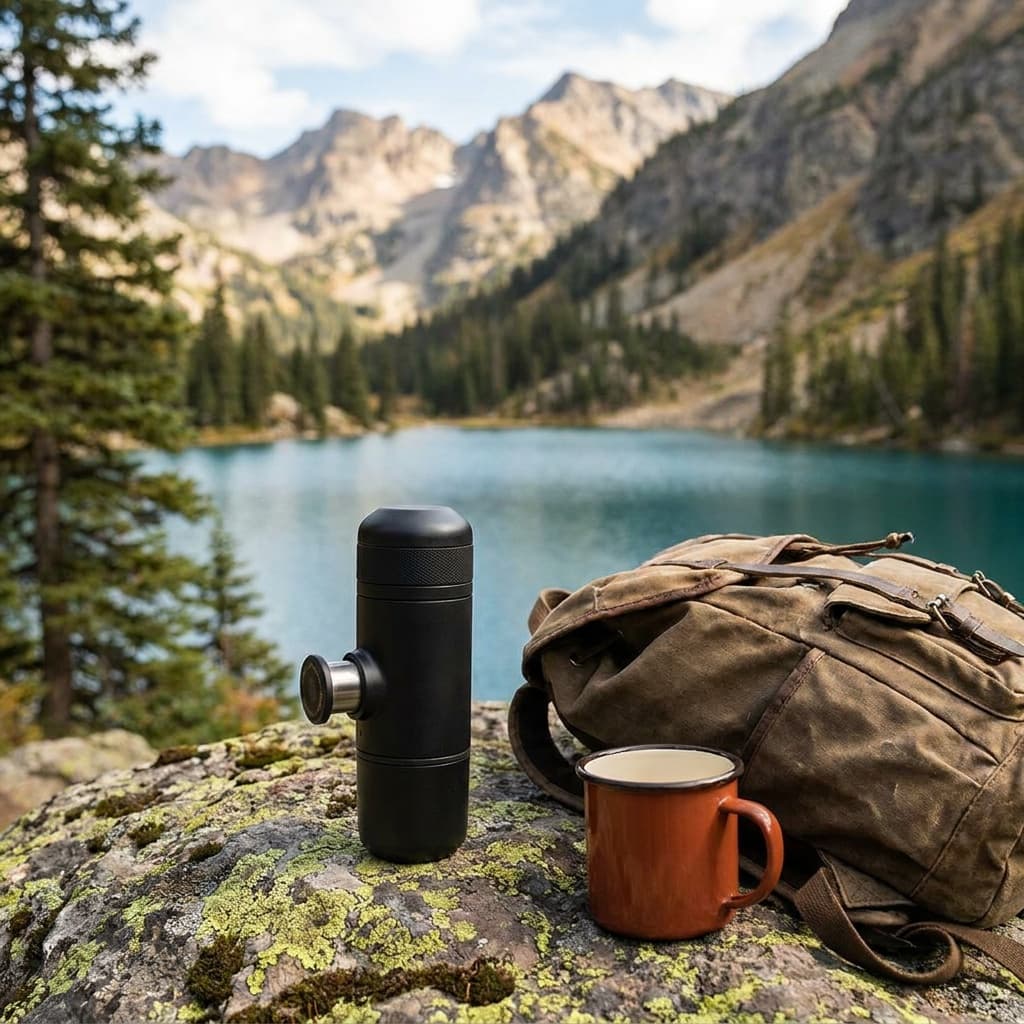
- Brew style
- Hand-pump espresso
- Pressure
- Up to 18 bar
- Packed weight
- 11.9 oz (336 g)
- Water
- 80 ml reservoir
About this pick
A hand-pumped espresso maker that pulls a genuinely respectable shot off-grid, no power, no cartridges. For campers who refuse to compromise on espresso.
Strengths
- Real pressurized espresso with no power
- Self-contained and pocketable
- Strong owner satisfaction
Weaknesses
- Single small shot at a time
- Priciest pick; finicky to dial in
Kit Score breakdown
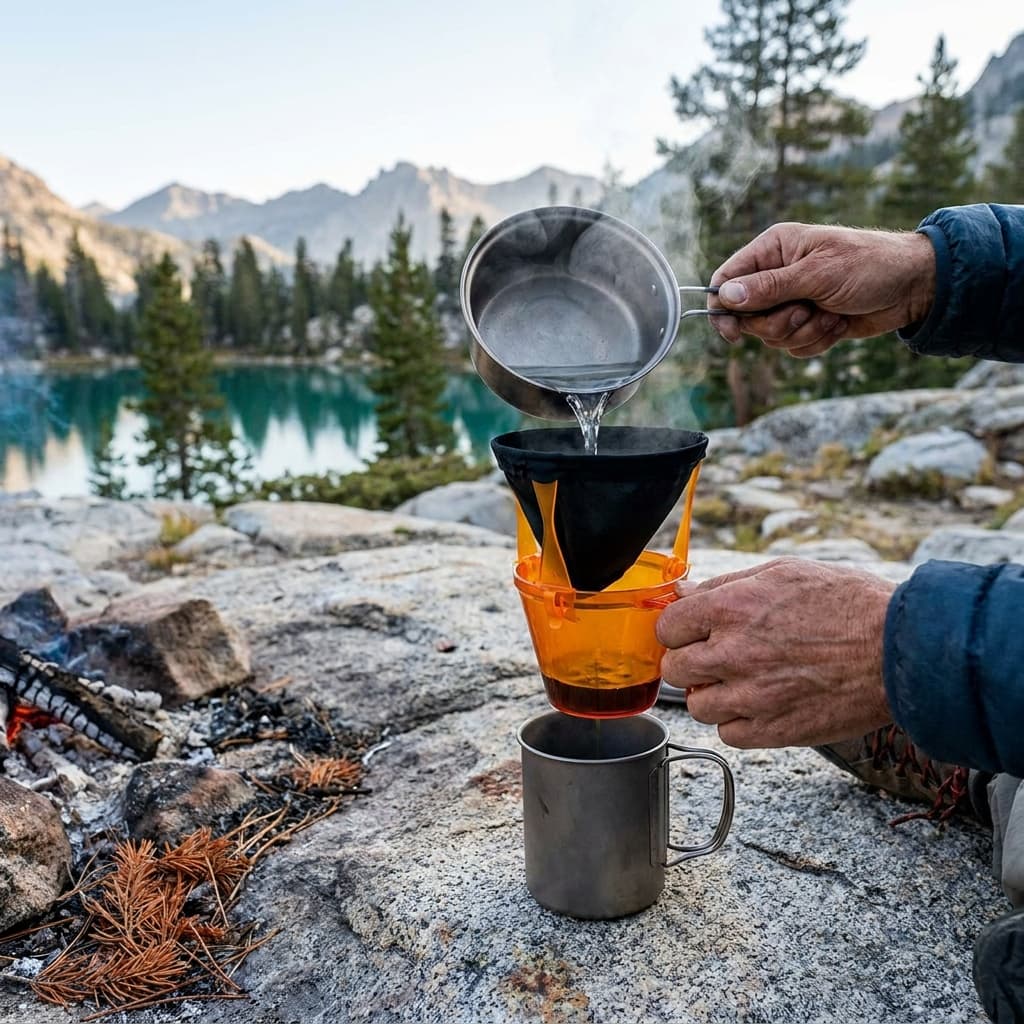
Best for: Ultralight backpackers and minimalist travelers who want any decent hot coffee at the lowest possible weight and cost, and are willing to pour carefully.
- At roughly 1 oz and collapsible flat, it is the lightest and most packable travel coffee solution on the market
- The plastic clip arms are fragile and prone to breaking if the dripper gets caught in a packed bag or forced onto a thick-rimmed mug
- Weight
- 1.1 oz (31 g)
- Packed size
- Fits flat under a standard fuel canister
- Filter type
- Reusable nylon mesh basket, no paper needed
- Compatibility
- Clips onto most standard mugs and cups
- Material
- Nylon mesh, plastic frame
- Brew time
- 3 to 5 minutes
About this pick
A clip-on pour-over filter that weighs just over an ounce and collapses flat. Three plastic arms grip the rim of almost any mug or cup, the nylon mesh basket holds grounds, and you pour hot water straight through: no pump, no fuss, no paper filters.
Strengths
- At roughly 1 oz and collapsible flat, it is the lightest and most packable travel coffee solution on the market
- No paper filters required and no moving parts to break or lose
- Sub-$20 price means it can live permanently in a travel kit, bag, or emergency drawer without a second thought
Weaknesses
- The plastic clip arms are fragile and prone to breaking if the dripper gets caught in a packed bag or forced onto a thick-rimmed mug
- Brew quality depends heavily on slow, careful pouring; a rushed pour produces a thin, under-extracted cup
Kit Score breakdown
See all picks in Best travel coffee makers: AeroPress, pour-over, and espresso
Keep going
Researched, not hands-on tested
Updated Jun 5, 2026Our recommendations draw on manufacturer documentation, retailer listings, owner feedback, and comparisons with alternatives.
As an Amazon Associate I earn from qualifying purchases. We may earn a commission from links here, at no extra cost to you. How we research →