When to go
Weather, crowds, and what the season changes about the trip.
Spring
40-60F
Cold and unsettled, highs 40-60F. Superior is frigid and the big water is unpredictable.
Pack Cold-water and wind protection, and patience for weather windows.
Summer
70-80F
Mild and pleasant, highs 70-80F. Peak ferry, kayak, and camping season.
Pack Layers, a real wind shell, and a backup plan for wave days.
Fall
50-65F
Cool and crisp, highs 50-65F. Quieter water and color, but a shorter ferry season.
Pack Warm layers, headlamp, and a flexible boat schedule.
Winter
15-30F
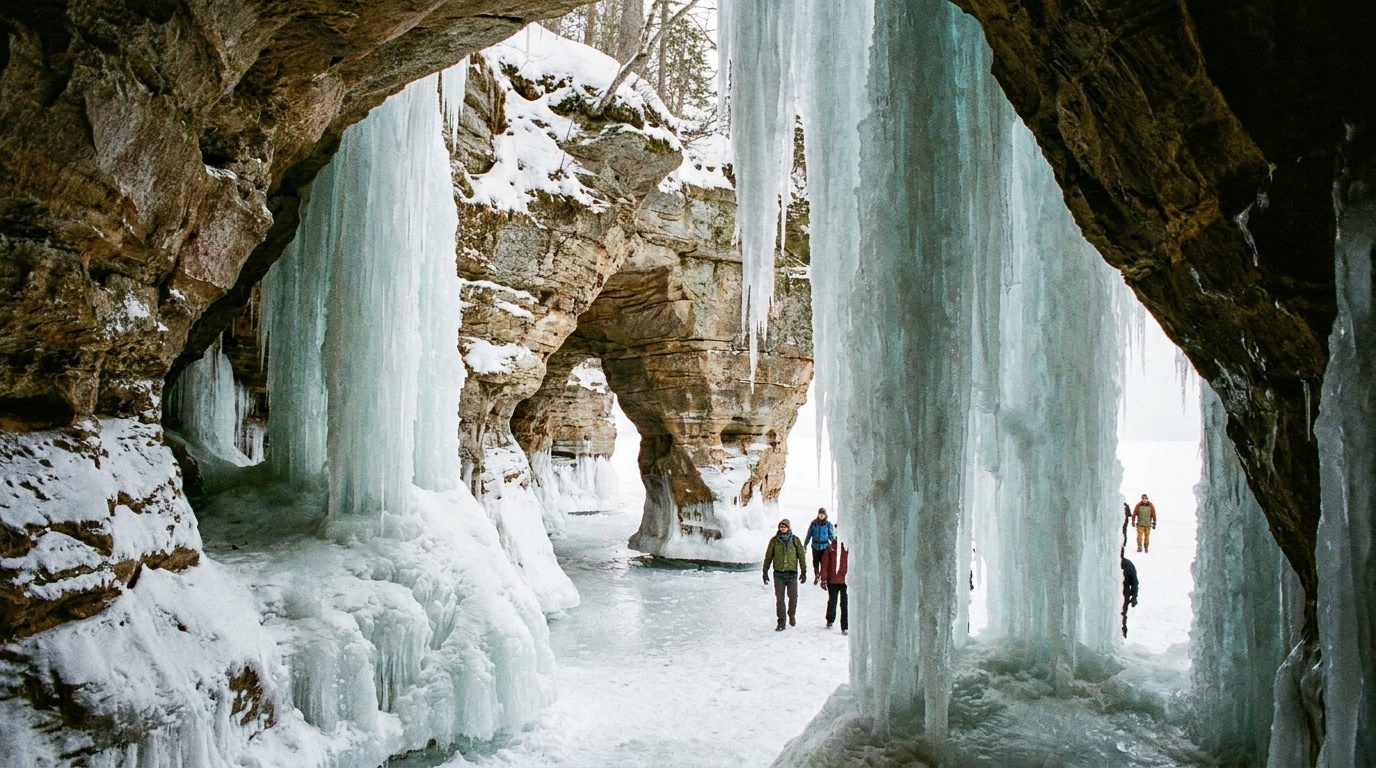
Frozen and severe, highs 15-30F. The mainland ice caves form only in rare safe-ice years.
Pack Full winter kit and a hard commitment to official ice-safety updates.
Top things to do
Mainland Sea Caves at Meyers Beach
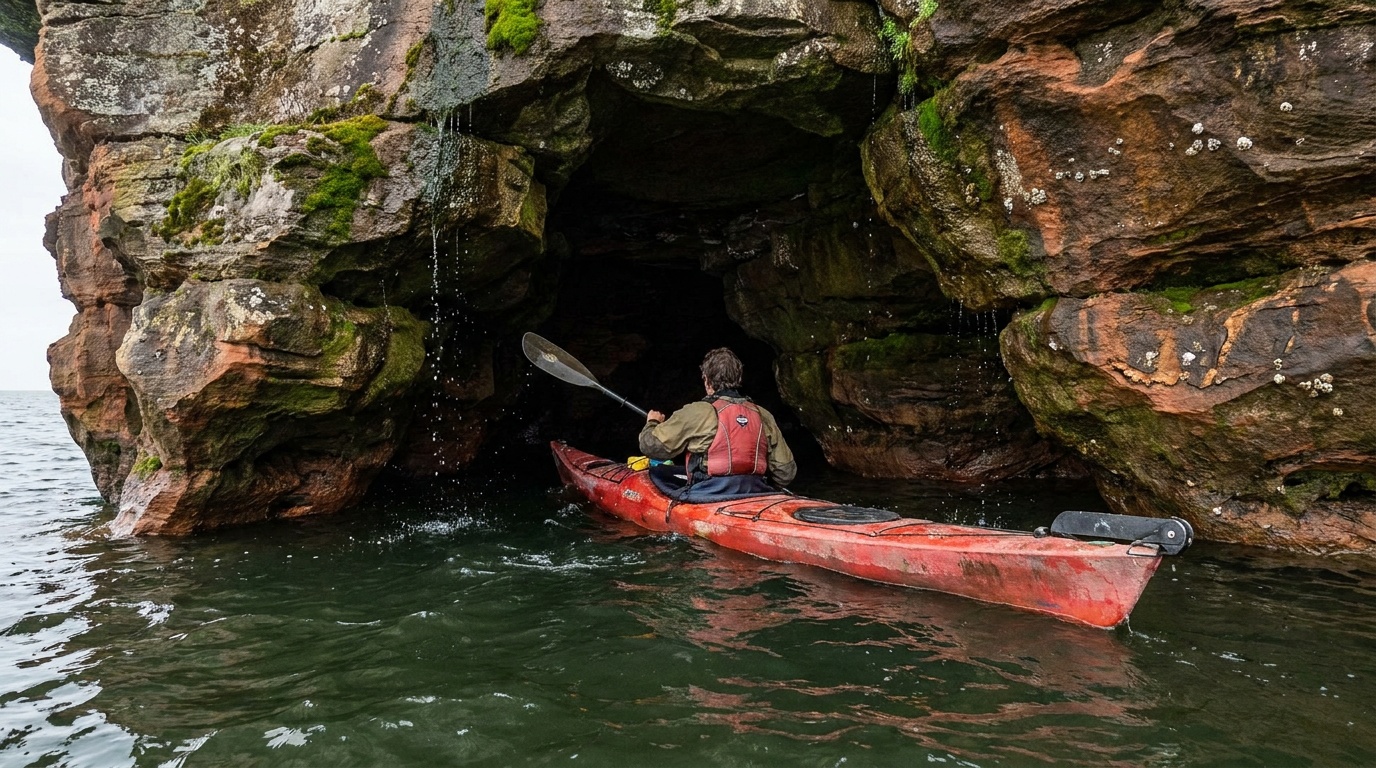
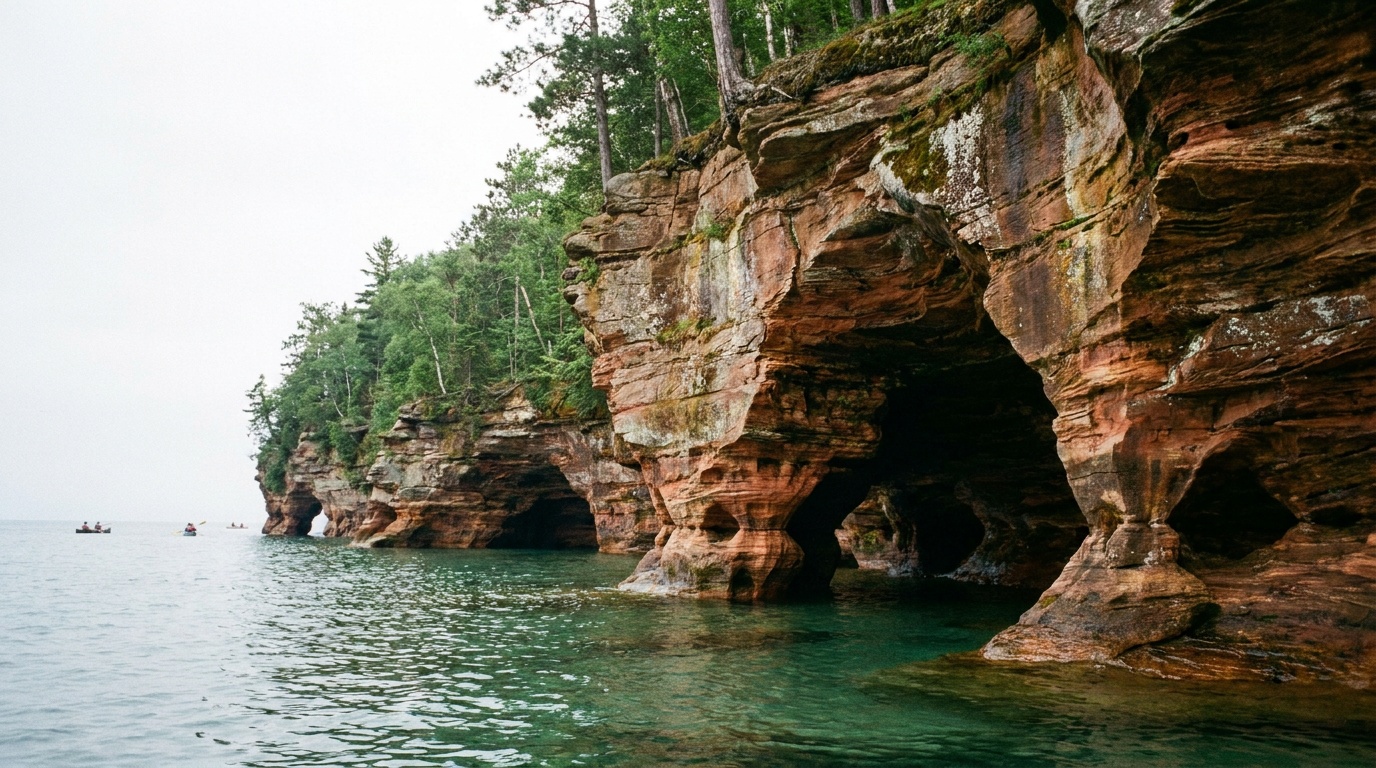
Sandstone caves carved by Lake Superior, seen from the Lakeshore Trail above or by kayak on calm days. Conditions decide whether the water route is safe.
Devils Island and the lighthouses
The archipelago holds the largest collection of lighthouses in the National Park System, several reachable by tour boat or private craft.
Sea kayaking the islands
Island-hopping by kayak is the signature Apostle Islands experience, but Lake Superior demands skill, cold-water gear, and a weather window.
Anchor the day around Mainland Sea Caves at Meyers Beach
Put the access rule first: shuttle, parking, timed-entry, or reservation windows should decide the order of the day. For one day in Apostle Islands National Lakeshore, make Mainland Sea Caves at Meyers Beach the non-negotiable, add Devils Island and the lighthouses only if the first stop runs clean, and keep Sea kayaking the islands as the flexible finish.
- 1Start with Mainland Sea Caves at Meyers Beach: Sandstone caves carved by Lake Superior, seen from the Lakeshore Trail above or by kayak on calm days. Conditions decide whether the water route is safe.
- 2Add Devils Island and the lighthouses: The archipelago holds the largest collection of lighthouses in the National Park System, several reachable by tour boat or private craft.
- 3Use Sea kayaking the islands as the optional finish, not as a reason to rush the whole day.
Where to stay
Bayfield is the gateway town and the hub for the Apostle Islands Cruises tour boat, kayak outfitters, lodging, and the Madeline Island car ferry. Madeline Island, the largest island, sits outside the park boundary and has its own town, lodging, and a state park campground. Inside the national lakeshore, the only camping is backcountry sites on the islands, reached by boat. Base in Bayfield for a first trip, then decide whether to add an island camping night.
Camping reservations
Camping reservations
Island camping is permit-only through Recreation.gov, and you still have to get a boat to the island.
The only camping inside the lakeshore is backcountry sites on the islands. Permits are reserved on Recreation.gov, but a permit is not transportation: you reach the sites by tour boat drop-off, water taxi, or your own kayak or powerboat.
Reviewed June 11, 2026
Booking window
Island camping permits are reserved through Recreation.gov, with individual sites and primitive zones priced per night plus a per-trip reservation fee. Reserve ahead for summer and build in weather flexibility.
- There is no drive-in campground in the national lakeshore; all camping is island backcountry by boat.
- A camping permit does not include transportation. Arrange a tour-boat drop-off, water taxi, or your own craft.
- Lake Superior weather can cancel crossings, so always have a flexible date and a land-based fallback.
- Meyers Beach parking is $5 for vehicles under 20 feet and $8 for larger vehicles.
Where to book or verify
Official NPS page for island sites, zones, permits, and rules.
Island backcountry permits are reserved through Recreation.gov.
The Bayfield tour-boat concessioner for island tours and some camper transport.
Check for federal campground, backcountry, tour, and permit inventory tied to this park.
All island camping requires an advance permit through Recreation.gov.
Campgrounds to know
Island individual sites
Details- Booking
- Reserve on Recreation.gov.
- Season
- Open in the boating season, roughly late spring through fall.
- Sites
- Designated individual campsites on several islands, reached by boat.
- About $15 per night plus a per-trip reservation fee; you must arrange your own boat transport.
Primitive camping zones
Details- Booking
- Reserve on Recreation.gov.
- Season
- Boating season, weather permitting.
- Sites
- Dispersed primitive zones on select islands for experienced backcountry campers.
- For self-sufficient paddlers and boaters comfortable with Lake Superior conditions.
Getting there and practical info
Make the transfer plan before the trail plan.
Weather windows, boat schedules, flight buffers, and backup days shape what is realistic.
Getting there
Get to Apostle Islands National Lakeshore by solving the transfer first.
- Nearest airport
- Duluth International (DLH), about 1.5 hours from Bayfield
- Access rhythm
- Transfer time matters
- Region
- Wisconsin
Arrival note
Bayfield, Wisconsin is the gateway, about 1.5 hours from Duluth.
Transfer plan
From Bayfield you reach the islands by the Apostle Islands Cruises tour boat, a guided or private kayak, or a chartered craft, and you reach Madeline Island by car ferry.
Local movement
The mainland sea caves are reached by driving to Meyers Beach and hiking the cliff-top Lakeshore Trail.
Book ahead
- Rental cars at Duluth International (DLH)Paid link, Economybookings
- Guided tours in Apostle Islands National LakeshorePaid link, Viator
Paid links: we may earn a commission if you book, at no extra cost to you.
Pair this with lodging: the best base is the one that protects the departure window, pickup point, or weather buffer.
Plan your trip
Turn Apostle Islands's conditions into water, pack, and sleep-system decisions.
Build around access
Plan the transfer before the trail list.
Plan your trip
4 quick tools, already seeded for Apostle Islands National Lakeshore. Tune the route, pack weight, weather margin, and overnight setup after the access plan is real.
What to pack
Start with the gear decisions this park changes: footing, weather, camping, and water.
Kit Authority
Apostle Islands National Lakeshore packing list
0 of 20 packed. Check items as you pack, then take this list to the store, trailhead, or campsite.
Pack planning
Decide what Apostle Islands National Lakeshore asks of your kit before you start checking boxes.
Use this as a constraint check while you are still shaping the trip. The active checklist becomes useful once your route, dates, and sleep plan are set.
- First constraintHydration and exposureWater, hat, sunscreen, sunglasses, Navigationmap, downloaded GPS, or a GPS watch, 3 more
- Route realityFooting and tractionHiking boots, Hiking socks, Trekking poles
- Load choicePack and carry systemBackpacking pack
- If overnightSleep and shelterBackpacking tent, Sleeping bag, Sleeping pad, 1 more
Checklist mode
20 items, grouped for the trip you are actually taking.
- Dates and season are set.
- Primary route, campground, or lodge is chosen.
- Water, footwear, and overnight needs are sized.
One researched pick
The first gear decision for Apostle Islands National Lakeshore
A properly fitted paddling PFD is the first purchase to settle before the boat, dry bag, or accessories.
We may earn a commission from links on this page, at no extra cost to you. Product prices and availability are accurate as of the date/time indicated and are subject to change. Any price and availability information displayed on Amazon at the time of purchase will apply to the purchase of this product.
THE PADDLING PICK
Onyx MoveVent Dynamic
Best Overall
Kit Score 8.2/10
$66.32 Price checked Oct 26, 7:39 AM CDT
Best for: Kayakers and paddleboarders who want the vest they will actually keep on, at a family-friendly price.
- Mesh lower back works with kayak seats and SUP kneeling instead of riding up
- Sizing runs athletic; broad-chested paddlers should size up
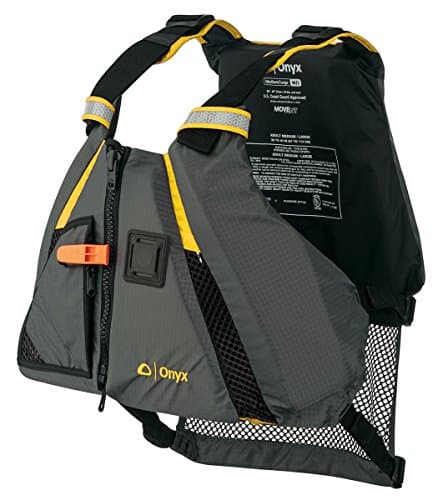
- Approval
- USCG Type III
- Back
- Mesh lower back, sits above kayak seats
- Ventilation
- Vented chest and shoulder channels
- Pockets
- Zippered front pocket, lash tab
- Sizing
- XS/S through XL/2XL, women's cut available
About this pick
The MoveVent Dynamic is the vest that solved the real PFD problem: people own one and leave it in the car. The mesh lower back sits above a kayak or SUP seat, the arm cuts clear a full paddle stroke, and the venting keeps it tolerable in July. A life jacket only works if you wear it, and this is the one people wear.
Strengths
- Mesh lower back works with kayak seats and SUP kneeling instead of riding up
- Ventilated panels keep it wearable through a hot afternoon
- USCG Type III approval at a price that outfits a whole family without pain
Weaknesses
- Sizing runs athletic; broad-chested paddlers should size up
- Single front pocket is tight for a large phone in a pouch
Kit Score breakdown
Gear for Apostle Islands
The buying guides that match what Apostle Islands asks of your kit, with our current top picks across budget and use case.
Can you photograph here? Permit and drone rules
Wisconsin relaunched a state film office (Film Wisconsin) in 2026 for incentives, not permits; the DNR's $50 per-property Commercial Use Permit is what photographers actually encounter in state parks.
- Permit
- Usually fine for personal shoots; commercial or large productions can need a permit
- Drones
- Legal under FAA rules; commercial drone work requires FAA Part 107
- Land
- Yes: photographing people and property visible from public space is legal in the US
From our photography sister site, Aperture Authority. Verified 2026-07-01.
Frequently asked questions
Is there an entrance fee at Apostle Islands National Lakeshore?
No. There is no entrance fee. Meyers Beach parking costs $5 to $8 depending on vehicle size, and camping, docking, and special-use activities carry their own permit fees.
How do you camp on the Apostle Islands?
All camping is on the islands and requires an advance permit through Recreation.gov. A permit does not include a boat, so you must arrange a tour-boat drop-off, a water taxi, or your own kayak or powerboat to reach the site.
Can you see the sea caves without a boat?
Yes. The mainland sea caves at Meyers Beach can be viewed from the cliff-top Lakeshore Trail, about a 4-mile round trip. Kayaking into the caves is only safe in calm conditions and is best done with a guide.
When can you see the Apostle Islands ice caves?
The famous mainland ice caves only form in rare years when the lake ice is thick and stable enough for the NPS to declare safe access. There is no guarantee in any given winter; always follow official ice-safety updates.