When to go
Weather, crowds, and what the season changes about the trip.
Spring
Muddy season through May; trails are soft and upper alpine zones remain snowy into late May and sometimes June.
Pack Waterproof boots, gaiters, layers, and patience for slow going in the high mud and snow.
Summer
Warm lower slopes, cool and often windy above treeline; afternoon thunderstorms build quickly on the summit.
Pack Rain shell, extra warm layer for the exposed summit, water, and an early start to beat afternoon lightning.
Fall
Crisp and spectacular from mid-September through mid-October, with hardwood color visible from the summit.
Pack Warm insulating layer, wind shell, traction for early-season ice above treeline, and a camera.
Winter
Full alpine conditions above treeline: deep snow, ice, and wind. A backcountry winter objective requiring crampons and ice axe.
Pack Full mountaineering cold-weather kit, crampons, ice axe, navigation tools, and summit-or-turn-back discipline.
Top things to do
Burrows Trail to the summit
The most popular route, climbing the northwest flank through UVM research forest where early acid-rain studies took place, meeting the Long Trail at the Hut Clearing 2.1 miles up, then 0.3 miles to the 4,083-foot open summit.
Monroe Trail from North Duxbury
The eastern approach, longer and more gradual than Burrows, starting at the end of Camel's Hump Road in Duxbury and joining the Long Trail near the summit. Quieter parking area than the Burrows trailhead.
The Long Trail ridgeline and alpine zone
Above treeline, Camel's Hump exposes a fragile arctic-alpine zone with rare plants found nowhere else in Vermont. The Long Trail runs through the summit cone; staying on marked rock cairns protects the vegetation.
Anchor the day around Burrows Trail to the summit
Put the access rule first: shuttle, parking, timed-entry, or reservation windows should decide the order of the day. For one day in Camel's Hump State Park, make Burrows Trail to the summit the non-negotiable, add Monroe Trail from North Duxbury only if the first stop runs clean, and keep The Long Trail ridgeline and alpine zone as the flexible finish.
- 1Start with Burrows Trail to the summit: The most popular route, climbing the northwest flank through UVM research forest where early acid-rain studies took place, meeting the Long Trail at the Hut Clearing.
- 2Add Monroe Trail from North Duxbury: The eastern approach, longer and more gradual than Burrows, starting at the end of Camel's Hump Road in Duxbury and joining the Long Trail near the summit. Quieter.
- 3Use The Long Trail ridgeline and alpine zone as the optional finish, not as a reason to rush the whole day.
Plan your trip
Turn Camel's Hump's conditions into water, pack, and sleep-system decisions.
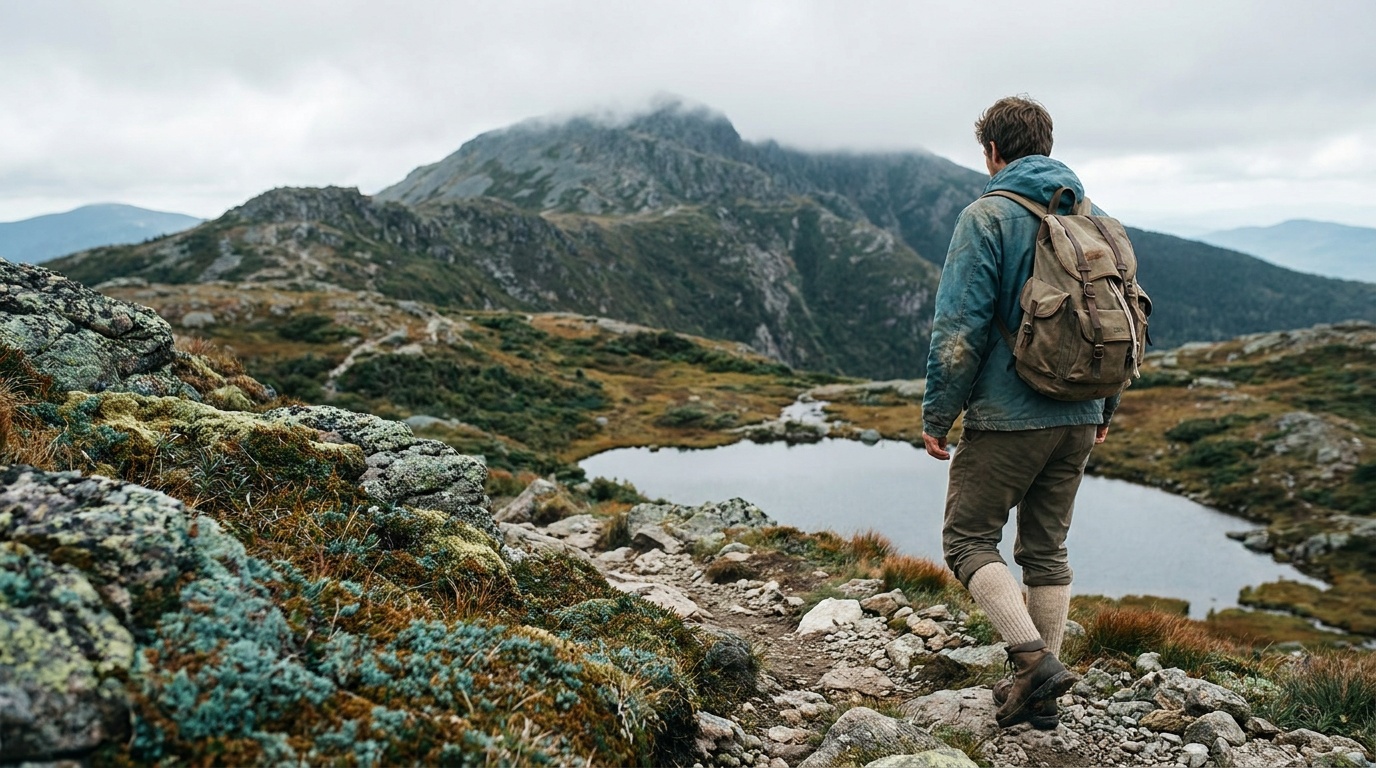
Build around conditions
Let season, elevation, and weather set the plan.
Plan your trip
4 quick tools, already seeded for Camel's Hump State Park. Tune the numbers around temperature swings, footing, layers, and how much margin the route needs.
What to pack
Start with the gear decisions this park changes: footing, weather, camping, and water.
Kit Authority
Camel's Hump State Park packing list
0 of 21 packed. Check items as you pack, then take this list to the store, trailhead, or campsite.
Pack planning
Decide what Camel's Hump State Park asks of your kit before you start checking boxes.
Use this as a constraint check while you are still shaping the trip. The active checklist becomes useful once your route, dates, and sleep plan are set.
- First constraintHydration and exposureWater, hat, sunscreen, sunglasses, Navigationmap, downloaded GPS, or a GPS watch, 3 more
- Route realityFooting and tractionHiking boots, Hiking socks, Trekking poles
- Load choicePack and carry systemBackpacking pack
- If overnightSleep and shelterBackpacking tent, Sleeping bag, Sleeping pad, 1 more
Checklist mode
21 items, grouped for the trip you are actually taking.
- Dates and season are set.
- Primary route, campground, or lodge is chosen.
- Water, footwear, and overnight needs are sized.
One researched pick
The first gear decision for Camel's Hump
A stable daypack is the one purchase that organizes water, layers, food, first aid, and the small safety margin.
We may earn a commission from links on this page, at no extra cost to you.
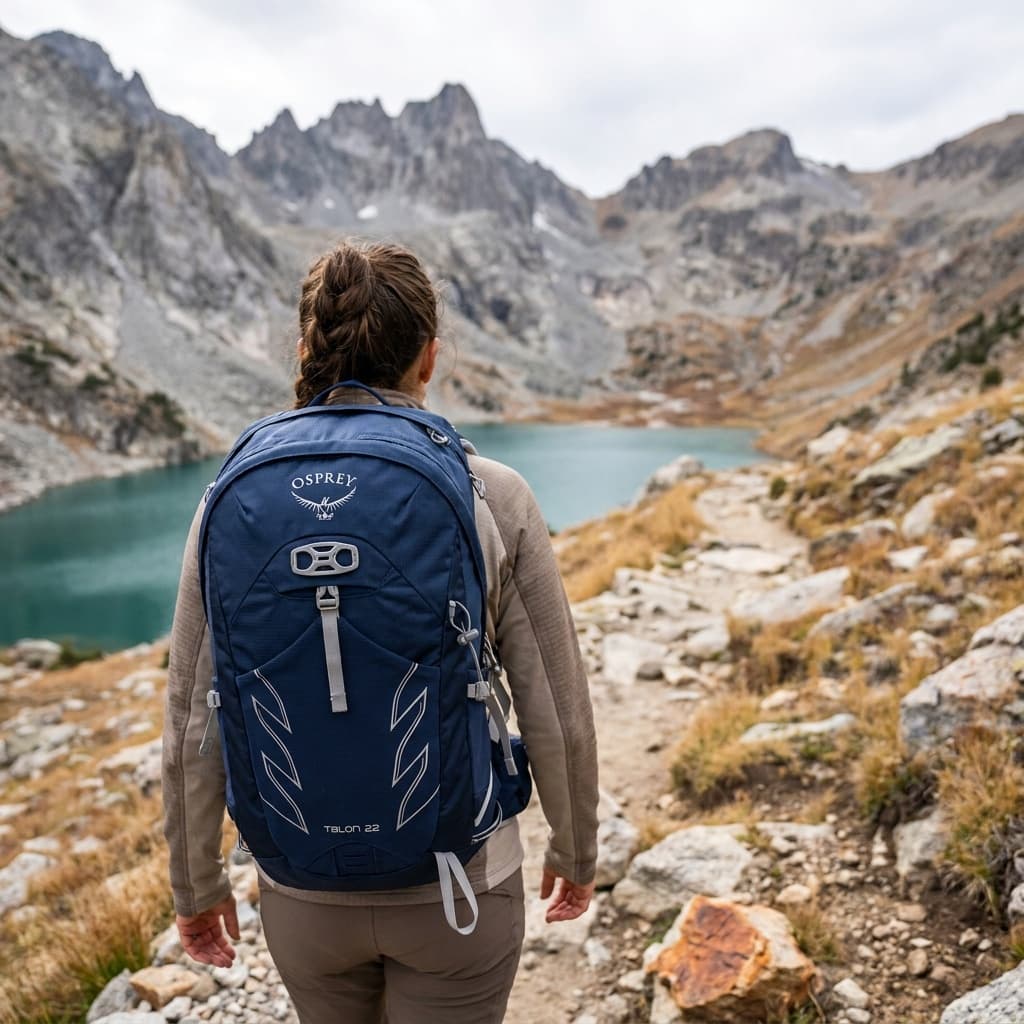
THE DAY-HIKE PICK
Osprey Talon 22
- Volume
- 22 L
- Weight
- 2 lb 1 oz (945 g)
- Back Panel
- AirScape foam with ventilation channels
- Hipbelt Pockets
- 2 zippered
- Hydration
- Compatible up to 3 L reservoir (sold separately)
- Warranty
- All Mighty Guarantee (lifetime repair or replace)
The Talon 22 is the daypack you see on the trail more than any other for good reason: it packs in a padded hipbelt, adjustable torso harness, and dual hipbelt pockets into a 22-liter package that handles loads up to 20 lb without complaint. Owners across hundreds of Amazon ratings consistently cite its adjustability and durability as standouts.
- Adjustable torso fit covers a wide range of body sizes
- Padded hipbelt and dual hipbelt pockets at this size are rare
- At 2 lb 1 oz it runs heavier than ultralight rivals for the same volume
Best for
Hikers who want a proven all-around daypack with solid load support, plenty of adjustment, and a warranty they can actually use.
Gear for Camel's Hump
The buying guides that match what Camel's Hump asks of your kit, with our current top picks across budget and use case.
Where to stay
Backcountry overnight options are the Montclair Glen Lodge and Dean Shelter, both GMC-supervised from May through October with a 2-night limit and a caretaker fee, and the Hump Brook Tenting Area on the eastern approach. Reservations are not accepted at GMC facilities; it is first-come. For roofed lodging, Waterbury, Stowe, and Burlington are the nearest towns with hotels, inns, and full services.
Camping reservations
Camping reservations
Backcountry only: GMC shelters and tenting on the Long Trail, no reservations accepted.
Camel's Hump has no drive-in campground. Overnight options are limited to the Green Mountain Club-supervised shelters and the Hump Brook Tenting Area on the backcountry trail network, with a 2-night stay limit during the supervised season.
Reviewed June 11, 2026
Booking window
No advance reservations accepted at GMC shelters. First-come, first-served during the supervised season (roughly May through October). GMC caretakers are present and collect a nightly fee.
- No reservations are accepted at Montclair Glen Lodge, Dean Shelter, or Hump Brook Tenting Area.
- A GMC caretaker fee of $5 to $10 per person per night applies at supervised backcountry sites.
- The 2-night stay limit is enforced during the GMC-supervised season.
Where to book or verify
Official Vermont State Parks page with trail maps, park rules, and access information.
GMC trail guide for the Long Trail, Monroe, and Burrows routes including shelter details.
Check for federal campground, backcountry, tour, and permit inventory tied to this park.
Campgrounds to know
Montclair Glen Lodge and Dean Shelter (GMC)
Details- Booking
- No reservations; first-come, first-served during GMC-supervised season.
- Season
- Supervised by GMC caretakers roughly May through October.
- Sites
- Backcountry log shelter (Montclair Glen Lodge) and lean-to shelter (Dean Shelter) on the Long Trail.
- The classic overnight option for Camel's Hump; arrive early on summer and fall weekends.
Hump Brook Tenting Area
Details- Booking
- No reservations; first-come, first-served.
- Season
- Open year-round; GMC caretaker supervision in season.
- Sites
- Designated tenting area on the Monroe Trail approach, eastern side of the mountain.
- The quieter eastern-approach camping option, farther from the Burrows trailhead crowds.
Getting there and practical info
Plan the handoff from arrival to shuttle.
Parking, pedestrian entrances, and shuttle timing decide how calmly the first morning starts.
Getting there
Get to Camel's Hump State Park, then remove the first-morning friction.
- Access rhythm
- Plan the last mile
- Region
- Vermont
Car strategy
The Burrows trailhead is off Camel's Hump Road in Huntington, reached from Interstate 89 Exit 11 near Richmond.
Car strategy
The Monroe trailhead starts at the end of Camel's Hump Road in North Duxbury, accessed from Interstate 89 Exit 10 near Waterbury.
Car strategy
Both require a car; Burlington is about 25 miles west and Waterbury is the closest town with services.
Pair this with lodging: sleep where the park transfer is simple, especially if your route needs an early start.
Can you photograph here? Permit and drone rules
No state film office and no general filming permit; you deal with town clerks, and the Department of Forests, Parks and Recreation permits commercial use of state lands.
- Permit
- Usually fine for personal shoots; commercial or large productions can need a permit
- Drones
- Legal under FAA rules; commercial drone work requires FAA Part 107
- Land
- Yes: photographing people and property visible from public space is legal in the US
From our photography sister site, Aperture Authority. Verified 2026-07-01.
Frequently asked questions
Is Camel's Hump hard to hike?
It is a strenuous day hike with significant elevation gain: about 2,400 feet over 4.8 miles round trip via Burrows, or longer via Monroe. The upper section is exposed above treeline and requires good footwear and weather awareness, not technical climbing.
What is the best trailhead for Camel's Hump?
Most hikers use the Burrows trailhead in Huntington, which is shorter to the summit. On busy summer weekends the parking lot fills by 9 a.m., so consider an early start or the Monroe Trail from North Duxbury, which is longer but quieter.
Can you camp on Camel's Hump?
Yes, but only in designated backcountry facilities: Montclair Glen Lodge, Dean Shelter, and the Hump Brook Tenting Area, all managed by the Green Mountain Club. No reservations are accepted; it is first-come with a 2-night limit and a nightly caretaker fee.
Why is Camel's Hump significant in Vermont?
It is the only undeveloped peak above 4,000 feet in Vermont and carries a fragile arctic-alpine zone at the summit that is among the rarest ecosystems in New England. Its silhouette is one of the most recognizable in the state.