When to go
Weather, crowds, and what the season changes about the trip.
Spring
Cool and windy in March and April, warming in May. Northbound warblers, shorebirds, and horseshoe crabs stack up as temperatures rise.
Pack Binoculars, a wind layer for the exposed beach section, and waterproof footwear for the wetland trails.
Summer
Warm and humid, with sea breezes moderating the heat. The lighthouse and beach attract casual visitors, while serious birders focus on shorebird staging.
Pack Sun protection, light layers for morning beach walks, and insect repellent for the pond trails.
Fall
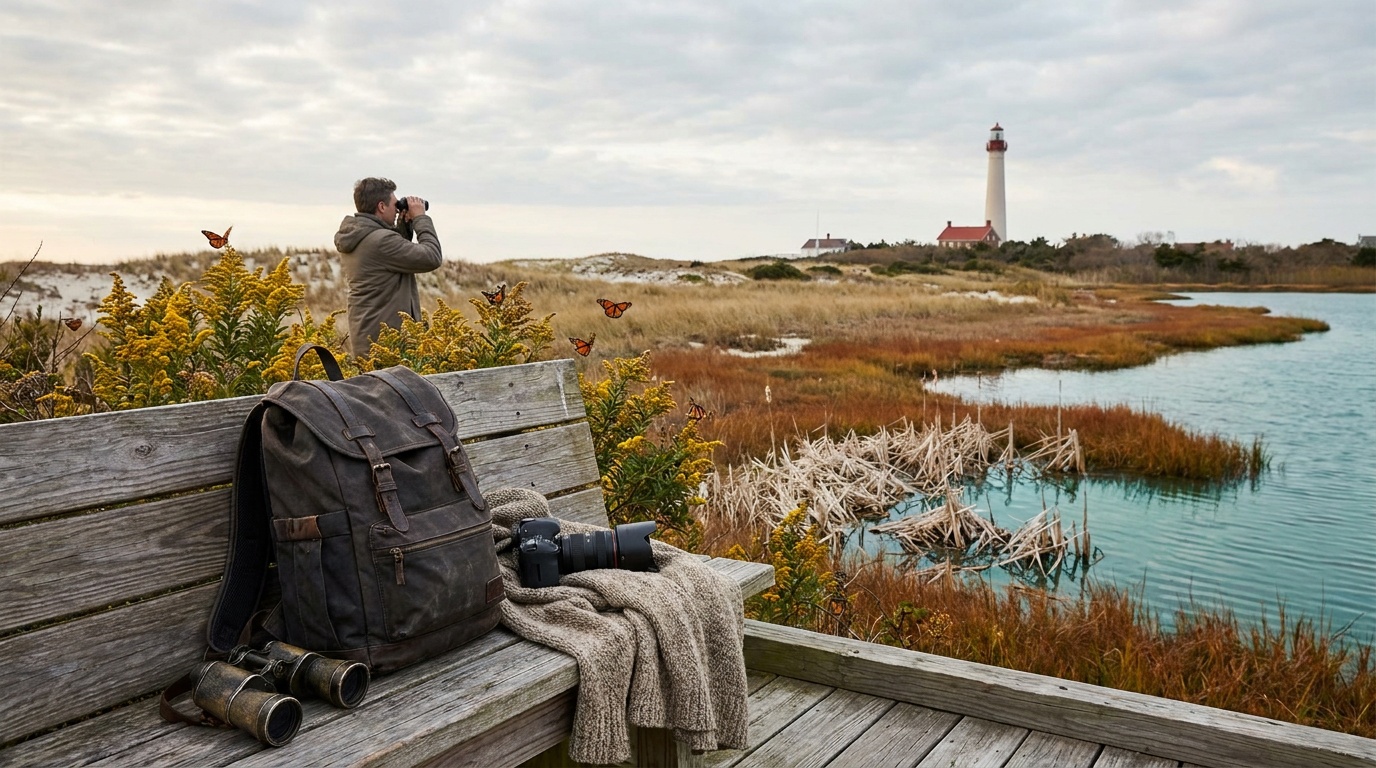
The reason to come. September through November brings crisp air, northwest winds that funnel thousands of raptors and songbirds past the hawk watch, and monarch butterflies covering the dunes.
Pack Binoculars and a field guide, layers for long morning sits at the hawk watch platform, and a camera for the lighthouse and monarch roosts.
Winter
Cold and often windy, but winter birding for ducks, loons, and scoters offshore can be excellent. The park is quiet and the lighthouse remains open on weekends.
Pack Heavy insulation, a scope for offshore waterbird scanning, and waterproof boots for wet trail sections.
Top things to do
Cape May Hawk Watch platform
One of the most famous hawk-counting stations in North America, staffed by the Cape May Bird Observatory from September 1 through November. Nearly 20 raptor species are recorded, including sharp-shinned hawks and peregrine falcons by the thousands.
Cape May Lighthouse climb
The 1859 lighthouse stands 157 feet tall and is still an active aid to navigation. Visitors who climb the 199 steps earn a panoramic view over the Cape May Peninsula, Delaware Bay, and the Atlantic.
Duck Pond, Plover, and Monarch trails
A network of short, flat trails looping through freshwater ponds, dunes, maritime forest, and beach habitat totaling about 2 miles. The Monarch Trail is the best route during the September butterfly migration.
Lighthouse Pond shorebird and waterfowl viewing
The two Lighthouse Ponds in the park's interior draw a remarkable variety of shorebirds in August and September, and wintering ducks from October onward. An accessible 0.5-mile Red Trail circles the west pond.
Anchor the day around Cape May Hawk Watch platform
Lock the boat, ferry, tide, or water access first, then fit the route list around that schedule. For one day in Cape May Point State Park, make Cape May Hawk Watch platform the non-negotiable, add Cape May Lighthouse climb only if the first stop runs clean, and keep Duck Pond, Plover, and Monarch trails as the flexible finish.
- 1Start with Cape May Hawk Watch platform: One of the most famous hawk-counting stations in North America, staffed by the Cape May Bird Observatory from September 1 through November. Nearly 20 raptor species.
- 2Add Cape May Lighthouse climb: The 1859 lighthouse stands 157 feet tall and is still an active aid to navigation. Visitors who climb the 199 steps earn a panoramic view over the Cape May.
- 3Use Duck Pond, Plover, and Monarch trails as the optional finish, not as a reason to rush the whole day.
Plan your trip
Turn Cape May Point's conditions into water, pack, and sleep-system decisions.
Build around access
Plan the transfer before the trail list.
Plan your trip
2 quick tools, already seeded for Cape May Point State Park. Tune the route, pack weight, weather margin, and overnight setup after the access plan is real.
What to pack
Start with the gear decisions this park changes: footing, weather, camping, and water.
Kit Authority
Cape May Point State Park packing list
0 of 17 packed. Check items as you pack, then take this list to the store, trailhead, or campsite.
Pack planning
Decide what Cape May Point State Park asks of your kit before you start checking boxes.
Use this as a constraint check while you are still shaping the trip. The active checklist becomes useful once your route, dates, and sleep plan are set.
- First constraintHydration and exposureWater, Electrolyte mix, hat, sunscreen, sunglasses, 4 more
- Route realityFooting and tractionHiking boots, Hiking socks, Trekking poles
- Load choicePack and carry systemDaypack
- Season checkLayers for conditionsMoisture-wicking base layers, Rain jacket, Insulated jacket, 2 more
Checklist mode
17 items, grouped for the trip you are actually taking.
- Dates and season are set.
- Primary route, campground, or lodge is chosen.
- Water, footwear, and overnight needs are sized.
One researched pick
The first gear decision for Cape May Point
A stable daypack is the one purchase that organizes water, layers, food, first aid, and the small safety margin.
We may earn a commission from links on this page, at no extra cost to you.
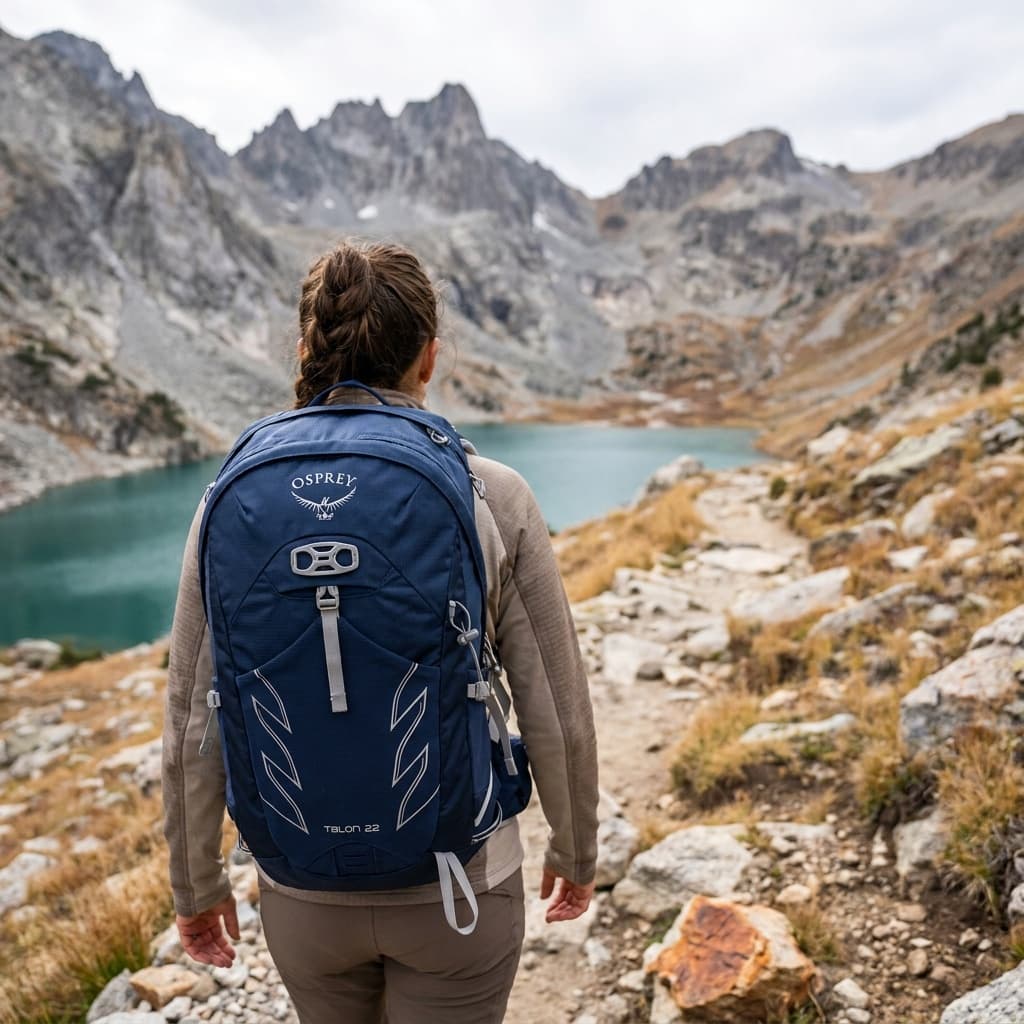
THE DAY-HIKE PICK
Osprey Talon 22
- Volume
- 22 L
- Weight
- 2 lb 1 oz (945 g)
- Back Panel
- AirScape foam with ventilation channels
- Hipbelt Pockets
- 2 zippered
- Hydration
- Compatible up to 3 L reservoir (sold separately)
- Warranty
- All Mighty Guarantee (lifetime repair or replace)
The Talon 22 is the daypack you see on the trail more than any other for good reason: it packs in a padded hipbelt, adjustable torso harness, and dual hipbelt pockets into a 22-liter package that handles loads up to 20 lb without complaint. Owners across hundreds of Amazon ratings consistently cite its adjustability and durability as standouts.
- Adjustable torso fit covers a wide range of body sizes
- Padded hipbelt and dual hipbelt pockets at this size are rare
- At 2 lb 1 oz it runs heavier than ultralight rivals for the same volume
Best for
Hikers who want a proven all-around daypack with solid load support, plenty of adjustment, and a warranty they can actually use.
Gear for Cape May Point
The buying guides that match what Cape May Point asks of your kit, with our current top picks across budget and use case.
Where to stay
Cape May Point State Park has no camping. The town of Cape May, a short drive east, offers a full range of Victorian inns, B&Bs, and hotels. For camping, the nearest options are at Belleplain State Forest about 25 miles north, with reservable sites through camping.nj.gov.
Camping reservations
Camping reservations
Cape May Point is day-use only; camp at Belleplain State Forest.
The park has no campground. Day visitors have access from dawn to dusk. For an overnight base on the Cape May peninsula, Belleplain State Forest to the north is the nearest state-park camping option.
Reviewed June 11, 2026
Booking window
New Jersey State Parks reservations open up to 11 months in advance at camping.nj.gov.
- Cape May Point State Park is day-use only with free entry and no camping.
- Belleplain State Forest (about 25 miles north) is the nearest NJ state park campground.
- The town of Cape May has abundant inn and hotel lodging for non-campers.
Where to book or verify
Book Belleplain State Forest and other NJ state park campgrounds here.
Trail maps, hawk watch schedule, lighthouse info, and park hours.
Check for federal campground, backcountry, tour, and permit inventory tied to this park.
Campgrounds to know
No campground at Cape May Point (day-use only)
Details- Nearest state-park camping is at Belleplain State Forest via camping.nj.gov.
Getting there and practical info
Make the transfer plan before the trail plan.
Weather windows, boat schedules, flight buffers, and backup days shape what is realistic.
Getting there
Get to Cape May Point State Park by solving the transfer first.
- Access rhythm
- Transfer time matters
- Region
- New Jersey
Arrival note
Cape May Point State Park is at the southern tip of New Jersey, about 3 miles west of the town of Cape May on Lighthouse Avenue.
Access note
It is approximately 160 miles from Philadelphia and 190 miles from New York City.
Transfer plan
The Cape May-Lewes Ferry crosses Delaware Bay nearby for visitors approaching from the south.
Pair this with lodging: the best base is the one that protects the departure window, pickup point, or weather buffer.
Can you photograph here? Permit and drone rules
New Jersey permitting is municipal; the state film commission smooths the path, and state parks require a special use permit with a long 90-day lead time.
- Permit
- Usually fine for personal shoots; commercial or large productions can need a permit
- Drones
- Commercial drone work requires FAA Part 107
- Land
- Yes: you can photograph what is visible from public space in the US
From our photography sister site, Aperture Authority. Verified 2026-07-01.
Frequently asked questions
When is the best time for hawk watching at Cape May Point?
Mid-September through October is the peak, especially on days after northwest winds. Sharp-shinned hawks, Cooper's hawks, and peregrine falcons move through in large numbers. The Cape May Bird Observatory staffs the platform daily from September 1 through November.
Is there a fee to enter Cape May Point State Park?
No. Day-use entry to the park is free. Climbing the Cape May Lighthouse costs a small admission fee charged by the Mid-Atlantic Center for the Arts, which manages the lighthouse.
Can you see monarch butterflies at Cape May Point?
Yes. September is the peak, when monarchs congregate in the dunes and on goldenrod along the Monarch Trail before crossing Delaware Bay. Cape May is one of the most reliable monarch staging areas on the East Coast.
Is there camping at Cape May Point State Park?
No. The park is day-use only. For overnight stays, the town of Cape May has hotels and inns, and Belleplain State Forest about 25 miles north has reservable campsites through camping.nj.gov.