When to go
Weather, crowds, and what the season changes about the trip.
Spring
Cool and often wet near Lake Superior, with sites opening as the season starts in late May.
Pack Warm rain layer, insect repellent, and footwear for muddy trails.
Summer
Mild and pleasant by the lake, with the depot staffed and trails in full use.
Pack Layers for cool lake breezes, bug spray, and water for the portage trail.
Fall
Crisp days, turning color, and quieter trails as the staffed season winds down.
Pack Warm layers, rain shell, and headlamp for shorter days.
Winter
Cold and snowy, with the heritage center open but the depot largely closed.
Pack Full winter kit and snowshoes or skis if exploring the trail.
Top things to do
The reconstructed depot and stockade
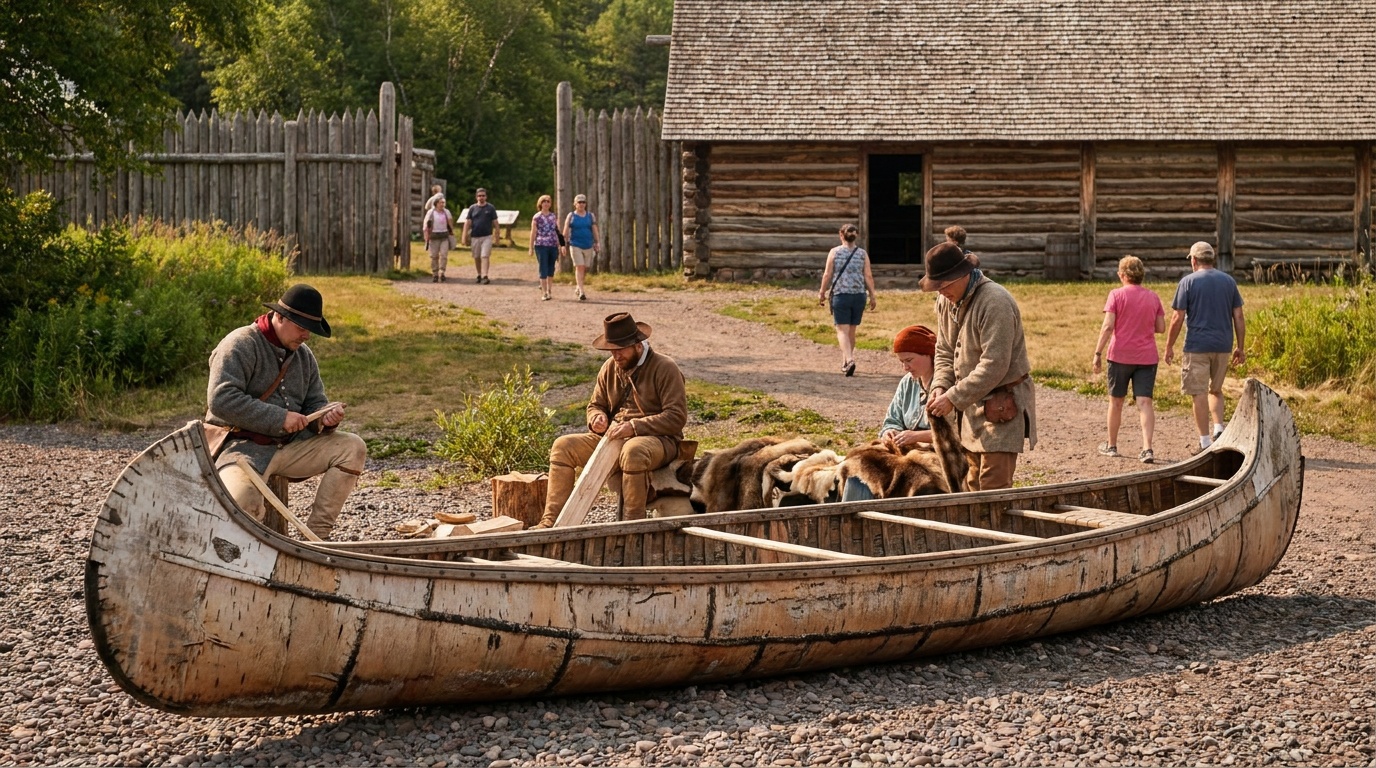
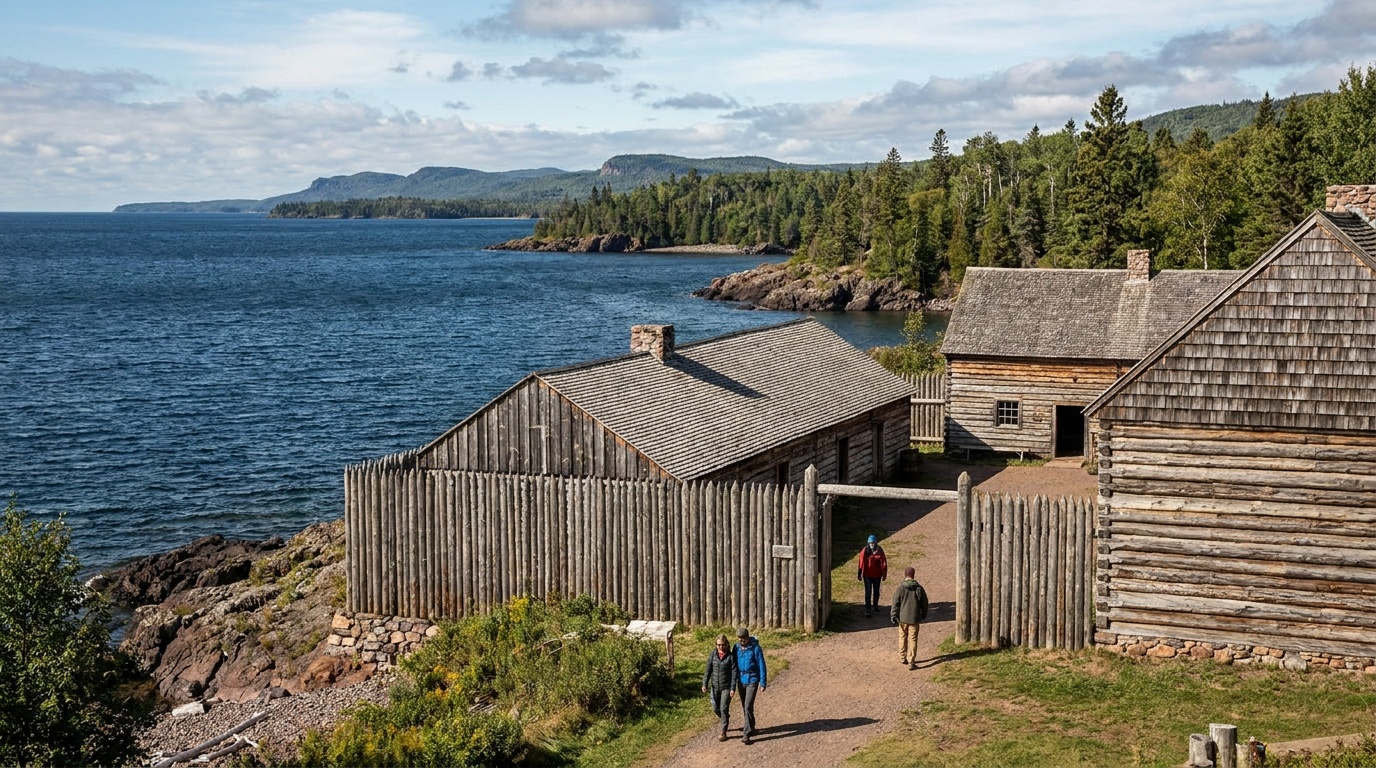
A faithful reconstruction of the North West Company's Lake Superior fur-trade depot, with the great hall, kitchen, canoe warehouse, and stockade staffed by costumed interpreters in summer.
Mount Rose Trail
A short, steep paved-and-stone trail to an overlook above the depot and Grand Portage Bay, the best quick view of the site and Lake Superior.
The Grand Portage trail to Fort Charlotte
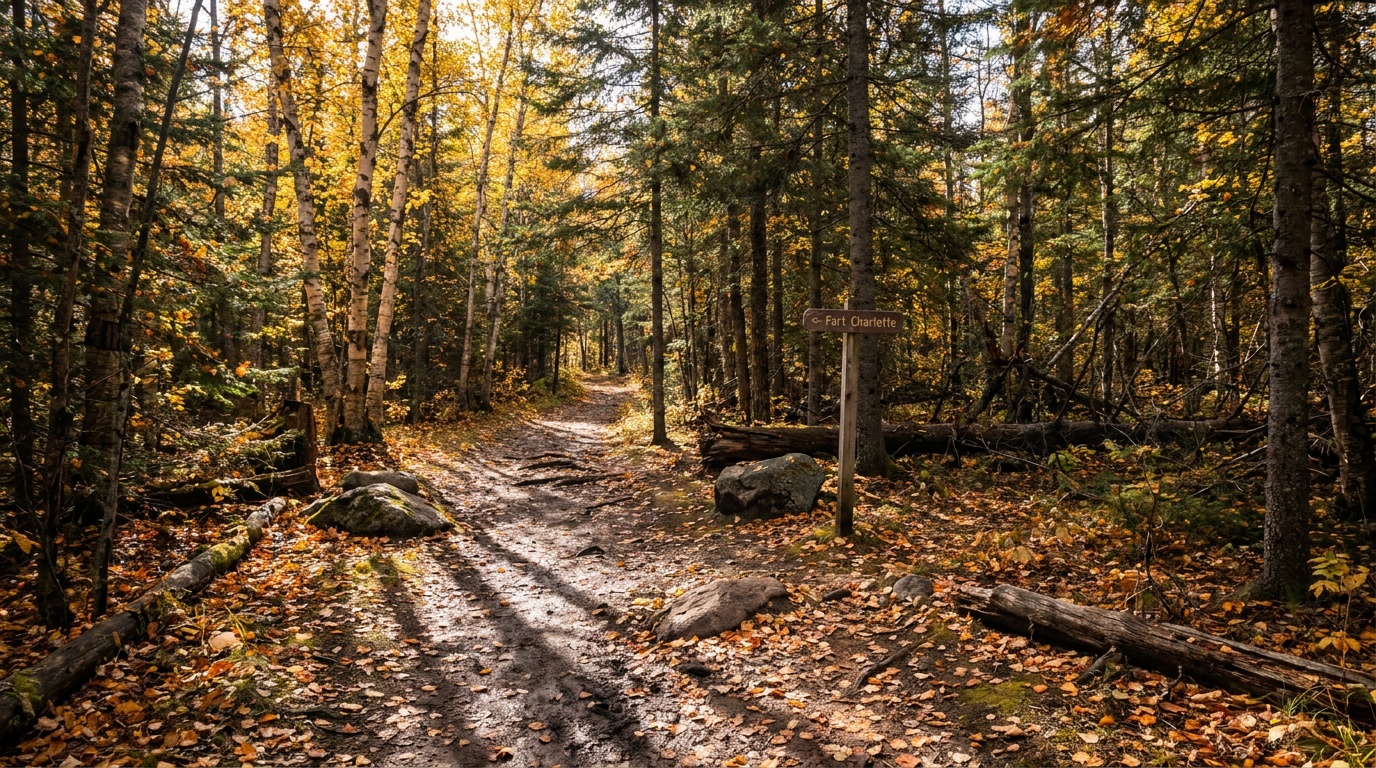
The historic 8.5-mile portage trail that gives the monument its name, carrying voyageurs around the falls of the Pigeon River to a backcountry site at Fort Charlotte.
Make The reconstructed depot and stockade the timed anchor
Put the timed or highest-demand stop first, then keep the rest of the day close and low-friction. For one day in Grand Portage National Monument, time The reconstructed depot and stockade first, then keep Mount Rose Trail and The Grand Portage trail to Fort Charlotte close enough that the visit still feels relaxed.
- 1Start with The reconstructed depot and stockade: A faithful reconstruction of the North West Company's Lake Superior fur-trade depot, with the great hall, kitchen, canoe warehouse, and stockade staffed by costumed.
- 2Add Mount Rose Trail: A short, steep paved-and-stone trail to an overlook above the depot and Grand Portage Bay, the best quick view of the site and Lake Superior.
- 3Use The Grand Portage trail to Fort Charlotte as the slower finish before leaving the area.
Where to stay
There is no lodging inside the monument, but the Grand Portage Lodge and Casino, run by the Grand Portage Band of Lake Superior Chippewa, sits nearby and is the closest hotel. Backcountry camping is available at Fort Charlotte, at the inland end of the historic portage trail, by free permit. The town of Grand Marais, about 40 minutes southwest along the North Shore, has the broadest lodging, food, and fuel. For developed camping, nearby Judge C. R. Magney State Park and other North Shore state parks are the closest options.
Camping reservations
Camping reservations
No developed camping in the monument, but free backcountry sites sit at Fort Charlotte.
Grand Portage is free to enter and has no developed campground, but backcountry sites at Fort Charlotte, reached by the historic portage trail, are available by free permit. The main planning hook is the staffed summer season at the depot.
Reviewed June 11, 2026
Booking window
No entrance fee. The depot and exhibits are staffed roughly late May to early September. Fort Charlotte backcountry camping requires a free permit from the monument.
- The reconstructed depot and exhibits are fully staffed only in the summer season; the heritage center has longer hours.
- Backcountry camping is at Fort Charlotte, at the inland end of the 8.5-mile portage trail, by free permit.
- There is no developed campground inside the monument; the nearest developed camping is at North Shore state parks.
Where to book or verify
Official NPS page with hours, season, the depot, and trail information.
Official NPS page confirming the monument is free to enter.
Check for federal campground, backcountry, tour, and permit inventory tied to this park.
Campgrounds to know
Fort Charlotte backcountry sites
Details- Season
- Snow-free season, generally late spring through fall.
- Sites
- Backcountry tent sites at the inland end of the historic Grand Portage trail.
- The only camping tied to the monument, reached on foot by the 8.5-mile portage trail or by canoe from the Pigeon River.
North Shore state parks (nearby)
Details- Season
- Generally open spring through fall, weather dependent.
- Sites
- Developed tent and RV sites at parks like Judge C. R. Magney along the North Shore.
- The closest developed camping, since the monument has no developed campground.
Getting there and practical info
Build the arrival around the reservation.
Entry windows, permit pickups, and drive time should be checked before the itinerary gets crowded.
Getting there
Get to Grand Portage National Monument with the required window already protected.
- Nearest airport
- Thunder Bay (YQT) about 50 minutes; Duluth (DLH) about 3 hours
- Access rhythm
- Plan the last mile
- Region
- Minnesota
Arrival note
Grand Portage sits at the far northeast tip of Minnesota, off State Highway 61 near the Canadian border and just south of the Pigeon River.
Fly in
From Grand Marais it is about 40 minutes northeast along the North Shore, and Thunder Bay, Ontario, is the nearest airport at about 50 minutes north.
Local movement
Duluth is roughly three hours south.
Book ahead
- Rental cars at Thunder Bay (YQT)Paid link, Economybookings
- Guided tours in Grand Portage National MonumentPaid link, Viator
Paid links: we may earn a commission if you book, at no extra cost to you.
Pair this with lodging: choose the base that keeps the reservation or permit pickup from becoming the hardest part of the day.
Plan your trip
Turn Grand Portage's conditions into water, pack, and sleep-system decisions.
Build around conditions
Let season, elevation, and weather set the plan.
Plan your trip
4 quick tools, already seeded for Grand Portage National Monument. Tune the numbers around temperature swings, footing, layers, and how much margin the route needs.
What to pack
Start with the gear decisions this park changes: footing, weather, camping, and water.
Kit Authority
Grand Portage National Monument packing list
0 of 22 packed. Check items as you pack, then take this list to the store, trailhead, or campsite.
Pack planning
Decide what Grand Portage National Monument asks of your kit before you start checking boxes.
Use this as a constraint check while you are still shaping the trip. The active checklist becomes useful once your route, dates, and sleep plan are set.
- First constraintHydration and exposureWater, hat, sunscreen, sunglasses, Navigationmap, downloaded GPS, or a GPS watch, 3 more
- Route realityFooting and tractionHiking boots, Hiking socks, Trekking poles
- Load choicePack and carry systemBackpacking pack
- If overnightSleep and shelterBackpacking tent, Sleeping bag, Sleeping pad, 1 more
Checklist mode
22 items, grouped for the trip you are actually taking.
- Dates and season are set.
- Primary route, campground, or lodge is chosen.
- Water, footwear, and overnight needs are sized.
One researched pick
The first gear decision for Grand Portage National Monument
A stable daypack is the one purchase that organizes water, layers, food, first aid, and the small safety margin.
We may earn a commission from links on this page, at no extra cost to you. Product prices and availability are accurate as of the date/time indicated and are subject to change. Any price and availability information displayed on Amazon at the time of purchase will apply to the purchase of this product.
THE DAY-HIKE PICK
Osprey Talon 22
Best Overall
Kit Score 8.6/10
$169.95 Price checked Oct 26, 7:39 AM CDT
Best for: Hikers who want a proven all-around daypack with solid load support, plenty of adjustment, and a warranty they can actually use.
- Adjustable torso fit covers a wide range of body sizes
- At 2 lb 1 oz it runs heavier than ultralight rivals for the same volume
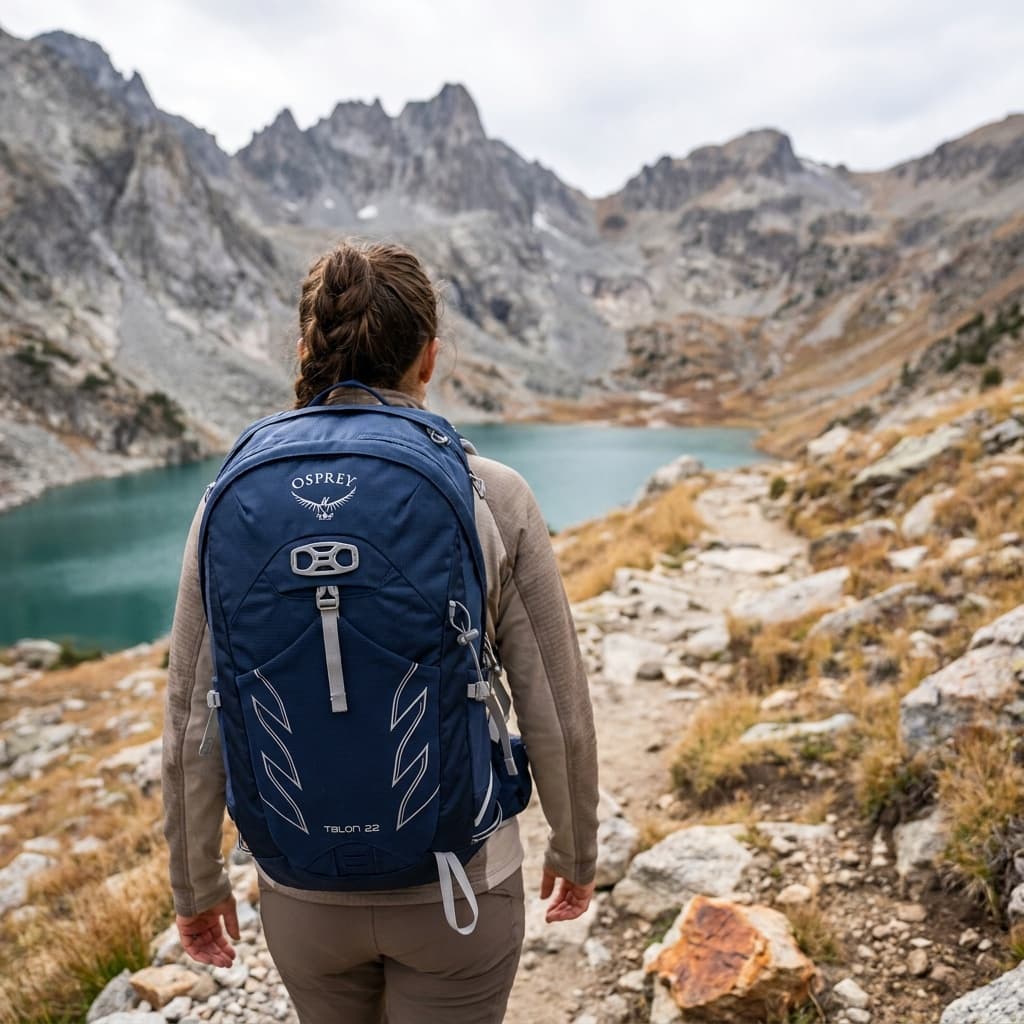
- Volume
- 22 L
- Weight
- 2 lb 1 oz (945 g)
- Back Panel
- AirScape foam with ventilation channels
- Hipbelt Pockets
- 2 zippered
- Hydration
- Compatible up to 3 L reservoir (sold separately)
- Warranty
- All Mighty Guarantee (lifetime repair or replace)
About this pick
The Talon 22 is the daypack you see on the trail more than any other for good reason: it packs in a padded hipbelt, adjustable torso harness, and dual hipbelt pockets into a 22-liter package that handles loads up to 20 lb without complaint. Owners across hundreds of Amazon ratings consistently cite its adjustability and durability as standouts.
Strengths
- Adjustable torso fit covers a wide range of body sizes
- Padded hipbelt and dual hipbelt pockets at this size are rare
- Osprey lifetime warranty backs years of hard use
Weaknesses
- At 2 lb 1 oz it runs heavier than ultralight rivals for the same volume
- AirScape back panel ventilation is functional but not class-leading compared to suspended-mesh designs
Kit Score breakdown
Gear for Grand Portage
The buying guides that match what Grand Portage asks of your kit, with our current top picks across budget and use case.
Can you photograph here? Permit and drone rules
Minnesota permits locally with a film-friendly posture; DNR state parks require permits for advertising and staged shoots, and the state adds its own MnDOT drone registration on top of Part 107.
- Permit
- Usually fine for personal shoots; commercial or large productions can need a permit
- Drones
- Commercial drone work requires FAA Part 107, and Minnesota adds state-level requirements: commercial drones must be registered with MnDOT (annual or per-event), operators advertising drone services need a MnDOT Commercial Operations License, and proof of insurance is required under Minn. Stat. 360.59
- Land
- Yes: you can photograph what is visible from public space in the US
From our photography sister site, Aperture Authority. Verified 2026-07-01.
Frequently asked questions
Is Grand Portage National Monument free?
Yes. There is no entrance fee. The reconstructed depot and exhibits are staffed roughly late May to early September, while the heritage center keeps longer hours.
What is Grand Portage known for?
It preserves a key North West Company fur-trade depot on Lake Superior and the 8.5-mile Grand Portage trail that carried voyageurs around the falls of the Pigeon River. The site also protects Anishinaabe Ojibwe heritage, and the annual Rendezvous Days reenactment takes place the second weekend of August.
Can you camp at Grand Portage National Monument?
There is no developed campground inside the monument, but backcountry camping is available at Fort Charlotte, at the inland end of the historic portage trail, by free permit. The nearest developed camping is at North Shore state parks.
How long is the Grand Portage trail?
The historic Grand Portage trail runs 8.5 miles one way from the Lake Superior depot to Fort Charlotte on the Pigeon River. For a shorter outing, the roughly 1-mile Mount Rose Trail climbs to an overlook of the depot and Grand Portage Bay.