When to go
Weather, crowds, and what the season changes about the trip.
Spring
210F
Cool at 6,210 feet elevation, with some trails closed April through June for seasonal elk calving and waterfowl nesting; Henrys Fork runs high and cold.
Pack Layers for cold mornings, bear spray, and a check on trail closure maps before planning routes.
Summer
Mild and beautiful with wildflowers across the meadows, active wildlife, and the Henrys Fork at its best for fly fishing.
Pack Sun protection, bear spray, fly fishing gear, insect repellent for evening meadow hours, and advance booking for ranch facilities.
Fall
Crisp and stunning with elk bugling, Trumpeter Swans gathering on the water, and excellent photography across the meadow-and-river landscape.
Pack Warm layers, camera, binoculars for swans and elk, and a fishing setup for the fall Henrys Fork dry-fly season.
Winter
Cold with significant snowfall at elevation; the park transforms into a premier Nordic skiing and snowshoeing destination with 33-plus miles of groomed trails.
Pack Cross-country ski or snowshoe gear, serious insulation, bear awareness even in winter, and a winter access pass.
Top things to do
Henrys Fork fly fishing
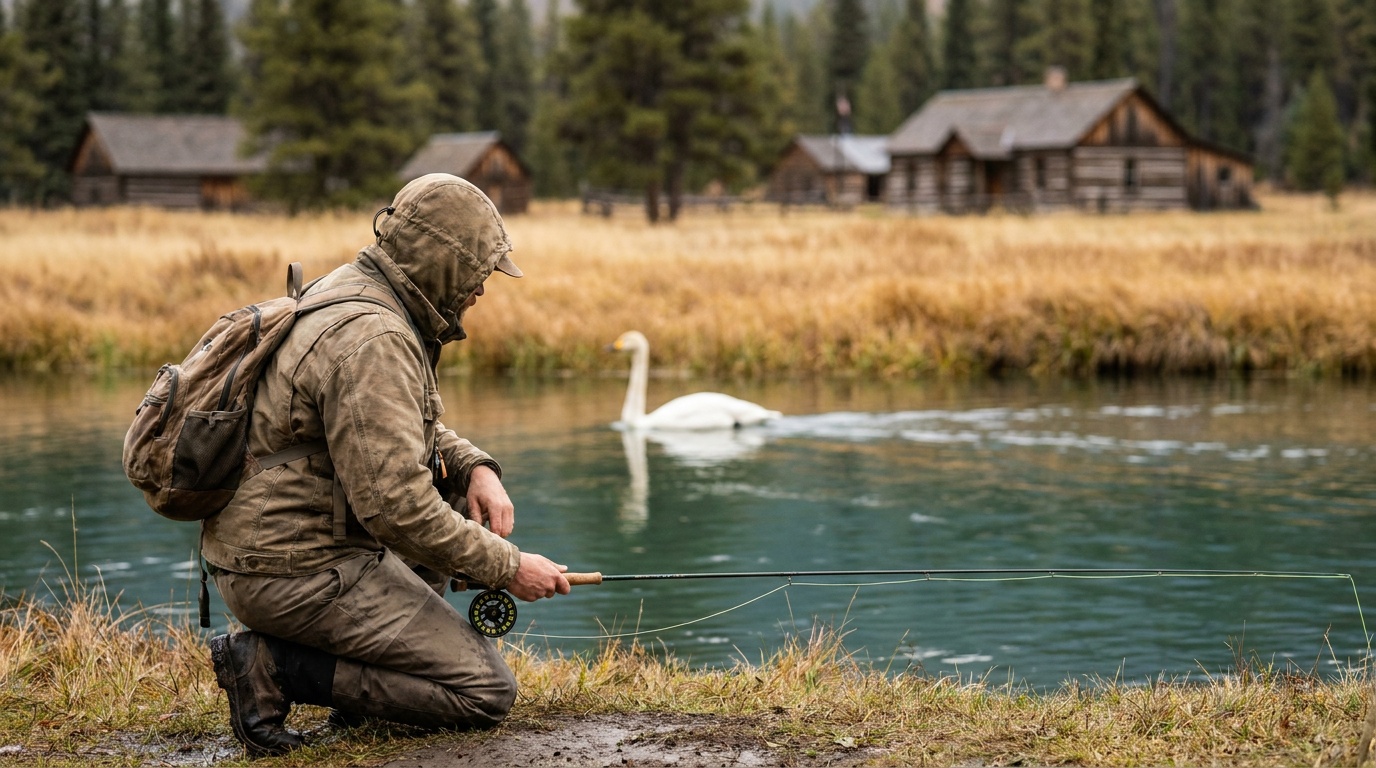
Eight miles of the Henrys Fork of the Snake River run through the park in water known globally as the Ranch, one of the most challenging and revered dry-fly fisheries in the United States, with large rainbows and browns feeding on prolific aquatic insect hatches in the crystal-clear river.
Trumpeter Swan and wildlife viewing
Harriman lies within an 11,700-acre wildlife refuge in the Greater Yellowstone Ecosystem, with Trumpeter Swans, the world's largest waterfowl, regularly visible on the water along with moose, elk, and bald eagles throughout the season.
Historic Railroad Ranch and 22 miles of trails
The historic Railroad Ranch, once the private retreat of the Harriman and Guggenheim families, is now interpretable through weekend ranger tours in summer; 22 miles of hiking, mountain biking, and horseback riding trails thread through meadows, along riverbanks, and through Ponderosa forest.
Anchor the day around Henrys Fork fly fishing
Check road and trail status before committing to the high-country version of the plan. For one day in Harriman State Park, make Henrys Fork fly fishing the non-negotiable, add Trumpeter Swan and wildlife viewing only if the first stop runs clean, and keep Historic Railroad Ranch and 22 miles of trails as the flexible finish.
- 1Start with Henrys Fork fly fishing: Eight miles of the Henrys Fork of the Snake River run through the park in water known globally as the Ranch, one of the most challenging and revered dry-fly.
- 2Add Trumpeter Swan and wildlife viewing: Harriman lies within an 11,700-acre wildlife refuge in the Greater Yellowstone Ecosystem, with Trumpeter Swans, the world's largest waterfowl, regularly visible on.
- 3Use Historic Railroad Ranch and 22 miles of trails as the optional finish, not as a reason to rush the whole day.
Plan your trip
Turn Harriman's conditions into water, pack, and sleep-system decisions.
Build around conditions
Let season, elevation, and weather set the plan.
Plan your trip
3 quick tools, already seeded for Harriman State Park. Tune the numbers around temperature swings, footing, layers, and how much margin the route needs.
What to pack
Start with the gear decisions this park changes: footing, weather, camping, and water.
Kit Authority
Harriman State Park packing list
0 of 15 packed. Check items as you pack, then take this list to the store, trailhead, or campsite.
Pack planning
Decide what Harriman State Park asks of your kit before you start checking boxes.
Use this as a constraint check while you are still shaping the trip. The active checklist becomes useful once your route, dates, and sleep plan are set.
- First constraintHydration and exposureWater, hat, sunscreen, sunglasses, Navigationmap, downloaded GPS, or a GPS watch, 3 more
- Route realityFooting and tractionHiking boots, Hiking socks, Trekking poles
- Load choicePack and carry systemDaypack
- Season checkLayers for conditionsMoisture-wicking base layers, Insulated jacket, Traction devices for ice, 1 more
Checklist mode
15 items, grouped for the trip you are actually taking.
- Dates and season are set.
- Primary route, campground, or lodge is chosen.
- Water, footwear, and overnight needs are sized.
One researched pick
The first gear decision for Harriman
A stable daypack is the one purchase that organizes water, layers, food, first aid, and the small safety margin.
We may earn a commission from links on this page, at no extra cost to you.
THE DAY-HIKE PICK
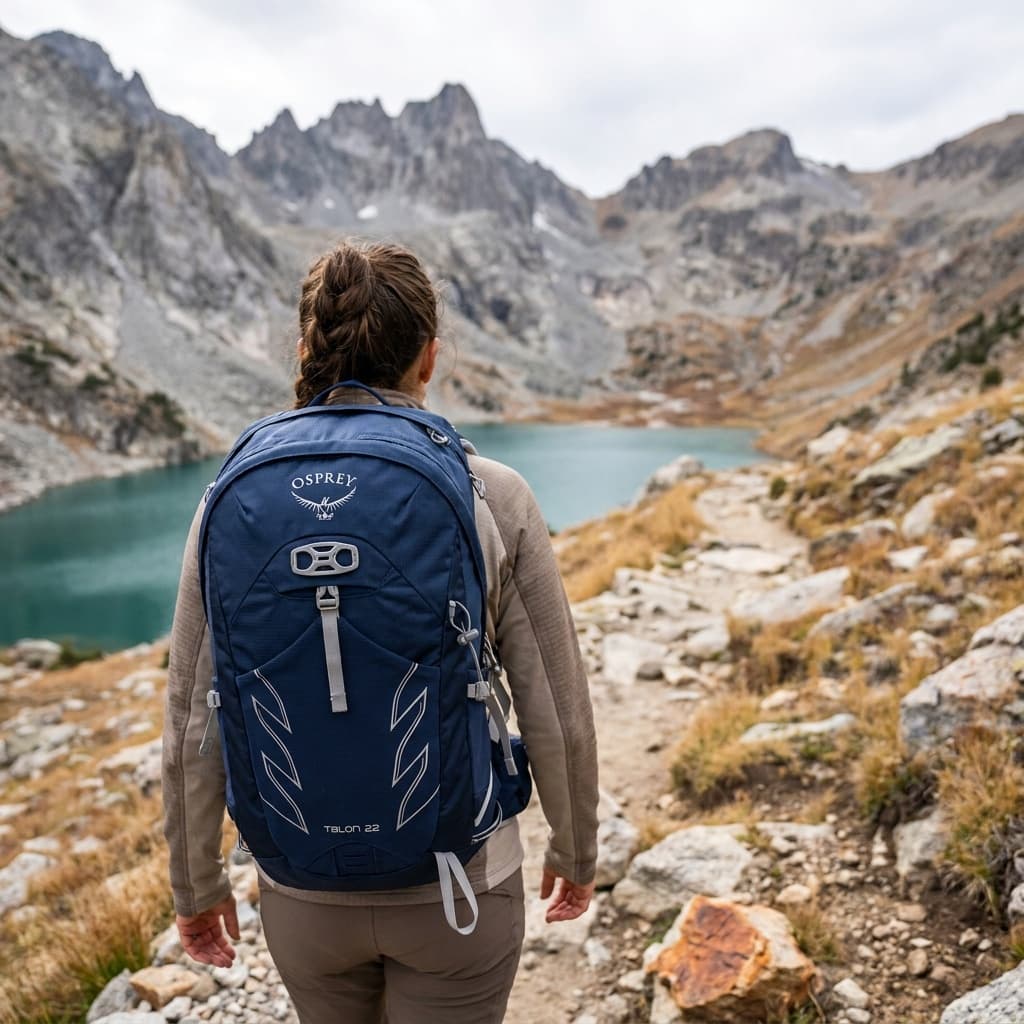
Osprey Talon 22
- Volume
- 22 L
- Weight
- 2 lb 1 oz (945 g)
- Back Panel
- AirScape foam with ventilation channels
- Hipbelt Pockets
- 2 zippered
- Hydration
- Compatible up to 3 L reservoir (sold separately)
- Warranty
- All Mighty Guarantee (lifetime repair or replace)
The Talon 22 is the daypack you see on the trail more than any other for good reason: it packs in a padded hipbelt, adjustable torso harness, and dual hipbelt pockets into a 22-liter package that handles loads up to 20 lb without complaint. Owners across hundreds of Amazon ratings consistently cite its adjustability and durability as standouts.
- Adjustable torso fit covers a wide range of body sizes
- Padded hipbelt and dual hipbelt pockets at this size are rare
- At 2 lb 1 oz it runs heavier than ultralight rivals for the same volume
Best for
Hikers who want a proven all-around daypack with solid load support, plenty of adjustment, and a warranty they can actually use.
Gear for Harriman
The buying guides that match what Harriman asks of your kit, with our current top picks across budget and use case.
Where to stay
Harriman has no traditional campground; overnight stays are in yurts (about $75 to $110 per night, sleeping 6), the Ranch Manager's House (about $160 to $236 per night, sleeping 8), the Cattle Foreman's House (about $200 to $220, sleeping 6), the Dormitory and Dining Hall (about $300 to $330, sleeping up to 36), and the Scovel Education Center cabin cluster. All require advance reservations through the Idaho state park system. Island Park, 3 miles away, adds lodges and rental cabins, and West Yellowstone, Montana, is 28 miles south.
Camping reservations
Camping reservations
Harriman has no campground; reserve yurts and ranch houses through Idaho's getoutside.idaho.gov system.
Overnight stays at Harriman are in yurts, historic ranch houses, dormitories, and the Scovel Education Center, all reservable through the Idaho state park system. No pets of any kind are allowed in the park.
Reviewed June 11, 2026
Booking window
Idaho State Parks handles all Harriman reservations through getoutside.idaho.gov or by calling 1-888-922-6743. The Scovel Education Center is reservable directly through the park up to 9 months in advance.
- No dogs or other pets are allowed anywhere in Harriman State Park, including parking lots and all trails, due to the wildlife refuge and National Historic Place status.
- Spring trail closures apply from April 15 to June 15 on several trails for waterfowl nesting, and from April 15 to July 1 on ridge trails for elk calving; check the spring closure map before visiting.
- Winter access requires a separate Winter Access Pass in addition to the $7 MVEF: $6 per person daily, $50 individual seasonal, $75 couple, or $100 family.
Where to book or verify
Official Idaho State Parks reservation system for Harriman yurts, ranch houses, and group facilities.
Official Idaho Parks page for the Railroad Ranch, trail maps, fly fishing, and spring closures.
Check for federal campground, backcountry, tour, and permit inventory tied to this park.
Campgrounds to know
Harriman yurts (Cygnet, Ermine, Wyethia, Becker backcountry)
Details- Booking
- Reserve through getoutside.idaho.gov or call 1-888-922-6743.
- Season
- Cygnet, Ermine, and Wyethia year-round; Becker backcountry yurt May through November.
- Sites
- Canvas-walled yurts sleeping 6 with wood stove, propane stove, and bunk beds; Becker is 1.5 miles from parking on a backcountry route.
- No pets allowed. No campfires in yurts. Bring your own propane canisters, water, and bedding.
Ranch Manager's House and Cattle Foreman's House
Details- Booking
- Reserve through getoutside.idaho.gov; 2-night minimum.
- Season
- Available year-round.
- Sites
- Historic log homes with multiple bedrooms; Ranch Manager's House sleeps 8 ($160 to $236), Cattle Foreman's sleeps 6 ($200 to $220).
- The premier fly fishing base on the Henrys Fork; no pets allowed.
Getting there and practical info
Build the arrival around the reservation.
Entry windows, permit pickups, and drive time should be checked before the itinerary gets crowded.
Getting there
Get to Harriman State Park with the required window already protected.
- Access rhythm
- Car required
- Region
- Idaho
Car strategy
Harriman State Park is at 3489 Green Canyon Road in Island Park, Idaho, about 28 miles north of West Yellowstone, Montana, and 130 miles north of Pocatello.
Car strategy
Take US Highway 20 north from Idaho Falls or south from Ashton to Island Park, then follow signs to Green Canyon Road.
Local movement
The park sits within the Island Park caldera at 6,210 feet elevation.
Pair this with lodging: choose the base that keeps the reservation or permit pickup from becoming the hardest part of the day.
Can you photograph here? Permit and drone rules
Idaho issues no statewide permits and most cities require none; the real rule is the Idaho state parks filming permit with its 100 dollar application fee.
- Permit
- Usually fine for personal shoots; commercial or large productions can need a permit
- Drones
- Commercial drone work requires FAA Part 107
- Land
- Yes: you can photograph what is visible from public space in the US
From our photography sister site, Aperture Authority. Verified 2026-07-01.
Frequently asked questions
Is Harriman State Park good for fly fishing?
Harriman is world-class. Eight miles of the Henrys Fork of the Snake River run through the park in water known globally as the Ranch, widely considered one of the most challenging and revered dry-fly fisheries in the United States. Large rainbows and browns feed on prolific aquatic insect hatches in clear, spring-fed water. The river runs through the park from June through September for the prime dry-fly season.
Are dogs allowed at Harriman State Park?
No. Dogs and all other pets are prohibited everywhere in Harriman State Park, including all trails, the historic ranch area, all overnight facilities, and parking lots. This is due to the park's status as a National Historic Place and an active wildlife refuge protecting Trumpeter Swans, elk, and other sensitive species.
Can you see Trumpeter Swans at Harriman State Park?
Yes. Harriman is one of the best places in the lower 48 to see Trumpeter Swans, the world's largest waterfowl species. They are regularly visible on the Henrys Fork and the adjacent wetlands throughout the warmer months and gather in notable numbers in fall before migration. Moose, elk, bald eagles, and sandhill cranes are also common sightings.
Is there camping at Harriman State Park?
Not in the traditional tent-camping sense. The park has no campground. Overnight stays are in yurts (sleeping 6, about $75 to $110 per night), historic ranch houses and dormitories (sleeping 6 to 36), and the Scovel Education Center cabin cluster, all reservable through getoutside.idaho.gov. Island Park, 3 miles away, has lodges and rental cabins for those needing more options.